Women’s Health Midterm Review of Topics
Contraceptive Methods: types, instructions for use, benefits, side effects, contraindications, ideal candidates, managing method problems, predicting ovulation with natural fami
...
Women’s Health Midterm Review of Topics
Contraceptive Methods: types, instructions for use, benefits, side effects, contraindications, ideal candidates, managing method problems, predicting ovulation with natural family planning
• Non-hormonal: abstinence, coitus interruptus
lactational amenorrhea method – breastfeeding increases maternal prolactin levels which inhibit ovulation. 1. Must be exclusively breastfeeding. 2. Amenorrhea 3. Infant younger than 6 months
• Fertility awareness-based methods - timing method
• Barrier methods –
Condoms- offers protection against STIs
Spermicides- N-9 containing spermicides are not recommended for multiple daily sex acts or for STI’s protection. Lubricating microbicides potential for STI and HIV protection.
Diaphrams/cervical cap- designed to be used with spermicides. UTIs are more common. Must be fitted by a clinician, requires a rx. Wait 6 hrs for removal no more than 24 hrs. cervical cap repeated intercourse is more convenient bc no need to add more spermicide. Should not use if hx of TSS
Sponge – Nonoxynol-9. Releases 125-150mg over a 24 hr period. No rx needed. May be used for multiple sex acts. Wait 6 hrs after sex to remove. Contraindicated w hx of TSS, allergy to polyurethane foam, nonoxynol-9, metabisulfite or sulfa. Do no use during menstruation.
RU-486—mifepristone protocol – not an emergency contraception
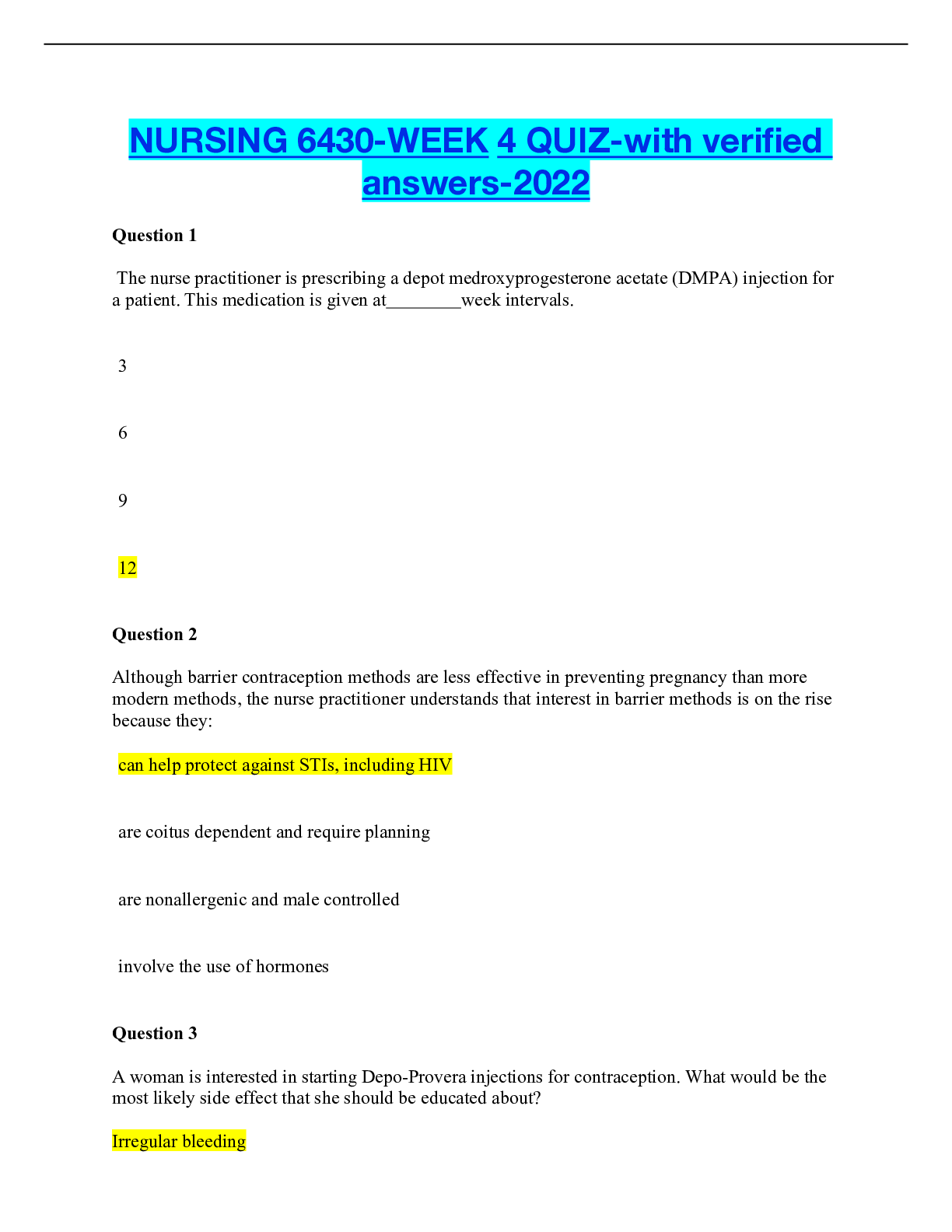
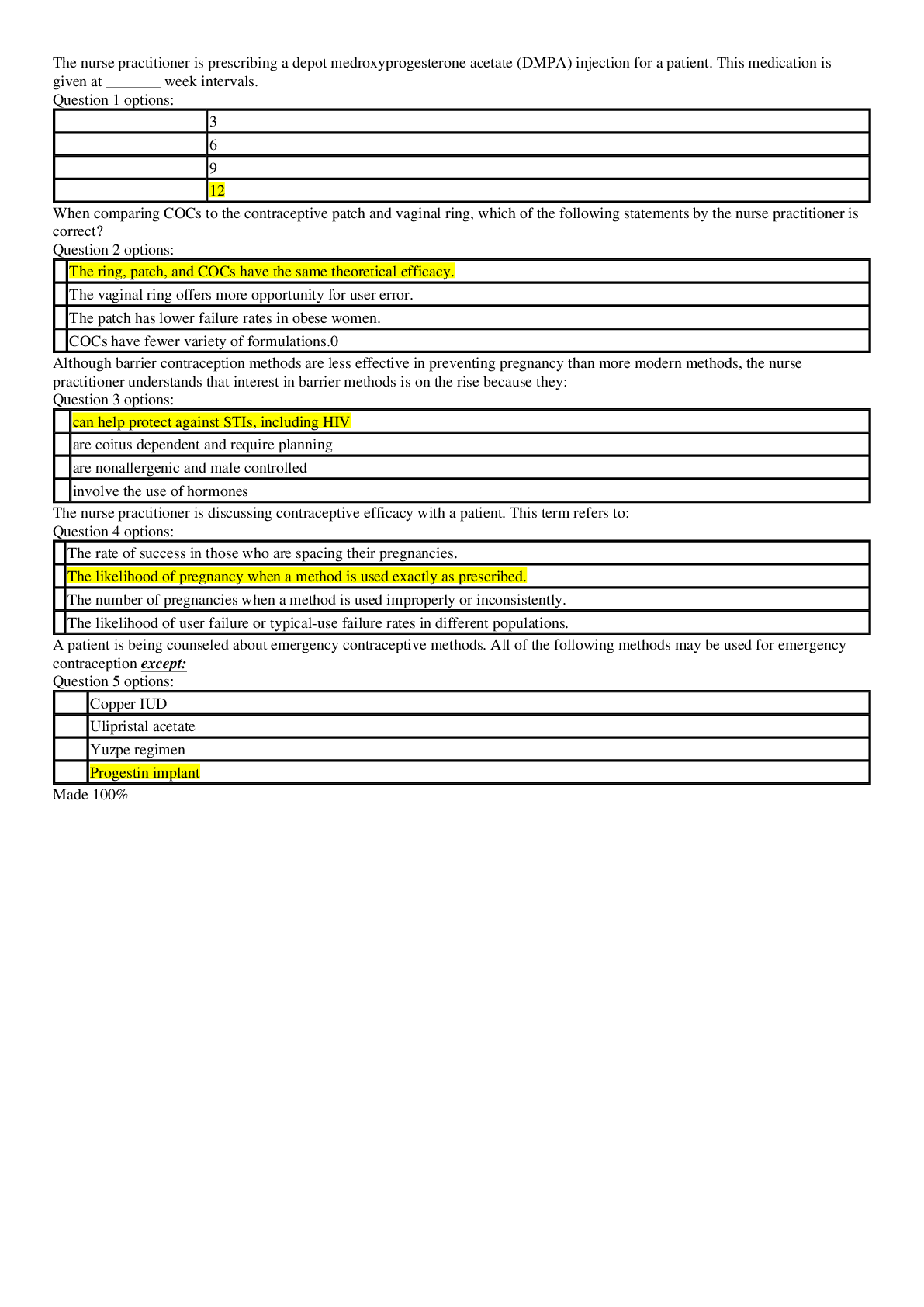
Emergency contraception- yuzpe regimen-2doses of 100mg ethinyl estradiol and 0.5mg levonorgestrel taken 12 hours apart. Progestin only method – 0.75 q 12hrs or 1.5 one. Copper IUD
Infertility: etiology, tests, management
>Failure to ovulate due to abnormal menstrual cycle or insufficient hormone levels
> Blockage of the oviducts, which could be a result of a bacterial infection
> Endometriosis may occur which causes the uterine lining to develop outside of the uterus and may block the oviduct
> Antisperm antibodies may develop, which are secreted into the uterus, destroying sperm before it reaches the egg
Tests: documentation of ovulation detection, semen analysis. Lab testing: TSH, free thyroxine (T4), prolactin levels. Hysterosalpingography or chlamydial testing to r/o tubal blockage. Serum progesterone midway through luteal phase on day 21 can help confirm if a woman is ovulating. Greater than 3 = she has ovulated. FSH, LH, estradiol, free testosterone, total testosterone and dehydroepiandrosterone sulfate (DHEA-S) to look for hyperandrogenic disorder.
Sonohysterosalpingography – inexpensive, transvaginal ultrasound to confirm the shape of the uterine cavity, measure thickness of endometrium, patency of fallopian tubes. Sterile saline and iar are injected into the uterus through the cervix.
Hysterosalpingography- contrast injected thru the cervix into the uterus and into the fallopian tubes observed by xray. Normal would be travel unobstructed.
hysteroscopy – definitive dx of intrauterine conditions causing infertility.
Breast Disorders/Problems: types, clinical manifestations, management,
Physiology of the Menstrual Cycle
Ovarian Cycle:
Follicular phase – day 1 to 14 of ovarian cycle, ovarian hormones (estrogen & progesterone) are low. FSH causes follicle to form, follicle grows, increases estrogen, cause uterine lining to thicken.
Ovulatory Phase – mature ovum is release from follicle, occurs 10-12 hrs after LH peak. Inc estrogen stims pit glad to produce LH. LH surge causes follicle to rupture and egg cell sent to oviduct.
Luteal phase – rupture follicle heals inside ovary, forms corpus luteum, corpus luteum produces progesterone, estrogen and prog maintain added growth of uterine lining
Endometrial Cycle:
Proliferative phase – fourth or fifth day of the cycle and usually lasts approximately 10 days, ending with the release of the ovum. occur in preparation for implantation of the fertilized ovum
Secretory phase – begins at ovulation, last from day 15 (day after ovulation) today 28 (varies)
Menstrual phase – begins with the initiation of menses lasts 4-6 days. Prostaglandins initiate contractions of the uterine smooth muscle and sloughing and degraded endometrial tissue leading to menses.
Reproductive Organs: anatomy and physiology, functions
Menstrual Cycle Disorders: etiology, PMS vs. PMDD, dysmenorrhea, management
PMDD – drospirenone/ethinyl estradiol/levomefolate calcium (Beyaz),
PMS greatest occurrence in the late luteal phase, COC can help relieve sx,
Dysmenorrhea –Primary - pain associated w menstrual flow in absence of pelvic disease, occurs w/in 6-12 months after menarche or as late as 1-3 years after, pain occurs just before or with onset of menstrual flow. Secondary – pain occurring during menses r/t pathologic pelve disease such as endometriosis, uterine fibroids, adenomyosis, ovarian systs, polyps,PID, IUD or infertility probs. Generally later in life after years of painless menstruation (30-40 yrs old). Pain 1-2 week before menses, peaks 1-2 days before menses, relieved by onset of menstrual flow. First line drug for dysmenorrhea – NSAID (ibu 400-800mg q 6h x 3 days, naproxen 500 initial then 250 q 6-8hrs x 3 days). Hormonal contraceptions (first line for dysmenorrhea cause by endometriosis).
Abnormal Uterine Bleeding: etiology, amenorrhea, management
Progesterone challenge: in the presence of amenorrhea and normal secondary sex characteristics the progesterone challenge would ascertain the presence of endogenous estrogen.
Dysfunctional uterine bleeding (DUB) most common cause – anovulation
Polycystic Ovarian Syndrome: etiology, clinical manifestations, risks, management
Diagnostic criteria: irregular menstrual cycles, hyperandrogenism (increased testosterone), infertility.
Androgen excess and ovarian dysfunction
S/sx: hirsutism, acne, androgenic alopecia
Hirsutism- excessive terminal hair growth in women, occurs in anatomic areas where hair follicles are most androgen sensitive
Alopecia – prolong exposure to circulating androgens may cause hair loss
Obesity increases the risk for developing PCOS
PCOS increases the risk of endometrial ca 3x and ovarian ca 2x
Preventative Screenings based on age
Adolescent well woman visit: general health hx, focusing on reproductive and sexual health concerns, psychosocial (family related, peer related, emotional and physical as well as relate to abuse, druse use and etoh) concerns, physical exam, screening tests and immunizations as indicated by the health hx and gyn considerations for an external only inspection of the genitalia.
Screening tool for substance abuse in teens- CRAFFT
Mammography should be accompanied by a clinical breast exam
Tanner Scale
Grades I-V genitals male, breasts, pubic hair
Tanner stage 1 – no pubic hair
Tanner Stage 2 - breast bud stage-elevation of breast and papilla, areolar slightly enlarges, sparse growth of long, slightly pigmented, straight hair on labia majora
Tanner stage 3 - further enlargement of breast and areolar, with no separation of their contours
hair is darker, coarser, curlier, spreads sparsely over labia
Tanner sage 4 - projection of areolar and papilla to form a secondary mound above the level of the breast, hair is adult in type but covers less area than an adult (female/male)
Tanner stage 5 - mature stage, papilla projection only. recession of areolar to general contour of breast, hair is adult in type, in inverse triangle, spreads to medial surface of the thighs (adult)
Pregnancy: symptoms, clinical signs, prenatal labs, hCG levels, assessment/exam, vaccinations, weight gain, calculate Nageles rule, calculate gravida/parity, differentiate between abortion types, complications – pre-eclampsia, gestational diabetes, bleeding
• Sx/Clinical Signs
Presumptive signs: Subjective – amenorrhea, n/v, increased urinary frequency, excessive fatigue, breast tenderness, quickening at 18-20 wks
Probable signs: objective – goodells sign (softening of the cervix), chadwick sign (cervix bluish), Hegars sign (softening of lower uterine segment, uterine enlargement, Braxton hicks may be palpated at 28 wks, uterine soufflé (soft blowing sound due to blood pulsating through the placenta), integumentary pigment changes, ballottement, fetal outline definable, +pregnancy test.
Positive signs: diagnostic – fetal hr, palpable fetal outline, fetal movement after 20 wks, visualization of the fetus w cardiac activity by US.
• Prenatal labs – CBC w hgb/hct, blood type and Rh factor, Antibody screen, Rubella titer, Hep B surface antigen (HBsAg), HIV, Syphilis (VDRL or RPR), Urine culture, chlamydia, gonorrhea. Glucose tolerance test – 50g glucose load and check blood glu in 1 hr, for women with hx of impaired glucose metabolism, gest diabetes or BMI >30 – test during 1st trimester, all others should be done between weeks 24-28. 135-140 warrants further testing. Do no need if already known diabetes. Pap test. Optional > genetic testing, maternal serum markers (10-14 wks), Quad screening (15-20 wks).
• hCG prevents corpus luteum from decomposing which maintains progesterone level. Endometrium not shed
• assessment/exam – assessment should include medical, social and personal components. History, menstrual history, medical hx (birth control use a conception, prior obstetric hx (complications, gest age at birth, length of labor, pain relief used, C-section, and gravida/parity), Infectious disease hx (tb, varicella, STIs), genetic hx, paternal hx, substance exposure (meds non rx or illicit), chemical exposure (cig smoke), social hx, safety (home, work). Exam complete physical exam, pap, fetal heart tones as early as 10-12 weeks, 120-160 bpm.
• vaccinations – Flu > any gestation. Tdap > 3rd trimester (ideally 27-36 wks). Hep B > if at risk, 3 injections beginning at any point in gestation. Contraindicated > MMR, Varicella (Live viruses)
• weight gain
BMI < 18.5 (underweight): 28–40 lb
BMI 18.5–24.9 (normal): 25–35 lb
BMI 25–29.9 (overweight): 15–25 lb
BMI > 30 (obese): should gain 11–20 lb
• nageles rule – add 7 days to the first day of LMP, subtract 3 months, add one year
• calculate gravida/parity – GTPAL
G – gravida or pregnancy: total number of pregnancies the woman has had (should be total TPAL)
T- term births: those occurring from 37 -42 weeks
P- preterm: those occurring after point of viability, 20 weeks and less than 37 weeks or fetal wgt greater than 500gm
A- abortions: spontaneous and included prior to 20 weeks
L – Living children
• abortion types
Spontaneous Abortion (SAB) – loss of pregnancy before 20weeks
Therapeutic Abortion (TAB) – elective
Threatened abortion – pregnancy complicated by bleeding before 20 weeks, abd cramping, cervix remains closed and long
Inevitable abortion – dilated cervical os
Incomplete abortion- some but not all intrauterine contents have been expelled
Complete – products of conception expelled entirely, minimal bleeding, prior uterine cramping, os closed or open
Missed abortion – fetal demise w/o cervical dilation and/or uterine activity, bleeding has occurred, subsided and reoccurs. No cramping, hx of cramping. Products of conception retained for up to 6 weeks.
• Pre-eclampsia – 140/90 or higher, proteinuria +1 on 2 occasions 4 hrs apart or 300mg or greater in a 24 hour time frame, thrombocytopenia, renal insufficiency, impaired liver func, pulmonary edema, or CNS or visual changes.
• Gestational diabetes
• Bleeding
Postpartum: mastitis management, contraceptive options for breastfeeding women, differentiate between postpartum blues, postpartum depression, and postpartum psychosis
Obtaining “Health Histories” specific to Women’s Health
[Show More]