ADVANCED HEALTH ASSESSMENT
Health History - TINA JONES™
**For instructor use only**
Page 1 of 3
Instructor Use Only
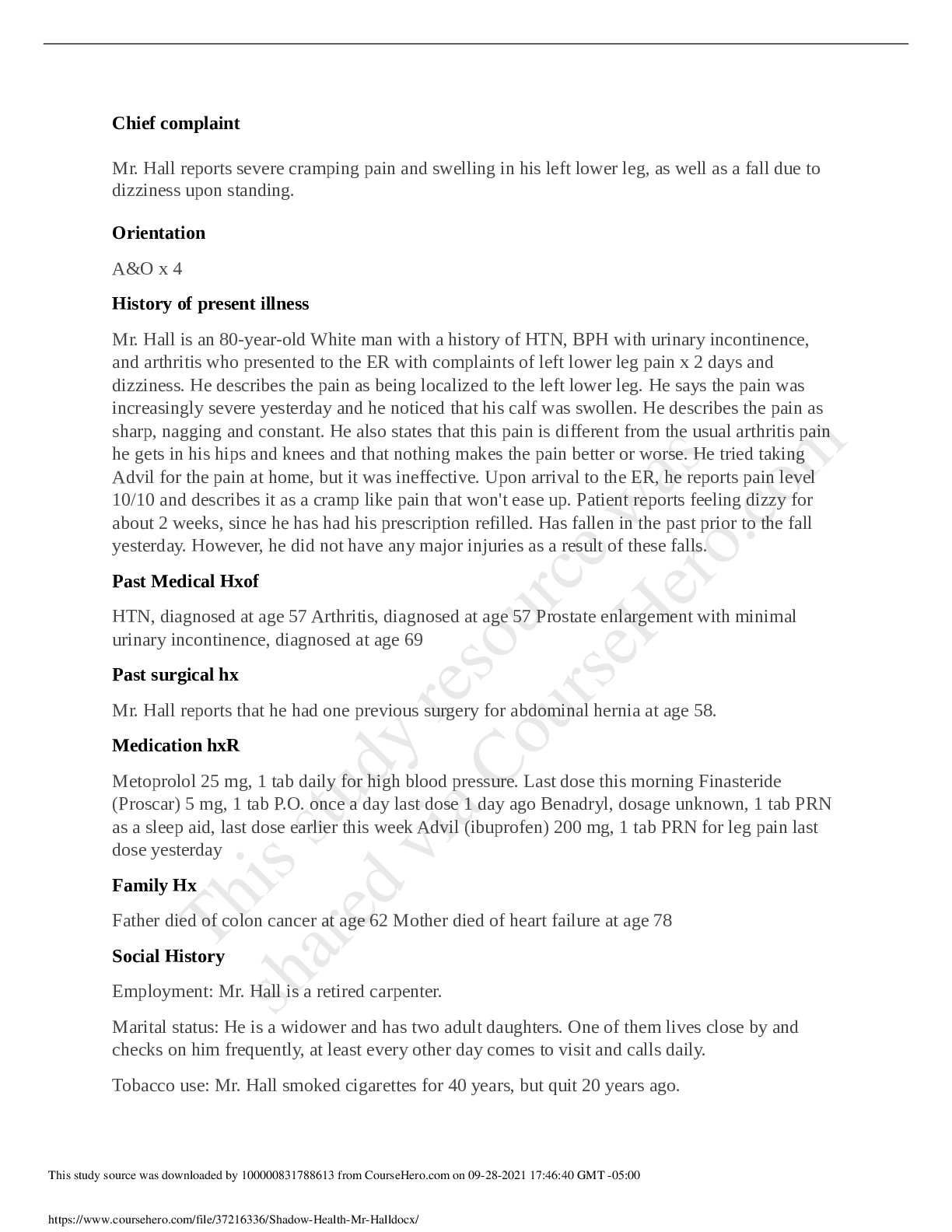
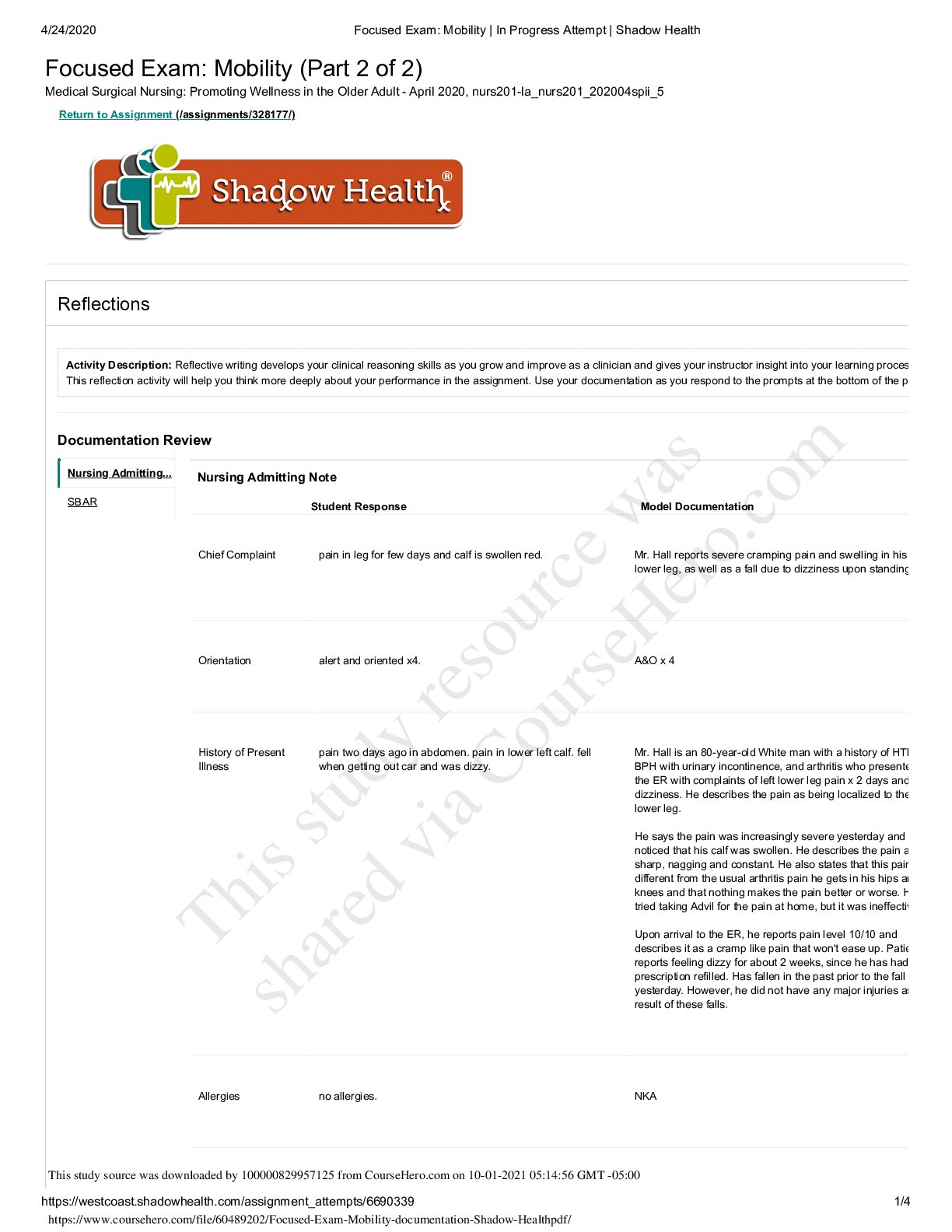
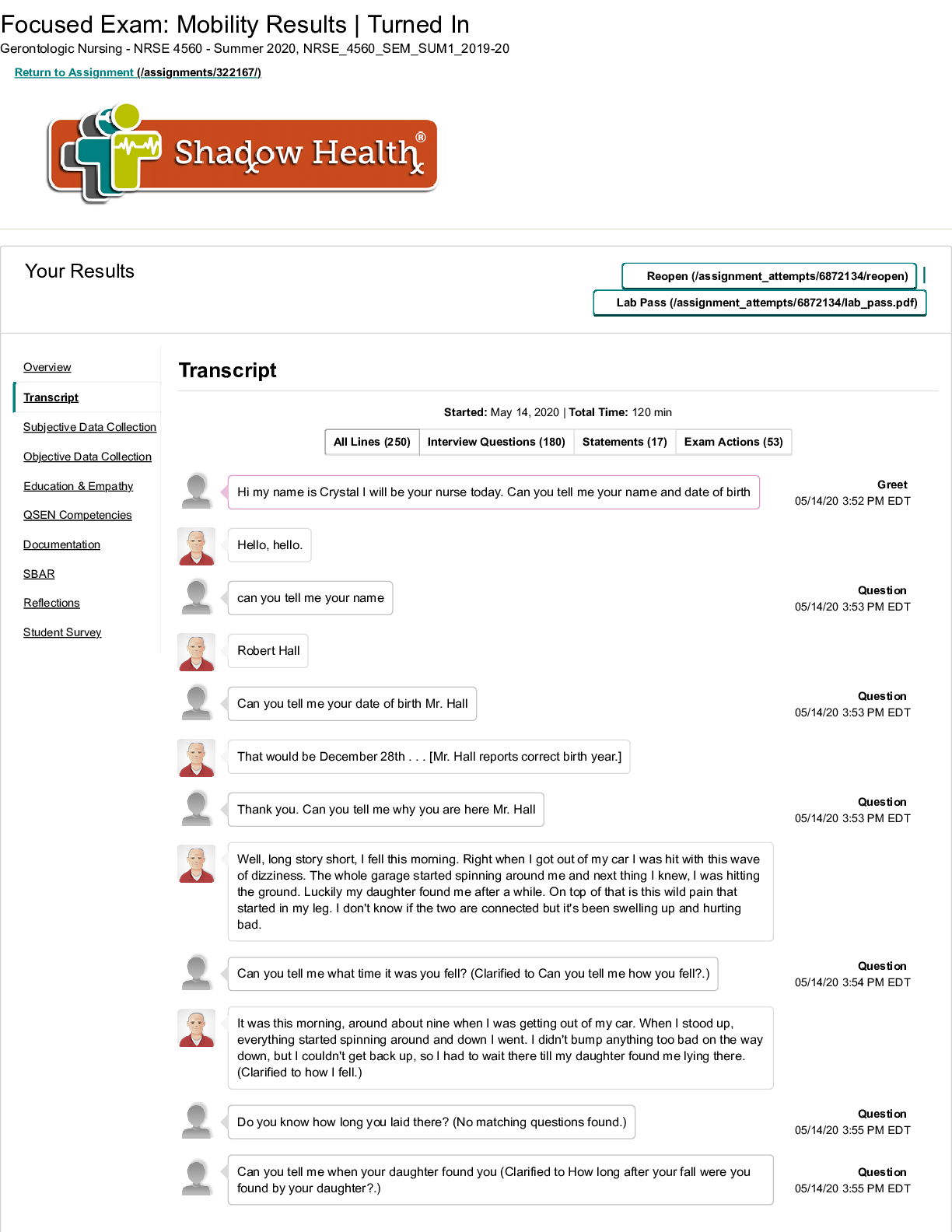
Ms. Jones is a pleasant, 28 -year- old obese African American single woman who presents to establ
...
ADVANCED HEALTH ASSESSMENT
Health History - TINA JONES™
**For instructor use only**
Page 1 of 3
Instructor Use Only
Ms. Jones is a pleasant, 28 -year- old obese African American single woman who presents to establish care and with
a recent right foot injury. She is the primary source of the history. Ms. Jones off ers information freely and without
contradiction. Speech is clear and coherent. She maintains eye contact throughout the interview.
Timeframe: 1 week after fall (Age: 28)
Reason for visit: Patient presents for an initial primary care visit today complaining of an infected foot wound.
Module 1 - Health History
Develop strong communication skills
• Interview the patient to elicit subjective health information about her health and health history
• Ask relevant follow-up questions to evaluate patient condition
• Demonstrate empathy for patient perspectives, feelings, and sociocultural background
• Identify opportunities to educate the patient
Document accurately and appropriately
• Document subjective data using professional terminology
• Organize appropriate documentation in the EHR
Demonstrate clinical reasoning skills
• Organize all components of an interview
• Assess risk for disease, infection, injury, and complications
After completing the assessment, you will refl ect on personal strengths, limitations, beliefs, prejudices, and values.
Learning Objectives
High Priority
• Acute pain of the foot
• Local infection of skin and
subcutaneous tissue of the foot
• Uncontrolled type 2 diabetes
mellitus
Low Priority:
• Acanthosis nigricans
• Asthma
• Dysmenorrhea
• Hirsutism
• Hypertension
• Menorrhagia
• Obesity
• Oligomenorrhea
• Polycystic ovarian syndrome
Underlying ICD- 10 Diagnoses
• Information Processing Activity
• Student Performance Index - This style of rubric contains subjective and objective data categories. Subjective
data categories include interview questions and patient data. Objective data categories include examination
and patient data.
Module Features
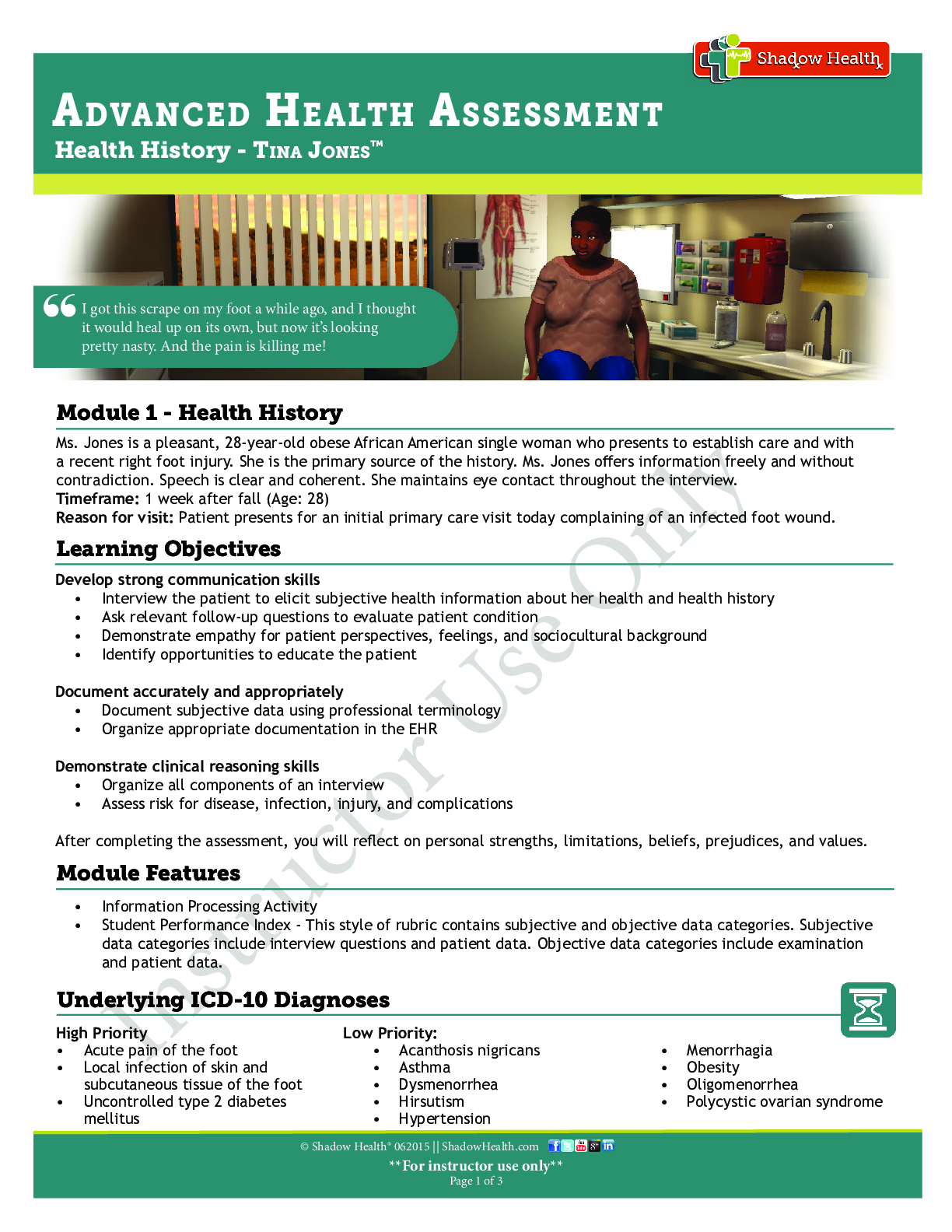
I got this scrape on my foot a while ago, and I thought
it would heal up on its own, but now it’s looking
“ pretty nasty. And the pain is killing me!ADVANCED HEALTH ASSESSMENT
Health History - TINA JONES™
© Shadow Health® 062015 || ShadowHealth.com
**For instructor use only**
Page 1 of 3
Instructor Use Only
One week after sustaining the cut, Tina Jones develops an infection in the cut on the bottom of her foot; she seeks
treatment when the infection starts to swell and produce pus.
Day 1 (Onset): Tina was at home, going down the back steps, and she tripped. She turned her ankle and scraped the
bottom of her foot. The wound bled, but she stopped the bleeding quickly and cleaned the wound. She worried that
she had sprained her ankle, and her mom drove her to the ER. (“a week ago”)
The ER did an x ray (no broken bones), gave her a prescription for Tramadol, and sent her home. In the following days,
her ankle seemed fi ne not as serious as she thought.
Day 2 - 4: She cleaned the wound dutifully, twice a day, with soap and water or hydrogen peroxide, let it dry, put
Neosporin on it, and bandaged it. The wound wasn’t getting worse, but it wasn’t healing, either. She expresses that
she “took really good care of it.” Tina was able to go to work and attend school.
Day 4: Tina went to her cousin’s house, where she encountered cats and experienced wheezing. She tried two puff s on
her albuterol inhaler, and she had to do a third puff . (“three days ago”)
Day 5 - 6: Tina noticed pus in the wound, and swelling, redness and a warm feeling in her foot. Her pain increased to
the point she was unable to walk. She began to take the Tramadol to try to manage the pain, but it didn’t resolve the
pain completely. She missed class and work. (“two days ago”
[Show More]