1. A nurse is assessing a new client. Which of the following information should the nurse include in the cultural portion of the assessment?
a. Food preferences
b. Employment status
c. History of illnesses
d. Sexual
...
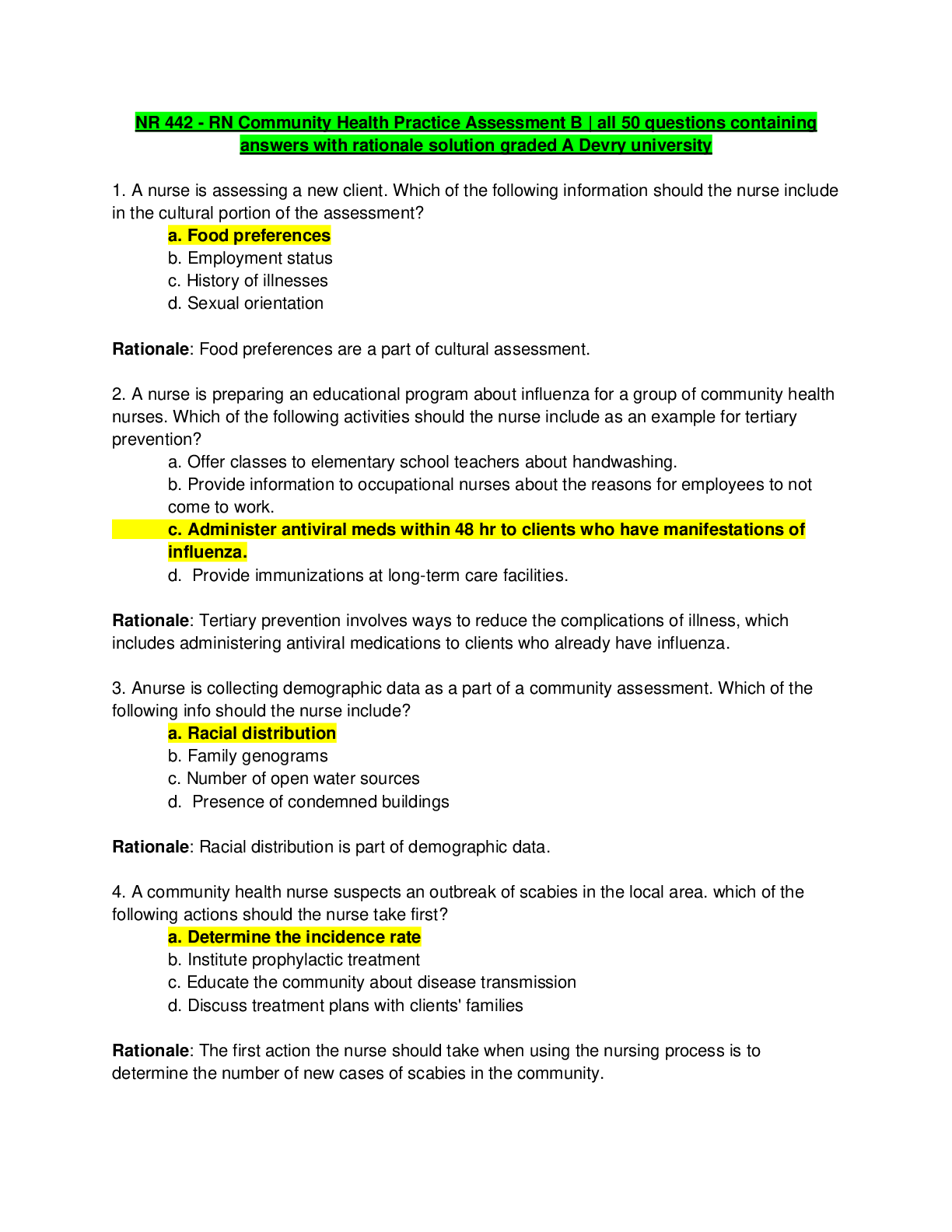
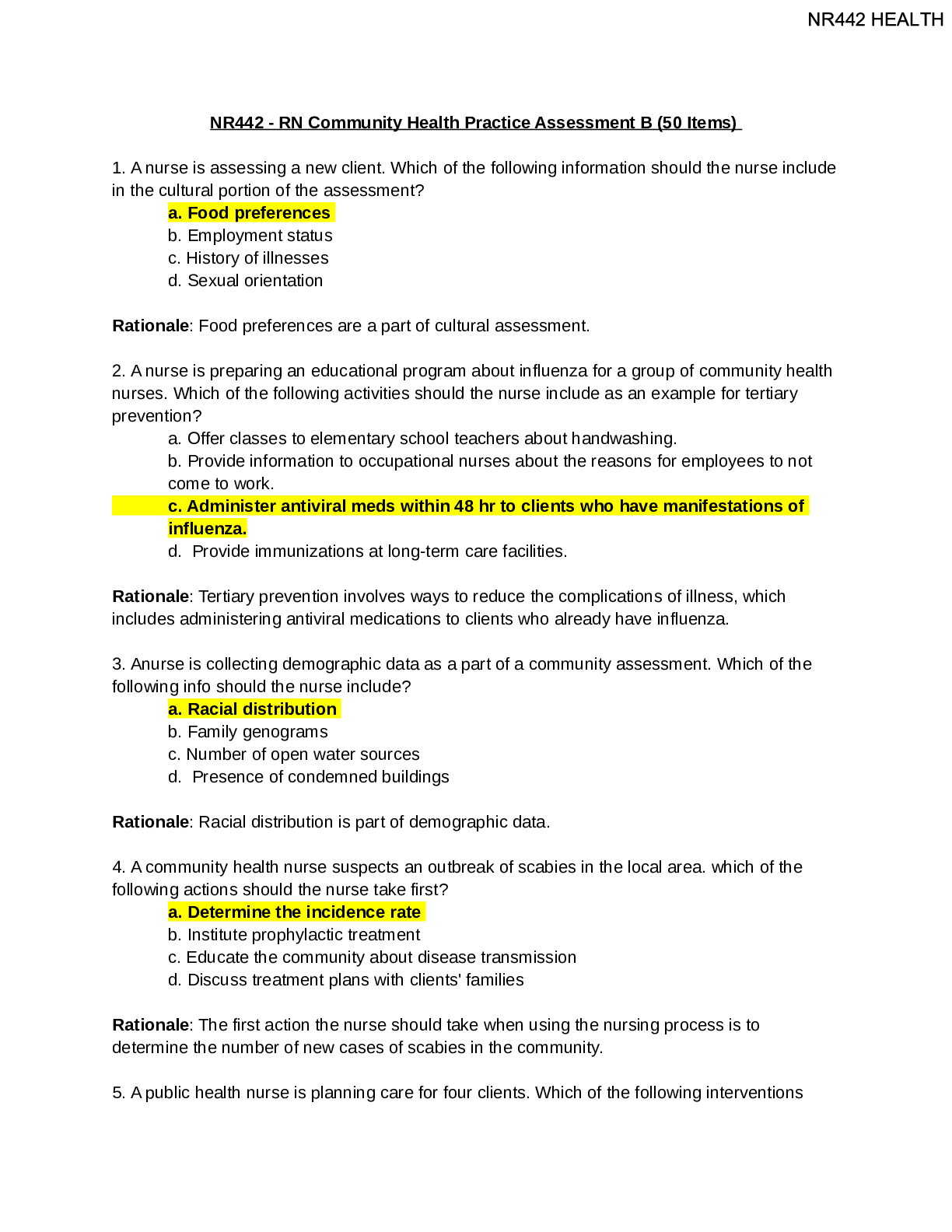
1. A nurse is assessing a new client. Which of the following information should the nurse include in the cultural portion of the assessment?
a. Food preferences
b. Employment status
c. History of illnesses
d. Sexual orientation
Rationale: Food preferences are a part of cultural assessment.
2. A nurse is preparing an educational program about influenza for a group of community health nurses. Which of the following activities should the nurse include as an example for tertiary prevention?
a. Offer classes to elementary school teachers about handwashing.
b. Provide information to occupational nurses about the reasons for employees to not come to work.
c. Administer antiviral meds within 48 hr to clients who have manifestations of influenza.
d. Provide immunizations at long-term care facilities.
Rationale: Tertiary prevention involves ways to reduce the complications of illness, which includes administering antiviral medications to clients who already have influenza.
3. Anurse is collecting demographic data as a part of a community assessment. Which of the following info should the nurse include?
a. Racial distribution
b. Family genograms
c. Number of open water sources
d. Presence of condemned buildings
Rationale: Racial distribution is part of demographic data.
4. A community health nurse suspects an outbreak of scabies in the local area. which of the following actions should the nurse take first?
a. Determine the incidence rate
b. Institute prophylactic treatment
c. Educate the community about disease transmission
d. Discuss treatment plans with clients' families
Rationale: The first action the nurse should take when using the nursing process is to determine the number of new cases of scabies in the community.
5. A public health nurse is planning care for four clients. Which of the following interventions
should the nurse recognize as tertiary prevention?
a. Providing chemoprophylaxis for malaria to a client who is traveling to mosquito- infested countries
b. Administering antibiotics to a client who has AIDS and was diagnosed with pneumocystis jiroveci
c. Performing a serological screening for HIV for a client who is pregnant
d. Participating in partner notification for a client who has an STI ‘=
Rationale: Administering antibiotics to a client who has AIDS and was diagnosed with Pneumocystis jiroveci is an example of tertiary prevention.
6. A home health nurse is assessing an older adult client who is taking captopril to treat heart failure. Which of the following findings should the nurse identify as an adverse effect of this medication?
a. dry cough
b. weight gain
c. ataxia
d. photophobia
Rationale: Captopril prevents the conversion of angiotensin I to angiotensin II, causing bradykinin to accumulate. The client may experience coughing as a result of bradykinin accumulation.
7. A home health nurse is caring for a client who has breast cancer. Which of the following assessment findings should the nurse identify as an indication that the client is coping effectively?
a. Inability to concentrate
b. Makes eye contact
c. Excessive sleeping
d. Lack of interest in food
Rationale: The nurse should recognize that making eye contact is a characteristic of effective coping.
8. A public health nurse is providing information to a client who has an alcohol use disorder and is asking about treatment. Which of the following statements should the nurse identify as an indication that the client understands the information?
a. "I will not have to completely stop drinking alcohol if I go into an inpatient treatment program."
b. "Once I make it through detoxification, I will be free of my addiction."
c. "I am not eligible for an outpatient program until I have completed an inpatient program first."
d. "I can expect to get help with other aspects of my life while in treatment."
[Show More]