ERSC 181 Week 2 Quiz | Questions and Answers 2021 - AMU
Document Content and Description Below
ERSC 181 Week 2 Quiz | Questions and Answers 2021 - AMU-
A. volcanic arc, forearc basin
•
B. oceanic trench, island arc
•
C. broad mountain range, folds
Question 2 of 25
4.0 Points
Which of the fo
...
[Show More]
Last updated: 4 years ago
Preview 1 out of 21 pages
Instant download

Buy this Document to get the Full Access Instantly
Provided by Students Who Aced it
We Verify Document Content to Gurantee Accuracy
Reviews( 0 )
Document information
Connected school, study & course
About the document
Uploaded On
Jul 27, 2021
Number of pages
21
Written in
All

Additional information
This document has been written for:
Uploaded
Jul 27, 2021
Downloads
0
Views
189
Topic Tags
Recommended For You
Get more on EXAM »
$15
39 Pages
ERSC181 B001 Introduction to Geology | ERSC181 B001 Week 8 Fin...

$15
14 Pages
ERSC181 B001 Introduction to Geology| APUS_ERSC181_WEEK_8_FINA...
$15
14 Pages
ERSC 181 Final Exam | Score 98/100 | American Military Univers...
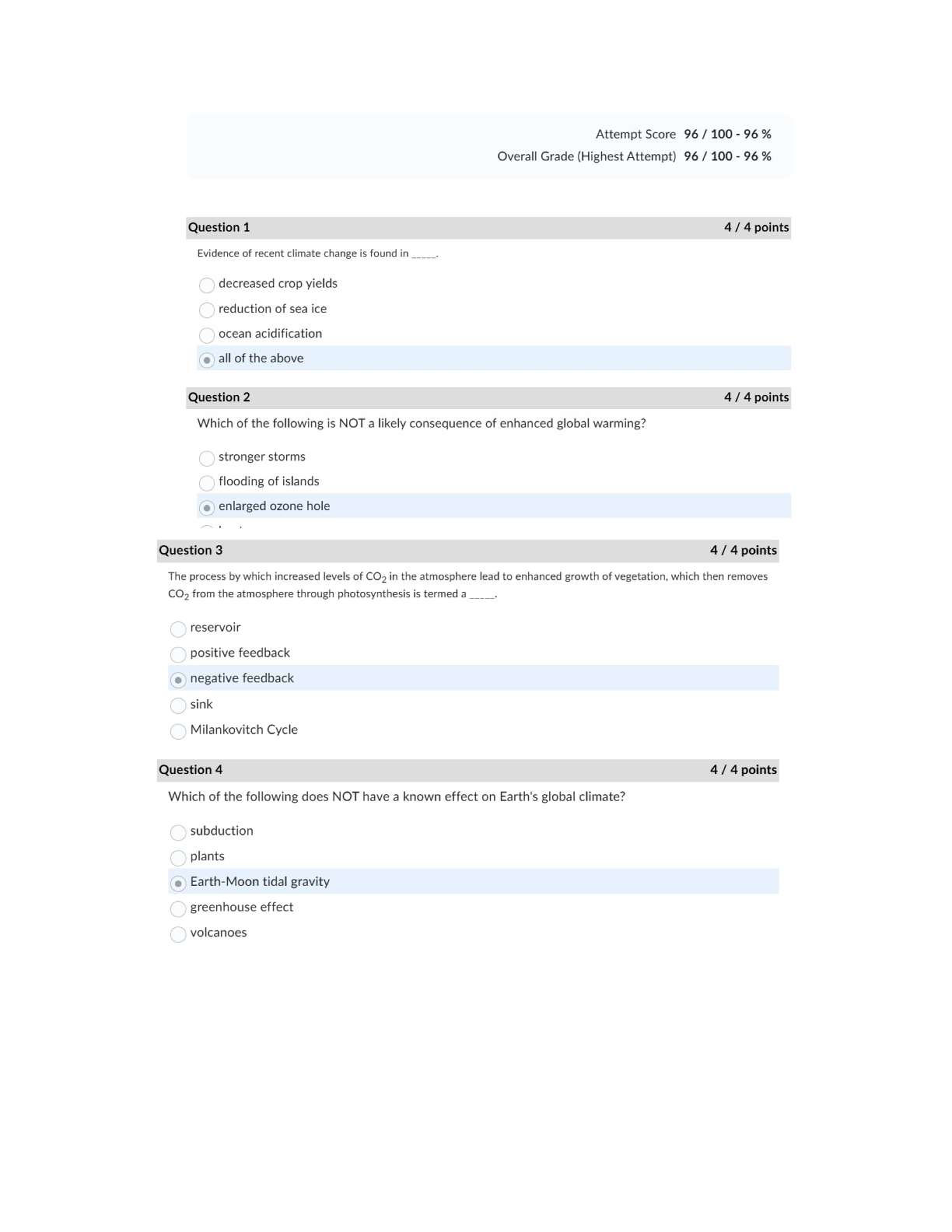
$12
8 Pages
ERSC 181 Exam 7 | Score 96/100 | American Military University
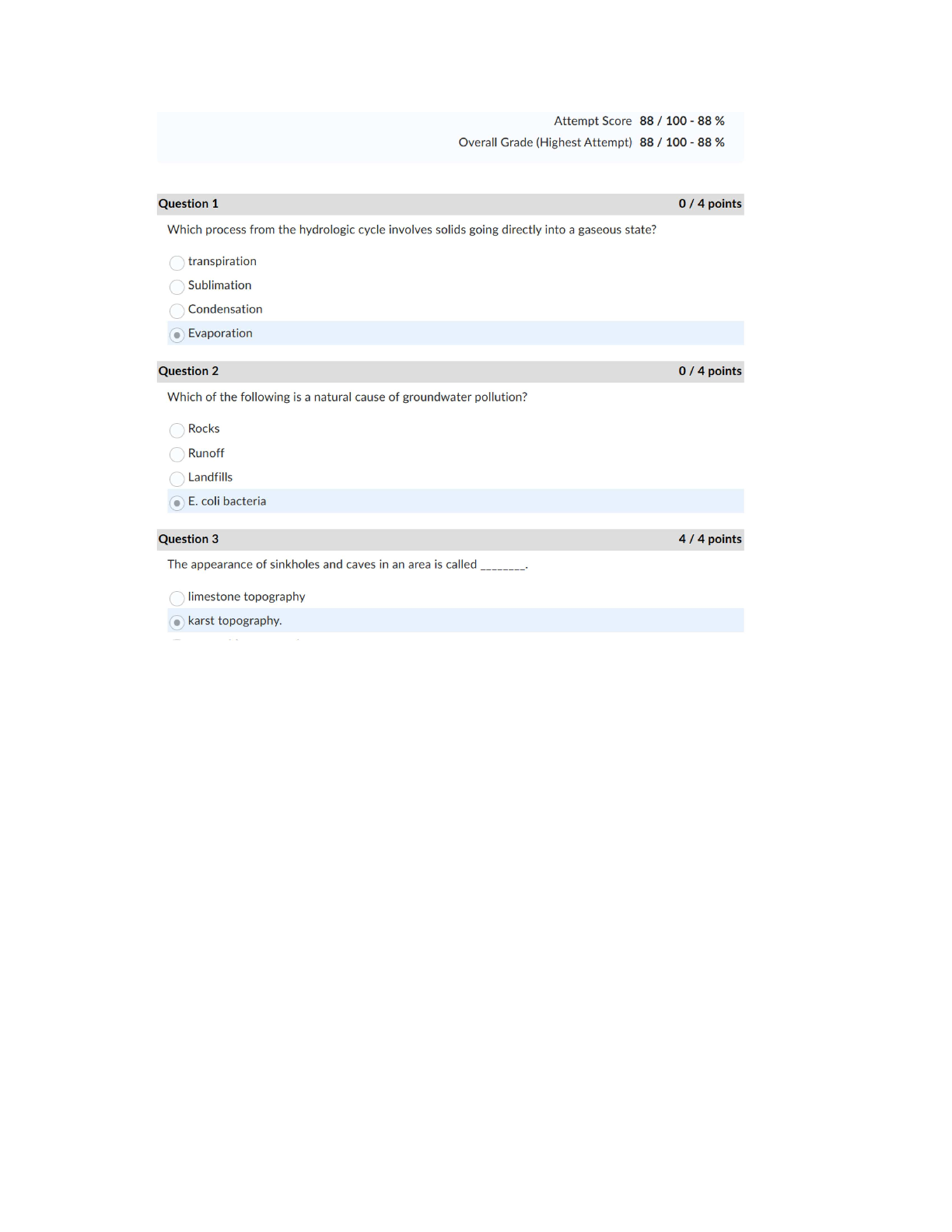
$12
8 Pages
ERSC 181 Exam 6 | Score 88/100 | American Military University
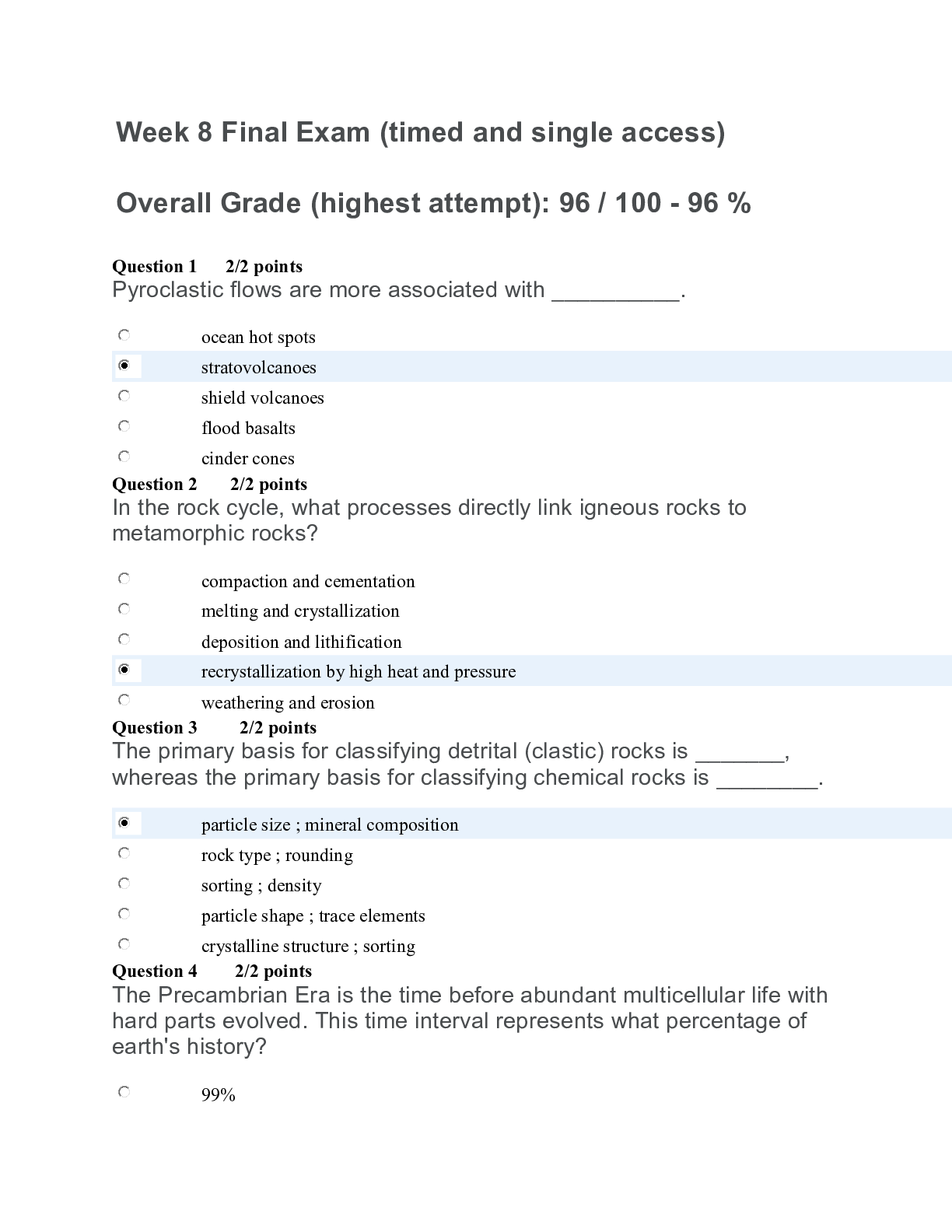
$12.5
14 Pages
ERSC181 B001 Introduction to Geology| APUS_ERSC181_WEEK_8_FINA...

$20
64 Pages
ERSC181 B001 Introduction to Geology | ERSC181 B001 Test 1-7 C...
$18.5
165 Pages
ERSC 181 Week 1-8 Exams 2021 | American Public University

$10.5
75 Pages
ERSC181 B001 Week 8 COMBINED exams WEEK 1-7 (answered) Fall 20...

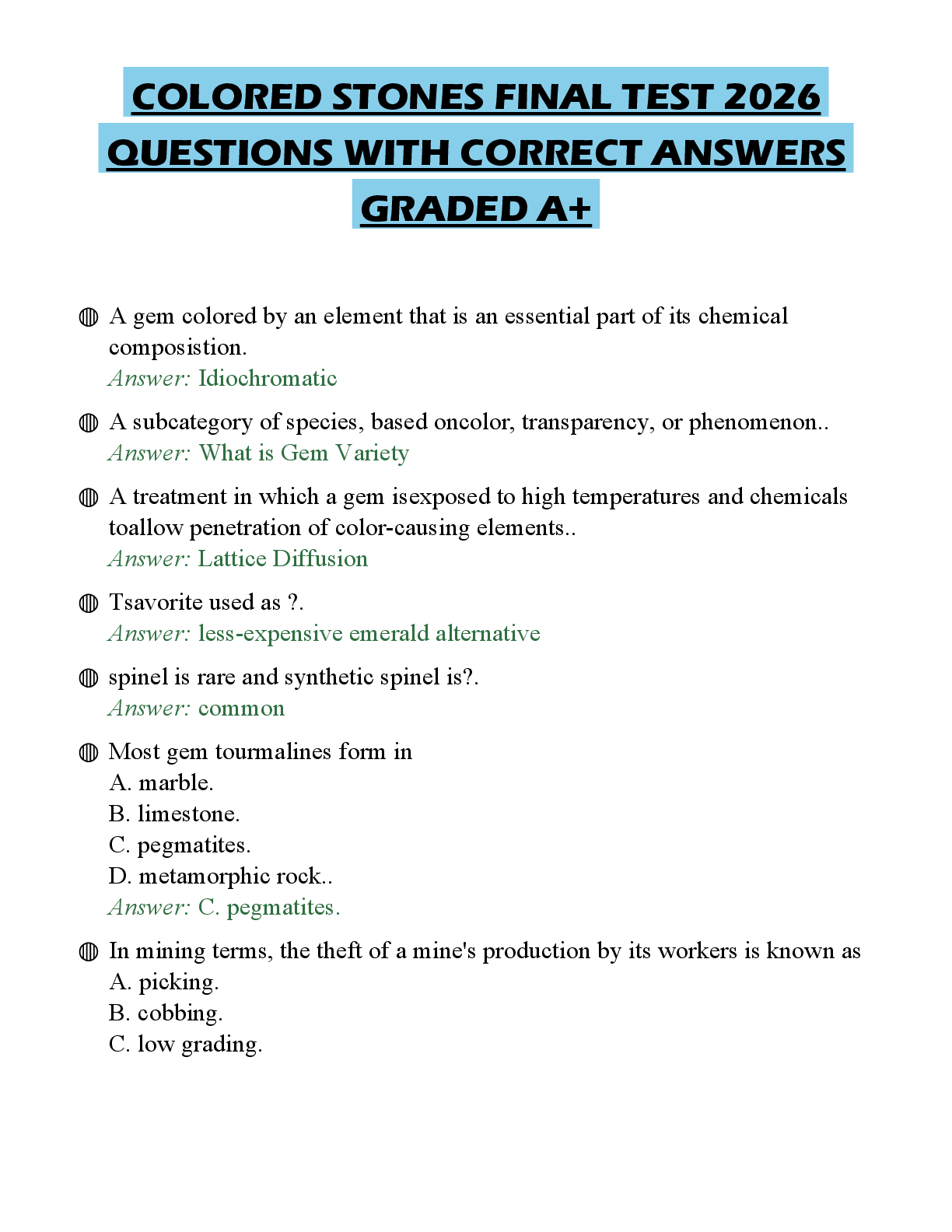
$25
103 Pages
Exercises in Physical Geology 12e Kenneth Hamblin, James Howar...

$25
54 Pages
Essentials of Geology, 13e Frederick Lutgens, Edward Tarbuck,...
$25
37 Pages
Essentials of Geology, 13e Frederick Lutgens, Edward Tarbuck,...

$24
414 Pages
Test Bank for Investigating Oceanography, 3rd Edition by Keith...
$26
414 Pages
Investigating Oceanography, 3rd Edition by Keith Sverdrup, Rap...

$24
1032 Pages
TEST BANK for Principles of Human Anatomy 15th Edition by Gera...
$20
846 Pages
Test Bank for Geosystems: An Introduction to Physical Geograph...
More related documents below