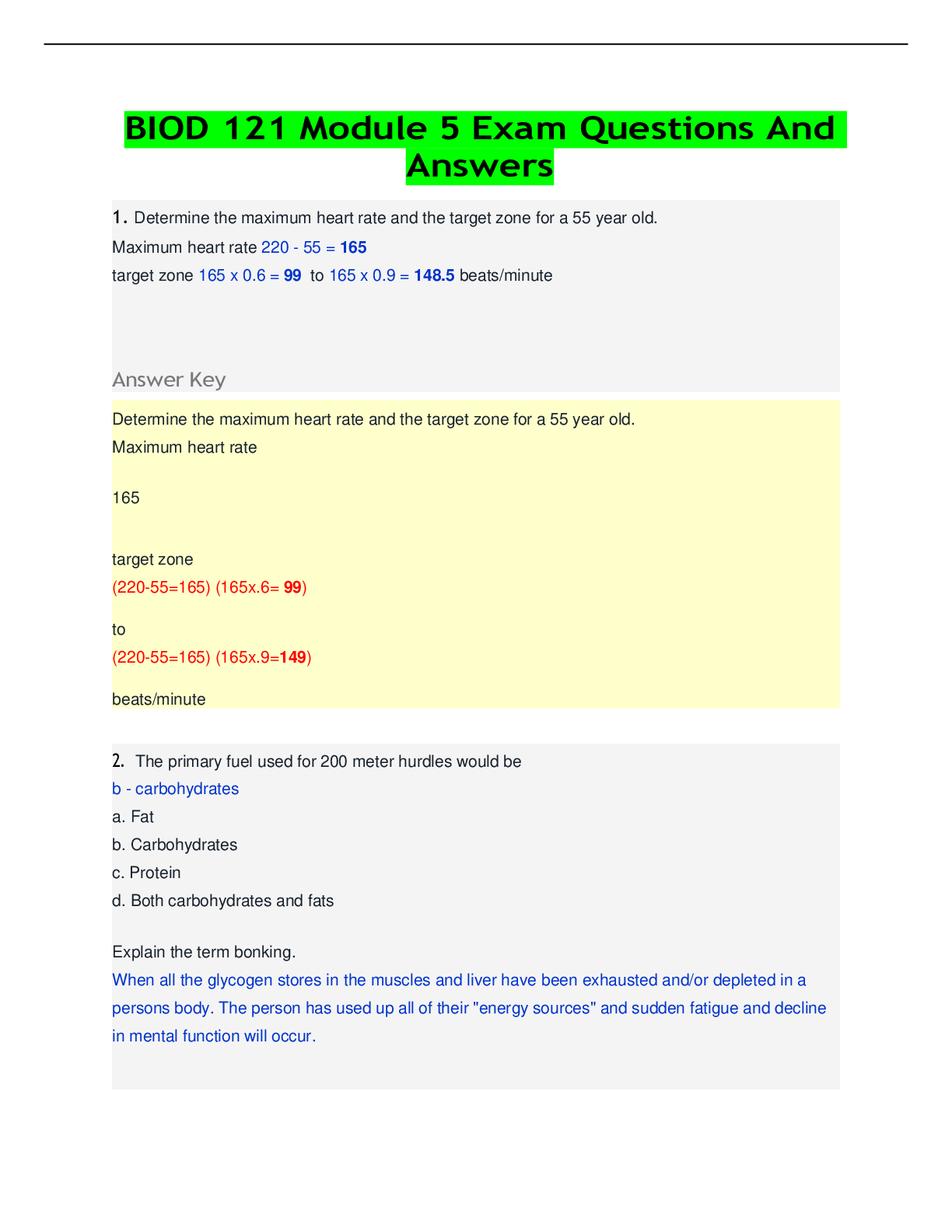
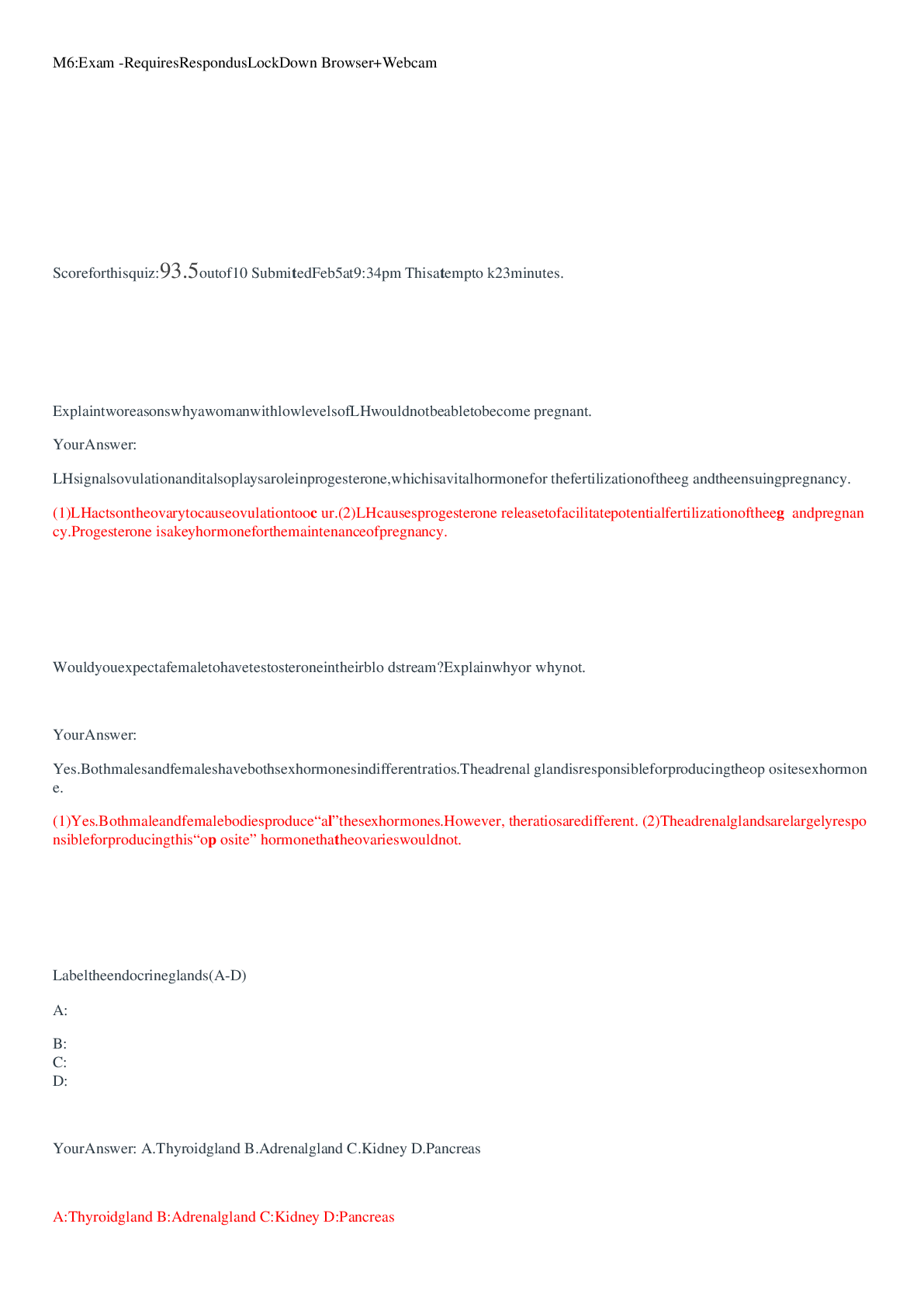
Quiz NUR 304/; COMPLETE SOLUTION OUT OF 100%
Document Content and Description Below
Quiz NUR 304
20 Questions
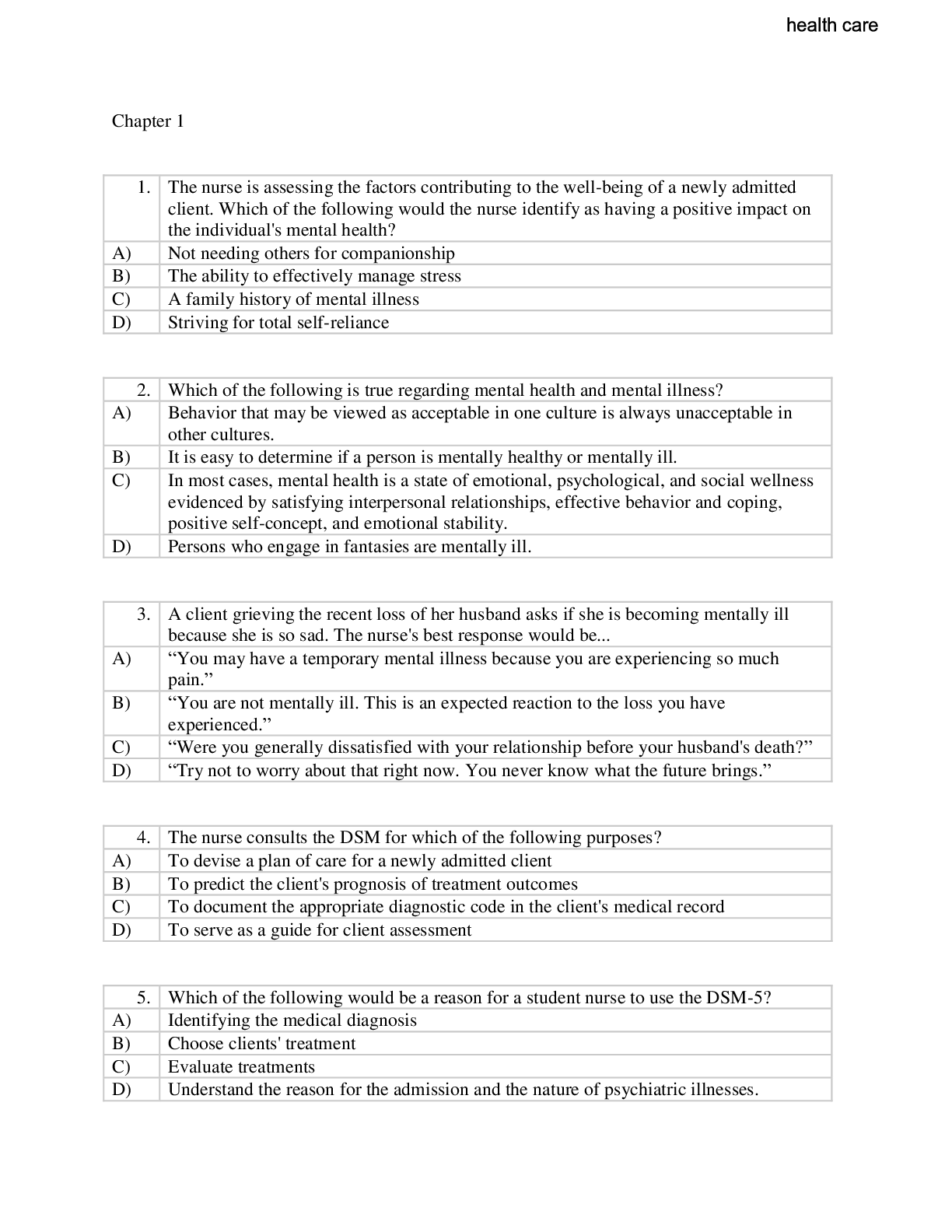
1. Your client is suspected of having a pulmonary embolus. The nurse assesses the client, knowing that which of the following is a common clinical manifestation of pulmonary embolism?
2.
...
[Show More]
Last updated: 3 years ago
Preview 1 out of 4 pages
Instant download
 (1).png)
Buy this Document to get the Full Access Instantly
Provided by Students Who Aced it
We Verify Document Content to Gurantee Accuracy
Reviews( 0 )
Document information
Connected school, study & course
About the document
Uploaded On
Jul 30, 2021
Number of pages
4
Written in
All

Additional information
This document has been written for:
Uploaded
Jul 30, 2021
Downloads
0
Views
79
Topic Tags
Recommended For You
Get more on EXAM »
$10
17 Pages
NURS-6512N-8/NURS-6512C-8-Advanced Health Assessment Winter 20...

$15
26 Pages
NURS 6630N-5- VERSION 5 Week 11 Final Exam (August 2021) SCORE...
$14.5
79 Pages
NUR 304 FINAL EXAM/ FINAL EXAM FOR NUR 304 MOST RECENT AND COM...

$25
118 Pages
NUR 304 Exam 1 Test Bank; Varcarolis’ Foundations of Psychiatr...
$25
118 Pages
NUR 304 Exam 1 Test Bank; Varcarolis’ Foundations of Psychiatr...
$18
118 Pages
NUR 304 Exam 1 Test Bank; Varcarolis’ Foundations of Psychiatr...

$14
50 Pages
NURS 6501N-34, Advanced Pathophysiology. Week 11 Final | Attem...
$30
265 Pages
Psychiatric Mental Health Nursing Videbeck.CUNY Lehman College...
$30
265 Pages
Psychiatric Mental Health Nursing Videbeck.CUNY Lehman College...
.png)
$10
7 Pages
ECON 550 Final Part 1,Latest complete 100 out of 100 points.

$19
119 Pages
MATH 1281 Statistical Inference All Quizzes Unit 1-9 Graded 1...

$15
347 Pages
TEST BANK For COMMUNITY AND PUBLIC HEALTH NURSING 10TH EDITION...

$15
1061 Pages
Test Bank for Fundamentals of Nursing 12th Edition (Elsevier,...

$15
278 Pages
TEST BANK for Saunders Comprehensive Review for the NCLEX-RN®...
More related documents below