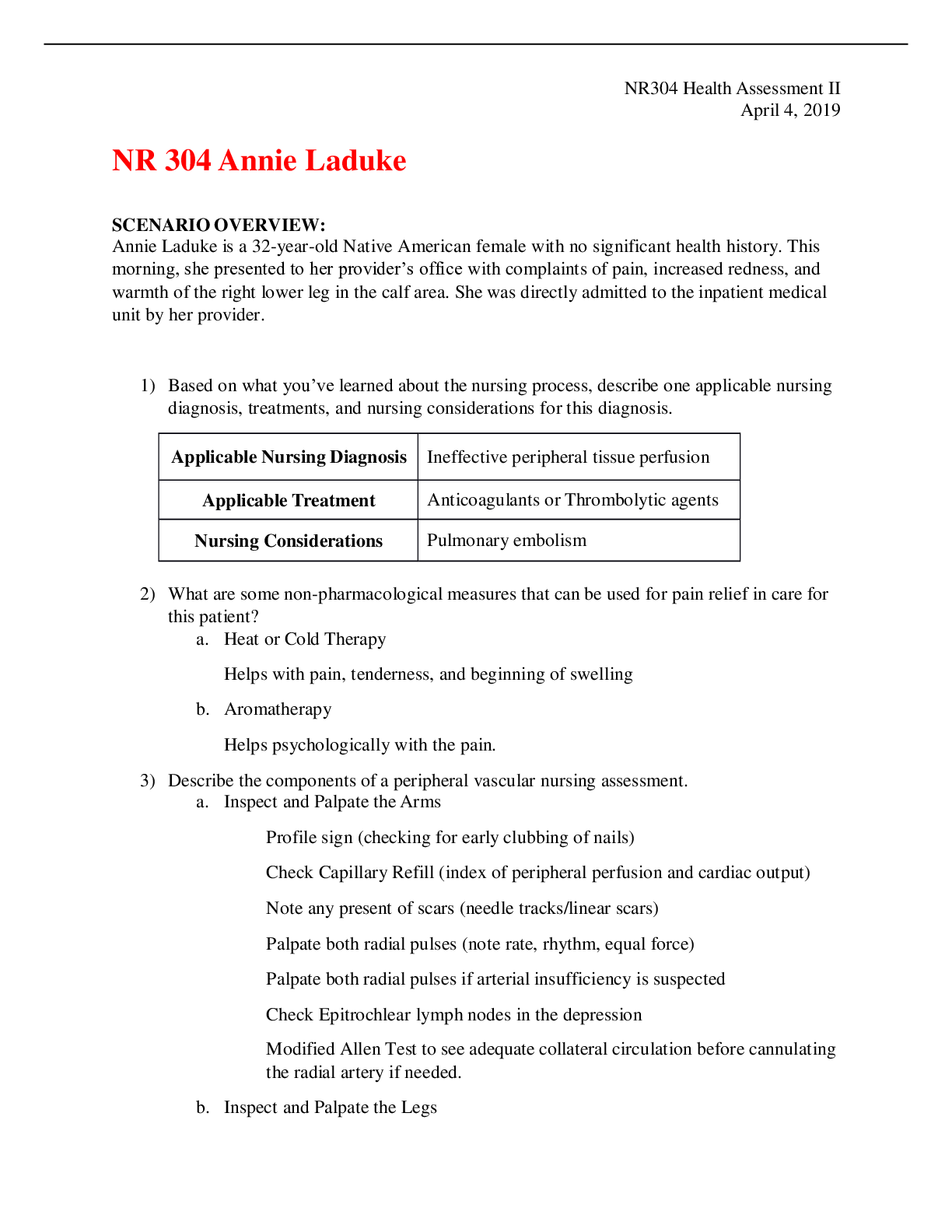
NR 304 Annie Laduke/; SCORE A COMPLETE GUIDE
Document Content and Description Below
NR 304 Annie Laduke
SCENARIO OVERVIEW:
Annie Laduke is a 32-year-old Native American female with no significant health history. This morning, she presented to her provider’s office with complaints of pain, increased
...
[Show More]
Last updated: 3 years ago
Preview 1 out of 2 pages
Instant download
Buy this Document to get the Full Access Instantly
Provided by Students Who Aced it
We Verify Document Content to Gurantee Accuracy
Reviews( 0 )
Document information
Connected school, study & course
About the document
Uploaded On
Jul 30, 2021
Number of pages
2
Written in
All

Additional information
This document has been written for:
Uploaded
Jul 30, 2021
Downloads
0
Views
82
Topic Tags
Recommended For You
Get more on EXAM »
 Exam 2 Concept List MY21.png)
$9
31 Pages
NR304 / NR-304 Exam 2 Concept List Updated: Health Assessment...
 Quiz 1 Concept List MY21.png)
$9
12 Pages
NR304 / NR-304 Quiz 1 Concept List : Health Assessment II - C...

$10
11 Pages
NR304 / NR 304 Health Assessment II Exam 1 Study Guide . Chamb...

$15
18 Pages
NR304 / NR-304: Health Assessment II FINAL EXAM Chamberlain...

$11
59 Pages
NR 304 / NR304 EXAM TESTBANK. QUESTIONS WITH 100% CORRECT ANSW...
$11.5
16 Pages
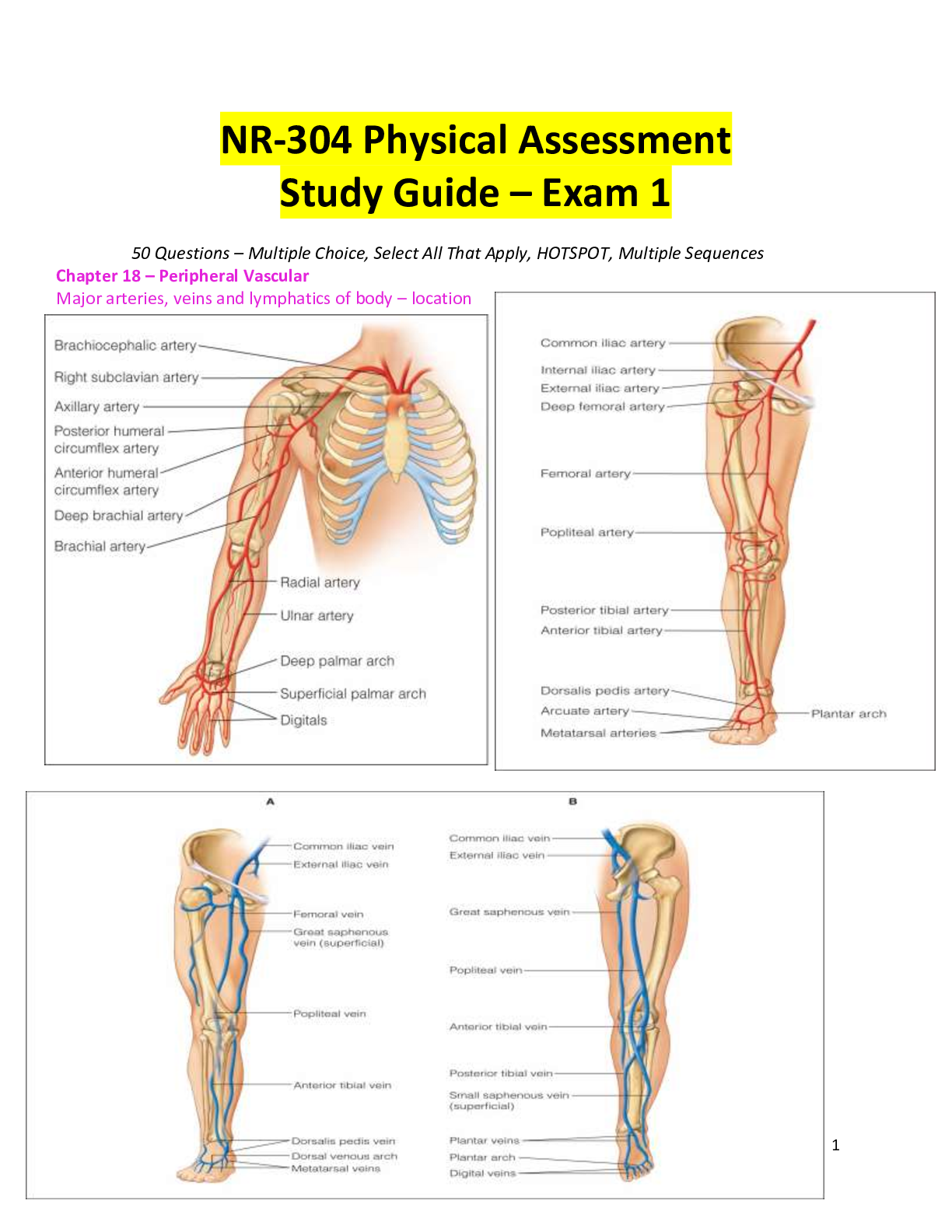
NR 304 Exam 1 Study Guide / NR304 Exam 1 Study Guide (Latest,2...
.png)
$12
8 Pages
NR 304 EXAM 2 STUDY GUIDE / NR304 EXAM 2 STUDY GUIDE VERSION 1...


$10
34 Pages
NR 304 Chapter 21 Abdominal assessment, Complete solution (202...
$17.5
14 Pages
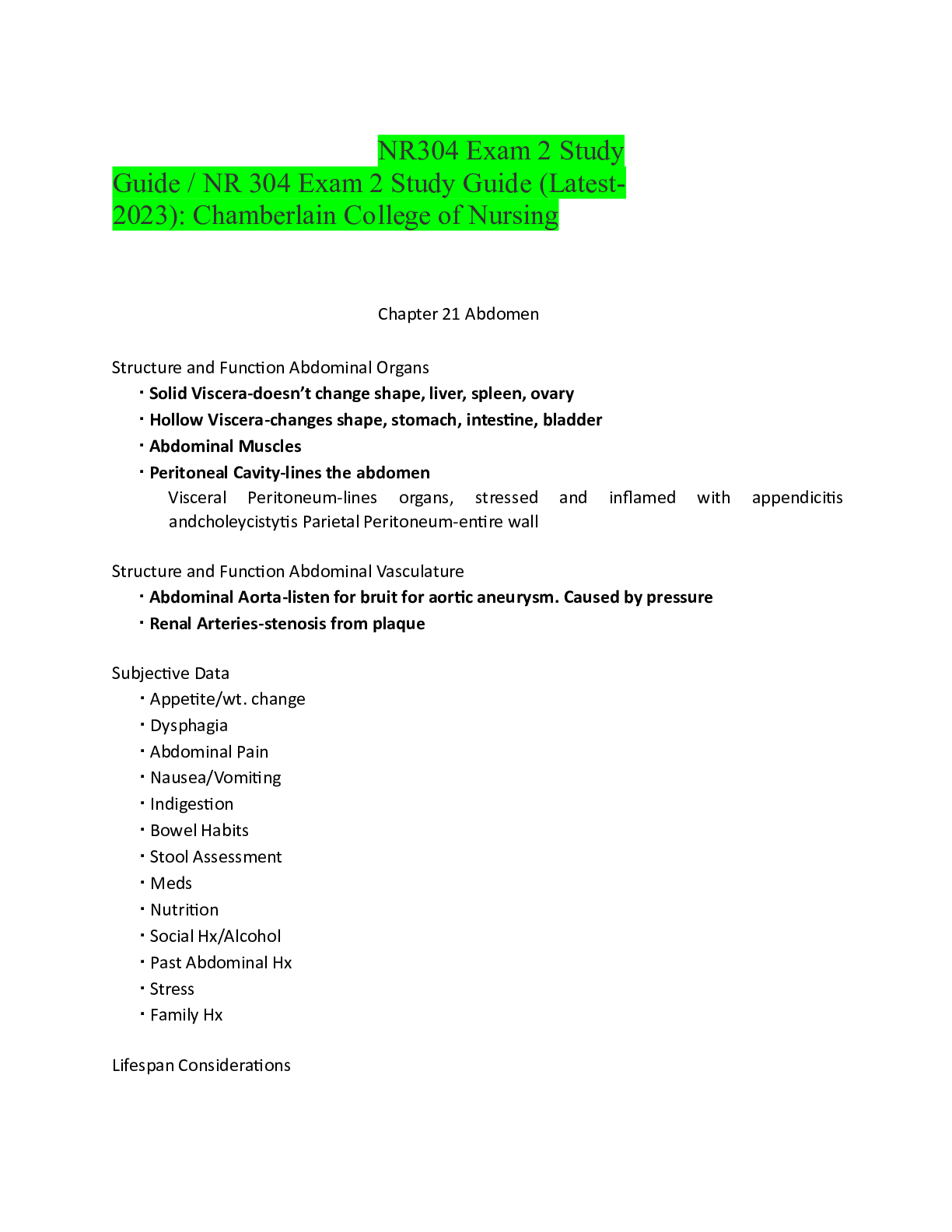
NR304 Exam 2 Study Guide, NR 304 Exam 2 Study Guide (Latest-20...

$16
5 Pages
NR304 / NR-304: Health Assessment II FINAL EXAM STUDY GUIDE...

$15
13 Pages
NR304 / NR-304 Final Exam Concept Study Guide : Health Assess...
$4.5
17 Pages
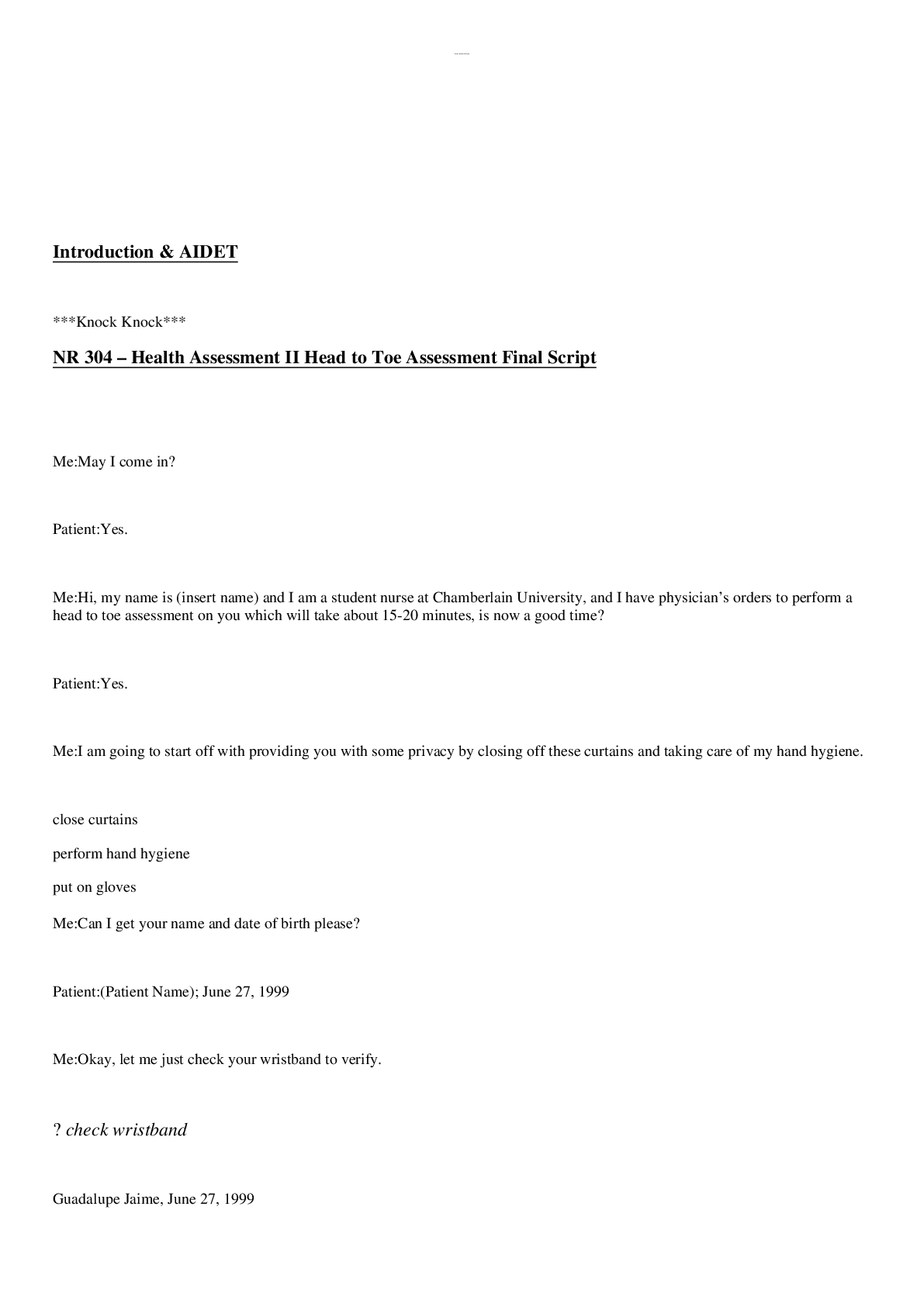
NR 304 Health Assessment II Head to Toe Assessment Final Scrip...

$8
18 Pages
The Health History and Health Assessment Brittany Lieber Chamb...
More related documents below