Midterm Outline
Chapter 1:
The Role of the Advanced Practice Nurse as Prescriber
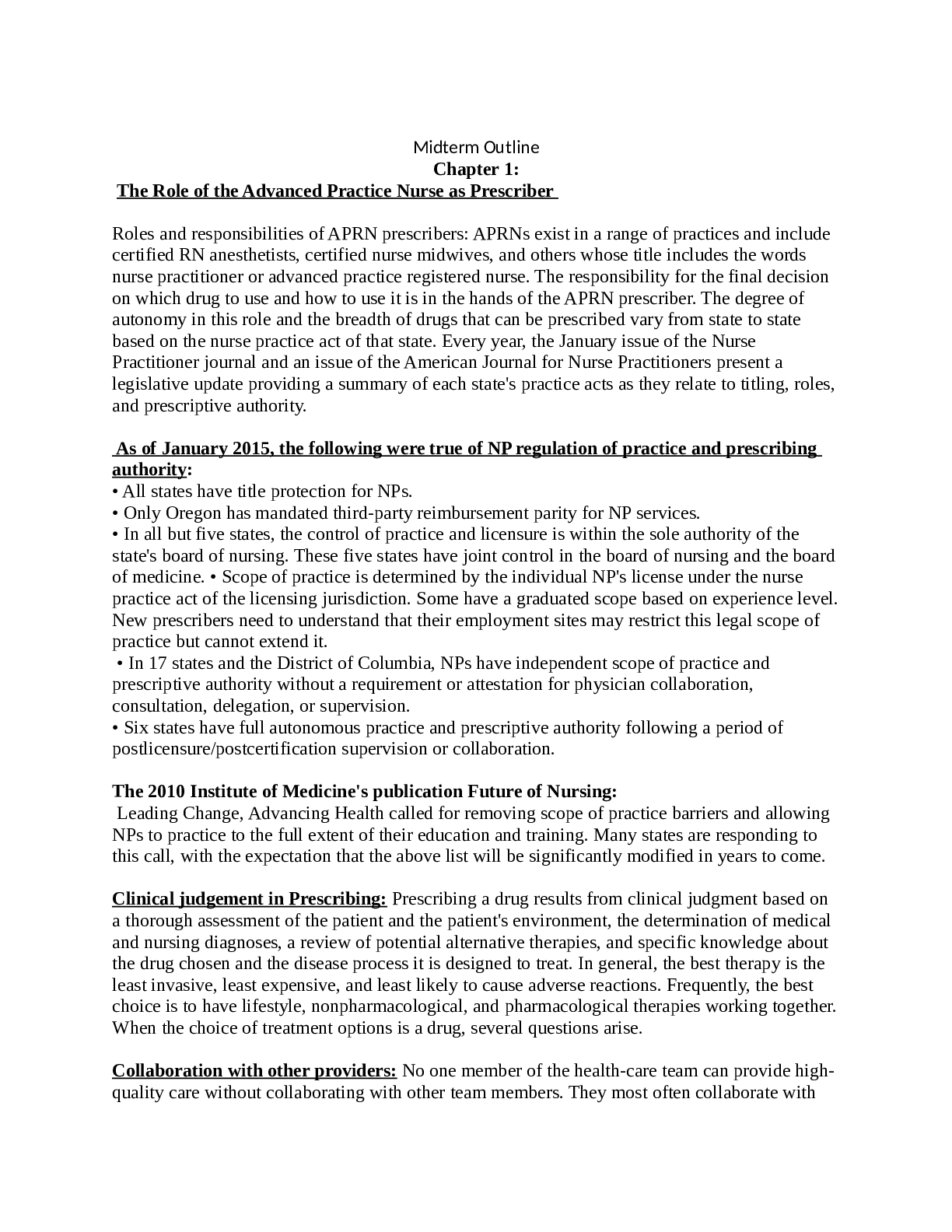
Roles and responsibilities of APRN prescribers: APRNs exist in a range of practices and include
certified RN anesthetists, certified nu
...
Midterm Outline
Chapter 1:
The Role of the Advanced Practice Nurse as Prescriber
Roles and responsibilities of APRN prescribers: APRNs exist in a range of practices and include
certified RN anesthetists, certified nurse midwives, and others whose title includes the words
nurse practitioner or advanced practice registered nurse. The responsibility for the final decision
on which drug to use and how to use it is in the hands of the APRN prescriber. The degree of
autonomy in this role and the breadth of drugs that can be prescribed vary from state to state
based on the nurse practice act of that state. Every year, the January issue of the Nurse
Practitioner journal and an issue of the American Journal for Nurse Practitioners present a
legislative update providing a summary of each state's practice acts as they relate to titling, roles,
and prescriptive authority.
As of January 2015, the following were true of NP regulation of practice and prescribing
authority:
• All states have title protection for NPs.
• Only Oregon has mandated third-party reimbursement parity for NP services.
• In all but five states, the control of practice and licensure is within the sole authority of the
state's board of nursing. These five states have joint control in the board of nursing and the board
of medicine. • Scope of practice is determined by the individual NP's license under the nurse
practice act of the licensing jurisdiction. Some have a graduated scope based on experience level.
New prescribers need to understand that their employment sites may restrict this legal scope of
practice but cannot extend it.
[Show More]