Micro Biology > EXAM > BIO 171 Final Exam (GRADED A) Questions and Answers | Portage Learning (All)
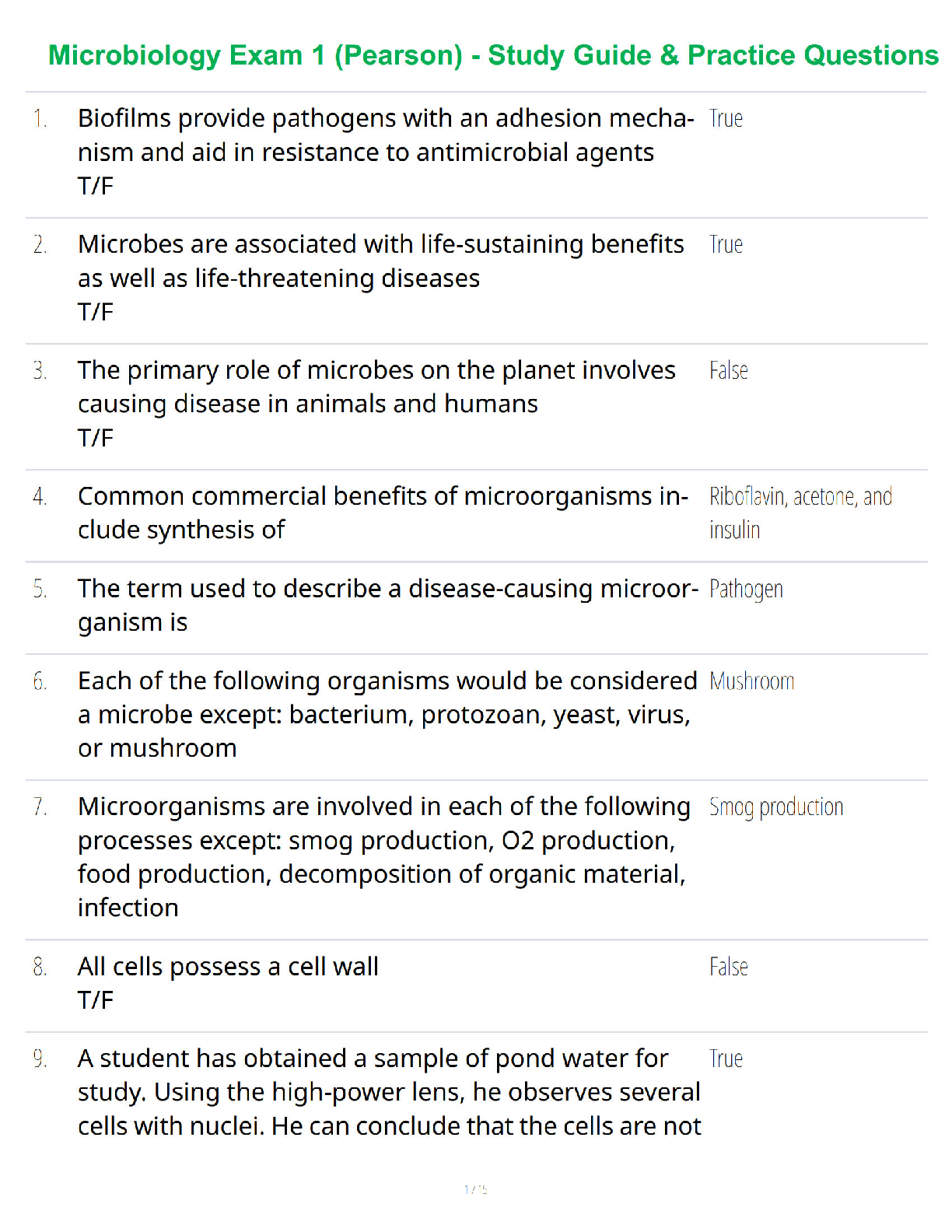
BIO 171 Final Exam (GRADED A) Questions and Answers | Portage Learning
Document Content and Description Below
Last updated: 3 years ago
Preview 1 out of 20 pages
Instant download
 (1).png)
Buy this Document to get the Full Access Instantly
Provided by Students Who Aced it
We Verify Document Content to Gurantee Accuracy
Also available in bundle (1)
Click Below to Access Bundle(s)
BIO 171 MODULE 6 EXAM plus Final Exam (GRADED A) Questions and Answers | Portage Learning.
BIO 171 Final Exam (GRADED A) Questions and Answers | Portage Learning BIO 171 MODULE 6 EXAM (LATEST VERSION) | 100% Correct Answers
By BestSeller_ScholarFriends 3 years ago
$12
2
Reviews( 0 )
Document information
Connected school, study & course
About the document
Uploaded On
Dec 06, 2022
Number of pages
20
Written in
All
Seller

Reviews Received
Additional information
This document has been written for:
Uploaded
Dec 06, 2022
Downloads
0
Views
131
Document Keyword Tags
Recommended For You
Get more on EXAM »
Bio 171 Module 2 Exam (RATED A+) | Questions and Answer soluti...
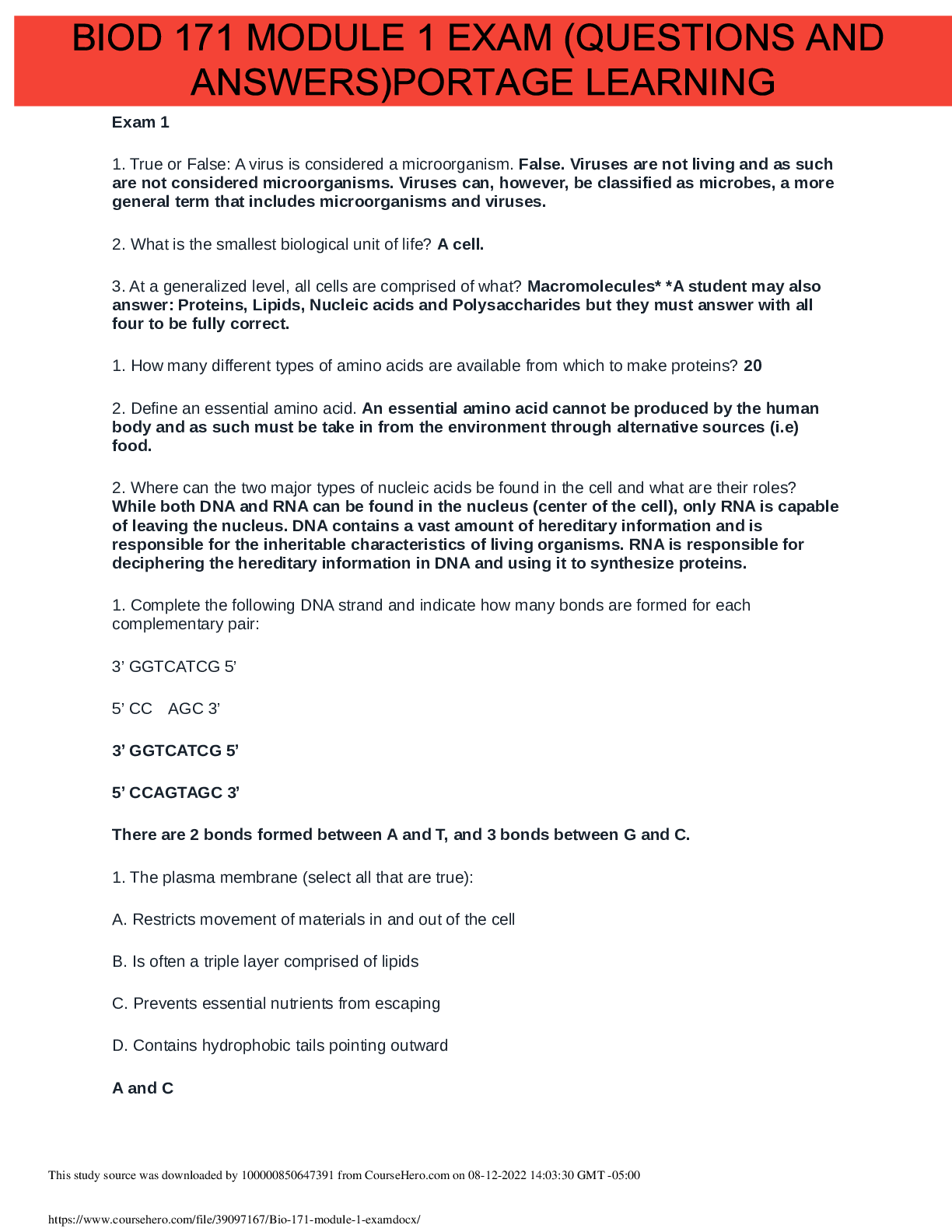
Bio 171 module 1 exam (GRADED A) Questions and Answers solutio...
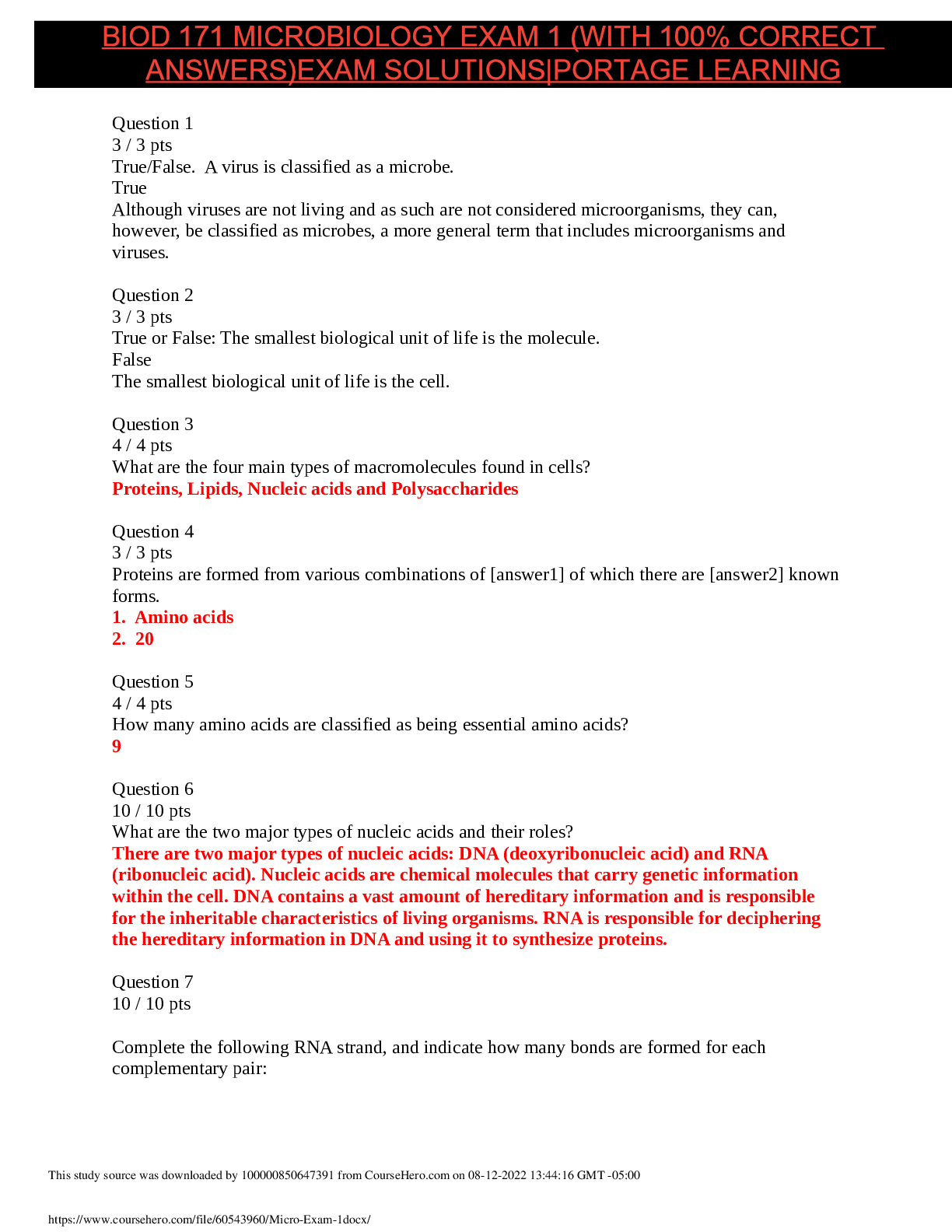
BIO 171 Microbiology Exam 1 (100% CORRECT Answers)/ Exam solut...



Prescott's Microbiology, 12th Edition by Willey, Sandman, Wood...

TEST BANK for Talaro’s Foundations in Microbiology, 10th Editi...

Microbiology AN EVOLVING SCIENCE 2nd Edition By Joan Slonczews...

Microbiology An Evolving Science 3rd Edition By Joan Slonczews...

Talaro's Foundations in Microbiology, 11th Edition by Chess an...

Nester's Microbiology: A Human Perspective, 10th Edition by An...
Environmental Microbiology for Engineers, 2e Volodymyr Ivanov...