Physics > Lab Report > Impulse and Momentum lab (All)
Impulse and Momentum lab
Document Content and Description Below
Learning Objectives:
1. Understanding force vs time curves for a collision.
2. Calculating impulse using force vs. time curves.
3. Understanding the relationship between impulse and momentum.
4. Applying conservation
...
[Show More]
Last updated: 3 years ago
Preview 1 out of 8 pages
Instant download

Buy this document to get the full access instantly
Instant Download Access after purchase
Reviews( 0 )
Document information
Connected school, study & course
About the document
Uploaded On
Jul 13, 2021
Number of pages
8
Written in
All

Additional information
This document has been written for:
Uploaded
Jul 13, 2021
Downloads
0
Views
179
Document Keyword Tags
Recommended For You
Get more on Lab Report »

$22
713 Pages
Test Bank for Physics for Scientists and Engineers A Strategic...

$25
100 Pages
Plasma Physics, 2e by Richard Fitzpatrick (Solutions Manual)



$11
9 Pages
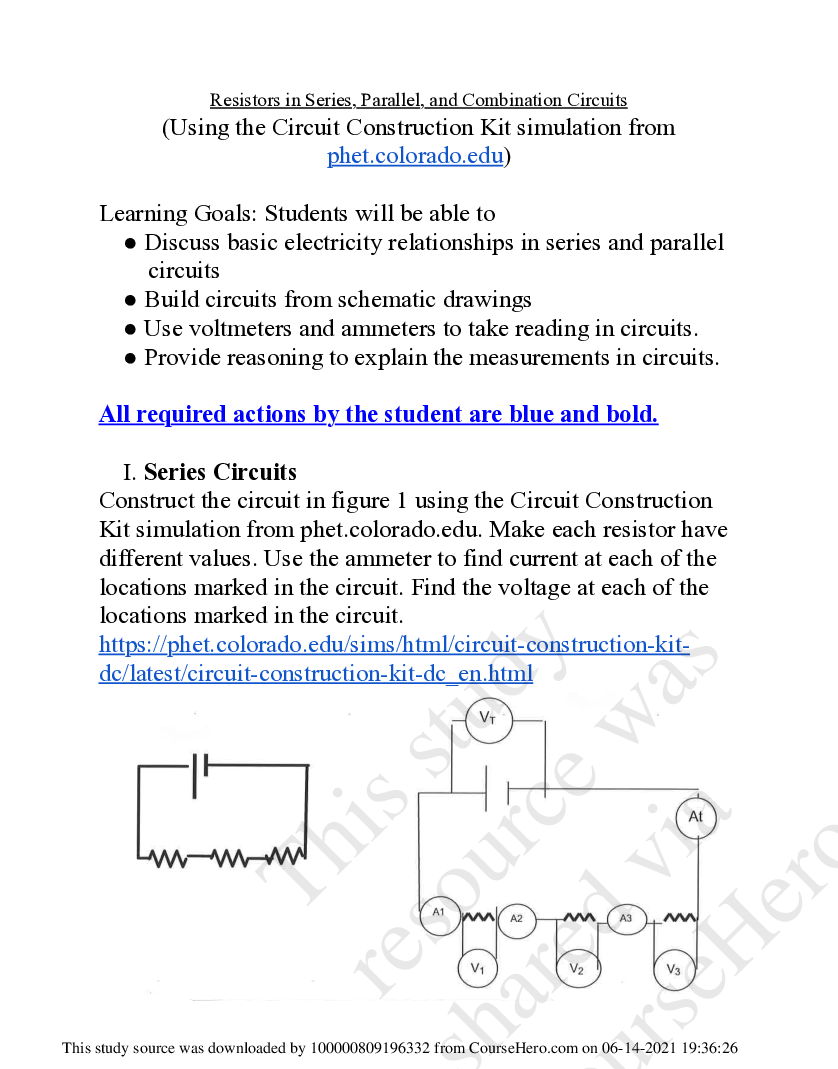
Resistors in Series, Parallel, and Combination Circuits PHET L...


.png)
$11
14 Pages
LAB Report for Experiment RC Circuits ( well written report )...


$11
4 Pages
Laboratory Techniques Lab Report Option One: Density Measureme...

$11
5 Pages
The City College of New York, CUNYPHYSICS 204Physics_Lab_4-_In...


$11
28 Pages
Northeastern UniversityPHYS 1152Report for Experiment 18 R-C C...
More related documents below