Auditing > TEST BANKS > Auditing A Practical Approach, 4th Canadian Edition by Moroney, Campbell, Hamilton | Test Bank (All)
Auditing A Practical Approach, 4th Canadian Edition by Moroney, Campbell, Hamilton | Test Bank
Document Content and Description Below
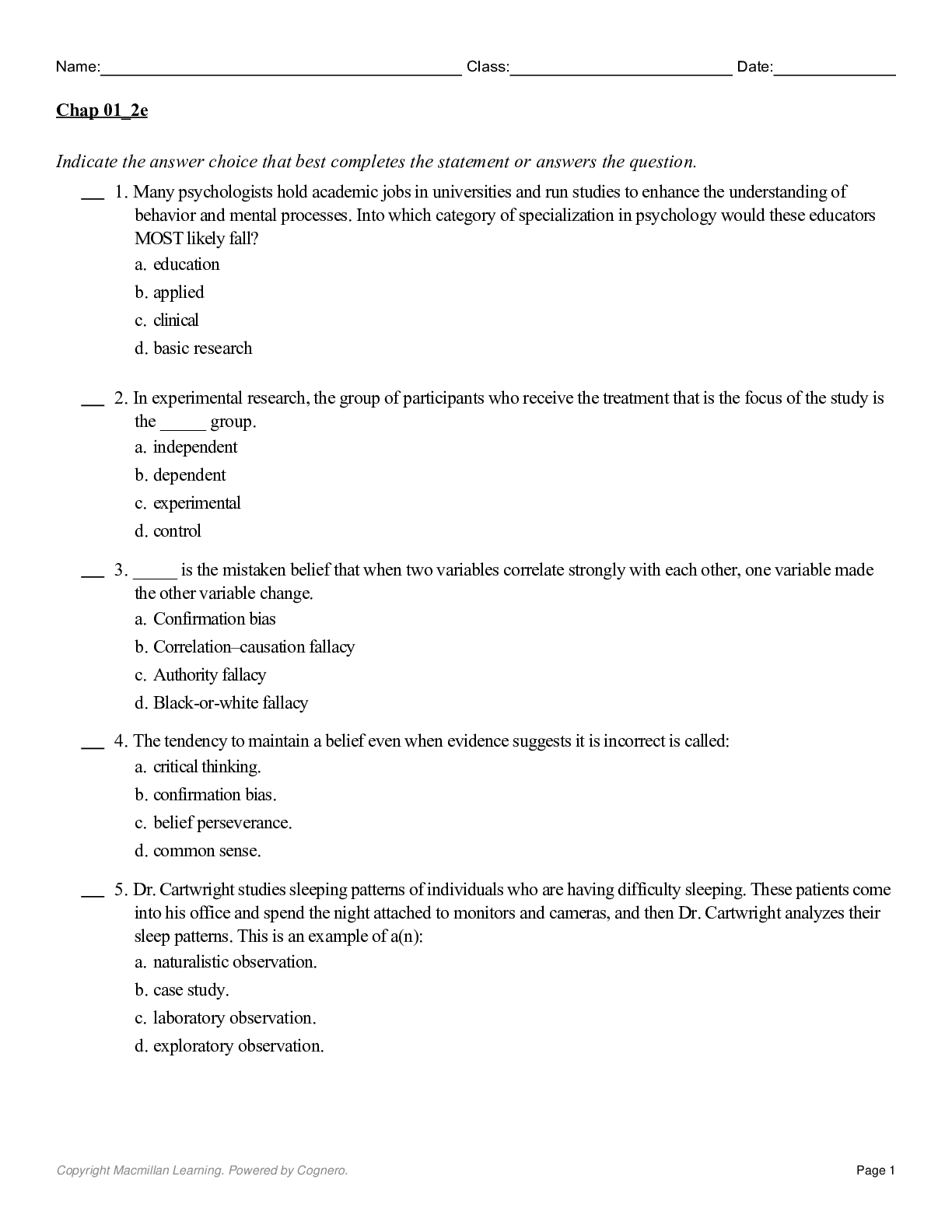
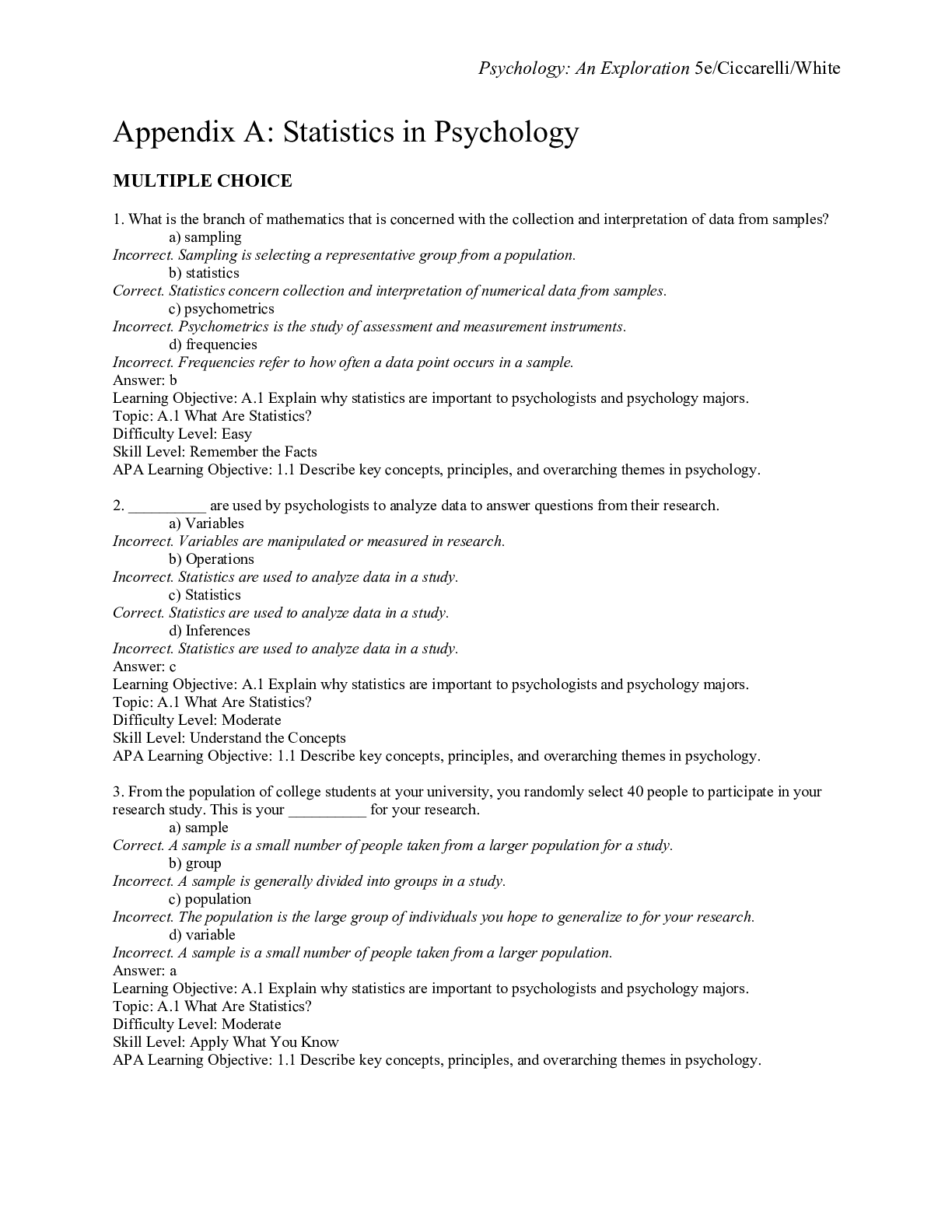
Test Bank for Auditing A Practical Approach, 4th Canadian Edition, 4ce by Robyn Moroney, Fiona Campbell, Jane Hamilton,Valerie Warren TEST BANK ISBN-13: 9781119709480 Full chapters included 1 I ... ntroduction and Overview of Audit and Assurance 1-1 1.1 Auditing and Assurance Defined 1-4 1.2 Demand for Audit and Assurance Services 1-6 1.2.1 Financial Statement Users 1-6 1.2.2 Sources of Demand for Audit and Assurance Services 1-7 1.2.3 Theoretical Frameworks 1-8 1.2.4 Demand in a Voluntary Setting 1-9 1.3 Different Assurance Services 1-10 1.3.1 Financial Statement Audits 1-10 1.3.2 Compliance Audits 1-12 1.3.3 Performance Audits 1-12 1.3.4 Comprehensive Audits 1-13 1.3.5 Internal Audits 1-13 1.3.6 Corporate Social Responsibility (CSR) Assurance 1-13 1.4 Different Levels of Assurance 1-14 1.4.1 Reasonable Assurance 1-14 1.4.2 Limited Assurance 1-17 1.4.3 No Assurance 1-17 1.5 Different Audit Opinions 1-20 1.6 Preparers and Auditors 1-22 1.6.1 Preparer Responsibility 1-22 1.6.2 Auditor Responsibility 1-23 1.6.3 Assurance Providers 1-24 1.7 The Role of Regulators and Regulations 1-25 1.7.1 Regulators, Standard Setters, and Other Bodies 1-25 1.7.2 Legislation 1-26 1.7.3 Regulation 1-27 1.8 The Audit Expectation Gap 1-29 2 Ethics, Legal Liability, and Client Acceptance 2-1 2.1 The Fundamental Principles of Professional Ethics 2-3 2.1.1 The Fundamental Ethical Principles 2-4 2.1.2 Specific Rules Incorporating the Principles of Professional Ethics 2-5 2.1.3 Framework for Ethical Dilemmas 2-6 2.2 Professional Judgement and Professional Scepticism 2-7 2.2.1 A Decision-Making Framework for Applying Professional Judgement 2-7 2.2.2 Improving Professional Scepticism 2-8 2.3 Independence 2-9 2.3.1 Threats to Independence 2-10 2.3.2 Safeguards to Independence 2-13 2.4 The Auditor’s Relationships with Others 2-17 2.4.1 Auditors and Shareholders 2-17 2.4.2 Auditors and the Board of Directors 2-17 2.4.3 Auditors and the Audit Committee 2-18 2.4.4 Auditors and Internal Auditors 2-18 2.5 Legal Liability 2-19 2.5.1 Legal Liability to Clients 2-20 2.5.2 Contributory Negligence 2-21 2.5.3 Legal Liability to Third Parties 2-21 2.5.4 Avoidance of Litigation 2-23 2.6 Client Acceptance and Continuance Decisions 2-24 3 Audit Planning I 3-1 3.1 Phases of an Audit 3-4 3.1.1 Risk Assessment Phase 3-4 3.1.2 Risk Response Phase 3-6 3.1.3 Concluding and Reporting on an Audit 3-6 3.2 Gaining an Understanding of the Client 3-6 3.2.1 Entity Level 3-7 3.2.2 Industry Level 3-9 3.2.3 Economy Level 3-10 3.3 Related Parties 3-11 3.4 Fraud Risk 3-13 3.4.1 Incentives and Pressures to Commit a Fraud 3-14 3.4.2 Opportunities to Perpetrate a Fraud 3-14 3.4.3 Attitudes and Rationalizations to Justify a Fraud 3-15 3.4.4 Audit Procedures Relating to Fraud 3-16 3.5 Going Concern 3-17 3.5.1 Going Concern Risk—Indicators 3-17 3.5.2 Going Concern Risk—Mitigating Factors 3-18 3.6 Auditing Estimates and Related Disclosures 3-19 3.6.1 Risk Assessment and Estimation Uncertainty 3-19 3.6.2 Estimates and the Entity Level Risk Assessment 3-20 3.7 Corporate Governance 3-21 3.8 Information Technology 3-22 3.9 Financial Reporting and Closing Procedures 3-24 4 Audit Planning II 4-1 4.1 Audit Risk 4-3 4.1.1 The Audit Risk Model and Its Components 4-5 4.1.2 Quantification of the Audit Risk Model 4-11 4.2 Materiality 4-12 4.2.1 Qualitative and Quantitative Factors 4-12 4.2.2 Materiality and Audit Risk 4-16 4.3 Audit Strategy 4-17 4.4 Client Approaches to Measuring Performance 4-21 4.4.1 Profitability 4-21 4.4.2 Liquidity 4-22 4.5 Analytical Procedures 4-22 4.5.1 Comparisons 4-24 4.5.2 Trend Analysis 4-24 4.5.3 Common-Size Analysis 4-25 4.5.4 Ratio Analysis 4-25 4.5.5 Analysis with Technology 4-28 4.5.6 Factors to Consider when Conducting Analytical Procedures 4-29 5 Audit Evidence 5-1 5.1 Assertions 5-4 5.2 Types of Audit Evidence 5-7 5.2.1 Sufficient Appropriate Audit Evidence 5-7 5.2.2 External Confirmations 5-9 5.2.3 Documentary Evidence 5-13 5.2.4 Representations 5-14 5.2.5 Verbal Evidence 5-17 5.2.6 Computational Evidence 5-17 5.2.7 Physical Evidence 5-18 5.2.8 Electronic Evidence 5-18 5.3 Persuasiveness of Audit Evidence 5-19 5.3.1 Internally Generated Evidence 5-19 5.3.2 Externally Generated Evidence Held by the Client 5-20 5.3.3 Externally Generated Evidence Sent Directly to the Auditor 5-20 5.4 Using the Work of an Expert 5-21 5.4.1 Assessing the Need to Use an Expert 5-21 5.4.2 Determining the Scope of the Work to Be Carried Out 5-21 5.4.3 Assessing the Competence and Capability of the Expert 5-22 5.4.4 Assessing the Objectivity of the Expert 5-22 5.4.5 Assessing the Expert’s Report 5-22 5.4.6 Responsibility for the Conclusion 5-22 5.5 Using the Work of Another Auditor 5-23 5.6 Evidence-Gathering Procedures 5-24 5.7 Drawing Conclusions 5-26 5.8 Documentation—Audit Working Papers 5-27 5.8.1 Permanent File 5-28 5.8.2 Current File 5-29 6 Sampling and Overview of the Risk Response Phase of the Audit 6-1 6.1 Audit Sampling 6-3 6.2 Sampling and Non-Sampling Risk 6-4 6.2.1 Sampling Risk and Tests of Controls 6-4 6.2.2 Sampling Risk and Substantive Procedures 6-5 6.2.3 Non-Sampling Risk 6-6 6.3 Statistical and Non-Statistical Sampling 6-7 6.4 Sampling Techniques and Factors Affecting Sampling 6-8 6.4.1 Sampling Techniques 6-8 6.4.2 Factors to Consider when Selecting a Sample 6-10 6.5 Factors that Influence the Sample Size—Testing Controls 6-12 6.6 Factors that Influence the Sample Size—Substantive Testing 6-13 6.6.1 Factors that Influence Sample Size when Performing Substantive Tests 6-13 6.6.2 Techniques for Performing Substantive Tests 6-14 6.7 Evaluating Sample Test Results 6-16 6.8 Tests of Controls and Substantive Procedures 6-18 6.8.1 Tests of Controls 6-19 6.8.2 Substantive Procedures 6-20 6.9 Nature, Timing, and Extent of Audit Testing 6-22 6.9.1 Nature of Audit Testing 6-22 6.9.2 Timing of Audit Testing 6-23 6.9.3 Extent of Audit Testing 6-24 7 Understanding and Testing the Client’s System of Internal Controls 7-1 7.1 The System of Internal Control Defined 7-4 7.2 Objectives of Internal Controls 7-5 7.3 System of Internal Controls 7-6 7.3.1 The Control Environment 7-7 7.3.2 The Entity’s Risk Assessment Process 7-10 7.3.3 Information Systems and Communication 7-11 7.3.4 Control Activities 7-12 7.3.5 Monitoring of Controls 7-14 7.3.6 Internal Control in Small Entities 7-15 7.4 Types of Controls 7-16 7.4.1 Preventive and Detective Controls 7-17 7.4.2 Manual and Automated Controls 7-20 7.5 Selecting and Designing Tests of Controls 7-24 7.5.1 Which Controls Should Be Selected for Testing? 7-24 7.5.2 How Much Testing Does the Auditor Need to Do? 7-25 7.6 Documenting and Testing Internal Controls 7-29 7.6.1 Documenting Internal Controls 7-29 7.6.2 Testing Internal Controls 7-30 7.7 Results of the Auditor’s Testing 7-33 7.8 Documenting Conclusions 7-35 7.9 Identifying Strengths and Weaknesses in a System of Internal Controls 7-37 7.10 Management Letters 7-38 8 Execution of the Audit—Performing Substantive Procedures 8-1 8.1 Overview of Substantive Procedures 8-3 8.1.1 Substantive Procedures and Assertions 8-3 8.1.2 Definition of Substantive Procedures 8-6 8.2 Relationship Between Risk Assessment and the Nature, Timing, and Extent of Substantive Procedures 8-8 8.3 Substantive Audit Procedures 8-10 8.3.1 Tests of Details 8-10 8.3.2 Analytical Procedures 8-12 8.3.3 Performing Substantive Testing Using Technology 8-15 8.4 Levels of Evidence 8-16 8.4.1 Persuasive 8-16 8.4.2 Corroborative 8-17 8.4.3 Minimal 8-18 8.4.4 General 8-19 8.5 Auditing Accounting Estimates 8-19 8.6 Evaluating and Documenting Substantive Analytical Procedures’ Results 8-21 8.6.1 Evaluating Errors Identified in Testing 8-22 8.6.2 Concluding and Documenting the Results of Substantive Procedures 8-22 9 Audit Data Analytics 9-1 9.1 What Are Data Analytics? 9-3 9.1.1 How Audit Data Analytics Are Used 9-4 9.1.2 When Audit Data Analytics Are Used 9-5 9.1.3 Techniques Used for Audit Data Analytics 9-6 9.2 Data Considerations 9-8 9.2.1 Types of Data 9-9 9.2.2 Data Access 9-9 9.2.3 Data Quality 9-9 9.2.4 Data Relevance and Reliability 9-10 9.2.5 Documentation 9-12 9.2.6 The Data Life Cycle 9-12 9.3 The Audit Data Analytic (ADA) Five-Step Process 9-13 9.3.1 Plan the ADA 9-14 9.3.2 Access and Prepare the Data 9-15 9.3.3 Consider the Data’s Relevance and Reliability 9-16 9.3.4 Perform the ADA 9-16 9.3.5 Evaluate the Results 9-17 9.3.6 Additional Issues to Consider when Performing an ADA as a Risk Assessment Procedure 9-18 9.4 Audit Data Analytics as a Substantive Analytical Procedure 9-24 9.4.1 Regression Analysis 9-24 9.5 Audit Data Analytics as a Substantive Test 9-27 9.5.1 Substantive Testing 9-27 9.5.2 ADA Example of Accounts Receivable and Revenue 9-28 9.5.3 ADA Example of Payroll 9-30 9.6 Features of a Good Visualization 9-33 10 Auditing Sales and Receivables 10-1 10.1 Audit Objectives 10-3 10.2 The Process for Credit Sales Transactions 10-6 10.2.1 Credit Sales Transactions 10-6 10.2.2 Cash Receipts Transactions 10-9 10.2.3 Sales Adjustment Transactions 10-11 10.3 Audit Strategy 10-12 10.3.1 Understanding the Entity and Its Environment 10-12 10.3.2 Analytical Review 10-13 10.3.3 Inherent Risk Assessment 10-13 10.3.4 Internal Controls 10-15 10.3.5 Final Assessment 10-20 10.4 Determining an Acceptable Level of Detection Risk 10-21 10.5 Designing Substantive Procedures 10-23 10.5.1 Initial Procedures 10-25 10.5.2 Analytical Procedures 10-25 10.5.3 Tests of Details of Transactions 10-26 10.5.4 Tests of Details of Balances 10-27 10.5.5 Evaluating Adequacy of the Allowance for Doubtful Accounts 10-31 10.5.6 Disclosure 10-31 11 Auditing Purchases, Payables, and Payroll 11-1 11.1 Audit Objectives 11-3 11.2 The Process for Purchase Transactions 11-6 11.2.1 Purchase Transactions 11-6 11.2.2 Payment Transactions 11-10 11.3 The Process for Payroll Transactions 11-11 11.3.1 Hiring Employees 11-12 11.3.2 Authorizing Payroll Changes 11-13 11.3.3 Preparing Attendance and Timekeeping Data 11-13 11.3.4 Preparing the Payroll 11-13 11.3.5 Recording the Payroll 11-13 11.3.6 Paying the Payroll and Protecting Unclaimed Wages 11-14 11.4 Audit Strategy 11-15 11.4.1 Understanding the Entity and Its Environment 11-15 11.4.2 Analytical Review 11-16 11.4.3 Inherent Risk Assessment 11-16 11.4.4 Internal Controls 11-17 11.4.5 Final Assessment 11-23 11.5 Determining an Acceptable Level of Detection Risk 11-24 11.6 Designing Substantive Procedures 11-26 11.6.1 Initial Procedures 11-27 11.6.2 Analytical Procedures 11-28 11.6.3 Tests of Details of Transactions 11-28 11.6.4 Tests of Details of Balances 11-29 11.6.5 Disclosure 11-31 12 Auditing Inventories and Property, Plant, and Equipment 12-1 12.1 Audit Objectives: Inventory 12-4 12.2 Custody of Inventory and Maintenance of Inventory Records 12-5 12.2.1 Maintaining Inventory Records 12-6 12.2.2 Physical Comparison of Inventory with Inventory Records 12-7 12.2.3 Determining and Recording Inventory Costs 12-9 12.3 Audit Strategy: Inventory 12-10 12.3.1 Inherent Risk Assessment 12-10 12.3.2 Control Risk Assessment 12-12 12.4 Substantive Procedures for Inventories 12-14 12.4.1 Initial Procedures 12-16 12.4.2 Analytical Procedures 12-16 12.4.3 Tests of Details of Transactions 12-17 12.4.4 Tests of Details of Balances 12-17 12.4.5 Testing Inventory Pricing 12-20 12.4.6 Confirming Inventories at Locations Outside the Entity 12-21 12.4.7 Examining Consignment Agreements and Contracts 12-22 12.4.8 Disclosure 12-22 12.5 Audit Objectives: Property, Plant, and Equipment 12-23 12.6 Audit Strategy 12-25 12.7 Designing Substantive Procedures for Property, Plant, and Equipment 12-26 12.7.1 Initial Procedures 12-28 12.7.2 Analytical Procedures 12-29 12.7.3 Tests of Details of Transactions 12-29 12.7.4 Tests of Details of Balances 12-30 12.7.5 Disclosure 12-31 13 Auditing Cash and Investments 13-1 13.1 Audit Objectives for Cash 13-4 13.2 Audit Strategy for Cash 13-5 13.2.1 Bank Reconciliations 13-6 13.2.2 Imprest Accounts 13-6 13.3 Substantive Procedures for Cash Balances 13-9 13.3.1 Initial Procedures 13-9 13.3.2 Analytical Procedures 13-9 13.3.3 Tests of Details of Transactions 13-9 13.3.4 Tests of Balances 13-12 13.3.5 Disclosure 13-16 13.4 Special Considerations for Cash Balances 13-17 13.4.1 Detecting Lapping 13-17 13.4.2 Auditing Imprest Petty Cash Funds 13-19 13.4.3 Auditing Imprest Bank Accounts 13-19 13.5 Audit Objectives for Investments 13-20 13.6 Audit Strategy for Investments 13-21 13.6.1 Control Environment 13-22 13.6.2 Functions and Related Controls 13-22 13.7 Substantive Procedures for Investments 13-23 13.7.1 Initial Procedures 13-24 13.7.2 Analytical Procedures 13-25 13.7.3 Tests of Details of Transactions 13-25 13.7.4 Tests of Details of Balances 13-25 13.7.5 Disclosure 13-26 13.8 Auditing Consolidated Financial Statements 13-27 13.8.1 Audit Strategy for Consolidated Financial Statements 13-28 13.8.2 Substantive Procedures 13-28 14 Completing and Reporting on the Audit 14-1 14.1 Engagement Wrap-Up 14-5 14.1.1 Sufficient Appropriate Audit Evidence 14-7 14.1.2 Evaluating Audit Evidence 14-7 14.2 Going Concern 14-8 14.3 Contingent Liabilities 14-10 14.4 Subsequent Events 14-11 14.4.1 Type 1 Subsequent Events 14-12 14.4.2 Type 2 Subsequent Events 14-12 14.4.3 Procedures Used When Conducting a Subsequent Events Review 14-12 14.4.4 Auditor Responsibility for Subsequent Events 14-14 14.5 Misstatements 14-15 14.5.1 Current-Year Misstatements 14-16 14.5.2 Prior-Year Misstatements 14-17 14.5.3 Qualitative Considerations 14-18 14.6 Evaluating the Conclusions and Forming an Opinion 14-19 14.7 Components of the Audit Report 14-20 14.8 Identification of the Types of Modifications to an Audit Report 14-22 14.8.1 Emphasis of Matter and Other Matters 14-23 14.8.2 Inability to Obtain Appropriate Audit Evidence 14-24 14.8.3 Material Misstatement of Financial Statements 14-27 14.9 Communication with Those Charged with Governance 14-30 14.9.1 Audit Matters of Governance Interest to Be Communicated 14-30 14.9.2 Documentation Considerations 14-31 14.10 Other Engagements 14-32 14.10.1 Reports Prepared in Accordance with a Special Purpose Framework 14-32 14.10.2 Reports on a Component of the Financial Statements 14-33 14.10.3 Review Engagements 14-33 14.10.4 Review Engagements on Interim Financial Statements 14-34 14.10.5 Assurance Engagements 14-35 14.10.6 Compliance Engagements 14-36 14.10.7 Reporting on Controls 14-37 14.10.8 Reports on Supplementary Matters 14-37 14.10.9 Reports on the Results of Applying Specified Procedures to Financial Information Other Than Financial Statements 14-37 14.10.10 Reports on the Application of Accounting Principles 14-38 14.10.11 Reports Used in an Offering [Show More]
Last updated: 1 year ago
Preview 10 out of 514 pages

Loading document previews ...
Buy this document to get the full access instantly
Instant Download Access after purchase
Buy NowInstant download
We Accept:

Reviews( 0 )
$26.00
Can't find what you want? Try our AI powered Search
Document information
Connected school, study & course
About the document
Uploaded On
Aug 10, 2022
Number of pages
514
Written in
All

Additional information
This document has been written for:
Uploaded
Aug 10, 2022
Downloads
1
Views
342