Professional Teaching Knowledge > EXAM > ABCTE Professional Teaching Knowledge Exam Secrets Study Guide - ABCTE Professional Teaching Knowled (All)
ABCTE Professional Teaching Knowledge Exam Secrets Study Guide - ABCTE Professional Teaching Knowledge Exam Bank
Document Content and Description Below
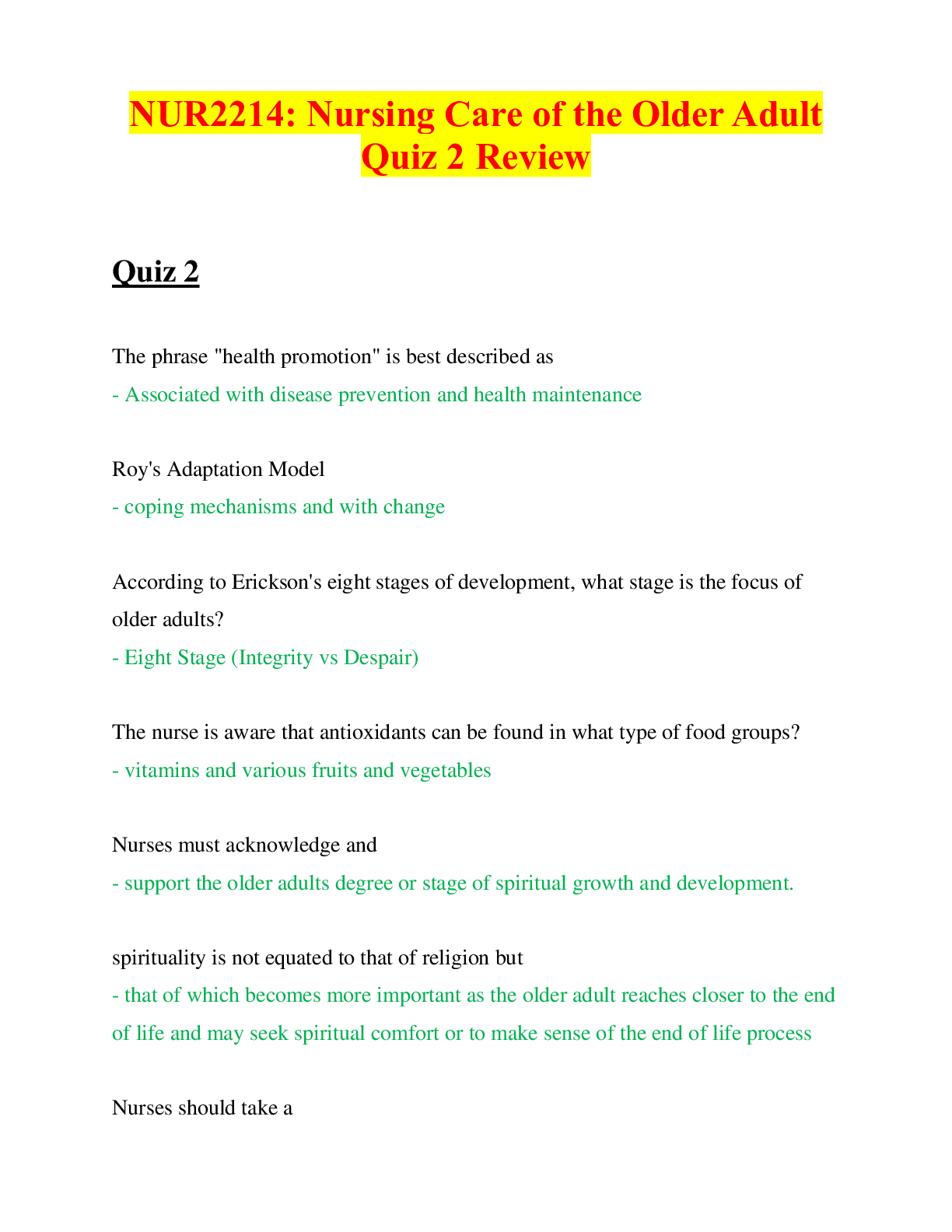
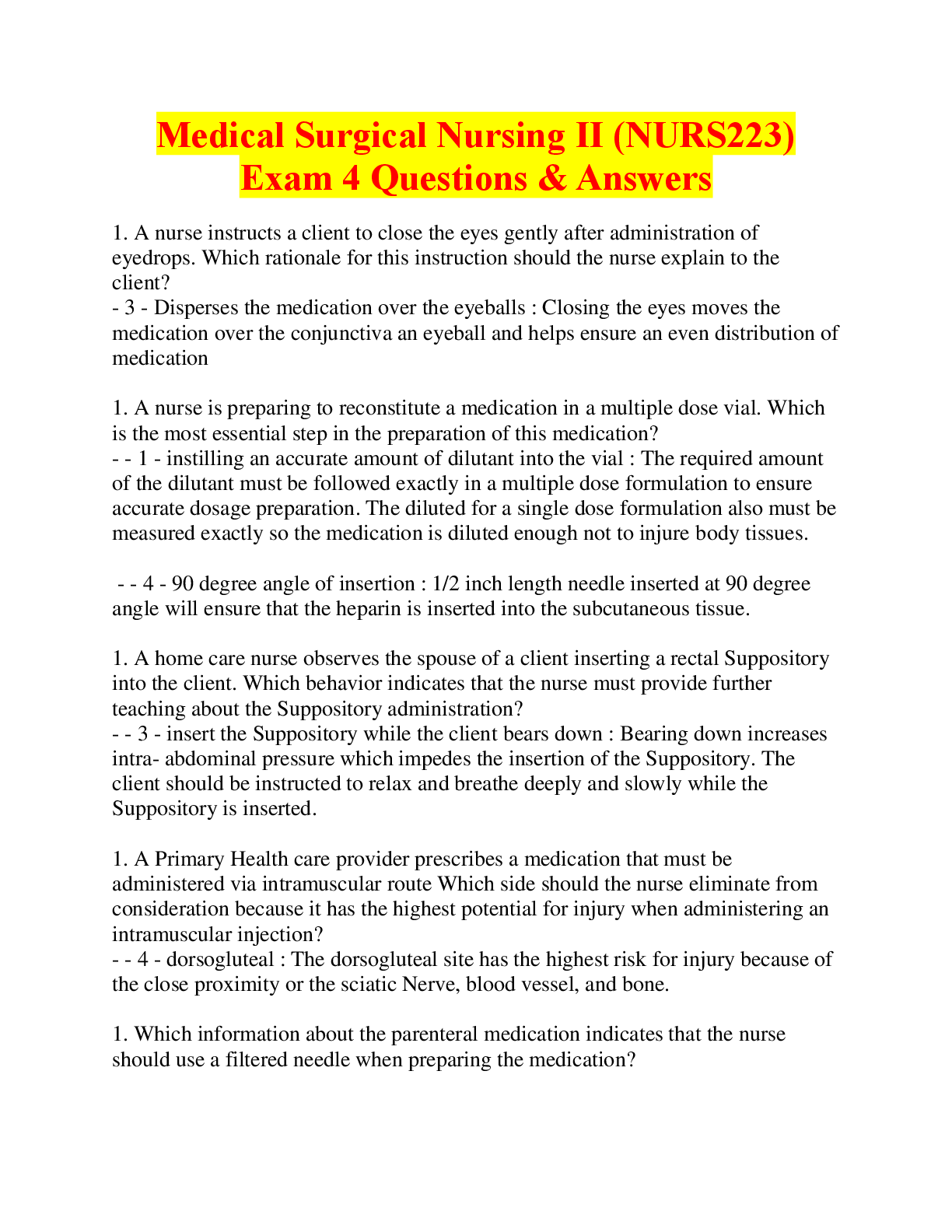
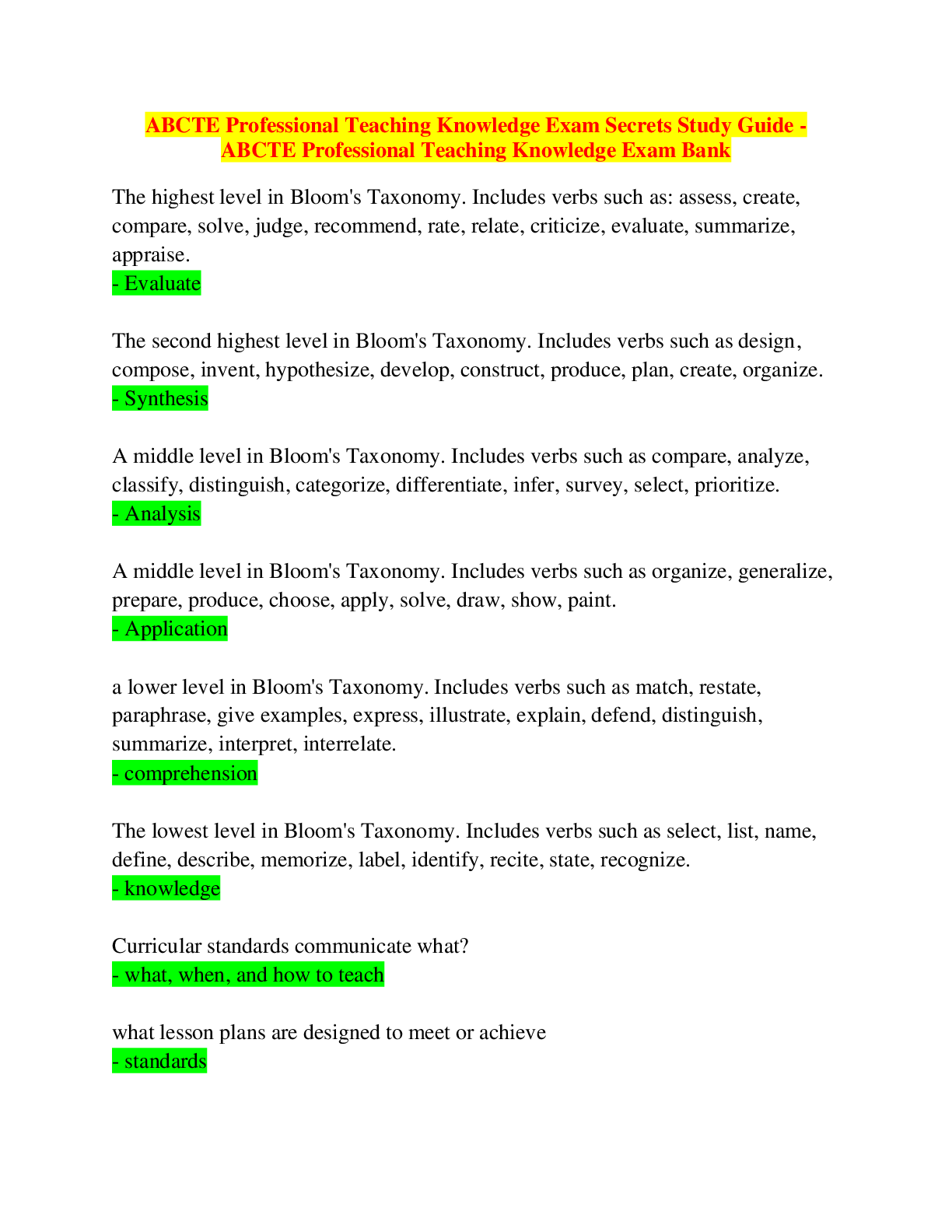
ABCTE Professional Teaching Knowledge Exam Secrets Study Guide - ABCTE Professional Teaching Knowledge Exam Bank-The highest level in Bloom's Taxonomy. Includes verbs such as: assess, create, compare, ... solve, judge, recommend, rate, relate, criticize, evaluate, summarize, appraise. - Evaluate The second highest level in Bloom's Taxonomy. Includes verbs such as design, compose, invent, hypothesize, develop, construct, produce, plan, create, organize. - Synthesis A middle level in Bloom's Taxonomy. Includes verbs such as compare, analyze, classify, distinguish, categorize, differentiate, infer, survey, select, prioritize. - Analysis A middle level in Bloom's Taxonomy. Includes verbs such as organize, generalize, prepare, produce, choose, apply, solve, draw, show, paint. - Application a lower level in Bloom's Taxonomy. Includes verbs such as match, restate, paraphrase, give examples, express, illustrate, explain, defend, distinguish, summarize, interpret, interrelate. - comprehension The lowest level in Bloom's Taxonomy. Includes verbs such as select, list, name, define, describe, memorize, label, identify, recite, state, recognize. - knowledge Curricular standards communicate what? - what, when, and how to teach what lesson plans are designed to meet or achieve - standards the most important educational document - the lesson plan what does curriculum contain? - objectives, sample lessons, assessments, procedures, materials/equipment needed, activities, samples of student work what the student is supposed to learn - objective methods of determining effectiveness of the lessons - assessments What was the purpose of No Child Left Behind and the Every Student Succeeds Act? - to create a standardized curriculum for each subject area what is curriculum? - what the students are supposed to learn as a result of a specific educational sequence of events anchor papers - the reference for all other work; what is expected by students Who can help translate curriculum? - administrators and content specialists order the steps of instruction: re-design, teach, repeat, review, give assessment, write assessment, identify time limit of unit, evaluate instruction, review for assessment - 1. identify time limit of unit 2. write assessment 3. teach 4. review for assessment 5. give assessment 6. evaluate instruction 7. re-design 8. repeat Objectives should be specific enough that they can be used as ____________ questions. - Exam Lesson Objectives: what the students will ___________________ by the end of the lesson. - accomplish Agenda Items: what the class will ___________ to meet the lesson objectives. - do Pacing of material is dependant upon 3 things - 1. nature of students 2. nature of material 3. goals of the teacher periodic measuring devices that indicate student growth and also verify successful lessons - assessments should you schedule assessments based on the calendar date or the progress of the class? - based on progress of the class Who do you need to know before you begin planning lessons? - your students who can help you get to know your students? - prior teachers, counselors, administrators, other colleagues How much repetition is enough? - as much as possible until mastery is acheived What should inform your instruction? - assessments Name three important things to consider when choosing a seating arrangement. - 1. visibility of students 2. movement by the teacher 3. space for isolation 4. students should always be in front of the teacher 5. utilize a second teacher's desk in the room 6. considers the distance between students what is fostered when students are seated close together or in groups? - interaction between students when should you prepare class rules and their consequences? - BEFORE school begins Name some ways to create a positive learning environment. - 1. greet students at the door 2. display examples of student work 3. make the classroom feel open, welcoming, and caring Definition= The learning and practice of teaching - Pedagogy Lessons are intended for the _________________ of the audience, not for the ____________________ of the teacher. - benefit [Show More]
Last updated: 2 years ago
Preview 1 out of 41 pages
Buy this document to get the full access instantly
Instant Download Access after purchase
Buy NowInstant download
We Accept:

Reviews( 0 )
$8.50
Can't find what you want? Try our AI powered Search
Document information
Connected school, study & course
About the document
Uploaded On
Jun 05, 2023
Number of pages
41
Written in
All

Additional information
This document has been written for:
Uploaded
Jun 05, 2023
Downloads
0
Views
102