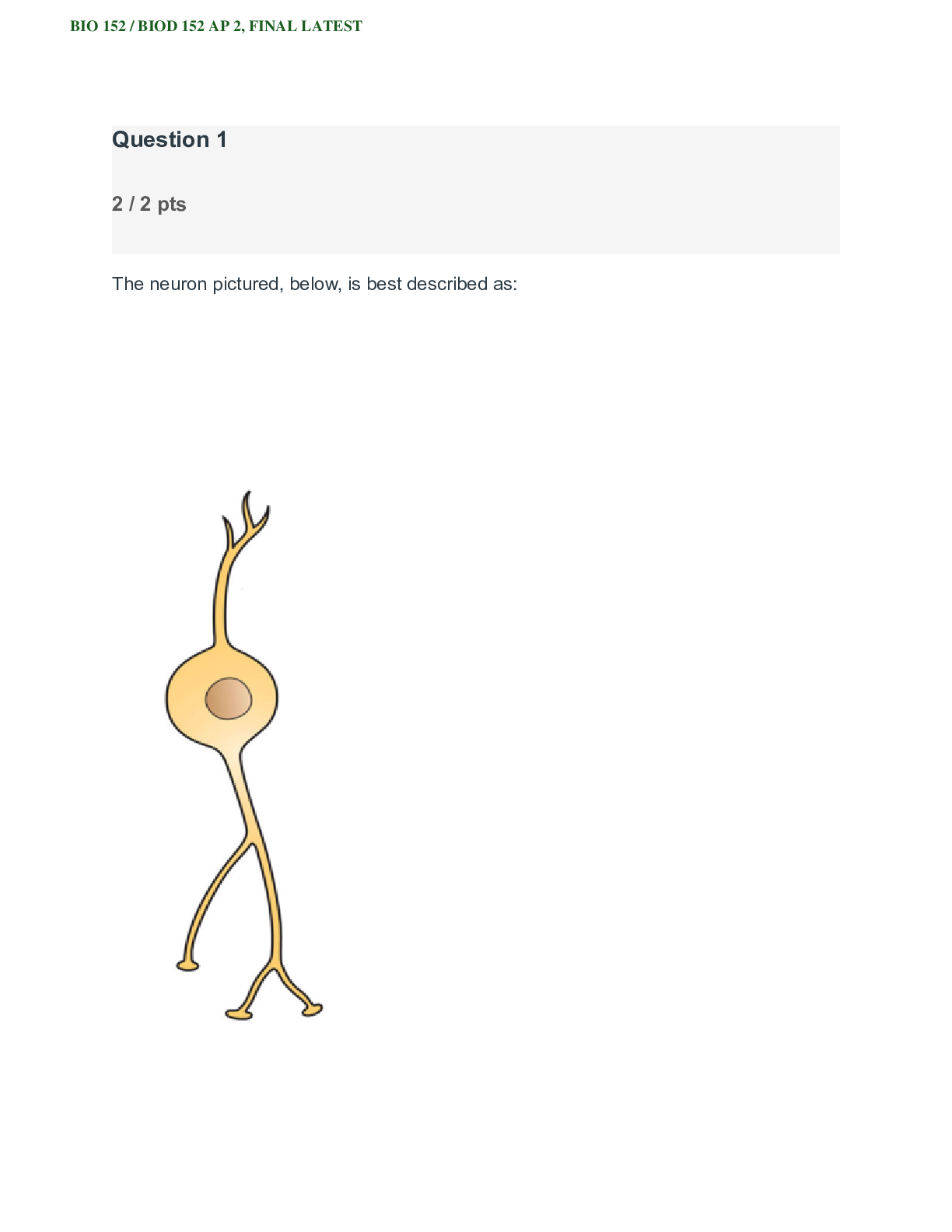
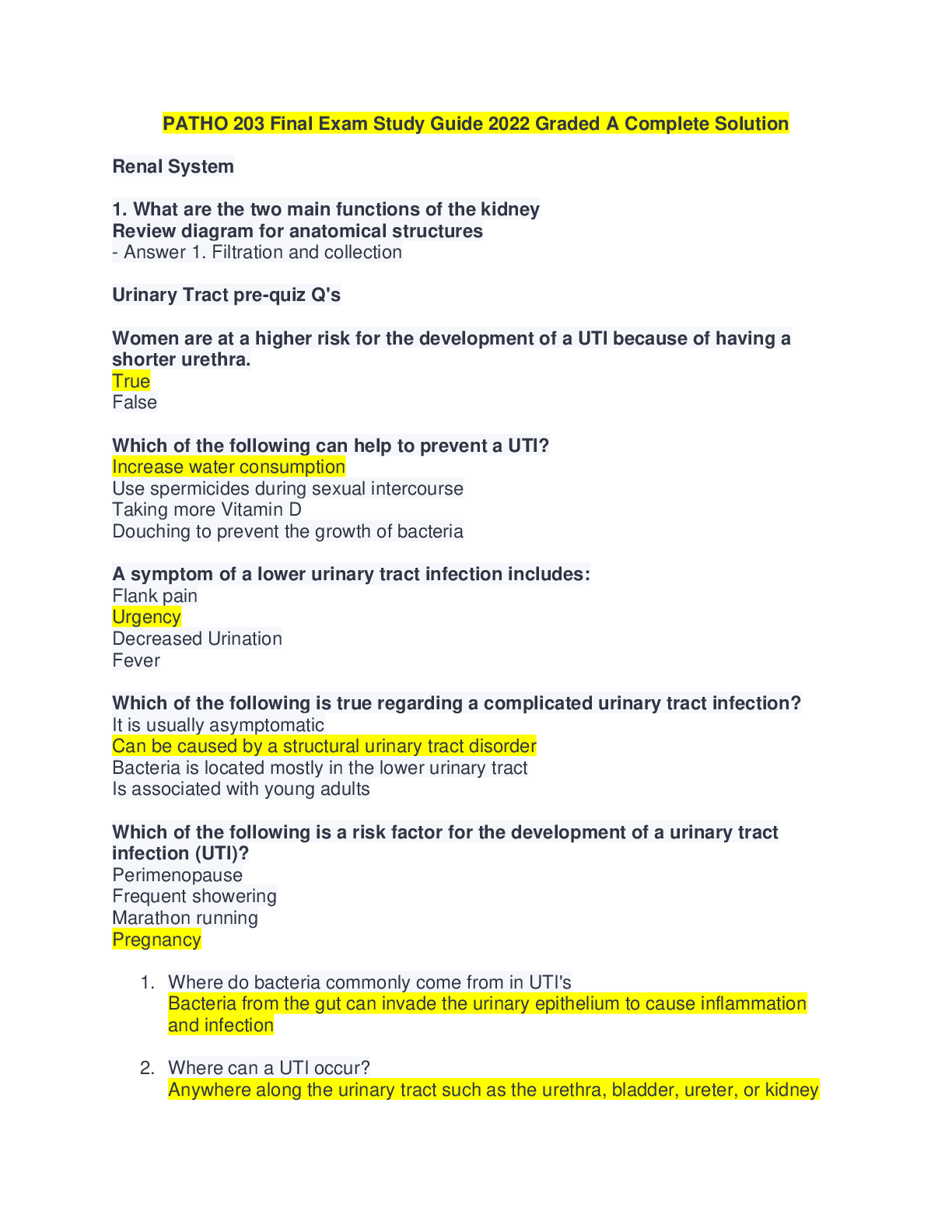
Biology > STUDY GUIDE > BIOD 152 AP II Lab 8 (All)
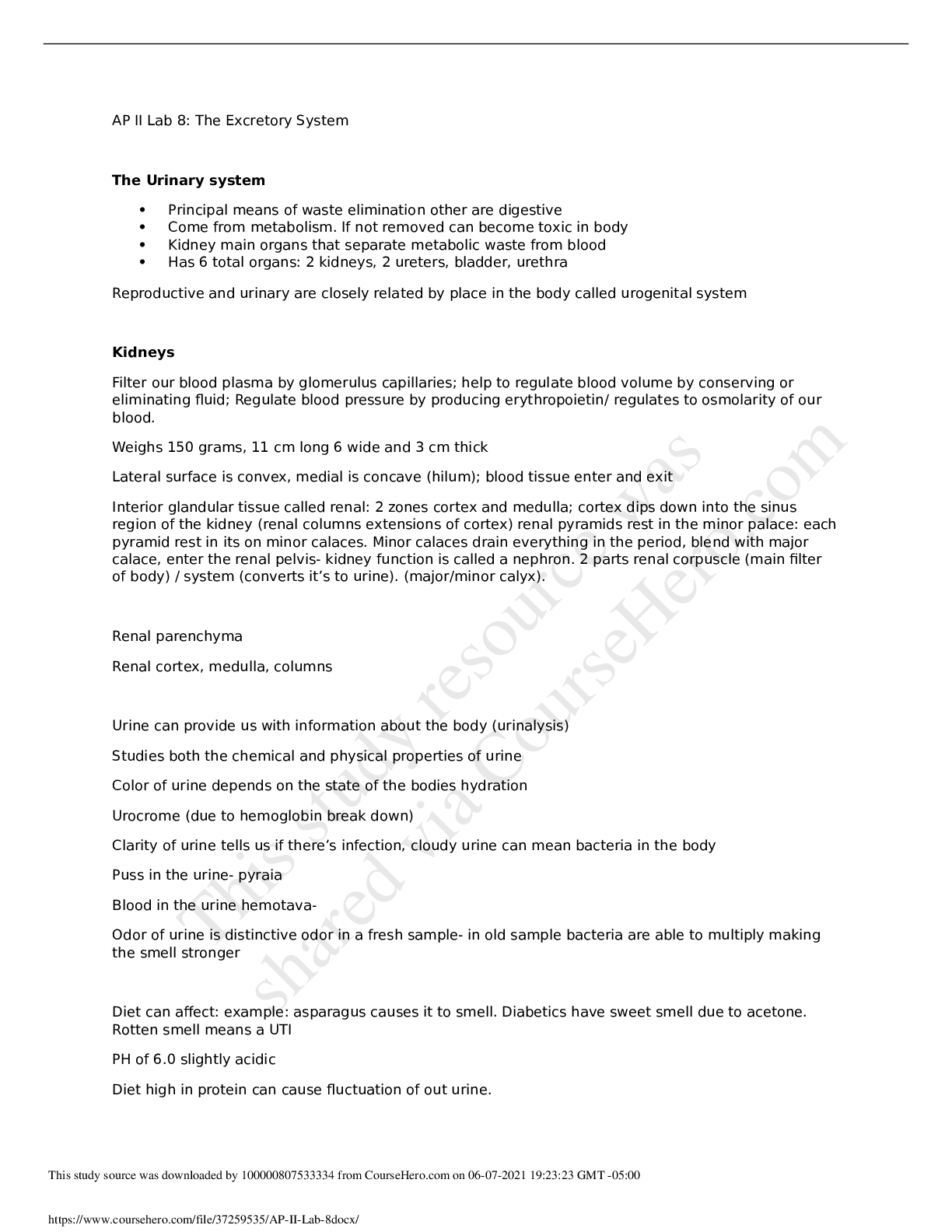
BIOD 152 AP II Lab 8
Document Content and Description Below
Last updated: 4 years ago
Preview 1 out of 6 pages
Instant download
Buy this Document to get the Full Access Instantly
Provided by Students Who Aced it
We Verify Document Content to Gurantee Accuracy
Reviews( 0 )
Document information
Connected school, study & course
About the document
Uploaded On
Aug 13, 2021
Number of pages
6
Written in
All

Additional information
This document has been written for:
Uploaded
Aug 13, 2021
Downloads
0
Views
107
Topic Tags
Recommended For You
Get more on STUDY GUIDE »
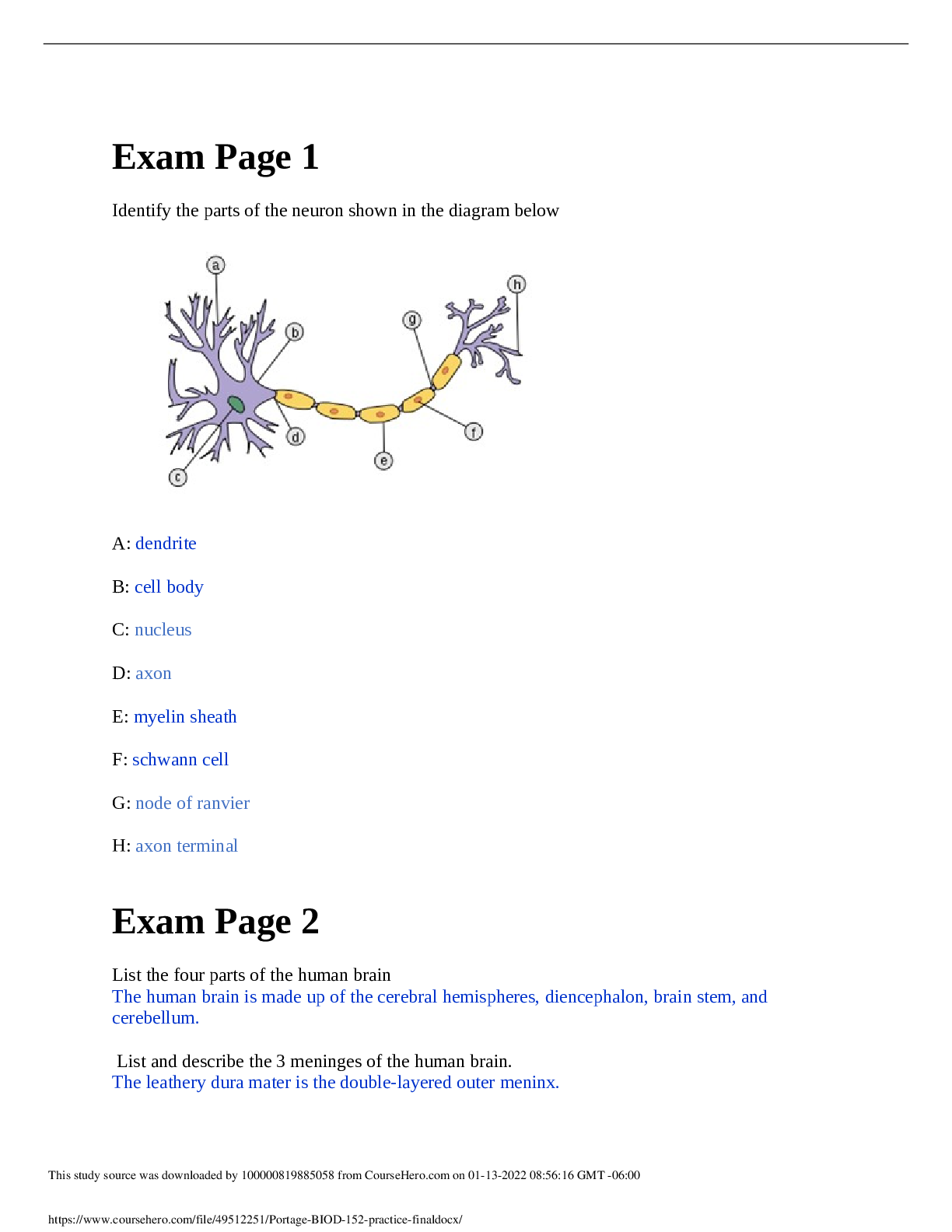
BIOD 152 Final Exam- Essential Human Anatomy and Physiology II...

Portage Learning BIOD 152 | AP2 Module 1 Exam (answered) retak...

Biod 152/A&P All portage Modules learning Exam Latest Update...

BIOD 152 A&P II Exam Module 2 Questions and Answers- Portage/G...
Portage Learning BIOD 152 LAB EXAMS ALL Modules Upadated 2023
PORTAGE LEARNING AP2 BIOD 152 MODULE 1 – 7 EXAMS All in One

(complete solutions guide) Portage Learning A&P 2 102All of po...

Portage Learning BIOD 152 MODULE 7 ESSENTIAL HUMAN ANATOMY AN...