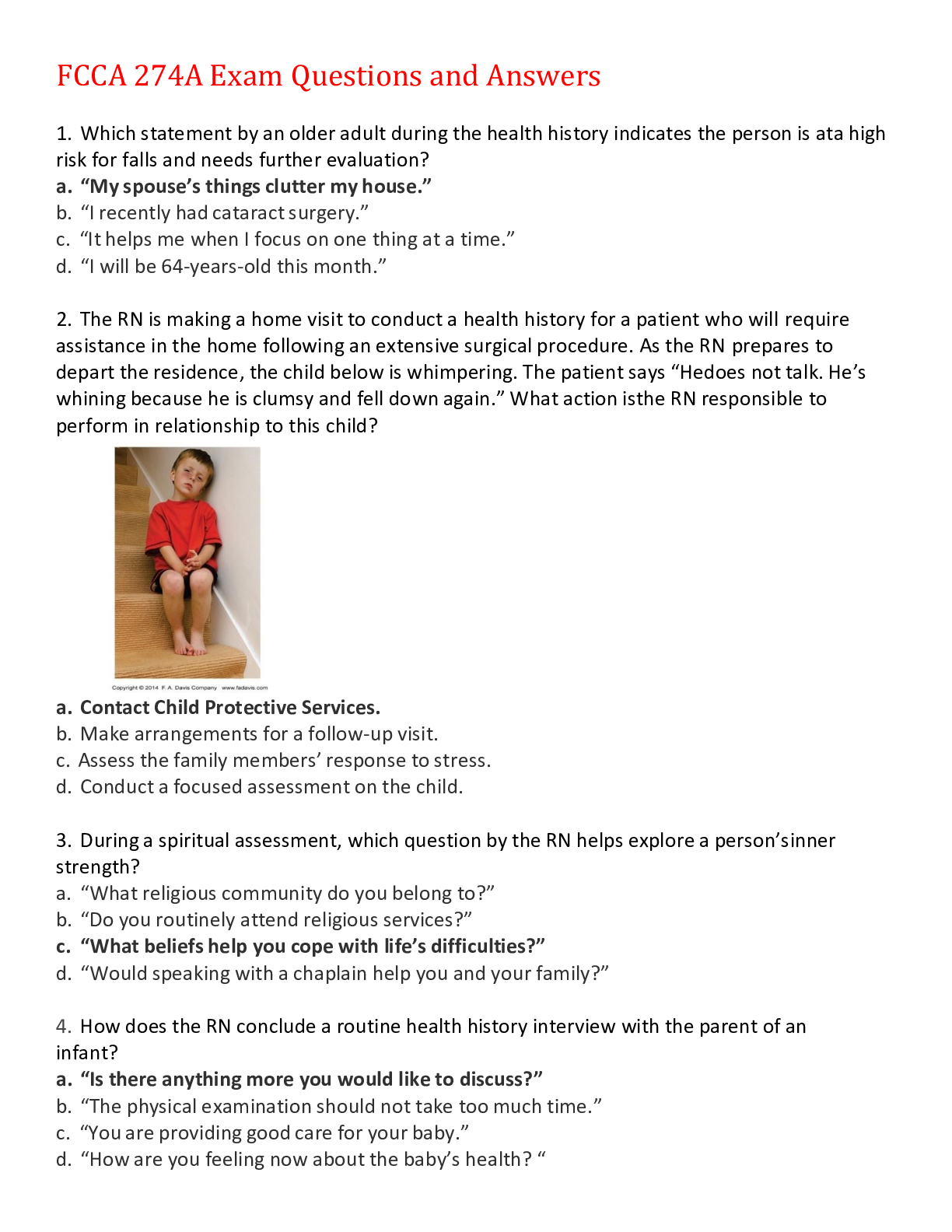
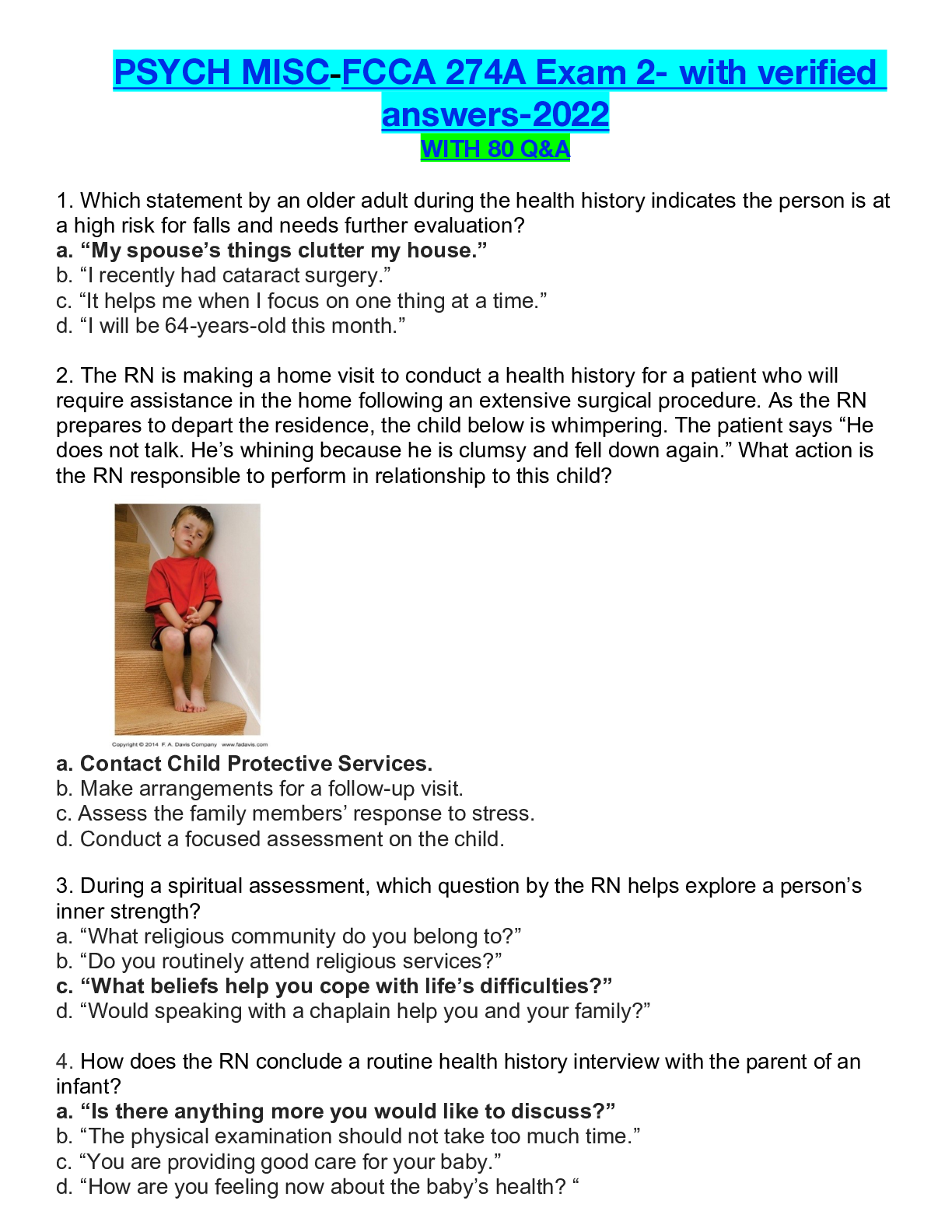
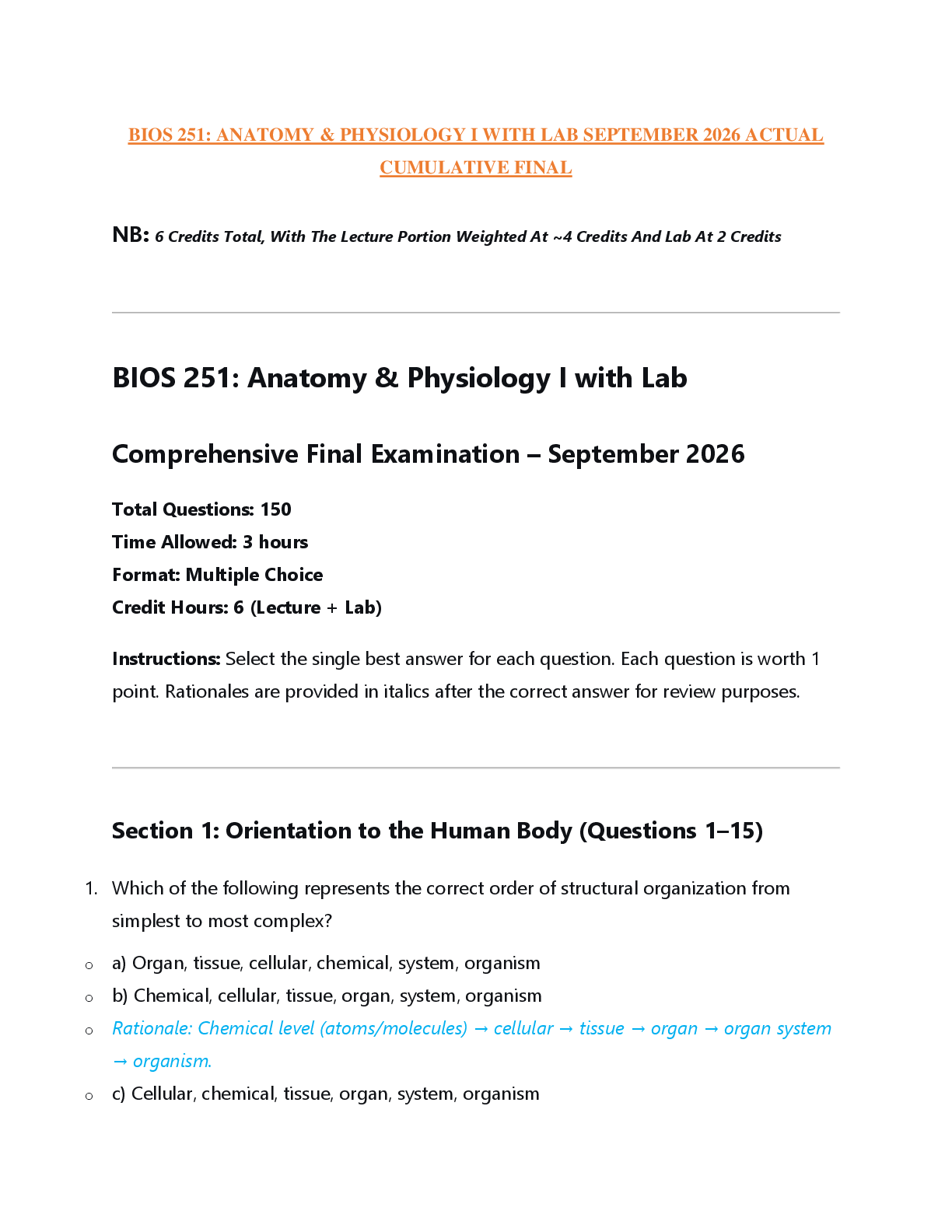
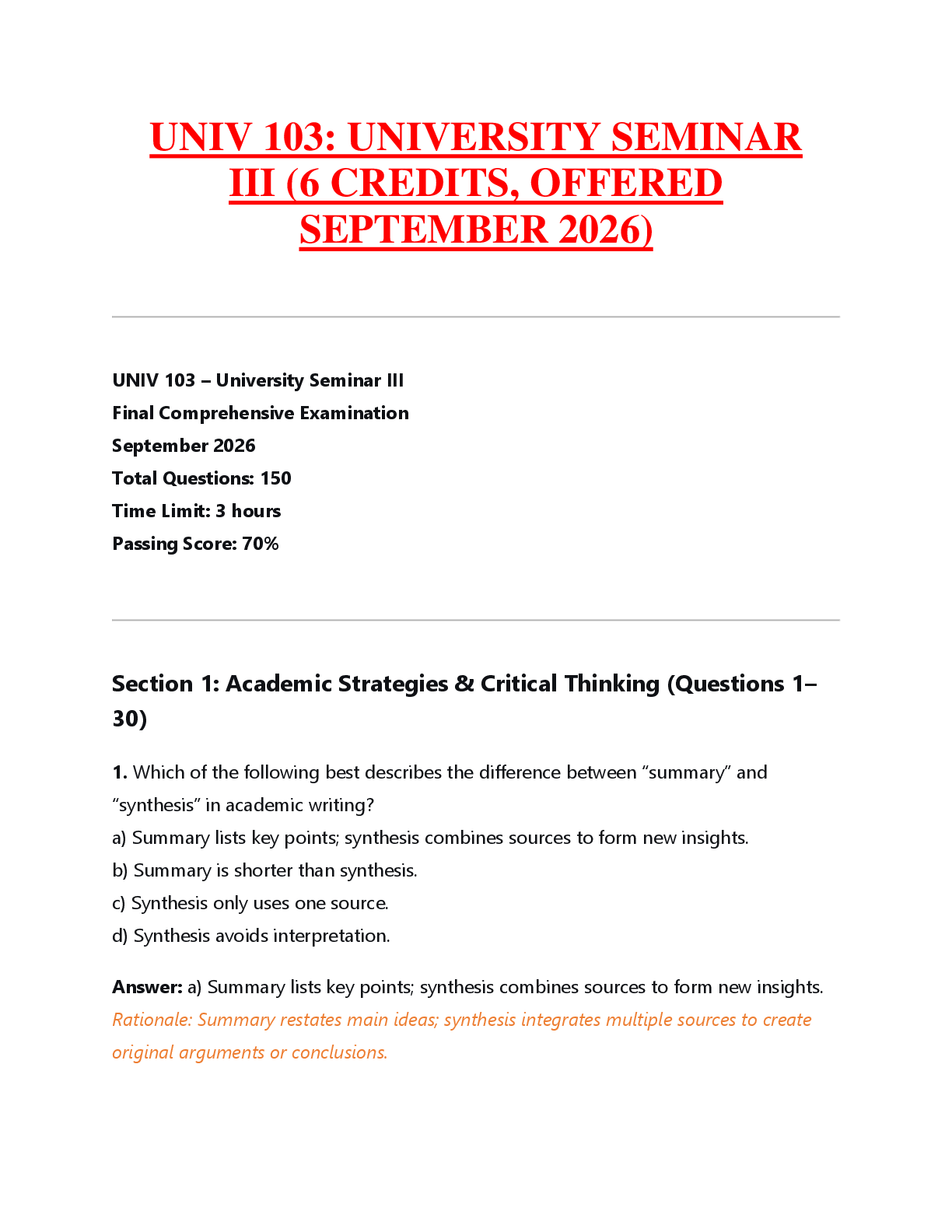
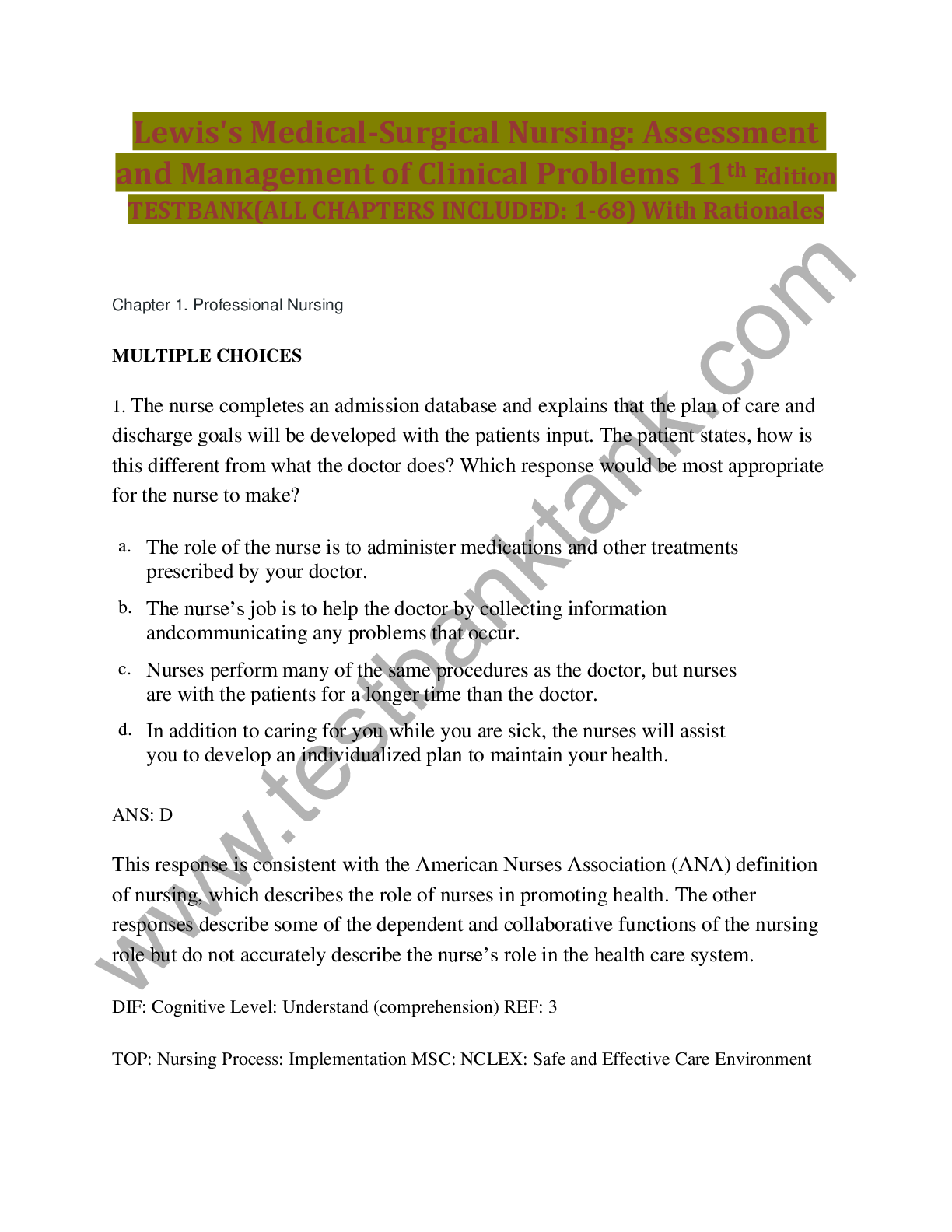
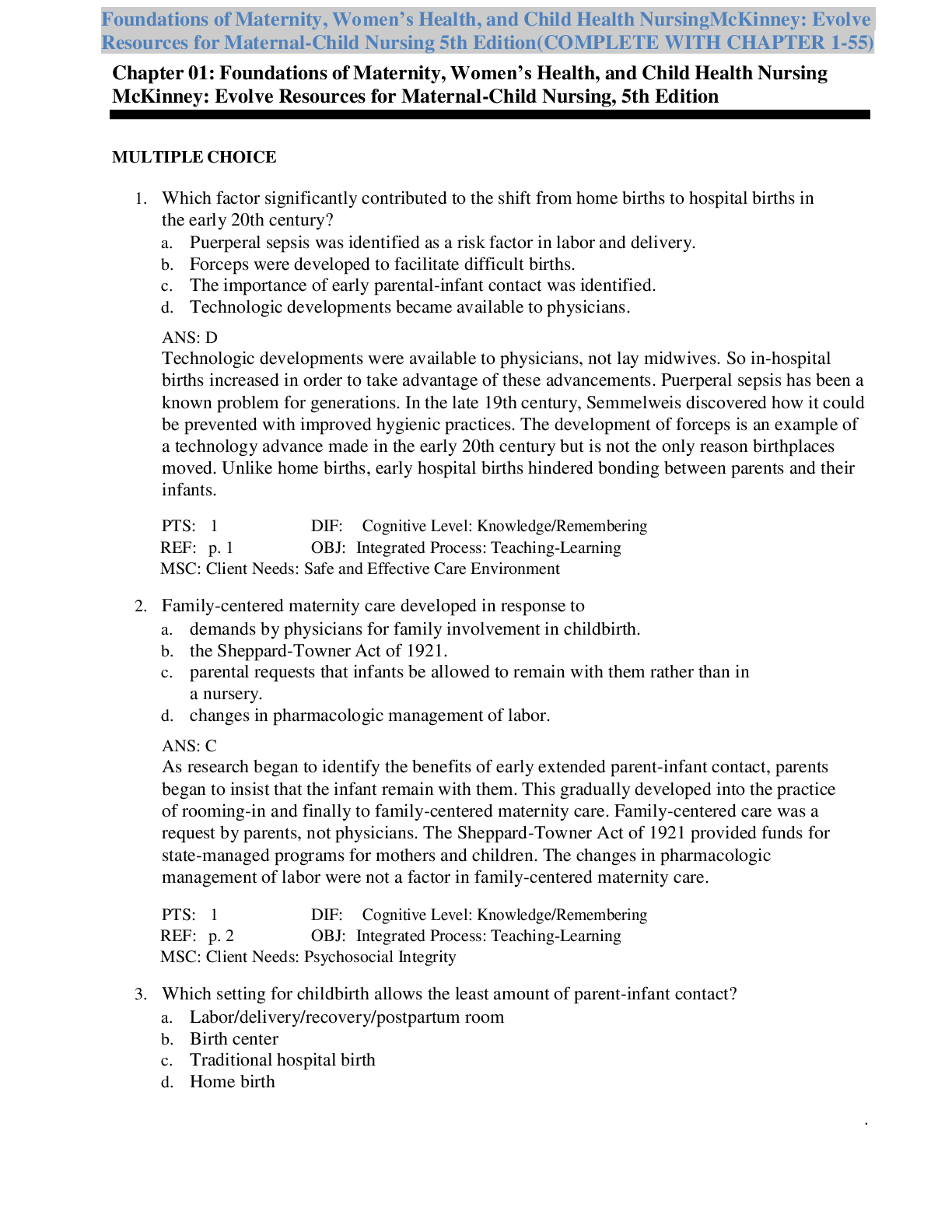
1. Which statement by an older adult during the health history indicates the person is at a high risk for falls and needs further evaluation? a. “My spouse’s things clutter my house.” b. “I ... recently had cataract surgery.” c. “It helps me when I focus on one thing at a time.” d. “I will be 64-years-old this month.” 2. The RN is making a home visit to conduct a health history for a patient who will require assistance in the home following an extensive surgical procedure. As the RN prepares to depart the residence, the child below is whimpering. The patient says “He does not talk. He’s whining because he is clumsy and fell down again.” What action is the RN responsible to perform in relationship to this child? a. Contact Child Protective Services. b. Make arrangements for a follow-up visit. c. Assess the family members’ response to stress. d. Conduct a focused assessment on the child. 3. During a spiritual assessment, which question by the RN helps explore a person’s inner strength? a. “What religious community do you belong to?” b. “Do you routinely attend religious services?” c. “What beliefs help you cope with life’s difficulties?” d. “Would speaking with a chaplain help you and your family?” 4. How does the RN conclude a routine health history interview with the parent of an infant? a. “Is there anything more you would like to discuss?” b. “The physical examination should not take too much time.” c. “You are providing good care for your baby.” d. “How are you feeling now about the baby’s health? “5. The RN is obtaining a health history from a middle-aged adult patient. Which question allows for comprehensive data regarding the patient’s physical fitness? a. “Can you describe your typical daily activity level?” b. “How often do you reach your target heart rate?” c. “Do you routinely participate in a sports activity?” d. “What benefits do you experience when exercising?” 6. During a health assessment, the RN asks “Do you have an advance health care directive?” The patient asks “Why do I need that? Is my condition that serious?” What is the appropriate response by the RN? a. “A power of attorney can make your health care decisions if you are unable.” b. “The written form will direct the health care team not to perform resuscitation activities.” c. “Documenting your desired treatment goals will help guide your health care.” d. “Once completed and witnessed, the form is legally binding in all states.” [Show More]
Last updated: 3 years ago
Preview 1 out of 20 pages
Buy this document to get the full access instantly
Instant Download Access after purchase
Buy NowInstant download
We Accept:
Can't find what you want? Try our AI powered Search
Connected school, study & course
About the document
Uploaded On
Aug 13, 2021
Number of pages
20
Written in
All
This document has been written for:
Uploaded
Aug 13, 2021
Downloads
0
Views
69
Scholarfriends.com Online Platform by Browsegrades Inc. 651N South Broad St, Middletown DE. United States.
We're available through e-mail, Twitter, and live chat.
FAQ
Questions? Leave a message!
Copyright © Scholarfriends · High quality services·