lOMoARcPSD|784381
U World Hematological final
nuclex hematology
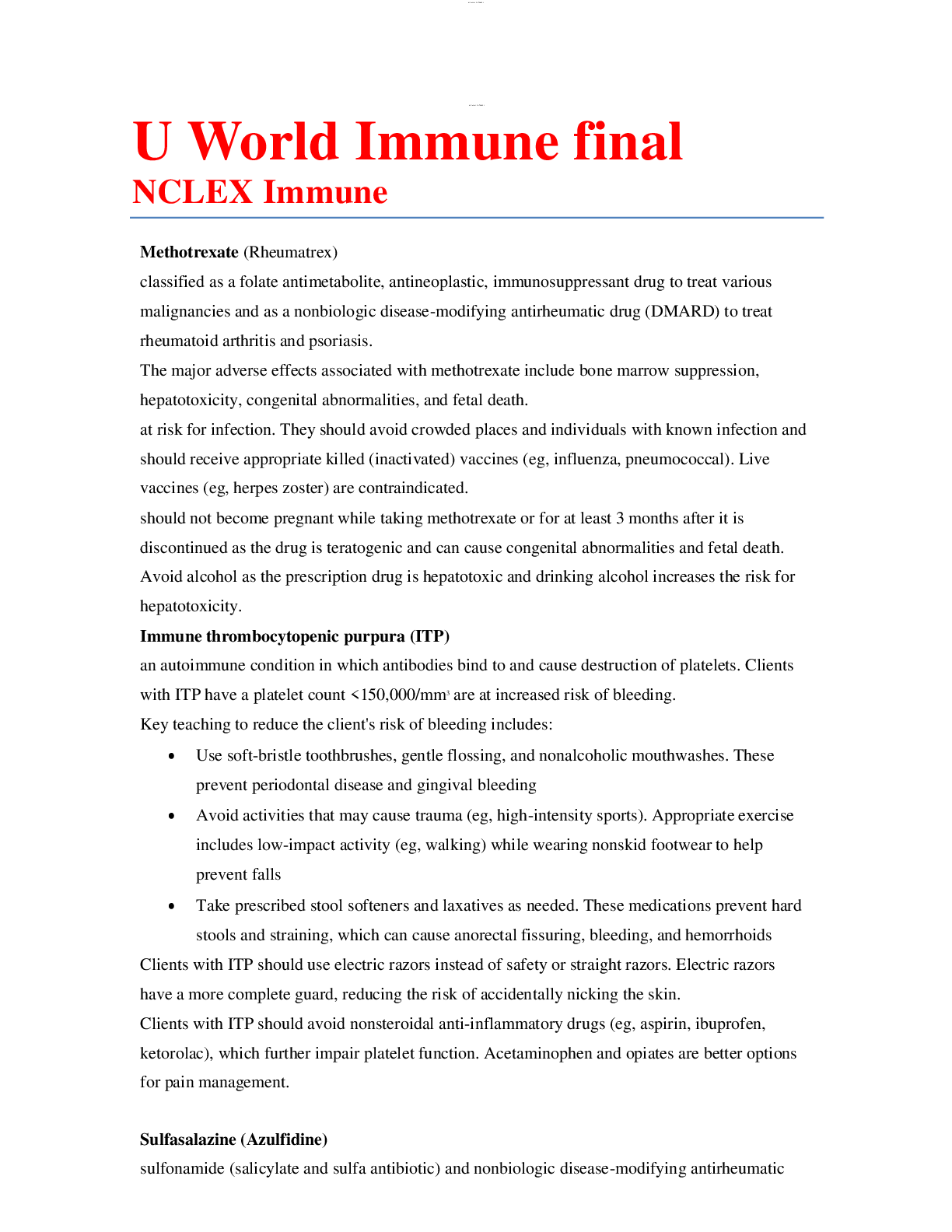
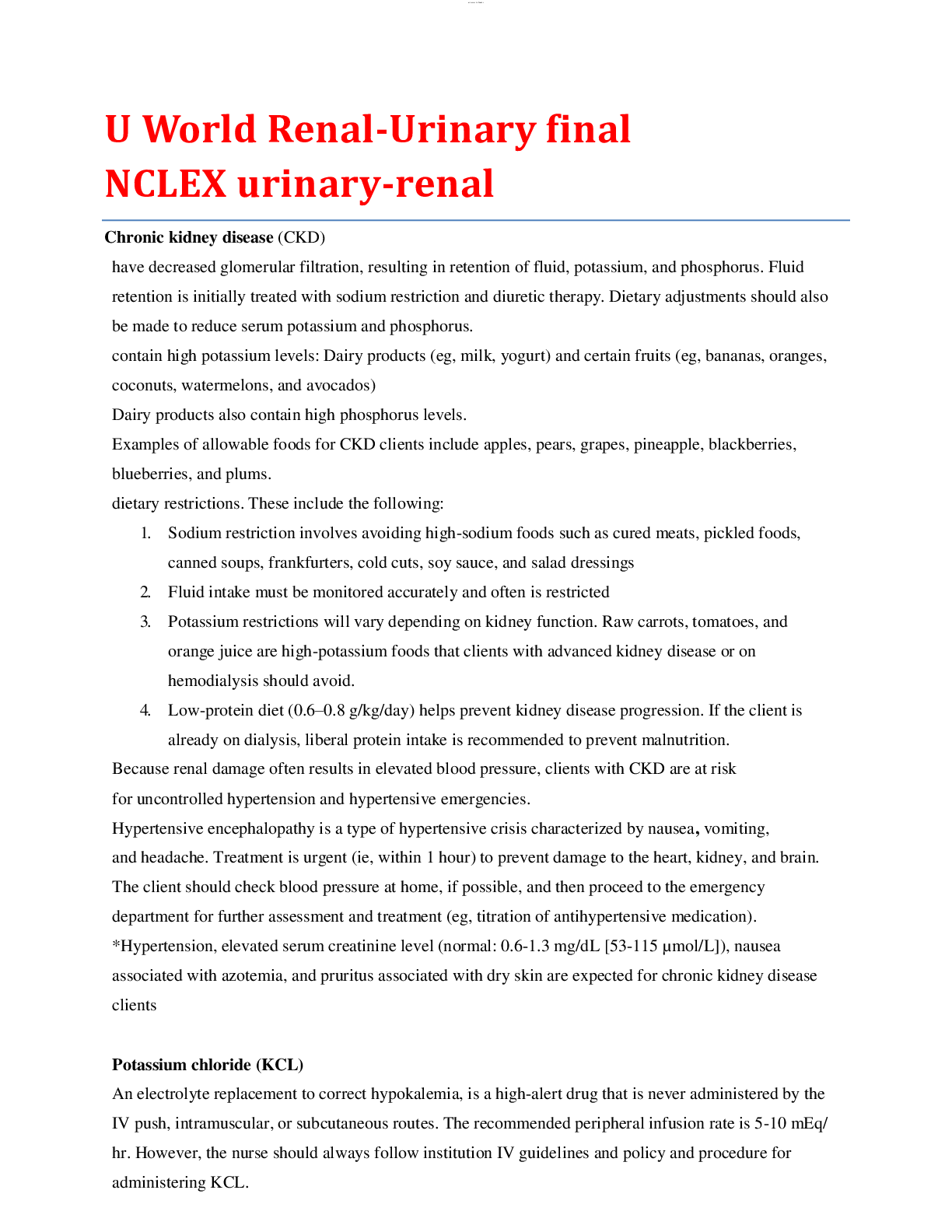
Cisplatin
an antineoplastic medication that can cause renal toxicity.
Warfarin (Coumadin)
Anticoagulant given to clients with a mechanical valve r
...
lOMoARcPSD|784381
U World Hematological final
nuclex hematology
Cisplatin
an antineoplastic medication that can cause renal toxicity.
Warfarin (Coumadin)
Anticoagulant given to clients with a mechanical valve replacement
Radiation therapy to the head and neck can decrease a client's oral intake due to the development of mucositis (ie, inflammation of the mouth, esophagus, and oropharynx) and xerostomia (ie, dry mouth).
The nurse teaches the client to:
•
Tumor lysis syndrome (TLS)
A potential complication of chemotherapy
Allopurinol (Zyloprim) blocks the nucleic acid catabolism and prevents hyperuricemia but would not
Severe anemia
A normal hemoglobin level for an adult male is 13.2-17.3 g/dL and female is 11.7-15.5 g/dL. Will
Oral mucositis
inflammation or ulceration of the oral mucosa, results from chemotherapy or radiation therapy. Oral
Clopidogrel (Plavix)
platelet aggregation inhibitor used to prevent blood clot formation in clients with recent myocardial
Calcium acetate (PhosLo)
Magnesium sulfate
used to correct hypomagnesemia and treat torsades de pointes and seizures associated with eclampsia. normal adult: 1.5-2.5 mEq/L
Metformin (Glucophage)
first-line drug for the control of blood sugar in clients with type 2 diabetes mellitus. Glycosylated
Warning signs of cancer
A mnemonic to remember the warning signs of cancer is CAUTION and includes the following:
Enoxaparin (Lovenox)
low molecular weight heparin (LMWH) that may be prescribed for up to 10-14 days following hip and
Radiation contamination (and chemotherapy)
affects rapidly proliferating (dividing) cells first, such as those of the oral mucosa, gastrointestinal tract,
The examination for skin cancer follows the ABCDE rule:
Lymphedema
the accumulation of lymph fluid in the soft tissue. It can occur as a result of lymph node removal or
Neutropenia an ANC below 1,000/mm3
An ANC below 500/mm3 is defined as severe neutropenia and is a critical emergency.
Thrombocytopenia (low platelets)
can result from bone marrow suppression caused by chemotherapy.
Epoetin alfa (human recombinant erythropoietin)
a hematopoietic growth factor. The erythropoietin is produced in the kidney and stimulates bone marrow
Teletherapy (external beam radiation therapy)
o
Filgrastim (Neupogen) and pegfilgrastim (Neulasta)
Colorectal cancer
the third most common cancer and the second leading cause of cancer deaths affecting both genders
Medications commonly prescribed for a client with an open fracture include:
• Cefazolin (Ancef),
• Cyclobenzaprine (Flexeril), a
• Tetanus and diphtheria toxoid, a
• Ketorolac (Toradol), a
• Opioids
Internal radiation (brachytherapy)
involves direct application of a radioactive implant to the cancerous site or tumor for a short time, usually
Polycythemia vera (PV)
a chronic myeloproliferative disorder in which the bone marrow produces an abnormally high number of
Oropharyngeal candidiasis/thrush (moniliasis)
is a fungal infection of skin or mucous membranes. It resembles curdled milk and can bleed when
Shingles (herpes zoster)
is reactivation of dormant varicella virus. The lesions follow the nerve dermatome and can be quite
Folliculitis
usually due to the presence of staphylococci in moist areas where there is friction. It is most common in
Pulmonary embolism (PE)
Early identification of risk factors (eg, venous stasis, hypercoagulability of blood, endothelial damage)
Tamoxifen
Selective estrogen receptor modulators
In the breast, they block estrogen (antagonist) and are therefore helpful in inhibiting the growth of
Lymph nodes
Ordinarily are not palpable in adults. a lymph node that is palpable, superficial, small (0.5-1 cm), mobile, inflammation but hard or fixed nodes could indicate malignancy.
** A bitter almond smell on the client's breath is a classic sign of cyanide poisoning.
Clients do not develop tolerance to heparin
Cyclophosphamide
Hemorrhagic cystitis (eg, bladder inflammation) is a well-known complication. The client is instructed to drink plenty of fluids.
Herbal supplement
Uses
Side effects
Ginkgo biloba
• Memory enhancement
• Increased bleeding risk
Ginseng
• Improved mental performance
• Increased bleeding risk
Saw palmetto
• Benign prostatic hyperplasia
• Mild stomach discomfort
• Increased bleeding risk
Black cohosh
• Postmenopausal symptoms (hot flashes & vaginal dryness)
• Hepatic injury
St John's wort
• Depression
• Insomnia
• Drug interactions: Antidepressants (serotonin syndrome), OCs, anticoagulants (↓ INR), digoxin
• Hypertensive crisis
Kava
• Anxiety
• Insomnia
• Severe liver damage
Licorice
• Stomach ulcers
• Bronchitis/viral infections
• Hypertension
• Hypokalemia
Echinacea
• Treatment & prevention of cold & flu
• Anaphylaxis (more likely in asthmatics)
Ephedra
• Treatment of cold & flu
• Weight loss & improved athletic performance
• Hypertension
• Arrhythmia/MI/sudden death
• Stroke
• Seizure
A chronic subdural hematoma involves bleeding into the subdural space that can occur several
The Z-track technique
The Z-track technique prevents tracking (leakage) of the medication into the subcutaneous tissue and is universally recommended for the administration of IM injections. Displacing the skin while injecting the medication, and then releasing the skin back to its normal position after removing the needle creates a zigzag track. The procedure for administering an IM injection using the Z-track technique includes these steps:
1. Pull the skin 1-1 ½" (2.5-3.5 cm) laterally away from the injection site
2. Hold the skin taut with the nondominant hand,and insert the needle at a 90-degree angle – taut skin facilitates entry of the needle and this angle ensures that the needle will reach the muscle
3. Inject the medication slowly into the muscle while maintaining traction – slow injection promotes comfort and allows time for tissue expansion to facilitate absorption of the medication
4.
[Show More]