*NURSING  >  STUDY GUIDE  >  NU 545 Unit 2 Study Guide Latest Version 100% Correct (All)

NU 545 Unit 2 Study Guide Latest Version 100% Correct

Document Content and Description Below

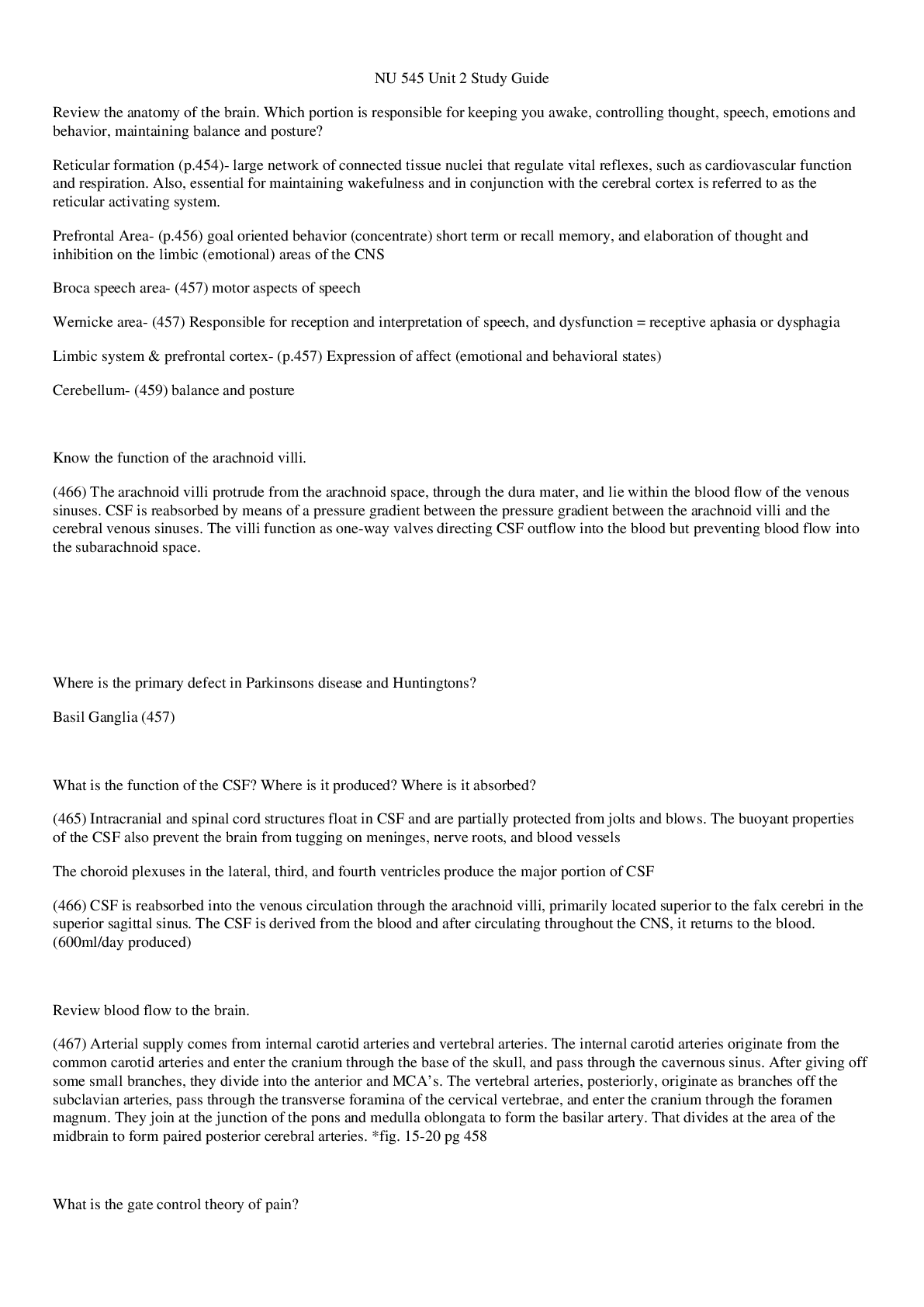
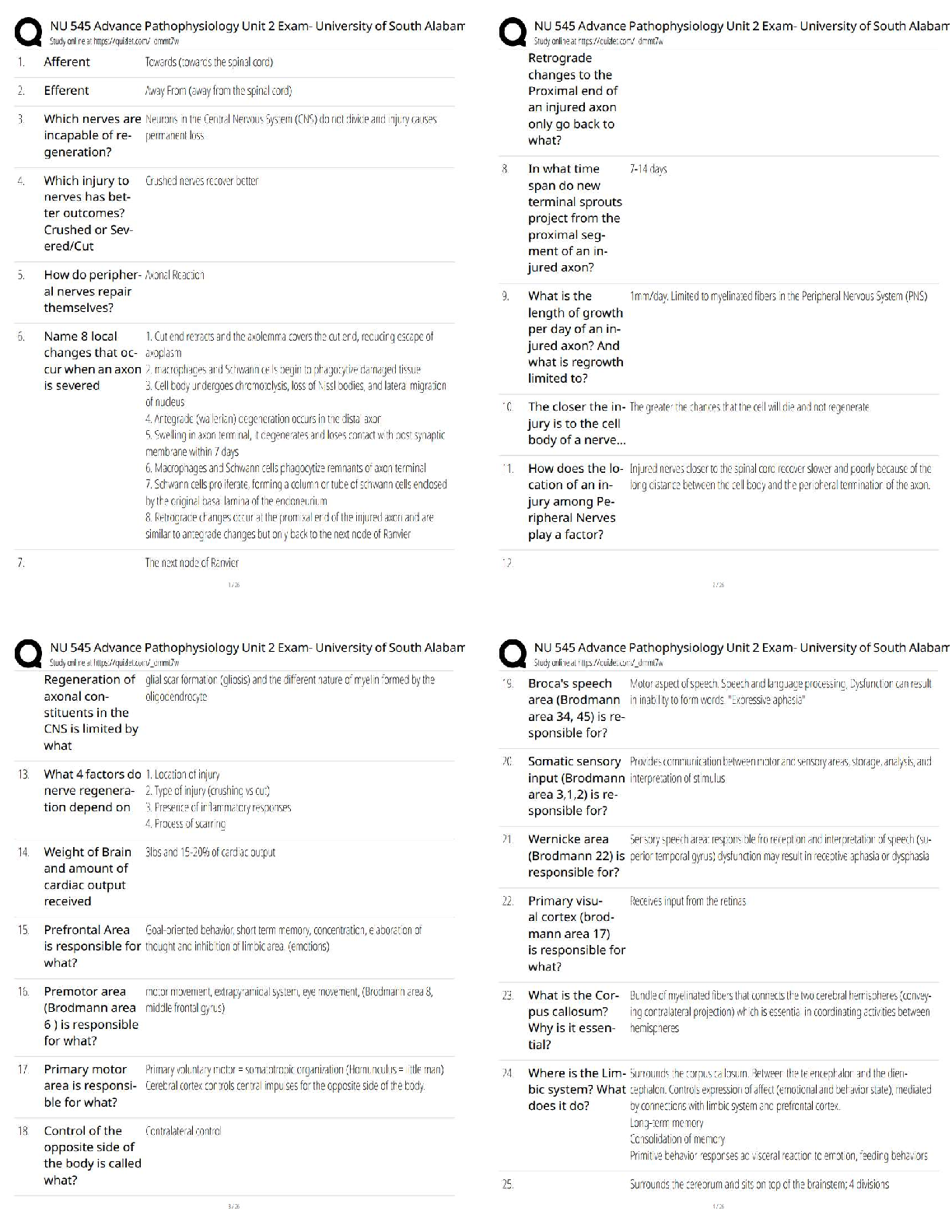
NU 545 Unit 2 Study Guide 1. Review the anatomy of the brain. Which portion is responsible for keeping you awake, controlling thought, speech, emotions and behavior, maintaining balance and post ... ure? 2. Know the function of the arachnoid villi. 3. Where is the primary defect in Parkinsons disease and Huntingtons? 4. What is the function of the CSF? Where is it produced? Where is it absorbed? 5. Review blood flow to the brain. 6. What is the gate control theory of pain? 7. Know the type of nerve fibers that transmit pain impulses. 8. Where in the CNS does pain perception occur? 9. Know different clinical descriptions of pain (acute, chronic, 10. Know endogenous opioids. (490) 11. What are the two types of fibers that transmit the nerve action potentials generated by excitation of any of the nociceptors. 12. What is the relationship between epinephrine and body temperature? 13. Know mechanisms of heat production and heat loss. (496) 14. Know heat exhaustion and heat stroke? (500) 15. Define the different stages of sleep. (502) 16. Discuss disorders of the conjunctiva of the eye. (507) 17. Which part of the brain controls movement of the eye? (509) 18. What part of the brain must be functioning for cognitive operations? 19. Discuss the types of mid-brain dysfunction and its physical symptoms. 20. Know the best prognostic indicator of recovery of consciousness and functional outcome after a brain event. (528-529) 21. Know vomiting with which CNS injuries. 22. Define seizure and status epilepticus. What is the medical significance? Know benign febrile seizures. 23. Know the characteristics of closed head injury. 24. Define dyskinesia. Types? Characteristics? 25. Know the stages of intracranial hypertension. (555-556) 26. Know normal intracranial pressure. How does body compensate for increased ICP? (556) 27. Know the most critical index of nervous system dysfunction/function. 28. What is responsible for the tremors associated with Parkinson’s Disease? (567) 29. Define concussion. Know the different grades of concussion. 30. Know coupe and countercoup brain injuries and how they happen. 31. Know most common primary CNS tumor. 32. What happens to a patient after an acute spinal cord injury? Why is it life threatening? Describe the clinical manifestations. Why would their temperature fluctuate? (590) 33. Know diagnostic criteria for vegetative state and brain death. (534) 34. Define and discuss the different types of stroke, which affected artery causes what data processing deficits (agnosia, dysphasia, etc). (539) 35. Know all types of cerebral edema and what causes each type. (557) 36. Know characteristics of AV malformation. (604) 37. Define and describe the pathophysiology, clinical manifestations and etiology of Multiple Sclerosis. (618) 38. Define and describe the pathophysiology, clinical manifestations and etiology of Guillian Barre Syndrome. (622) 39. Define and describe the pathophysiology, clinical manifestations and etiology of Mysthenia Gravis (624) 40. Define and describe the pathophysiology, clinical manifestations and etiology of Parkinson disease. (564, box17-5 565) 41. Define and describe the pathophysiology, clinical manifestations and etiology of Huntington disease. (562) 42. Prenatal and perinatal factors may result in what psychiatric condition? (642) 43. What is schizophrenia? What part of the brain is associated with the S/S of this disorder? (642) 44. Define depression and its types; know etiology. (650) 45. How Does ECT (electroconvulsive therapy) treat depression? (652) 46. Define generalized anxiety disorder. What is the underlying defect? Know characteristics. (655) 47. Define panic disorder. What are the complications? (654) 48. Define encephalocele, meningocele, spina bifida, myelomeningocele. Where is the defect located in each? (664) 49. Know when the neural groove closes during embryonic development. 50. Know pathophysiology, clinical manifestations and etiology of cerebral palsy. (670) 51. Know pathophysiology, clinical manifestations and etiology of PKU. (673) 52. What nerves are capable of regeneration? (451) [Show More]

Last updated: 3 years ago

Preview 1 out of 10 pages

Buy Now

Instant download

We Accept:

Payment methods accepted on Scholarfriends (We Accept)
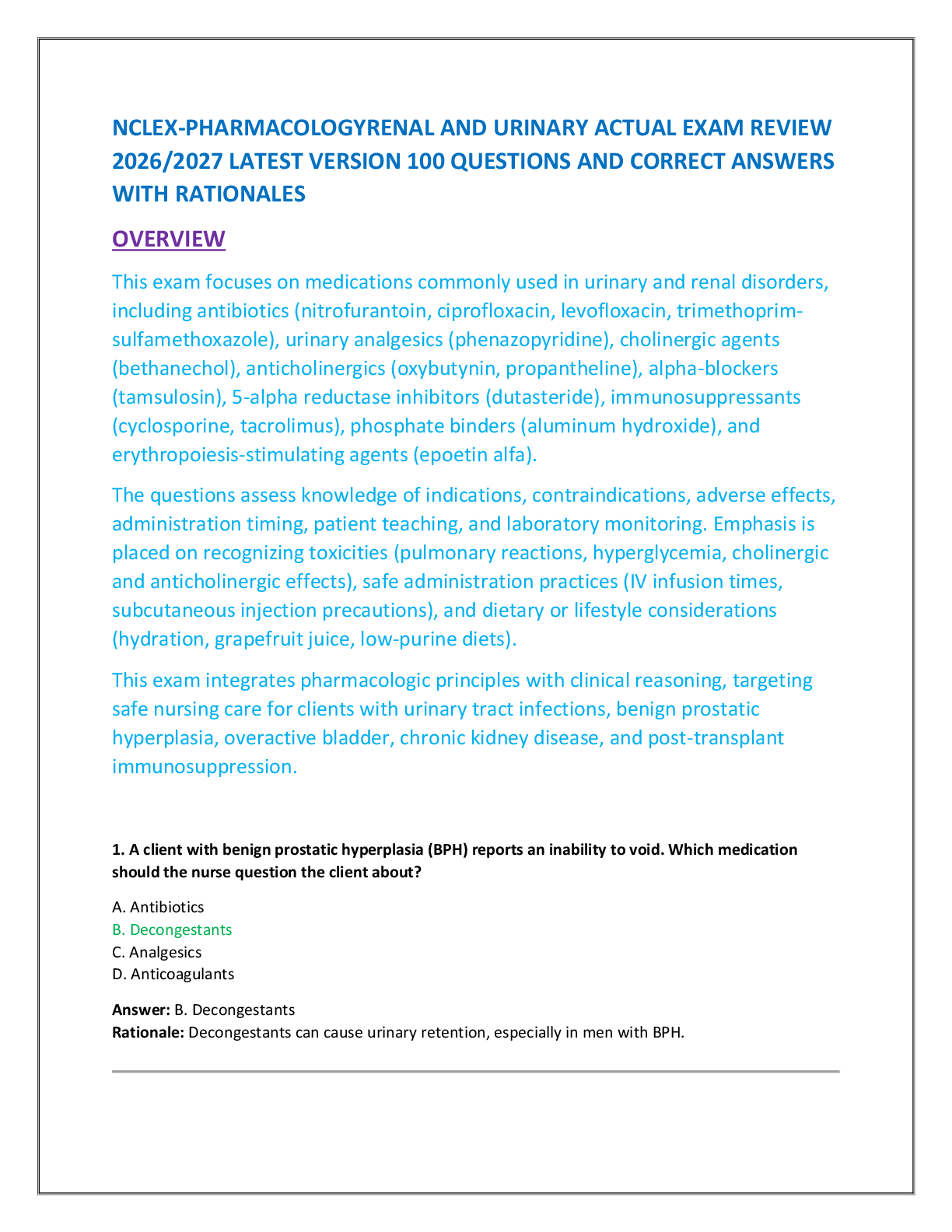
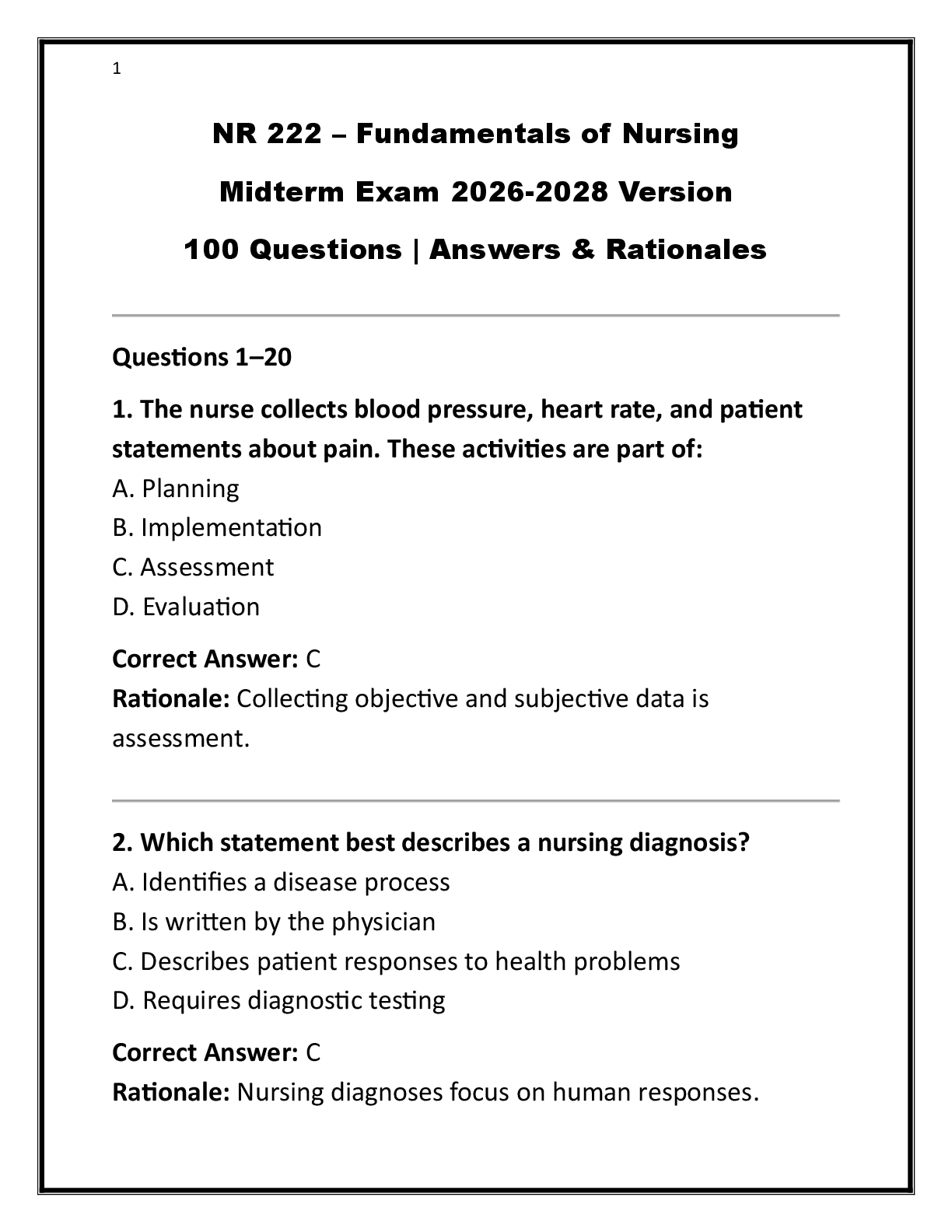
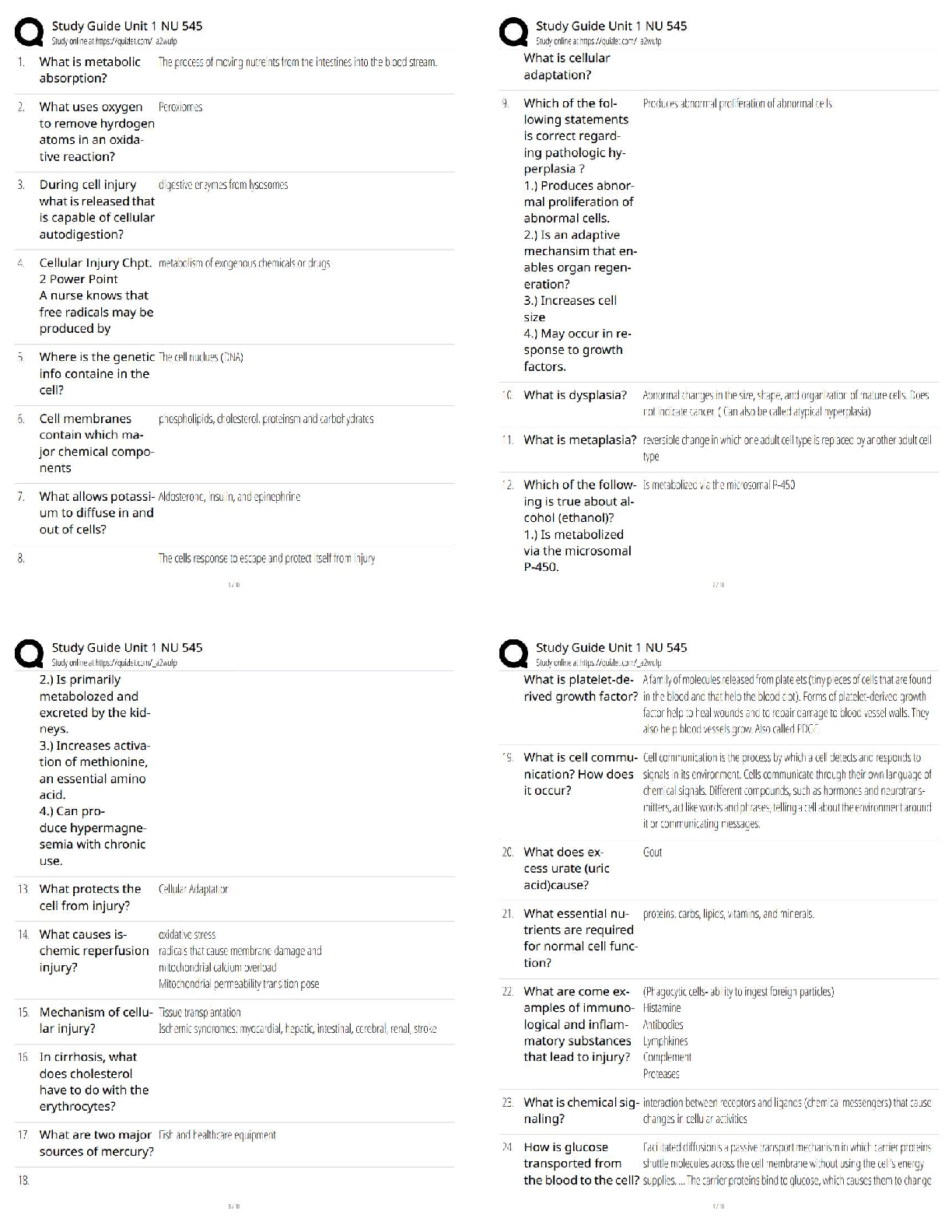
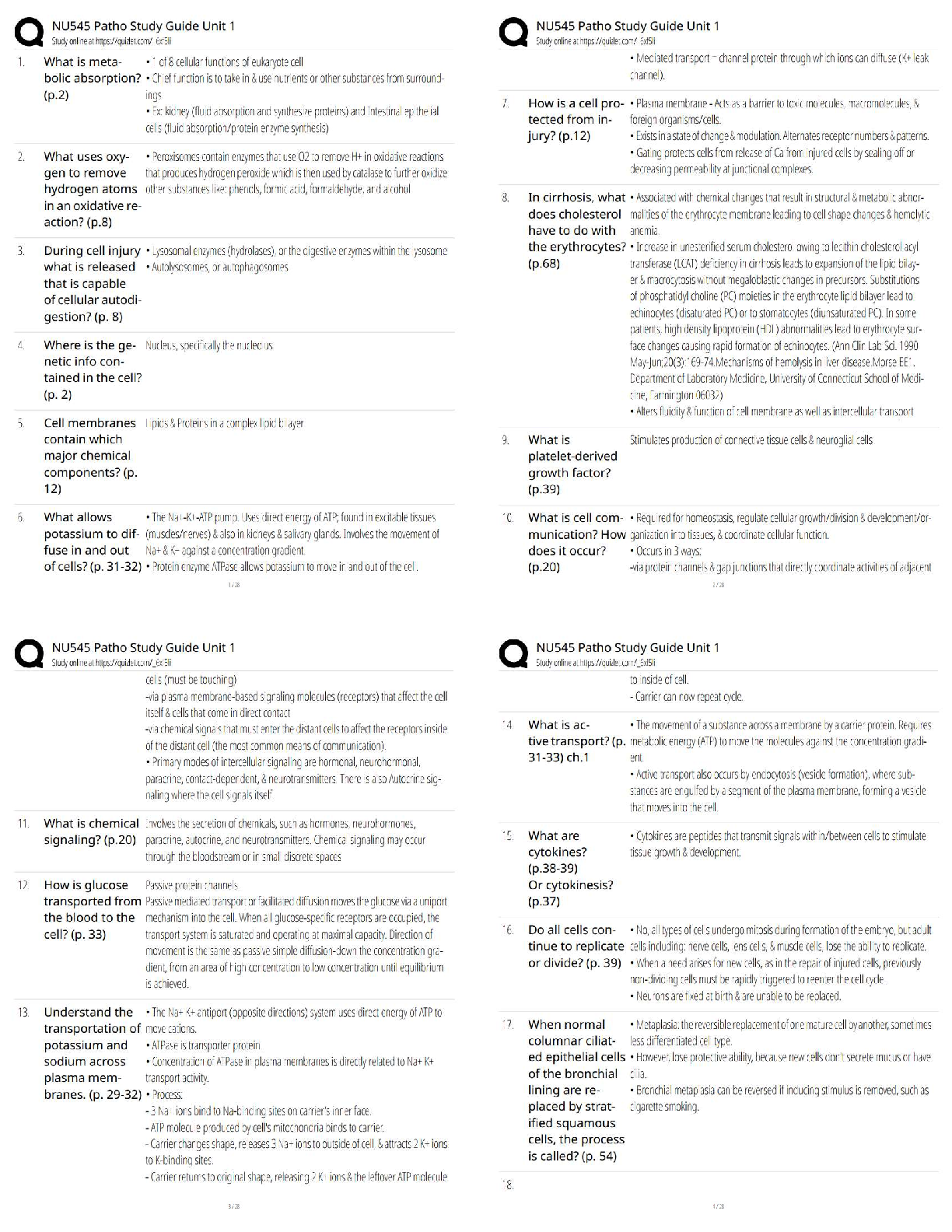
Preview image of NU 545 Unit 2 Study Guide Latest Version 100% Correct document

Buy this document to get the full access instantly

Instant Download Access after purchase

Buy Now

Instant download

We Accept:

Payment methods accepted on Scholarfriends (We Accept)

Reviews( 0 )

$15.00

Buy Now

We Accept:

Payment methods accepted on Scholarfriends (We Accept)

Instant download

Can't find what you want? Try our AI powered Search

132
0

Document information


Connected school, study & course


About the document


Uploaded On

Sep 03, 2020

Number of pages

10

Written in

All

Seller


Profile illustration for Good grade
Good grade

Member since 5 years

395 Documents Sold

Reviews Received
56
16
7
7
18
Additional information

This document has been written for:

Uploaded

Sep 03, 2020

Downloads

 0

Views

 132

Document Keyword Tags

Recommended For You

Get more on STUDY GUIDE »
$15.00
What is Scholarfriends

Scholarfriends.com Online Platform by Browsegrades Inc. 651N South Broad St, Middletown DE. United States.

We are here to help

We're available through e-mail, Twitter, and live chat.
 FAQ
 Questions? Leave a message!


Copyright © Scholarfriends · High quality services·