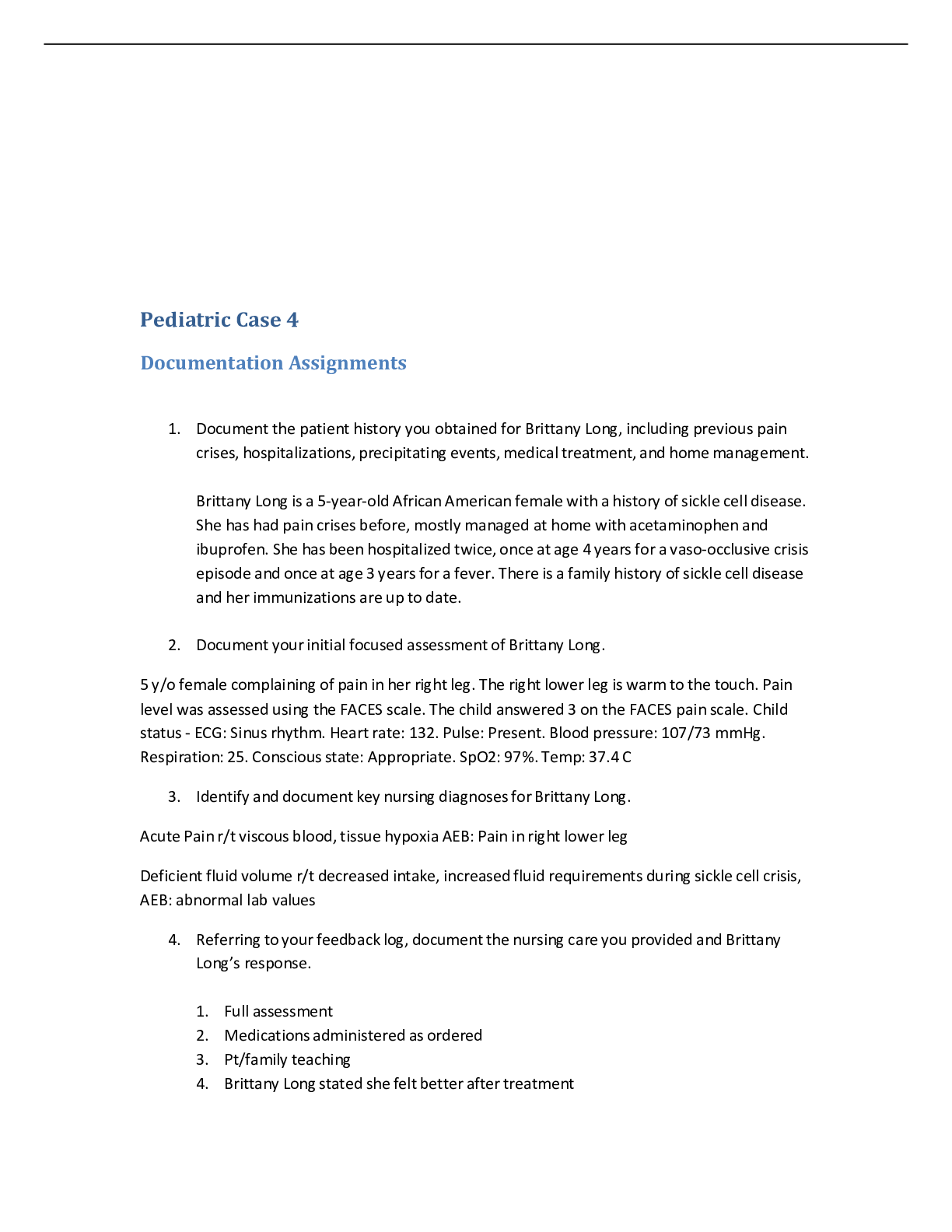
Pediatric Case 4: Brittany Long
Guided Reflection Questions
Opening Questions
How did the simulated experience of Brittany Long’s case make you feel? I feel like I am repeating myself, but I felt good. I took my t
...
Pediatric Case 4: Brittany Long
Guided Reflection Questions
Opening Questions
How did the simulated experience of Brittany Long’s case make you feel? I feel like I am repeating myself, but I felt good. I took my time and read over the mar before starting and even paused for the first time so that I could better think of my next steps without feeling rushed.
Describe the actions you felt went well in this scenario. I felt I knew how to read orders, and lab results pretty good, I knew when to assess and when to give meds. I thought I keeped the child as happy as could be.
Scenario Analysis Questions1
EBP What is the relationship between fluid and oxygen therapy in the treatment of sickle cell anemia? Dehydration is often a precipitating factor in sickle cell crises. Assessment for signs and symptoms of dehydration is critical, particularly in young children, whose fluid stores are rapidly depleted. If oral fluids are not meeting the child’s fluid requirements, IV fluids are necessary.
Hydration is essential to prevent further VOC and complications of SCD and to provide relief of pain. Acute chest syndrome can develop in children with sickle cell crisis. Patients who are immobile are at greater risk for this complication. Monitoring oxygenation, use of incentive spirometry, hydration, and early recongnition are critical in preventing respiratory complications and failure.
EBP What complications might Brittany Long face if her symptoms are not recognized and treated in a timely manner? Delayed puberty, leg ulcers, restrictive lung disease, retinopathy, avascular necrosis of the hip, respiratory failure death.
EBP What methods of pain management did you use and what other methods should be considered for Brittany Long, based on the latest evidence-based practice? Children with mild-to-moderate sickle cell crisis usually receive oral opioid medication and NSAIDs. If that is not sufficient to manage their pain, they may require morphine for breakthrough pain. IV PCA may also become necessary if pain cannot be controlled. Making a referral to the pain team may also be helpful in
1 The Scenario Analysis Questions are correlated to the Quality and Safety Education for Nurses (QSEN) competencies: Patient-Centered Care (PCC), Teamwork and Collaboration (T&C), Evidence-Based Practice (EBP), Quality Improvement (QI), Safety (S), and Informatics (I). Find more information
at: http://qsen.org/
[Show More]