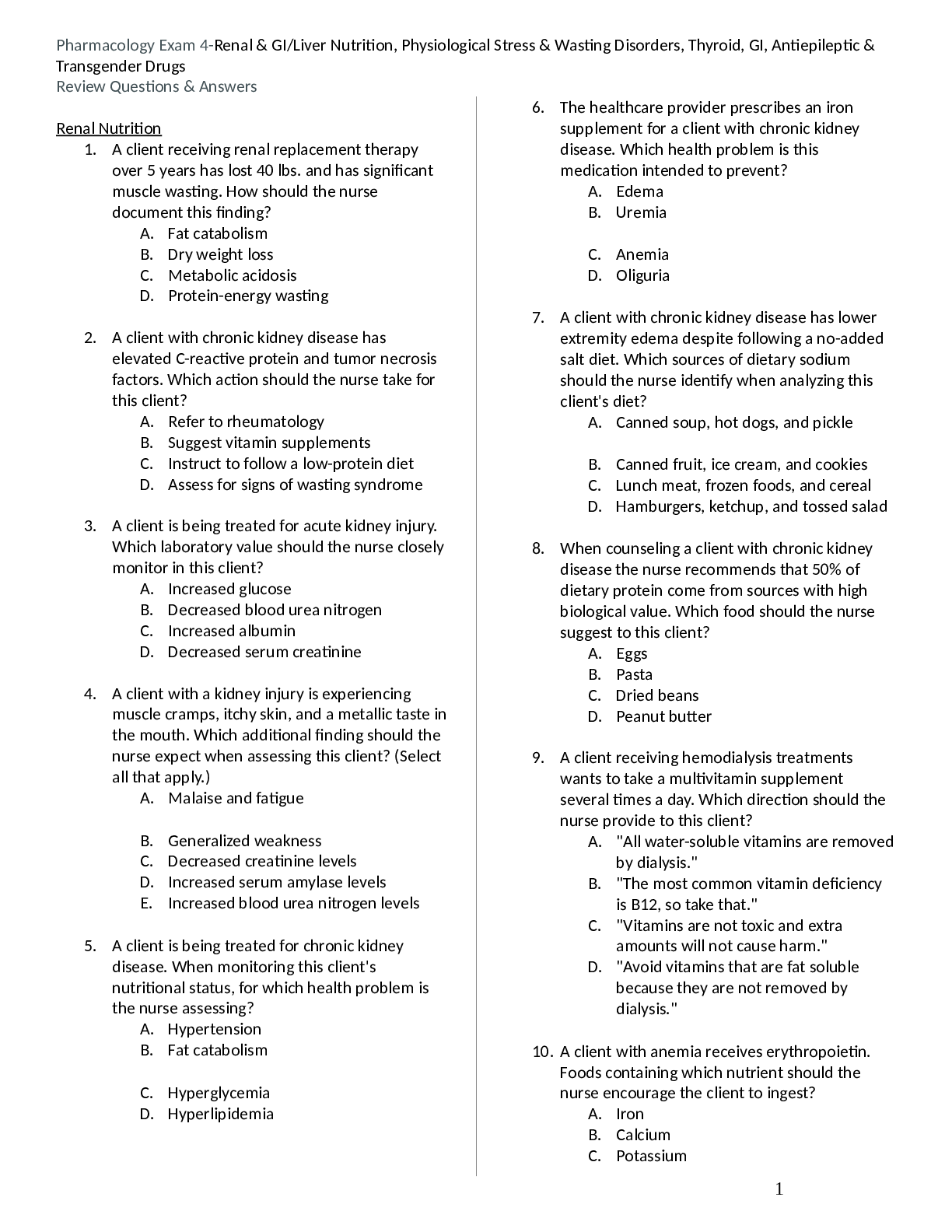
Renal Nutrition
1. A client receiving renal replacement therapy
over 5 years has lost 40 lbs. and has significant
muscle wasting. How should the nurse
document this finding?
A. Fat catabolism
B. Dry weight loss
C.
...
Renal Nutrition
1. A client receiving renal replacement therapy
over 5 years has lost 40 lbs. and has significant
muscle wasting. How should the nurse
document this finding?
A. Fat catabolism
B. Dry weight loss
C. Metabolic acidosis
D. Protein-energy wasting
2. A client with chronic kidney disease has
elevated C-reactive protein and tumor necrosis
factors. Which action should the nurse take for
this client?
A. Refer to rheumatology
B. Suggest vitamin supplements
C. Instruct to follow a low-protein diet
D. Assess for signs of wasting syndrome
3. A client is being treated for acute kidney injury.
Which laboratory value should the nurse closely
monitor in this client?
A. Increased glucose
B. Decreased blood urea nitrogen
C. Increased albumin
D. Decreased serum creatinine
4. A client with a kidney injury is experiencing
muscle cramps, itchy skin, and a metallic taste in
the mouth. Which additional finding should the
nurse expect when assessing this client? (Select
all that apply.)
A. Malaise and fatigue
B. Generalized weakness
C. Decreased creatinine levels
D. Increased serum amylase levels
E. Increased blood urea nitrogen levels
5. A client is being treated for chronic kidney
disease. When monitoring this client's
nutritional status, for which health problem is
the nurse assessing?
A. Hypertension
B. Fat catabolism
C. Hyperglycemia
D. Hyperlipidemia
6. The healthcare provider prescribes an iron
supplement for a client with chronic kidney
disease. Which health problem is this
medication intended to prevent?
A. Edema
B. Uremia
C. Anemia
D. Oliguria
7. A client with chronic kidney disease has lower
extremity edema despite following a no-added
salt diet. Which sources of dietary sodium
should the nurse identify when analyzing this
client's diet?
A. Canned soup, hot dogs, and pickle
B. Canned fruit, ice cream, and cookies
C. Lunch meat, frozen foods, and cereal
D. Hamburgers, ketchup, and tossed salad
8. When counseling a client with chronic kidney
disease the nurse recommends that 50% of
dietary protein come from sources with high
biological value. Which food should the nurse
suggest to this client?
A. Eggs
B. Pasta
C. Dried beans
D. Peanut butter
9. A client receiving hemodialysis treatments
wants to take a multivitamin supplement
several times a day. Which direction should the
nurse provide to this client?
A. "All water-soluble vitamins are removed
by dialysis."
B. "The most common vitamin deficiency
is B12, so take that."
C. "Vitamins are not toxic and extra
amounts will not cause harm."
D. "Avoid vitamins that are fat soluble
because they are not removed by
dialysis."
10. A client with anemia receives erythropoietin.
Foods containing which nutrient should the
nurse encourage the client to ingest?
A. Iron
B. Calcium
C. Potassium
[Show More]




.png)

.png)
.png)

