Pharmacology > STUDY GUIDE > NSG 6005 PHARM MIDTERM STUDY GUIDE 2018 (word).docx (All)
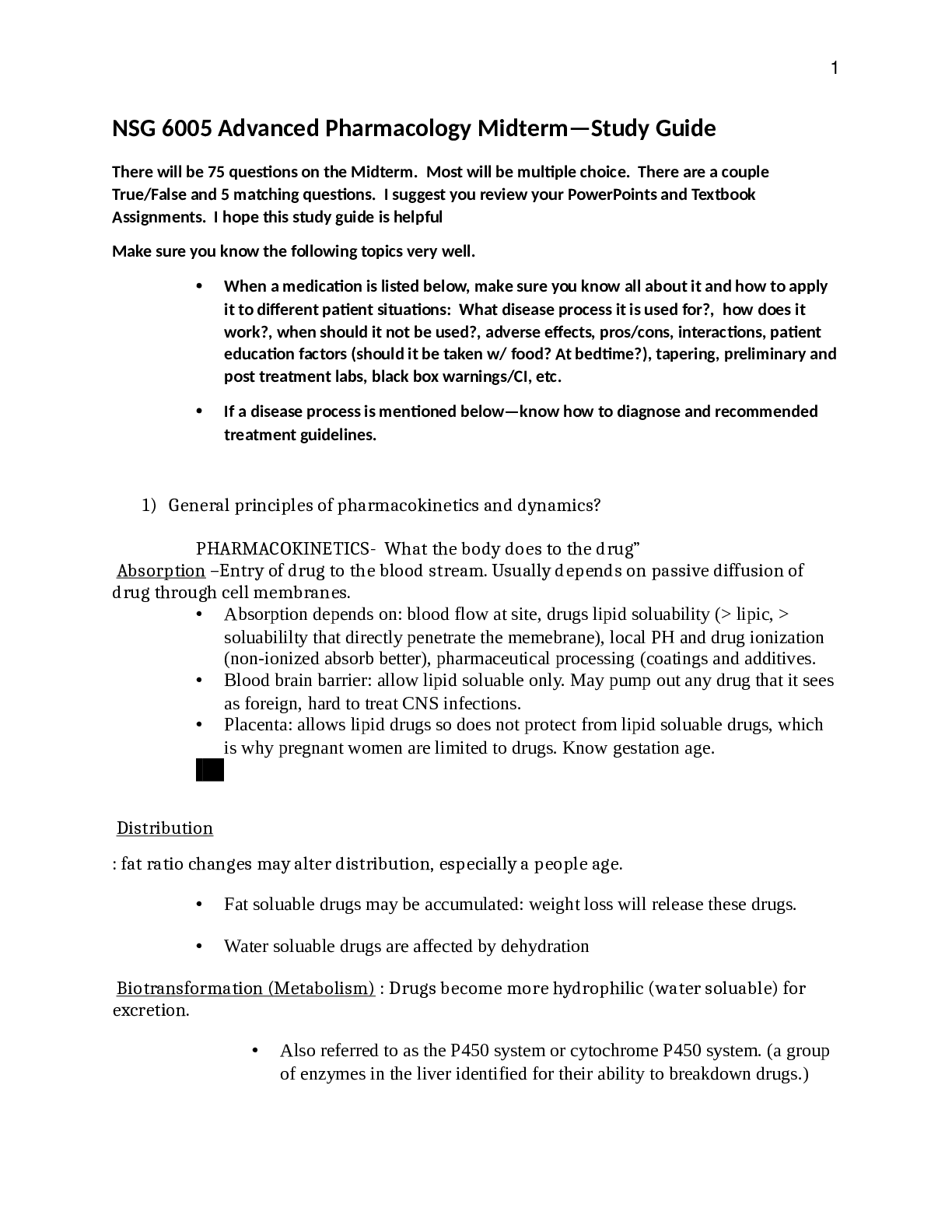
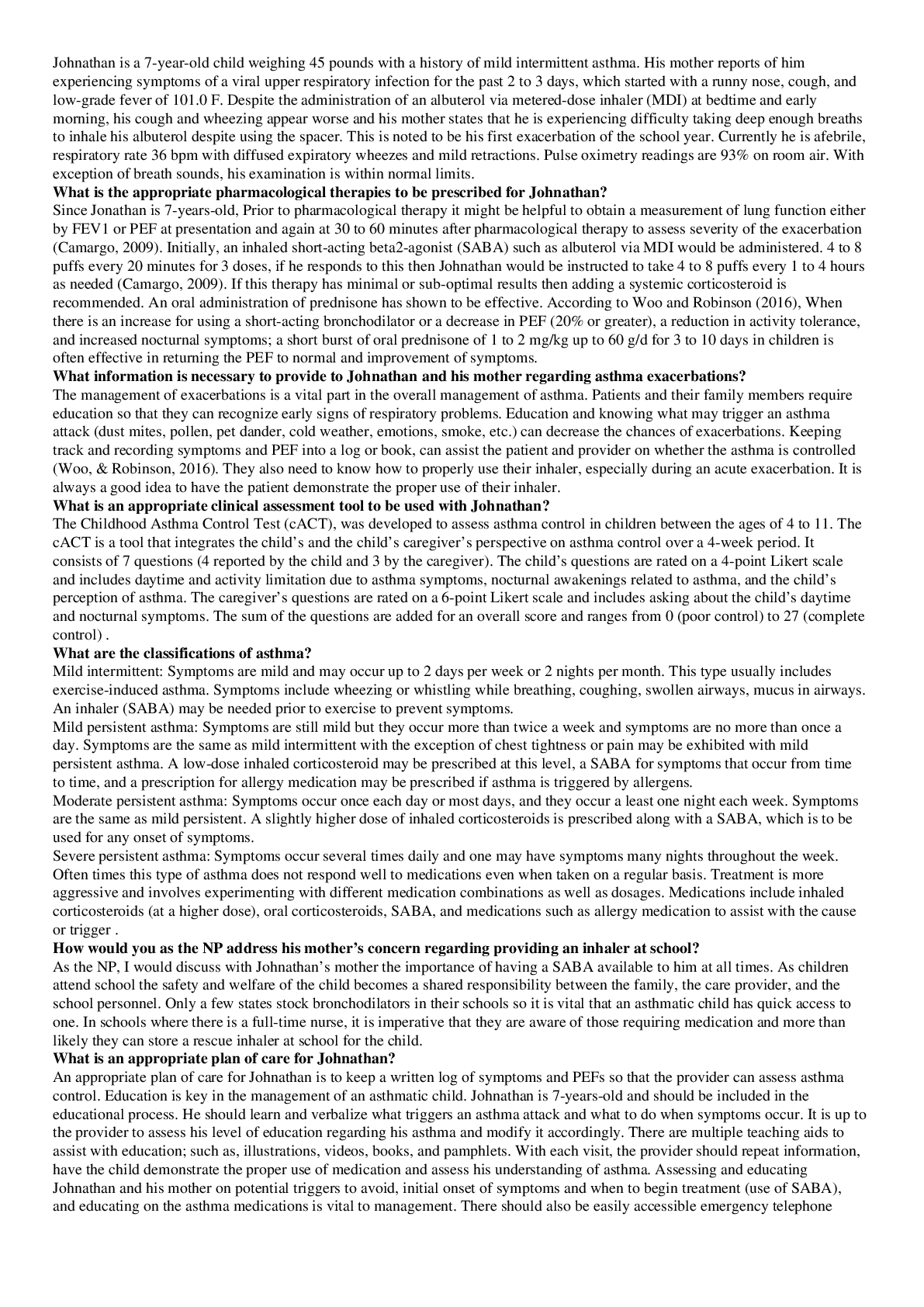
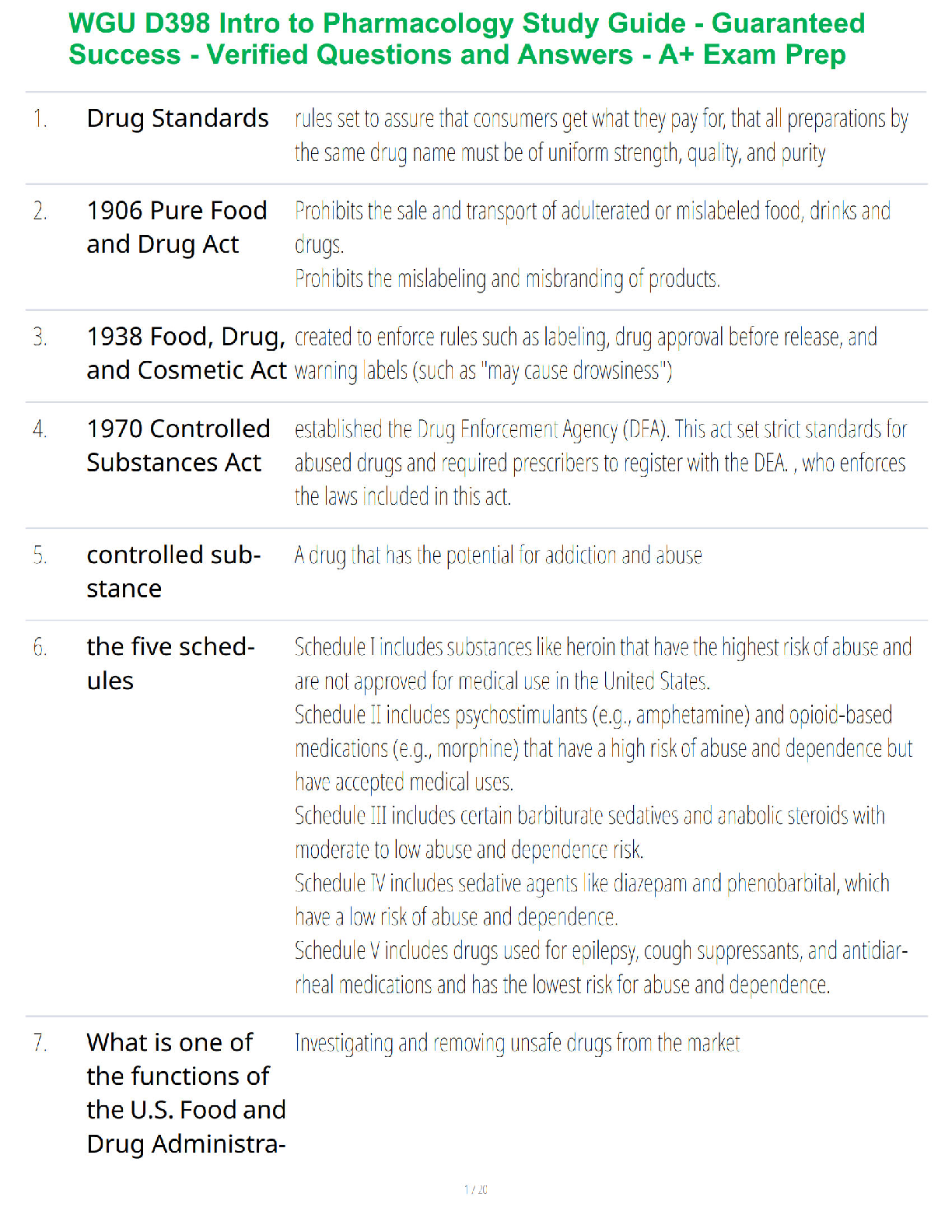
NSG 6005 Advanced Pharmacology Midterm—Study Guide There will be 75 questions on the Midterm. Most will be multiple choice. There are a couple True/False and 5 matching questions. I suggest you re ... view your PowerPoints and Textbook Assignments. I hope this study guide is helpful Make sure you know the following topics very well. • When a medication is listed below, make sure you know all about it and how to apply it to different patient situations: What disease process it is used for?, how does it work?, when should it not be used?, adverse effects, pros/cons, interactions, patient education factors (should it be taken w/ food? At bedtime?), tapering, preliminary and post treatment labs, black box warnings/CI, etc. • If a disease process is mentioned below—know how to diagnose and recommended treatment guidelines. 1) General principles of pharmacokinetics and dynamics? PHARMACOKINETICS- What the body does to the drug” Absorption –Entry of drug to the blood stream. Usually depends on passive diffusion of drug through cell membranes. • Absorption depends on: blood flow at site, drugs lipid soluability (> lipic, > soluabililty that directly penetrate the memebrane), local PH and drug ionization (non-ionized absorb better), pharmaceutical processing (coatings and additives. • Blood brain barrier: allow lipid soluable only. May pump out any drug that it sees as foreign, hard to treat CNS infections. • Placenta: allows lipid drugs so does not protect from lipid soluable drugs, which is why pregnant women are limited to drugs. Know gestation age. • Distribution : fat ratio changes may alter distribution, especially a people age. • Fat soluable drugs may be accumulated: weight loss will release these drugs. • Water soluable drugs are affected by dehydration Biotransformation (Metabolism) : Drugs become more hydrophilic (water soluable) for excretion. • Also referred to as the P450 system or cytochrome P450 system. (a group of enzymes in the liver identified for their ability to breakdown drugs.) 2 • Hepatic “First Pass Effect” (parenteral (IV or IM) meds bypass this enzymatic effect) • breaks PO meds down to some degree, some are protected with coating but they don’t always work • Metabolites Usually less active, less toxic, easier • to excrete • Prodrugs - inactive in form given but metabolized to active drug (ex: enalapril) • Liver function determined by liver enzymes • Failing liver produces fewer enzymes, drugs available longer: caution • • Excretion: Process by which medications are eliminated from the body unchanged or as metabolites • Kidneys are main organ of excretion • If poor renal function, drug may accumulate, may wish to prescribe less of drug • Also eliminated via r [Show More]
Last updated: 3 years ago
Preview 1 out of 110 pages
Buy this document to get the full access instantly
Instant Download Access after purchase
Buy NowInstant download
We Accept:
Can't find what you want? Try our AI powered Search
Connected school, study & course
About the document
Uploaded On
Aug 22, 2021
Number of pages
110
Written in
All
This document has been written for:
Uploaded
Aug 22, 2021
Downloads
0
Views
86
Scholarfriends.com Online Platform by Browsegrades Inc. 651N South Broad St, Middletown DE. United States.
We're available through e-mail, Twitter, Facebook, and live chat.
FAQ
Questions? Leave a message!
Copyright © Scholarfriends · High quality services·