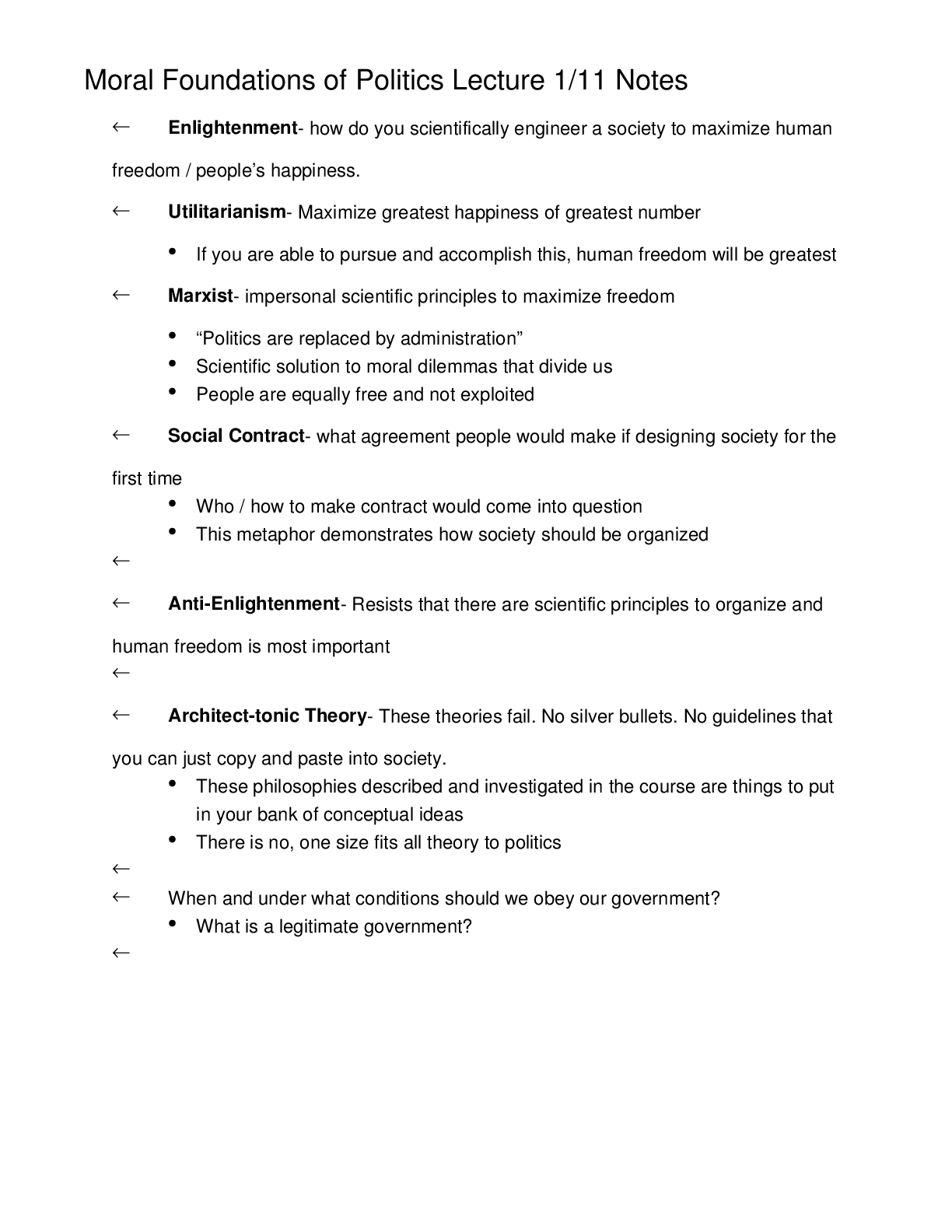
You Just Don't Understand:
Chapter 1
Reactions to the World around them
Men:
- views the world as a hierarchy society.
- either one-up or one-down.
- view conversations as negotiations in which they try to achieve
...
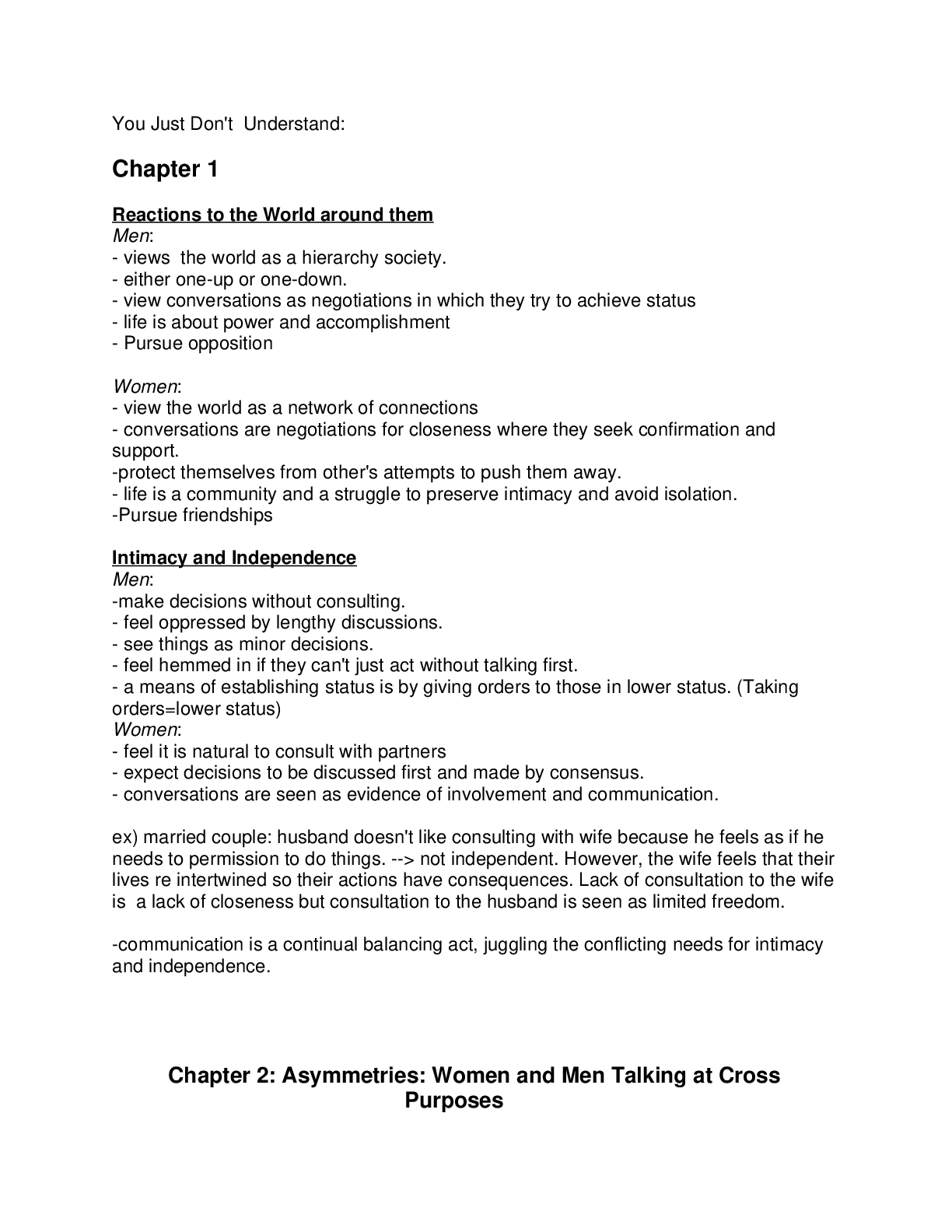
You Just Don't Understand:
Chapter 1
Reactions to the World around them
Men:
- views the world as a hierarchy society.
- either one-up or one-down.
- view conversations as negotiations in which they try to achieve status
- life is about power and accomplishment
- Pursue opposition
Women:
- view the world as a network of connections
- conversations are negotiations for closeness where they seek confirmation and
support.
-protect themselves from other's attempts to push them away.
- life is a community and a struggle to preserve intimacy and avoid isolation.
-Pursue friendships
Intimacy and Independence
Men:
-make decisions without consulting.
- feel oppressed by lengthy discussions.
- see things as minor decisions.
- feel hemmed in if they can't just act without talking first.
- a means of establishing status is by giving orders to those in lower status. (Taking
orders=lower status)
Women:
- feel it is natural to consult with partners
- expect decisions to be discussed first and made by consensus.
- conversations are seen as evidence of involvement and communication.
ex) married couple: husband doesn't like consulting with wife because he feels as if he
needs to permission to do things. --> not independent. However, the wife feels that their
lives re intertwined so their actions have consequences. Lack of consultation to the wife
is a lack of closeness but consultation to the husband is seen as limited freedom.
-communication is a continual balancing act, juggling the conflicting needs for intimacy
and independence.
Chapter 2: Asymmetries: Women and Men Talking at Cross
PurposesThey're My Troubles, Not Yours
When a woman sympathizes with a man, he gets annoyed and feels she is trying to
take something away from him by denying the uniqueness of his experience.
ex) "I know how you feel; I feel the same way"
I'll Fix it For you
when men offer solutions to women, they complain about women's refusal to take action
to solve the problems they complain about.
their sincere attempts to help a woman solve her problems are met with disapproval
rather than gratitude.
Woman express their problems frequently because of the metamessage that it carries:
it's a bad for an expression of understanding or a similar complaint.
Troubles talk = rapport talk
women send each other the metamessage of "We're the same, you're not alone"
women feel distanced by advice: which sends the metamessage: "We;re not the same.
You have the problems, I have the Solutions."
Parallel Tracks
Men tend to dismiss each other's troubles as insignificant and would rather talk about
their own.
ex) "You shouldn't feel bad because your problems aren't so bad"
Matching Troubles
women tend to show understanding of another woman's feelings.
men try to reassure women by telling them that their situation isn't so bleak. --> women
hear their feelings being belittled or discounted. = failure of intimacy
A Different Symmetry
when women and men talk to each other, the problem is that each expects a different
kind of response.
men: seek to assuage feelings indirectly by attacking their cause.
women: expect to have their feelings supported
Don't Ask
Why do men resist asking for help?
the one who has more information is framed as higher up.
men especially refuse to ask for help from women.
women:
giving information, directions, or help reinforces bonds between people.
some women are aware of this reluctance by the men, so they become cautious about
stating information that they know.
I'll Fix it if it Kills me
women
feel comfortable asking for help
[Show More]






.png)