NR 601 Midterm Exam review November 2019
Week 1
Developmental changes
o Review Kennedy readings for age related changes
Physiological
Age related Change Functional Change Implications
Integumentary System
Loss of
...
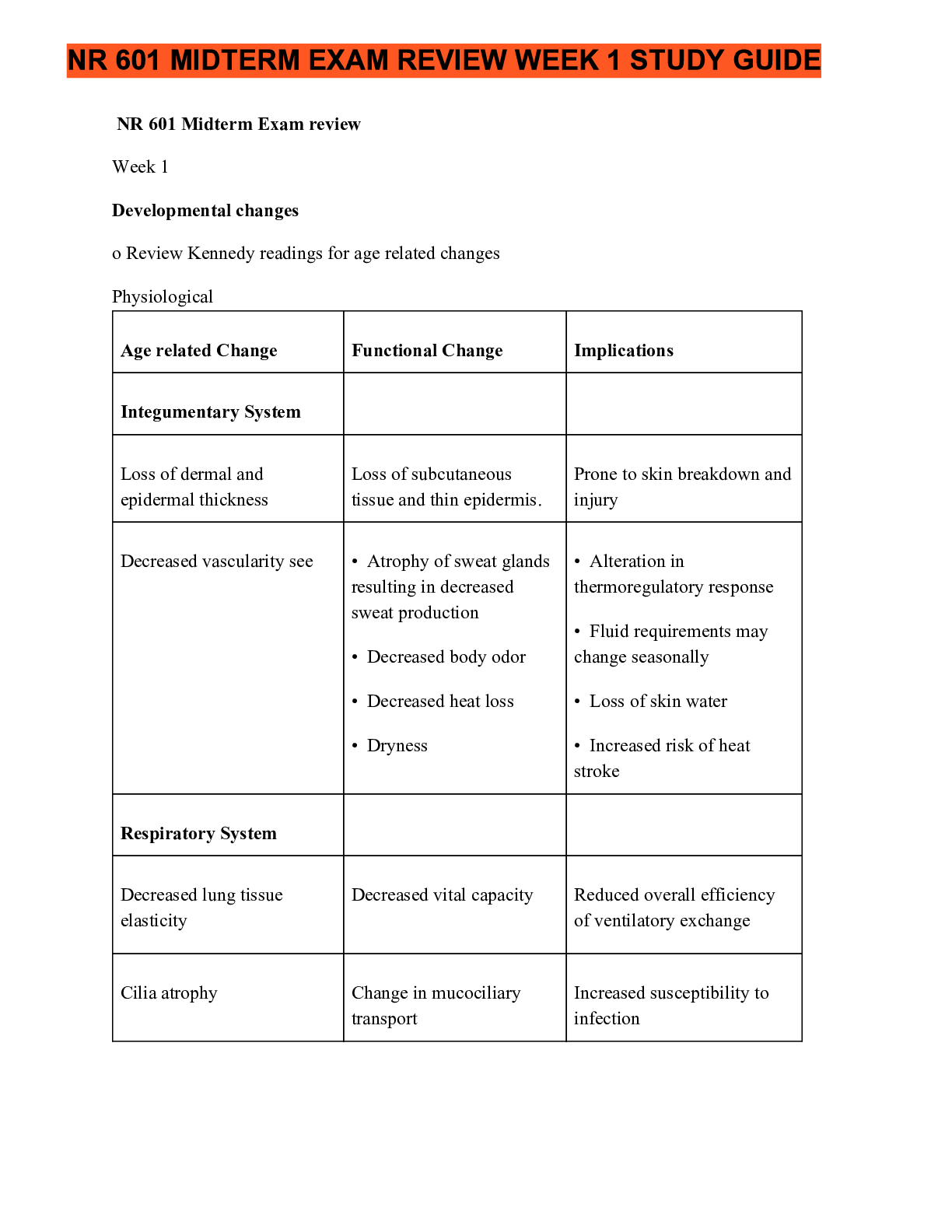
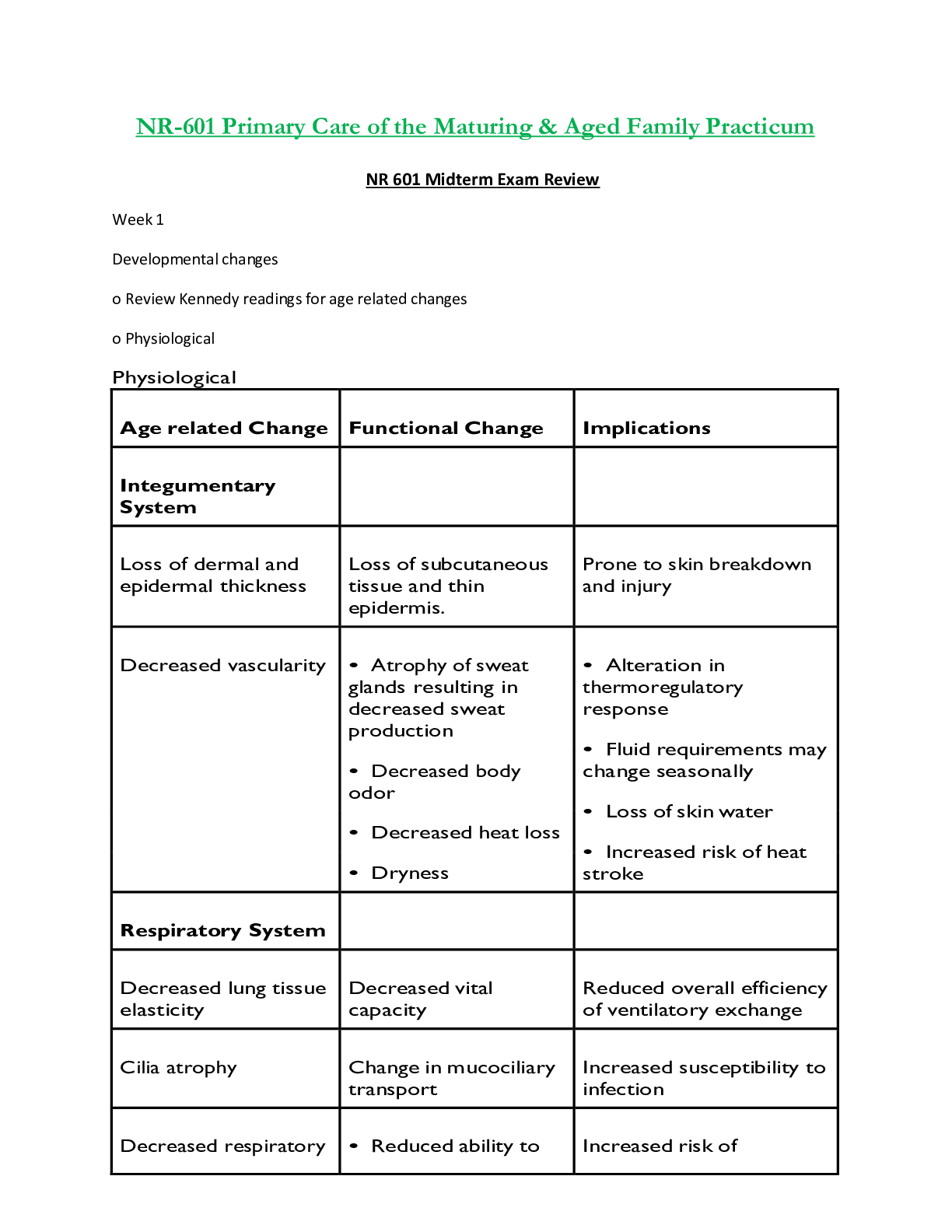
NR 601 Midterm Exam review November 2019
Week 1
Developmental changes
o Review Kennedy readings for age related changes
Physiological
Age related Change Functional Change Implications
Integumentary System
Loss of dermal and
epidermal thickness
Loss of subcutaneous tissue
and thin epidermis.
Prone to skin breakdown and
injury
Decreased vascularity see • Atrophy of sweat glands
resulting in decreased
sweat production
• Decreased body odor
• Decreased heat loss
• Dryness
• Alteration in
thermoregulatory response
• Fluid requirements may
change seasonally
• Loss of skin water
• Increased risk of heat
stroke
Respiratory System
Decreased lung tissue
elasticity
Decreased vital capacity Reduced overall efficiency of
ventilatory exchange
Cilia atrophy Change in mucociliary
transport
Increased susceptibility to
infection
Decreased respiratory
muscle strength
• Reduced ability to handle
secretions and reduced
effectiveness against
noxious foreign particles
• Partial inflation of lungs
at rest
Increased risk of atelectasisCardiovascular System
Heart valves thicken and
become fibrotic
Reduced stroke volume,
cardiac output; may be
altered
Decreased responsiveness to
stress
Fibroelastic thickening of the
sinoatrial node; decreased
number of pacemaker cells
Slower heart rate Increased prevalence of
arrhythmias
Decreased baroreceptor
sensitivity (stretch
receptors)
Decreased sensitivity to
changes in blood pressure
Prone to loss of balance,
which increases the risk for
falls
GI
Liver becomes smaller Decreased storage capacity
Decreased muscle tone Altered motility Increases risk of constipation,
functional bowel syndrome,
esophageal spasm,
diverticular disease
Decreased basal metabolic
rate (rate at which fuel is
converted into energy)
May need fewer calories
NE CONDE)
Lab results
Lab Test Normal Changes with age Comments
UA
Protein 0-5mg/100ml Rises slightly May be due to kidney
changes with age,
urinary tract infection,
renal pathology
Specific Gravity 1.005-1.020 Lower max in elderly
1.016-1.022
Decline in nephrons
impairs ability toconcentrate urine
Hematology
ESR Men: 0-20
Women: 0-30
Significant increase Neither sensitive nor
specific in aged
Iron Binding 50-160mcg/dl
230-410mcg/dl
Slight decrease
Decrease
Hemoglobin Men: 13-18g/100ml
Women: 12-16g
Men: 10-17g
Women: None noted
Anemia common in the
elderly
Hematocrit Men: 45-52%
Women 37-48%
Slight decreased
speculated
Decline in
hematopoiesis
Leukocytes 4,300–10,800/mm3 Drop to 3,100–
9,000/mm3
Decrease may be due to
drugs or sepsis and
should not be
attributed immediately
to age
Lymphocytes 00–2,400 T
cells/mm3 50–200
B cells/mm3
T-cell and B-cell
levels fall
Infection risk higher;
immunization
encouraged
Platelet 150,000–350,000/ No change in
number
Blood Chemistry
Albumin 3.5–5.0 Decline Related to decrease in
liver size and enzymes;
protein-energymalnutrition common
Globulin 2.3–3.5 Slight increase
Total serum protein 6.0–8.4 g No change Decreases may indicate
malnutrition, infection,
liver disease
Blood urea nitrogen Men: 10–25
Women: 8–20 mg
Increases
significantly up to 69
mg
Increases significantly
up to 69 mg
Creatinine 0.6–1.5 mg Increases to 1.9 mg Related to lean body
mass decrease
[Show More]



x.png)