Physiological
Age related Change Functional Change Implications
Integumentary System
Loss of dermal and
epidermal thickness
Loss of subcutaneous tissue
and thin epidermis.
Prone to skin breakdown and
injury
Decr
...
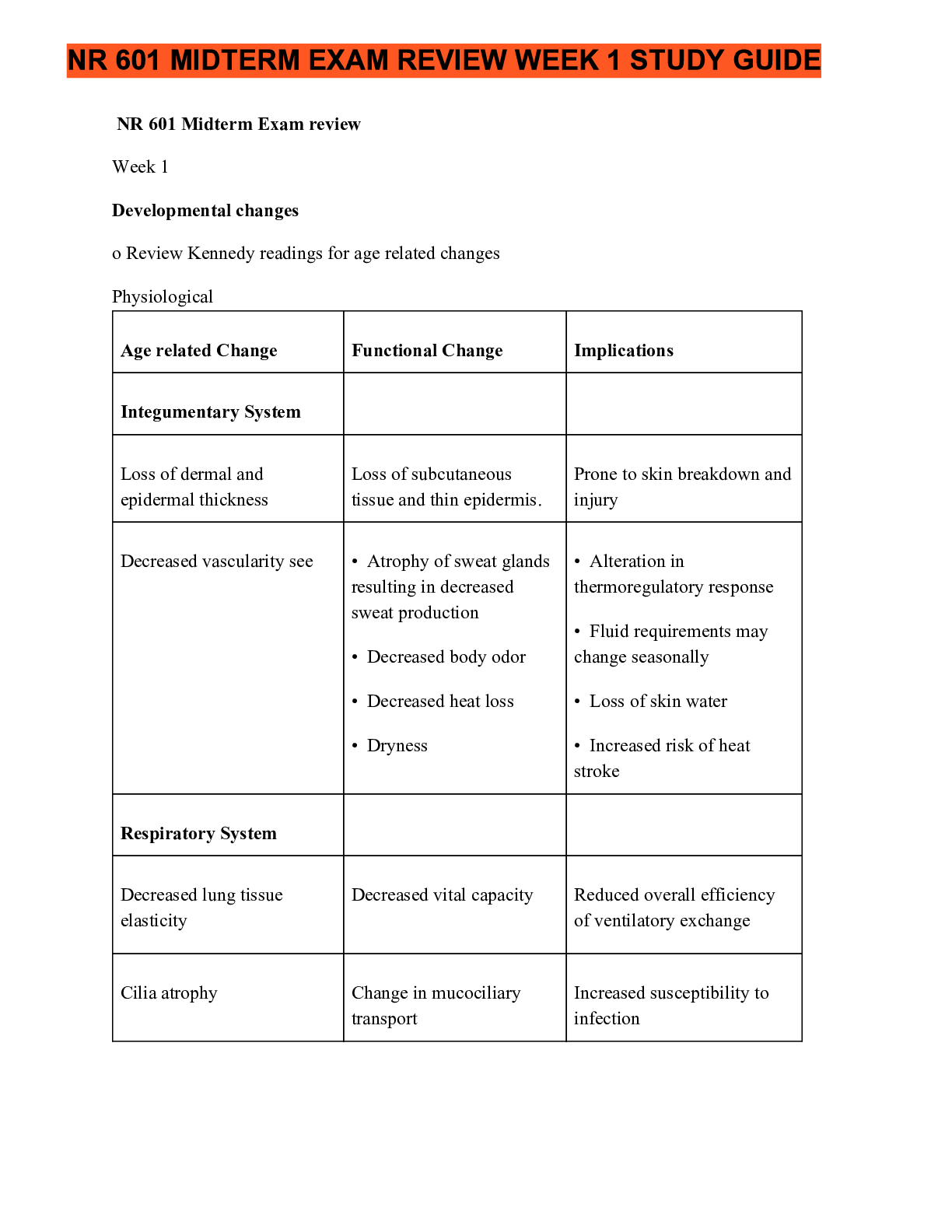
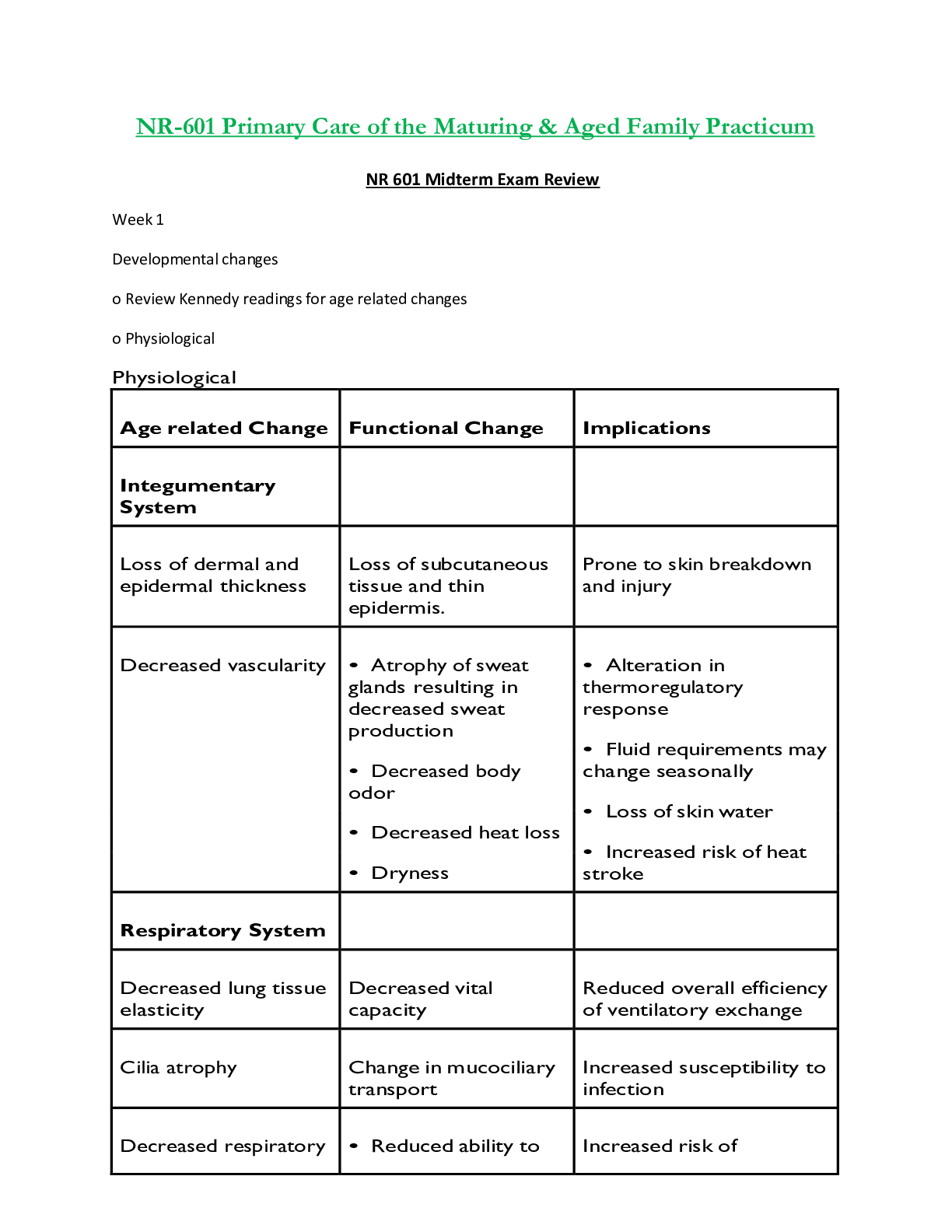
Physiological
Age related Change Functional Change Implications
Integumentary System
Loss of dermal and
epidermal thickness
Loss of subcutaneous tissue
and thin epidermis.
Prone to skin breakdown and
injury
Decreased vascularity see • Atrophy of sweat glands
resulting in decreased
sweat production
• Decreased body odor
• Decreased heat loss
• Dryness
• Alteration in
thermoregulatory response
• Fluid requirements may
change seasonally
• Loss of skin water
• Increased risk of heat
stroke
Respiratory System
Decreased lung tissue
elasticity
Decreased vital capacity Reduced overall efficiency of
ventilatory exchange
Cilia atrophy Change in mucociliary
transport
Increased susceptibility to
infection
Decreased respiratory
muscle strength
• Reduced ability to handle
secretions and reduced
effectiveness against
noxious foreign particles
• Partial inflation of lungs
at rest
Increased risk of atelectasisCardiovascular System
Heart valves thicken and
become fibrotic
Reduced stroke volume,
cardiac output; may be
altered
Decreased responsiveness to
stress
Fibroelastic thickening of the
sinoatrial node; decreased
number of pacemaker cells
Slower heart rate Increased prevalence of
arrhythmias
Decreased baroreceptor
sensitivity (stretch
receptors)
Decreased sensitivity to
changes in blood pressure
Prone to loss of balance,
which increases the risk for
falls
GI
Liver becomes smaller Decreased storage capacity
Decreased muscle tone Altered motility Increases risk of constipation,
functional bowel syndrome,
esophageal spasm,
diverticular disease
Decreased basal metabolic
rate (rate at which fuel is
converted into energy)
May need fewer calories
NE CONDE)
Lab results
Lab Test Normal Changes with age Comments
UA
Protein 0-5mg/100ml Rises slightly May be due to kidney
changes with age,
urinary tract infection,
renal pathology
Specific Gravity 1.005-1.020 Lower max in elderly
1.016-1.022
Decline in nephrons
impairs ability toconcentrate urine
Hematology
ESR Men: 0-20
Women: 0-30
Significant increase Neither sensitive nor
specific in aged
Iron Binding 50-160mcg/dl
230-410mcg/dl
Slight decrease
Decrease
Hemoglobin Men: 13-18g/100ml
Women: 12-16g
Men: 10-17g
Women: None noted
Anemia common in the
elderly
Hematocrit Men: 45-52%
Women 37-48%
Slight decreased
speculated
Decline in
hematopoiesis
Leukocytes 4,300–10,800/mm3 Drop to 3,100–
9,000/mm3
Decrease may be due to
drugs or sepsis and
should not be
attributed immediately
to age
Lymphocytes 00–2,400 T
cells/mm3 50–200
B cells/mm3
T-cell and B-cell
levels fall
Infection risk higher;
immunization
encouraged
Platelet 150,000–350,000/ No change in
number
Blood Chemistry
Albumin 3.5–5.0 Decline Related to decrease in
liver size and enzymes;
protein-energymalnutrition common
Globulin 2.3–3.5 Slight increase
Total serum protein 6.0–8.4 g No change Decreases may indicate
malnutrition, infection,
liver disease
Blood urea nitrogen Men: 10–25
Women: 8–20 mg
Increases
significantly up to 69
mg
Increases significantly
up to 69 mg
Creatinine 0.6–1.5 mg Increases to 1.9 mg Related to lean body
mass decrease
Creatinine clearance 104–124 mL/min Decreases
10%/decade after
age 40 years
Used for prescribing
medications for drugs
excreted by kidney
Glucose tolerance 62–110 mg/dL after
fasting; >120 mg/dL
after 2 hours
postprandial
Slight increase of 10
mg/dL/decade after
30 years of age
Diabetes increasingly
prevalent; drugs may
cause glucose
intolerance
Alkaline
phosphatase
13–39 IU/L Increase by 8–10
IU/L
Elevations >20%
usually due to disease;
elevations may be
found with bone
abnormalities, drugs
(e.g., narcotics), and
eating a fatty meal
o Atypical disease presentations
1. Acute abdomenAbsence of symptoms or vague symptoms, acute confusion, mild discomfort and
constipation, some tachypnea and possibly vague respiratory symptoms, appendicitis pain
may begin in right lower quadrant and become diffuse
2. Depression
Anorexia, vague abdominal complaints, new onset of constipation, insomnia
hyperactivity, lack of sadness
3. Hyperthyroidism
Hyperthyroidism presenting as “apathetic thyrotoxicosis,” i.e., fatigue and weakness; weight
loss may result instead of weight gain; patients report palpitations, tachycardia, new onset
of atrial fibrillation, and heart failure may occur with undiagnosed hyperthyroidism
4. Hypothyroidism
Hypothyroidism often presents with confusion and agitation; new onset of anorexia, weight
loss, and arthralgias may occur
5. Malignancy
New or worsening back pain secondary to metastases from slow growing breast masses
Silent masses of the bowel
6. Myocardial
Absence of chest pain infarction (MI), vague symptoms of fatigue, nausea, and a decrease in
functional and cognitive status; classic presentations: dyspnea, epigastric discomfort,
weakness, vomiting; history of previous cardiac failure, higher prevalence in females versus
males Non-Q-wave MI
7. Overall infectious diseases process
Absence of fever or low-grade fever, malaise
8. Sepsis
Without usual leukocytosis and fever, falls, anorexia, new onset of confusion and/or
alteration in change in mental status, decrease in usual functional status
9. Peptic ulcer disease
Absence of abdominal pain, dyspepsia, early satiety, painless, bloodless, new onset of
confusion, unexplained, tachycardia, and/or hypotension
10. PneumoniaAbsence of fever; mild coughing without copious sputum, especially in dehydrated patients;
tachycardia and tachypnea; anorexia and malaise are common; alteration in cognition.
11. Pulmonary edema
Lack of paroxysmal nocturnal dyspnea or coughing; insidious onset with changes in
function, food or fluid intake, or confusion
12. Tuberculosis (TB)
Atypical signs of TB in older adults include hepatosplenomegaly, abnormalities in liver
function tests, and anemia
13. Urinary tract infection
Absence of fever, worsening mental or functional status, dizziness, anorexia, fatigue,
weakness
o Geriatric syndromes refers to conditions that involve multiple organ systems. Most common are
delirium, falls, dizziness and incontinence.
risk factors include: older age, cognitive impairment, functional impairment, and impaired mobility.
Bowel incontinence- involuntary passage of stool or the inability to control stool from expulsion.
More prevalent in women than men. 3 types: urge incontinence, passive incontinence, and fecal
seepage.
urge- has desire to go but cannot make it to the toilet despite attempts to avoid defecating.
Passive-involuntary loss of gas and stool without awareness.
fecal seepage- leakage of stool after a normal bowel movement.
etiology : a number of reasons including GI issues, cognitive or neurological diseases.
Treatment: treat related etiology such as impaction of increasing fiber. Habit training is also
recommended. Once clear evidence of no impaction, infection, or cause is determined. antidiarrheal
medication like Imodium can be tried.
For retrosphincter dysfunction biofeedback with strengthening exercises for the sphincter can be
done.
Constipation: presence of 2 or more symptoms: decreased stool frequency, straining, hard stools,
sensation of incomplete emptying, blockage at anorectal site. constipation is most common
digestive complaint.
[Show More]

 GRADE A SOLUTION.png)



x.png)

 hesi.png)
.png)
.png)