NR 328 Final Exam | 100% Score 60/60 POINTS
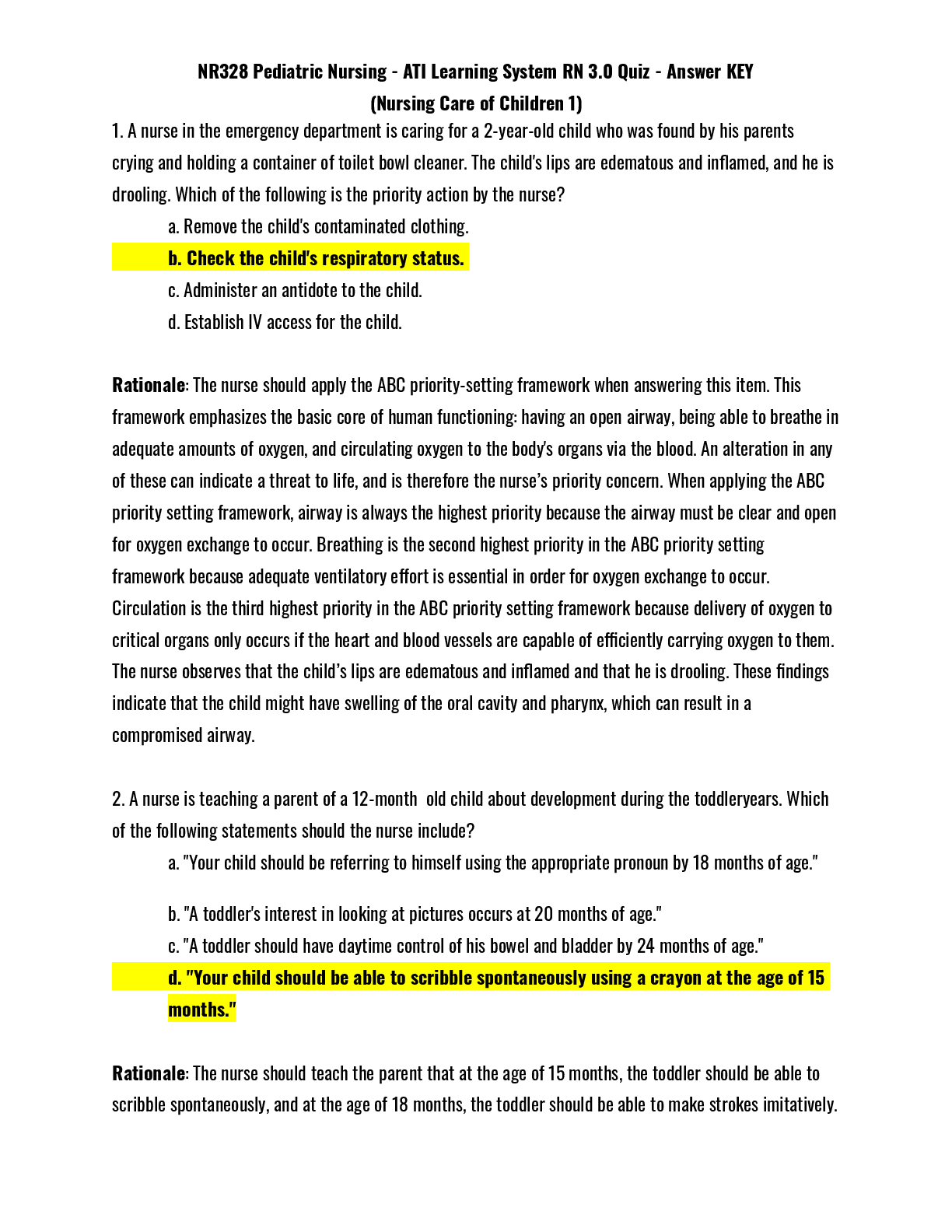
An important nursing consideration when suctioning a young child who has had heart surgery is to:
Administer supplemental oxygen before and after suctioning.
...
NR 328 Final Exam | 100% Score 60/60 POINTS
An important nursing consideration when suctioning a young child who has had heart surgery is to:
Administer supplemental oxygen before and after suctioning.
Suction for no longer than 30 seconds at a time.
Perform suctioning at least every hour.
Expect symptoms of respiratory distress when suctioning.
If suctioning is indicated, supplemental oxygen is administered with a manual resuscitation bag before and after the procedure to prevent hypoxia. Suctioning should be done only as indicated, not on a routine basis. The child should be suctioned for no more than 5 seconds at one time. Symptoms of respiratory distress are to be avoided by using the appropriate technique.
The primary nursing intervention necessary to prevent bacterial endocarditis is to:
Observe children for complications such as embolism and heart failure.
Counsel parents of high risk children about prophylactic antibiotics.
Institute measures to prevent dental procedures.
Encourage restricted mobility in susceptible children.
The objective of nursing care is to counsel the parents of high risk children about both the need for prophylactic antibiotics for dental procedures and the necessity of maintaining excellent oral health. The child’s dentist should be aware of the child’s cardiac condition. Dental procedures should be done to maintain a high level of oral health. Prophylactic antibiotics are necessary. Observing for complications and encouraging restricted mobility in susceptible children should be done, but maintaining good oral health and using prophylactic antibiotics are most important.
The leading cause of death after heart transplantation is:
Cardiomyopathy.
Rejection.
Infection.
Congestive heart failure.
The posttransplantation course is complex. The leading cause of death after cardiac transplantation is rejection. Infection is a continued risk secondary to the immunosuppression necessary to prevent rejection. Cardiomyopathy is one of the indications for cardiac transplant. Congestive heart failure is not a leading cause of death.
One of the most frequent causes of hypovolemic shock in children is:
Blood loss.
Anaphylaxis.
Myocardial infarction.
Congenital heart disease.
Blood loss and extracellular fluid loss are two of the most frequent causes of hypovolemic shock in children. Myocardial infarction is rare in a child; if it occurred, the resulting shock would be cardiogenic, not hypovolemic. Anaphylaxis results in distributive shock from extreme allergy or hypersensitivity to a foreign substance.
Congenital heart disease tends to contribute to hypervolemia, not hypovolemia.
Which structural defects constitute tetralogy of Fallot?
Pulmonic stenosis, ventricular septal defect, overriding aorta, right ventricular hypertrophy
Aortic stenosis, atrial septal defect, overriding aorta, left ventricular hypertrophy
Aortic stenosis, ventricular septal defect, overriding aorta, right ventricular hypertrophy
Pulmonic stenosis, ventricular septal defect, aortic hypertrophy, left ventricular hypertrophy
Tetralogy of Fallot has these four characteristics: pulmonary stenosis, ventricular septal defect, overriding aorta, and right ventricular hypertrophy. There is pulmonic stenosis but not aortic stenosis in tetralogy of Fallot. Right ventricular hypertrophy, not left ventricular hypertrophy, is present in tetralogy of Fallot. There is a ventricular septal defect, not an atrial septal defect, and overriding aorta, not aortic hypertrophy, is present.
When caring for the child with Kawasaki disease, the nurse should understand that:
Therapeutic management includes administration of gamma globulin and aspirin.
The child’s fever is usually responsive to antibiotics within 48 hours.
Aspirin is contraindicated.
The principal area of involvement is the joints.
High-dose intravenous gamma globulin and aspirin therapy are indicated to reduce the incidence of coronary artery abnormalities when given within the first 10 days of the illness. The fever of Kawasaki disease is unresponsive to antibiotics and antipyretics. Involvement of mucous membranes and conjunctiva, changes in the extremities, and cardiac involvement are seen.
A young girl has just injured her ankle at school. In addition to calling the child’s parents, the most appropriate immediate action by the school nurse is to:
Obtain parental permission for administration of acetaminophen or aspirin.
Apply ice.
Observe for edema and discoloration.
Encourage child to assume a comfortable position.
Soft-tissue injuries should be iced immediately. In addition to ice, the extremity should be rested, be elevated, and have compression applied. Observing for edema and discoloration, encouraging the child to assume a comfortable position, and obtaining parental permission or administration of acetaminophen or aspirin are not immediate priorities.
An appropriate nursing intervention when caring for a child in traction is to:
Remove adhesive traction straps daily to prevent skin breakdown.
Keep child in one position to maintain good alignment.
Provide active range-of-motion exercises to affected extremity 3 times a day.
Assess for tightness, weakness, or contractures in uninvolved joints and muscles.
Traction places stress on the affected bone, joint, and muscles. The nurse must assess for tightness, weakness, or contractures developing in the uninvolved joints and muscles. The adhesive straps should be released/replaced only when absolutely necessary. Active, passive, or active with resistance exercises should be carried out for the unaffected extremity only. Movement is expected with children. Each time the child moves, the nurse should check to ensure that proper alignment is maintained.
A neonate is born with mild clubfeet. When the parents ask the nurse how this will be corrected, the nurse should explain that:
Frequent, serial casting is tried first.
Surgical intervention is needed.
Children outgrow this condition when they learn to walk.
Traction is tried first.
Serial casting, the preferred treatment, is begun shortly after birth before discharge from the nursery. Successive casts allows for gradual stretching of skin and tight structures on the medial side of the foot. Manipulation and casting of the leg are repeated frequently (every week) to accommodate the rapid growth of early infancy. Surgical intervention is done only if serial casting is not successful. Children do not improve without intervention.
Which nursing intervention is appropriate to assess for neurovascular competency in a child who fell off the monkey bars at school and hurt his arm?
The amount of swelling noted in the extremity and pain intensity.
The length, diameter, and shape of the extremity.
The skin color, temperature, movement, sensation, and capillary refill of the extremity.
The degree of motion and ability to position the extremity.
A neurovascular evaluation includes assessing skin color and temperature, ability to move the affected extremity, degree of sensation experienced, and speed of capillary refill in the extremity. The degree of motion in the affected extremity and ability to position the extremity are incomplete assessments of neurovascular competency. The length, diameter, and shape of the extremity are not assessment criteria in a neurovascular evaluation. Although the amount of swelling is an important factor in assessing an extremity, it is not a criterion for a neurovascular assessment.
Which term is used to describe a type of fracture that does not produce a break in the skin?
Simple
Comminuted
Complicated
Compound
If a fracture does not produce a break in the skin, it is called a simple or closed fracture. A compound or open fracture is one with an open wound through which the bone protrudes. A complicated fracture is one in which the bone fragments damage other organs or tissues. A comminuted fracture occurs when small fragments of bone are broken from the fractured shaft and lie in the surrounding tissue. These are rare in children.
A child is upset because, when the cast is removed from her leg, the skin surface is caked with desquamated skin and sebaceous secretions. What should the nurse suggest to remove this material?
Soak in a bathtub.
Apply powder to absorb material.
Carefully pick material off of the leg.
Vigorously scrub the leg.
Simple soaking in the bathtub is usually sufficient for the removal of the desquamated skin and sebaceous secretions. It may take several days to eliminate the accumulation completely. The parents and child should be advised not to scrub the leg vigorously or forcibly remove this material because it may cause excoriation and bleeding. Oil or lotion, but not powder, may provide comfort for the child.
The primary method of treating osteomyelitis is:
Bracing and casting.
Long-term corticosteroid therapy.
Intravenous antibiotic therapy.
Joint replacement.
Osteomyelitis is an infection of the bone, most commonly caused by Staphylococcus aureus. The treatment of choice is antibiotics. Joint replacement, bracing and casting, and long-term corticosteroids are not indicated for infectious processes.
An advantage to using a fiberglass cast instead of a plaster cast is that a fiberglass cast:
Molds closely to body parts.
Has a smooth exterior.
Is less expensive.
Dries rapidly.
A synthetic casting material dries in 5 to 30 minutes as compared with a plaster cast, which takes 10 to 72 hours to dry. Synthetic casts are more expensive. Plaster casts mold closer to body parts. Synthetic casts have a rough exterior, which may scratch surfaces.
What effect does immobilization have on the cardiovascular system?
Increased efficiency of orthostatic neurovascular reflexes
Increased vasopressor mechanism
Venous stasis
Normal distribution of blood volume
Because of decreased muscle contraction, the physiologic effects of immobilization include venous stasis. This can lead to pulmonary emboli or thrombi. A decreased vasopressor mechanism results in orthostatic hypotension, syncope, hypotension, decreased cerebral blood flow, and tachycardia. An altered distribution of blood volume is found, with decreased cardiac workload and exercise tolerance. Immobilization causes a decreased efficiency of orthostatic neurovascular reflexes, with an inability to adapt readily to the upright position and pooling of blood in the extremities in the upright position.
Which statement is accurate concerning a child’s musculoskeletal system and how it
may be different from an adult’s?
Children's bones have less blood flow.
Growth occurs in children as a result of an increase in the number of muscle fibers.
Because soft tissues are resilient in children, dislocations and sprains are less common than in adults.
Infants are at greater risk for fractures because their epiphyseal plates are not fused.
Because soft tissues are resilient in children, dislocations and sprains are less common than in adults. A child’s growth occurs because of an increase in size rather than an increase in the number of the muscle fibers. Fractures in children younger than 1 year are unusual because a large amount of force is necessary to fracture their bones. A child’s bones have greater blood flow than an adult’s bones.
The nurse is caring for a 4-year-old child immobilized by a fractured hip. Which complications should the nurse monitor?
Positive nitrogen balance
Increased production of stress hormones
Decreased metabolic rate
Hypocalcemia
Immobilization causes a decreased metabolic rate with slowing of all systems and a decreased food intake, leads to hypercalcemia, and causes a negative nitrogen balance secondary to muscle atrophy. A decreased production of stress hormones occurs with decreased physical and emotional coping capacity.
Kristin, age 10 years, sustained a fracture in the epiphyseal plate of her right fibula when she fell off of a tree. When discussing this injury with her parents, the nurse should consider which statement?
This is an unusual fracture site in young children.
Growth can be affected by this type of fracture.
Healing is usually delayed in this type of fracture.
This type of fracture is inconsistent with a fall.
Detection of epiphyseal injuries is sometimes difficult, but fractures involving the epiphysis or epiphyseal plate present special problems in determining whether bone growth will be affected. Healing of epiphyseal injuries is usually prompt. The epiphysis is the weakest point of the long bones. This is a frequent site of damage during trauma.
When assessing the child with osteogenesis imperfecta, the nurse should expect to observe:
Below-normal intelligence.
Above-average stature.
Increased muscle tone.
Discolored teeth.
Children with osteogenesis imperfecta have incomplete development of bones, teeth, ligaments, and sclerae. Teeth are discolored because of abnormal enamel. Despite their appearance, children with osteogenesis imperfecta have normal or above-normal intelligence. The child with osteogenesis imperfecta has weak muscles and decreased muscle tone. Because of compression fractures of the spine, the child appears short.
The nurse is caring for a boy with probable intussusception. He had diarrhea before admission but, while waiting for administration of air pressure to reduce the intussusception, he passes a normal brown stool. The most appropriate nursing action is to:
Auscultate for bowel sounds.
Measure abdominal girth.
Notify the practitioner.
Take vital signs, including blood pressure.
Passage of a normal brown stool indicates that the intussusception has reduced itself. This is immediately reported to the practitioner, who may choose to alter the diagnostic/therapeutic plan of care.
An infant with pyloric stenosis experiences excessive vomiting that can result in:
Metabolic alkalosis.
Hypernatremia.
Hyperchloremia.
Metabolic acidosis.
Infants with excessive vomiting are prone to metabolic alkalosis from the loss of hydrogen ions. Chloride ions and sodium are lost with vomiting. Metabolic alkalosis, not acidosis, is likely.
Which description of a stool is characteristic of intussusception?
Loose, foul-smelling stools
Ribbon-like stools
Hard stools positive for guaiac
“Currant jelly” stools
Pressure on the bowel from obstruction leads to passage of “currant jelly” stools. Ribbon-like stools are characteristic of Hirschsprung's disease. With intussusception, passage of bloody mucus-coated stools occurs. Stools will not be hard. Loose, foul- smelling stools may indicate infectious gastroenteritis.
When caring for a child with probable appendicitis, the nurse should be alert to recognize that a sign of perforation is:
Anorexia.
Decreased abdominal distention.
Bradycardia.
Sudden relief from pain.
Signs of peritonitis, in addition to fever, include sudden relief from pain after perforation. Tachycardia, not bradycardia, is a manifestation of peritonitis. Anorexia is already a clinical manifestation of appendicitis. Abdominal distention usually increases in addition to an increase in pain (usually diffuse and accompanied by rigid guarding of the abdomen).
A newborn was admitted to the nursery with a complete bilateral cleft lip and palate. The physician explained the plan of therapy and its expected good results. However, the mother refuses to see or hold her baby. Initial therapeutic approach to the mother should be to:
Encourage her to express her feelings.
Restate what the physician has told her about plastic surgery.
Emphasize the normalcy of her baby and the baby’s need for mothering.
Recognize that negative feelings toward the child continue throughout childhood.
For parents, cleft lip and cleft palate deformities are particularly disturbing. The nurse must place emphasis not only on the infant’s physical needs but also on the parents’ emotional needs. The mother needs to be able to express her feelings before the acceptance of her child can occur. Although discussing plastic surgery will be addressed, it is not part of the initial therapeutic approach. As the mother expresses her feelings, the nurse’s actions should convey to the parents that the infant is a precious human being. The child’s normalcy is emphasized, and the mother is assisted to recognize the child’s uniqueness. A focus on abnormal maternal-infant attachment would be inappropriate at this time.
Caring for the newborn with a cleft lip and palate before surgical repair includes:
Keeping the infant in near-horizontal position during feedings.
Providing satisfaction of sucking needs.
Allowing little or no sucking.
Gastrostomy feedings.
Using special or modified nipples for feeding techniques helps to meet the infant’s sucking needs. Gastrostomy feedings are usually not indicated. Feeding is best accomplished with the infant’s head in an upright position. The child requires both nutritive and nonnutritive sucking.
The nurse is caring for an infant with suspected pyloric stenosis. Which clinical manifestation would indicate pyloric stenosis?
Correct Answer
Visible peristalsis and weight loss
Abdominal rigidity and pain on palpation
Rounded abdomen and hypoactive bowel sounds
Distention of lower abdomen and constipation
Visible gastric peristaltic waves that move from left to right across the epigastrium are observed in pyloric stenosis, as is weight loss. Abdominal rigidity and pain on palpation, and rounded abdomen and hypoactive bowel sounds, are usually not present. The upper abdomen is distended, not the lower abdomen.
The nurse is explaining to a parent how to care for a child with vomiting associated with a viral illness. The nurse should include:
Avoiding carbohydrate-containing liquids.
Brushing teeth or rinsing mouth after vomiting.
Giving nothing by mouth for 24 hours.
Giving plain water until vomiting ceases for at least 24 hours.
It is important to emphasize the need for the child to brush the teeth or rinse the mouth after vomiting to dilute the hydrochloric acid that comes in contact with the teeth.
Administration of a glucose-electrolyte solution to an alert child will help restore water and electrolytes satisfactorily. It is important to include carbohydrates to spare body protein and avoid ketosis.
Therapeutic management of the child with acute diarrhea and dehydration usually begins with:
Clear liquids.
Oral rehydration solution (ORS).
Adsorbents such as kaolin and pectin.
Antidiarrheal medications such as paregoric.
ORS is the first treatment for acute diarrhea. Clear liquids are not recommended because they contain too much sugar, which may contribute to diarrhea. Adsorbents are not recommended and neither are antidiarrheals because they do not get rid of pathogens.
Careful hand washing before and after contact can prevent the spread of which
condition in day care and school settings?
Irritable bowel syndrome
Ulcerative colitis
Hepatitis A
Hepatic cirrhosis
Hepatitis A is spread person to person, by the fecal-oral route, and through contaminated food or water. Good hand washing is critical in preventing its spread. The virus can survive on contaminated objects for weeks. Irritable bowel syndrome is the result of increased intestinal motility and is not contagious. Ulcerative colitis is not infectious. Cirrhosis is not infectious.
Therapeutic management of most children with Hirschsprung’s disease is primarily:
Daily enemas.
Permanent colostomy.
Low-fiber diet.
Surgical removal of affected section of bowel.
Most children with Hirschsprung’s disease require surgical rather than medical management. Surgery is done to remove the aganglionic portion of the bowel, relieve obstruction, and restore normal bowel motility and function of the internal anal sphincter. Preoperative management may include enemas and low-fiber, high-calorie, high-protein diet until the child is physically ready for surgery. The colostomy that is created in Hirschsprung’s disease is usually temporary.
A parasite that causes acute diarrhea is:
Shigella organisms.
Correct Answer
Giardia lamblia.
Escherichia coli.
Salmonella organisms.
Giardia is a parasite that represents 15% of nondysenteric illness in the United States. Shigella, Salmonella, and E. coli are bacterial pathogens.
The parents of a child who has just been diagnosed with type 1 diabetes ask about exercise. The nurse should explain that:
Exercise will increase blood glucose.
Extra insulin is required during exercise.
Exercise should be restricted.
Extra snacks are needed before exercise.
Exercise lowers blood glucose levels, which can be compensated for by extra snacks. Exercise is encouraged and not restricted unless indicated by other health conditions. Extra insulin is contraindicated because exercise decreases blood glucose levels.
What is characteristic of the immune-mediated type 1 diabetes mellitus?
Oral agents are often effective for treatment.
Onset is gradual.
Ketoacidosis is infrequent.
Age at onset is usually younger than 18 years.
The immune-mediated type 1 diabetes mellitus typically has its onset in children or young adults. Peak incidence is between the ages of 10 and 15 years. Infrequent ketoacidosis, gradual onset, and treatment with oral agents are more consistent with type 2 diabetes.
Which laboratory finding confirms that a child with type 1 diabetes is experiencing diabetic ketoacidosis?
Elevated serum carbon dioxide
No urinary ketones
Elevated serum phosphorus
Low arterial pH
Severe insulin deficiency produces metabolic acidosis, which is indicated by a low arterial pH. Urinary ketones, often in large amounts, are present when a child is in diabetic ketoacidosis. Serum carbon dioxide is decreased in diabetic ketoacidosis. Serum phosphorus is decreased in diabetic ketoacidosis.
A child with growth hormone (GH) deficiency is receiving GH therapy. The best time for the GH to be administered is:
After meals.
On arising in the morning.
At bedtime.
Before meals.
Injections are best given at bedtime to more closely approximate the physiologic release of GH. Before or after meals and on arising in the morning are times that do not mimic the physiologic release of the hormone.
Type 1 diabetes mellitus is suspected in an adolescent. Which clinical manifestation
may be present?
Moist skin
Poor wound healing
Weight gain
Fluid overload
Poor wound healing is often an early sign of type 1 diabetes mellitus. Dry skin, weight loss, and dehydration are clinical manifestations of type 1 diabetes mellitus.
The nurse is discussing various sites used for insulin injections with a child and her family. Which site usually has the fastest rate of absorption?
Buttock
Abdomen
Arm
Leg
The abdomen has the fastest rate of absorption but the shortest duration. The arm has a fast rate of absorption but short duration. The leg has a slow rate of absorption but a long duration. The buttock has the slowest rate of absorption and the longest duration.
A parent asks the nurse why self-monitoring of blood glucose is being recommended for her child with diabetes. The nurse should base the explanation on knowing that:
It is not as accurate as laboratory testing.
The parents are better able to manage the disease.
It is a less expensive method of testing.
Children are better able to manage the diabetes.
Blood glucose self-management has improved diabetes management and can be used successfully by children from the time of diagnosis. Insulin dosages can be adjusted based on blood sugar results. Blood glucose monitoring is more expensive but provides improved management. It is as accurate as equivalent testing done in laboratories. The ability to self-test allows the child to balance diet, exercise, and insulin. The parents are partners in the process, but the child should be taught how to manage the disease.
Which symptom is considered a cardinal sign of diabetes mellitus?
Impaired vision Correct Answer Frequent urination
Nausea
Seizures
Hallmarks of diabetes mellitus are glycosuria, polyuria, and polydipsia. Nausea and seizures are not clinical manifestations of diabetes mellitus. Impaired vision is a long- term complication of the disease.
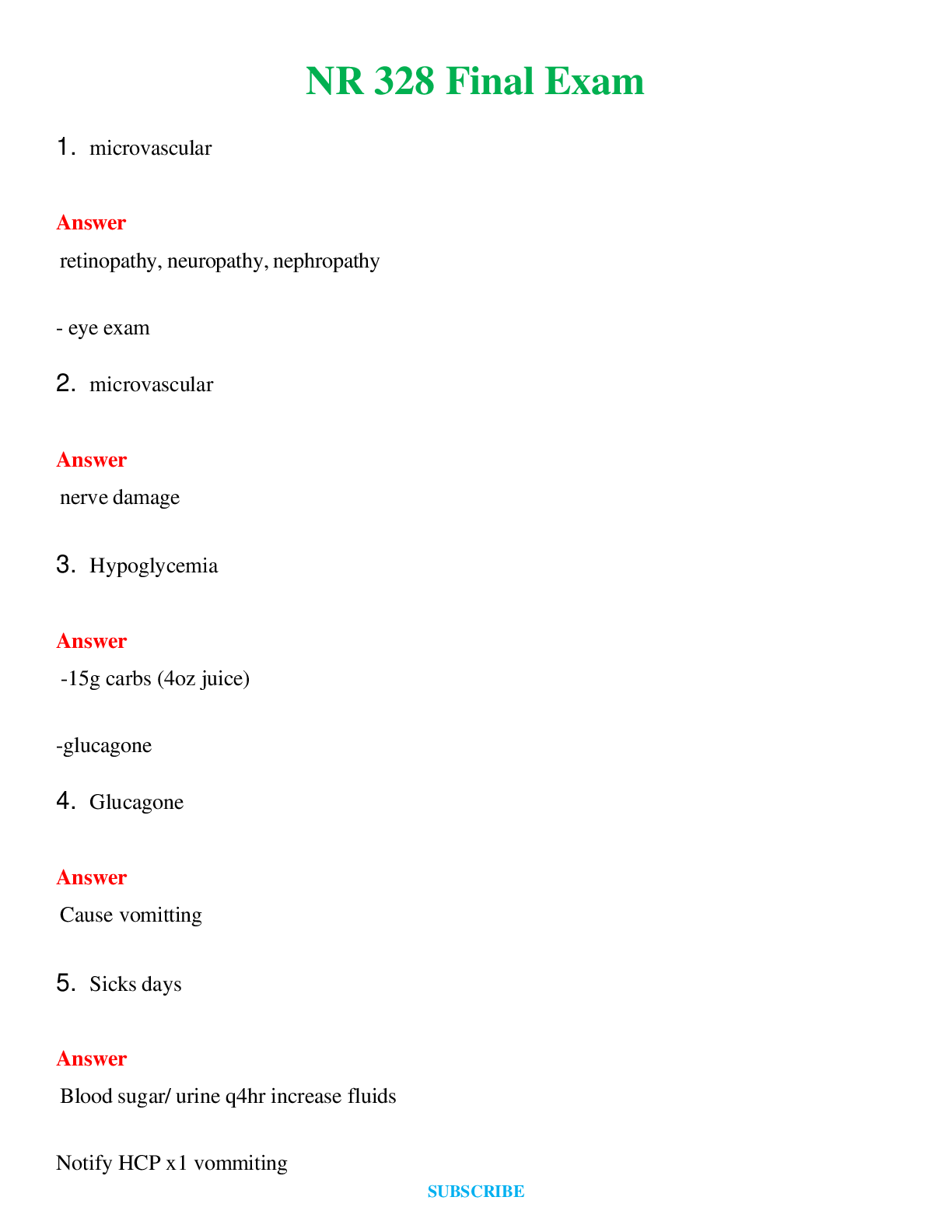
What should a nurse advise the parents of a child with type 1 diabetes mellitus who is not eating as a result of a minor illness?
Take the child directly to the emergency department.
Give the child plenty of unsweetened, clear liquids to prevent dehydration.
Substitute simple carbohydrates or calorie-containing liquids for solid foods.
Give the child half his regular morning dose of insulin.
A sick-day diet of simple carbohydrates or calorie-containing liquids will maintain normal serum glucose levels and decrease the risk of hypoglycemia. The child should receive his regular dose of insulin even if he does not have an appetite. If the child is not eating as usual, he needs calories to prevent hypoglycemia. During periods of minor illness, the child with type 1 diabetes mellitus can be managed safely at home.
A stool specimen from a child with diarrhea shows the presence of neutrophils and red blood cells. This is most suggestive of which condition?
Bacterial gastroenteritis
Fat malabsorption
Parasitic infection
Protein intolerance
Neutrophils and red blood cells in stool indicate bacterial gastroenteritis. Protein intolerance is suspected in the presence of eosinophils. Parasitic infection is indicated by eosinophils. Fat malabsorption is indicated by foul-smelling, greasy, bulky stools.
The nurse is caring for a boy with probable intussusception. He had diarrhea before admission but, while waiting for administration of air pressure to reduce the intussusception, he passes a normal brown stool. The most appropriate nursing action is to:
Notify the practitioner.
Measure abdominal girth.
Auscultate for bowel sounds.
Take vital signs, including blood pressure.
Passage of a normal brown stool indicates that the intussusception has reduced itself. This is immediately reported to the practitioner, who may choose to alter the diagnostic/therapeutic plan of care.
An infant with pyloric stenosis experiences excessive vomiting that can result in:
Hyperchloremia.
Metabolic acidosis.
Hypernatremia.
Metabolic alkalosis.
Infants with excessive vomiting are prone to metabolic alkalosis from the loss of hydrogen ions. Chloride ions and sodium are lost with vomiting. Metabolic alkalosis, not acidosis, is likely.
What should the nurse stress in a teaching plan for the mother of an 11-year-old boy with ulcerative colitis?
Teaching daily use of enemas
Coping with stress and avoiding triggers
Preventing the spread of illness to others
Nutritional guidance and preventing constipation
Coping with the stress of chronic illness and the clinical manifestations associated with ulcerative colitis (diarrhea, pain) are important teaching foci. Avoidance of triggers can help minimize the impact of the disease and its effect on the child. Ulcerative colitis is not infectious. Although nutritional guidance is a priority teaching focus, diarrhea is a problem with ulcerative colitis, not constipation. Daily enemas are not part of the therapeutic plan of care.
During the first few days after surgery for cleft lip, which intervention should the nurse do?
Remove restraints periodically to cuddle infant.
Alternate position from prone to side-lying to supine.
Leave infant in crib at all times to prevent suture strain.
Keep infant heavily sedated to prevent suture strain.
The nurse should remove restraints periodically, while supervising the infant, to allow him or her to exercise arms and to provide cuddling and tactile stimulation. The infant should not be left in the crib, but should be removed for appropriate holding and stimulation. Analgesia and sedation are administered for pain. Heavy sedation is not indicated. The child should not be placed in the prone position.
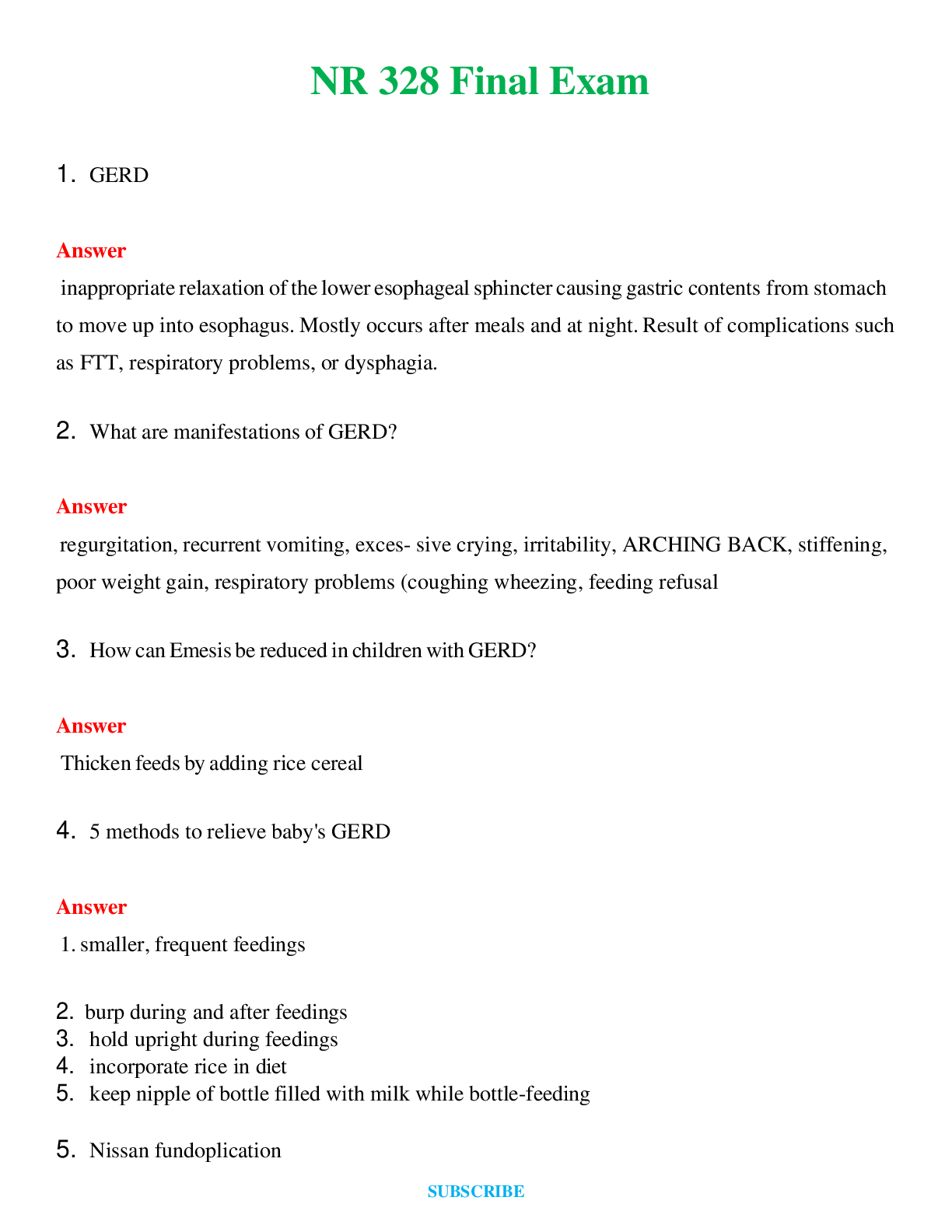
A 4-month-old infant has gastroesophageal reflux disease (GERD) but is thriving without other complications. What should the nurse suggest to minimize reflux?
Thicken formula with rice cereal.
Give larger, less frequent feedings.
Give continuous nasogastric tube feedings.
Place in Trendelenburg position after eating.
Giving small frequent feedings of formula combined with 1 teaspoon to 1 tablespoon of rice cereal per ounce of formula has been recommended. Milk thickening agents have been shown to decrease the number of episodes of vomiting and increase the caloric density of the formula. This may benefit infants who are underweight as a result of GERD. Placing the child in Trendelenburg position would increase the reflux.
Continuous nasogastric feedings are reserved for infants with severe reflux and failure to thrive. Smaller, more frequent feedings are recommended in reflux.
The nurse is caring for a boy with probable intussusception. He had diarrhea before admission but, while waiting for administration of air pressure to reduce the intussusception, he passes a normal brown stool. The most appropriate nursing action is to:
Take vital signs, including blood pressure.
Measure abdominal girth.
Correct Answer
Notify the practitioner.
Auscultate for bowel sounds.
Passage of a normal brown stool indicates that the intussusception has reduced itself. This is immediately reported to the practitioner, who may choose to alter the diagnostic/therapeutic plan of care.
An infant with pyloric stenosis experiences excessive vomiting that can result in:
Metabolic alkalosis.
Metabolic acidosis.
Hyperchloremia.
Hypernatremia.
Infants with excessive vomiting are prone to metabolic alkalosis from the loss of hydrogen ions. Chloride ions and sodium are lost with vomiting. Metabolic alkalosis, not acidosis, is likely.
Which description of a stool is characteristic of intussusception?
Hard stools positive for guaiac
Ribbon-like stools
“Currant jelly” stools
Loose, foul-smelling stools
Pressure on the bowel from obstruction leads to passage of “currant jelly” stools. Ribbon-like stools are characteristic of Hirschsprung's disease. With intussusception, passage of bloody mucus-coated stools occurs. Stools will not be hard. Loose, foul- smelling stools may indicate infectious gastroenteritis.
An important nursing consideration in the care of a child with celiac disease is to:
Refer to a nutritionist for detailed dietary instructions and education.
Help the child and family understand that diet restrictions are usually only temporary.
Teach proper hand washing and Standard Precautions to prevent disease transmission.
Suggest ways to cope more effectively with stress to minimize symptoms. The main consideration is helping the child adhere to dietary management.
Considerable time is spent in explaining to the child and parents the disease process, the specific role of gluten in aggravating the condition, and those foods that must be restricted. Referral to a nutritionist would help in this process. The most severe symptoms usually occur in early childhood and adult life. Dietary avoidance of gluten should be lifelong. Celiac disease is not transmissible or stress related.
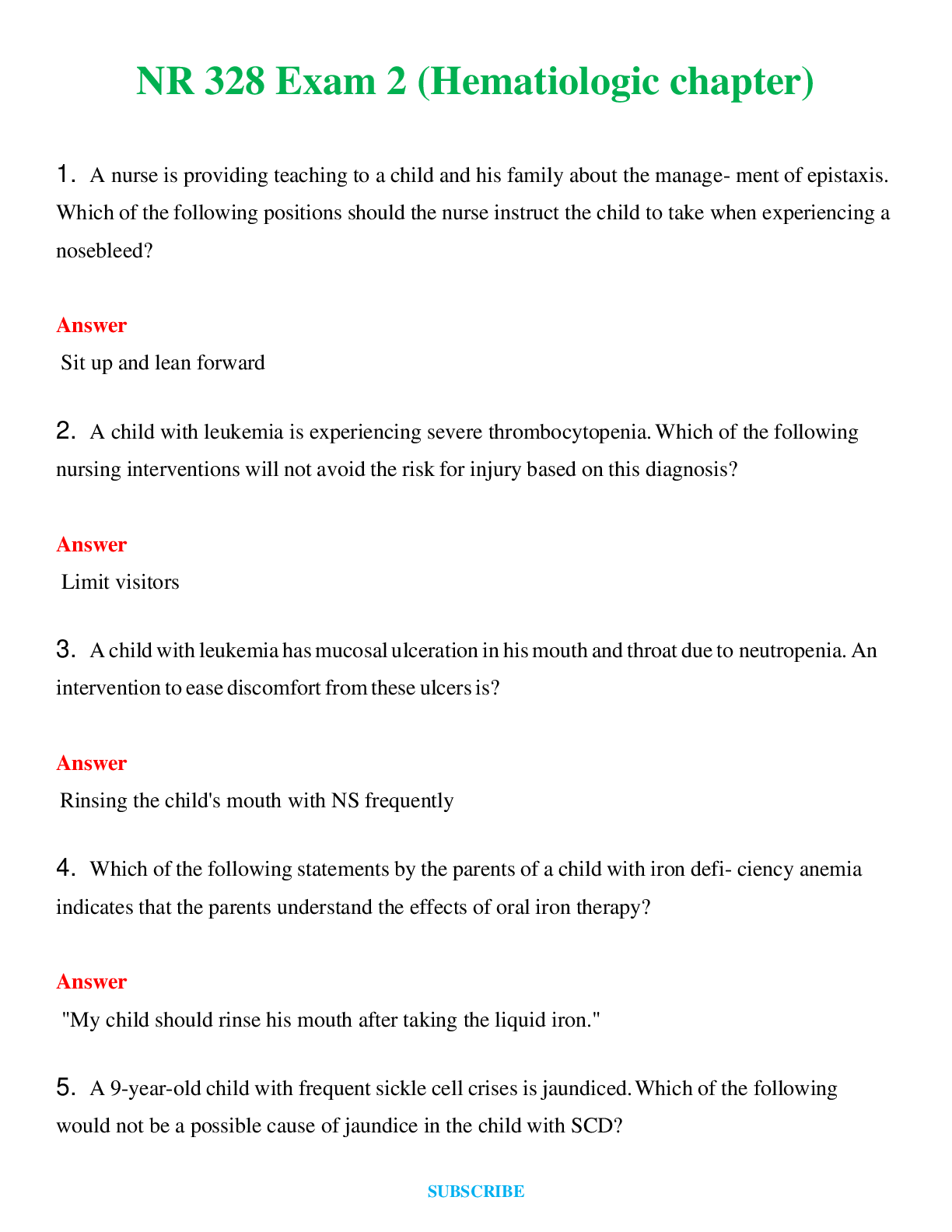
What is the primary result of anemia?
Increased blood viscosity.
Decreased oxygen-carrying capacity of blood.
Presence of abnormal hemoglobin.
Depressed hematopoietic system.
Anemia is a condition in which the number of red blood cells or hemoglobin concentration is reduced below the normal values for age. This results in a decreased oxygen-carrying capacity of blood. Increased blood viscosity is usually a function of too many cells or of dehydration, not of anemia. A depressed hematopoietic system or abnormal hemoglobin can contribute to anemia, but the definition depends on the deceased oxygen-carrying capacity of the blood.
Iron dextran is ordered for a young child with severe iron deficiency anemia. What nursing consideration should be considered?
Administering between meals
Injecting deeply into a large muscle
Massaging injection site for 5 minutes after administration of drug
Administering with meals
Iron dextran is a parenteral form of iron. When administered intramuscularly, it must be injected into a large muscle using the Z-track method. Iron dextran is for intramuscular or intravenous administration; it is not taken orally. The site should not be massaged to prevent leakage, potential irritation, and staining of the skin. The administration has no relationship to food since it is not being given orally.
Which factor predisposes a child to urinary tract infections?
Prostatic secretions in males
Short urethra in young girls
Frequent emptying of the bladder
Increased fluid intake
The short urethra in females provides a ready pathway for invasions of organisms. Increased fluid intake and frequent bladder emptying offer protective measures against urinary tract infections. Prostatic secretions have antibacterial properties that inhibit bacteria.
The nurse is teaching the parent about the diet of a child experiencing severe edema associated with acute glomerulonephritis. Which information should the nurse include in the teaching?
“Your child’s diet will consist of low-fat, low-carbohydrate foods.”
“Your child’s diet will need an increased amount of protein.”
Correct Answer
“You will need to avoid adding salt to your child’s food.”
“You will need to decrease the number of calories in your child’s diet.”
For most children, a regular diet is allowed, but it should contain no added salt. The child should be offered a regular diet with favorite foods. Severe sodium restrictions are not indicated.
What statement about discharge planning for the pediatric patient is true?
Begins when the parents are ready
Continues after discharge
Is initiated by the pediatrician’s office
Begins upon admission
Separation anxiety is most pronounced for the following age group:
Toddler
School-age child
Newborn
Adolescent
Nonpharmacologic strategies for pain management:
make pharmacologic strategies unnecessary.
may reduce pain perception.
usually take too long to implement.
trick children into believing that they do not have pain.
The most consistent indicator of pain in infants is:
facial expression of discomfort
increased respirations
clenching the teeth and lips
increased heart rate
Quiz Score: 55 out of 60
Submission Details:
[Show More]