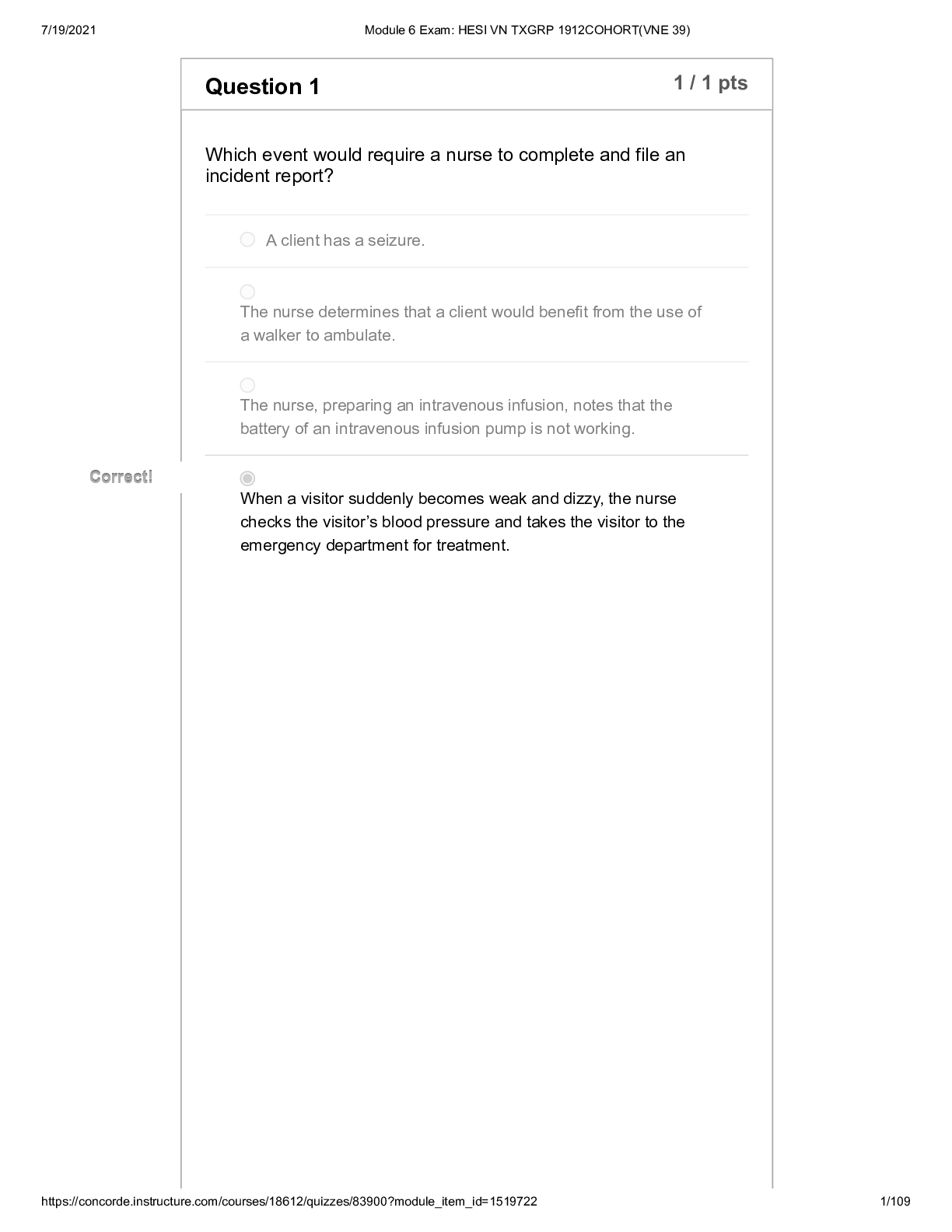
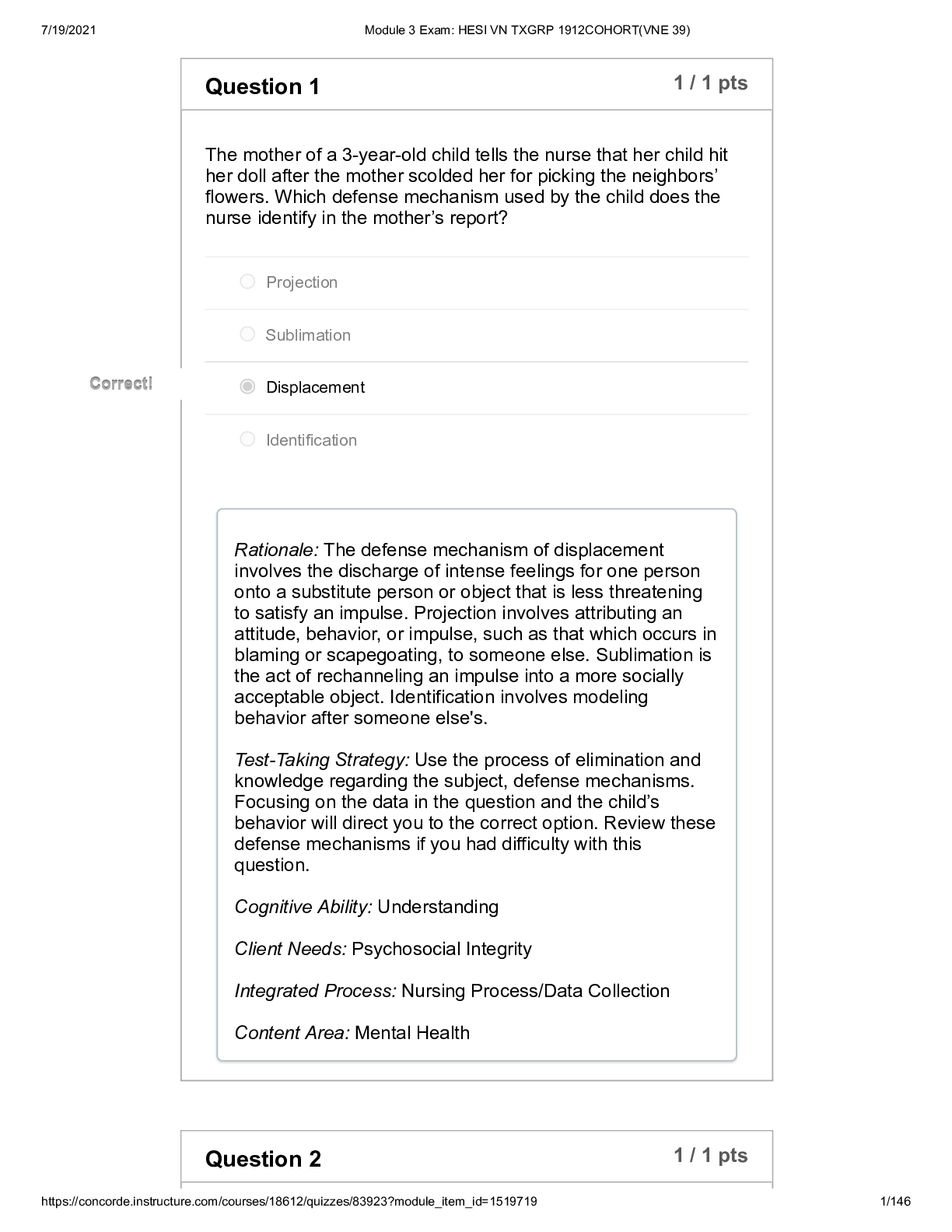
HESI 101HESI Comprehensive Exam A Practice.
Document Content and Description Below
1 A 2-day postpartum mother who is
. breastfeeding asks, "Why do I feel
this tingling in my breasts after the
baby sucks for a few minutes?"
Which information should the
nurse provide?
A. This feeling occurs during
...
[Show More]
Last updated: 3 years ago
Preview 1 out of 46 pages
Instant download

Buy this Document to get the Full Access Instantly
Provided by Students Who Aced it
We Verify Document Content to Gurantee Accuracy
Reviews( 0 )
Document information
Connected school, study & course
About the document
Uploaded On
Aug 31, 2021
Number of pages
46
Written in
All

Additional information
This document has been written for:
Uploaded
Aug 31, 2021
Downloads
0
Views
126
Topic Tags
Recommended For You
Get more on HESI ».png)

$15.5
33 Pages
HESI Practice Exam Pediatric Nursing_2020 | HESI Pediatric Nur...
$18.5
90 Pages
HESI Pharmacology Exam Practice – NCLEX-PN Style Study Questio...
$29
961 Pages
HESI RN COMPREHENSIVE EXIT EXAM Compiled 14 Versions Answers...
.png)
.png)
$32
149 Pages
HESI PN FUNDAMENTALS PROCTORED EXAM (9 LATEST VERSIONS, Qu...
.png)

$22
248 Pages
HESI RN Fundamentals Exam - 12 Versions | 1000+ Questions and...

$22
406 Pages
HESI RN Mental Health Exam - 20 Exam Sets | 1500+ Questions an...

$29
970 Pages
HESI Comprehensive RN Exam | Contains 15 Versions With 2500 +...
 Questions, Answers & Rationale, A+ Guide.png)
.png)

$18.5
93 Pages
HESI RN 2025 Exit NGN Exam – Verified Questions & Answers Upda...
$13
28 Pages
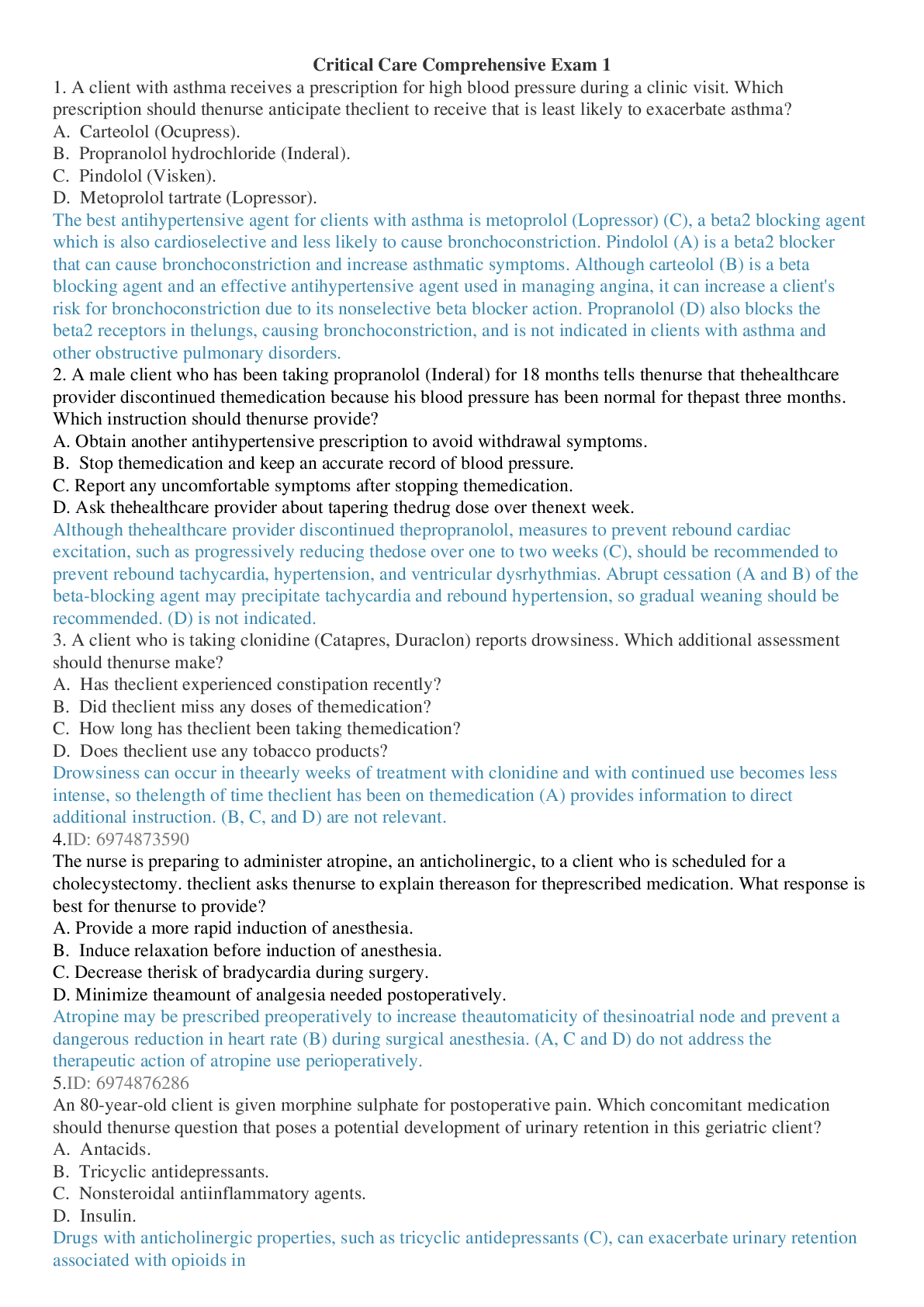
NURS 4345 HESI Critical Care Comprehensive Exam 1 Questions an...

$13
13 Pages
NURS 306 ATI practice asssessment maternal new born ATI Matern...


$19
41 Pages
HESI LPN Medical-Surgical Nursing I & II Exam LPN/LVN Comprehe...

$30
11 Pages
HESI LPN Fundamentals 2 Exam (2025/2026) – Verified Questions...
More related documents below




hesi.png)
hesi.png)