Treatment of Hypothyroidism with Levothyroxine
Chamberlain College of Nursing NR 293 – Pharmacology
Hypothyroidism is a disease in which there is a problem with the production of the thyroid hormone. Patients wi
...
Treatment of Hypothyroidism with Levothyroxine
Chamberlain College of Nursing NR 293 – Pharmacology
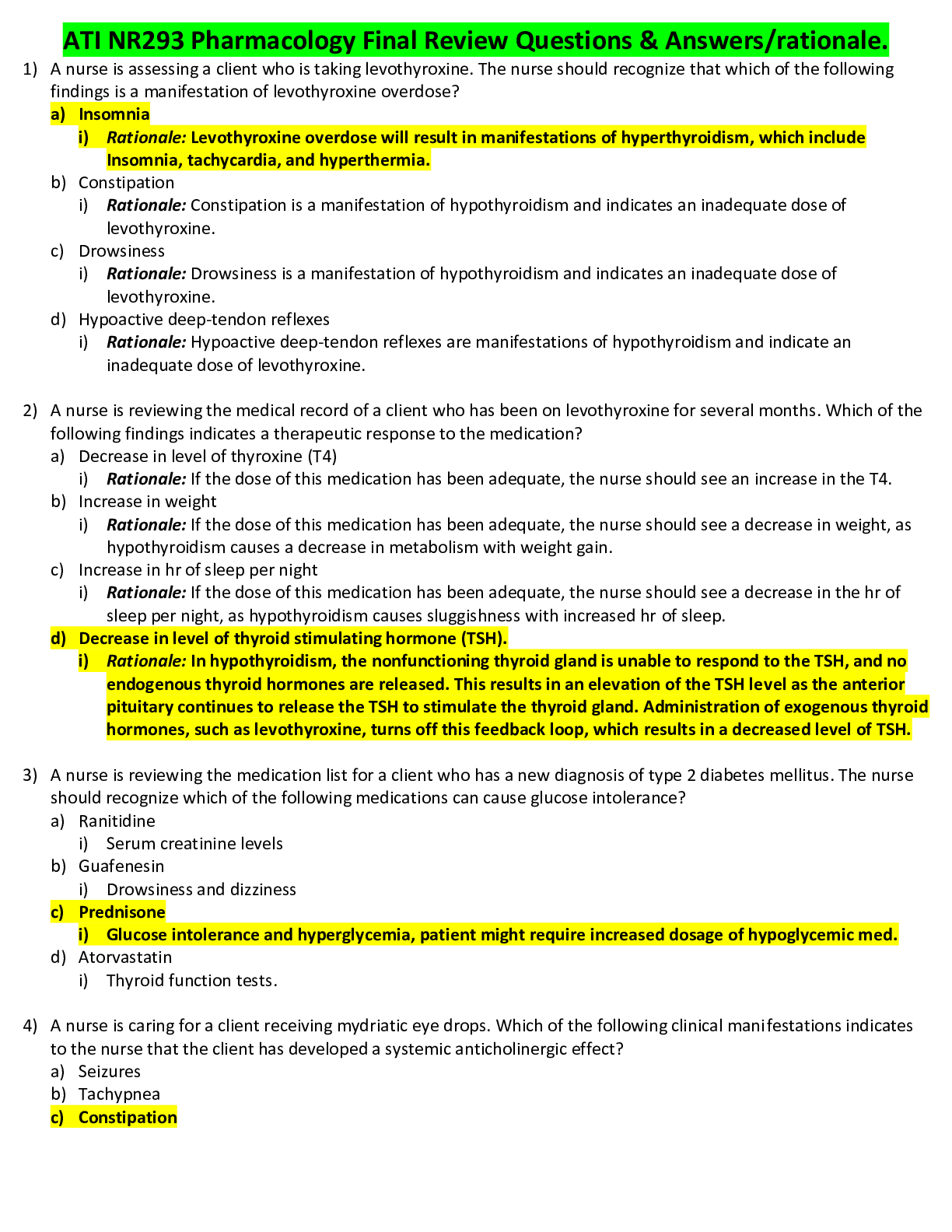
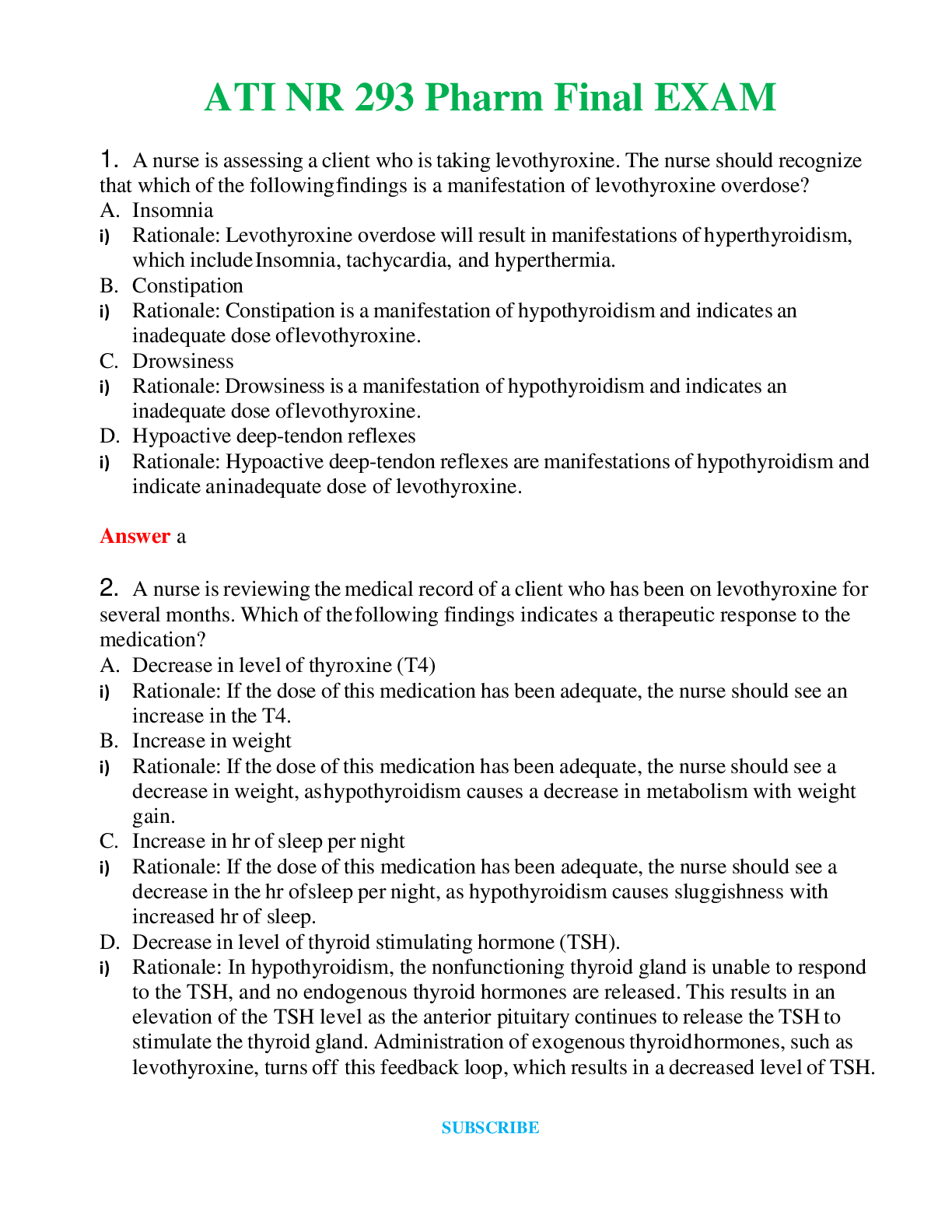
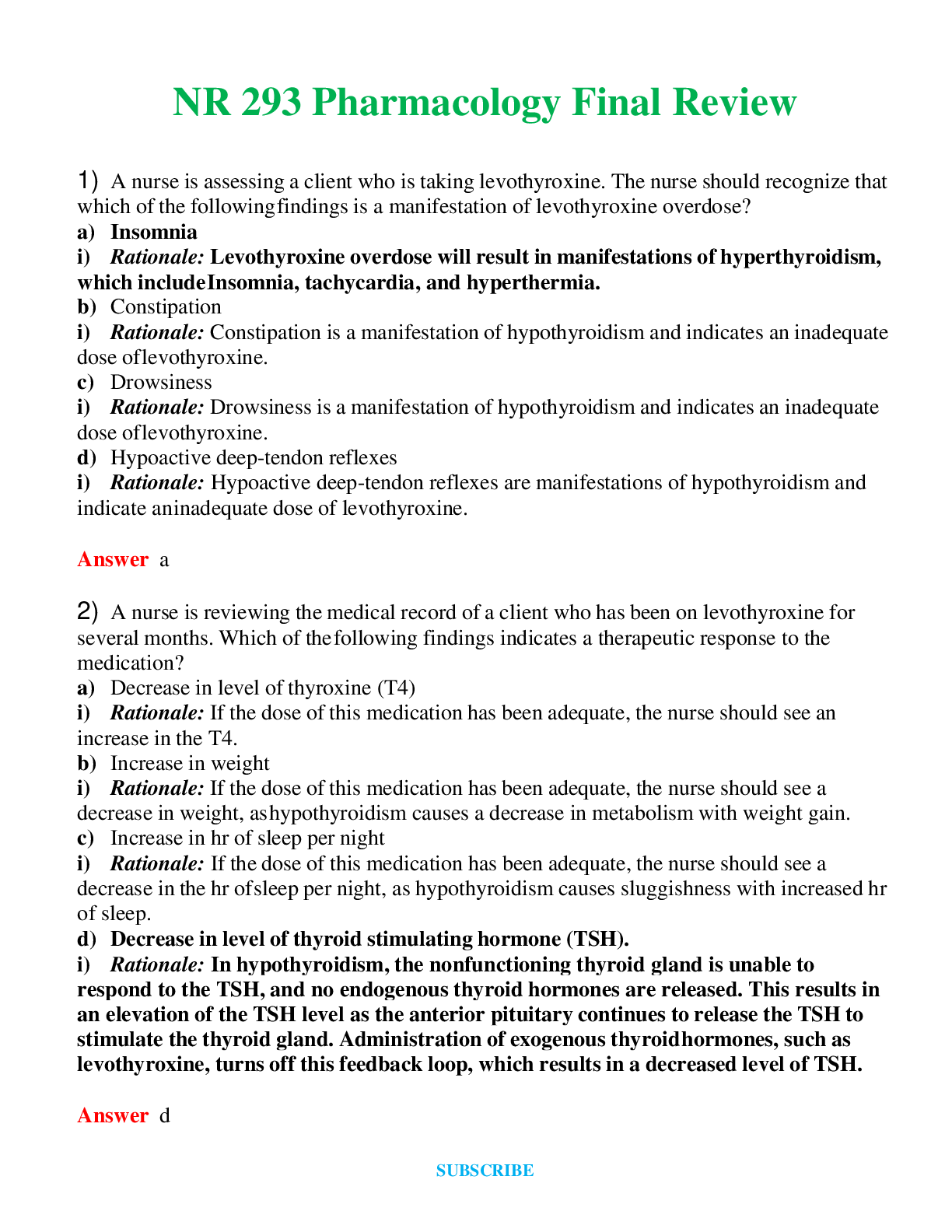
Hypothyroidism is a disease in which there is a problem with the production of the thyroid hormone. Patients with hypothyroidism are typically fatigued, have mild to moderate weight gain, muscle weakness, trouble with concentration, and are often depressed (Chiovato, Magi, & Carle, 2019). In order to treat hypothyroidism, medication needs to be prescribed that mimics the thyroid hormone. A popular medication for patients with hypothyroidism is levothyroxine. Levothyroxine is a synthetic version of the body's natural thyroxine (T4) hormone and is indicated to treat primary, secondary, and tertiary hypothyroidism (Eghtedari & Correa, 2020).
Levothyroxine is available in an oral form, which includes capsule, tablet, and solution. This medication can also be given intravenously and is only used to treat myxedema coma or severe hypothyroidism (Eghtedari & Correa, 2020). While the patient is on levothyroxine, their TSH levels need to be checked. TSH levels look at free T3 and T4, which helps identify if thyroid levels are within normal limits, are too high, or too low (Eghtedari & Correa, 2020). To maintain a healthy thyroid hormone level, these labs need to be checked periodically for the duration of treatment. Treatment is lifelong, as there is no cure for hypothyroidism.
Thyroid medications are contraindicated in those who have uncorrected adrenal insufficiency, patients with acute myocardial infarction, acute myocarditis, and people with thyrotoxicosis or hyperthyroidism (Eghtedari & Correa, 2020). There are some adverse effects of levothyroxine, including anxiety, tachycardia, irritability, reduced fertility, decreased bone mineral density, nausea, vomiting, and myocardial infarction (Eghtedari & Correa, 2020). The nurse administering the medication should keep in mind that this medication is to be given on an empty stomach; therefore, absorption increases. Before the nurse administers the
medication, they should ask the patient if they have had any iron or calcium products. If so, levothyroxine cannot be given and needs to be administered four hours later (Eghtedari & Correa, 2020).
Although hypothyroidism is one of the most common diseases worldwide, with the main form of treatment being levothyroxine, this medication often has to be altered throughout the patient's lifetime to achieve the best therapeutic effects (Chiovato, Magi, & Carle, 2019). In the end, the overall goal of levothyroxine is to provide relief of hypothyroid symptoms and long- term complications. Patients should be encouraged to avoid eating cabbage, brussels sprouts, broccoli, cauliflower, and kale. Additionally, patients should maintain a healthy intake of iodine, amino acid tyrosine, zinc, copper, iron, vitamins B2, B3, B6, C, and E (Bajaj, Salwan, & Salwan, 2016). After all, levothyroxine is the gold standard to manage hypothyroidism and help the patients live with less debilitating symptoms.
References
Eghtedari, B., & Correa, R. (2020). Levothyroxine. In: StatPearls [Internet]. StatPearls Publishing.
https://www.ncbi.nlm.nih.gov/books/NBK539808/
Chiovato, L., Magri, F., & Carlé, A. (2019). Hypothyroidism in Context: Where We've Been and Where We're Going. Advances in therapy, 36(Suppl 2), 47–58. https://doi.org/10.1007/s12325-019-01080-8
Bajaj, J., Salwan, P., & Salwan, S. (2016). Various Possible Toxicants Involved in Thyroid Dysfunction: A Review. Journal of clinical and diagnostic research: JCDR, 10(1), FE01– FE3. https://doi.org/10.7860/JCDR/2016/15195.7092
[Show More]