1.) A nurse is working with a 16-year-old pregnant teen and assessing for behavior that may put
the baby at risk. The most important assessment the nurse can make is whether the pregnant
woman uses illegal substances
...
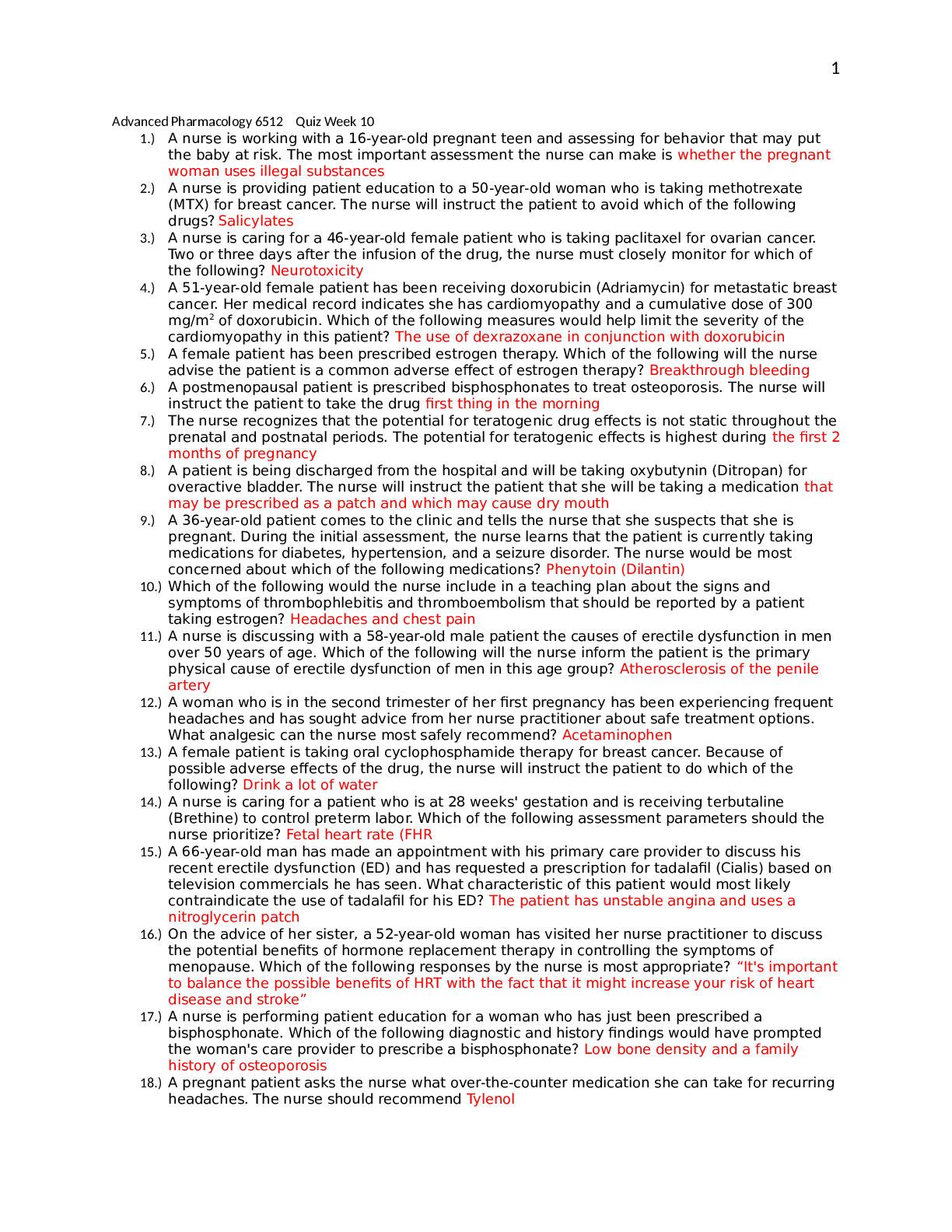
1.) A nurse is working with a 16-year-old pregnant teen and assessing for behavior that may put
the baby at risk. The most important assessment the nurse can make is whether the pregnant
woman uses illegal substances
2.) A nurse is providing patient education to a 50-year-old woman who is taking methotrexate
(MTX) for breast cancer. The nurse will instruct the patient to avoid which of the following
drugs? Salicylates
3.) A nurse is caring for a 46-year-old female patient who is taking paclitaxel for ovarian cancer.
Two or three days after the infusion of the drug, the nurse must closely monitor for which of
the following? Neurotoxicity
4.) A 51-year-old female patient has been receiving doxorubicin (Adriamycin) for metastatic breast
cancer. Her medical record indicates she has cardiomyopathy and a cumulative dose of 300
mg/m2 of doxorubicin. Which of the following measures would help limit the severity of the
cardiomyopathy in this patient? The use of dexrazoxane in conjunction with doxorubicin
5.) A female patient has been prescribed estrogen therapy. Which of the following will the nurse
advise the patient is a common adverse effect of estrogen therapy? Breakthrough bleeding
6.) A postmenopausal patient is prescribed bisphosphonates to treat osteoporosis. The nurse will
instruct the patient to take the drug first thing in the morning
7.) The nurse recognizes that the potential for teratogenic drug effects is not static throughout the
prenatal and postnatal periods. The potential for teratogenic effects is highest during the first 2
months of pregnancy
8.) A patient is being discharged from the hospital and will be taking oxybutynin (Ditropan) for
overactive bladder. The nurse will instruct the patient that she will be taking a medication that
may be prescribed as a patch and which may cause dry mouth
9.) A 36-year-old patient comes to the clinic and tells the nurse that she suspects that she is
pregnant. During the initial assessment, the nurse learns that the patient is currently taking
medications for diabetes, hypertension, and a seizure disorder. The nurse would be most
concerned about which of the following medications? Phenytoin (Dilantin)
10.) Which of the following would the nurse include in a teaching plan about the signs and
symptoms of thrombophlebitis and thromboembolism that should be reported by a patient
taking estrogen? Headaches and chest pain
11.) A nurse is discussing with a 58-year-old male patient the causes of erectile dysfunction in men
over 50 years of age. Which of the following will the nurse inform the patient is the primary
physical cause of erectile dysfunction of men in this age group? Atherosclerosis of the penile
artery
12.) A woman who is in the second trimester of her first pregnancy has been experiencing frequent
headaches and has sought advice from her nurse practitioner about safe treatment options.
What analgesic can the nurse most safely recommend? Acetaminophen
13.) A female patient is taking oral cyclophosphamide therapy for breast cancer. Because of
possible adverse effects of the drug, the nurse will instruct the patient to do which of the
following? Drink a lot of water
14.) A nurse is caring for a patient who is at 28 weeks' gestation and is receiving terbutaline
(Brethine) to control preterm labor. Which of the following assessment parameters should the
nurse prioritize? Fetal heart rate (FHR
15.) A 66-year-old man has made an appointment with his primary care provider to discuss his
recent erectile dysfunction (ED) and has requested a prescription for tadalafil (Cialis) based on
television commercials he has seen. What characteristic of this patient would most likely
contraindicate the use of tadalafil for his ED? The patient has unstable angina and uses a
nitroglycerin patch
16.) On the advice of her sister, a 52-year-old woman has visited her nurse practitioner to discuss
the potential benefits of hormone replacement therapy in controlling the symptoms of
menopause. Which of the following responses by the nurse is most appropriate? “It's important
to balance the possible benefits of HRT with the fact that it might increase your risk of heart
disease and stroke”
17.) A nurse is performing patient education for a woman who has just been prescribed a
bisphosphonate. Which of the following diagnostic and history findings would have prompted
the woman's care provider to prescribe a bisphosphonate? Low bone density and a family
history of osteoporosis
18.) A pregnant patient asks the nurse what over-the-counter medication she can take for recurring
headaches. The nurse should recommend Tylenol
[Show More]

.png)


.png)





.png)