1. Books
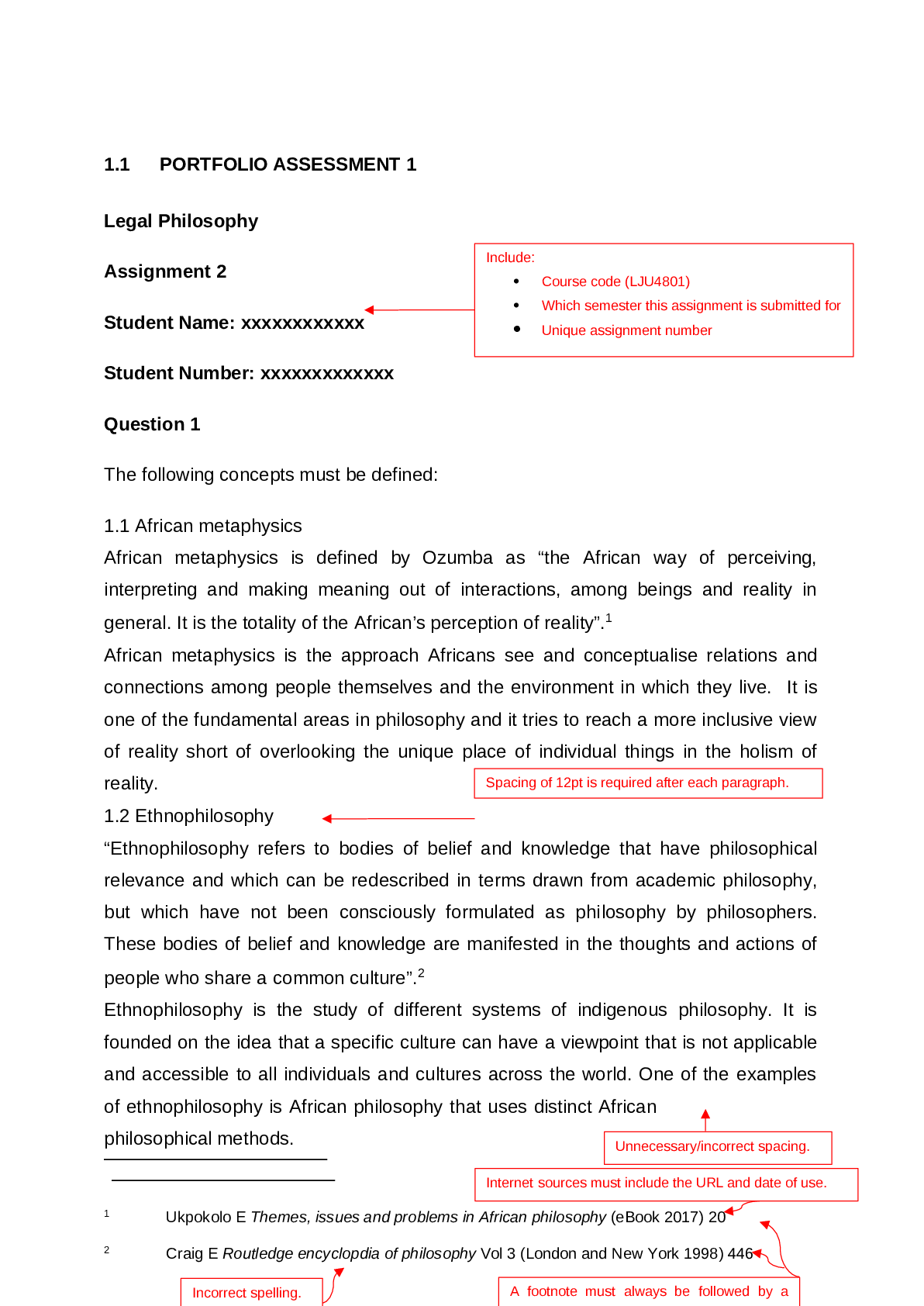
1.1 The commas and the year are placed at the wrong place, brackets are also missing
1.2 The apostrophe after the title and the edition is wrong
1.3 The line separating initials, capital letters in the title,
...
1. Books
1.1 The commas and the year are placed at the wrong place, brackets are also missing
1.2 The apostrophe after the title and the edition is wrong
1.3 The line separating initials, capital letters in the title, apostrophe, and capital letters on the subtitle, translation and authors must also be bracketed.
2. Journals
2.1 Authors in the short version, the gap between initials are wrong and the place and author after the year are not supposed to be there
2.2 The et al, the year and the subtitle in the short version is wrong. The gap between initials, and the subtitle are wrong.
2.3 Both years in the subtitle and in the long title are wrong. Incomplete word from the title and the number after the subtitle is wrong.
3. Contributions
3.1 Brackets on the title of the short version, the apostrophe in between the title, and the page numbers are wrong
3.2 Invented commas went beyond the title, the publishing place and year is not in brackets
3.3 The gap between initials is wrong, and “in” is missing.
4. Internet sources
4.1 The gap between the author and URL is wrong, and manner in which the date is written is wrong
4.2 The short version is wrong
4.3 The method in which the date is written is wrong
4.4 The gap between the author and URL, and date is wrong
4.5 The initial and year is wrong
5. Case law
5.1
5.2 Parties in the case must be written in italics and the underlying line is wrong
5.3 Parties names must be in italics and the bold font is wrong
6. Legislation
6.1 Capital letters are wrong
6.2 Constitution is incomplete
ASSESSMENT 2
PLATO & ARISTOTLE – Ancient Greek Philosophers
1. Fathers of natural law which is eternal & applicable to all humans.
2. Plato = Ideals and Aristotle = Forms
CICIRO, (Roman politician & lawyer
Cicero agreed with Aristotle on the application of logic and reasoning but also added customary rules of Roam law.
St. Augustine (Influenced by Plato & works of Christ)
He formed the gospel, Christian Religion
Islamic Jurists & Philosophers ( Used the Aristotle for Islamic legal theory Aristotle was felt in catholic Spain
THOMAS, AQUNIS (Medieval Period) Two realms: - Metaphysics & Physical realms (humans) – Took from Aristotle: Logic & Understanding. Argued that human law not in accordance with natural law is a distortion, not law.
HUGO DE GROOT
-was influenced by Spanish moral philosophers – Roman-Dutch law – South Africa – International law
ASSESSMENT 3
He accepted law seen through
1. Protection of ownership, 2. Enforcement of agreements, 3. Punishment if principles transgressed 4. Awarding compensation
Differences between ALP and Western Thinkers
1. Communitarianism
2. Pluralism
3. Ancestral
4. Exploration of things like culture and customs
1. Individualism
2. Dualism
3. Religion
4. Discovery of knowledge and why things are the way they are.
5. Emotional
6. Non-objective
7. Reconciliatory theory of law
5. Rationalism
6. Objective
7. Dominated by adversarial nature of legal proceedings
ASSESSMENT 4 INTRODUCTION
This assignment reflects the significance of transformative constitutionalism and social justice in Africa, and proceed by discussing which one of the critical theories available that is suitable to achieve these ideas. I will further discuss the origin of the critical theories and also try to examine in more detail the one theory which I feel is consistent with transformative constitutionalism and social justice in Africa.
WHAT IS TRANSFORMATIVE CONSTITUTIONALISM
Unfortunately, there is no single accepted definition for the concept of transformative constitutionalism. The then Deputy Chief Justice1 has said in this regard: “the meaning of transformation in juridical terms is as highly contested as it is difficult to formulate”. It is perhaps in keeping with the spirit of transformation that there is no single stable understanding of transformative constitutionalism.
1 Kellner D http://www.gseis.ucla.edu/faculty/kellner/kelner.html (Date of use: 03 September 2009)
Social Justice and Africanisation
African perspective on social justice is the reflection of a collective desire to unite the continent, with emerging economic relation
[Show More]