NSG 6420 Week 2 Quiz 1 - Rated A
Document Content and Description Below
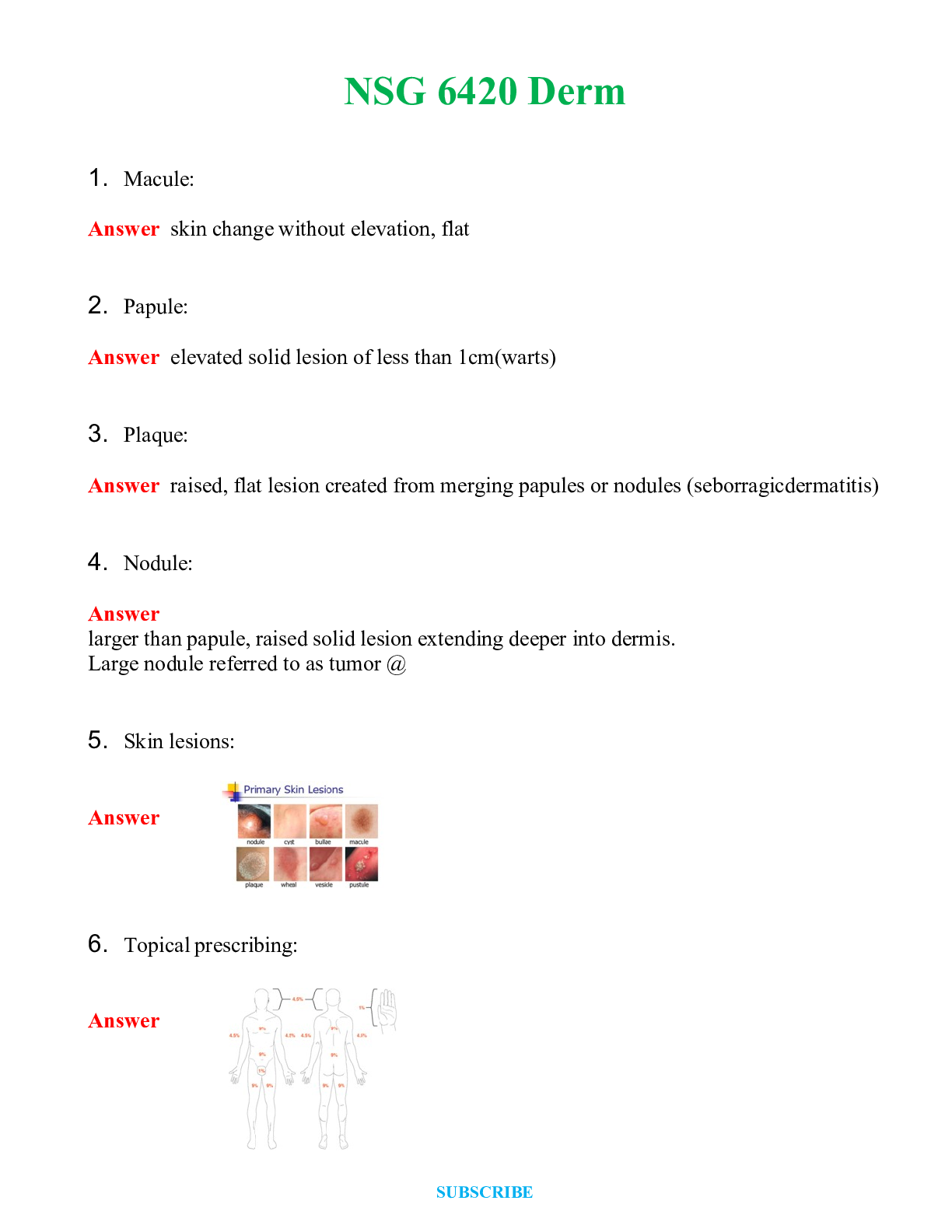
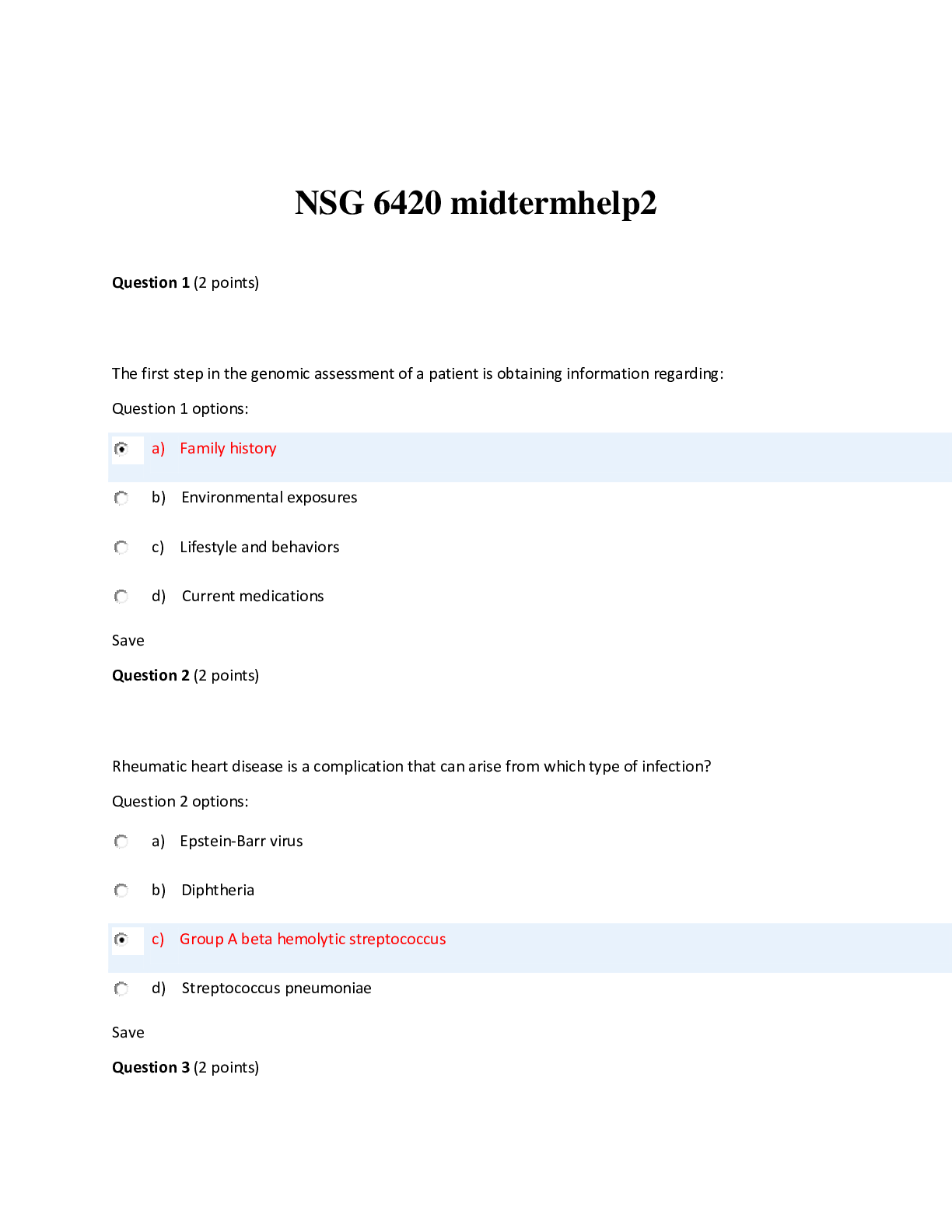
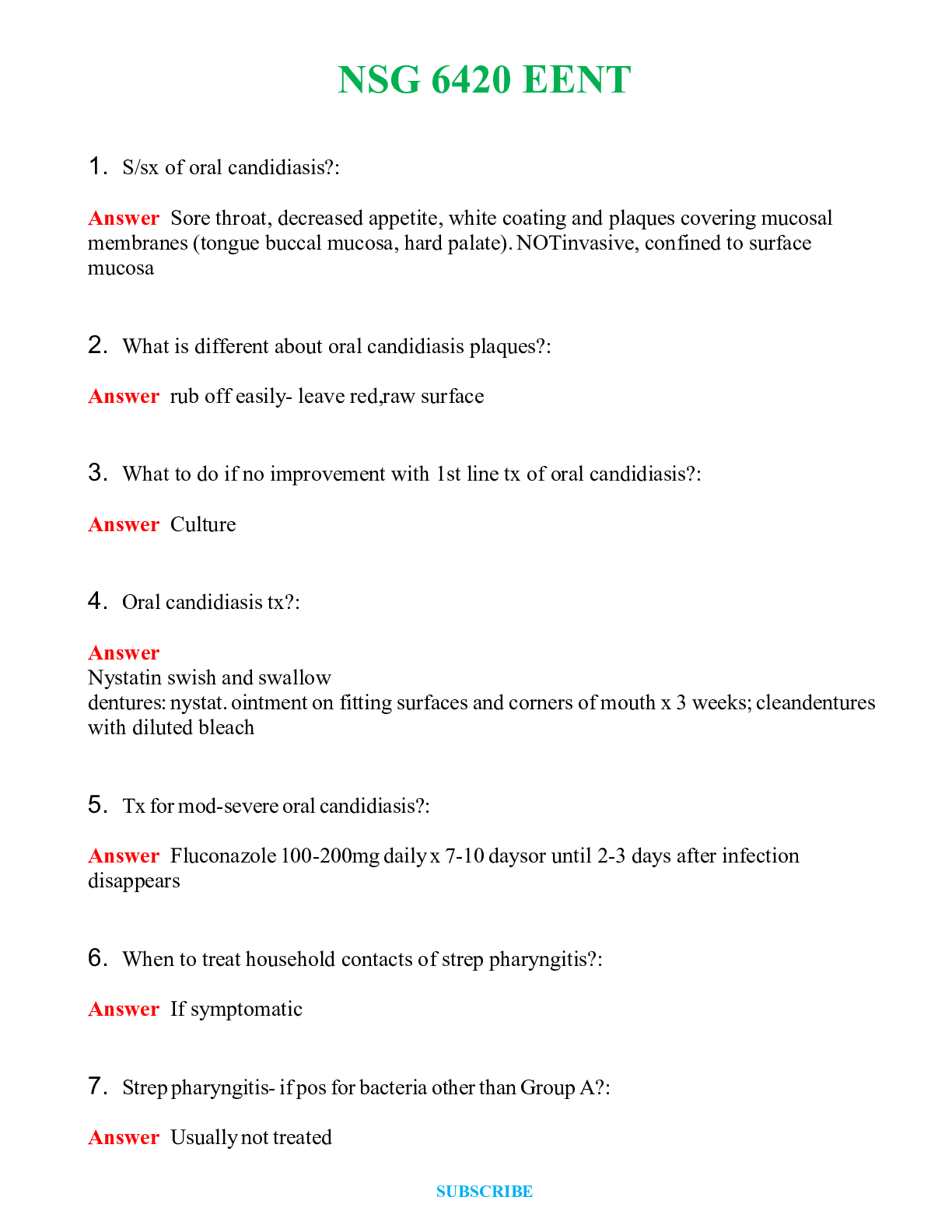
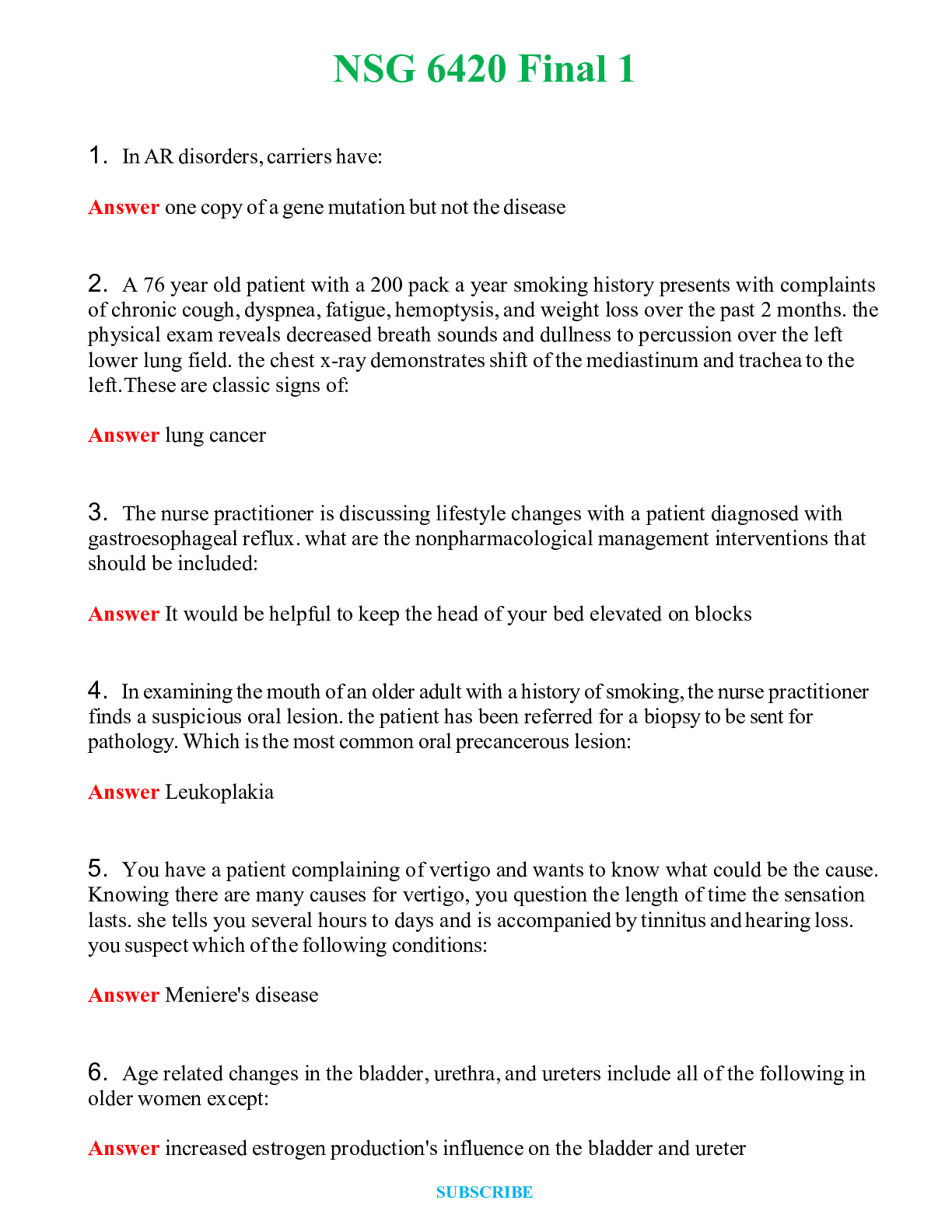
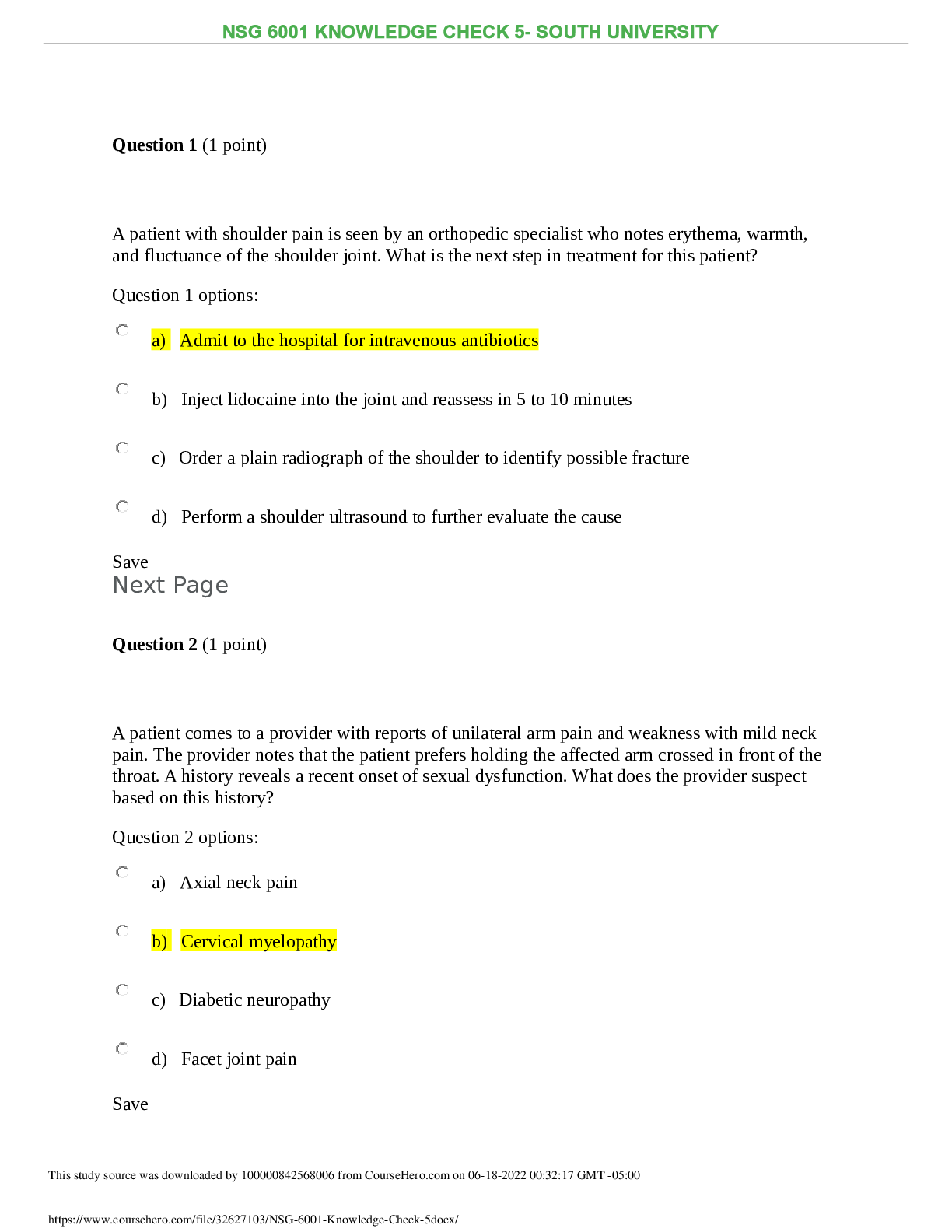
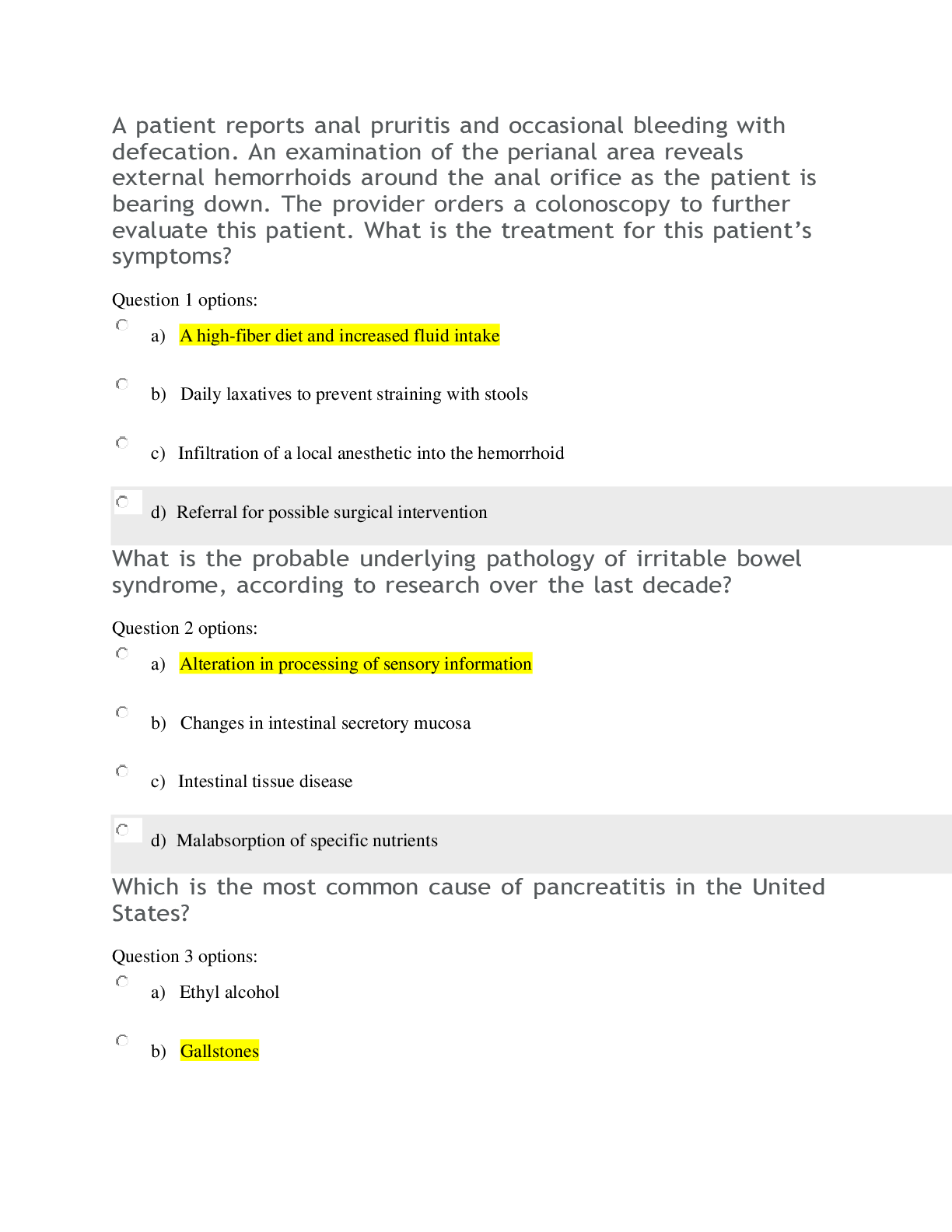
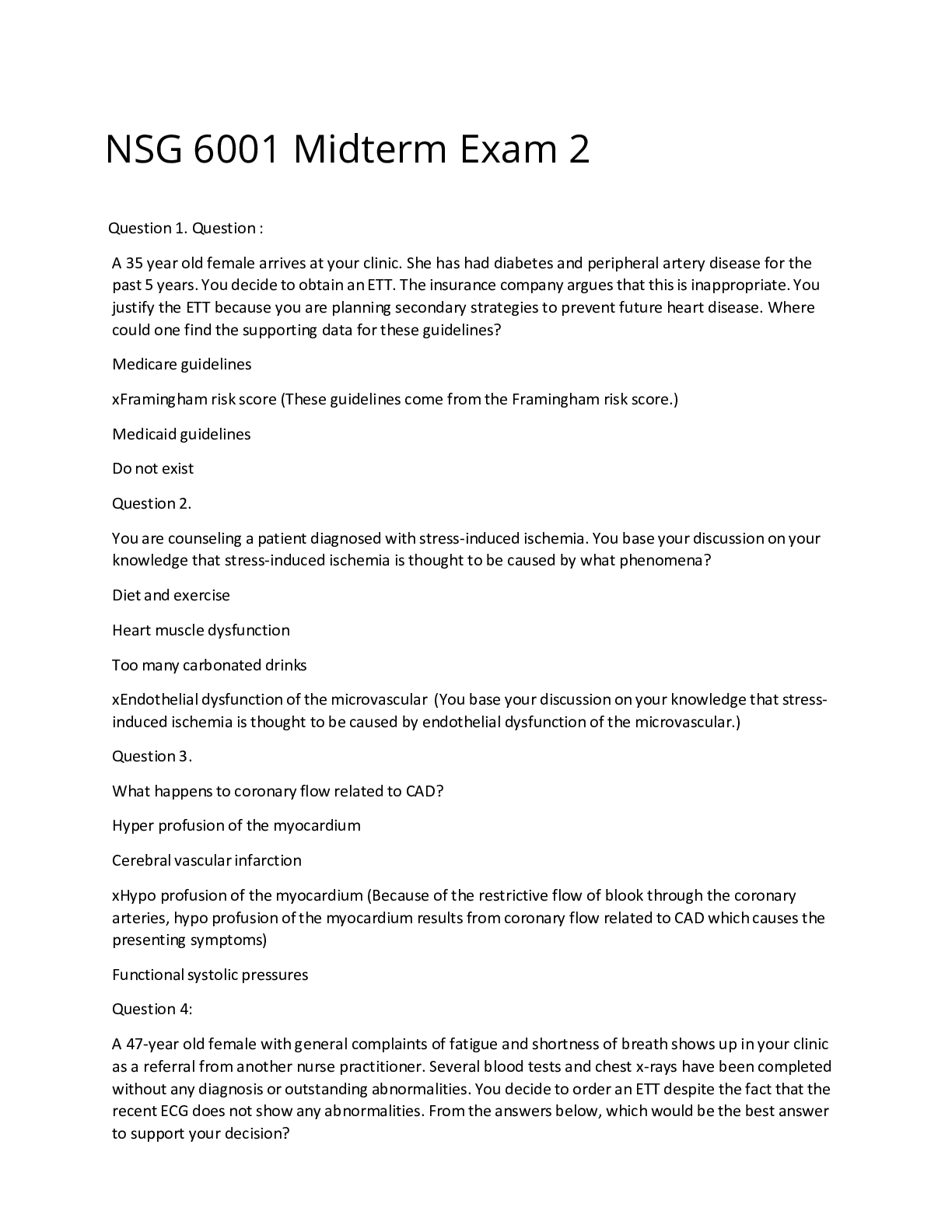
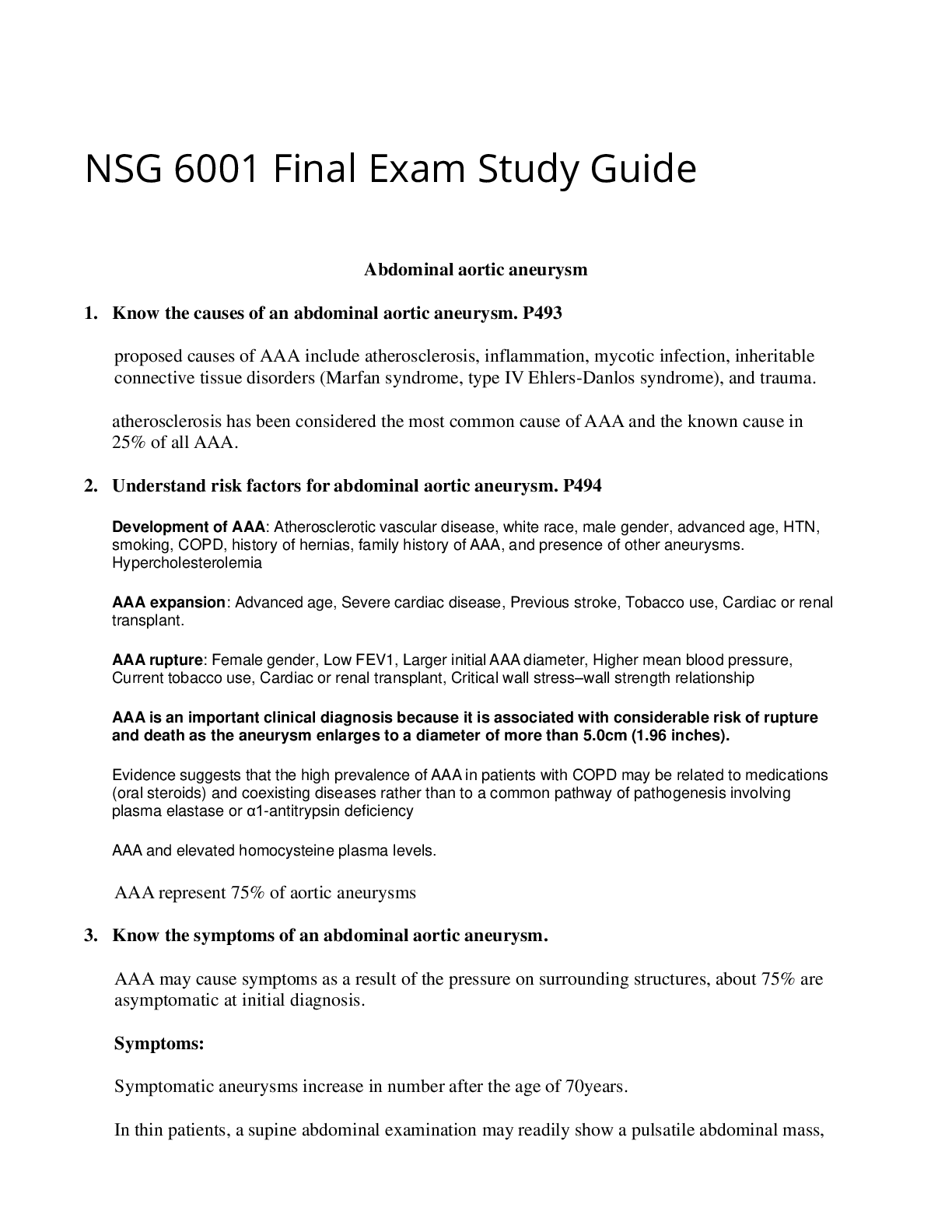
Which of the following is the most common cause of heartburn-type epigastric pain?
2. An older patient reports burning pain after ingestion of many foods and large meals. What assessment would assist the nurse practit
...
[Show More]
Last updated: 3 years ago
Preview 1 out of 86 pages
Instant download

Buy this Document to get the Full Access Instantly
Provided by Students Who Aced it
We Verify Document Content to Gurantee Accuracy
Reviews( 0 )
Document information
Connected school, study & course
About the document
Uploaded On
Sep 12, 2021
Number of pages
86
Written in
All

Additional information
This document has been written for:
Uploaded
Sep 12, 2021
Downloads
0
Views
126
Topic Tags
Related Subjects & Courses
Explore similar study resources and related concepts.
Recommended For You
Get more on EXAM »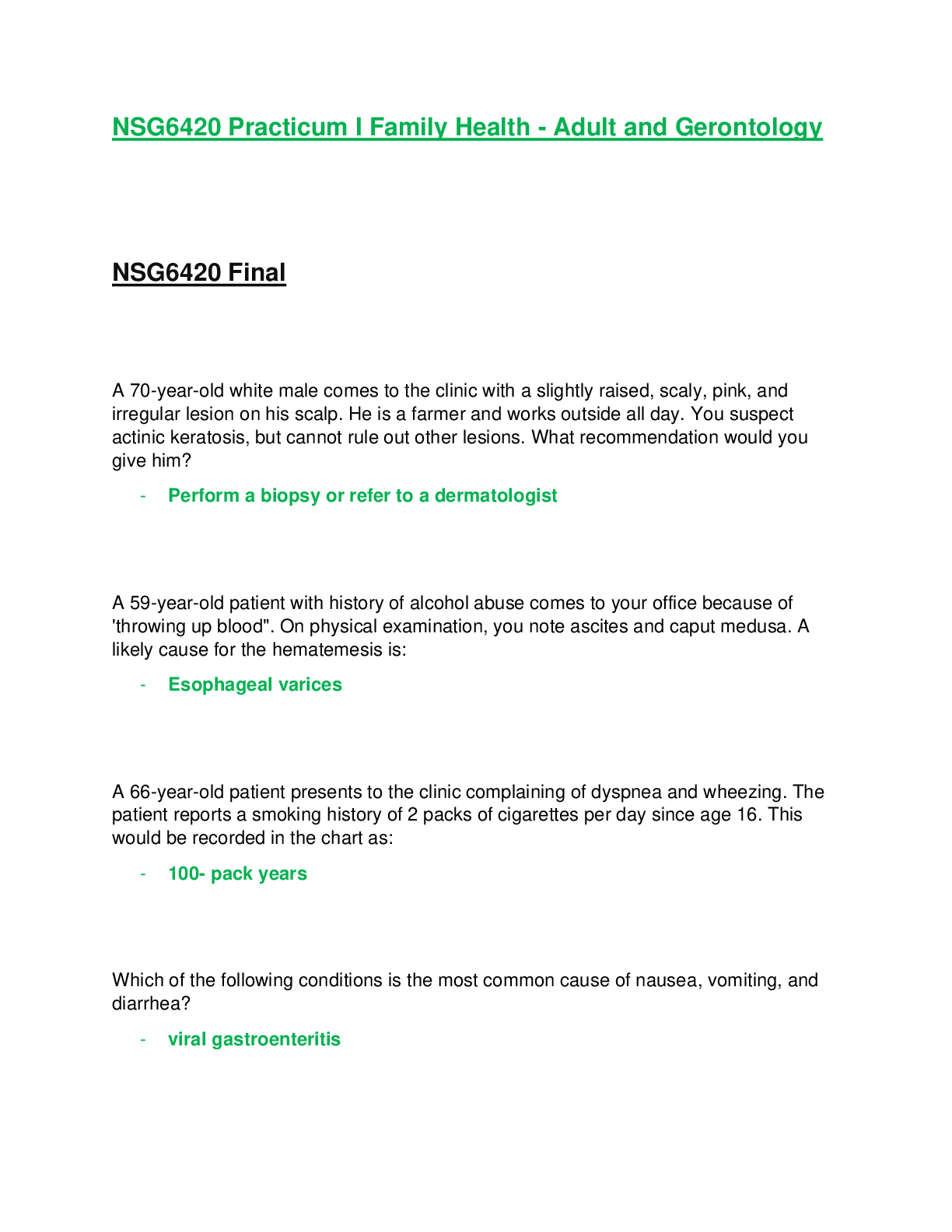
$10
19 Pages
NSG6420 / NSG 6420 Practicum I Family Health - Adult and Geron...
$10
12 Pages
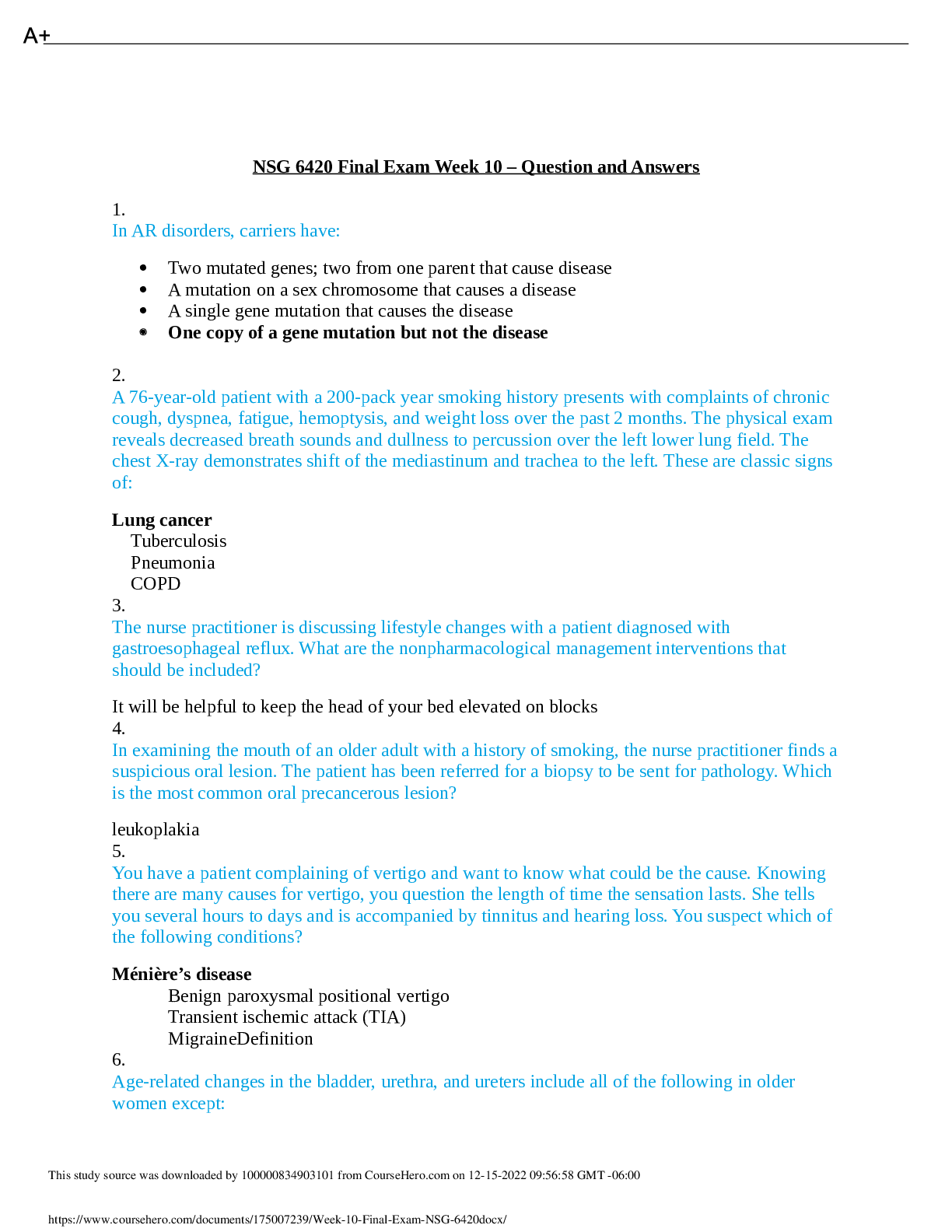
NSG 6420 / NSG6420 Final Exam |Questions and Answers | LATEST
$17.5
10 Pages
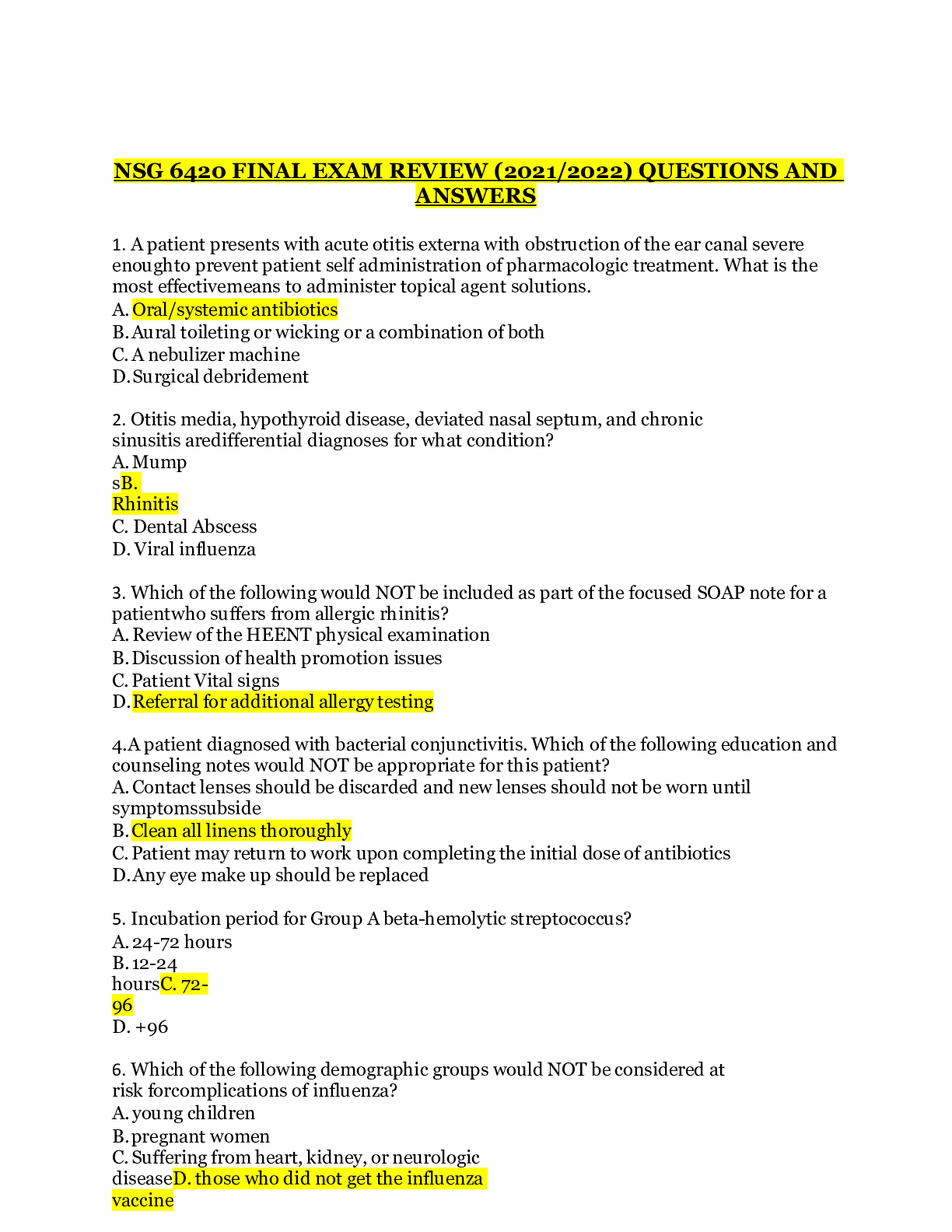
NSG 6420 FINAL EXAM REVIEW (2021) QUESTIONS AND ANSWERS

$10
19 Pages
NSG6420 / NSG 6420: Practicum I Family Health - Adult and Gero...
$10
44 Pages
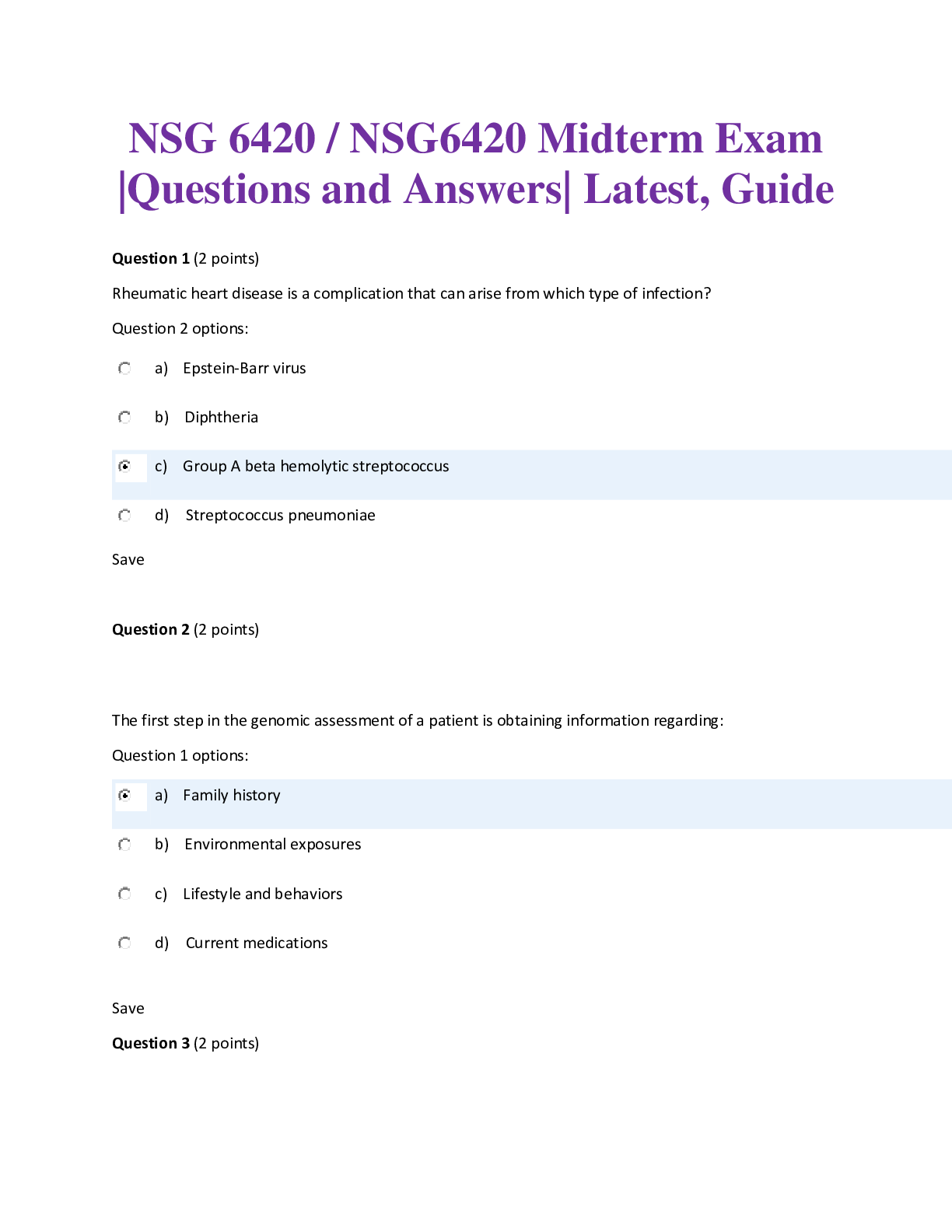
NSG 6420 / NSG6420 Midterm Exam |Questions and Answers| Latest...

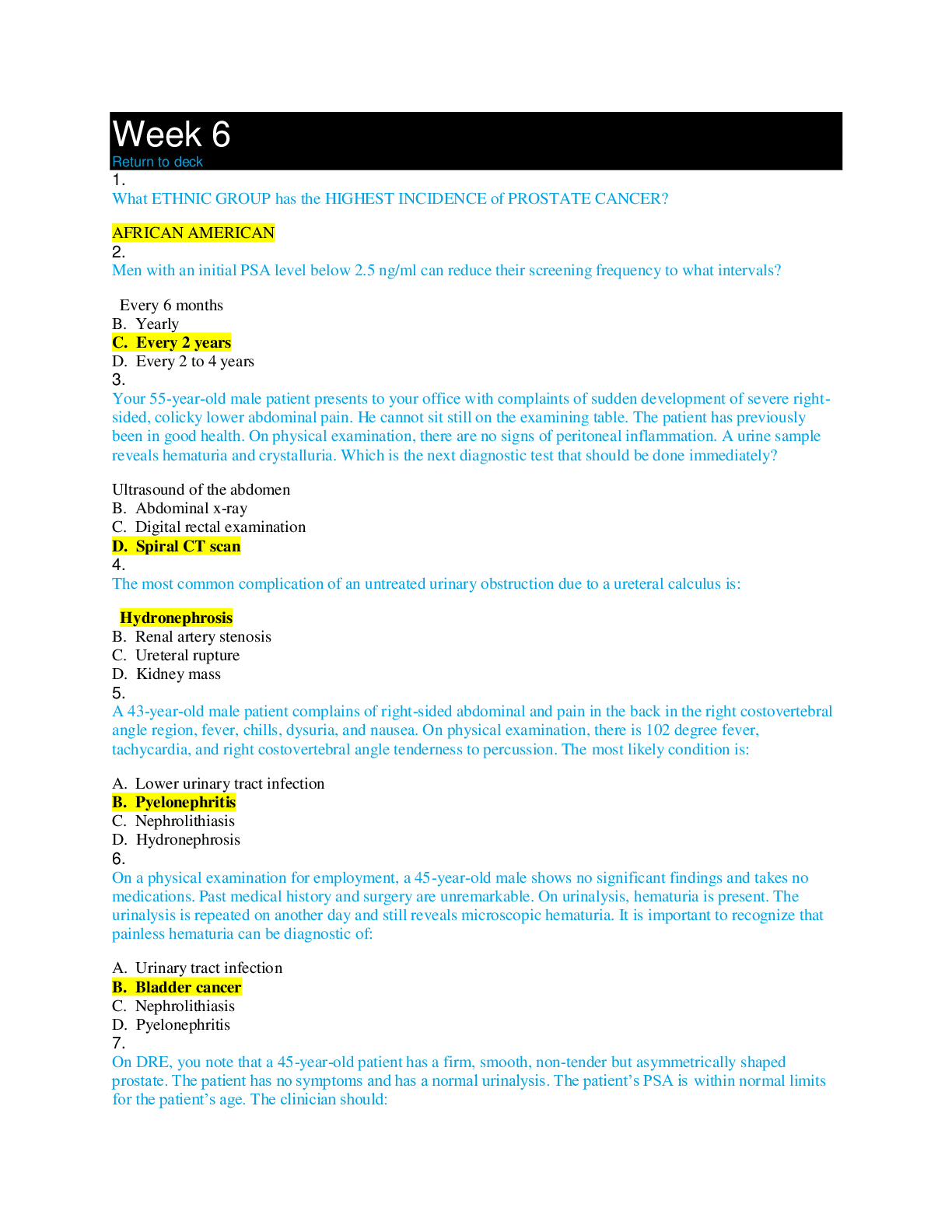
$7
4 Pages
NSG 6420 Week 6 Quiz – Question with Answers – South Universit...

$5
6 Pages
NSG 6420 Week 7 Quiz – Question and Answers – South University...
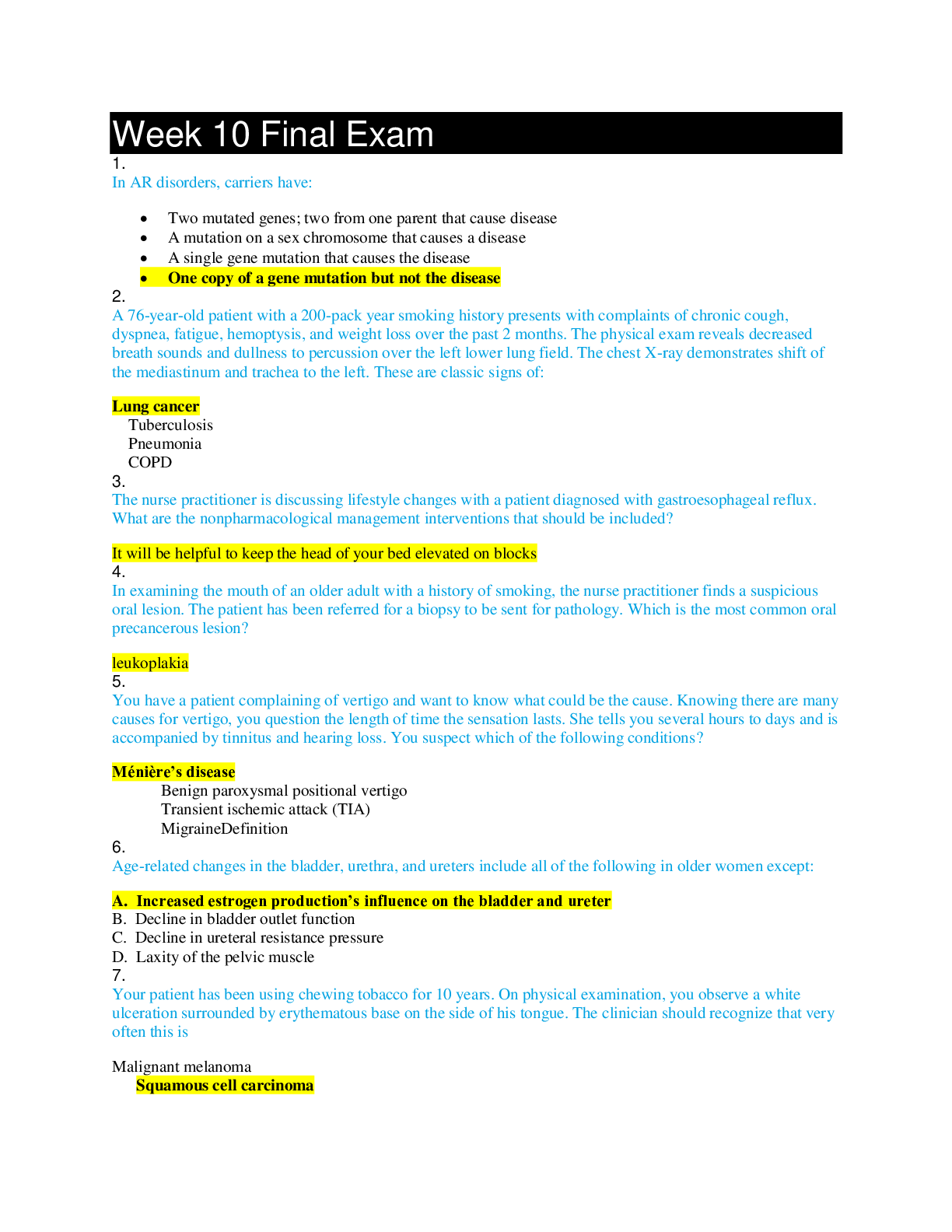
$11
16 Pages
South University, Savannah - NSG 6420 Week 10 Final Exam - Alr...

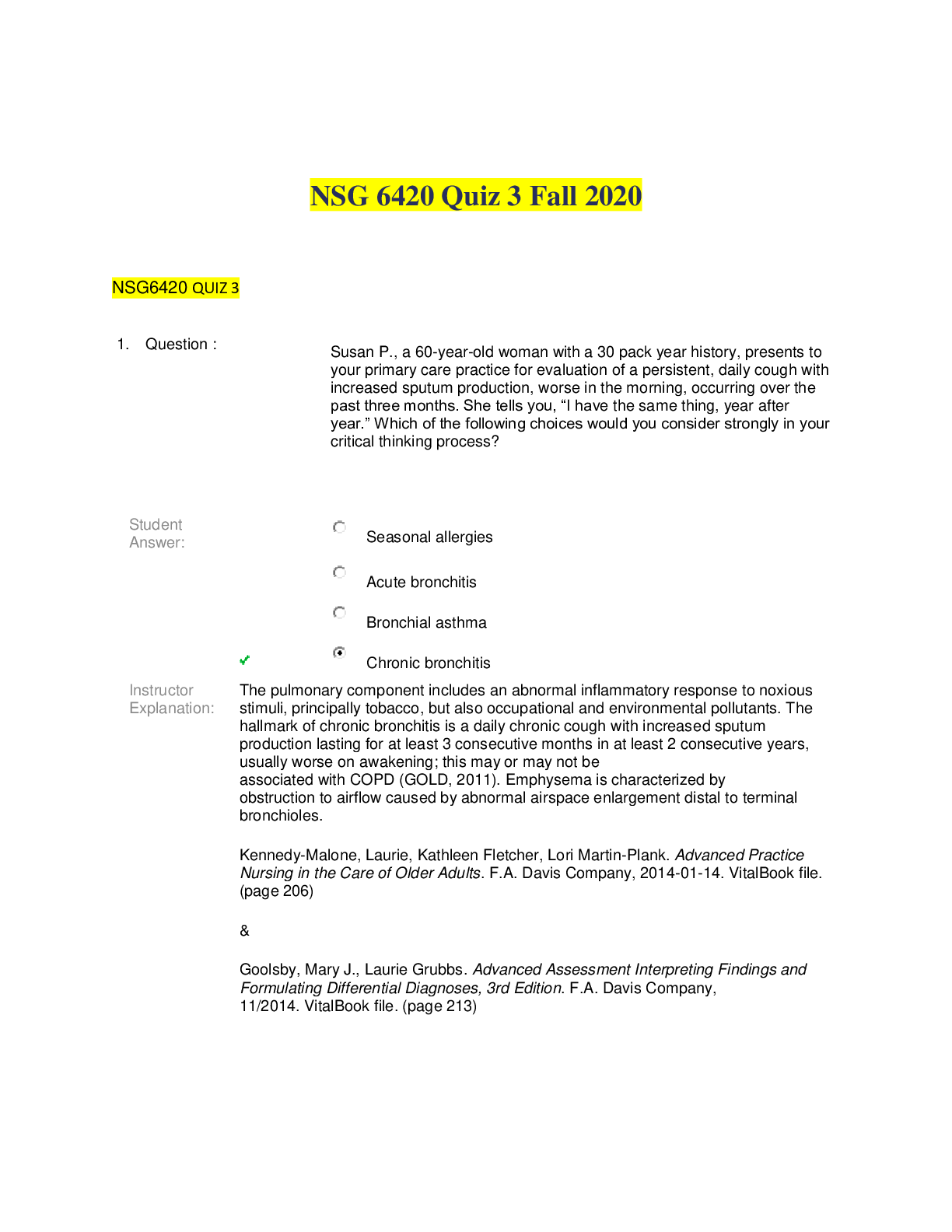
$13
17 Pages
NSG 6420 Quiz 3_ Fall 2020 – Graded A | NSG6420 Quiz 3_ Fall 2...
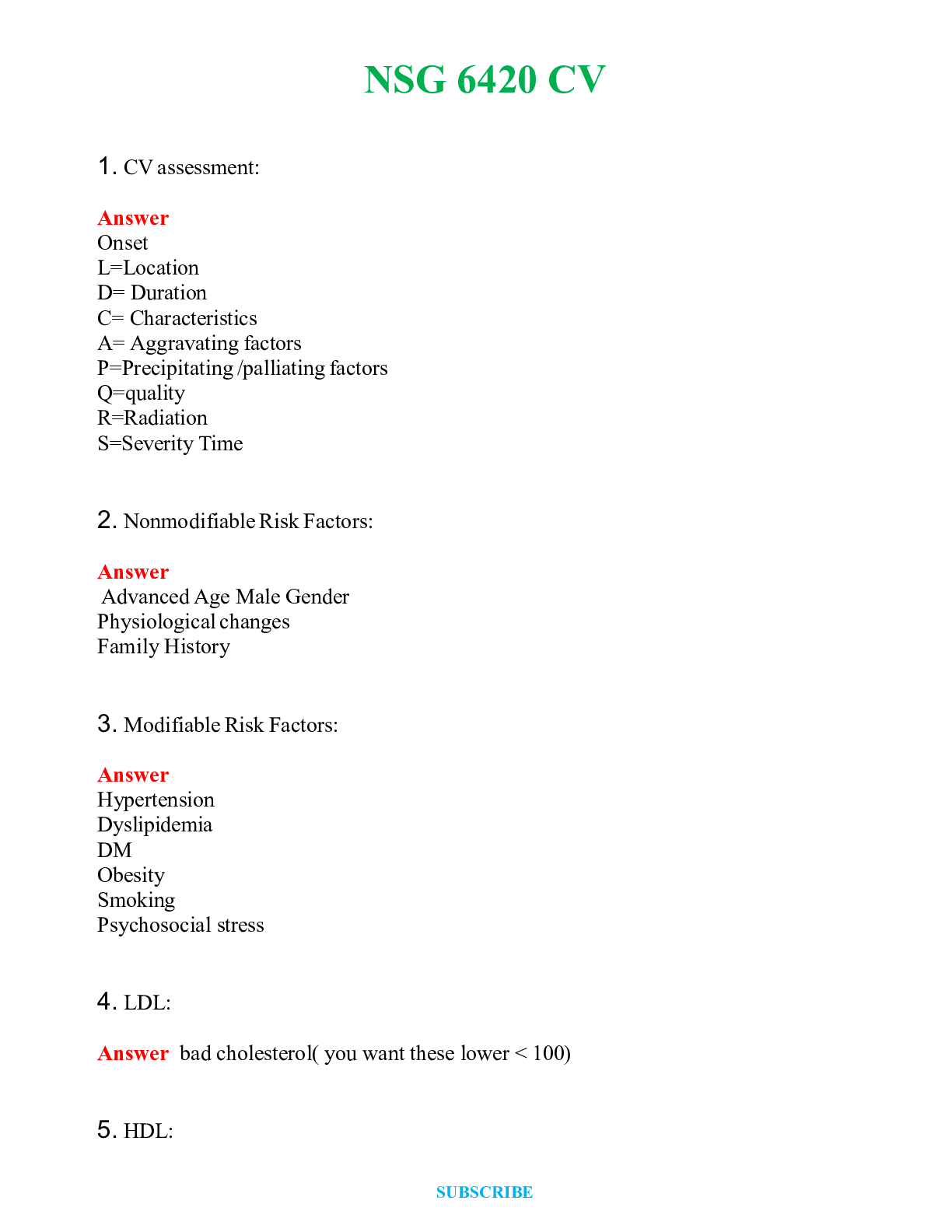
$9
43 Pages
NSG 6420 Mid Term Exam. Contains 100 Q&A | Correct Answers Hig...
$9.5
31 Pages
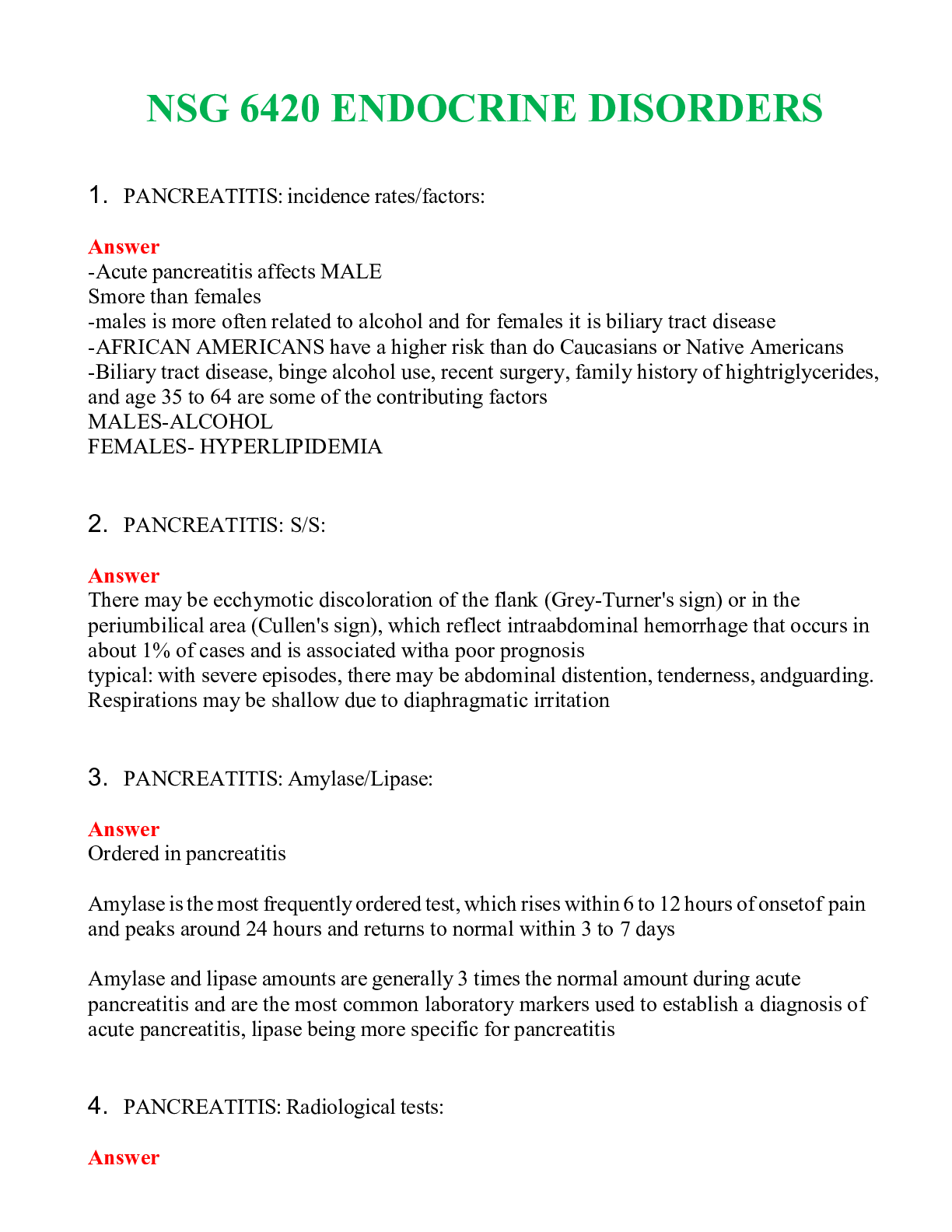
NSG 6420 ENDOCRINE DISORDERS Questions and Verified Answers
More related documents below



.png)


