Types of diabetes (prediabetes, type 1 and type 2)
PreDmM = glucose intolerance, Islet cell–specific antibodies, Screening for
prediabetes and DM should be considered in all individuals who are
overweight or obese,
...
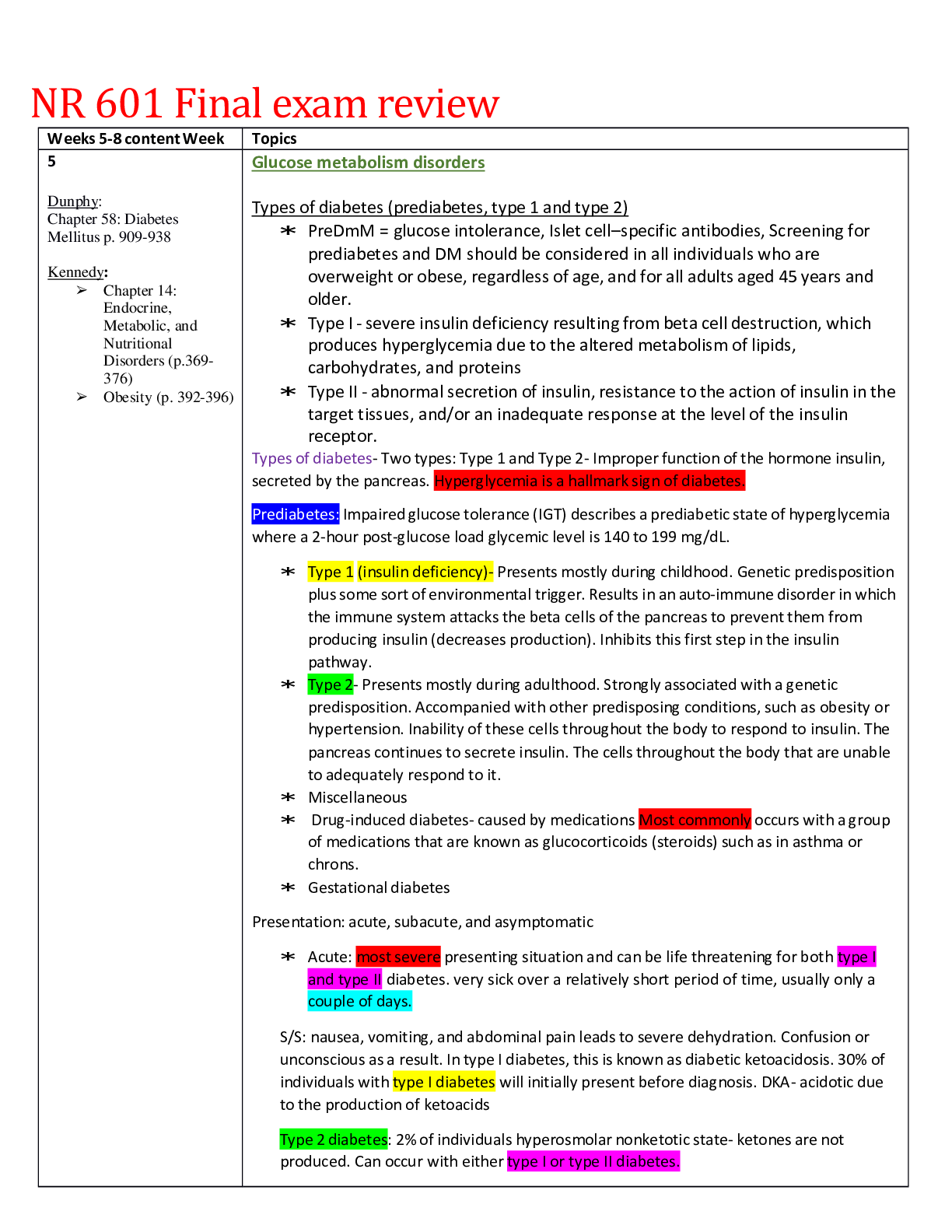
Types of diabetes (prediabetes, type 1 and type 2)
PreDmM = glucose intolerance, Islet cell–specific antibodies, Screening for
prediabetes and DM should be considered in all individuals who are
overweight or obese, regardless of age, and for all adults aged 45 years and
older.
Type I - severe insulin deficiency resulting from beta cell destruction, which
produces hyperglycemia due to the altered metabolism of lipids,
carbohydrates, and proteins
Type II - abnormal secretion of insulin, resistance to the action of insulin in the
target tissues, and/or an inadequate response at the level of the insulin
receptor.
Types of diabetes- Two types: Type 1 and Type 2- Improper function of the hormone insulin,
secreted by the pancreas. Hyperglycemia is a hallmark sign of diabetes.
Prediabetes: Impaired glucose tolerance (IGT) describes a prediabetic state of hyperglycemia
where a 2-hour post-glucose load glycemic level is 140 to 199 mg/dL.
Type 1 (insulin deficiency)- Presents mostly during childhood. Genetic predisposition
plus some sort of environmental trigger. Results in an auto-immune disorder in which
the immune system attacks the beta cells of the pancreas to prevent them from
producing insulin (decreases production). Inhibits this first step in the insulin
pathway.
Type 2- Presents mostly during adulthood. Strongly associated with a genetic
predisposition. Accompanied with other predisposing conditions, such as obesity or
hypertension. Inability of these cells throughout the body to respond to insulin. The
pancreas continues to secrete insulin. The cells throughout the body that are unable
to adequately respond to it.
Miscellaneous
Drug-induced diabetes- caused by medications Most commonly occurs with a group
of medications that are known as glucocorticoids (steroids) such as in asthma or
chrons.
Gestational diabetes
Presentation: acute, subacute, and asymptomatic
Acute: most severe presenting situation and can be life threatening for both type I
and type II diabetes. very sick over a relatively short period of time, usually only a
couple of days.
S/S: nausea, vomiting, and abdominal pain leads to severe dehydration. Confusion or
unconscious as a result. In type I diabetes, this is known as diabetic ketoacidosis. 30% of
individuals with type I diabetes will initially present before diagnosis. DKA- acidotic due
to the production of ketoacids
Type 2 diabetes: 2% of individuals hyperosmolar nonketotic state- ketones are not
produced. Can occur with either type I or type II diabetes.
[Show More]