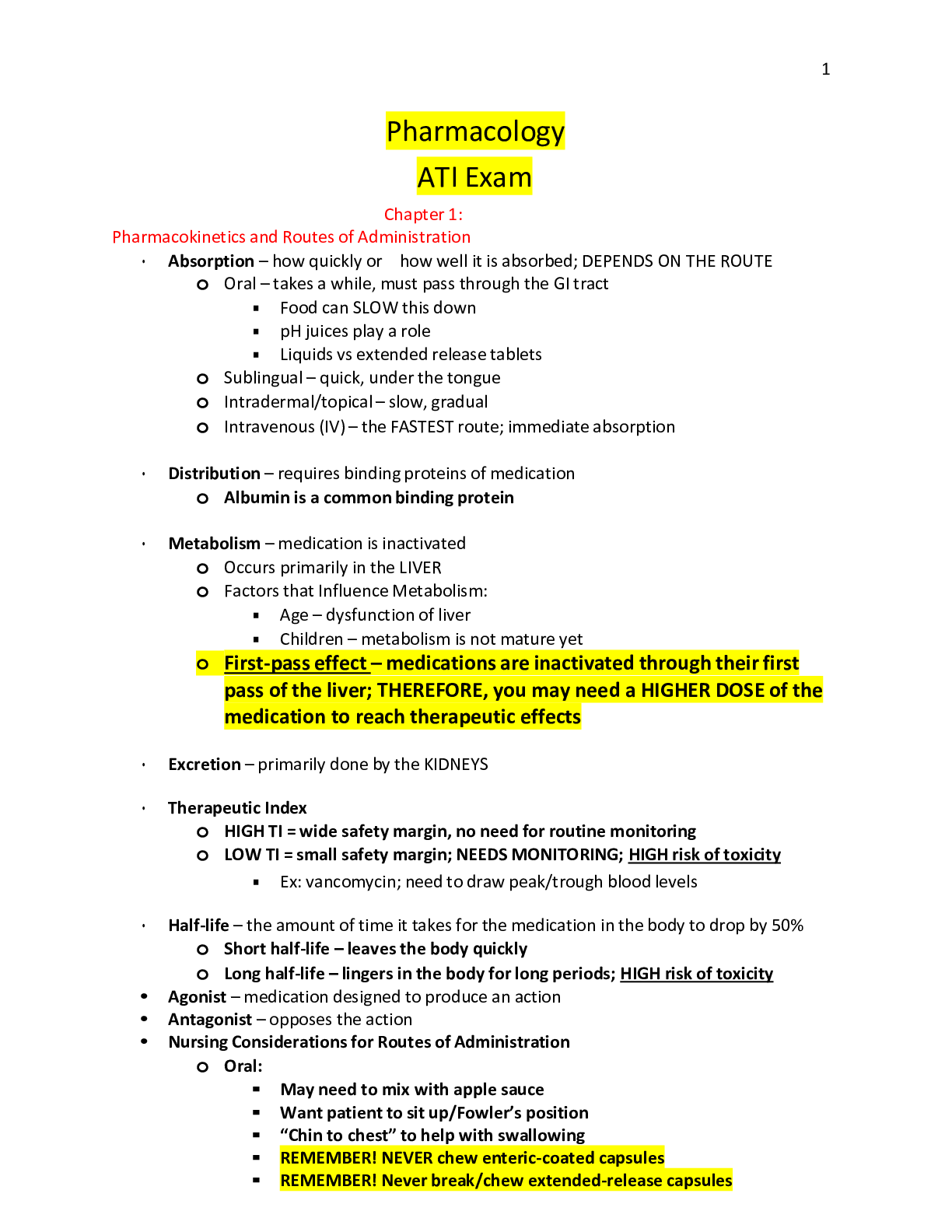
NURSING > ATI Study Resources. > NUR 153pharmacology ATI proctor notes. (All)
NUR 153pharmacology ATI proctor notes.
Document Content and Description Below
Last updated: 3 years ago
Preview 1 out of 30 pages
Instant download
Buy this Document to get the Full Access Instantly
Provided by Students Who Aced it
We Verify Document Content to Gurantee Accuracy
Reviews( 0 )
Document information
Connected school, study & course
About the document
Uploaded On
Sep 21, 2021
Number of pages
30
Written in
All

Additional information
This document has been written for:
Uploaded
Sep 21, 2021
Downloads
0
Views
212
Topic Tags
Recommended For You
Get more on ATI Study Resources. »
ATI TEAS 7 Exam Test Bank – 300 Questions with Answers Latest...

ATI Fundamentals 2.0 Proctored | ATI Testing | Academic Year 2...
ATI OB Test Bank | Actual Exam – 300 Questions & Verified Answ...

ATI MATERNAL NEWBORN PROCTORED EXAM | 33 VERSIONS Contains 260...
.png)
ATI MENTAL HEALTH EXAM A, B and C I Grade A+ Answers and C...

ATI MATERNAL NEWBORN PROCTORED EXAM WITH RATIONALES Version...
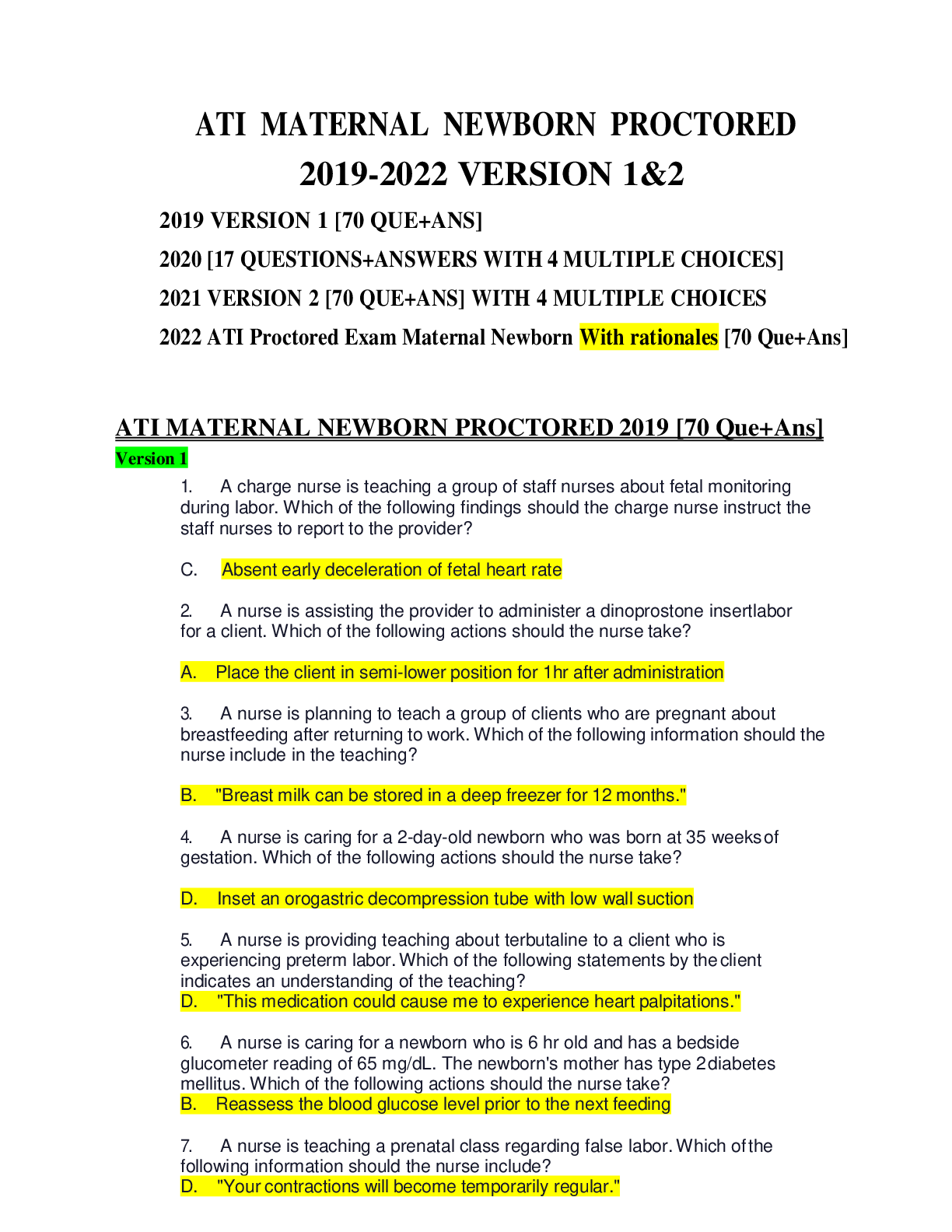
ATI MATERNAL NEWBORN PROCTORED EXAM WITH RATIONALES Version...
TEST BANK for Davis Advantage for Psychiatric Mental Health Nu...
Test Bank For Fundamentals of Nursing 11th Edition Potter Perr...
NUR 321 VCE #5 Fluid and Electrolyte Balance QUESTIONS AND ANS...

NUR 321 VCE # 1 Lesson 3- Critical Thinking in Nursing Practic...