4 ATLS Post Tests. Includes MCQ and Q&A. 2019. More than 150 Questions Answered.
1. The primary indication for transferring a
patient to a higher level trauma center is:
unavailability of a surgeon or operating room
...
4 ATLS Post Tests. Includes MCQ and Q&A. 2019. More than 150 Questions Answered.
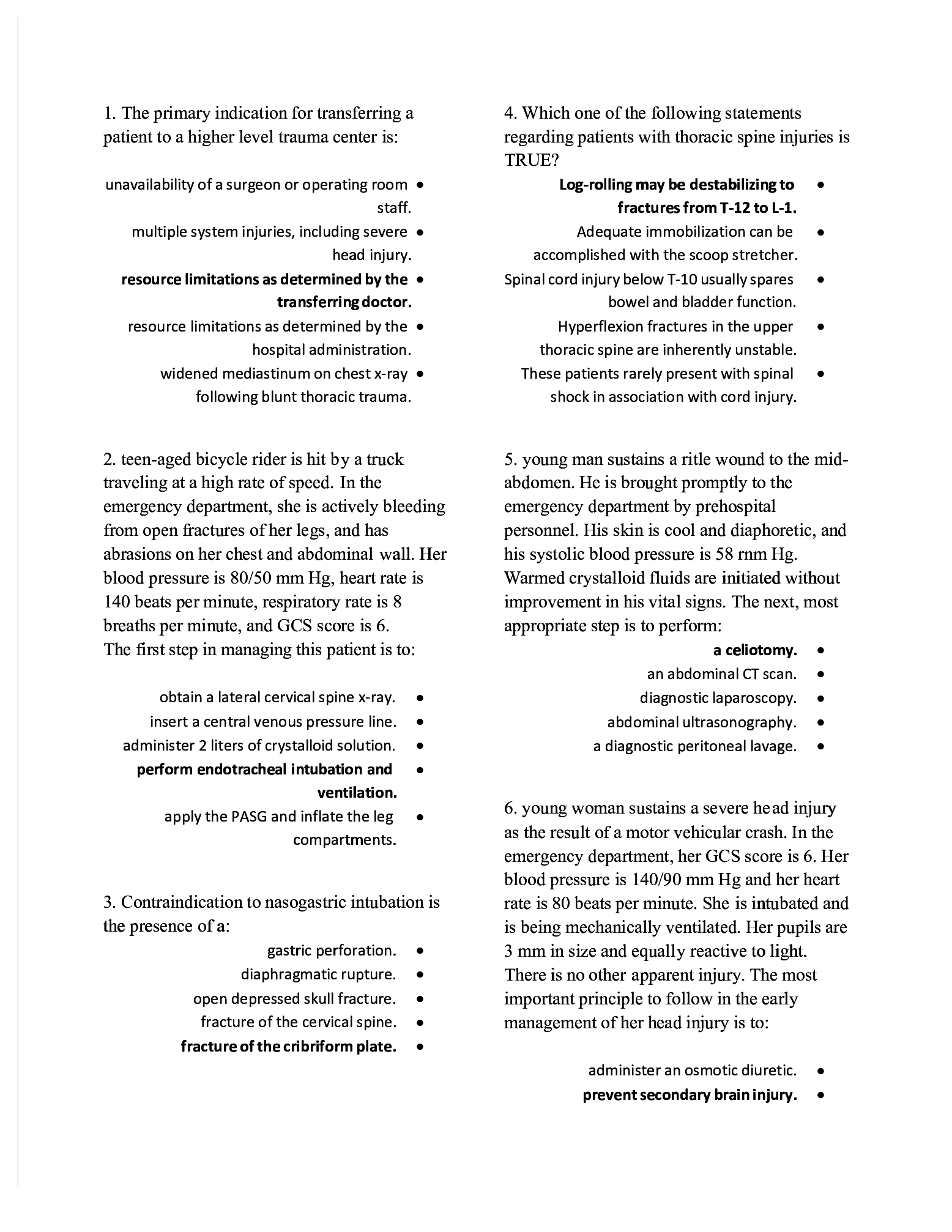
1. The primary indication for transferring a
patient to a higher level trauma center is:
unavailability of a surgeon or operating room
staff.
multiple system injuries, including severe
head injury.
resource limitations as determined by the
transferring doctor.
resource limitations as determined by the
hospital administration.
widened mediastinum on chest x-ray
following blunt thoracic trauma.
2. teen-aged bicycle rider is hit by a truck
traveling at a high rate of speed. In the
emergency department, she is actively bleeding
from open fractures of her legs, and has
abrasions on her chest and abdominal wall. Her
blood pressure is 80/50 mm Hg, heart rate is
140 beats per minute, respiratory rate is 8
breaths per minute, and GCS score is 6.
The first step in managing this patient is to:
obtain a lateral cervical spine x-ray.
insert a central venous pressure line.
administer 2 liters of crystalloid solution.
perform endotracheal intubation and
ventilation.
apply the PASG and inflate the leg
compartments.
3. Contraindication to nasogastric intubation is
the presence of a:
gastric perforation.
diaphragmatic rupture.
open depressed skull fracture.
fracture of the cervical spine.
fracture of the cribriform plate.
4. Which one of the following statements
regarding patients with thoracic spine injuries is
TRUE?
Log-rolling may be destabilizing to
fractures from T-12 to L-1.
Adequate immobilization can be
accomplished with the scoop stretcher.
Spinal cord injury below T-10 usually spares
bowel and bladder function.
Hyperflexion fractures in the upper
thoracic spine are inherently unstable.
These patients rarely present with spinal
shock in association with cord injury.
5. young man sustains a ritle wound to the midabdomen. He is brought promptly to the
emergency department by prehospital
personnel. His skin is cool and diaphoretic, and
his systolic blood pressure is 58 rnm Hg.
Warmed crystalloid fluids are initiated without
improvement in his vital signs. The next, most
appropriate step is to perform:
a celiotomy.
an abdominal CT scan.
diagnostic laparoscopy.
abdominal ultrasonography.
a diagnostic peritoneal lavage.
6. young woman sustains a severe head injury
as the result of a motor vehicular crash. In the
emergency department, her GCS score is 6. Her
blood pressure is 140/90 mm Hg and her heart
rate is 80 beats per minute. She is intubated and
is being mechanically ventilated. Her pupils are
3 mm in size and equally reactive to light.
There is no other apparent injury. The most
important principle to follow in the early
management of her head injury is to:
administer an osmotic diuretic.
prevent secondary brain injury.
aggressively treat systemic hypertension.
reduce metabolic requirements of the
brain.
distinguish between intracranial hematoma
and cerebral edema.
7. 22-year-old man is brought to the hospital
after crashing his motorcycle into a telephone
pole. He is unconscious and in profound shock.
He has no open wounds or obvious fractures.
The cause of his shock is MOST LIKELY
caused by:
a subdural hematoma.
an epidural hematoma.
a transected lumbar spinal cord.
a transected cervical spinal cord.
hemorrhage into the chest or abdomen.
8. 30-year-old man is struck by a car traveling
at 56 kph (35 mph). He has obvious fractures of
the left tibia near the knee, pain in the pelvic
area, and severe dyspnea. His heart rate is 180
beats per minute, and his respiratory rate is 48
breaths per minute with no breath sounds heard
in the left chest. A tension pneumothorax is
relieved by immediate needle decompression
and tube thoracostomy. Subsequently, his heart
rate decreases to 140 beats per minute, his
respiratory rate decreases to 36 breaths per
minute, and his blood pressure is 80/50 inm Hg.
Warmed Ringer's lactate is administered
intravenously. The next priority should be to:
perform a urethrogram and cystogram.
perform external fixation of the pelvis.
obtain abdominal and pelvic CT scans.
perform arterial embolization of the pelvic
vessels.
perform diagnostic peritoneal lavage or
abdominal ultrasound.
9. 8-year-old girl is an unrestrained passenger
in a vehicle struck from behind. In the
emergency department, her blood pressure is
80/60 mm Hg, heart rate is 80 beats per minute,
and respiratory rate is 16 breaths per minute.
Her GCS score is 14. She complains that her
legs feel "funny and won't move right;"
however, her spine x-rays do not show a
fracture or dislocation. A spinal cord injury in
this child:
is most likely a central cord syndrome.
must be diagnosed by magnetic resonance
imaging.
can be excluded by obtaining a CT of the
entire spine.
may exist in the absence of objective
findings on x-ray studies.
is unlikely because of the incomplete
calcification of the vertebral bodies.
10. Immediate chest tube insertion is indicated
for which of the following conditions?
Pneumothorax
Pneumomediastinum
Massive hemothorax
Diaphragmatic rupture
Subcutaneous emphysema
11. 18-year-old, helmeted motorcyclist is
brought by ambulance to the emergency
department following a high-speed crash.
Prehospital persormel report that he was thrown
15 meters (50 feet) off his bfice. He has a
history of hypotension prior to arrival in the
emergency department, but is now awake, alert,
and conversational. Which of the following
statements is TRUE?
Cerebral perfiision is intacto
Intravascular volume status is normal.
The patient has sensitive vasomotor
reflexes.
Intraabdominal visceral injuries are
unlikely.
The patient probably has an acute
epidural hematoma.
12. crosstable, lateral x-ray of the cervical
spine:
must precede endotracheal intubation.
excludes serious cervical spine injury.
is an essential part of the primary survey.
is not necessary for unconscious patients
with penetrating cervical injuries.
is unacceptable unless 7 cervical vertebrae
and the C-7 to T-1 relationship are
visualized.
13. During resuscitation, which one of the
following is the most reliable as a guide to
volume replacement?
Pulse rate
Hematocrit
Blood pressure
Urinary output
Jugular venous pressure
14. Which one of the following is the
recommended method for initially treating
frostbite?
Vasodilators
Anticoagulants
Warm (40°C) water
Padding and elevation
Topical application of silvasulphadiazine
15. young man sustains a gunshot wound to the
abdomen and is brought promptly to the
emergency department by prehospital
personnel. His skin is cool and diaphoretic, and
he is confused. His pulse is thready and his
femoral pulse is only weakly palpable. The
defmitive treatment in managing this patient is
to:
administer 0-negative blood.
apply extemal warming devices.
control internal hemorrhage operatively.
apply the pneumatic antishock garment.
infuse large volumes of intravenous
crystalloid solution.
16. To establish a diagnosis of shock:
systolic blood pressure must be below 90
mm Hg.
the presence of a closed head injury should
be excluded.
acidosis should be present by arterial blood
\gas analysis.
the patient must fail to respond to
intravenous fluid infu.sion.
clinical evidence of inadequate organ
perfusion must be present.
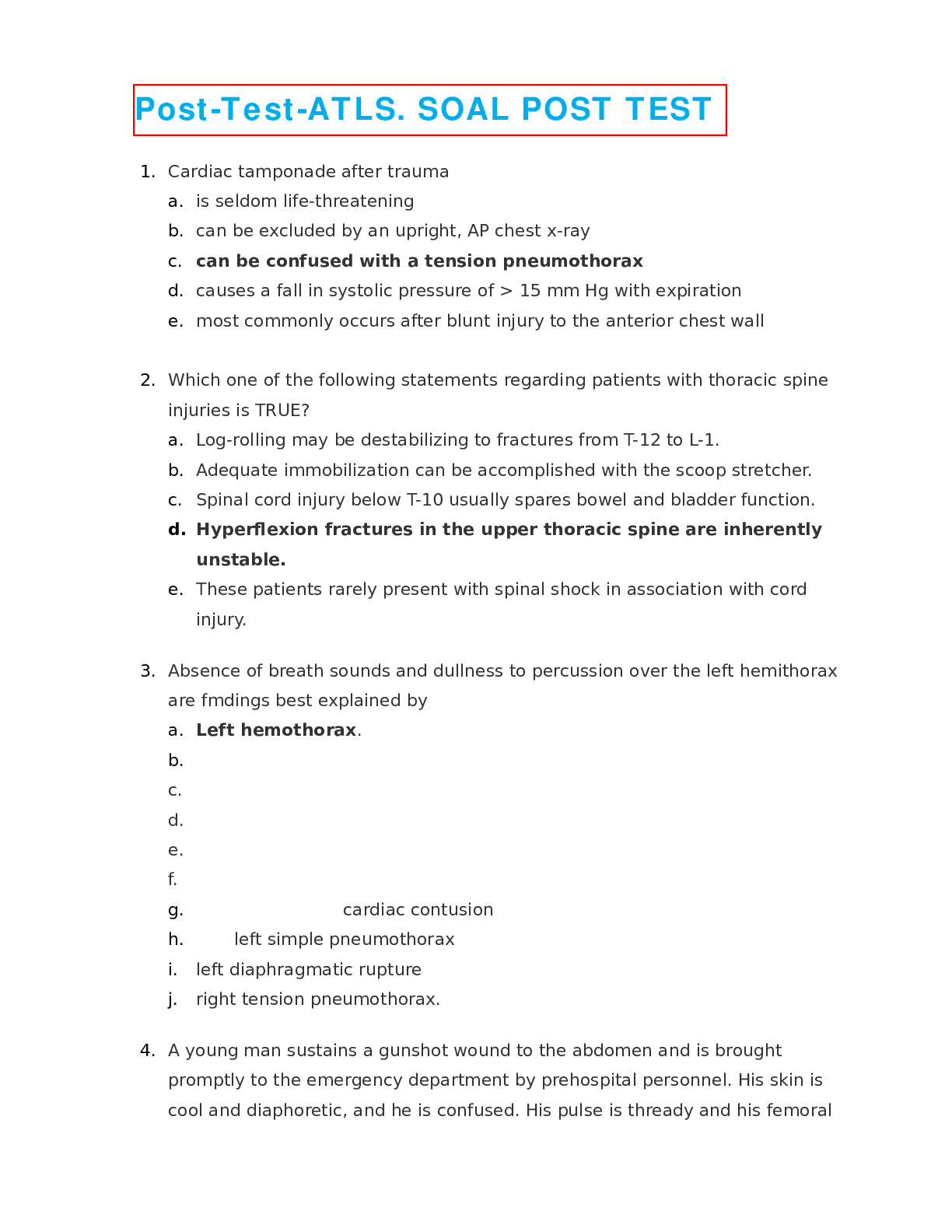
17. Absence of breath sounds and dullness to
percussion over the left hemithorax are fmdings
best explained by:
left hemothorax.
cardiac contusion.
left simple pneumothorax.
left diaphragmatic rupture.
right tension pneumothorax.
18. 17-year-old helmeted motorcyclist is struck
broadside by an automobile at an intersection.
He is unconscious at the scene with a blood
pressure of 140/90 mm Hg, heart rate of 90
beats per minute, and respiratory rate of 22
breaths per minute. His respirations are
sonorous and deep. His GCS score is 6.
Immobilization of the entire patient may
include the use of all the following EXCEPT:
air splints.
bolstering devices.
a long spine board.
a scoop-style stretcher.
a semirigid cervical collar.
19. During an altercation, a 32-year-old man
sustains a gunshot wound to the right upper
hemithorax, above the nipple line with an exit
wound posteriorly above the scapula on the
right. He is transported by ambulance to a
community hospital. He is endotracheally
intubated, closed tube thoracostomy is
performed, and 2 liters of Ringer's lactate
solution are infused through 2 large-caliber IVs.
His blood pressure now is 60/0 mm Hg, heart
rate is 160 beats per minute, and respiratory
rate is 14 breaths per minute (ventilated with
100% 02). The most appropriate next step in
managing this patient is:
celiotomy.
diagnostic peritoneal lavage.
arterial blood gas determination.
administer packed red blood cells.
chest x-ray to confinn tube placement.
20. Which of the following statements
regarding iWhich of the following statements
regardingnjury to the central nervous system in
children is TRUE?
Children suffer spinal cord injury without
x-ray abnormality more commonly than
adults.
An infant with a traumatic brain injury may
become hypotensive from cerebral edema.
Initial therapy for the child with traumatic
brain injury includes the administration of
methylprednisolone intravenously.
Children have more focal mass lesions as a
result of traumatic brain injury when
compared to adults .
Young children are less tolerant of
expanding intracranial mass lesions than
adults.
21. 5-year-old boy is struck by an automobile
and brought to the emergency department. He is
lethargic, but withdraws purposefully from
painful stimuli. His blood pressure is 90 mm
Hg systolic, heart rate is 140 beats per minute,
and his respiratory rate is 36 breaths per
minute. The preferred route of venous access in
this patient is:
percutaneous femoral vein cannulation
cutdown on the saphenous vein at the
ankle.
intraosseous catheter placement in the
proximal tibia.
percutaneous peripheral veins in the
upper extremities.
central venous access via the subclavian or
interna1 jugular vein.
22. The response to catecholamines in an
injured, hypovolemic pregnant woman can be
expected to result in:
placental abruption.
fetal hypoxia and distress.
fetal/maternal dysrhythmia.
improved uterine blood flow.
increased maternal renal blood flow.
23. Cardiac tamponade after trauma:
is seldom life-threatening.
can be excluded by an upright, AP chest x-
ray.
can be confused with a tension
pneumothorax.
causes a fall in systolic pressure of > 15 mm
Hg with expiration.
most commonly occurs after blunt injury to
the anterior chest wall.
24. 30-year-old man sustains a severely
comminuted, open distal right femur fracture in
a motorcycle crash. The wound is actively
bleeding. Normal sensation is present over the
lateral aspect of the foot but decreased over the
medial foot and great toe. Normal motion of the
foot is observed. Dorsalis pedis and posterior
tibial pulses are easily palpable on the left, but
heard only by Doppler on the right. Immediate
efforts to improve circulation to the injured
extremity should involve:
immediate angiography.
tamponade of the wound with a pressure
dressing.
wound exploration and removal of bony
fragments.
realignment of the fracture segments with
a traction splint.
fasciotomy of all four compartments in the
lower extremity.
25. 24-year-old man sustains multiple fractured
ribs bilaterally as a result of being crushed in a
press at a plywood factory. Examination in the
emergency department reveals a flail segment
of the patient's thorax. Primary resuscitation
includes high-flow oxygen administration via a
nonrebreathing mask, and initiation of Ringer' s
lactate solution. The patient exhibits
progressive confusion, cyanosis, and tachypnea.
Management at this time should consist of:
intravenous sedation.
external stabilization of the chest wall.
increasing the F102 in the inspired gas.
intercostal nerve blocks for pain relief.
endotracheal intubation and mechanical
ventilation.
26. 23-year-old man is brought immediately to
the emergency department from the hospital' s
parking lot where he was shot in the lower
abdomen. Examination reveals a single bullet
wound. He is breathing and has a thready pulse.
However, he is unconscious and has no
detectable blood pressure. Optimal immedi'ate
management is to:
perform diagnostic peritoneal lavage.
initiate infusion of packed red blood cells.
insert a nasogastric tube and urinary
catheter.
transfer the patient to the operating
room, while initiating fluid therapy.
initiate fluid therapy to return his blood
pressure to normotensive
27. 25-year-old woman is brought to the
emergency department after a motor vehicle
crash. She was initially lucid at the scene and
then developed a dilated pupil and contralateral
extremity weakness. In t.he emergency
department, she is unconscious and has a GCS
score of 6. The initial management step for this
patient should be to:
obtain a CT scan of the head.
administer decadron 20 mg IV.
perform endotracheal intubation.
initiate an W line and administer Mannitol
1 g/kg.
perform an emergency linar hole on the
side of the dilated pupil.
28. Twenty-seven patients are seriously injured
in an aircraft accident at a local airport. The
basic principle of triage should be to:
treat the most severely injured patients
first.
establish a field triage area directed by a
doctor.
rapidly transport all patients to the nearest
appropriate hospital.
treat the greatest number of patients in
the shortest period of time.
produce the greatest number of survivors
based on available resources.
29. Which one of the following statements is
FALSE concerning Rh isoimmunization in the
pregnant trauma patient?
It occurs in blunt or penetrating abdominal
trauma.
Minor degrees of fetomaternal
hemorrhage produce it.
A negative Kleihauer-Betke test excludes
Rh isoimmunization.
This is not a problem in the traumatized
Rh-positive pregnant patient.
Initiation of Rh immunoglobulin therapy
does not require proof of fetomaternal
hemorrhage.
30. 24-year-old woman passenger in an
automobile strikes the wind screen with her
face during a head-on collision. In the
emergency department, she is talking and has
marked facial edema and crepitus. The highest
priority should be given to:
lateral, c-spine x-ray.
upper airway protection.
carotid pulse assessment.
management of blood loss.
determination of associated Injuries.
31. Early central venous pressure monitoring
during fluid resuscitation in the emergency
department has the greatest utility in a:
patient with a splenic laceration.
patient with an inhalation injury.
6-year-old child with a pelvic fracture.
patient with a severe cardiac contusion.
24-year-old man with a massive
hemothorax.
32. 32-year-old man is brought to the hospital
unconscious with severe facial injuries and
noisy respirations after an automobile collision.
In the emergency department, he has no
apparent injury to the anterior aspect of his
neck. He suddenly becomes apneic, and
attempted ventilation with a face mask is
unsuccessful. Examination of his mouth reveals
a large hematoma of the pharynx with loss of
normal anatomic landmarks. Initial
management of his airway should consist of:
inserting an oropharyngeal airvvay.
inserting a nasopharyngeal airway.
performing a surgical cricothyroidotomy.
performing fiberoptic-guided nasotracheal
intubation.
performing orotracheal intubation after
obtaining a lateral c-spine x-ray.
33. 42-year-old man, injured in a motor vehicle
crash, suffers a closed head injury, multiple
palpable left rib fractures, and bilateral femur
fractures. He is intubated orotracheally without
difficulty. Initially, his ventilations are easily
assisted with a bag¬valve device. It becomes
more difficult to ventilate the patient over the
next 5 minutes, and his hemoglobin oxygen
saturation level decreases from 98% to89 % .
The most appropriate next step is to:
obtain a chest x-ray.
decrease the tidal volume.
auscultate the patient's chest.
increase the rate of assisted ventilations.
perform needle decompression of the left
chest.
34. 42-year-old man is trapped from the waist
down beneath his overtumed tractor for several
hours before medical assistance arrives. He is
awake and alert until just before arriving in the
emergency department. He is now unconscious
and responds only to painful stimuli by
moaning. His pupils are 3 mm in diameter and
symmetrically reactive to light. Prehospital
personnel indicate that they have not seen the
patient move either of his lower extremities. On
examination in the emergency department, no
movement of his lower extremities is detected,
even in response to painful stimuli. The most
likely cause for this fmding is:
an epidural hematoma.
a pelvic fracture.
central cord syndrome.
intracerebral hemorrhage.
bilateral compartment syndrome.
35. An electrician is electrocuted by a downed
power line after a thunderstorm. He apparently
made contact with the wire at the level of the
right mid thigh. In the emergency department,
his vital signs are normal and no dysrhythmia is
noted on ECG. On examination, there is an exit
wound on the bottom of the right foot. His
urine is positive for blood by dip stick but no
RBCs are seen microscopically. Initial
management should include:
immediate angiography.
aggressive fluid infusion.
intravenous pyleography.
debridement of necrotic muscle.
admission to the intensive care unit for
observation.
36. Which one of the following physical
findings suggests a cause of hypotension other
than spinal cord injury?
priapism.
bradycardia.
diaphragmatic breathing.
presence of deep tendon reflexes.
ability to flex forearms but inability to
extend them.
37. Regarding shock in the child, which of the
following is FALSE?
Vital signs are age-related.
Children have greater physiologic reserves
than do adults.
Tachycardia is the primary physiologic
response to hypovolemia.
The absolute volume of blood loss
required to produce shock is the same as
in adults.
An initial fluid bolus for resuscitation
should approximate 20 mL/kg of Ringer's
lactate.
38. All of the following signs on the chest x-ray
of a blunt injury victim may suggest aortic
rupture EXCEPT::
mediastinal emphysema.
presence of a "pleural cap."
obliteration of the aortic knob.
deviation of the trachea to the right.
depression of the left mainstem bronchus
39. An 8-year-old boy falls 4.5 meters (15 feet)
from a tree and is brought to the emergency
department by his family. His vital signs are
normal, but he complains of left upper quadrant
pain. An abdominal CT scan reveals a
moderately severe laceration of the spleen. The
receiving institution does not have 24-hour-aday operating room capabilities. The most
appropriate management of this patient would
be to:
type and crossmatch for blood.
request consultation of a pediatrician.
transfer the patient to a trauma center.
admit the patient to the intensive care unit.
prepare the patient for surgery the next
day.
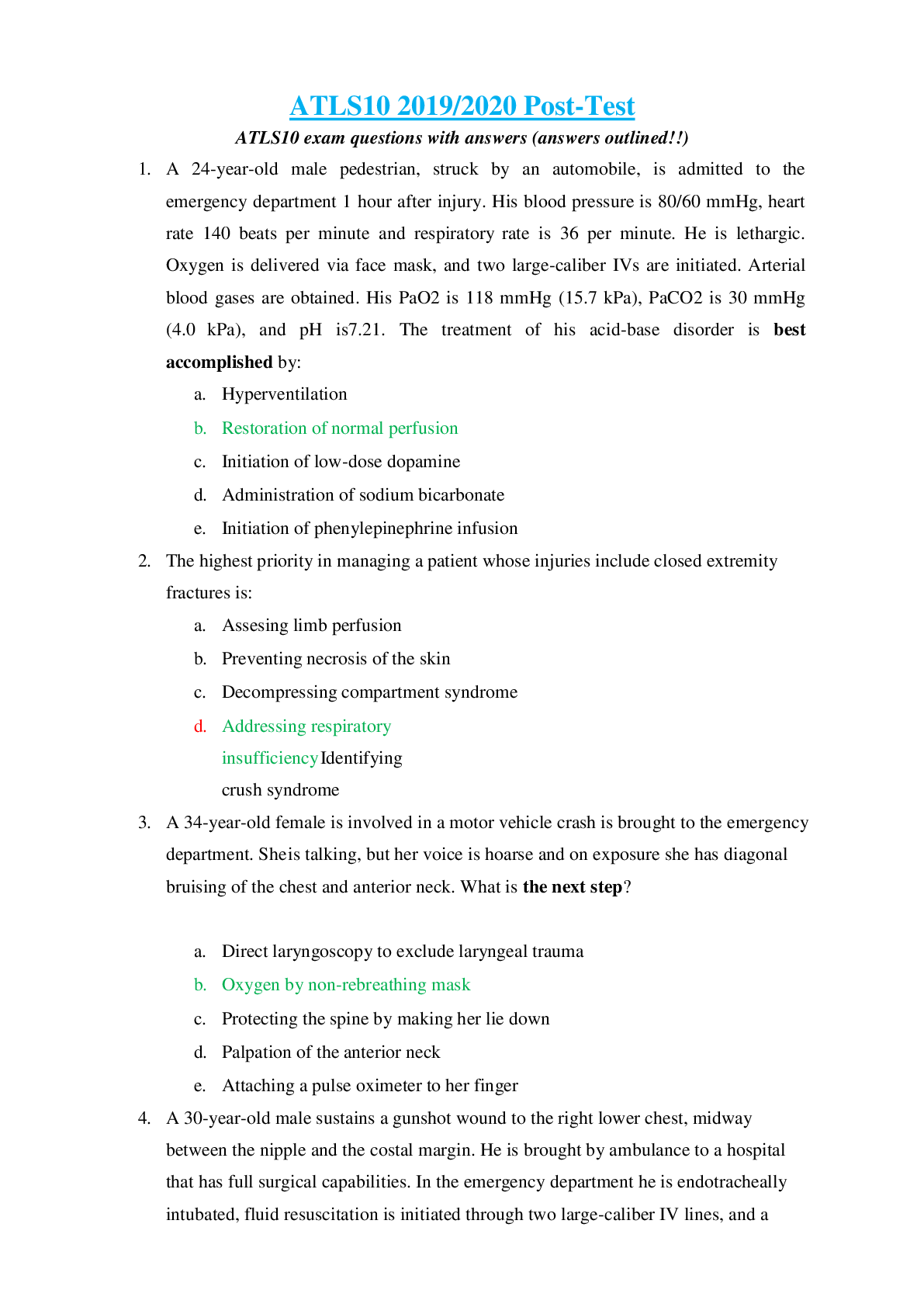
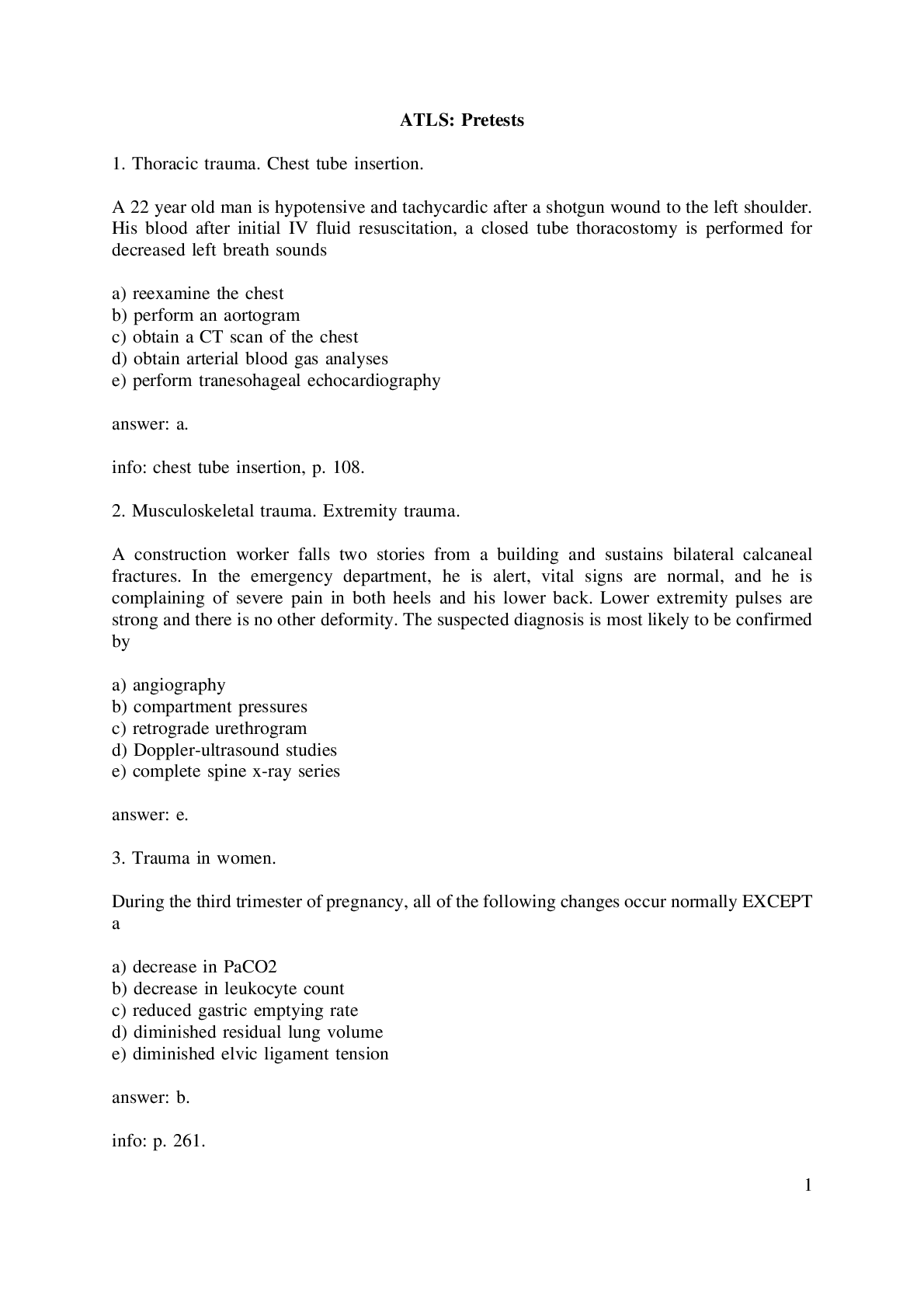
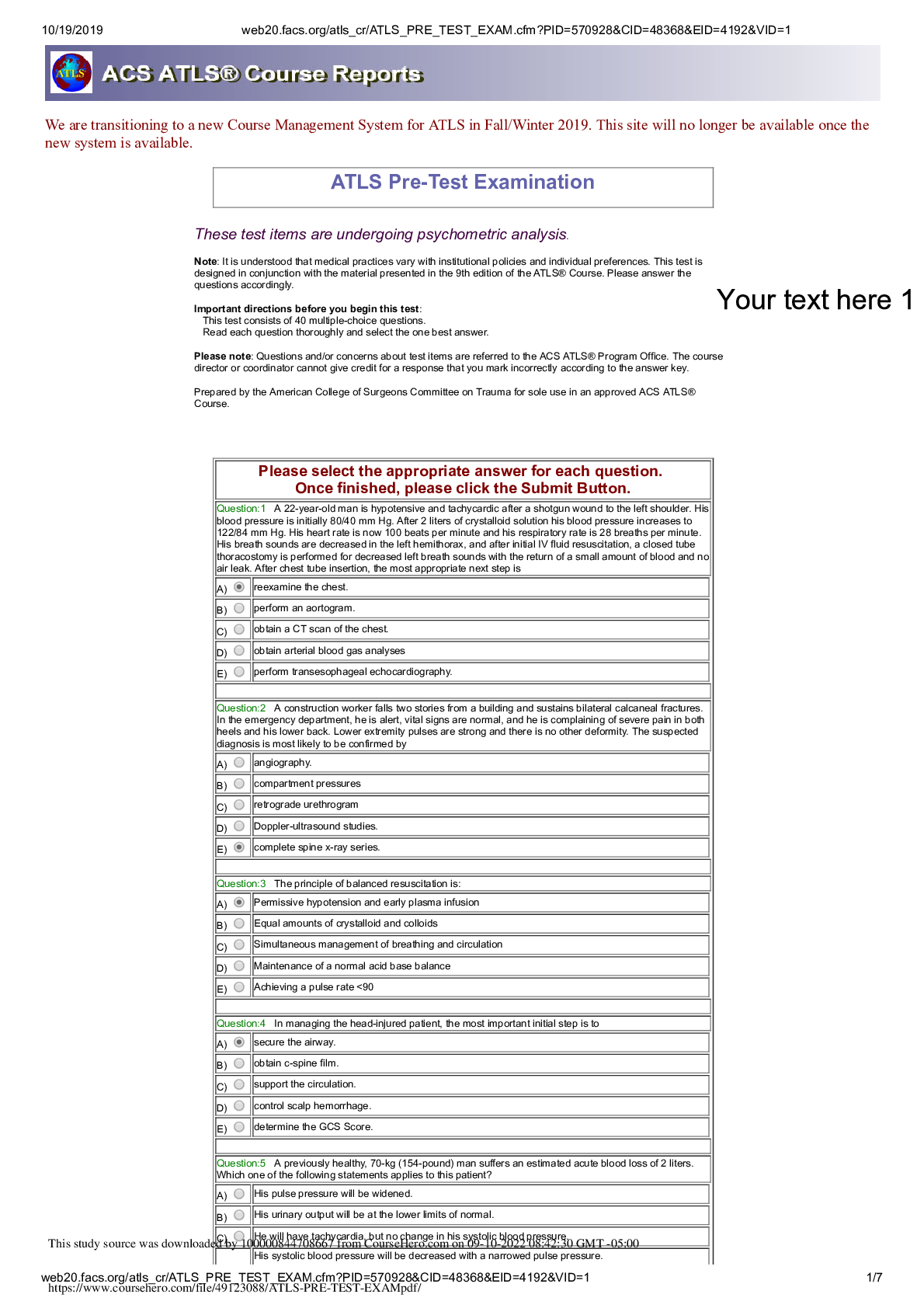
1. A 20 year old athlete is involved in
motorcycle crash. When he arrives in the
ER. He shouts that he cannot move his legs.
On physical exam, there are no
abnormalities of the chest, abdomen, or
pelvis. The patient has no sensation in his
legs and cannot move them, but his arms
are moving. The patient's respiratory rate is
23, heart rate 88, and blood pressure is
80/60 mm Hg. He is pale and sweaty. What
is most likely cause of his condition?
a. Neurogenic shock.
b. Cardiac temponade.
c. Myocardial contusion.
d. Hypothermia.
e. Abdominal hemorrhage.
2. A 22 year old male presents following a
motorcycle crash. He complains of the
inability to move or feel his legs. His
blood pressure is 80/50 mm Hg, heart
rate is 70, respiratory rate is 18. GCS is
15. Oxygen is 99%on 2L nasal prongs.
Chest X-ray, pelvic X-ray, FAST are
normal. Extremities are normal. His
management should be:
a. 2L of IV crystalloid and two units of
pRBSs.
b. 2L of IV crystalloid, manitol and IV
steroids.
c. 1 unit of albumin and compression
stockings.
d. Vassopressors and laprotomy.
e. 2L of crystalloid and vassopressors if
BPdoes not respond.
3. Which of the following signs is least
reliable for diagnosing esophageal
intubation?
a. Symmetrical chest wall movement.
b. End-tidal CO2.
c. Bilateral breath sounds.
d. Oxygen saturation.
e. Chest X-ray demonstrating the ETT tip
positioned above the carnia.
4. A 6 months old infant, being held in her
mother's arms, is ejected on impact from
a vehicle that is struck head-on by an
oncoming car travelling at 64 kph. The
infant arrives in the ER with multiple
facial injuries, is lethargic, and in severe
respiratory distress. Respiratory support
is not effective using a bag mask device.
And her oxygen saturation is falling.
Repeated attempts at orotracheal
intubation are unsuccessful. The most
appropriate procedure to perform next
is:
a. Administer hellox and epinephrine.
b. Perform nasotracheal intubation.
c. Perform surgical cricothyriodotomy.
d. Repeat orotracheal intubation.
e. Perform needle cricothyroidtomy
with jet insufflations.
5. 28 year old male is brought to ER. He
was involved in fight, in which he was
beaten with a wooden stick. His chest
shows multiple severe bruises. Airway
is clear, respiratory rate is 22, heart rate
is 126, and systolic blood pressure is 90
mm Hg. Which of the following should
be performed during the primary
survey?
a. GCS.
b. Tetanus toxoid administration.
c. Cervical spine X-ray.
d. Blood alcohol level.
e. Rectal exam.
6. Which one of the following injuries is
addressed in the secondary survey?
a. Forearm fracture.
b. Mid-thigh amputation.
c. Open fracture with bleeding.
d. Unstable pelvic fracture.
e. Bilateral femur fractures with
obvious deformity.
7. Which one of the following statements
is true regarding access in pediatric
resuscitation?
a. Intraosseous access should only be
considered after five percutaneous
attempts.
b. Cut-down at the ankle is the preferred
initial access technique.
c. Internal jugular cannulation is the next
preferred option when percutaneous
venous access fails.
d. Intraosseouscannulation should be the
first choice for access.
e. Blood transfusion can be delivered
through intraosseous access.
8. A 35 year old female sustains multiple
injuries in a motor vehicle crash and is
transported to a small hospital in full
spinal protection. She has a GCS of 4
and is being mechanically ventilated.
Intravenous access is established and
warmed crystalloid is infused. She
remains hemodynamically normal and
full spinal protection in maintained.
Preparations are made to transfer her to
another facility for definitive
neurosurgical care. Prior to transport,
which of the following tests or
treatments is mandatory?
a. FAST exam.
b. Chest X-ray. ???
c. Lateral cervical spine X-ray.???
d. Administration of
methiprednisolone.
e. CT of abdomen.
9. A 23 year old male is stabbed below the
right nipple. He is alert, and his oxygen
is 98%. Chest tube was placed for
treatment of hemopnueunthorax. BP
90/60 mm Hg after 1L of crystalloid
solution. What is the next step in
treatment?
a. Place a left-sided chest tube.
b. Re-examine the chest.
c. Inscert central venous catheter.
d. Perform CT scan of the abdomen
and pelvis.
e. Prepare for urgent throacotomy.
10. A 22 year old male is assaulted in a bar.
A semi-rigid cervical coller is applied,
and he is immobilized on a spine board.
On initial exam, VS are normal, GCS is
15. Which of the following is an
indication for CT in this patient with
possible minor traumatic brain injury?
a. Presence of hemotympanum.
b. Blood alcohol concentration of
0.16%.
c. Presence of an isolated 10 cm scalp
laceration.
d. Presence of a mandibuler fracture.
e. History of assult.
11. A 23 year old construction worker is
brought to ER after falling more than 9
meters. VS: HR is 140, BP is 90/60, and
RR is 36. He is complaining bitterly of
lower abdominal and lower limb pain,
and his obvious deformity of both lower
legs with bilateral open tibial fractures.
Which of the following statements
concerning the patient is true?
a. Pelvic injury can be ruled out based
on the mechanism of injury.
b. Blood loss from the lower limbs is
the most likely cause of
hypotension.
c. X-ray of the chest and pelvis are
important adjacent in his initial
assessment.
d. Spinal cord injury is most likely
cause of his hypotension.
e. Aortic injury is the most likely cause
of his tachycardia.
12. A 25 year old female in the third
trimester of pregnancy is brought to ER
following a high-speed motor vehicle
crash. She is conscious and immobilized
on long spine board. RR is 24, HR is
120, and BP is 70/50. Labs show a
PaCO2 of 40 mm Hg. Which one of the
following statements concerning this
patient is true?
a. Fetal assessment should take
priority.
b. Log rolling the patient to the right
will decompress the vena cava.
c. Rh-immunoglubulin therapy should
be immediately administered.
d. The patient has likely impending
respiratory failure.
e. Vasopressors should be given to the
patient.
13. A 30 year old male is stabbed in the
right chest. On arrival to ER, he is very
short of breath. HR is 120 and BP is
80/50 mm Hg. His neck veins are flat.
There is no diminished air entry on the
right side, and there is dullness
posteriorly on percussion. These
findings are most consistent with:
a. Tension pneumothorax.
b. Pericardial tamponade.
c. Hypovolemia from liver injury.
d. Hemothorax.
e. Spinal cord injury.
14. A specific aspect of the treatment of
thermal injuries is:
a. Chemical burns require the
immediate removal of clothing.
b. Patients who sustain thermal injury
are at lower risk of hypothermia.
c. Patients with circumferential burns
need prompt fasciotomies.
d. Electrical burns are associated with
extensive skin necrosis (from entry
point to exit).
e. The Parkland formula should be
used to determine adequacy of
resuscitation.
15. A 15 year old male is brought to ER
after being involved in a motor vehicle
crash. He is unconscious and was
intubated at the scene by EMS. On ER,
O2 is 92%, HR is 96 and BP is 150/85
mm Hg. Breath sounds are decreased on
the left side of the thorax. The next step
is:
a. Immediate needle
cricothyroidotomy.
b. Immediate needle thoracocentesis.
c. Chest tube insertion.
d. Reassess the position of
endotracheal tube.
e. Obtain a chest X-ray.
16. Which one of the following statements
is true?
a. Elevated ICP will not affect cerebral
perfusion.
b. CSF cannot be displaced from the
cranial vault.
c. Cerebral blood flow (CBF) is
increased when the PaCO2 is below
30 mm Hg.
d. AutoregulationCBF normally occurs
between cerebral perfusion
pressures of 50 to 150.
e. Hypotonic fluids should be used to
limit brain edema in patients with
severe head injury.
17. The first priority in the management of
a long bone fracture is:
a. Reduction of the pain.
b. Prevention of infection in case of an
open fracture.
c. Prevention of further soft tissue
injury.
d. Control of hemorrhage.
e. Improve long-term function.
18. A 40 year old obese patient with GCS of
8 requires a CT. before transfer to CT
you should:
a. Give more sedative drugs.
b. Insert a multilumen esophageal
airway.
c. Insert a definitive airway.
d. Request a lateral cervical spine film.
e. Insert a nasogastric tube.
19. Lateral cervical spine films:
a. Must be performed in the primary
survey.
b. Can exclude any significant spinal
injury.
c. Should be combined with clinical
exam, AP and odontoid, CT.
d. Are indicated in all trauma patients.
e. Require the following films: oblique
views, AP, odontoid and flexionextension views prior to spinal
clearance in trauma patients.
20. A 30 year old male is brought to ER
after falling 6 m. Flail chest on the right,
tachypneic and normal breath sounds.
No hyperresonance or dullness. On
oxygen by face mask.ABG are: PaO2 of
45, PaCO2 of 28 and pH of 7.47.
Abnormalities in the patient's blood
gases is due to:
a. Hypoventilation.
b. Hypovolemia.
c. Small pneumothorax.
d. Pulmonary contusion.
e. Flail chest.
21. An 82 year old male falls down five
stairs and presents to the ER. All are
true statements regarding his condition
compared to a younger patient with
similar mechanism, except:
a. He is more likely to have had
contracted circulatory volume prior
to his injury.
b. His risk of cervical spine injury is
increased due to degeneration,
stenosis, and loss of disk
compressibility.
c. Intracranial hemorrhage will
become sympotmatic more quickly.
d. His risk of occult fractures is
increased.
e. His risk of bleeding may be
increased.
22. The most specific test to evaluate for
injuries of solid abdominal organs is:
a. Abdominal X-ray.
b. Abdominal U/S.
c. DPL
d. Frequent abdominal examination
e. CT of abdomen and pelvis.
23. A 14 year old female is brought to ER
after falling from a horse. She is
immobolizedon a long spine board with
a hard collar and blocks, cervical spine
X-rays:
a. Will show cervical spine injury in
more than 20% of these patients.
b. Will exclude cervical spine injury if
no abnormalities are found on the Xrays.
c. Are not needed if she is awake,
alert, neurologically normal, and has
no neck pain or midline tenderness.
d. Should be performed before
addressing potential breathing or
circulatory problems.
e. May show atlanto-occipital
dislocation if the power's ratio is <
1.
24. The most important consequences of
inadequate organ perfusion is:
a. Multiple organ failure.
b. Decreased base deficit.
c. Acute gloumerulnephritis.
d. Increased ATP production.
e. Vasodilatation.
25. Hypertension following a head injury:
a. Should be treated to reduce ICP.
b. May indicate imminent herniation
from critically high ICP.
c. Indicates pre-existing hypertension.
d. Mandates prompt administration of
mannitol.
e. Should prompt burr hole drainage of
potential subdural hematomas.
26. Initial treatment of frostbite injuries
involves:
a. Application of dry heat.
b. Rapid rewarming of the body part in
circulating WARM water.
c. Debridement of hemorrhagic blisters.
d. Early amputation to prevent septic
complications.
e. Massage of the affected area.
27. Signs and symptoms of airway
compromise include all of the following
except:
a. Change in voice.
b. Stridor.
c. Decreased pulse pressure.
d. Dyspnea and agitation.
e. Tachypnea.
28. Which one of the following statements
is true regarding a pregnant patient who
presents following blunt trauma?
a. Early gastric decompression is
important.
b. A hemoglobin level of 10 g/dl
indicates recent blood loss.
c. The central venous pressure
response to volume resuscitation is
blunted in pregnant patients.
d. A lap belt is the best form of
restraint due to the size of the gravid
uterus.
e. A PaCO2 of 40 mm Hg provides
reassurance about the adequacy of
respiratory function.
29. A 30 year old is brought to ER after
being injured in a motor vehicle crash.
BP is 90/60 and HR is 122. She
responds to the rapid infusion of 1 liter
of crystalloid solution with a rise in her
BP to 118/ 88 and a decrease in her HR
to 90. Her BP then suddenly decreases
to 96/66. The least likely cause of her
hemodynamic change is:
a. Traumatic brain injury.
b. Ongoing blood loss.
c. Blunt cardiac injury.
d. Inadequate resuscitation.
e. Tension pneumothorax.
30. Limb-threatening extremity injuries:
a. Require a tourniquet.
b. Are characterized by the presence of
ischemic or crushed tissue.
c. Should be definitively managed by
application of a traction splint.
d. Are rarely present without an open
wound.
e. Indicates a different order of
priorities for the patient's initial
assessment and resuscitation.
31. A 29 year old female arrives in ER after
being involved in a motor vehicle crash.
She is 30 weeks pregnant. She was
restrained with a lap and shoulder belt,
and an airbag deployed. Which one of
the following statements best describes
the risk of injury?
a. The deployment of the airbag
increases the risk of fetal loss.
b. The use of seatbelts is associated
with increased risk of maternal
death.
c. The mechanism of injury suggests
the need for emergency C-section
due to the risk of impending
abruption placenta.
d. The risk of premature fetal delivery
and death is reduced by the use of
restraints.
e. The deployment of the airbag
increases the risk of maternal
abdominal injury.
32. Supraglottic airway devices:
a. Are equivalent to endotracheal
intubation.
b. Require neck extension for proper
placement.
c. Are preferable to endotracheal
intubation in a patient who cannot
lie flat.
d. Are of value as part of a difficult or
failed intubation plan.
e. Provide one form of definitive
airway.
33. A 70 year old male suffers blunt chest
trauma after being struck by a car. On
ER, GCS is 15, BP is 145/90, HR is 72,
RR is 24 and O2 saturation on 5L is
91%. Chest X-ray shows multiple rib
fractures. ECG shows normal sinus
rhythm with no conduction
abnormalities. Management should
include:
a. Placement of a 22-french, rightsided chest tube.
b. Serial troponins and cardiac
monitoring.
c. Thoracic splinting, taping, and
immobilization.
d. Monitored IV analgesia.
e. Bronchoscopy to exclude
tracheobronchial injury.
34. A 15 year old male presenting after a
motorcycle crash. Initial exam reveals
normal VS. There is a large bruise over
his epigastrium that extends to left
flank. He has no other appearent
injuries. A CT of abdomen shows
ruptured spleen surrounded by a large
hematoma and fluis in the pelvis. The
next step in this patient's management
is:
a. Splenic artery immobilization.
b. Pneumococcal vaccine.
c. Transfer to pediatrician.
d. Urgent laparotomy.
e. Surgical consultation.
35. A 30 year old male presents with a stab
wound to the abdomen. BP is 85/60, HR
is 130, RR is 25 and GCS is 14. Neck
veins are flat, and chest exam is clear
with bilateral breath sounds. Optimal
resuscitation should include:
a. Transfusion of fresh frozen plasma
and platelets.
b. 500 mL of hypertonic saline and
transfusion of pRBSs.
c. Resuscitation with crystalloid and
pRBCs until base excess is normal.
d. Preparation for laparotmy while
initiating fluid resuscitation.
e. Fluid resuscitation and
angioemobolization.
36. Initial resuscitation in adult trauma
patients should:
a. Be with 1-2 liters of crystalloid,
monitoring the patient's response.
b. Use crystalloid to normalize BP.
c. Use permissive hypotension in
patients with head injury.
d. Be with anon-blood colloid solution.
e. Be a minimum of 2 L of crystalloid
in all trauma patients prior to
administering blood.
37. A 25 year old male is brought to ER
following a bar fight. He has an altered
level of consciousness, opens his eyes
on command, moans without forming
discernible words, and localizes to
painful stimuli. Which one of the
following concerning this patient is
correct?
a. Mandatory intubation to protect his
airway is required.
b. His GCS suggests a severe head
injury.
c. His level of consciousness can be
solely attributed to elevated blood
alcohol.
d. CT is an important part of
neurological exam.
e. Hyperoxia should be avoided.
38. Which one of the following statements
regarding genitourinary injuries is true?
a. Urethral injuries are associated with
pelvic fractures.
b. All patients with microscopic
hematuria require evaluation of the
genitourinary tract.
c. Patients with gross hematuria and
shock will have a major renal injury
as the source of hemorrhage.
d. Intraperitoneal bladder injuries are
usually managed definitively with a
urinary catheter.
e. Urinary catheters should be placed
in all patients with pelvic fractures
during the primary survey.
39. Which one of the following physical
findings does not suggest spinal cord
injury as the cause of hypotension?
a. Priapism.
b. Bradycardia.
c. Distended neck veins.
d. Diaphragmatic breathing.
e. Ability to flex forearms but inability
to extend them.
40. Cardiac temponade:
a. Is definitively managed by needle
pericardiocentesis.
b. Is most common with blunt thoracic
trauma and anterior rib fractures.
c. Is easily diagnosed by discovery of
Beck's triad in the ER.
d. Is indicated by Kussmaul breathing.
e. Requires surgical intervention.
First group ATLS questions..
1- triage concept : save more lives with
available resources
2- a patient with gun shot , BP 70/0 , Chest
tube drained 120 ml , chest sounds normal.
next step?
- Laboratomy
3- persistent pneumothorax after placing
chest tube. Diagnosis?
- Tracheobronchial injury
4- which of the following is not part of the
initial assessment?
- determining incomplete,or complete
neurological deficit
5- echomosys in prenium , blood in mayatus
,what will you do?
- retrograde urethrogram
6- Class II shock:
- normal BP
7- patient with minimal trauma to chest and
tenderness,ABCDE are good, how to
manage?
- pain medication
8- old patient on B-blocker and Coumadin
(warfarin), decreased BP, normal pulse,
which of the following is true?
- excessive fluids cause cardiopulmonary
failure.
9- indication for intubation?
- maxilofacial injury
10- moderate head injury- GCS 11, what to
do?
- CT scan+repeat GCS assessment
11-Neurogenic shock except: neurologic
deficit
12- Neurogenic shock management:
vassopressor
13- initial step in multiple injured pt: ask the
patient's name
14- pt. with blunt trauma to abdomen..
Decreased BP, no external bleeding: FAST
15- DPL: most sensitive
16- unsucceful endotracheal intubation:
surgical cricothyroidectomy
17- anatomy: choroid plexus produce CSF in
the lateral and third ventricle..
18- failed intubation: bogie
19- unconscious baby then awake then
deteriorate: epidural
20- pt fell and can't move lower limb with
sensory problem: spinal shock
21- laparotomy indication: CT with
retroperitoneal air
22- circumfrential burn: escharotomy
23-Pediatric: flexible mediastinum
24- sacral sparing: good prognosis
25- most common cause of acid base
problem in pediatrics: ventilation
26- 80 kg male with 50% burn and received
1 L NS came after 3 hour.. What is the fluid
per hour in the next 5 hours?1400 ml/hr
27- X-ray of ruptured aorta except: air in
mediastinum
28- indication to anti-Rh in pregnant women
except: gunshot wound to the foot
29- pregnant lady with PV bleeding, initial
assessment Airway..
30- difficulty in respiration, loss of sensation
in the foot?- possible cervical injury
1. Which of the following is addressed in
the secondary survey?
2. A young male fallen from height with
obvious flail chest. ABG shows pH of
7.47. what is the cause of this
abnormality?
3. Cushing's triad which occurs in cases
of increased intracranial pressure?
Answer: Bradycardia with irregular
respirations and isolated increase in
SYSTOLIC BLOOD PRESSURE.
4. Trauma in pregnant women, clear fluid
leakage from vagina is an indication for
hospitalization.
5. blood at the external meatus do
RUG
6. Scenario of pelvic fracture, which
statement is correct?
7. 12 year old boy sustained blunt
abdominal trauma while playing
football. FAST scan is positive. He is
hemodynamically stable. What to do
next?
8. Old patient, had multiple rib fractures,
splinting of the right chest, what to do?
Answer: give analgesic.
9. Memorize indications for burn transfer
( eg> 10% surface area affected
transfer)
10. In comparison with young adults,
elderly patients exhibit which of the
following regarding brain injuries? Aincreased cerebral blood flow. B- less
stretching of bridging veins C- less
subdural hematomas D- less brain
contusions E- les mobility with angular
acceleration and deceleration.
11. Which of the following will be missed
by DPL?
hematoma of the spleen (because it is a
retroperitoneal organ)
12. Which of the following tests will
evaluate the retroperitonium?
13. Patient tried to commit suicide with a
rope (hyperextension of the neck), when
he presented to ER he had hoarsness of
voice and crepitation in the neck, what
to do? A- needle cricothyroidotomy Bsurgical tracheostomy in OR C- direct
laryngoscopy and intubation.
14. Burn victim with signs of inhalation
injury (carboneacous material, singed
eyebrows) Intubate.
15. Burn victim, has circumferential burn,
core temperature is 34 C. what next?
16. Which of the followings is NORMAL
in pregnancy?
17. Trauma patient was hypotensive then
you gave him 1 L of crystalloid and now
he is alert and talking. Which of the
following statements is correct?
18. Which of the followings is a
contraindication for nasal intubation?
19. Which of the followings will benefit
from oropharyngeal airway? Aposterior displacement of tongue Blaryngeal edema.
20. Patient came with severe head injury
GCS is 6 and has poor anal sphincter
tone and diagrammatic breathing. His
hands are flexed across the chest. What
is the cause of his injury?
21. Question about widened mediastinum
22. Question about spinal board?
23. CSF is between?
24. Question about transfer? Tr
25. Scenario with scalp laceration .. the
priority was to stop the bleeding with
direct pressure. The other choices are all
after the circulation.
26. Patient with head injury and systemic
hypotension, what is the most probable
cause of his hypotension?.
27. Dorsal column?
[Show More]




.png)

.png)