Exam 2 Study Guide NR 222
1. Chamberlain care model
We are not just another College of Nursing-we are distinctly Chamberlain College of
Nursing. Our distinction is rooted in our culture of care-Chamberlain Care-that
...
Exam 2 Study Guide NR 222
1. Chamberlain care model
We are not just another College of Nursing-we are distinctly Chamberlain College of
Nursing. Our distinction is rooted in our culture of care-Chamberlain Care-that
permeates every aspect of the College and is embedded in the mindful actions of each
and every one of us. Chamberlain Care is our way of being: caring for ourselves informs
and sustains caring relationships with our colleagues, students, patients, and the
community we touch.
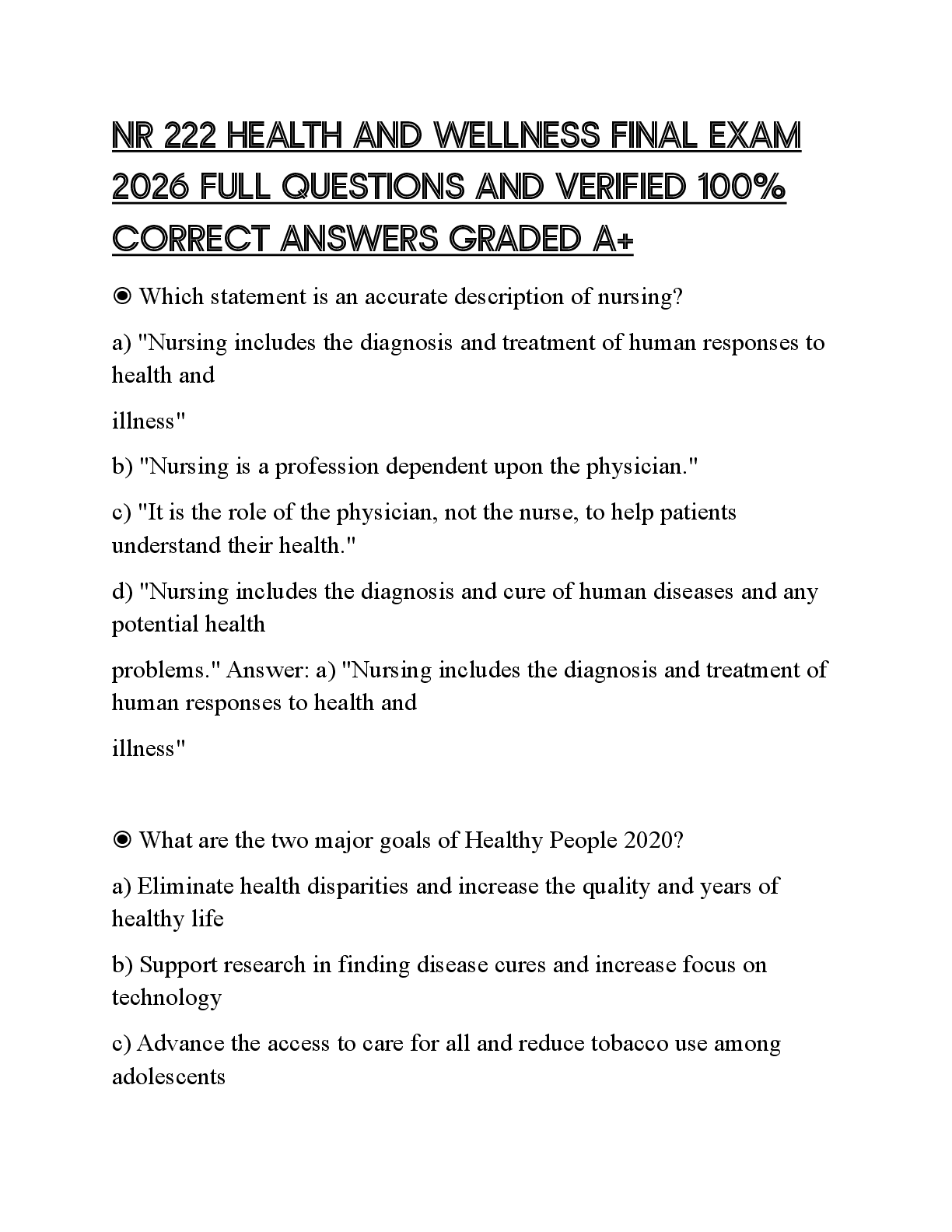
2. Healthy people 2020 goals (4 goals)
Attain high quality, longer lives free of preventable diseases, disability, injury, and
premature death.
Achieve health equity, eliminate disparities and improve the health of all groups.
Create social and physical environments that promote good heath for all.
Promote quality of life, healthy development, and healthy behaviors across all life stages.
3. HP 2020 LHI
LHI’s alters us to evidence of problem areas
Provide us with goal outcomes based on scientific evidence to help improve those
outcomes
Drive many public health projects today and influence organization in both preventative
and restorative efforts
Services include:
Leading Health indicator
Access to health service
Affordable care act
Improved access to health care insurance
Centers for Medicare and Medicaid
Examples of LHI
Tobacco
Adults who smoke currently
Adolescents who have smoked within 30 days
Mental health and substance abuse
Alcohol and/or drug use by adolescents
Binge drinking by adults
Major depression in adolescents
Suicide
Environmental quality
Air quality index > 100
Children exposed to second hand smoke
4. Steps of the nursing process ADOPIE
Assessment- gather info about patient condition
Collect and analyze data
Types of assessment:
o the patient-centered interview during a nursing health history.
o a physical examination.
o the periodic assessments you make during rounding or administering
care.
Diagnose- identify the patient’s problem
Outcome- set goals
Plan- identify appropriate nursing actions to reach goal
Implementation- perform the nursing actions or plan into action; includes teaching in
this step.
Evaluate- determine if goals and outcomes have been achieved.
5. How to plan teaching for low literacy levels
Determine goals and expected outcomes that guide the choice of teaching strategies
and approaches with a patient:
o Set priorities.
o Select timing to teach.
o Organize the teaching materials.
o Use teamwork and collaboration.
6. What is important to asses regarding patient’s health needs (communication)
See through the patient’s eyes.
o Teaching is patient-centered.
Assess the patient’s learning needs.
o Information or skills needed to perform self-care and to understand the
implications of a health problem.
o Patient experiences that influence the need to learn.
o Information that family caregivers need to support patient needs.
Motivation to learn
Ability to learn
Teaching environment
Resources for learning
Health literacy: the cognitive and social skills that determine the motivation and ability
of individuals to gain access to, understand, and use information in ways that promote
and maintain good health.
Health literacy includes patients’ reading and mathematics skills, comprehension, and
decision-making and functioning skills regarding health care
[Show More]






.png)




.png)


