QuizzesWeek 4: Advanced Clinical Management Case 2 / Test Your Knowledge
Home Syllabus
Announcements Modules
Files Grades People Resources
Academic Support Bookstore
Library Guides Media Gallery My Media New
...
QuizzesWeek 4: Advanced Clinical Management Case 2 / Test Your Knowledge
Home Syllabus
Announcements Modules
Files Grades People Resources
Academic Support Bookstore
Library Guides Media Gallery My Media New Webex
Week 4: Advanced Clinical Management Case 2 / Test Your Knowledge
Question 1
0 / 0 pts
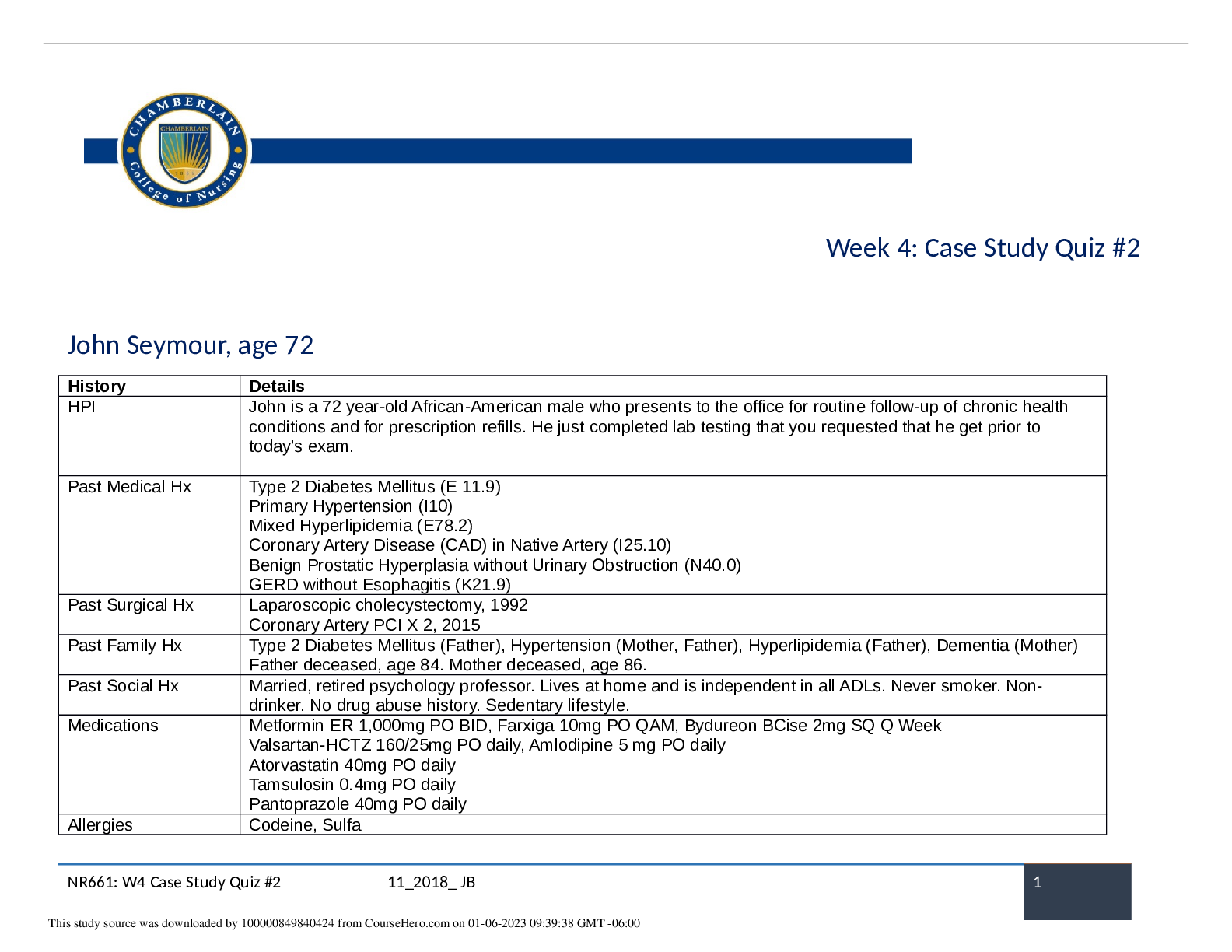
Questions 1-10 refer to patient John Seymour, age 72.
History
Details
HPI
John is a 72 year-old African-American male who presents to the office for routine follow-up of chronic health conditions and for prescription refills. He just completed lab testing that you requested that he get prior to today’s exam.
Past Medical Hx
Type 2 Diabetes Mellitus (E 11.9)
Primary Hypertension (I10)
Mixed Hyperlipidemia (E78.2)
Coronary Artery Disease (CAD) in Native Artery (I25.10)
Benign Prostatic Hyperplasia without Urinary Obstruction (N40.0)
GERD without Esophagitis (K21.9)
Past Surgical Hx
Laparoscopic cholecystectomy, 1992
Coronary Artery PCI X 2, 2015
Past Family Hx
Type 2 Diabetes Mellitus (Father), Hypertension (Mother, Father), Hyperlipidemia (Father), Dementia (Mother)
Father deceased, age 84. Mother deceased, age 86.
Past Social Hx
Married, retired psychology professor. Lives at home and is independent in all ADLs. Never smoker. Non- drinker. No drug abuse history. Sedentary lifestyle.
Medications
Metformin ER 1,000mg PO BID, Farxiga 10mg PO QAM, Bydureon BCise 2mg SQ Q Week
Valsartan-HCTZ 160/25mg PO daily, Amlodipine 5 mg PO daily
Atorvastatin 40mg PO daily
Tamsulosin 0.4mg PO daily
Pantoprazole 40mg PO daily
Allergies
Codeine, Sulfa
Vital Signs
Height 6’1”, Weight 220 lb, BMI 29, BP 138/84, HR 78, R 16
Most Recent Labs
Hemoglobin A1c 8.1%, Total cholesterol 207, HDL 34, LDL-C 129
Prior Health Maintenance
Colonoscopy- age 60
PCV13- age 64, PPSV23- age 60, Tdap- age 65, Zostavax- age 58
US AAA Screening- age 65
Based on Mr. Seymour’s A1c of 8.1%, what would be the next best pharmacological intervention? Start pioglitazone 30mg PO daily
Start Novolog 70/30 mix 15 units BID and titrate to goal Correct!
Start insulin glargine 20 units QHS and titrate to goal. Start sitagliptin 50mg PO daily
Question 2
0 / 0 pts
Based on Mr. Seymour’s lipid panel results (LDL-C 129), what is the next best appropriate action?
Add Lovaza to current atorvastatin therapy Add fenofibrate to current atorvastatin therapy
Replace atorvastatin 40mg with rosuvastatin 20mg PO daily Correct!
Increase atorvastatin from 40mg to 80mg PO daily Add WelChol to current atorvastatin therapy
Question 3
0 / 0 pts
Mr. Seymour asks if he should take a beta-blocker since he has coronary artery disease (CAD). He has been stable from a cardiovascular perspective and not had any anginal episodes. All of the following statements are true regarding beta-blocker use in diabetic patients except:
Beta-blockers may dampen early warning signs and contribute to hypoglycemia unawareness. Correct!
Post-hoc analysis of the ACCORD trial data suggests that the risk of cardiovascular events is lower in patients with T2DM and established CV risk factors who take β-blockers, compared with those who do not.
Post-hoc analysis of the ACCORD trial data suggests that the risk of cardiovascular events is higher in patients with T2DM and established CV risk factors who take β-blockers, compared with those who do not.
During episodes of severe hypoglycemia, β-blockers may serve a protective function by decreasing hypoglycemia-related cardiac arrhythmias, severe hypertension, and CV events.
Beta-blocker use may be associated with severe hypoglycemic episodes
Question 4
0 / 0 pts
Mr. Seymour has been taking pantoprazole 40mg PO daily for the past several years. Which of the following are risks of taking long-term therapy of this drug class? (Select all that apply)
H. pylori infection Correct Answer Pneumonia Correct!
Clostridium difficile infection Correct!
Hypocalcemia Correct!
Hypomagnesemia
Question 5
0 / 0 pts
Mr. Seymour reports that despite taking tamsulosin 0.4mg PO daily for his BPH symptoms, he still has difficulty starting his urinary stream and has to get up multiple times at night to urinate. According to the American Urological Association, which of the following would be appropriate pharmacological interventions for this patient? (Select all that apply)
Add saw palmetto for combination therapy Correct Answer
Increase tamsulosin from 0.4mg to 0.8mg PO daily
Add furosemide to help increase hydrostatic pressure of urine Add an alpha blocker like terazosin for combination therapy Correct!
Add a 5-Alpha-reductase inhibitor like finasteride for combination therapy
Question 6
0 / 0 pts
Based on the information provided, which preventative health items should be scheduled for Mr. Seymour this year? (Select all that apply)
Correct! PPSV23
Correct Answer Colonoscopy
Ultrasound for AAA screening Tdap
Correct!
High-dose influenza vaccine
Question 7
0 / 0 pts
You complete a 10-year ASCVD risk score on Mr. Seymour and print out the following results:
7.png
Which of the following should you tell Mr. Seymour? (Select all that apply)
Correct!
Although the USPSTF guidelines suggest there is insufficient evidence that you would benefit from taking aspirin, since you have history of type 2 diabetes mellitus and ASCVD, you would benefit from taking a daily aspirin for secondary prevention, which is a recommendation of the American Diabetes Association.
Correct!
Your blood pressure is well-controlled Correct!
On the basis of your age, your calculated risk for heart disease or stroke is high, and you should be on a high-intensity statin
You Answered
You have a 43% chance of death from heart disease or stroke within the next 10 years Correct!
We should develop an individualized health plan to help reduce your risk factors for future cardiovascular events.
Question 8
0 / 0 pts
According to JNC-8, which of the following statements are true? (Select all that apply) Correct!
In patients with hypertension and diabetes, pharmacologic treatment should be initiated when blood pressure is 140/90 mm Hg or higher, regardless of age.
Correct!
If the target blood pressure is not reached within one month after initiating therapy, the dosage of the initial medication should be increased, or a second medication should be added.
Correct Answer
In the general population, pharmacologic treatment should be initiated when blood pressure is 150/90 mm Hg or higher in adults 60 years and older, or 140/90 mm Hg or higher in adults younger than 60 years.
Correct!
Initial antihypertensive treatment should include a thiazide diuretic or calcium channel blocker in the general African-American population.
Correct Answer
Initial antihypertensive treatment should include a thiazide diuretic, calcium channel blocker, ACE inhibitor, or ARB in the general non-African-American population.
Question 9
0 / 0 pts
According to the American Diabetic Association (ADA) Standards for Medical Care in Diabetes (2018), how often should Mr. Seymour’s hemoglobin A1c be monitored?
Correct Answer Quarterly Monthly
None of the above You Answered Every 6 months Annually
Question 10
0 / 0 pts
According to the American Diabetic Association (ADA) Standards for Medical Care in Diabetes (2018), which of the following statements about Mr. Seymour’s diabetic management are true? (Select all that apply).
Correct!
For patients treated with an ACE inhibitor, angiotensin receptor blocker, or diuretic, serum creatinine/estimated glomerular filtration rate and serum potassium levels should be monitored at least annually.
Correct!
In patients with type 2 diabetes and established atherosclerotic cardiovascular disease, antihyperglycemic therapy should begin with lifestyle management and metformin and subsequently incorporate an agent proven to reduce major adverse cardiovascular events and cardiovascular mortality, like empagliflozin (Jardiance) and liraglutide (Trulicity).
Correct!
Use aspirin therapy (75–162 mg/day) as a secondary prevention strategy in those with diabetes and a history of atherosclerotic cardiovascular disease.
Correct Answer
Treatment for hypertension should include drug classes demonstrated to reduce cardiovascular events in patients with diabetes (ACE inhibitors, angiotensin receptor blockers, thiazide-like diuretics, or dihydropyridine calcium channel blockers).
Correct!
For patients with diabetes and atherosclerotic disease, if LDL cholesterol is > 70 mg/dL on maximally tolerated statin dose, consider adding additional LDL lowering therapy (such as ezetimibe or PCSK9 inhibitor) after evaluating the potential for further atherosclerotic cardiovascular disease risk reduction, drug-specific adverse effects, and patient preferences.
Question 11
0 / 0 pts
Questions 11-40 refer to general knowledge and application questions.
A 23-year-old female presents to the office with complaints of palpitations for the past 48 hours. She has no medical history. Her only medication is an oral contraceptive pill. She reports a history of sulfa-drug allergy and denies any tobacco, alcohol, or drug use. On examination, she is anxious appearing. Her temperature is 98.6°F, blood pressure 102/67 mmHg, pulse 109/minute, and respirations are 24/minute. Her cardiac rhythm is irregular. No murmurs can be heard. Her lungs are clear to auscultation bilaterally. An in-office electrocardiogram shows atrial fibrillation. The most appropriate next step in management is to order a:
Correct Answer
serum thyroid stimulating hormone level
cardiac stress test You Answered urine hCG level
ventilation-perfusion scan transesophageal echocardiogram
Question 12
0 / 0 pts
To test the efficacy of a new vaccine preventing a specific strain of influenza, 100 volunteer subjects were all given shots at the start of the flu season. These 100 subjects were then followed forward over the next four months, along with a match group of 100 volunteers who are not given shots. A total of 60 cases of the flu were recorded across both groups, with the distribution by group displayed in the table below:
Shot
No Shot
Total
Flu
23
45
6877
No Flu
77
55
132
Total
100
100
200
The study and included the statements chi-square =10.77, DF = 1, P < 0.05. If a patient brings a copy of the study to your office and asked what the chance of avoiding the flu would be if he were to be given the flu shot. The best response is:
“The flu shots are effective at eliminating 95% of the usual flu symptoms” Correct!
“The study suggests that taking the flu shot will cut your risk of getting the flu in half”
“You really don’t need the flu shot because you have a less than 50% chance of getting the flu” “95% of the patients who had the shot benefited from the treatment”
“The study was conducted on volunteer subjects and the results might not be the same for you”
Question 13
0 / 0 pts
The 44-year-old female presents the office with right-sided neck pain that radiates down her right arm. The pain is only partially alleviated with NSAIDs, which you prescribed to her on a previous visit. A CT scan of the neck is obtained and confirms your suspicion of cervical stenosis. In addition, you notice a 0.6 cm nodule on the left lobe of the thyroid on the CT, which is not palpable on physical examination. She has no significant medical history and there is no family history of thyroid cancer. Her thyroid stimulating hormone level is within normal limits. The most appropriate next step in management is to:
Determine T3 and free-T4 levels Order a thyroid uptake scan Correct Answer
Repeat the physical examination in 6 months You Answered
Repeat the CT scan in 3-6 months
Refer patient for an ultrasound guided biopsy
Question 14
0 / 0 pts
A 67-year-old postmenopausal female with coronary artery disease, stable angina, congestive heart failure with an ejection fraction of 30%, and hyperlipidemia presents to the office for her regularly
scheduled three-month examination. Her blood pressure is 130/70, pulse 93, and respirations are 18. Physical examination is normal. Her LDL cholesterol is 129 mg/dL and HDL cholesterol is 45 mg/dL. The pharmacotherapy that should be prescribed at this time that has been shown to decrease mortality is:
Estrogen
Isosorbide mononitrate Correct!
Atorvastatin Digoxin Diltiazem
Question 15
0 / 0 pts
A 68-year-old male with long-standing hypertension, depression, and gout presents to the office with complaints of decreased appetite and right upper quadrant abdominal pain. He was recently diagnosed with hyperlipidemia, which you elected to treat pharmacologically. His current medications include aspirin, atenolol, furosemide, sertraline, and simvastatin. His temperature is 98.6°F, blood pressure 118/78, pulse 58, and respirations are 16. On examination, his cardiac rhythm is regular with occasional premature beats. He has moderate right upper quadrant tenderness to palpation without rebound or guarding. Rectal examination shows guaiac-negative stool. Routine laboratory studies show that his ALT and AST are now 120 mg/dL and 100 mg/dL, up from their previous values of 23 mg/dL and 20 mg/dL, respectively. The most appropriate management at this time is to:
Obtain a RUQ ultrasound Correct!
Discontinue his simvastatin Discontinue his atenolol
Order an MRI with contrast of the liver Discontinue his aspirin
Question 16
0 / 0 pts
A 40-year-old female presents the office for pre-deployment physical examination. She has no medical history and takes no medication. She drinks one or two drinks each week, does not smoke cigarettes, and denies ever using illicit drugs. She also denies ever taking herbal medications or supplements and has never had a blood transfusion. Her physical examination is normal. The employment form that you need to fill out ask for a set of recent laboratory studies that show the following:
Hemoglobin 13 g/dL
Leukocyte count 5700/mm3
Platelets 270000/mm3
Hematocrit 31%
Sodium 145 mEq/L
Potassium 4.5 mEq/L
Chloride 100 mEq/L
Bicarbonate 24 mEq/L
Glucose 106 mg/dL
Creatinine 1.0 mg/dL
BUN 17 mg/dL
Total protein 6.9 g/dL
Albumin 4.1 g/dL
Total bilirubin 0.9 mg/dL
Direct bilirubin 0.4 mg/dL
Alkaline phosphatase 73 U/L
AST 30 U/L
ALT 71 U/L
INR 1.1
The most appropriate next step in her evaluation is to: Correct!
Repeat the transaminase levels in 1 to 2 months Order an abdominal ultrasound
All of the above
Order serum antinuclear antibodies Refer for a liver biopsy
Question 17
0 / 0 pts
A 68-year-old Asian woman is admitted to the hospital with complaints of shortness of breath for the past 1 to 2 days. She has a past medical history of depression and hypothyroidism, for which she takes fluoxetine and levothyroxine. Her chest x-ray shows left upper lobe pneumonia and mild kyphosis. She is admitted and subsequently started on oxygen, intravenous ceftriaxone and azithromycin, albuterol and ipratropium nebulizers, and intravenous methylprednisolone. She continues to take her levothyroxine. She makes an excellent recovery with this management. On the day of discharge, you advise her to continue with the levothyroxine, antibiotics, albuterol and ipratropium nebulizers, and low-dose oral steroids. She is agreeable to smoking cessation. In view of her new medications and her medical history, the most important nutritional advice you can give her at this time is to:
Correct Answer
Take calcium carbonate with added Vitamin D daily Eat plenty of fish
Take ferrous sulfate You Answered
Keep well-hydrated
Avoid drinking tea and coffee
Question 18
0 / 0 pts
You get a phone call in the morning from one of your patients with complaints of a fever and generalized malaise. The patient is a 26-year-old female that you saw three weeks ago in the office with complaints of dysuria. A urine culture grew > 100,000 CFU of E. coli, which was sensitive to the antibiotics that you prescribed for her. The dysuria resolved, but she has had a fever and shaking chills for the past 24 hours and is wondering if she still has the infection. Her past medical history is significant for prolonged hospitalization during childhood following a motor vehicle accident in which she fractured her femur and sustained a splenic laceration that required splenectomy. She is otherwise healthy. Her fevers have been as high as 104°F. She denies any rash, headache, ear pain, neck stiff, cough, shortness of breath, sore throat, runny nose, abdominal pain, basil discharge, nausea, vomiting, diarrhea, dysuria, hematuria, or urinary frequency. She is visiting her sister who lives three hours away in the same state, and she asks you what she should do. You advise her to:
Drink plenty of fluids and take acetaminophen for fever, as this is likely a viral syndrome Correct!
Seek medical attention immediately at the nearest ED/hospital.
Find the name of a local pharmacy and call in a new antibiotic, as this is likely a recurrent UTI Go to the closest urgent care for a repeat urinalysis
Come to your office later today for a repeat medical exam
Question 19
0 / 0 pts
The 47-year-old female with no past medical history presents to the office with complaints of fatigue and loss of energy for the past few months. She also complains of polydipsia and polyuria. Physical examination is normal. You suspect diabetes mellitus as a diagnosis. All of the following are considered diagnostic for diabetes mellitus except:
A1c > 6.5%
OGTT 2-hour Glucose > 200 mg/dl Correct!
Fasting plasma glucose >116 mg/dl
If classic symptoms of hyperglycemia present, a random glucose > 200 mg/dl Fasting plasma glucose >126 mg/dl
Question 20
0 / 0 pts
A 64 year-old female presents to the office for a new patient appointment. She hands you her old medical records that indicates that she has type 2 diabetes mellitus, depression, and carpal tunnel syndrome. She takes metformin, enteric-coated aspirin, and sertraline. She has no known drug allergies. She does not smoke, drink alcohol, or use recreational drugs. She is married and is employed as an accountant. Her father had diabetes mellitus and mother had coronary artery disease. Review of systems is negative other than occasional headaches that are relieved by taking acetaminophen. Her blood pressure is 170/102mmHg. She reports that her previous PCP detected an elevated blood pressure on her last several visits but had not yet begun medication. The most appropriate anti-hypertensive agent to use for this patient is:
Correct! Benazepril Losartan Clonidine
Hydrocholorthiazide
Metoprolol
Question 21
0 / 0 pts
According to the glycemic control algorithm published by the American College of Endocrinology (ACE), rank the following medications in order of importance for the management of the type 2 diabetes mellitus patient with an A1c < 7.5%.
Correct! Metformin
Correct! GLP-1
Correct! SGLT-2
You Answered DPP-4
Correct Answer Fourth You Answered Sulfonylurea
Correct Answer Fifth
Question 22
0 / 0 pts
According to the glycemic control algorithm published by the American College of Endocrinology (ACE), rank the following medications in order of importance for the management of the type 2 diabetes mellitus patient with an A1c > 7.5% who will be treated with dual therapy (metformin plus one additional anti-diabetic medication).
You Answered GLP-1
Correct Answer First Correct!
SGLT-2
You Answered DPP-4
Correct Answer Third Correct!
Basal insulin
Correct! Sulfonylurea
Question 23
0 / 0 pts
A 62-year-old male with history of hyperlipidemia, gastroesophageal reflux disease, and labile hypertension presents to your office complaining of bilateral leg edema. He states that it’s severe enough to prevent him from putting his shoes on. He is currently receiving physical therapy for a small meniscal tear of his left knee. He has difficulty ambulating and uses hydrocodone for the pain. A recent echocardiogram demonstrated a normal ejection fraction. He currently takes atenolol, benazepril, amlodipine, simvastatin, and omeprazole. In the past he was unable to tolerate hydrochlorothiazide and adamantly refuses to add any new medications to his regimen. His temperature is 98.2°F, blood pressure is 160/90, pulse 72, and respiration 16. He has bilateral pitting edema of the legs up to the level of the knees. His left knee is swollen and mildly tender over the anterior medial joint line. After much discussion you both agree to pursued nonpharmacological treatment of the leg edema. The approach that would demonstrate the best compliance and efficacy to in this patient is advising him to:
Correct!
Use leg compression stockings
Drink plenty of caffeinated drinks to help with the diuresis Talk a cold bath for 45 minutes daily
Continue ambulation with physical therapy using a walking aid Elevate the legs above the level of the heart while sleeping
Question 24
0 / 0 pts
A 78-year-old male with history of type II diabetes mellitus comes to the office complaining of scaling and flaking of the skin, mainly from the scalp, the eyebrows, and behind the ear. He also has pruritus around the skin of the eyebrows. The skin is red, greasy, and inflamed by lottery around the eyebrows. There is flaking in scaling of the skin over the eyebrows, scalp, and years. The most likely diagnosis is:
Pityrisis rosea
Alopecia areata Correct!
Seborrheic dermatitis Acne rosacea
Scabies
Question 25
0 / 0 pts
A 42-year-old male presents to the office with a tw- month history of intermittent, dull epigastric pain that typically occurs several hours after eating. He denies any nausea, vomiting, anorexia, melena, hematemesis, or weight loss. The pain is worse when he skips meals and is usually improved with eating. On a scale from 1 to 10, the patient rates the pain at a 4 at its worse. The patient does not smoke cigarettes or drink alcohol and denies using nonsteroidal anti-inflammatory drugs or aspirin on a regular basis. He does not take any prescription medications. His blood pressure is 130/75, pulse 72, and respirations 14. Abdominal examination shows no tenderness on palpation in the epigastric region, normal active bowel sounds, and the absence of rebound tenderness or guarding. Rectal examination is negative for occult blood. You defer for an upper G.I. series or upper endoscopy at this time, and send serology for Helicobacter pylori, which returns positive. The most appropriate treatment regimen for this patient is:
Sucralfate and misoprostol
Ranitidine and amoxicillin in combination Correct!
Omeprazole, clarithromycin, and metronidazole in combination Ranitidine monotherapy
Omeprazole monotherapy
Question 26
0 / 0 pts
A 48-year-old type 2 diabetic patient on daily glipizide presents with complaints off polyuria and polydipsia. Laboratory evaluation reveals a blood glucose of 192 mg/dL. She states that her diabetes had
been well controlled and that she has been symptom-free for the past 8 years. Recently, she started taking medication for hypertension. Which of the following antihypertensive drugs is she most likely taking?
Correct! Hydrochlorothiazide Methyldopa Terazosin
Diltiazem Enalapril
Question 27
0 / 0 pts
A 53 year-old male presents to your office with complaints of tingling in his feet and recurrent blurry vision. He is an obese man who eats poorly and exercises rarely. He takes no medications. You check a fasting glucose level today which reads 169 mg/dL. Which of the following medications used in the treatment of his condition will increase muscle uptake of glucose and decrease hepatic glucose production but not stimulate the secretion of insulin?
Exenatidfe You Answered Glipizide Correct Answer Metformin Canagliflozin Saxagliptin
Question 28
0 / 0 pts
A 25 year-old female presents with a 12-month history of palpitations, intermittent diarrhea, anxiety, and a 1-month history of bulging of both eyes. What is the most likely cause of her symptoms?
Papillary carcinoma Multinodular toxic goiter
Subacute thyroiditis You Answered Hashimoto thyroiditis Correct Answer Graves disease
Question 29
0 / 0 pts
A 21-year old female complains of fatigue. She has difficulty making it through the entire day. She recently began to feel her heart beating in her chest. Examination reveals pale mucosal membranes. A peripheral blood smear shows hypochromic, microcytic red blood cells. Which of the following is most likely to be diagnosed?
Correct Answer
Iron deficiency anemia You Answered
Folate deficiency Vitamin B12 deficiency Hereditary spherocytosis Sickle cell anemia
Question 30
0 / 0 pts
A 20-year-old African-American female with a history of of prior bowel resection due to Crohn’s disease presents to the office with complaints of fatigue and dyspnea on exertion. Her physical exam is notable for pallor and a wide-based unsteady gait. Her lab studies reveal a hemoglobin of 10 g/dL, with a mean corpuscular volume of 120um3. Examination of the peripheral blood smear shows macrocytosis, anisocytosis, poikilocytosis, and neutrophils with 6 to 8 nuclear lobulations. Which of the following is the most likely cause of this patient’s anemia?
Sickle cell trait You Answered
Anemia of chronic disease Correct Answer
Vitamin B12 deficiency Beta-thalassemia trait Iron deficiency
Question 31
0 / 0 pts
A 64 year-old male presents to the nurse practitioner with complaints of burning epigastric pain after eating meals. He has been self-medicating for several months without relief. You decide to stop the antacids and treat him with a combination of ranitidine and sucralfate. Why is this combination not a good idea?
Sucralfate and ranitidine have the same mechanism of action A proton-pump inhibitor would be a safer choice
Sucralfate is best used as first-line monotherapy You Answered
All of the above Correct Answer
Sucralfate can inhibit the absorption of ranitidine
Question 32
0 / 0 pts
A 40 year-old female presents to the office with concerns about her hair falling out. She was formerly obese and has lost 80 pounds by eating a strict, fat-free diet. Her alopecia is most likely related to which of the following vitamin deficiency?
Vitamin B Complex Vitamin C
Vitamin B6 You Answered Vitamin B12 Correct Answer Vitamin A
Question 33
0 / 0 pts
You are on-call for your practice and the ED attending notifies you that a 36-year-old female of your practice with history of insulin-dependent diabetes mellitus was brought to the emergency department because of a fever and cough for 3 days and disorientation since yesterday. She has been feeling excessively thirsty and urinating every 30 minutes since this morning. Her husband is concerned that she “hasn’t been herself.” Her temperature is 38.5 C (101.3F), blood pressure is 90/55 mm Hg, pulse is 108/min and respirations are 20/min. She is oriented to herself only, has dry mucous membranes and a thready pulse. A Foley catheter is draining clear urine. Blood glucose before receiving 2 L of normal saline was 685 mg/dL. Serum chemistries reveal a sodium of 128 mEq/L, potassium of 4.6 mEq/L, chloride of 96 mEq/L, and bicarbonate of 10 mEq/L. Repeat fingerstick is 522 mg/dL. Chest x-ray shows a left lower lobe infiltrate. Urinalysis reveals glucose >1000, protein 30, 2+ ketones
Correct!
begin aggressive hydration and an insulin infusion and admit her to the intensive care unit admit her to a medical floor after giving intravenous ceftriaxone
admit her to a medical floor after giving intravenous vancomycin
e. give regular insulin subcutaneously and observe her in the emergency department begin aggressive hydration and admit her to the intensive care unit
Question 34
0 / 0 pts
A 33-year-old woman comes to the clinic complaining of a 6-month history of weight gain, constipation and “sluggishness.” She denies any fevers, chills, or sweats. She also denies any alcohol, tobacco, or drug use and does not take any medications. Her temperature is 37.0 C (98.6 F), blood pressure is 98/78 mm Hg, pulse is 67/min, and respirations are 18/min. On examination, she has some fullness over her lower anterior neck, without palpable nodules. Her cardiac rhythm is regular, and her lungs are clear to auscultation bilaterally. The most appropriate next diagnostic step is to order:
a serum glucose level Correct!
a serum thyroid-stimulating hormone level a radioactive iodine uptake test
a thyroid ultrasound a cervical CT
Question 35
0 / 0 pts
A 38-year-old male presents the office because of coughing at night that is not productive and usually wakes up from sleep. He also complains of chest pain (at which time he points to his sternum and moves his hand up and down). He describes the pain as a “burn” that can also be felt in his throat. He drinks 2 cups of coffee every morning that he thinks might be worsening his symptoms. Physical examination is unremarkable. At this time, the most appropriate advice for the patient is:
elevating the head of the bed should be used as a last resort consumption of coffee has nothing to do with his symptoms antacids should be avoided as they may cause rebound symptoms You Answered
a histamine receptor blocker should be used for a maximum of six weeks Correct Answer
high-fat foods should be avoided because they may increase the severity of his symptoms.
Question 36
0 / 0 pts
A 78-year-old male is brought to the office from an outpatient assisted-living center by his caregiver. The patient is normally of a quiet disposition but is been very agitated over the past two days. His appetite apparently has also waned. He has had some watery bowel movements and fecal incontinence but no fever, vomiting, or urinary incontinence. He has history of dementia but has no other relevant past medical history. His physical exam confirms fecal incontinence. Laboratory studies show:
Hemoglobin 13 g/dL
Hematocrit 38%
Sodium 141 mEq/L
Potassium 4.7 mEq/L
Chloride 102 mEq/L
Bicarbonate 26 mEq/L
BUN 12 mg/dL
Creatinine 0.9 mg/dL
Glucose 88 mg/dL
Calcium 9.0 g/dL
Magnesium 2.1 mEq/L
Phosphate 4.0 mg/dL
An upright plane abdominal x-ray shows excessive stool in the descending colon. Appropriate management is to:
Order a head CT None of the above All of the above
Order a CT abdomen and pelvis Correct!
Start a fiber laxative
Question 37
0 / 0 pts
An 81-year-old female presents to the office with complaints of feeling depressed. She is also had recurrent muscle cramping and tingling of her fingers. On physical examination there is no evidence of carpal spasm when a blood pressure cuff is inflated above the systolic pressure on the arm for three minutes. There is no twitching of the facial muscle when the facial nerve is tapped anterior to the ear. Her serum calcium level is 6.8 mg/dL and her serum phosphorus level is 5.6 mg/dL. An additional finding that would be most consistent with a diagnosis of primary hypoparathyroidism is:
Shortening of QR interval on ECG Normal parathyroid hormone level Correct!
Decreased parathyroid hormone level All of the above
Renal failure
Question 38
0 / 0 pts
A 43-year-old male presents to the office for evaluation. He has spent the past three months working extensively remodeling a 19th century farmhouse. He comes to the office complaining of headache, fatigue, and muscle pain. He denies difficulty swallowing, photophobia, or limb weakness. He is not on any medications and has no remarkable personal or family history. Physical examination is normal. At this time, the most appropriate study to help establish a diagnosis is:
An erythrocyte sedimentation rate Liver function tests
Long bone x-rays Correct!
A complete blood count with a peripheral smear A fasting blood glucose level
Question 39
0 / 0 pts
A 35-year-old male presents the office with complaints of a rash on his penis that he his had off and on for the past two years. It typically starts with a tingling sensation and then blisters erupt, which are painful for the first day. This happens every month and the blisters last for approximately one week.
Initially tried an over-the-counter antifungal treatment because he thought it could help treat his “jock itch”, but he reports this hasn’t helped. He denies any urethral discharge or dysuria. He reports having four sexual partners in the past year. The most appropriate pharmacotherapeutic intervention would be:
Bicillin 2.4 million units IM once Imiquimod cream
Correct! Acyclovir
Azithromycin 1 gram PO once Ceftriaxone 250 IM once
Question 40
0 / 0 pts
You have been treating a 67-year-old male for diabetes mellitus with a regimen of medication, dietary interventions, and daily exercise. During a routine follow-up visit, the patient shows you a research article on lifestyle factors associated with diabetes that he discovered during several days searching through a local medical library. The article was recently published in a medical journal with a national reputation. The patient does not understand some of the technical aspects of the article and asks you to help him understand the implications of what he is found. The main table in article shows a series of correlation coefficients between the assessed glucose levels and lifestyle factors within a diabetic population. The table is presented below:
Pearson Correlation Coefficients
Glucose Levels
Number of desserts/week
Minutes of exercise/week
Hours of TV/week
Desserts
+0.57*
+1.00
-0.55*
-0.44*
Exercise
-0.35*
-0.55*
+1.00
-0.68*
TV Hours
+0.28*
-0.44*
-0.68*
+1.00
*P<0.01
Based on the results of this research article, you should inform the patient that: it is essential to avoid eating when watching TV
eating desserts and watching TV will produce a dangerous increase and glucose levels
increase exercise and eliminating desserts from one’s diet are sufficient to reduce glucose levels in most patients
general research articles are of little use in deciding clinical interventions Correct!
increased exercise is associated with decreased consumption of sweets, less TV watching, and lower glucose levels
[Show More]
![Preview of NURSE 661 QuizzesWeek 4: Advanced Clinical Management Case 2 / Test Your Knowledge [GRADED].](https://scholarfriends.com/storage/quiz_week4.png)







![Preview of [eBook] [PDF] Clinical Nursing Calculations 3rd Edition By Susan Sienkiewicz, Sandra Meg](https://browseimages.nyc3.digitaloceanspaces.com/paper-images/2025/Jul/04/4jF14r9I2025-07-04-05-586867ec3011731.png)