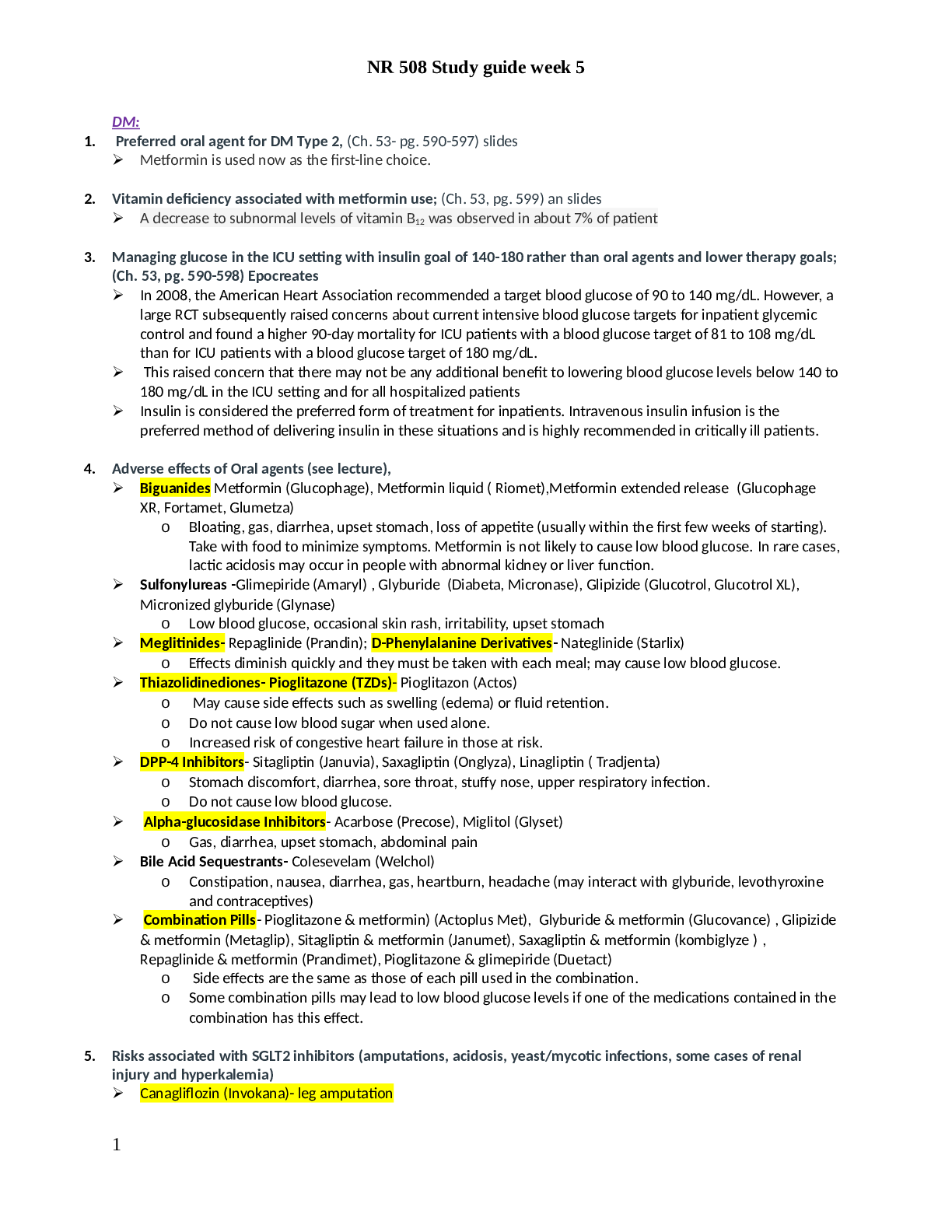
NR 508 Study guide week 5
DM:
1. Preferred oral agent for DM Type 2, (Ch. 53- pg. 590-597) slides
Metformin is used now as the first-line choice.
2. Vitamin deficiency associated with metformin use; (Ch. 53, pg. 59
...
NR 508 Study guide week 5
DM:
1. Preferred oral agent for DM Type 2, (Ch. 53- pg. 590-597) slides
Metformin is used now as the first-line choice.
2. Vitamin deficiency associated with metformin use; (Ch. 53, pg. 599) an slides
A decrease to subnormal levels of vitamin B12 was observed in about 7% of patient
3. Managing glucose in the ICU setting with insulin goal of 140-180 rather than oral agents and lower therapy goals;
(Ch. 53, pg. 590-598) Epocreates
In 2008, the American Heart Association recommended a target blood glucose of 90 to 140 mg/dL. However, a
large RCT subsequently raised concerns about current intensive blood glucose targets for inpatient glycemic
control and found a higher 90-day mortality for ICU patients with a blood glucose target of 81 to 108 mg/dL
than for ICU patients with a blood glucose target of 180 mg/dL.
This raised concern that there may not be any additional benefit to lowering blood glucose levels below 140 to
180 mg/dL in the ICU setting and for all hospitalized patients
Insulin is considered the preferred form of treatment for inpatients. Intravenous insulin infusion is the
preferred method of delivering insulin in these situations and is highly recommended in critically ill patients.
4. Adverse effects of Oral agents (see lecture),
Biguanides Metformin (Glucophage), Metformin liquid ( Riomet),Metformin extended release (Glucophage
XR, Fortamet, Glumetza)
o Bloating, gas, diarrhea, upset stomach, loss of appetite (usually within the first few weeks of starting).
Take with food to minimize symptoms. Metformin is not likely to cause low blood glucose. In rare cases,
lactic acidosis may occur in people with abnormal kidney or liver function.
Sulfonylureas -Glimepiride (Amaryl) , Glyburide (Diabeta, Micronase), Glipizide (Glucotrol, Glucotrol XL),
Micronized glyburide (Glynase)
o Low blood glucose, occasional skin rash, irritability, upset stomach
Meglitinides- Repaglinide (Prandin); D-Phenylalanine Derivatives- Nateglinide (Starlix)
o Effects diminish quickly and they must be taken with each meal; may cause low blood glucose.
Thiazolidinediones- Pioglitazone (TZDs)- Pioglitazon (Actos)
o May cause side effects such as swelling (edema) or fluid retention.
o Do not cause low blood sugar when used alone.
o Increased risk of congestive heart failure in those at risk.
DPP-4 Inhibitors- Sitagliptin (Januvia), Saxagliptin (Onglyza), Linagliptin ( Tradjenta)
o Stomach discomfort, diarrhea, sore throat, stuffy nose, upper respiratory infection.
o Do not cause low blood glucose.
Alpha-glucosidase Inhibitors- Acarbose (Precose), Miglitol (Glyset)
o Gas, diarrhea, upset stomach, abdominal pain
Bile Acid Sequestrants- Colesevelam (Welchol)
o Constipation, nausea, diarrhea, gas, heartburn, headache (may interact with glyburide, levothyroxine
and contraceptives)
Combination Pills- Pioglitazone & metformin) (Actoplus Met), Glyburide & metformin (Glucovance) , Glipizide
& metformin (Metaglip), Sitagliptin & metformin (Janumet), Saxagliptin & metformin (kombiglyze ) ,
Repaglinide & metformin (Prandimet), Pioglitazone & glimepiride (Duetact)
o Side effects are the same as those of each pill used in the combination.
o Some combination pills may lead to low blood glucose levels if one of the medications contained in the
combination has this effect.
[Show More]













.png)





.png)


