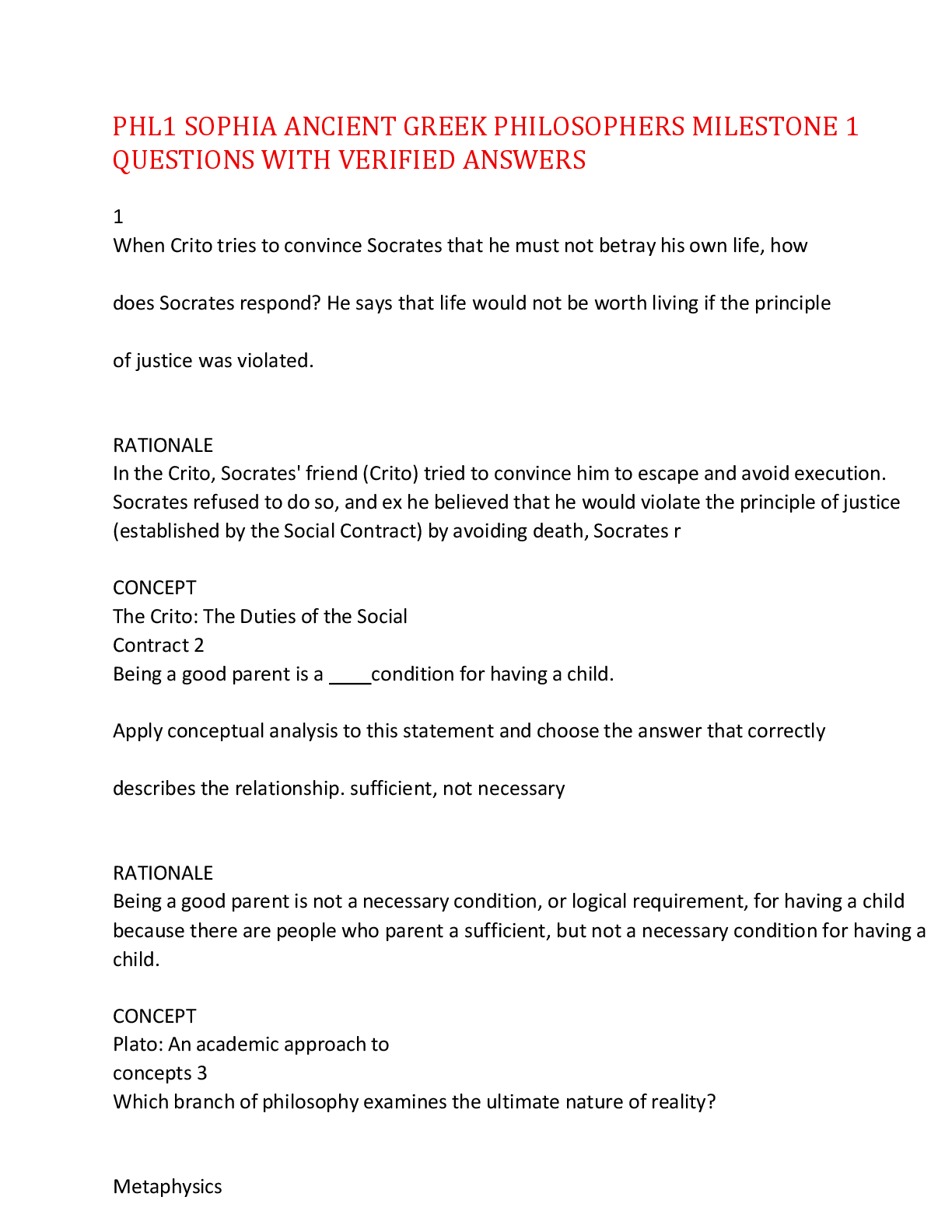
Which of the following would be considered biogenic needs?
Question 2
2 out of 2 points
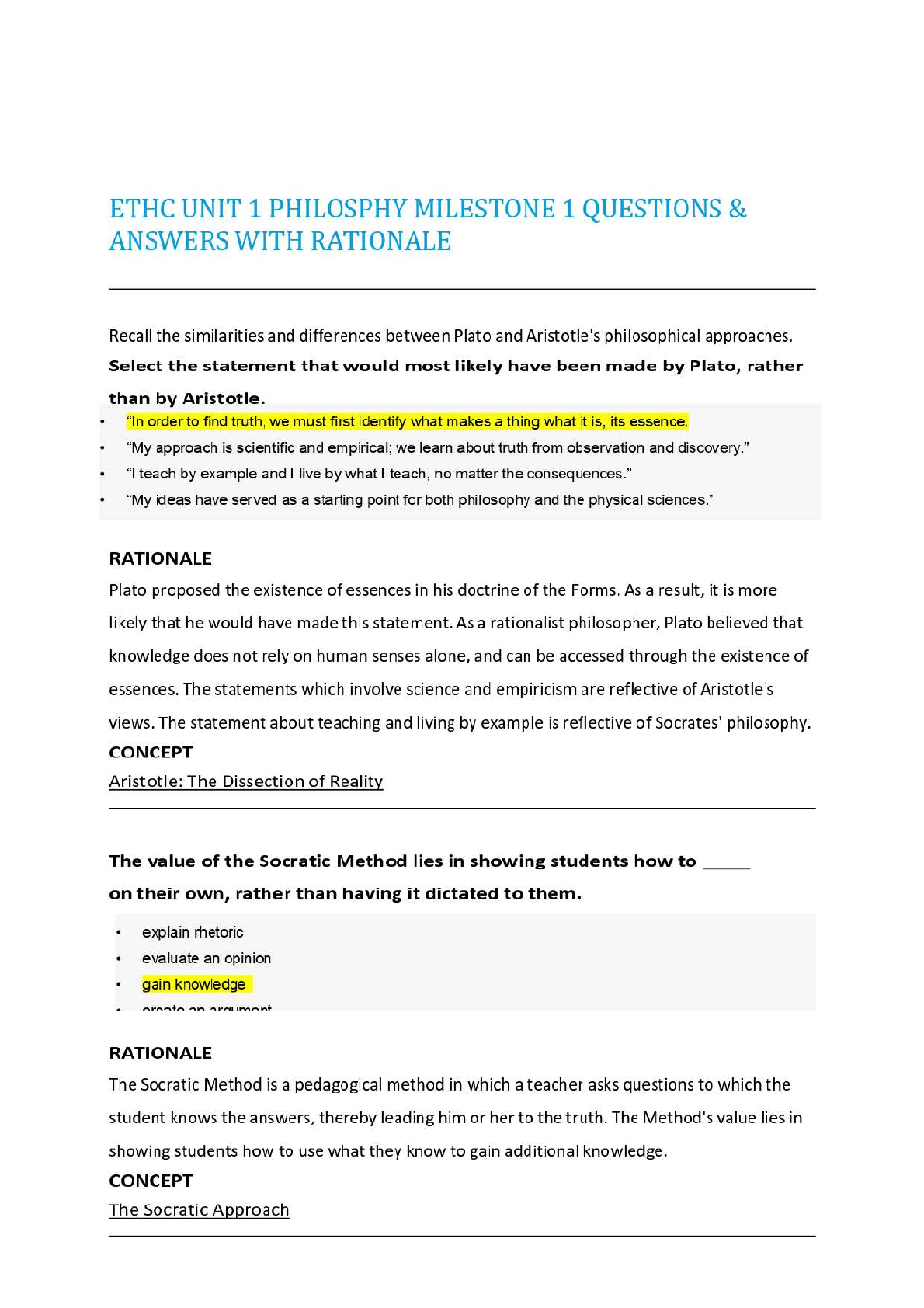
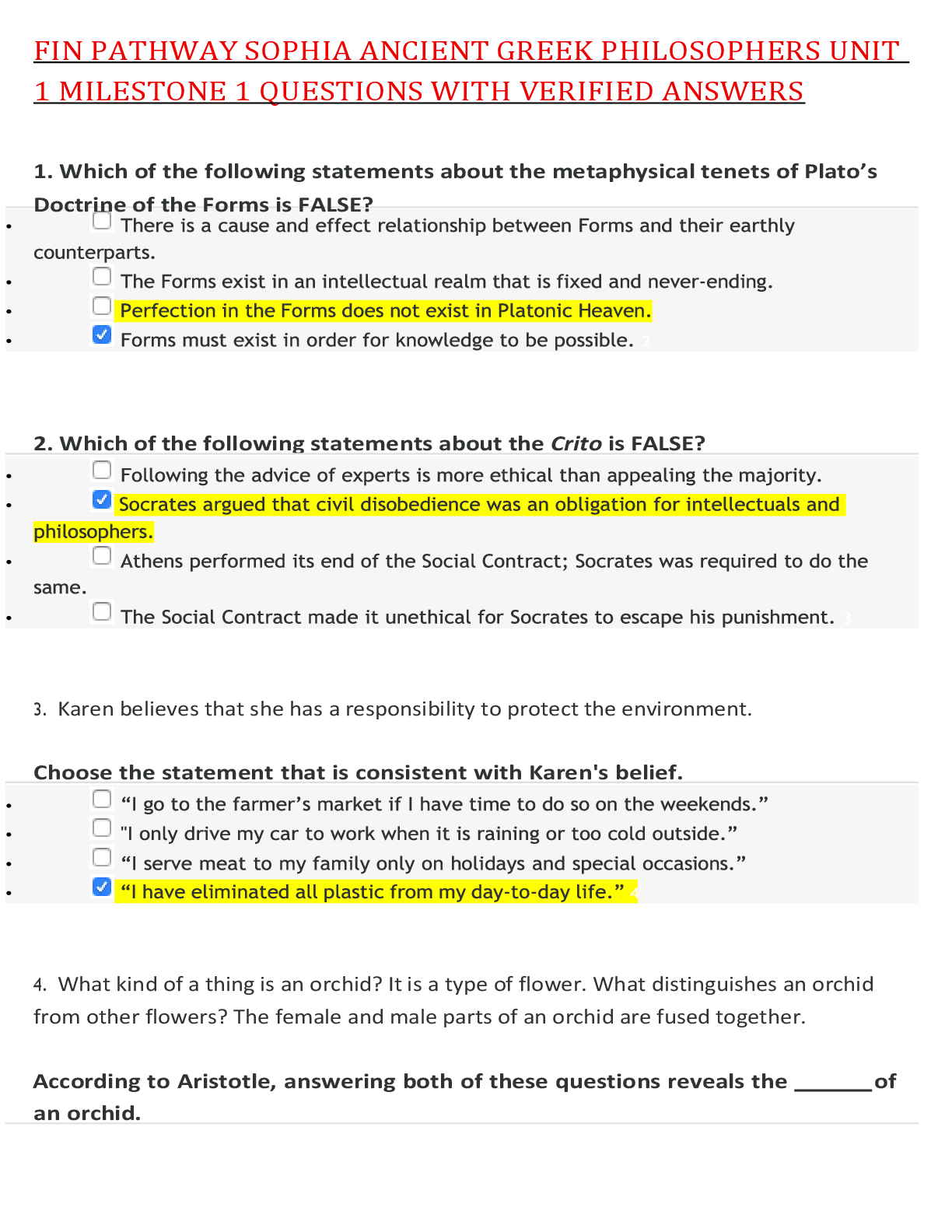
Which of the following comes closest to what Aristotle regarded as the highest human good?
Question 3
...
Which of the following would be considered biogenic needs?
Question 2
2 out of 2 points
Which of the following comes closest to what Aristotle regarded as the highest human good?
Question 3
2 out of 2 points
Which of the following is an approach to justice which focuses on repairing harms through processes involving the offender, victim, and community?
Question 4
2 out of 2 points
Traits of character that dispose a person to act in a moral fashion are typically referred to as:
Question 5
2 out of 2 points
Which of the following frameworks encourages us to imagine alternative solutions to moral dilemmas, “focusing less on deciding between given alternatives” and, instead, “envisioning new alternatives” that we may not have initially considered?
Question 6
2 out of 2 points
Which of the following is a key Aristotelian idea that describes a midpoint between extremes of excess and deficiency?
Question 7
2 out of 2 points
With regard to how we feel about ourselves and our own accomplishments, which of the following would be the virtuous midpoint between moral deficiency and excess?
Question 8
2 out of 2 points
Part of the value of moral virtues is that they help us overcome tendencies to think, feel, and act in ways indifferent or harmful. In other words, we can think of virtues as:
Question 9
2 out of 2 points
According to Aristotle, human beings are different from all other living things because of our:
Question 10
2 out of 2 points
Aristotle's ethics was teleological, meaning:
Question 11
2 out of 2 points
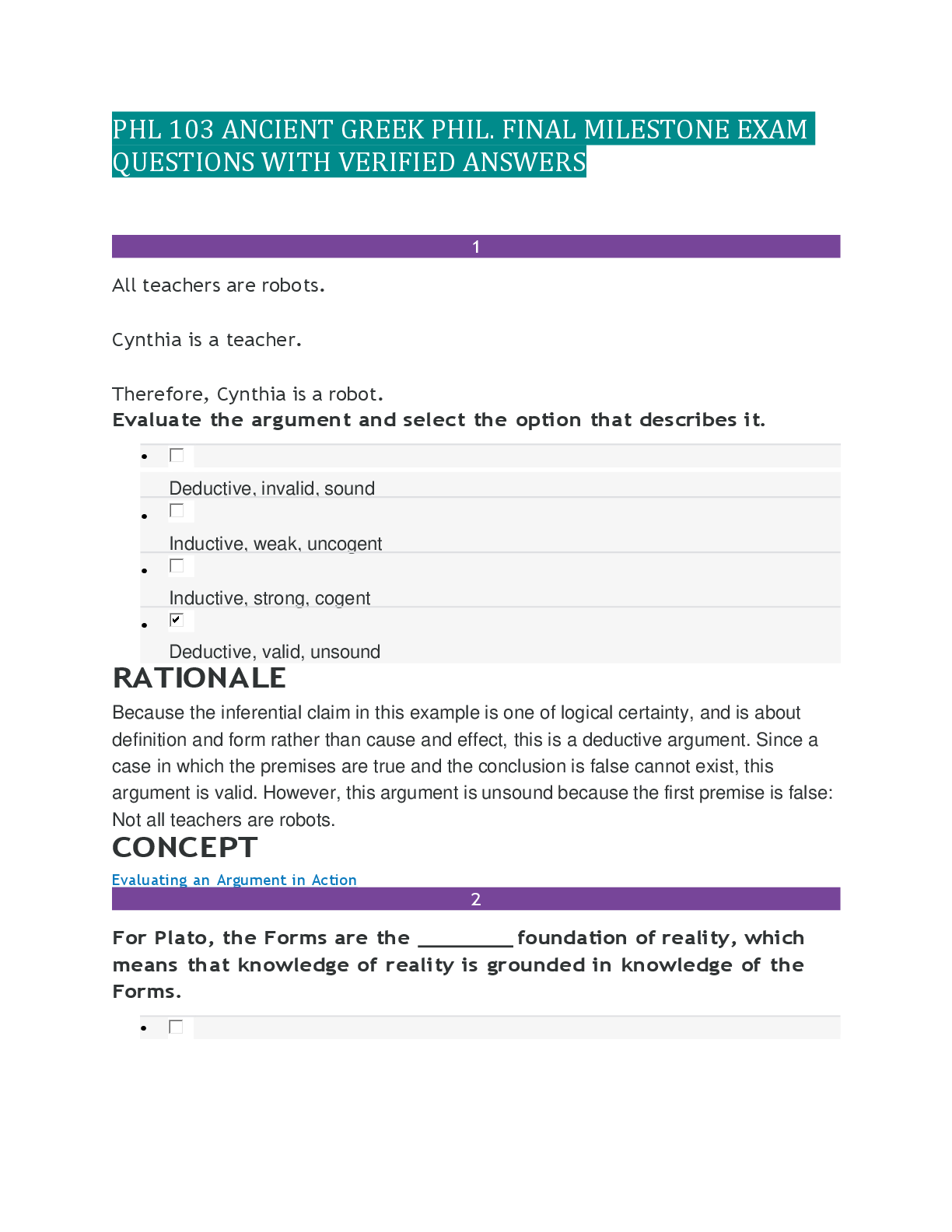
Good beliefs and decisions require that the reasons that led to making the decision are true and acceptable, and the conclusion naturally follows from those reasons.
Question 12
2 out of 2 points
What term does NOT refer to a type of reasoning?
Question 13
2 out of 2 points
It is important to always defend your ideas.
Question 14
2 out of 2 points
An ethical life involves thinking dichotomously.
Question 15
0 out of 2 points
Skepticism is:
Question 16
2 out of 2 points
Assumptions are always:
Question 17
2 out of 2 points
Reasoning about ethics requires which of the following?
Question 18
2 out of 2 points
Decisions should be made based on self-interest or the interests of a group to which you belong.
Question 19
2 out of 2 points
Which of the following is an example of reasoning?
Question 20
0 out of 2 points
Beliefs held on the basis of authority (such as laws, public opinion, or the U.S. Constitution) are always justified.
Question 21
2 out of 2 points
What are virtues?
Question 22
2 out of 2 points
How did Aristotle view virtue?
Question 23
2 out of 2 points
Rule Utilitarianism addresses problems that arise when otherwise morally undesirable actions might produce good consequences.
Question 24
2 out of 2 points
What is an option to consider when duties and obligations conflict?
Question 25
2 out of 2 points
Which of the following is NOT one of Ross’s Prima Facie Duties?
Question 26
2 out of 2 points
Kantianism states that it is not the consequences of our actions with which we should be concerned, but rather the actions themselves.
Question 27
0 out of 2 points
Which of the following is NOT an ethical framework for making decisions?
Question 28
2 out of 2 points
Instrumental goods outweigh intrinsic goods.
Question 29
2 out of 2 points
Deciding with consequences means predicting the likely consequences of different decisions or courses of action and choosing that which produces the greatest balance of good over bad.
Question 30
2 out of 2 points
What should be considered when thinking about ethical issues and decisions?
[Show More]
.png)




.png)