*NURSING  >  QUESTIONS and ANSWERS  >  NURS 6052 Week 7 Assignment | Critiquing Quantitative, Qualitative, or Mixed Methods Studies (All)

NURS 6052 Week 7 Assignment | Critiquing Quantitative, Qualitative, or Mixed Methods Studies

Document Content and Description Below

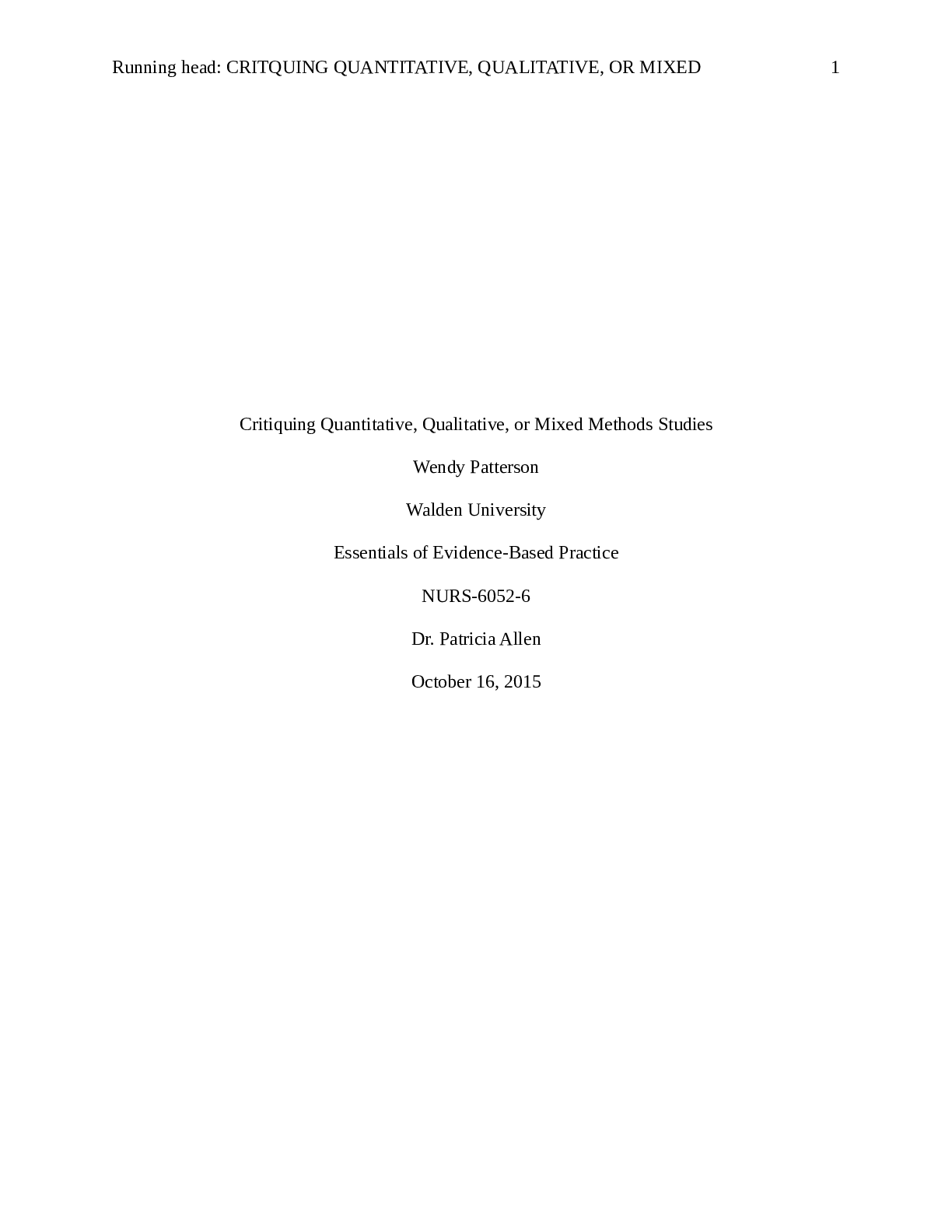
Critiquing Quantitative, Qualitative, or Mixed 1 Critiquing Quantitative, Qualitative, or Mixed Method Studies It is essential for nurses to participate in research. “The general purpose of nursin ... g research is to answer questions or solve problems of relevance to nursing” [Pol12]. There are two main types of research techniques, quantitative and qualitative. The purpose of this paper is to examine and critique two research articles, one quantitative and one qualitative, contrast the information gained from the two articles, and provide insight on the research techniques. Quantitative research is collected according to an established strategy, using designed means to obtain information [Pol12]. Information gathered for a quantitative study is numeric, from a precise measurement and is analyzed statistically [Pol12]. Qualitative research is focused on understanding the human experience as it is lived [Pol12]. Qualitative information is narrative and subjective [Pol12]. A quantitative study by Parisi et al., (2016) was reviewed, along with a qualitative study by Browne et al., (2014). Parisi et al., (2016) uses a before and after study to assess the occurrence of ventilator-associated pneumonia (VAP) in an intensive care unit (ICU) and to observe the effects of the implementation of ventilator bundles and staff education on its occurrence. The population sample includes 362 patients. Browne et al., (2014), uses a qualitative survey design that pursued to characterize physician opinions surrounding the diagnostic and management practice for VAP in the United Kingdom (UK). The population sample includes 339 physicians from the UK Intensive Care Society. Advantages and Disadvantages of the Two Articles Each research design is conducted in different ways. Both designs have advantages and disadvantages. The quantitative study by Parisi et al., (2016) focuses on the occurrence of VAP rates and ways to decrease that occurrence, while the qualitative study by Browne et al., (2014) Critiquing Quantitative, Qualitative, or Mixed 2 focuses on physician opinion on how they diagnose and treat VAP, and how it varies from guidelines printed. An advantage of quantitative research is that allows researchers to measure and analyze data. Relationships between independent and dependent variables are observed and studied. Parisi et al., (2016) was able to implement ventilator bundles and observe how VAP rates decreased over a 24-month period. The baseline VAP rate was 21.6 per 1,000 ventilator days, and after the implement [Show More]

Last updated: 3 years ago

Preview 1 out of 15 pages

Buy Now

Instant download

We Accept:

Payment methods accepted on Scholarfriends (We Accept)
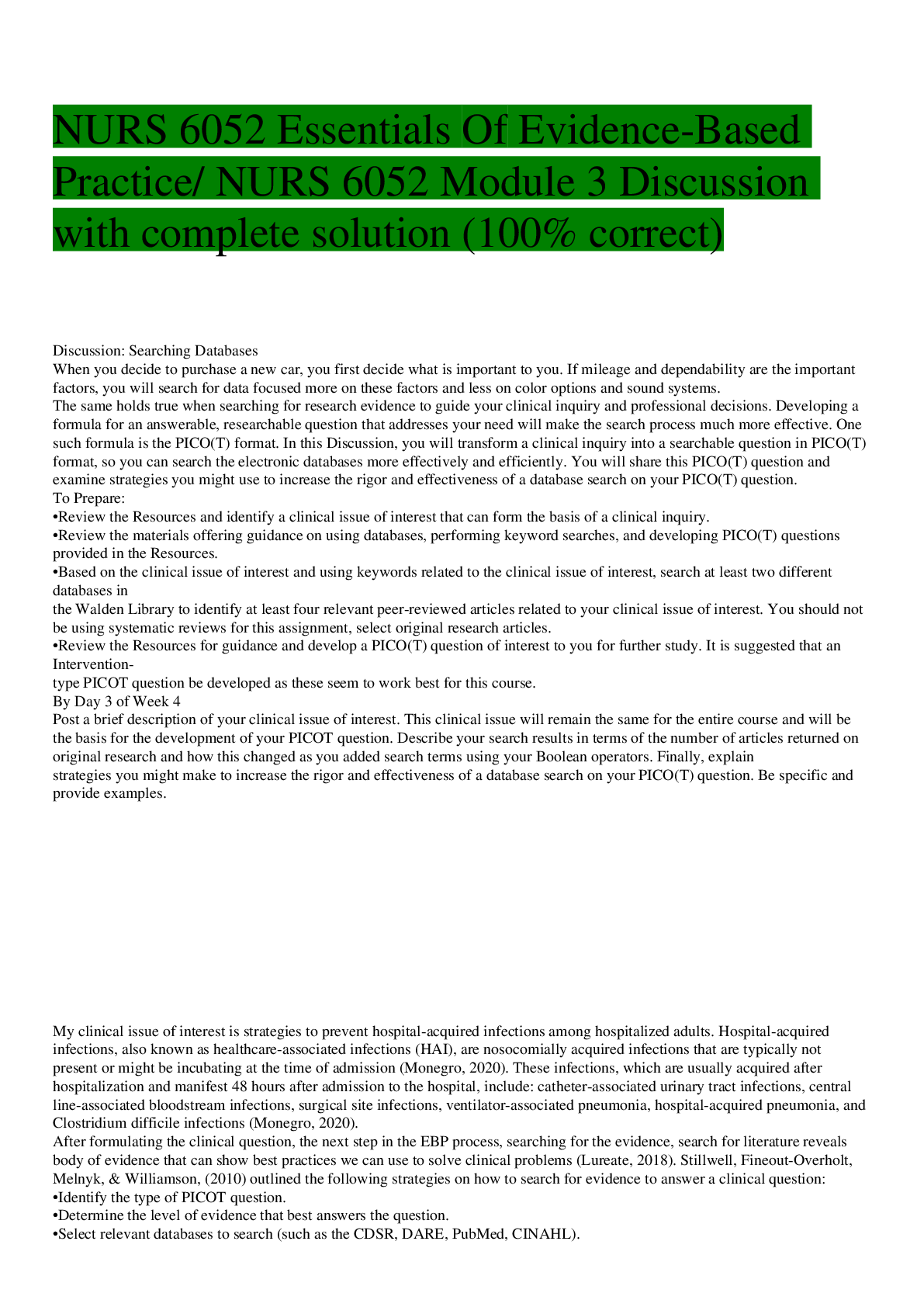
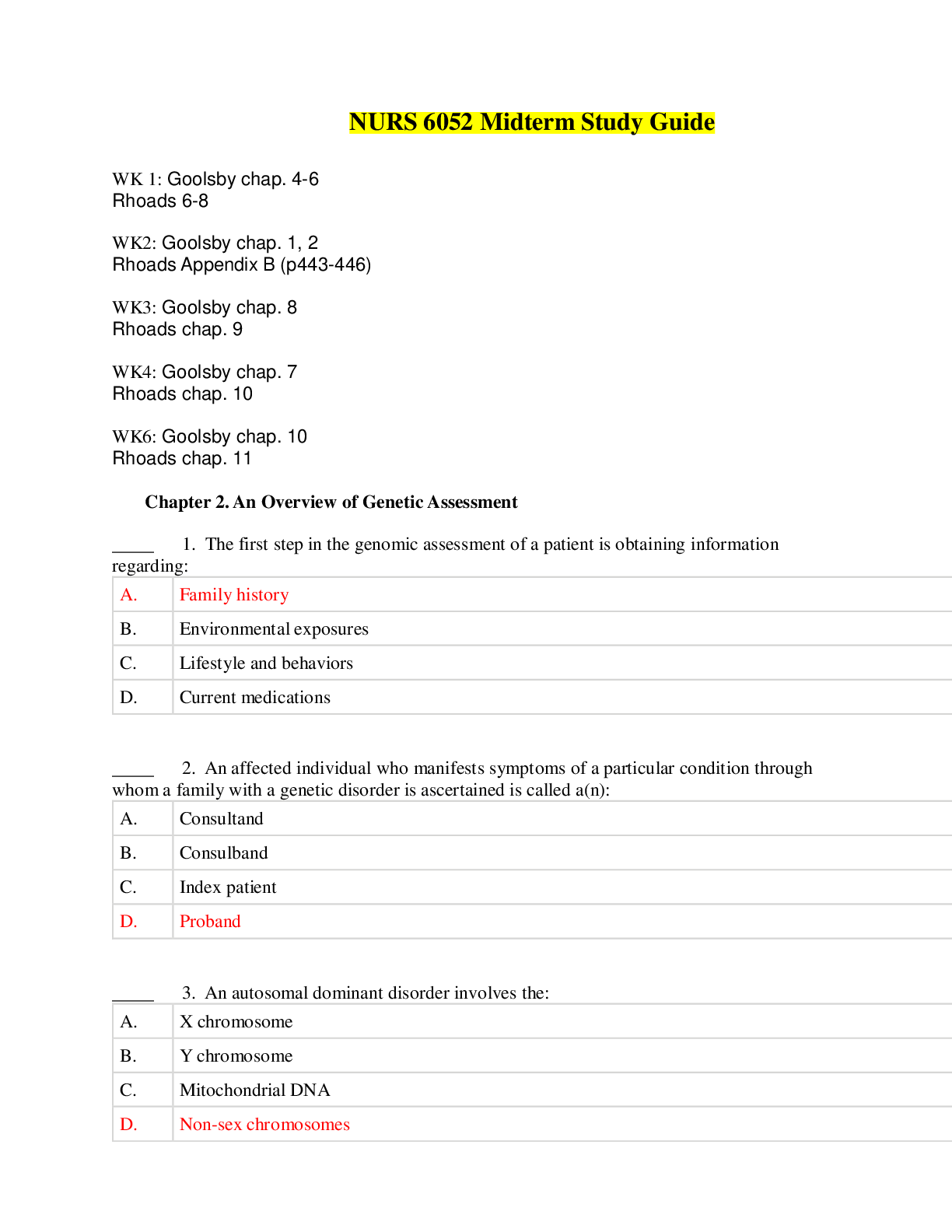
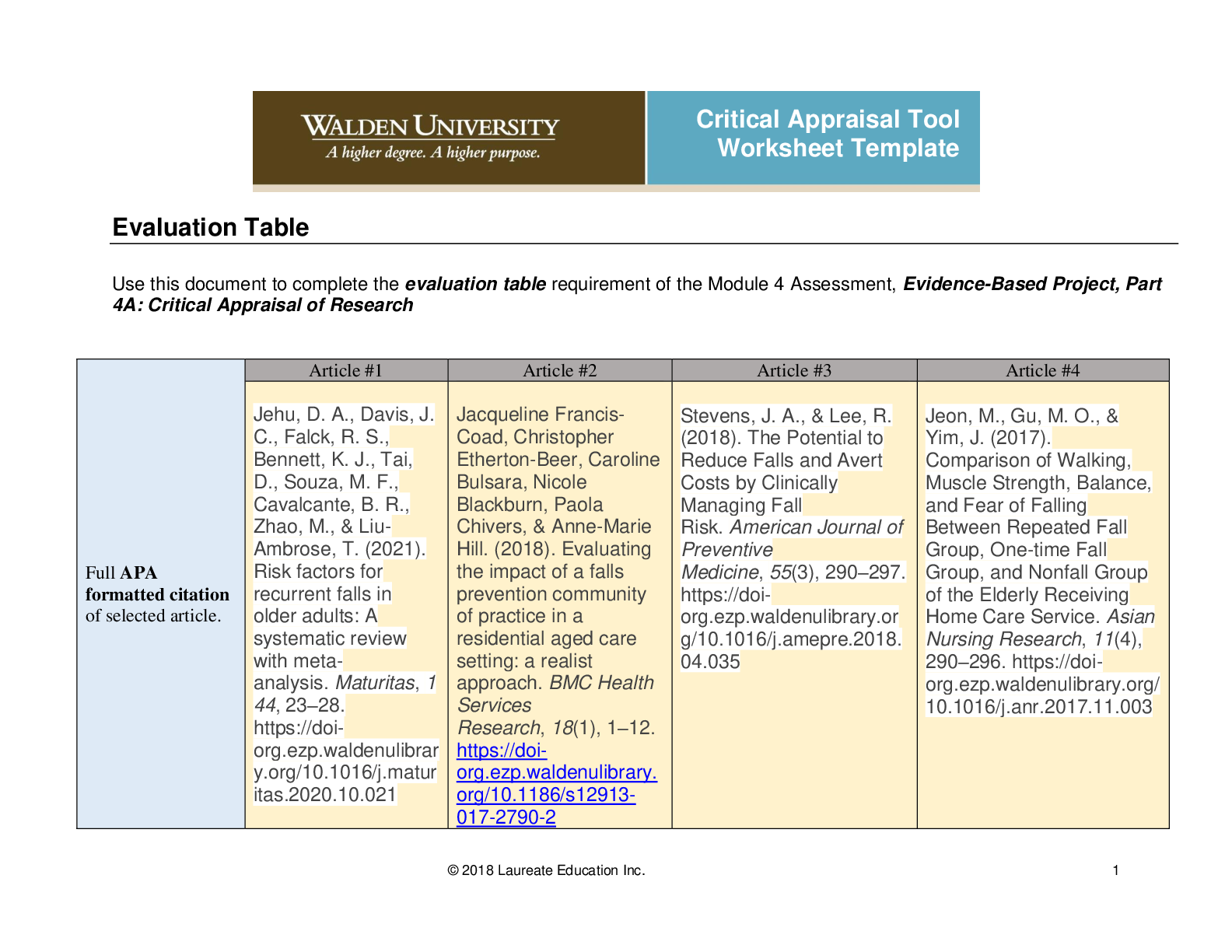
Preview image of NURS 6052 Week 7 Assignment | Critiquing Quantitative, Qualitative, or Mixed Methods Studies document

Buy this document to get the full access instantly

Instant Download Access after purchase

Buy Now

Instant download

We Accept:

Payment methods accepted on Scholarfriends (We Accept)

Reviews( 0 )

$13.00

Buy Now

We Accept:

Payment methods accepted on Scholarfriends (We Accept)

Instant download

Can't find what you want? Try our AI powered Search

124
0

Document information


Connected school, study & course


About the document


Uploaded On

Oct 07, 2021

Number of pages

15

Written in

All

Seller


Profile illustration for jimmydarts
jimmydarts

Member since 4 years

80 Documents Sold

Reviews Received
4
2
1
1
5
Additional information

This document has been written for:

Uploaded

Oct 07, 2021

Downloads

 0

Views

 124

Document Keyword Tags


$13.00
What is Scholarfriends

Scholarfriends.com Online Platform by Browsegrades Inc. 651N South Broad St, Middletown DE. United States.

We are here to help

We're available through e-mail, Twitter, Facebook, and live chat.
 FAQ
 Questions? Leave a message!

Follow us on
 Twitter

Copyright © Scholarfriends · High quality services·