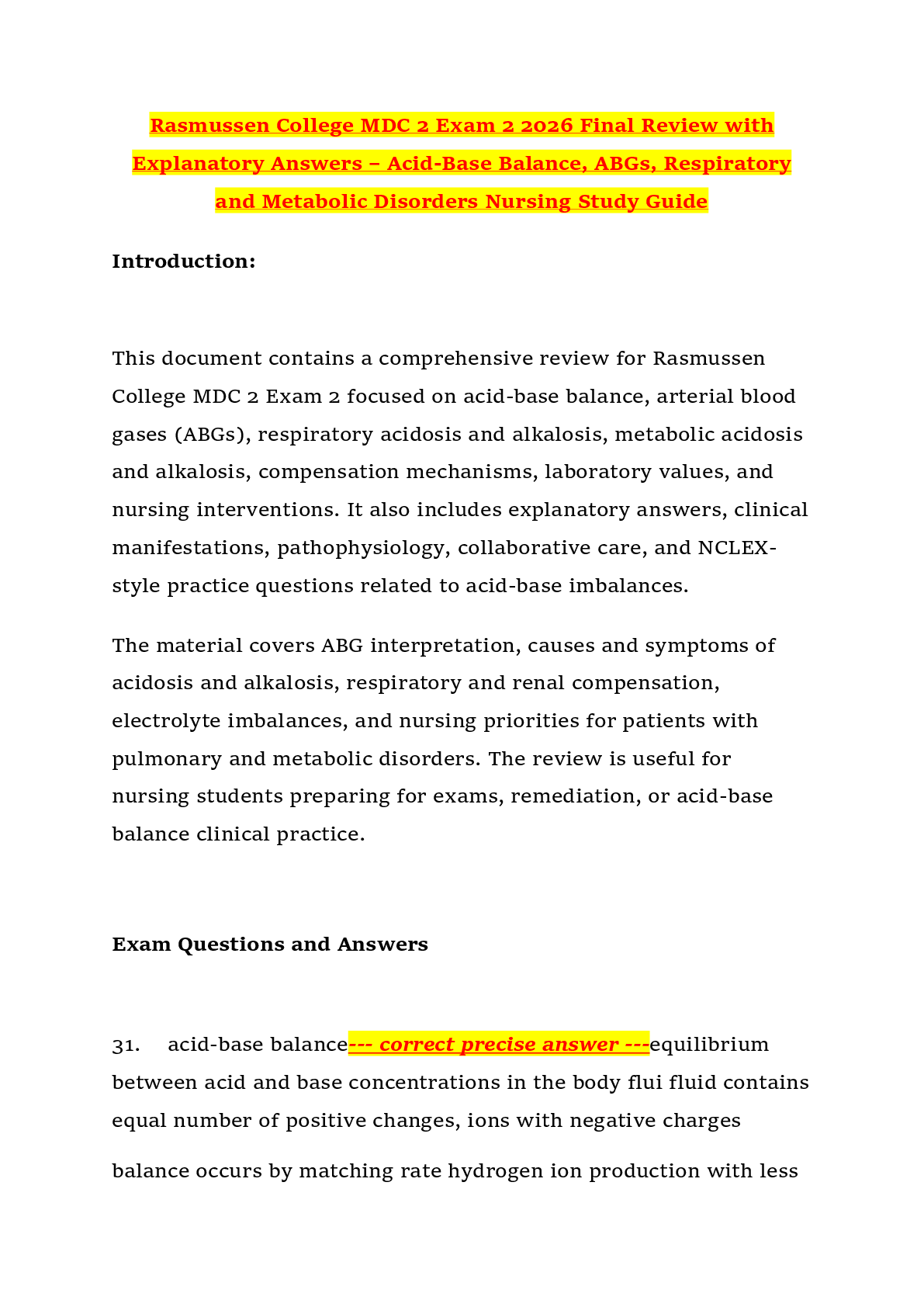
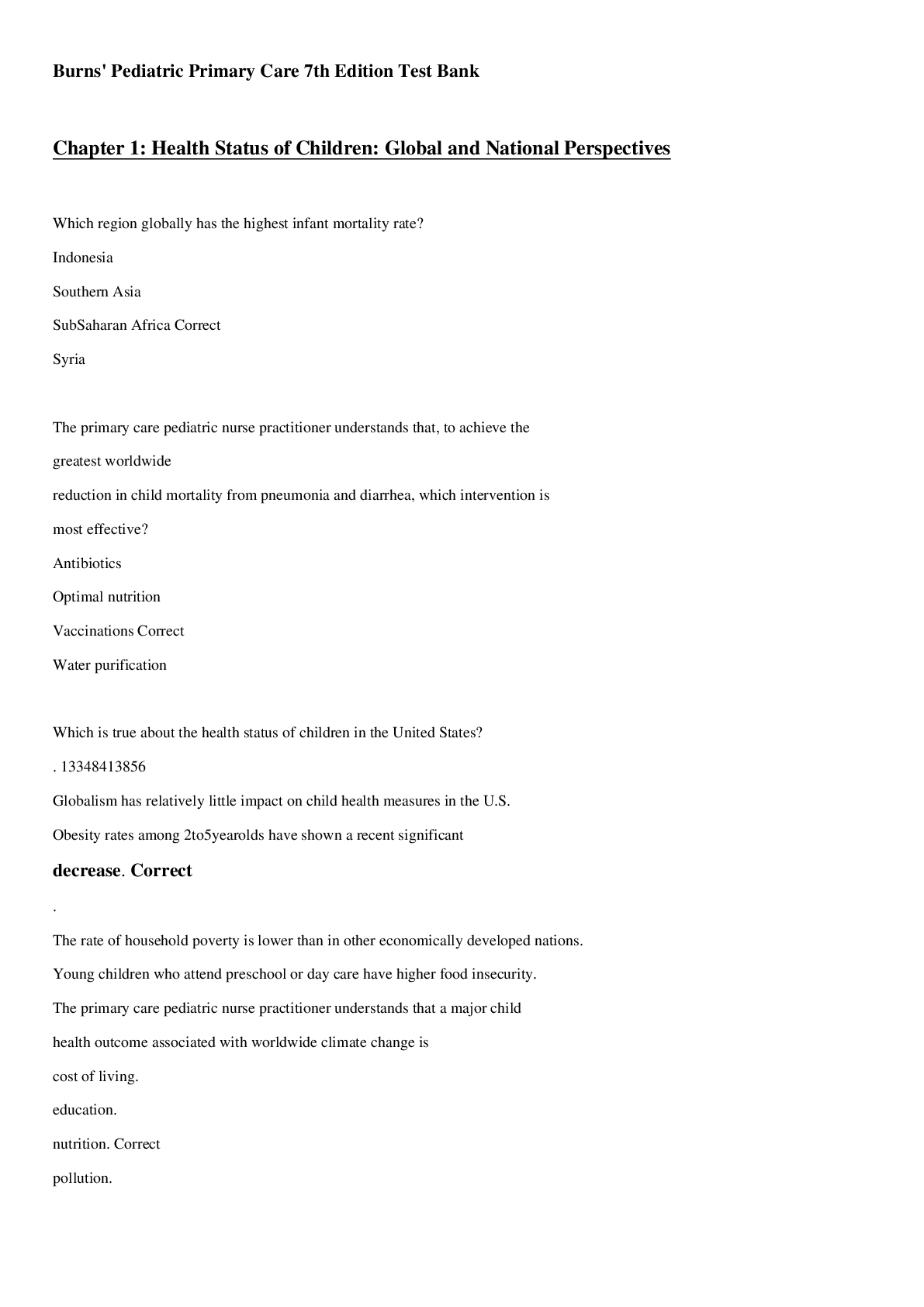
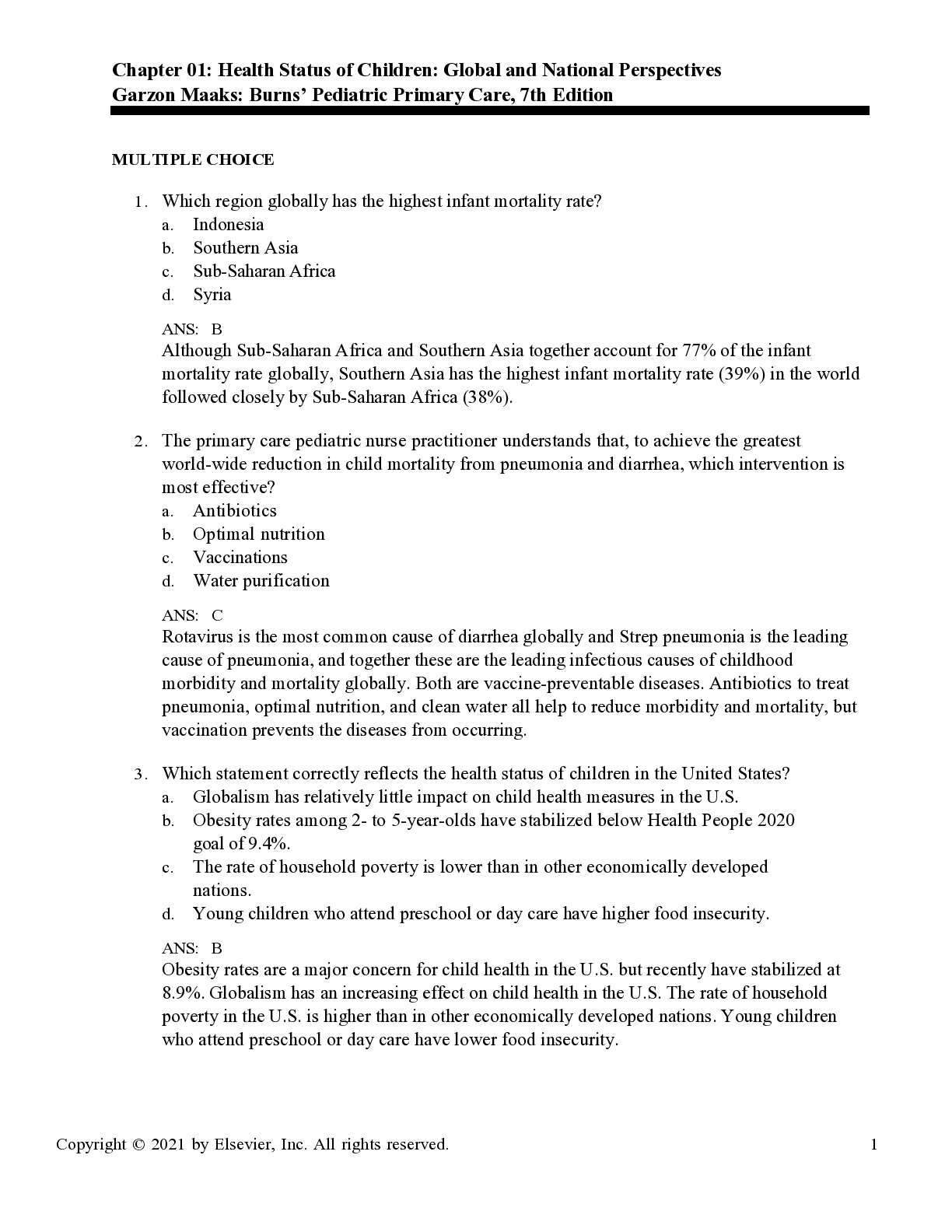
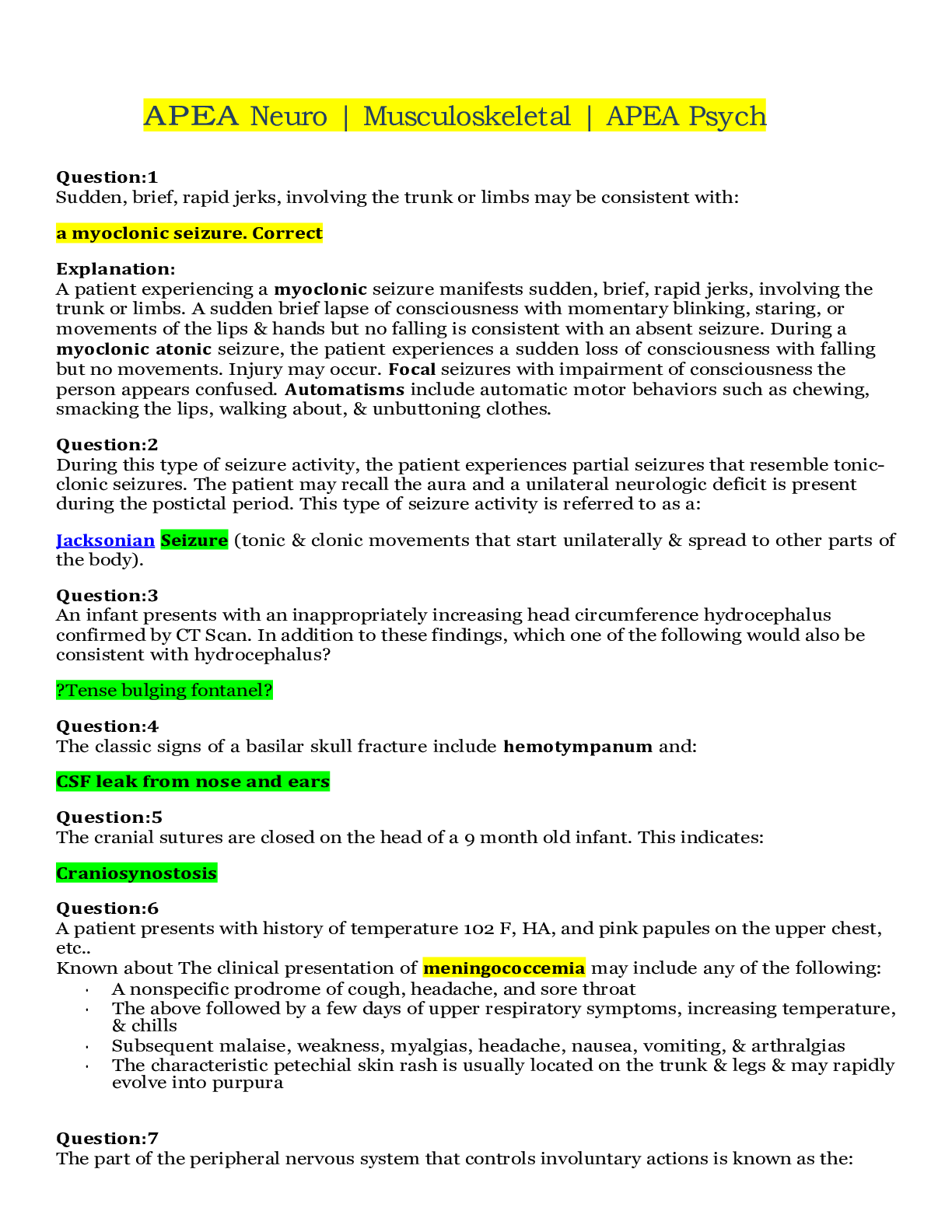
NURS-6630C-7/NURS-6630N-7-Approaches to Treatment2019 Course NURS-6630C-7/NURS-6630N-7-Approaches to Treatment2019
Winter Qtr 11/25-02/16-PT27
Test Week 11 Final Exam
Started 2/9/20 10:02 AM
Submitted 2/9/20 11:48 AM
...
NURS-6630C-7/NURS-6630N-7-Approaches to Treatment2019 Course NURS-6630C-7/NURS-6630N-7-Approaches to Treatment2019
Winter Qtr 11/25-02/16-PT27
Test Week 11 Final Exam
Started 2/9/20 10:02 AM
Submitted 2/9/20 11:48 AM
Due Date 2/10/20 1:59 AM
Status Completed
Attempt
Score
62 out of 75 points
Time Elapsed 1 hour, 45 minutes out of 2 hours
Results
Displayed
Submitted Answers
Question 1
1 out of 1 points
The parents of a 10 year old girl diagnosed with ADHD ask if the PMHNP can prescribe
something to help their daughter’s ADHD that is not a stimulant. Which of the following
responses is correct?
Selected
Answer:
c.
"I can prescribe atomoxetine for your daughter. This medication help ADHD
symptoms and is not considered a stimulant."
Question 2
1 out of 1 points
A patient with chronic insomnia asks the PMHNP if they can frst try an over-the-counter
(OTC) medication before one that needs to be prescribed to help the patient sleep. Which is
the best response by the PMHNP?
Selected
Answer:
d.
“You can get melatonin over the counter, which will help with
sleep onset.”
Question 3
0 out of 1 points
Methylphenidate, amphetamine, and cocaine are alike because all three
_____________________.
Selected
Answer:
c.
act as
depressants.
Question 4
0 out of 1 points
An elderly woman with a history of Alzheimer’s disease, coronary artery disease, and
myocardial infarction had a fall at home 3 months ago that resulted in her receiving an
open reduction internal fxation. While assessing this patient, the PMHNP is made aware
that the patient continues to experience mild to moderate pain. What is the PMHNP most
likely to do?Selected
Answer:
b.
Order an X-ray because it is possible that she
dislocated her hip.
Question 5
1 out of 1 points
The PMHNP is caring for a patient who openly admitted to drinking a quart of vodka daily.
Prior to prescribing this patient disulfram (Antabuse), it is important for the PMHNP to:
Selected
Answer:
c.
Evaluate the patient’s willingness to abstain
from alcohol
Question 6
0 out of 1 points
Insomnia is caused by excessive nighttime arousal. The PMHNP is likely to prescribe which
of the following to treat insomnia?
Selected
Answer:
d.
A negative allosteric modulator of GABA-A
receptors
Question 7
1 out of 1 points
The nursing staff asks the PMHNP for additional education regarding the treatment of
agitation in dementia patients. Which of the following is correct?
Selected
Answer:
b.
The nurse should attempt to determine how the patient's environment
may be impacting the patient's mood.
Question 8
1 out of 1 points
The PMHNP is evaluating a 30-year-old female patient who states that she notices pain and
a drastic change in mood before the start of her menstrual cycle. The patient states that
she has tried diet and lifestyle changes but nothing has worked. What will the PMHNP most
likely do?
Selected
Answer:
d.
Prescribe desvenlafaxine (Pristiq), 50
mg daily
Question 9
1 out of 1 points
The PMHNP is caring for a patient who reports excessive arousal at nighttime. What could
the PMHNP use for a time-limited duration to shift the patient’s brain from a hyperactive
state to a sleep state?
Selected
Answer:
b.
Benzodiazepi
nes
Question 10
1 out of 1 pointsWhich of these characteristics does NOT meet the criteria for probably Alzheimer's
dementia?
Selected
Answer:
b.
Sudden
onset
Question 11
0 out of 1 points
A patient with a new diagnosis of diabetic peripheral neuropathy is switched from sertraline
(ZOLOFT) to duloxetine (CYMBALTA). The patient asks why they are switching treatment.
What is the best response?
Selected
Answer:
c.
Sertraline increases norepinephrine and serotonin. You need a medication
that only increases serotonin.
Question 12
1 out of 1 points
Daniel is a 33 year old patient with ADHD and multiple comorbidities: mood disorder,
alcohol abuse, ADHD, and nicotine dependence. Which comorbidity should be treated frst?
Selected
Answer:
c.
Alcohol abuse
disorder
Question 13
1 out of 1 points
Parents of a 12-year-old boy want to consider attention defcit hyperactivity disorder
(ADHD) medication for their son. Which medication would the PMHNP start?
Selected
Answer:
a.
All of these could potentially treat their son’s
symptoms.
Question 14
0 out of 1 points
Which of the following is considered as a disruptive/impulse control behavior?
Selected
Answer:
a.
Skin
picking
Question 15
1 out of 1 points
The PMHNP is performing a quality assurance peer review of the chart of another PMHNP.
Upon review, the PMHNP reviews the chart of an older adult patient in long-term care
facility who has chronic insomnia. The chart indicates that the patient has been receiving
hypnotics on a nightly basis. What does the PMHNP fnd problematic about this
documentation?
Selected
Answer:
a.
Hypnotics have prolonged half-lives that can cause drug accumulation
in the elderly. Question 16
1 out of 1 points
The PMHNP understands that slow-dose extended release stimulants are most appropriate
for which patient with ADHD?
Selected
Answer:
d.
8-year-old
patient
Question 17
1 out of 1 points
Mr. Peterson is meeting with the PMHNP to discuss healthier dietary habits. With a BMI of
33, Mr. Peterson is obese and needs to modify his food intake. “Sometimes I think I’m
addicted to food the way some people are addicted to drugs,” he says. Which statement
best describes the neurobiological parallels between food and drug addiction?
Selected
Answer:
c.
There is decreased activation of the
prefrontal cortex.
Question 18
0 out of 1 points
Which of the following substances has the highest probability of becoming dependent after
a single use?
Selected
Answer:
a.
Heroi
n
Question 19
1 out of 1 points
A patient recovering from shingles presents with tenderness and sensitivity to the upper
back. He states it is bothersome to put a shirt on most days. This patient has end stage
renal disease (ESRD) and is scheduled to have hemodialysis tomorrow but states that he
does not know how he can lie in a recliner for 3 hours feeling this uncomfortable. What will
be the PMHNP’s priority?
Selected
Answer:
d.
Prescribe lidocaine
5%
Question 20
1 out of 1 points
A patient is prescribed D-methylphenidate, 10-mg extended-release capsules. What should
the PMHNP include when discussing the side effects with the patient?
Selected
Answer:
a.
The medication can affect your blood
pressure.
Question 21
0 out of 1 points
An interneuron is a neuron that has its cell body, dendrites, and axon within the spinalcord. The neuron can be considered excitatory if it contains ____________ or inhibitory if it
contains ____________.
Selected
Answer:
b.
Seratonin /
Dopamine
Question 22
1 out of 1 points
The PMHNP is treating a patient with depression and fbromyalgia. The PMHNP chooses to
prescribe a treatment that may help treat the patient's fbromyalgia and depressive
symptoms. Which medication is the PMHNP likely to choose?
Selected
Answer:
c.
Amitriptyline
(ELAVIL)
Question 23
1 out of 1 points
Brandon is a non-compliant patient that presents to the clinic asking for help with his
alcohol dependence. The PMHNP evaluates the patient and determines a long-acting
injection that blocks the mu-receptors would be the best treatment option for Brandon.
Which medication should the PMHNP prescribe?
Selected
Answer:
b.
Naltrexone
(VIVITROL)
Question 24
1 out of 1 points
Which patient will receive a lower dose of guanfacine?
Selected
Answer:
a.
Patient with kidney
disease
Question 25
1 out of 1 points
Alcohol enhances inhibition at ____________ synapses and reduces excitation at
______________ synapses.
Selected
Answer:
b.
GABA /
Glutamate
Question 26
1 out of 1 points
An opioid-naive patient is taking MS Contin (morphine sulfate) to treat his pain that is
secondary to cancer. Under what circumstances would the PMHNP order naloxone (Narcan)
IM/SQ?
Selected
Answer:
a.
The patient’s vital signs are 98.4F temp, 88 pulse, 104/62 blood
pressure, and 8 respirations. Question 27
1 out of 1 points
The PMHNP is meeting with the parents of an 8-year-old patient who is receiving an initial
prescription for D-amphetamine. The PMHNP demonstrates appropriate prescribing
practices when she prescribes the following dose:
Selected
Answer:
c.
The child will be prescribed
2.5 mg.
Question 28
1 out of 1 points
The PMHNP is treating a patient for fbromyalgia and is considering prescribing milnacipran
(Savella). When prescribing this medication, which action is the PMHNP likely to choose?
Selected
Answer:
c.
Split the daily dose into two doses after the
frst day.
Question 29
1 out of 1 points
An adult patient presents with a history of alcohol addiction and attention defcit
hyperactivity disorder (ADHD). Given these comorbidities, the PMHNP determines which of
the following medications may be the best treatment option?
Selected
Answer:
b.
Atomoxetine
(Strattera)
Question 30
0 out of 1 points
The PMHNP is evaluating a 7 year old pediatric patient for the treatment of ADHD. The
PMHNP decides to prescribe a medication that is selective for alpha-2A receptors that has a
lower incidence of sedation and hypotension. Which agent did the PMHNP prescribe?
Selected
Answer:
a.
Atomoxetine
(STRATTERA)
Question 31
1 out of 1 points
The PMHNP is discussing dopamine D2 receptor occupancy and its association with
aggressive behaviors in patients with the student. Why does the PMHNP prescribe a
standard dose of atypical antipsychotics?
Selected
Answer:
a.
The doses are based on achieving 60% D2 receptor
occupancy.
Question 32
1 out of 1 points
Antihistamines may cause side effects such as blurred vision, constipation, memory
problems, and dry mouth. This is due to the _______________ effects of antihistamines.Selected
Answer:
b.
Anticholiner
gic
Question 33
1 out of 1 points
The PMHNP is assessing a patient who has expressed suicidal intent and is now stating that
he is hearing voices and sees people chasing him. The PMHNP identifes these symptoms
to be associated with which of the following?
Selected
Answer:
d.
“Bath salt”
intoxication
Question 34
1 out of 1 points
A patient is being prescribed bupropion and is concerned about the side effects. What will
the PMHNP tell the patient regarding bupropion?
Selected
Answer:
c.
It can cause cardiac
arrhythmias.
Question 35
1 out of 1 points
A patient with chronic back pain has been prescribed a serotonin-norepinephrine reuptake
inhibitor (SNRI). How does the PMHNP describe the action of SNRIs on the inhibition of pain
to the patient?
Selected
Answer:
a.
“The SNRI can increase noradrenergic neurotransmission in the
descending spinal pathway to the dorsal horn.”
Question 36
1 out of 1 points
Mike wants to quit smoking. He has tried nicotine replacement and varenicline without
success. He has asked for another medication to help him kick his habit. The PMHNP
decides to try a medication that increases dopamine by prescribing a medications that can
increase both norepinephrine and dopamine. Which medication did the PMHNP prescribe?
Selected
Answer:
c.
Bupropion
(ZYBAN)
Question 37
1 out of 1 points
Individuals who suffer from an addiction often increase the dose of medication to achieve
the desired effect. The need to increase the dose to reach the safe effect is due to
__________________.
Selected
Answer:
b.
toleran
ce Question 38
1 out of 1 points
A patient you have been evaluating was admitted to the hospital with some abnormal lab
work. Hematology/oncology was consulted and diagnoses the patient with aplastic anemia
and agranulocytosis. Which medication was likely the culprit?
Selected
Answer:
d.
Carbamazepi
ne
Question 39
1 out of 1 points
A 26-year-old female patient with nicotine dependence and a history of anxiety presents
with symptoms of attention defcit hyperactivity disorder (ADHD). Based on the
assessment, what does the PMHNP consider?
Selected
Answer:
d.
ADHD is often not the focus of treatment in adults with comorbid
conditions.
Question 40
1 out of 1 points
Neal is complaining of restless leg syndrome and insomnia. Which frst-line medication
should the PMHNP prescribe to treat both?
Selected
Answer:
b.
Ripinirole
(REQUIP)
Question 41
1 out of 1 points
A 63-year-old patient presents with the following symptoms. The PMHNP determines which
set of symptoms warrant prescribing a medication? Select the answer that is matched with
an appropriate treatment.
Selected
Answer:
c.
Impairment in the ability to learn and retain new information is most
problematic, and an appropriate treatment option would be donepezil.
Question 42
0 out of 1 points
Which of these statements is correct?
Selected
Answer:
b.
EPS is common with aripiprazole
(ABILIFY)
Question 43
1 out of 1 points
The PMHNP is selecting a medication treatment option for a patient who is exhibiting
psychotic behaviors with poor impulse control and aggression. Of the available treatments,
which can help temper some of the adverse effects or symptoms that are normally causedby D2 antagonism?
Selected
Answer:
a.
Second-generation, atypical
antipsychotics
Question 44
1 out of 1 points
A patient with fbromyalgia and major depression needs to be treated for symptoms of
pain. Which is the PMHNP most likely to prescribe for this patient?
Selected
Answer:
a.
Duloxetine
(Cymbalta)
Question 45
1 out of 1 points
You have been consulted to evaluate a patient who presents with symptoms of dementia.
The patient is experiencing memory defcit, aphasia, apraxia, and agnosia. Which
treatment option is best for this patient?
Selected
Answer:
b.
Donepezil
(ARICEPT)
Question 46
1 out of 1 points
A patient with hypersexual disorder is being assessed for possible pharmacologic
treatment. Why does the PMHNP prescribe an antiandrogen for this patient?
Selected
Answer:
d.
It will block
testosterone.
Question 47
1 out of 1 points
A patient with gambling disorder and no other psychiatric comorbidities is being treated
with pharmacological agents. Which drug is the PMHNP most likely to prescribe?
Selected
Answer:
a.
Naltrexo
ne
Question 48
1 out of 1 points
A patient on chronic opioids is currently on oxycodone ER (OxyContin). The PMHNP is
consulted to treat underlying depression. Under which circumstance should the PMHNP
order naloxone (NARCAN)?
Selected
Answer:
c.
The patient is somnolent and has 7 respirations
per minute.
Question 491 out of 1 points
An 8-year-old patient presents with severe hyperactivity, described as “ants in his pants.”
Based on self-report from the patient, his parents, and his teacher; attention defcit
hyperactivity disorder (ADHD) is suspected. What medication is the PMNHP most likely to
prescribe?
Selected
Answer:
d.
Methylphenidate (Ritalin,
Concerta)
Question 50
1 out of 1 points
A 71-year-old male patient comes to an appointment with his 65-year-old wife. They are
both having concerns related to her memory and ability to recognize faces. The PMNHP is
considering prescribing memantine (Namenda) based on the following symptoms:
Selected
Answer:
c.
Amnesia, apraxia,
agnosia
Question 51
1 out of 1 points
Heather is admitted for opioid withdrawals and detoxifcation. The PMHNP decides to
prescribe an alpha-2 adrenergic agonist to reduce the symptoms of autonomic
hyperactivity during withdrawal and aid in the detoxifcation process. Which medication did
the PMHNP prescribe?
Selected
Answer:
d.
Clonidin
e
Question 52
0 out of 1 points
An adult patient presents with a history of substance-use disorder and attention defcit
hyperactivity disorder (ADHD). Which of the following treatment options is best for this
patient?
Selected
Answer:
b.
Fluoxeti
ne
Question 53
1 out of 1 points
The PMHNP is providing a workshop for pediatric nurses, and a question is posed about
noradrenergic agents to treat ADHD. Which of the following noradrenergic agents have
norepinephrine reuptake inhibitor (NRI) properties that can treat ADHD?
Selected
Answer:
d.
Both Desipramine and
Atomoxetine
Question 54
1 out of 1 points
The PMHNP is teaching a patient with a sleep disorder about taking diphenhydramine(Benadryl). The patient is concerned about the side effects of the drug. What can the
PMHNP teach the patient about this treatment approach?
Selected
Answer:
a.
“It can cause blurred
vision.”
Question 55
1 out of 1 points
Karen completes the Epworth sleepiness scale and scores abnormally high. She is
diagnosed with narcolepsy. The PMHNP prescribes a wake-promoting agent that is a weak
dopamine transporter antagonist. Which medication did the PMHNP prescribe?
Selected
Answer:
b.
Modafanil
(PROVIGIL)
Question 56
1 out of 1 points
The PMHNP wants to use a symptom-based approach to treating a patient with
fbromyalgia. How does the PMHNP go about treating this patient?
Selected
Answer:
d.
Matching the patient’s symptoms with the malfunctioning brain circuits and
neurotransmitters that might mediate those symptoms.
Question 57
1 out of 1 points
Jacob is a 7-year-old pediatric patient who has signifcant oppositional symptoms
associated with his ADHD diagnosis. What is the best treatment for this patient?
Selected
Answer:
a.
Prescribe methylphenidate and augment with
guanfacine.
Question 58
1 out of 1 points
A 72-year-old male patient is diagnosed with frontotemporal dementia and presents with
aggression and agitation. The PMHNP is consulted and decided to prescribe which of the
following?
Selected
Answer:
b.
Citalopram
(CELEXA)
Question 59
1 out of 1 points
A patient with chronic insomnia and depression is taking trazodone (Oleptro) but complains
of feeling drowsy during the day. What can the PMHNP do to reduce the drug’s daytime
sedating effects?
Selected
Answer:
a.
Give the medicine at night and lowerthe dose
Question 60
1 out of 1 points
Even though both of these medications are useful in the treatment of ADHD, their actions
are different. Atomoxetine is a selective ______________________ reuptake inhibitor, while
bupropion is a selective __________________ reuptake inhibitor.
Selected
Answer:
b.
Norepinephrine / norepinephrinedopamine
Question 61
1 out of 1 points
The PMHNP is assessing a patient who presents with elevated levels of brain amyloid as
noted by positron emission tomography (PET). What other factors will the PMHNP consider
before prescribing medication for this patient, and what medication would the PMHNP want
to avoid given these other factors?
Selected
Answer:
d.
ApoE4 genotype and avoid antihistamines if possible and Type 2 diabetes
and avoid olanzapine
Question 62
1 out of 1 points
A 72-year-old male patient is in the early stages of Alzheimer’s disease. The PMHNP
determines that improving memory is a key consideration in selecting a medication. Which
of the following would be an appropriate choice?
Selected
Answer:
d.
All of these are
correct
Question 63
0 out of 1 points
A patient presents with psychotic aggression. Which treatment option is best for a patient
presenting with psychotic aggression due to impaired top-down cortical control and
excessive drive from striatal hyperactivity?
Selected
Answer:
b.
Antipsychoti
cs
Question 64
1 out of 1 points
The PMHNP wants to prescribe Mr. Barber a mood stabilizer that will target aggressive and
impulsive symptoms by decreasing dopaminergic neurotransmission. Which mood
stabilizer will the PMHNP select?
Selected
Answer:
d.
Lithium
(Lithane)
Question 65
1 out of 1 pointsWhat will the PMHNP most likely prescribe to a patient with psychotic aggression who
needs to manage the top-down cortical control and the excessive drive from striatal
hyperactivity?
Selected
Answer:
d.
Antipsychoti
cs
Question 66
0 out of 1 points
Sandra complains of constipation after being on quetiapine (SEROQUEL) for several weeks.
Constipation is likely caused by the binding of quetiapine (SEROQUEL) to which receptor?
Selected
Answer:
a.
D1
Question 67
1 out of 1 points
Mrs. Kenner is concerned that her teenage daughter spends too much time on the Internet.
She inquires about possible treatments for her daughter’s addiction. Which response by the
PMHNP demonstrates understanding of pharmacologic approaches for compulsive
disorders?
Selected
Answer:
c.
“There are no evidence-based treatments for Internet addiction, but there
are behavioral therapies your daughter can try.”
Question 68
1 out of 1 points
The PMHNP is assessing a 49-year-old male with a history of depression, post-traumatic
stress disorder (PTSD), alcoholism with malnutrition, diabetes mellitus type 2, and
hypertension. His physical assessment is unremarkable with the exception of peripheral
edema bilaterally to his lower extremities and a chief complaint of pain with numbness and
tingling to each leg 5/10. The PMHNP starts this patient on a low dose of doxepin
(Sinequan). What is the next action that must be taken by the PMHNP?
Selected
Answer:
a.
Order liver function
tests.
Question 69
1 out of 1 points
Why does the PMHNP avoid prescribing clozapine (Clozaril) as a frst-line treatment to the
patient with psychosis and aggression?
Selected
Answer:
c.
There is too high a risk of serious adverse
side effects.
Question 70
1 out of 1 points
Kevin is an adolescent who has been diagnosed with kleptomania. His parents are
interested in seeking pharmacological treatment. What does the PMHNP tell the parentsregarding his treatment options?
Selected
Answer:
b.
“Naltrexone may be an appropriate option to
discuss.”
Question 71
0 out of 1 points
Jerry presents to the clinic for his four-week follow-up after starting trazodone for insomnia.
How does trazodone help with insomnia?
Selected
Answer:
d.
Trazodone increases the level of serotonin in the brain at
low doses.
Question 72
1 out of 1 points
The PMHNP is caring for a patient who experiences too much overstimulation and anxiety
during daytime hours. The patient agrees to a pharmacological treatment but states, “I
don’t want to feel sedated or drowsy from the medicine.” Which decision made by the
PMHNP demonstrates proper knowledge of this patient’s symptoms and appropriate
treatment options?
Selected
Answer:
b.
Avoiding prescribing the patient a drug that blocks H1
receptors
Question 73
1 out of 1 points
The PMHNP is assessing a patient who will be receiving phentermine (Adipex-P)/topiramate
(Topamax) (Qsymia). Which of the following conditions/diseases will require further
evaluation before this medication can be prescribed?
Selected
Answer:
b.
Cardiovascular
disease
Question 74
1 out of 1 points
The parents of a 7-year-old patient with ADHD are concerned about the effects of
stimulants on their child. The parents prefer to start pharmacological treatment with a nonstimulant. Which medication will the PMHNP will most likely prescribe?
Selected
Answer:
c.
Stratte
ra
Question 75
1 out of 1 points
The PMHNP is caring for a patient with fbromyalgia. Which second-line treatment does the
PMHNP select that may be effective for managing this patient’s pain?
Selected a.Answer: Imipramine
(Tofranil)
Question 76
0 out of 0 points
When completng this exam, did you comply with Walden University’s Code of
Conduct including the expectatons for academic integrity?
Selected
Answer:
Ye
s
[Show More]