Abdominal
Question 1. A patient asks how to avoid contracting pharyngitis and tonsillitis. Which piece of advice is not appropriate for this patient?
“Take antibiotics when well to avoid future infections.”
Question
...
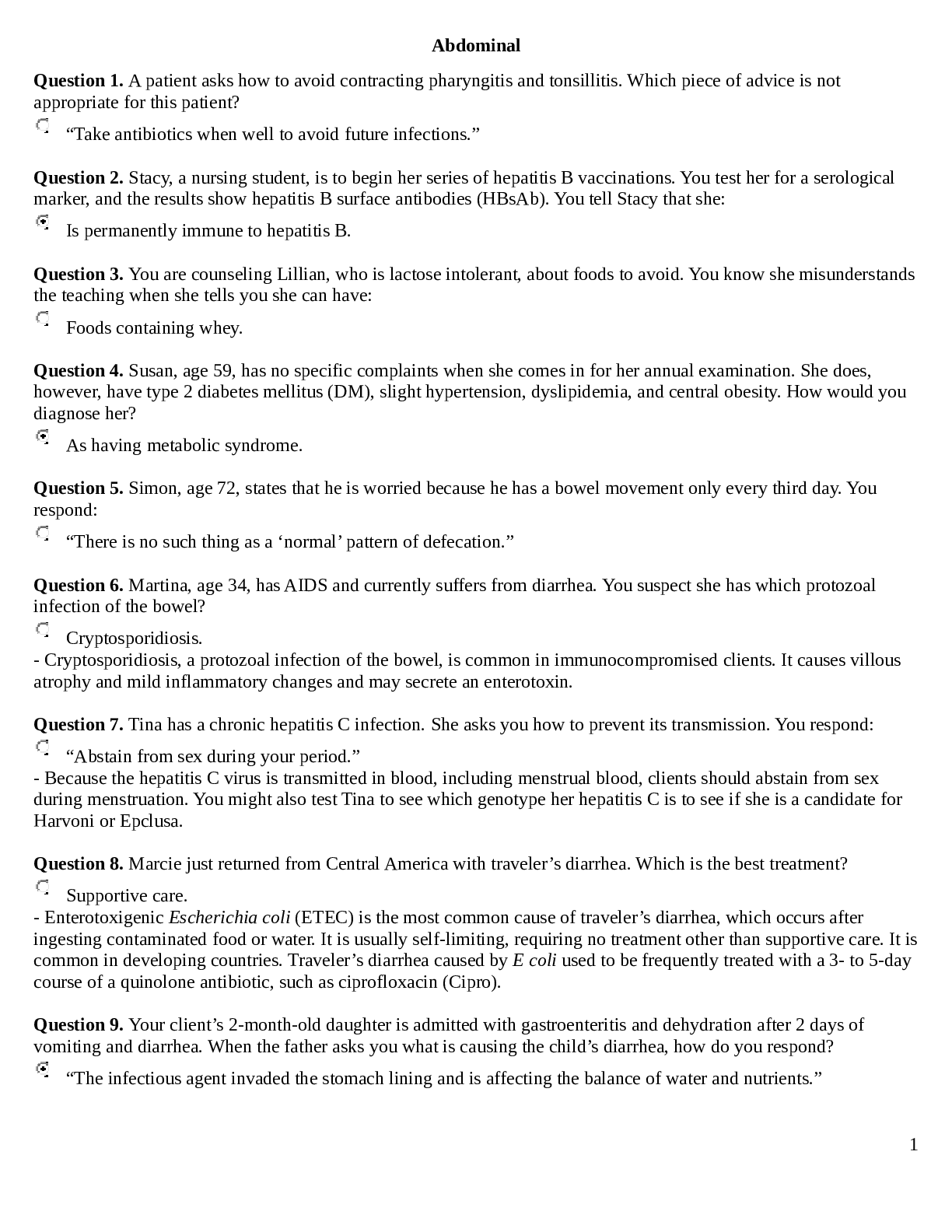
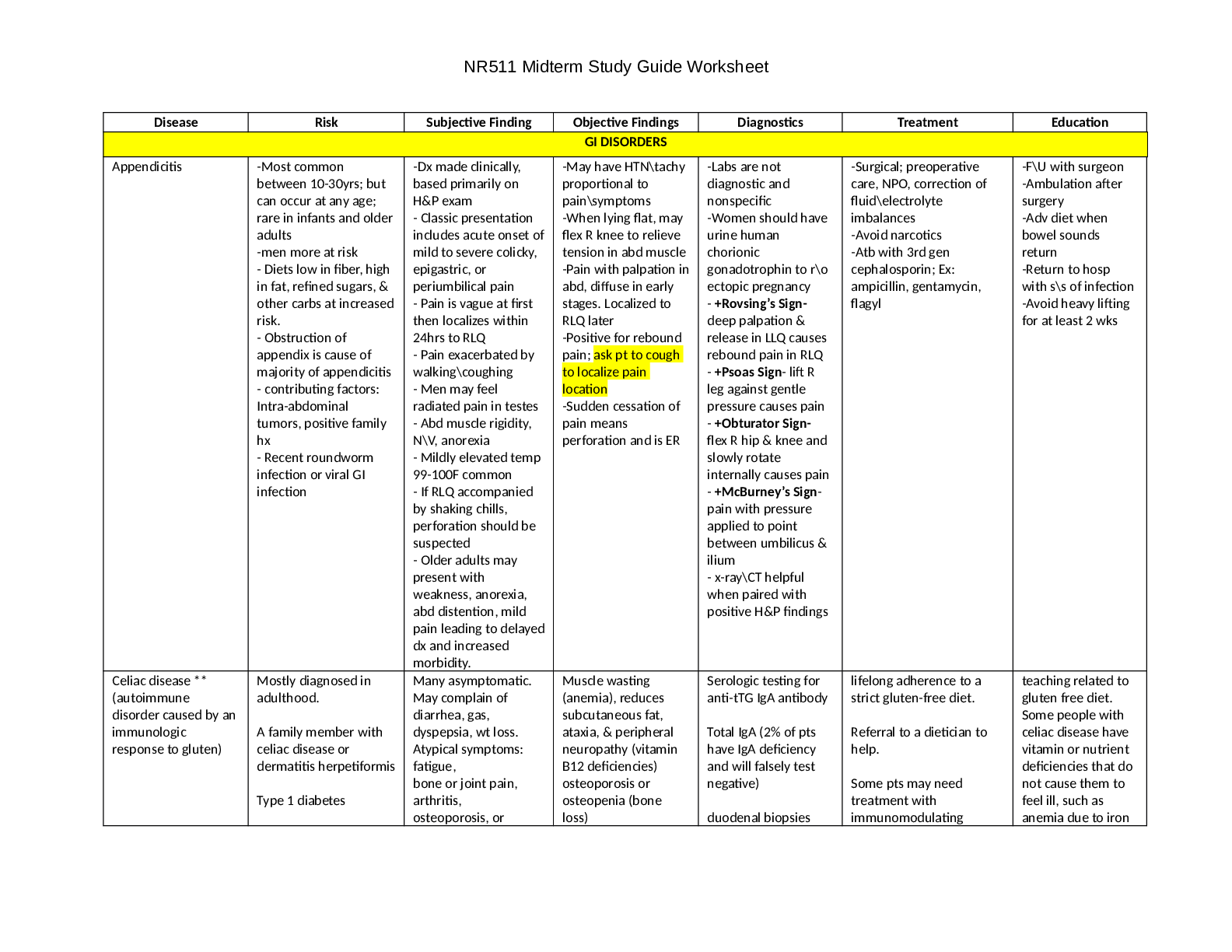
Abdominal
Question 1. A patient asks how to avoid contracting pharyngitis and tonsillitis. Which piece of advice is not appropriate for this patient?
“Take antibiotics when well to avoid future infections.”
Question 2. Stacy, a nursing student, is to begin her series of hepatitis B vaccinations. You test her for a serological marker, and the results show hepatitis B surface antibodies (HBsAb). You tell Stacy that she:
Is permanently immune to hepatitis B.
Question 3. You are counseling Lillian, who is lactose intolerant, about foods to avoid. You know she misunderstands the teaching when she tells you she can have:
Foods containing whey.
Question 4. Susan, age 59, has no specific complaints when she comes in for her annual examination. She does, however, have type 2 diabetes mellitus (DM), slight hypertension, dyslipidemia, and central obesity. How would you diagnose her?
As having metabolic syndrome.
Question 5. Simon, age 72, states that he is worried because he has a bowel movement only every third day. You respond:
“There is no such thing as a ‘normal’ pattern of defecation.”
Question 6. Martina, age 34, has AIDS and currently suffers from diarrhea. You suspect she has which protozoal infection of the bowel?
Cryptosporidiosis.
- Cryptosporidiosis, a protozoal infection of the bowel, is common in immunocompromised clients. It causes villous atrophy and mild inflammatory changes and may secrete an enterotoxin.
Question 7. Tina has a chronic hepatitis C infection. She asks you how to prevent its transmission. You respond: “Abstain from sex during your period.”
- Because the hepatitis C virus is transmitted in blood, including menstrual blood, clients should abstain from sex during menstruation. You might also test Tina to see which genotype her hepatitis C is to see if she is a candidate for Harvoni or Epclusa.
Question 8. Marcie just returned from Central America with traveler’s diarrhea. Which is the best treatment?
Supportive care.
- Enterotoxigenic Escherichia coli (ETEC) is the most common cause of traveler’s diarrhea, which occurs after ingesting contaminated food or water. It is usually self-limiting, requiring no treatment other than supportive care. It is common in developing countries. Traveler’s diarrhea caused by E coli used to be frequently treated with a 3- to 5-day course of a quinolone antibiotic, such as ciprofloxacin (Cipro).
Question 9. Your client’s 2-month-old daughter is admitted with gastroenteritis and dehydration after 2 days of vomiting and diarrhea. When the father asks you what is causing the child’s diarrhea, how do you respond?
“The infectious agent invaded the stomach lining and is affecting the balance of water and nutrients.”
Question 10. Sandy, age 52, presents with jaundice, dark urine, and light-colored stools, stating that she is slightly improved over last week’s symptoms. Which stage of viral hepatitis do you suspect?
Icteric.
- In the icteric stage of viral hepatitis, there is jaundice, dark urine, and light-colored stools. There are continued prodromal complaints, with gradual improvement.
Question 11. When Sammy asks you what he can do to help his wife, who has dumping syndrome, what do you suggest he encourage her to do?
Eat foods with a moderate fat and protein content.
Question 12. You suspect that Harry has a peptic ulcer and tell him that it has been found to be strongly associated with:
Infection by Helicobacter pylori.
- About 90% of cases of peptic ulcers have been found to be caused by infection with the bacteria H pylori.
Question 13. You are trying to differentiate between functional (acquired) constipation and Hirschsprung disease in a neonate. Distinguishing features of Hirschsprung disease include which of the following?
Small ribbonlike stools.
Question 14. Shelby has recently been diagnosed with pancreatitis. Of the following objective findings that can result from the pancreatic inflammatory process, which is known as Grey Turner sign?
Bluish discoloration over the flanks.
- Grey Turner sign is a bluish discoloration over the flanks.
Question 15. You suspect that Nikki has a gastroduodenal ulcer caused by Helicobacter pylori and plan to treat her empirically. What medications should you order?
A proton pump inhibitor (omeprazole), tetracycline or amoxicillin, and metronidazole (Flagyl).
- All of the drugs listed are used in the eradication of H pylori. Traditional 14-day “triple therapy” with a proton pump inhibitor (omeprazole), tetracycline or amoxicillin, and metronidazole (Flagyl) has consistently produced eradication rates of approximately 95% and is the least expensive therapy.
Question 16. A 45-year-old homeless man presents to your urgent care clinic for evaluation. His chief complaint is diarrhea. The patient states he started to have diarrhea 2-3 days ago, and it is getting progressively worse. He also notes nausea without vomiting, dry mouth, and double vision. On exam you notice his pupillary reflex is absent. The patient states he lives on the street and eats mostly canned goods that he scavenges from a grocery store dumpster.
What is the likely cause of the patient’s symptoms?
Botulism.
- This patient has a gastrointestinal illness associated with descending neurological symptoms after eating canned food; this is the presentation of botulism.
Question 17. A 75-year-old male presents for a routine physical. He is obese and has no abdominal pain or recent injuries or problems. He has no complaints. He lies supine for his abdominal exam. He is nontender to palpation and has a normal exam. When he sits up you see a large mass protrude from his abdomen. It is central to his abdomen and inferior to his rib cage. It disappears when he is sitting up fully. What is the patient’s diagnosis?
Ventral (epigastric) hernia.
- This is the hernia described in the question; most of these hernias are asymptomatic.
Question 18. A 50-year-old female presents to the urgent care clinic complaining of left lower quadrant pain. She has associated nausea and vomiting, and her vital signs are as follows: temperature 102.5°F, pulse 110, blood pressure 150/90, pulse oximetry 99% on room air. What is the best test to evaluate this patient?
Computed tomography (CT) scan with oral contrast.
- This is the best diagnostic choice. While diverticulitis is likely the cause of the patient’s symptoms, a CT of the abdomen would show if the patient has any gynecologic etiology (such as ovarian cyst or tumor) of this pain.
Question 19. The screening guidelines for colon cancer recommend which of the following for the general population?
Colonoscopy starting at age 50.
Question 20. Which of the following is not a risk factor for cholecystitis?
Younger age.
- The risk of cholecystitis actually increases with age.
Question 21. Zena just had a hemorrhoidectomy. You know she has not understood your teaching when she tells you she will:
Decrease her dietary fiber for 1 month.
- For clients who have just had a hemorrhoidectomy, teaching would include advising them to maintain an adequate intake of dietary fiber to maintain stool bulk.
Question 22. Timothy, age 68, complains of an abrupt change in his defecation pattern. You evaluate him for: Colorectal cancer.
- A middle-aged or older client with an abrupt change in defecation pattern must be evaluated for colorectal cancer.
Question 23. Anson tells you he thinks his antacids are causing his diarrhea. You respond:
“Antacids may contain magnesium, which decreases bowel transit time and may contain poorly absorbed salts that draw fluid into the bowel.”
Question 24. Lucy, age 49, has pain in both the left and right lower quadrants. What might you suspect?
Pelvic inflammatory disease.
- The pain associated with pelvic inflammatory disease can be palpated in both the right and left lower quadrants.
Question 25. You elicit costovertebral angle tenderness in Gordon, age 29. Which condition do you suspect?
Inflammation of the kidney.
Question 26. A mother brings in her 4-year-old child, who she states has acute abdominal pain and a rash. Which of the following do you initially rule out?
Appendicitis.
Question 27. Harvey just came back from Mexico. Which pathogen do you suspect is responsible for his diarrhea?
Escherichia coli.
Question 28 To differentiate among the different diagnoses of inflammatory bowel diseases, you look at the client’s histological, culture, and radiological features. Mary has transmural inflammation, granulomas, focal involvement of the colon with some skipped areas, and sparing of the rectal mucosa. What do you suspect?
Crohn disease.
- Crohn disease would show transmural inflammation, granulomas, focal involvement of the colon with some skipped areas, and sparing of the rectal mucosa. The key words are “skipped areas of mucosal involvement.”
Question 29. Which of the following medications/drugs are not known to cause heartburn or dyspepsia?
Tylenol.
Question 30. Icterus due to hyperbilirubinemia is seen when the serum level of bilirubin is greater than?
2.5 mg/dL.
- A bilirubin level greater than 2.5-3 mg/dL is associated with yellowing of the eyes.
Question 31. What is the best diagnostic test to confirm the diagnosis of celiac disease?
Anti-tTG IgA.
- This is the most sensitive and specific test for diagnosing celiac disease.
Question 32. All of the following medications are used for the control of nausea and vomiting. Which medication works by affecting the chemoreceptor trigger zone, thereby stimulating upper gastrointestinal motility and increasing lower esophageal sphincter pressure?
Antidopaminergic and cholinergic agents, such as metoclopramide (Reglan).
- Metoclopramide (Reglan) is used for diabetic gastroparesis and postoperative nausea and vomiting. It works by affecting the chemoreceptor trigger zone, thereby stimulating upper gastrointestinal motility and increasing lower esophageal sphincter pressure.
Question 33. You auscultate Julie’s abdomen and hear a peritoneal friction rub. Which condition do you rule out?
Irritable bowel syndrome.
- Irritable bowel syndrome does not produce a friction rub.
Question 34. Which is the most common presenting symptom of gastric cancer?
Weight loss.
- Weight loss is usually the presenting symptom of gastric cancer.
Question 35. Tom has just been diagnosed with celiac disease. Which of the following might you tell him?
A strict gluten-free diet is the only treatment for celiac disease.
- A strict gluten-free diet is the only treatment for celiac disease.
Question 36. Samantha, age 28, is 100 lb overweight and wants to have a gastroplasty performed. In discussing this with her, you explain that by having this procedure she may:
Develop diarrhea.
- Diarrhea is a common problem after a gastroplasty because of the induced malabsorption.
Question 37. Rose has gastroesophageal reflux disease (GERD). You know she misunderstands your teaching when she tells you she will:
Have a snack before retiring so that the esophagus and stomach are not empty at bedtime.
- Rose should not have a snack before retiring. Clients with GERD should be instructed to avoid coffee, alcohol, chocolate, peppermint, and spicy foods; eat smaller meals; stop smoking; remain upright for 2 hours after meals; elevate the head of the bed on 6- to 8-in blocks; and refrain from eating for 3 hours before retiring.
Question 38. In a 2-month-old infant with vomiting and diarrhea, the most effective way of determining a fluid deficit is to check for:
Decreased peripheral perfusion.
- In a 2-month-old infant with vomiting and diarrhea, the most effective way of determining a fluid deficit is to check for decreased peripheral perfusion, dry oral mucous membranes, and sunken fontanels. The body compensates for loss of fluid by shifting the interstitial fluid into the intravascular space, thereby maintaining perfusion of vital organs. If the fluid loss continues, circulating volume is diminished and vasoconstriction occurs in the peripheral vessels, resulting in decreased perfusion.
Question 39. Olive has an acute exacerbation of Crohn’s disease. Which laboratory test value(s) would you expect to be decreased?
Vitamin A, B complex, and C levels.
- Folic acid and serum levels of most vitamins, including A, B complex, C, and the fat-soluble vitamins, are decreased in Crohn’s disease as a result of malabsorption.
Question 40. You are doing routine teaching with a patient who has a family history of colorectal cancer. You know she misunderstands the teaching when she tells you she will:
Increase her fluid intake.
- Increasing fluid intake has not been shown to decrease the risk of colorectal cancer. Current recommendations to aid in preventing colorectal cancer include decreased fat consumption, increased fiber consumption, and the daily use of aspirin.
Question 41. Dottie brings in her infant, who has gastroesophageal reflux. What do you tell her about positioning her infant?
“Always position infants on their back to prevent sudden infant death syndrome.”
- Babies with gastroesophageal reflux should, from birth, be placed to sleep on their back on a firm, flat mattress that is not elevated. Elevating the sleeping surface for back-sleeping babies does not reduce reflux and is not recommended. In addition, these babies should be fed a formula thickened with rice cereal and held in an upright position for 1 hour after feeding, as gravity helps prevent reflux.
Question 42. To differentiate among the different diagnoses of inflammatory bowel diseases, you look at the client’s histological, culture, and radiological features. Mary has transmural inflammation, granulomas, focal involvement of the colon with some skipped areas, and sparing of the rectal mucosa. What do you suspect?
Crohn disease.
- Crohn disease would show transmural inflammation, granulomas, focal involvement of the colon with some skipped areas, and sparing of the rectal mucosa. The key words are “skipped areas of mucosal involvement.”
Question 43. Marian, age 52, is obese. She complains of a rapid onset of severe right upper quadrant abdominal cramping pain, nausea, and vomiting. Your differential diagnosis might be:
Cholecystitis.
- A rapid onset of severe right upper quadrant (RUQ) abdominal cramping pain with nausea and vomiting is a classic presentation of acute cholecystitis; 90% to 95% of clients with acute cholecystitis also have gallstones. Other symptoms include low-grade fever, epigastric tenderness, guarding, and pain on inspiration during palpation of the RUQ (Murphy sign). The 7 F’s of cholecystitis are fair, fat, 40, female, fertile, fat intolerant, and flatulent.
Question 44. Which of the following is not true regarding hepatitis C?
If hepatitis is asymptomatic it doesn’t cause cirrhosis or liver cancer.
Question 45. What is the recommended treatment to eradicate a Helicobacter pylori infection?
Amoxicillin, clarithromycin, and omeprazole for 2 weeks.
- This is the recommended treatment to eradicate H pylori.
Question 46. A 25-year-old male presents complaining of hematochezia. The patient states he has noticed this for 2 days. He states there is a streak of bright blood along his stool every time he has a bowel movement. The patient has no pain with his bowel movements. He admits to eating a poor diet. The patient has no abdominal pain, nausea, or vomiting. On physical exam the patient has a positive fecal occult blood test but has no noticeable rectal bleeding or lesions. What is the likely diagnosis?
Internal hemorrhoid.
Question 47. Margie, age 52, has an extremely stressful job and was just given a diagnosis of gastric ulcer. She tells you she is sure it is going to be malignant. How do you respond?
“About 95% of gastric ulcers are benign.”
- About 95% of gastric ulcers are benign even though some of these seem to look malignant on x-ray.
Question 48. Cydney has been given a diagnosis of ascariasis. Which symptoms would you expect to see?
Low-grade fever, productive cough with blood-tinged sputum, wheezing, and dyspnea.
- Ascariasis is the most common intestinal helminth (parasitic worm). It causes pulmonary manifestations, such as low-grade fever, productive cough with blood-tinged sputum, wheezing, and dyspnea, because the larvae are transmitted to the lungs from the vascular system. The larvae burrow through alveolar walls, migrating up the bronchial tree to the pharynx, and then down the esophagus, back to the intestine.
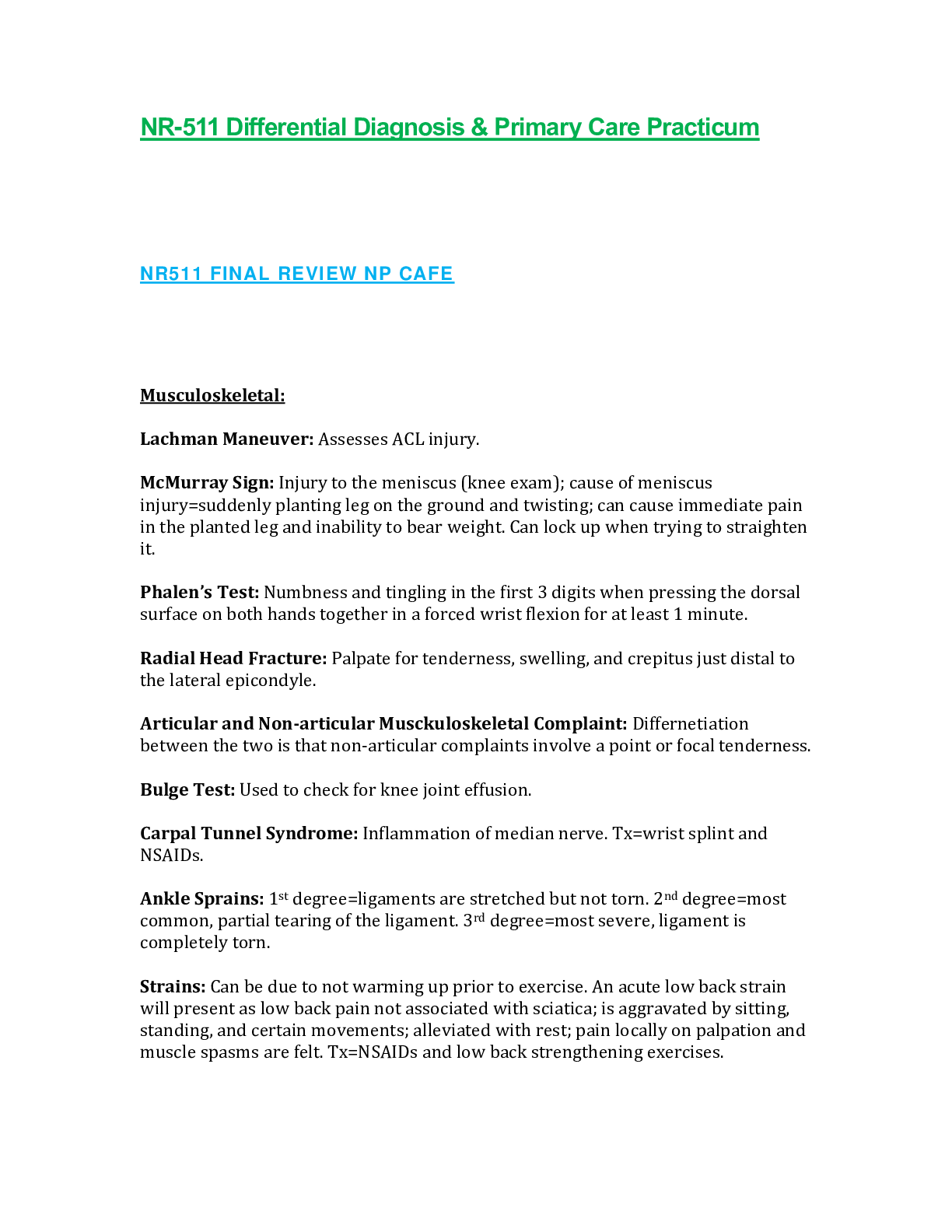
Question 49. You suspect appendicitis in Andrew, who is 18. With his right hip and knee flexed, you slowly rotate his right leg internally to stretch a muscle. He states that it is painful over his right lower quadrant. Which sign did you elicit?
Obturator sign.
- Obturator sign is elicited when, with the patient’s right hip and knee flexed, the examiner slowly rotates the right leg internally, which stretches the obturator muscle. Pain over the right lower quadrant (RLQ) is considered a positive sign.
Question 50. Marty, age 52, notices a bulge in his midline every time he rises from bed in the morning. You tell him that it is a ventral hernia, also known as an:
Epigastric hernia.
- A ventral hernia, also known as an epigastric hernia, occurs along the midline between the xiphoid process and the umbilicus. The fibers along the linea alba are brought together in a patchwork-type closure; the defect exists within this decussation. As these fibers weaken, the contents can herniate through the abdomen. Epigastric hernias are 3 times more likely to occur in men than women.
Question 51. Bobby, age 6, has constant periumbilical pain shifting to the right lower quadrant, vomiting, a small volume of diarrhea, absence of headache, a mild elevation of the white blood cell count with an early left shift, and white blood cells in the urine. You suspect:
Appendicitis.
- Constant periumbilical pain shifting to the right lower quadrant; vomiting following the pain; a small volume of diarrhea; no systemic symptoms, such as a headache, malaise, or myalgia; a mild elevation of the white blood cell count with an early left shift; and white blood cells (WBCs) or red blood cells (RBCs) in the urine are indications of appendicitis. The WBC count becomes high only with gangrene or perforation of the appendix. The urine may have WBCs or RBCs if the bladder is irritated and ketonuria if there is prolonged vomiting.
Question 52. Melva, age 63, presents with an acute exacerbation of pancreatitis, and you are going to admit her to the hospital. Which is the most important factor in determining a negative long-term outcome for her?
Infection.
- The most important factor in determining long-term negative outcomes for pancreatitis is the presence of infection. Despite best practices, mortality associated with severe acute pancreatitis remains approximately 20% to 25% because of systemic complications.
Question 53. A 54-year-old female presents to your primary care office for routine reevaluation for gastroesophageal reflux disease (GERD). She has been treated with diet modifications and 6 weeks of omeprazole without improvement of her symptoms. What is the next step in management of this patient’s GERD?
Order an endoscopy.
- This is the next step in treatment in order to evaluate the etiology of the patient’s GERD and consider biopsy if necessary.
Question 54. What would you expect to see on an abdominal series that would lead toward a diagnosis of small- bowel obstruction?
Air-fluid levels.
- This finding on an abdominal x-ray is the hallmark of a small-bowel obstruction.
Question 55. Nausea is difficult to discern in a young child. What question might you ask to determine if a child has nausea?
“Are you hungry?”
- To elicit information concerning nausea in a young child, ask the child about hunger because a young child cannot usually differentiate between hunger and mild nausea
Question 56. Matt, age 26, recently returned from a camping trip and has gastroenteritis. He says that he has been eating only canned food. Which of the following pathogens do you suspect?
Clostridium botulinum.
- C botulinum is an anaerobic, gram-positive bacillus that produces toxins. It is widely distributed in the soil and vegetation. Improperly processed home-canned low-acid vegetables and contaminated meats are the usual cause of food-borne botulism.
Question 57. Ruby has a colostomy and complains that her stools are too loose. What food(s) do you suggest to help thicken the stools?
Cheese.
- Cheese, bread, pasta, rice, pretzels, and yogurt all help to thicken stools.
Question 58. Ellie, age 42, has a seizure disorder and has been taking phenytoin (Dilantin) for years. Which supplement should she also be taking if no other problems exist?
Folic acid.
- Clients taking phenytoin (Dilantin) should also be taking 0.4 to 1 mg/d of folic acid because Dilantin promotes a folate deficiency.
Question 59. Melva, age 63, presents with an acute exacerbation of pancreatitis, and you are going to admit her to the hospital. Which is the most important factor in determining a negative long-term outcome for her?
Infection.
- The most important factor in determining long-term negative outcomes for pancreatitis is the presence of infection. Despite best practices, mortality associated with severe acute pancreatitis remains approximately 20% to 25% because of systemic complications.
Question 60. Which of the following is the most common cause of acute pancreatitis?
Gallstone obstruction of the pancreatic duct and alcoholism.
- Both gallstones and alcoholism are the most common causes of acute pancreatitis.
Question 61. Treatment for achalasia may include: Balloon dilation of the lower esophageal sphincter.
- Achalasia is an absence of peristalsis of the esophagus and a high gastroesophageal sphincter pressure. After initial noninvasive treatments, clients may require a balloon dilation of the lower esophageal sphincter.
Question 62. A 7-year-old male presents with his mother to the urgent care clinic complaining of abdominal pain. He started to complain of pain prior to going to bed; however, it has gotten progressively worse and is now preventing him from sleeping. He is nauseous but hasn’t vomited and didn’t eat dinner due to the pain. The patient appears pale and is complaining of right-sided abdominal pain. His vitals are as follows: blood pressure 130/85, pulse 120, temperature 100.5°F, pulse oximetry 98% on room air. On physical exam he is tender in the right lower quadrant. His complete blood count (CBC) shows a white blood cell count (WBC) of 17.0. What is the patient’s likely diagnosis?
Appendicitis.
- This is the clinical scenario typical for appendicitis.
Question 63. Which oral medication might be used to treat a client with chronic cholelithiasis who is a poor candidate for surgery?
Ursodiol (Actigall).
Question 64. The metabolism of which drug is not affected in Marsha, age 74?
Alcohol.
Question 65. Rose, a client with gastroesophageal reflux disease (GERD), has many other concurrent conditions. In teaching Rose about medications to avoid, what do you recommend she refrain from using?
Nonsteroidal anti-inflammatory drugs (NSAIDs).
Question 66. Marvin, a known alcoholic with cirrhosis, is frequently admitted for coagulopathies and occasionally receives blood transfusions. His wife asks you why he has bleeding problems. How do you respond?
“There is an interruption of the normal clotting mechanism.”
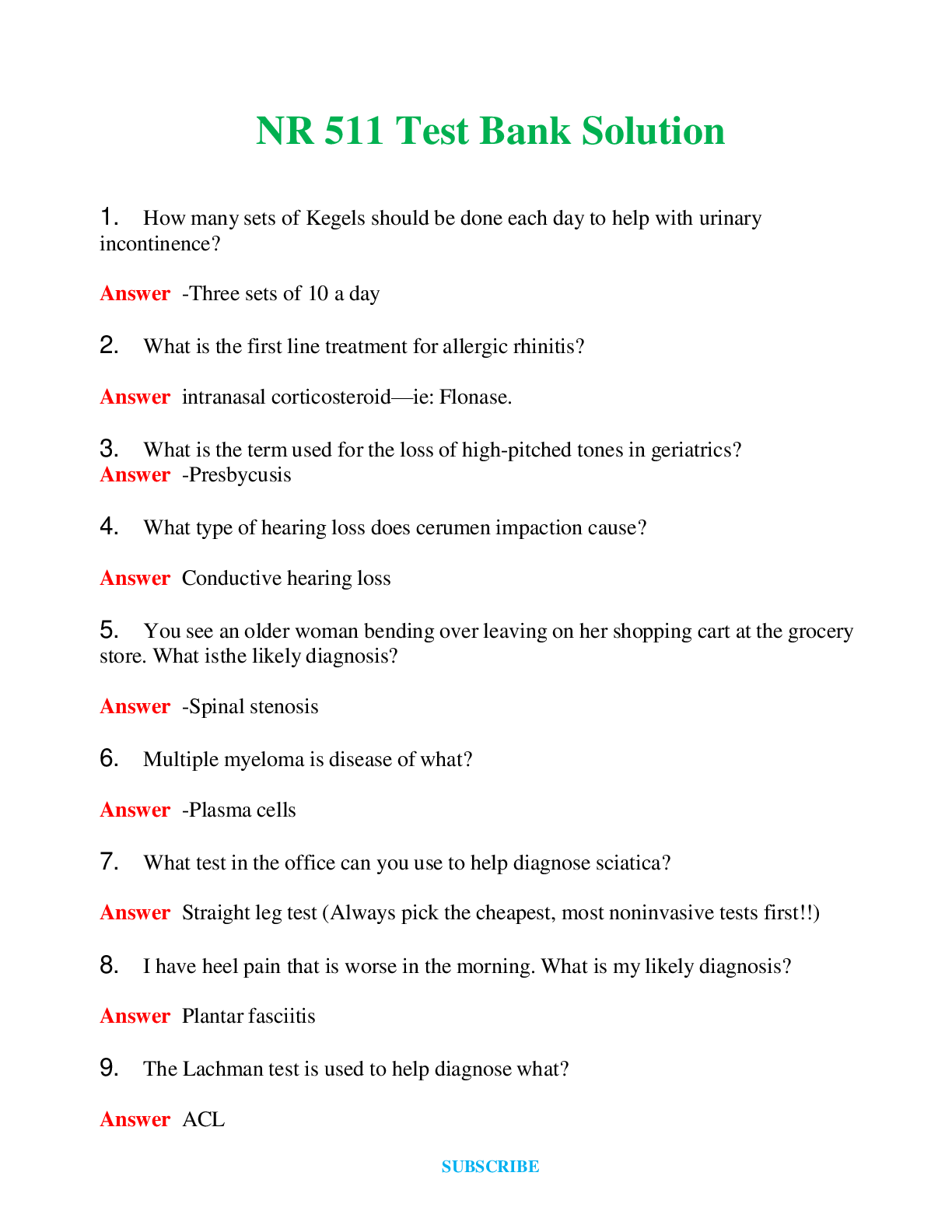
HEENT Eye Problems
Question 1. Which of the following statements about macular degeneration is not true?
Macular degeneration is characterized by gradual loss of peripheral vision.
- This is how open-angle glaucoma is characterized. Macular degeneration is gradual loss of central vision.
Question 2. You prescribe Levaquin (levofloxacin) for a severe sinus infection. What is not a possible adverse reaction to this medication?
Stevens-Johnson syndrome.
- Stevens-Johnson syndrome is usually caused by allopurinol and beta-lactam antibiotics.
Question 3. Which of the following is not a complication of untreated group A streptococcal pharyngitis?
Hemolytic anemia.
- This is a complication of mononucleosis.
Question 4. What is the most common cause of epistaxis?
Digital trauma.
Question 5. Which of the following is not recommended for hoarseness?
Oral steroids.
Question 6. Aaron, age 4, is brought in to the clinic by his father. His tympanic membrane is perforated from otitis media. His father asks about repair of the eardrum. How do you respond?
“The eardrum, in most cases, heals within several weeks.”
- Most perforated tympanic membranes seen with acute otitis media heal within several weeks.
Question 7. A 44-year-old banker comes to your office for evaluation of a pulsating headache over the left temporal region, and he rates the pain as an 8 on a scale of 1 to 10. The pain has been constant for the past several hours and is
accompanied by nausea and sensitivity to light. He has had frequent, though less severe, headaches for many years, and they are usually relieved by over-the-counter medicines. He is unclear as to a precipitating event but notes that he has had visual disturbances before each headache and he has been under a lot of stress in his job. Based on this description, what is the most likely diagnosis of this type of headache?
Migraine.
- Migraines are classically preceded by an aura and accompanied by nausea, vomiting (sometimes), and photophobia. They are usually unilateral.
Question 8. Mrs. Johnson, a 54-year-old accountant, presents to the office with a painful red eye without discharge. You should suspect:
Iritis.
Question 9. Mandy, 44, was given a diagnosis of flu 1 day ago and wants to start on the “new flu medicine” right away. What do you tell her?
“I’ll start you on oseltamivir (Tamiflu) today. It may shorten the course of the disease and perhaps lessen the severity of your symptoms.”
Question 10. Marcia, age 4, is brought in to the office by her mother. She has a sore throat, difficulty swallowing, copious oral secretions, respiratory difficulty, stridor, and a temperature of 102°F but no pharyngeal erythema or cough. What do you suspect?
Epiglottitis.
- A symptom cluster of severe throat pain with difficulty swallowing, copious oral secretions, respiratory difficulty, stridor, and fever but without pharyngeal erythema or cough is indicative of epiglottitis.
Question 11. Mr. Clark, age 78, is being treated with timolol maleate (Timoptic) drops for his chronic open-angle glaucoma. While performing a new client history and physical, you note that he is taking other medications. Which medication would you be most concerned about?
Atenolol (Tenormin), a beta blocker for high blood pressure.
- If a client is taking timolol maleate (Timoptic) drops for chronic open-angle glaucoma, you should be most concerned if the client is also taking atenolol (Tenormin), a beta blocker, for high blood pressure. Because timolol maleate drops are beta-adrenergic blockers, additional beta blockers can cause worsening of congestive heart failure or reactive airway disease, as well as acute delirium.
Question 12. You are assessing a first grader and find that the tonsils are touching the uvula. How would you grade this finding?
Grade 3.
- Grade 3 indicates the tonsils are touching the uvula. Tonsils are enlarged to 2, 3, or 4 with an acute infection.
Question 13. Nystatin (Mycostatin) is ordered for Michael, a 56-year-old banker who has an oral fungal infection. What instructions for taking the medication do you give Michael?
“Swish and swallow the medication.”
Question 14. Mario, a 17-year-old high school student, came to the office for evaluation. He is complaining of persistent sore throat, fever, and malaise not relieved by the penicillin therapy prescribed recently at the urgent care center. As the nurse practitioner, what would you order next?
A Monospot test.
- If a client has a persistent sore throat, fever, and malaise not relieved by penicillin therapy, a Monospot test should be performed to rule out mononucleosis (Epstein-Barr virus).
Question 15. Cynthia, a 31-year-old woman with a history of depression, is seen in the office today for complaints of headaches. She was recently promoted at her job, and this has caused increased stress. She describes the headache as a tightening (viselike) feeling in the temporal and nuchal areas. The pain is bilateral and tends to wax and wane. It started approximately 2 days ago and is still present. What kind of headache is she describing?
Tension headache.
- Tension headache is the most common type of headache. These headaches are usually bilateral and tend to wax and wane but have a characteristic pressure/tightening (viselike grip) in the forehead, temporal, or nuchal areas and can last from minutes to weeks. Tension headache may be associated with stress, depression, or anxiety disorders.
Question 16. Regular ocular pressure testing is indicated for older adults taking:
High-dose inhaled glucocorticoids.
- Although regular ocular pressure testing is indicated on a routine basis for all older adults, it is especially important for clients taking an extended regimen of high-dose inhaled glucocorticoids because prolonged continuous use increases the risk of ocular hypertension or open-angle glaucoma.
Question 17. In a young child, unilateral purulent rhinitis is most often caused by:
A foreign body.
- In a young child, unilateral purulent rhinitis is most often caused by a foreign body. The key word here is unilateral.
Question 18. Samantha, age 12, presents with ear pain. When you begin to assess her ear, you tug on her normal- appearing auricle, eliciting severe pain. This leads you to suspect:
Otitis externa.
- When severe pain is elicited by tugging on a normal-appearing auricle, an acute infection of the external ear canal (otitis externa) is suspected.
Question 19. Ellen, a 56-year-old social worker, is seen by the nurse practitioner for complaints of fever; left-sided facial pain; moderate amounts of purulent, malodorous nasal discharge; and pain and headache when bending forward. The symptoms have been occurring for approximately 6 days. On physical assessment, there is marked redness and swelling of the nasal passages and tenderness/pain on palpation over the cheekbones. The nurse practitioner should suspect:
Acute rhinosinusitis.
- The client is exhibiting classic characteristics of acute rhinosinusitis.
Question 20. You diagnose 46-year-old Mabel with viral conjunctivitis. Your treatment should include:
Supportive measures and lubricating drops (artificial tears).
- Viral conjunctivitis is treated with supportive measures, including cold compresses and lubricating eye drops. Preventive measures, such as frequent handwashing, are important, as viral conjunctivitis is highly contagious.
Question 21. A 25-year-old male presents with “bleeding in my eye” for 1 day. He awoke this morning with a dark area of redness in his eye. He has no visual loss or changes. He denies constitutional symptoms, pruritus, drainage, or recent trauma. The redness presents on physical exam as a dark red area in the patient’s sclera of the right eye only and takes up less than 50% of the eye. The patient’s remaining sclera is clear and white. He also notes he was drinking alcohol last night and vomited afterward. What is the best treatment?
Reassurance that this lesion will resolve without any treatment in 2 to 4 weeks.
- This is the classic presentation of a subconjunctival hemorrhage. It will resolve without treatment in 2 to 4 weeks. Vomiting probably caused his hemorrhage.
Question 22. Which of the following is not a cause of conductive hearing loss?
Presbycusis
- This is a cause of sensorineural hearing loss.
Question 23. You are the nurse practitioner caring for Martha, a 47-year-old accountant. You have made a diagnosis of acute sinusitis based on Martha’s history and the fact that she complains of pain behind her eye. Which sinuses are affected?
Ethmoid.
- With ethmoid sinus problems, the pain is felt behind the eye and high on the nose.
Question 24. Marlene, a 57-year-old cashier, comes to the clinic because she is unable to differentiate between sharp and dull stimulation on both sides of her face. You suspect:
A lesion affecting the trigeminal nerve.
- A lesion affecting the sensory portion of the trigeminal nerve could be manifested by bilateral symptoms.
Question 25. While doing a face, head, and neck examination on a 16-year-old patient, you note that the palpebral fissures are abnormally narrow. What are you examining?
The openings between the margins of the upper and lower eyelids.
- The palpebral fissures are the openings between the margins of the upper and lower eyelids. Someone who appears to be squinting is said to have narrow palpebral fissures.
Question 26. Your client, a 72-year-old smoker of 50 years, is at the office today for a routine physical. During your inspection of the oral mucosa, you discover a white lesion on the lateral surface of the tongue that you suspect to be cancerous. You document your finding as:
A white, painless, firm, ulcerated lesion with indurated borders.
- Approximately 90% of oral cancers are squamous cell carcinoma (SCC), which is seen typically on the lip or lateral part of the tongue, usually as a lesion that is white, red, or mixed white and red. SCCs are characterized by painless, firm lesions with indurated borders.
Question 27. Mia, a 27-year-old school teacher, has a 2-day history of severe left ear pain that began after 1 week of upper respiratory infection (URI) symptoms. On physical examination, you find that she has acute otitis media (AOM). She has a severe allergy to penicillin. The most appropriate antimicrobial option for this patient is:
Azithromycin (Zithromax).
- Azithromycin is not a perfect option for treating otitis media; however, it is preferred for patients with severe penicillin allergy.
Question 28. A 64-year-old obese woman comes in complaining of difficulty swallowing for the past 3 weeks. She states that “some foods get stuck” and she has been having “heartburn” at night when she lies down, especially if she has had a heavy meal. Occasionally, she awakes at night coughing. She denies weight gain and/or weight loss, vomiting, or change in bowel movements or color of stools. She denies alcohol and tobacco use. There is no pertinent family history or findings on review of systems (ROS). Physical examination is normal, with no abdominal tenderness, and the stool is occult blood (OB) negative. What is the most likely diagnosis?
Gastroesophageal reflux disease (GERD).
Question 29. Mr. Johnson, age 69, has had Meniere disease for several years. He has some hearing loss but now has persistent vertigo. What treatment might be instituted to relieve the vertigo?
A vestibular neurectomy.
- For a client who has had Meniere disease for several years, with some hearing loss and now persistent vertigo, treatment by vestibular neurectomy might relieve the vertigo. In vestibular neurectomy, the portion of cranial nerve VIII that controls balance and the sensation of vertigo is severed. Vertigo is usually relieved in 90% of cases.
Question 30. Marjorie, age 37, has asthma and has been told she has nasal polyps. What do you tell her about them?
Nasal polyps are benign growths.
- Nasal polyps are benign growths that occur frequently in clients with sinus problems, asthma, and allergic rhinitis. Polyps are neither neoplastic growths nor precancerous, but they do have the potential to affect the flow of air through the nasal passages. Clients who have asthma and have nasal polyps may have an associated allergy to aspirin, a syndrome that is referred to as Samter triad.
Question 31. April, age 50, presents with soft, raised, yellow plaques on her eyelids at the inner canthi. She is concerned that they may be cancerous skin lesions. You tell her that they are probably:
Xanthelasmas.
- Xanthelasmas are soft, raised, yellow plaques on the eyelids at the inner canthi. They appear frequently in women, in their 50s. Xanthelasmas occur with both high and normal lipid levels and have no pathological significance.
Question 32. Which manifestation is noted with carbon monoxide poisoning?
Cherry-red lips.
- Cherry-red lips are a manifestation of carbon monoxide poisoning. They also occur with ketoacidosis or acidosis from aspirin poisoning.
Question 33. Kathleen, age 54, has persistent pruritus of the external auditory canal. External otitis and dermatological conditions, such as seborrheic dermatitis and psoriasis, have been ruled out. What can you advise her to do?
Apply mineral oil to counteract dryness.
Question 34. Kevin, age 26, has AIDS and presents to the clinic with complaints of a painful tongue covered with what look like creamy white, curdlike patches overlying erythematous mucosa. You are able to scrape off these “curds” with a tongue depressor, which assists you in making which of the following diagnoses?
Oral candidiasis.
Question 35. Sally, age 19, presents with pain and pressure over her cheeks and discolored nasal discharge. You cannot transilluminate the sinuses. You suspect which sinus to be affected?
Maxillary sinus.
- The maxillary sinus is the largest of the paranasal sinuses and is the most commonly affected sinus. There is usually pain and pressure over the cheek. Inability to transilluminate the cavity usually indicates a cavity filled with purulent material. Discolored nasal discharge, as well as a poor response to decongestants, may also indicate sinusitis.
Question 36. A 10-year-old male in 5th grade presents to the pediatric office with his mother complaining of itchy and red eyes for 1 day. The patient complains of watery drainage in both eyes, associated with repetitive itching. On physical exam, he has no fever or constitutional symptoms. His vision is normal, with no decrease in extraocular movements. The patient has a sibling that just started day care recently. He also has bilateral preauricular lymph nodes that are inflamed. What is the patient’s diagnosis?
Viral conjunctivitis.
- This is the classic presentation of viral conjunctivitis. The patient also has exposure to kids at school and a sibling with day care exposure.
Question 37. A 75-year-old African American male presents to your family practice office complaining of visual impairment. He has worn corrective lenses for many years but has noticed that his vision has gotten progressively worse the past 6 months. He denies pain. He states his vision is worse in both eyes in the peripheral aspects of his visual field. He also notes trouble driving at night and halos around street lights at night. You test his intraocular pressure, and it is 23 mm Hg. What is his most likely diagnosis?
Open-angle glaucoma.
- This is the typical presentation of chronic, or open-angle, glaucoma.
Question 38. Which of the following statements about macular degeneration is not true?
Macular degeneration is characterized by gradual loss of peripheral vision.
- This is how open-angle glaucoma is characterized. Macular degeneration is gradual loss of central vision.
Question 39. What is the most common bacterial pathogen associated with acute otitis media?
Streptococcus pneumoniae.
- This causes 40% to 50% of cases.
Question 40. Alexandra, age 34, was treated with oral antibiotics 2 weeks ago for a urinary tract infection. She is seen in the office today for a follow-up visit. On physical examination, the nurse practitioner notices that she has some painless, white, slightly raised patches in her mouth. This is probably caused by:
Candidiasis.
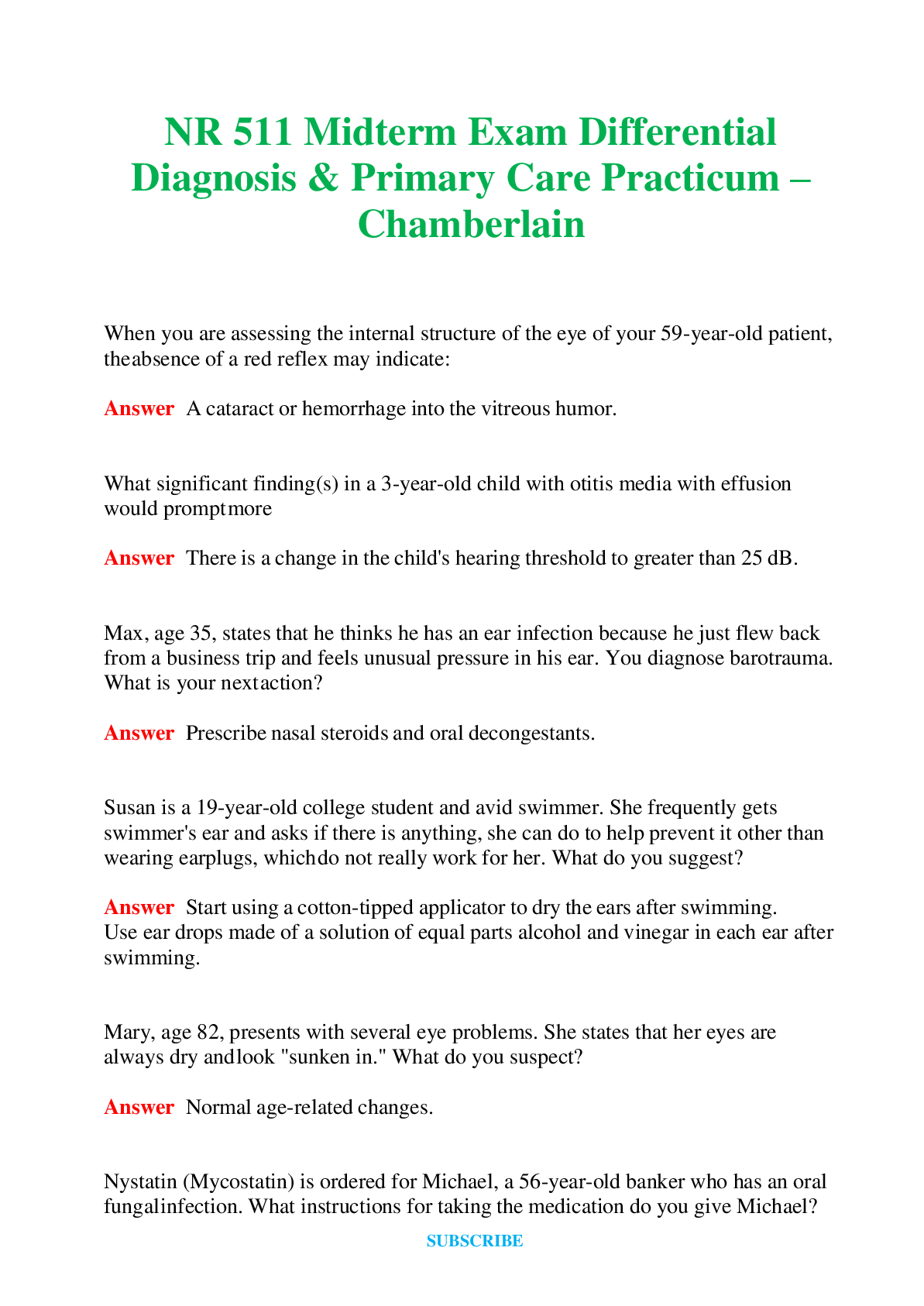
Question 41. When you are assessing the internal structure of the eye of your 59-year-old patient, the absence of a red reflex may indicate:
A cataract or hemorrhage into the vitreous humor.
- When assessing the internal structure of the eye, absence of a red reflex may indicate the total opacity of the pupil because of a cataract or hemorrhage into the vitreous humor. It may also be a result of improper positioning of the ophthalmoscope.
Question 42. When the Weber test is performed with a tuning fork to assess hearing and there is no lateralization, the nurse practitioner should document this finding as:
A normal finding.
- A Weber test assesses hearing by bone conduction. With normal hearing, sound is heard equally well in both ears, meaning there is no lateralization.
Question 43. What significant finding(s) in a 3-year-old child with otitis media with effusion would prompt more aggressive treatment and referral?
There is a change in the child’s hearing threshold to greater than 25 dB.
- If a child with otitis media with effusion has a change in the hearing threshold greater than 25 dB and has notable speech and language delays, more aggressive treatment is indicated. When the child’s hearing examination reveals a change in the hearing threshold, it is extremely important that the provider evaluate the child’s achievement of developmental milestones in speech and language. Any abnormal findings warrant referral.
Question 44. Which of the following conditions produces sharp, piercing facial pain that lasts for seconds to minutes?
Trigeminal neuralgia.
Question 45. Mary, age 82, presents with several eye problems. She states that her eyes are always dry and look “sunken in.” What do you suspect?
Normal age-related changes.
Question 46. At the clinic, you are assessing Kyle, a 4-month-old baby, for the first time and notice that both eyes are turning inward. What is this called?
Esotropia.
- Esotropia is the inward turning of the eyes.
Question 47. You diagnose acute epiglottitis in Sally, age 5, and immediately send her to the local emergency room. Which of the following symptoms would indicate that an airway obstruction is imminent?
Stridor.
Question 48. A 75-year-old female presents to your office complaining of dizziness and hearing loss. The patient states she awoke yesterday with dizziness, which she described as feeling the room spinning. She also notes intermittent ringing in her ears. On physical exam, the patient has lateralization of her hearing loss to the unaffected ear. Rinne test shows air conduction lasts longer than bone conduction. What is the next step in helping this patient’s symptoms?
Start the patient on a low-salt, low-caffeine diet and give her meclizine for vertigo attacks.
Question 49. Which of the following is not a cause of conductive hearing loss?
Presbycusis.
Question 50. A 20-year-old male presents to your primary care clinic. This patient is a college student. He complains of fatigue, sore throat, and low-grade fever for 3 days. On physical exam, he has a temperature of 100.7°F. His ear exam is normal. His nose and throat exam shows mild erythema of the nasal mucosa and edematous, enlarged tonsils bilaterally, with erythema of the pharyngeal wall and tonsillar exudates. He has inflamed posterior cervical lymph nodes. He has a mild nonproductive cough and clear lung exam. What is his most likely diagnosis?
Mononucleosis.
- This presentation could be a viral pharyngitis; however, with posterior cervical lymphadenitis, you would suspect mononucleosis.
Question 51. Mattie, age 64, presents with blurred vision in 1 eye and states that it felt like “a curtain came down over my eye.” She doesn’t have any pain or redness. What do you suspect?
Retinal detachment.
- The classic sign of retinal detachment is a client stating that “a curtain came down over my eye.” Typically, the person presents with blurred vision in 1 eye that becomes progressively worse, with no pain or redness.
Question 52. A 65-year-old man presents complaining of a left-sided, deep, throbbing headache and mild fatigue. On examination, the client has a tender, tortuous temporal artery. You suspect giant cell arteritis (GCA), or temporal arteritis. What is the least invasive procedure to help with diagnosis?
Erythrocyte sedimentation rate (ESR).
- An elevated ESR—anywhere from 30 to 100 mm/h—may be seen in giant cell arteritis (temporal arteritis); however, the ESR may also be normal. The temporal artery supplies the optic nerve; if temporal arteritis is suspected due to the age of the client (50 and older) and the location and character of the pain, it is essential that a referral to a surgeon be made for immediate biopsy of the artery before damage to the optic nerve occurs. A temporal artery biopsy (TAB), an invasive procedure, is the criterion standard for diagnosing temporal arteritis.
Question 53. Sharon, a 47-year-old bank teller, is seen by the nurse practitioner in the office for a red eye. You are trying to decide between a diagnosis of conjunctivitis and iritis. One distinguishing characteristic between the two is:
A ciliary flush.
- When trying to decide between a diagnosis of conjunctivitis and iritis, one distinguishing characteristic is the ciliary flush present in iritis. Photophobia is not usually present in conjunctivitis, but it is always present with iritis.
Photophobia occurs with corneal inflammation, iritis, and angle-closure glaucoma.
Question 54. Cataracts are a common occurrence in patients over 60 years of age. You counsel your patient that the best cure for cataracts is:
Corrective lens surgery.
Question 55. Erica, age 39, has a sudden onset of shivering, sweating, headache, aching in the orbits, and general malaise and misery. Her temperature is 102°F. The nurse practitioner diagnosed her with influenza (flu). What is your next course of action?
Prescribe rest, fluids, acetaminophen (Tylenol), and possibly a decongestant and an antitussive.
Question 56. A 62-year-old woman presents to your clinic with a sudden right-sided headache that is worse in her right eye. She states that her vision seems blurred, and her right pupil is dilated and slow to react. The right conjunctiva is markedly injected, and the eyeball is firm. You screen her vision and find that she is 20/30 OS and 20/30 OD. She most likely has:
Angle-closure glaucoma.
- In angle-closure glaucoma, the patient presents with a sudden onset of symptoms as described in this case. This client has a visual deficit and pain as well as fullness of the affected eye. This is a medical emergency, and she should be referred immediately because, without intervention, blindness can occur within days.
Question 57. How would you describe the cervical lymphadenopathy associated with asymptomatic human immunodeficiency virus (HIV) infection?
Nontender, mobile, and firm but not hard lymph nodes.
- The cervical lymphadenopathy associated with asymptomatic HIV infection may be described as lymph nodes that are nontender, mobile, and firm but not hard.
Question 58. A 6-year-old female presents to your pediatric office with her mother complaining of right ear pain for 3 days. This pain resolved with Tylenol. The patient has also had noted fevers of 101.3°F over the last 2 nights. The patient had a nonproductive cough for 7 days prior to the ear pain. On physical exam, the patient has tenderness with tugging on the auricle of the ear. The tympanic membrane is not mobile with pneumatic otoscopy and is erythematous and full. The patient has no drainage from the ear and no mastoid tenderness. What is the next step?
Amoxicillin 80 to 90 mg/kg/d.
Question 59. Jill, a 34-year-old bank teller, presents with symptoms of hay fever. She complains of nasal congestion, runny nose with clear mucus, and itchy nose and eyes. On physical assessment, you observe that she has pale nasal turbinates. What is your diagnosis?
Allergic rhinitis.
- The symptoms of hay fever, also called allergic rhinitis, are similar to those of viral rhinitis but usually persist and are seasonal in nature. When assessing the nasal mucosa, you will observe that the turbinates are usually pale or violaceous because of venous engorgement.
Question 60. The most common cause of a white pupil (leukokoria or leukocoria) in a newborn is:
A congenital cataract.
- The most common cause of a white pupil (leukokoria or leukocoria) in a newborn is a congenital cataract. The incidence may be as high as 1 in every 500 to 1000 live births, and there is usually a family history. Some infants require no treatment; however, in other cases surgery may be performed during the first few weeks of life.
Question 61. Mallory brings her 4-week-old infant to the office because she noticed small, yellow-white, glistening bumps on her infant’s gums. She says they look like teeth, but she is worried that they may be cancer. You diagnose these bumps as:
Epstein pearls.
Question 62. A 25-year-old client who plays in a band complains that he finds it difficult to understand his fellow musicians at the end of a night of performing, a problem that is compounded by the noisy environment of the club. These symptoms are most characteristic of which of the following?
Sensorineural loss.
- Sensorineural loss comes from exposure to loud noises, inner ear infections, tumors, congenital and familial disorders, and aging. The results of the Weber and Rinne tests will assist in the diagnosis.
Question 63. The antibiotic of choice for recurrent acute otitis media (AOM) and/or treatment failure in children is: Amoxicillin and potassium clavulanate (Augmentin).
Question 64. An 80-year-old woman comes in to the office with complaints of a rash on the left side of her face that is blistered and painful and accompanied by left-sided eye pain. The rash broke out 2 days ago, and she remembers being very tired and feeling feverish for a week before the rash appeared. On examination, the rash follows the trigeminal nerve on the left, and she has some scleral injection and tearing. You suspect herpes zoster ophthalmicus. Based on what you know to be complications of this disease, you explain to her that she needs:
Ophthalmological consultation.
Question 65. Max, age 35, states that he thinks he has an ear infection because he just flew back from a business trip and feels unusual pressure in his ear. You diagnose barotrauma. What is your next action?
Prescribe nasal steroids and oral decongestants.
Week 2 Quiz
Score for this quiz: 13 out of 15 This attempt took 13 minutes.
Question 1
1 / 1 pts
In a young child, unilateral purulent rhinitis is most often caused by:
An allergic reaction.
Correct!
A foreign body.
A bacterial infection.
A viral infection.
- In a young child, unilateral purulent rhinitis is most often caused by a foreign body. The key word here is unilateral.
Question 2
0 / 1 pts
A 21-year-old female patient presents to the clinic for pre-operative tonsillectomy clearance. She has heard about permanent taste changes after a tonsillectomy and is concerned. What should the clinician tell her?
You Answered
“You will have some alterations, but we’ll have to wait and see how you are affected personally.”
Correct Answer
“You may notice a slight difference initially, but there are no lasting changes in taste.”
“About half of the patients have some permanent alterations in the sense of taste.” “Your ability to recognize sweet from salty taste will be altered for life.”
- Although some clients report a significant subjective drop in taste function following surgery, none have ongoing taste dysfunction.
Question 3
1 / 1 pts
A 30-year-old male presents to the clinic with intermittent diarrhea. He is pretty sure that the antacids taken for heartburn are the cause since the loose stools always occur within 30 minutes after taking them. How should the clinician respond?
“Antacids contain caffeine, which decreases bowel transit time.”
“Antacids contain sorbitol or mannitol, which are sugars that aren’t absorbed and can cause fluid to be drawn into the bowel.”
“Antacids contain fructose, which may not be totally absorbed, resulting in fluid being drawn into the bowel.”
Correct!
“Antacids may contain magnesium, which decreases bowel transit time and may contain poorly absorbed salts that draw fluid into the bowel.”
- Antacids may contain magnesium, which decreases bowel transit time and may contain poorly absorbed salts that result in an osmotic draw of fluid into the bowel resulting in diarrhea.
Question 4
1 / 1 pts
A 72-year-old male patient presents to the clinic for his annual physical. He states that he is worried because he only has a bowel movement every three days. How should the clinician respond?
“You should have two to three stools per day.” “You should have at least three stools per week.” “You should defecate once a day.”
Correct!
“There is no such thing as a ‘normal’ pattern of defecation.”
- There is no such thing as a “normal” pattern of defecation. Patterns of defecation vary widely and may in part be affected by dietary habits, fluid intake, bacteria in the stool, psychological stress, or voluntary postponement of defecation. Defecating every third day could be the routine pattern for Simon. He should be questioned if this is routine for him.
Question 5
1 / 1 pts
A 52-year-old female is suspected of having a gastric ulcer and will undergo an Esophagogastroduodenoscopy (EGD). She is concerned because she heard that gastric ulcers can be malignant. How should the clinician respond?
“Don’t worry. Gastric ulcers are not cancerous.”
Correct!
“About 95% of gastric ulcers are benign.”
“You have about a 50% chance of having gastric cancer from your ulcer.” “Even if it is cancer, surgery is 100% successful.”
- About 95% of gastric ulcers are benign even though some of these seem to look malignant on x-ray.
Question 6
1 / 1 pts
A 29-year-old female just returned from Central America with traveler’s diarrhea and presents to the clinic for evaluation. Which of the following is the best treatment?
Metronidazole (Flagyl).
Correct!
Supportive care.
Gastric lavage.
Penicillin antibiotics.
- Enterotoxigenic Escherichia coli (ETEC) is the most common cause of traveler’s diarrhea, which occurs after ingesting contaminated food or water. It is usually self-limiting, requiring no treatment other than supportive care. It is common in developing countries. Traveler’s diarrhea caused by E coli used to be frequently treated with a 3- to 5-day course of a quinolone antibiotic, such as ciprofloxacin (Cipro).
Question 7
1 / 1 pts
A 67-year old female on multiple medications for chronic conditions was just diagnosed with gastroesophageal reflux disease (GERD). In teaching the patient about the disease, what medication should the clinician recommend that the patient refrain from using?
Antibiotics.
Oral contraceptives.
Correct!
Nonsteroidal anti-inflammatory drugs (NSAIDs).
Antifungals.
- Clients with GERD should avoid taking NSAIDs because they tend to aggravate the already irritated gastric mucosa.
Question 8
1 / 1 pts
Nausea is difficult to discern in a young child. What question should the clinician ask to determine if a child has nausea?
“Are you nauseous?”
“Are you sick to your tummy?”
Correct!
“Are you hungry?”
“Are you eating the way you normally eat?”
- To elicit information concerning nausea in a young child, ask the child about hunger because a young child cannot usually differentiate between hunger and mild nausea.
Question 9
1 / 1 pts
A 38-year-old male patient has recently had an ileostomy for ulcerative colitis. Which self-care measures should the clinician teach him about to relieve food blockage?
Drink cold fluids.
Take a hot shower or tub bath.
Correct!
Massage the peristomal area.
Lie in a supine position.
- Self-care measures to relieve food blockage in a client with an ileostomy include massaging the peristomal area, which may stimulate peristalsis and fecal elimination; assuming a knee-chest position to reduce intra-abdominal pressure; taking a warm shower or tub bath to relax the abdominal muscles; and drinking warm fluids or grape juice to produce a mild cathartic effect.
Question 10
1 / 1 pts
The antibiotic of choice for recurrent acute otitis media (AOM) and/or treatment failure in children is: Amoxicillin (Amoxil).
Prednisone (Deltasone).
Correct!
Amoxicillin and potassium clavulanate (Augmentin).
Azithromycin (Zithromax).
- The antibiotic of choice for recurrent AOM or treatment failure is amoxicillin and potassium clavulanate (Augmentin).
Question 11
1 / 1 pts
A 26-year-old male recently returned from a camping trip with symptoms of acute gastroenteritis. He reports that he only ate vegetables from his garden that he canned prior to his outing. Which of the following pathogens might be causing his symptoms?
Campylobacter jejuni. Staphylococcus.
Clostridium perfringens.
Correct!
Clostridium botulinum.
- C botulinum is an anaerobic, gram-positive bacillus that produces toxins. It is widely distributed in the soil and vegetation. Improperly processed home-canned low-acid vegetables and contaminated meats are the usual cause of food-borne botulism.
Question 12
1 / 1 pts
When the Weber test is performed with a tuning fork to assess hearing and there is no lateralization, the clinician should document this finding as:
Nerve damage. Conductive deafness. Correct!
A normal finding.
Perceptive deafness.
- A Weber test assesses hearing by bone conduction. With normal hearing, sound is heard equally well in both ears, meaning there is no lateralization.
Question 13
0 / 1 pts
An 82-year-old female has been diagnosed with irritable bowel, chronic constipation, and diverticulosis following a colonoscopy. Which pharmacological agent should the clinician recommend?
Lubricants. You Answered Laxatives.
Stool softeners. Correct Answer Bulking agents.
- Bulking agents, such as psyllium preparations or methylcellulose preparations, are used for irritable bowel, chronic constipation, and diverticulosis.
Question 14
1 / 1 pts
A 75-year-old female presents to your office complaining of dizziness and ringing in both ears for 1 day. She describes the dizziness as feeling like "the room is spinning". On physical exam, the Rinne test reveals that air conduction is greater than bone conduction bilaterally. The Weber test reveals lateralization to the left. She is unable to hear the examiner's whisper on the right side but can hear the whisper on the left side. What is the next step in helping this patient’s symptoms?
Order a computed tomography (CT) scan to rule out acoustic neuroma. Start her on high-dose Augmentin.
Correct!
Start the patient on a low-salt diet, prescribe meclizine for vertigo and refer her to an ENT specialist.
Refer the patient to the Emergency Room.
- Meniere's disease is characterized by vertigo, tinnitus and hearing loss. The patient self-reports vertigo and tinnitus while the results of the Weber, Rinne, and whisper test indicate sensorineural hearing loss on the right. Meniere disease is diagnosed based on history and the exclusion of other conditions as well. Referral to ENT is warranted to rule out other etiologies. The treatment for symptoms of Meniere disease is both dietary and pharmacological.
Antibiotics are not indicated, nor is it necessary to send the patient to the Emergency Room. A CT scan would not help to relieve the patient's symptoms.
Question 15
1 / 1 pts
Which medications used to treat nausea and vomiting works by affecting the chemoreceptor trigger zone, thereby stimulating upper gastrointestinal motility and increasing lower esophageal sphincter pressure?
Correct!
Antidopaminergic and cholinergic agents, such as metoclopramide (Reglan).
Tetrahydrocannabinols, such as dronabinol (Marinol). Antidopaminergic agents, such as prochlorperazine (Compazine). Anticholinergics, such as scopolamine (Donnatal).
- Metoclopramide (Reglan) is used for diabetic gastroparesis and postoperative nausea and vomiting. It works by affecting the chemoreceptor trigger zone, thereby stimulating upper gastrointestinal motility and increasing lower esophageal sphincter pressure.
[Show More]