Communication > QUESTIONS & ANSWERS > Technical Communications QUESTIONS WITH ALL COMPLETE CORRECT ANSWERS (All)
Technical Communications QUESTIONS WITH ALL COMPLETE CORRECT ANSWERS
Document Content and Description Below
Last updated: 3 months ago
Preview 1 out of 4 pages
Instant download


Buy this Document to get the Full Access Instantly
Provided by Students Who Aced it
We Verify Document Content to Gurantee Accuracy
Reviews( 0 )
Document information
Connected school, study & course
About the document
Uploaded On
Nov 16, 2021
Number of pages
4
Written in
All

Additional information
This document has been written for:
Uploaded
Nov 16, 2021
Downloads
0
Views
403
Document Keyword Tags
Recommended For You
Get more on QUESTIONS & ANSWERS »
Test Bank for Communication Principles for a Lifetime 8th Edit...

Test Bank for Choices & Connections An Introduction to Communi...

Test Bank for Organizational Communication 8th Edition By Eric...
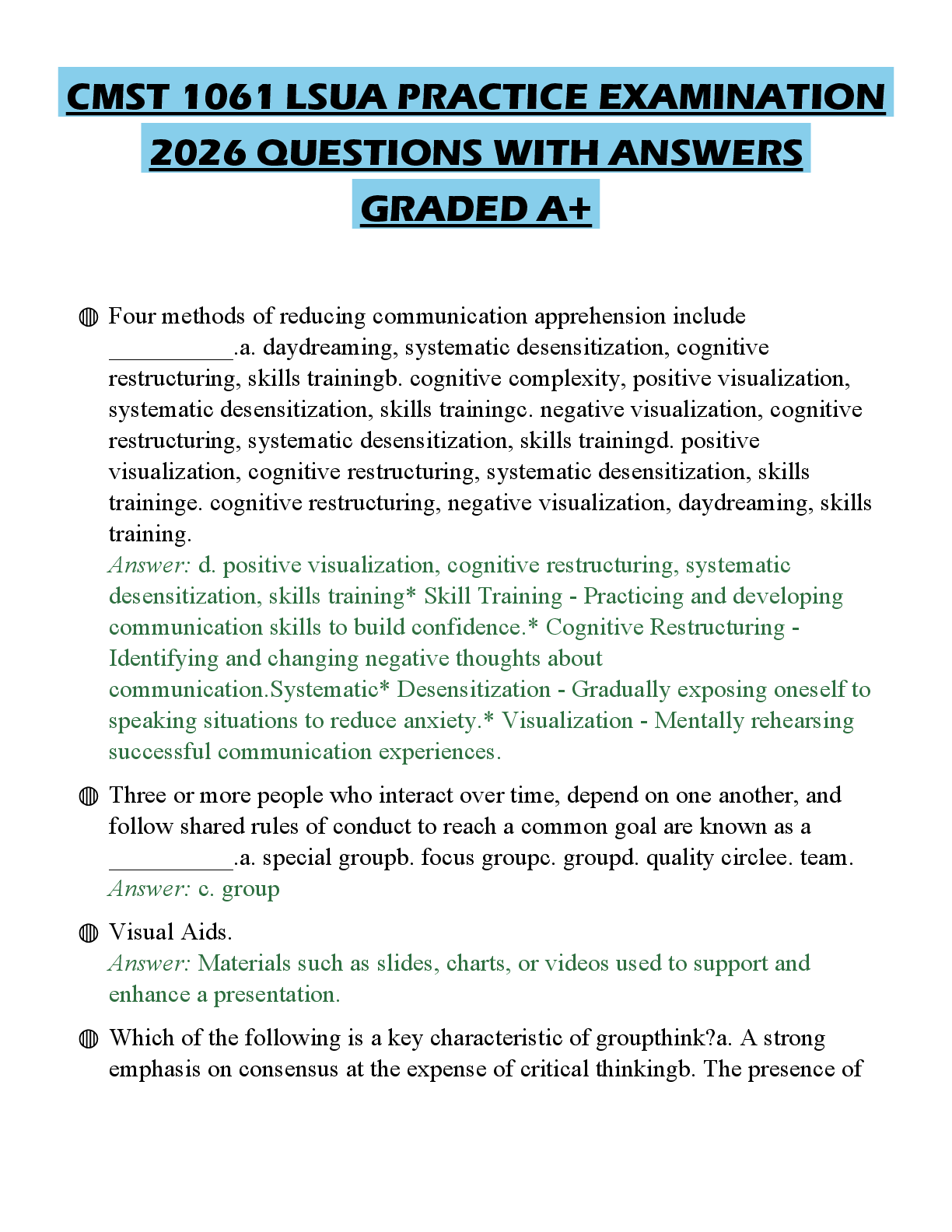
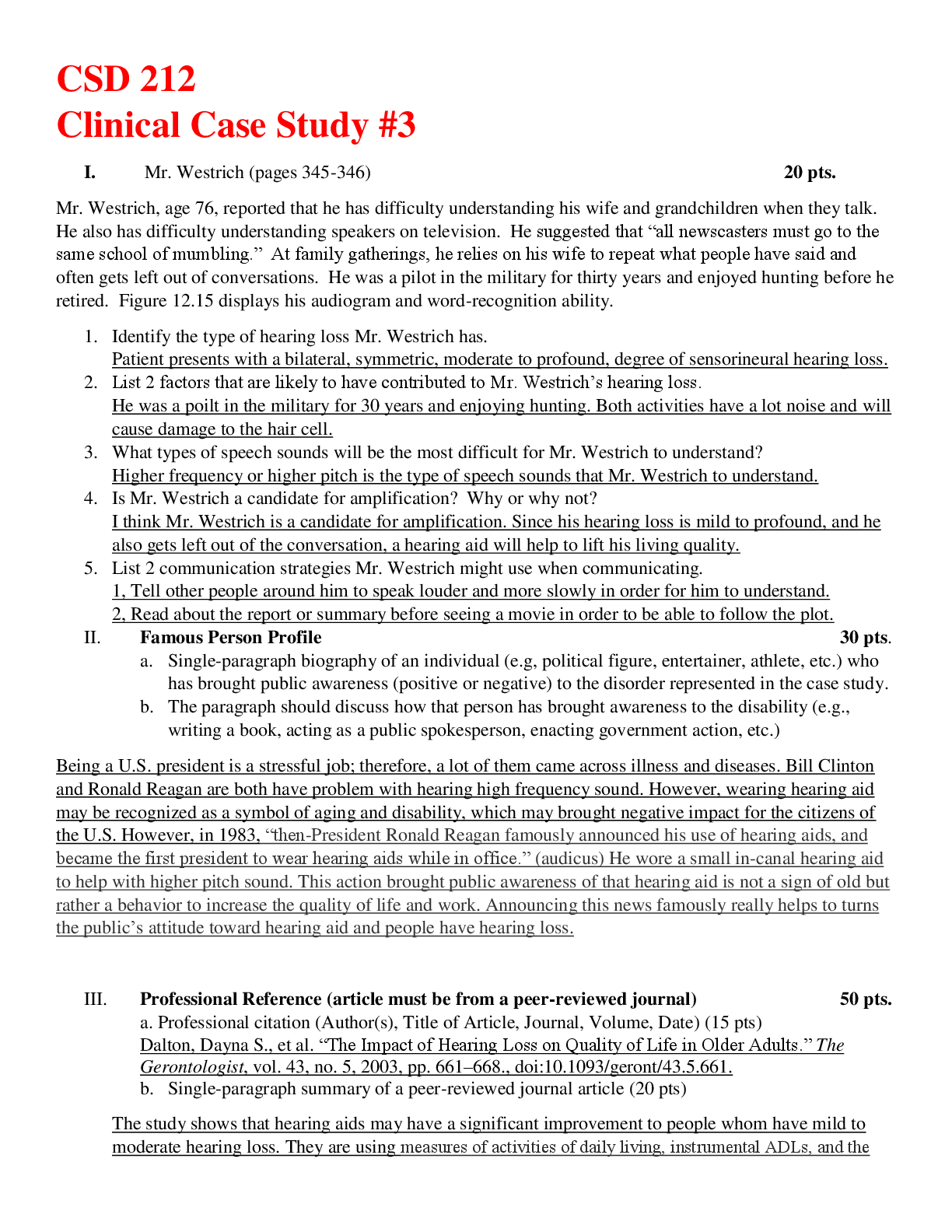
CSD 212 Clinical Case Study #3 I. Mr. Westrich (Complete solut...




![Preview of [SOLVED] EDCO 740 / EDCO740 Quiz 1 (LATES 2021/2022 Graded A)](https://scholarfriends.com/storage/EDCO_740_Quiz_1.png)