WEEK 3: SICK CHILD CLINICAL CASE PRESENTATION
4 unread replies.9595 replies.
PURPOSE
The purpose of this assignment is for learners to:
• Have the opportunity to integrate knowledge and skills learned throughout
...
WEEK 3: SICK CHILD CLINICAL CASE PRESENTATION
4 unread replies.9595 replies.
PURPOSE
The purpose of this assignment is for learners to:
• Have the opportunity to integrate knowledge and skills learned throughout all core courses in the FNP track and previous clinical courses.
• Demonstrate an advancing understanding of the care of women and children.
• Demonstrate the ability to analyze previous patients seen in the clinical setting be able to perform an evidenced- based review of their case, diagnosis, and plan, while guiding and taking feedback from peers regarding the case
• Demonstrate professional communication and leadership, while advancing the education of peers.
Course Outcomes
1. Integrate current evidence based clinical practice guidelines in the care of childbearing and childrearing families.
2. Appropriately apply anticipatory guidance and health promotion in the care of childbearing and childrearing families.
3. Assess growth and developmental milestones in the care of childbearing and childrearing families.
4. Construct an evidence based reproductive health management plan.
5. Identify and address healthcare needs of marginalized childbearing and childrearing families
Requirements
For Week 3 of the course you will be presenting your own case from clinical. The case should be clear, organized, and meet the following guidelines:
Initial Case Presentation:
Present only the subjective and objective data only on the patient organized as you would organize them in a SOAP (CC, HPI (no OLDCART for HPI); ROS, PE findings, and any lab or diagnostic findings for your patient.
**Do not put the diagnosis or plan in initial post. No Assessment/Plan in the initial post. No citations or references are required for your initial post, you will post references in your summary post.
WEEK 3: The case should be pediatric (a patient age 17 years or younger).
WEEK 3 specific guidelines: The case must not be something overly simple. The list of things that should not be covered include sore throat, URI, UTI, ear infection, or contact dermatitis (poison ivy). You need to present a case that intrigued you or presents new content in a different light. *One of the above diagnosis can be presented if the findings were unusual and you clear such case with your course faculty prior to posting (at least 2 days before posting). In the pediatric case you must also include in the objective data growth chart percentiles for height, weight, and BMI, and tanner staging. A patient you saw both for initial complaint and follow-up would be ideal, but not required.
Leading the Discussion: Post your subjective, objective, and diagnostic data for your patient by Wednesday at 11:59 PM MT.
Interactive Dialogue: As a student you will also be required to respond to at least two (2) other students initial case presentation. In your responses, you must include the following: Your top three (3) differentials based on the information provided and why (rationale based on presentation findings), the primary diagnosis you are leaning toward, how you would treat that diagnosis. Use references to support your response. *DEADLINE - YOUR RESPONSES TO 2 STUDENTS ARE DUE BY FRIDAY AT 11:59 p.m. (MT). **If all students have a response, then choose the student with the least responses to their posting.
Clinical Case Presentation Summary Criteria:
By Sunday 11:59 p.m. MT, post a summary reply to your initial post and respond to any faculty questions to your initial posting or question(s) posed to the general class. Use references to support all of your responses.
Criteria for Summary Post should include all of the following required elements: Summary post written in paragraph(s) type format (No SOAP note for Summary Post); discuss primary and any applicable secondary diagnoses along with treatment plan for each diagnosis. Scholarly and evidence based in-text citation support for all of the listed diagnoses;
Scholarly and evidence based in-text citation for each treatment plan. Differential diagnoses are eliminated. Summarize your peer's posts to your presentation.
*Remember not to use any patient identifiers in your posting (this would be full names or disclosure of clinic name, preceptor name, et cetera). Please include age, gender, and race.
**To see view the grading criteria/rubric, please click on the 3 dots in the box at the end of the solid gray bar above the discussion board title and then Show Rubric.
Search entries or author Filter replies by unread
Unread Collapse replies Expand replies
Subscribed
Collapse SubdiscussionKristan Bannister
KRISTAN BANNISTER
Nov 10, 2019Nov 10 at 12:37pm Manage Discussion Entry
NR603 Week 3 Sick Child Clinical Case Presentation
Patient Information: The patient S.P. is a 6-year-old Hispanic female who presented to the primary care clinic with her mother.
Chief Complaint: S.P. reported “tummy pain” to her mother, along with a low-grade temp of 99.8, positive for nausea, vomiting and diarrhea for 3 days.
History of Presenting Illness: S.P. mother reports that the abdominal discomfort began and diarrhea, to her knowledge, approximately three days ago. Approximately one day later, the nausea, vomiting presented. The fever was first noticed yesterday, although S. P’s mother did not take her temperature prior, so she is unsure if she was febrile at time of symptoms first presenting. The last temperature recorded was 99.8 at home. The diarrhea is reported as semi watery in consistency, with occurrences approximately four times per day. No blood in stools reported. S.P does not appear to be urinating as much according to mother. S. P’s mother reports that S.P. is not eating and drinking as she previously was, and not engaging with usual activities of play. Mother is unaware of any weight loss. S. P’s mother has held her from school at the onset of her noticing the fever. Treatment measures include supportive care, which consists of soup, juice, and Tylenol PRN.
Review of Symptoms:
Constitutional: Positive fatigue and fever. HEENT: Denies symptoms
Skin: Negative for rash, itching. Skin warm, dry. Cardiovascular: No concerns reported Respiratory: No concerns reported
Gastrointestinal: Positive for generalized GI discomfort and diarrhea x3 days; Positive for nausea, vomiting x2 days. Negative for hematochezia.
Genitourinary: Decreased urinary output reported.
Neurological: No headache, dizziness reported. No change in bowel control. Lymphatic: No issues reported.
Allergies: No known drug or food allergies
Physical Examination Findings:
Constitutional: Height: 44 inches; weight: 43 pounds. BMI: 15.6; BMI percentile: 55%. Height Percentile: 26.1%. Weight Percentile: 38.6%. Tanner Stage: 1. Appears well nourished and of appropriate size for age.
o
Collapse SubdiscussionKristan Bannister
KRISTAN BANNISTER
Nov 12, 2019Nov 12 at 1:32pm Manage Discussion Entry
Dr McPeters and class,
I forgot to include some of my vital signs for my presentation B/P-98/62, R-22, T-99.8, P-120
Sorry about that, Kristan
Reply Reply to Comment
▪
Collapse SubdiscussionTatyana Pisarevskaya
TATYANA PISAREVSKAYA
Nov 12, 2019Nov 12 at 6:59pm Manage Discussion Entry
Hello Kristan!
Diarrhea (with or without nausea/vomiting) is a very common problem in young children and is defined as an increase in the number of stools or the presence of looser stools than is normal for the individual (three or more watery or loose stools in 24 hours) (Hartman, Brown, Loomis, & Russell, 2019). The differential diagnoses include a wide range of gastrointestinal conditions such as inflammatory bowel disease, intussusception, pseudomembranous enterocolitis, appendicitis, food allergy, lactase deficiency etc.
Differential diagnoses
1. Acute gastroenteritis (Primary)
Rationale: Acute gastroenteritis is defined as a diarrheal disease of rapid onset, with or without nausea, vomiting, fever, and abdominal pain (Hartman et al., 2019). Decreased of appetite and urine output can be seen in patients with an acute gastroenteritis. SP has abdominal discomfort and diarrhea x 3 days, nausea and vomiting. Temperature 99.8 F. Bowel movement was described as semi watery in consistency, with occurrences approximately four times per day.
Mother reported decreased oral intake and urine output. PE revealed dry mucus membrane due to the dehydration, hyperactive bowel sounds, abdominal pain and guarding with palpation.
Diagnostic: In children with mild illness, stool microbiological tests are not routinely needed when viral gastroenteritis is the likely diagnosis (Hartman et al., 2019). According to the provided data, the Clinical Dehydration Scale score approximately 1 to 4 points which means a mild (3% to 6%) dehydration.
Treatment: The goals of acute gastroenteritis treatment include preventing dehydration, treating dehydration when it occurs, and reducing duration and severity of symptoms (Hartman et al., 2019). Mild dehydration from acute gastroenteritis can be managed at home, with oral rehydration therapy as the mainstay of treatment (Hartman et al., 2019). Children with mild dehydration should receive half-strength apple juice followed by preferred fluids (regular juices, milk) (Hartman et al., 2019). After each loose stool, the World Health Organization (WHO) recommends giving children younger than two years 50 to 100 mL of fluid and children two to 10 years of age 100 to 200 mL of fluid; older children may have as much fluid as they want (Hartman et al., 2019). Antiemetics can be given to prevent vomiting and improve hydration status. Ondansetron is a preferred drug due to the fewer side effects. The typical dose of ondansetron is 2 mg for children weighing 8 to 15 kg (17 lbs, 10 oz to 33 lbs), 4 mg for children weighing 15 to 30 kg (33 lbs to 66 lbs, 2 oz), and 8 mg for children weighing more than 30 kg (Hartman et al., 2019).
Prevention: hand washing, daily administration of probiotics, and rotavirus vaccination.
2. Inflammatory bowel disease
Rationale: The inflammatory bowel diseases (IBDs), including ulcerative colitis and Crohn disease, are chronic inflammatory disorders of the gastrointestinal tract (Rosen, Dhawan, & Saeed, 2015). Children present to the clinic with the classic symptoms of weight loss, abdominal pain, diarrhea, blood in the stool, fever (Crohn disease), nausea and vomiting, anorexia, and growth retardation (Rosen et al., 2015). Abdominal examination may reveal focal tenderness or fullness, rebound tenderness, and guarding that may indicate perforation or abscess that should be evaluated promptly with imaging (Rosen et al., 2015).
3. Lactose intolerance
Rationale: Malabsorption of dietary lactose in the small intestine results in gastrointestinal symptoms such as abdominal pain, bloating, passage of loose, watery stools, and excessive flatus (Xiong, Wang, Gong, & Chen, 2017). Latinos have a prevalence of lactose intolerance of 50 to 80 percent.
4. Celiac disease
Rationale: Celiac disease is an autoimmune disorder of the gastrointestinal tract caused by exposure to dietary gluten, which is a storage protein in wheat, rye, and barley (Pelkowski, & Vera, 2014). Clinical manifestations of celiac disease can be categorized as intestinal or extraintestinal. Intestinal clinical presentation includes abdominal pain, diarrhea, nausea, loss of appetite, weight loss, and flatulence (Pelkowski, & Vera, 2014). The extraintestinal manifestation includes anemia, dermatitis herpetiformis, elevated transaminase levels, delayed menarche, hematologic abnormalities, and other (Pelkowski, & Vera, 2014).
Hartman, S., Brown, E., Loomis, E., & Russell, H. (2019). Gastroenteritis in children. Am Fam Physician. 99(3):159-
165. Retrieved from https://www.aafp.org/afp/2019/0201/p159.html#afp20190201p159-t2
Pelkowski, T., & Vera, A. (2014). Celiac disease: Diagnosis and management. Am Fam Physician. 89(2):99-105. Retrieved from https://www.aafp.org/afp/2014/0115/p99.html (Links to an external site.)
Rosen, M., Dhawan, A., & Saeed, S. (2015). Inflammatory Bowel Disease in Children and Adolescents. JAMA pediatrics, 169(11), 1053–1060. doi:10.1001/jamapediatrics.2015.1982
Xiong, L., Wang, Y., Gong, X., & Chen, M. (2017). Prevalence of lactose intolerance in patients with diarrhea- predominant irritable bowel syndrome: Data from a tertiary center in southern China. Journal Of Health, Population, And Nutrition, 36 (1), 38. Retrieved from https://doi- org.chamberlainuniversity.idm.oclc.org/10.1186/s41043-017-0113-1
Reply Reply to Comment
▪
Collapse SubdiscussionSteadman McPeters
STEADMAN MCPETERS
Nov 13, 2019Nov 13 at 9:34pm Manage Discussion Entry
Very good differentials, Tatyana! There is one that I am thinking that you did not include; however, Jessica did..............
Thanks!
Dr. McPeters
Reply Reply to Comment
▪
Collapse SubdiscussionJessica Brown
JESSICA BROWN
Nov 12, 2019Nov 12 at 7:26pm Manage Discussion Entry
Week 3 Peer Response Kristan,
The differential diagnosis for the case study are as follows:
Viral Gastroenteritis Appendicitis
Inflammatory Bowel Disease
Viral Gastroenteritis is a result of the norovirus causing inflammation of the stomach and intestines (Munnink & van der Hoek, 2016). The patient presents with generalized abdominal discomfort, nausea, vomiting, and diarrhea with a low grade temp. Viral gastroenteritis is considered as a differential diagnosis as the clinical signs and symptoms are abdominal cramping, nausea, vomiting, diarrhea, and low grade temps (Munnink & van der Hoek, 2016).
Appendicitis is the result of an obstruction to the appendiceal lumen causing inflammation, ischemia, abscess formation, or perforation of the appendix (Jones, Lopez, & Deppen, 2019). Clinical presentation may include periumbilical abdominal pain, anorexia, malaise, nausea, vomiting, and fever (Jones, Lopez, & Deppen, 2019). The diagnosis was considered due to nausea, vomiting, diarrhea, abdominal pain, and malaise. This diagnosis was excluded due to
McBurney’s point was not addressed and appendicitis symptoms start early and progress quickly with impending rupture within 48 hours of start of symptoms (Jones, Lopez, & Deppen, 2019).
Inflammatory Bowel Disease involves ulcerative colitis and Crohn’s disease which are the result of chronic inflammation of the GI tract particularly the colon (Rosen, Dhawan, & Saeed, 2015). Clinical presentation includes weight loss, bloody diarrhea, abdominal pain, anemia, and poor growth. This diagnosis was excluded due to the patient not ever having bloody stools.
The primary diagnosis is viral gastroenteritis.
Treatment is based on symptoms. Hydration and replacement of electrolytes is the most important treatment goal. Medications such as ondanseteron 2-4 mg PO for one dose (Stuempfig & Seroy, 2019). Nonpharmacologic treatment may include a diet of bananas, rice, toast, apples and tea, although there is no statistical data to support this compared to regular diets (Stuempfig & Seroy, 2019). Tylenol may also be given for fever.
Jessica References:
Jones, M. W., Lopez, R., & Deppen, J. (2019). Appendicitis. Retrieved November 12, 2019, from https://www.ncbi.nlm.nih.gov/books/NBK493193/.
Oude Munnink, B. B., & van der Hoek, L. (2016). Viruses Causing Gastroenteritis: The Known, The New and Those Beyond. Viruses, 8(2), 42. doi:10.3390/v8020042
Rosen, M. J., Dhawan, A., & Saeed, S. A. (2015). Inflammatory Bowel Disease in Children and Adolescents. JAMA pediatrics, 169(11), 1053–1060. doi:10.1001/jamapediatrics.2015.1982
Stuempfig, N. D., & Seroy, J. (2019, June 17). Viral Gastroenteritis. Retrieved November 12, 2019, from https://www.ncbi.nlm.nih.gov/books/NBK518995/.
Reply Reply to Comment
▪
Collapse SubdiscussionSteadman McPeters
STEADMAN MCPETERS
Nov 13, 2019Nov 13 at 9:35pm Manage Discussion Entry
Very good work, Jessica! I am in agreement with you. There is one on your list that I think I am leaning towards more than anything we shall see!
Dr. McPeters
Reply Reply to Comment
▪
Collapse SubdiscussionJessica Brown
JESSICA BROWN
Nov 14, 2019Nov 14 at 4:36am Manage Discussion Entry
Dr. McPeters,
I was honestly torn between my top 2 differential diagnosis. I would order an abdominal US to ultimately rule out Appendicitis. US are recommend in children prior to CT to avoid ionizing radiation (Jones, Lopez, Deppen, 2019). Also, appendicitis typically presents as right lower quadrant pain, however if there is rupture, generalized abdominal pain could be present. The patient also had abdominal guarding. I would also order a CBC to assess an elevated WBC.
Jessica Reference:
Jones, M. W., Lopez, R., & Deppen, J. (2019). Appendicitis. Retrieved November 12, 2019, from https://www.ncbi.nlm.nih.gov/books/NBK493193/.
Reply Reply to Comment
▪
Collapse SubdiscussionSteadman McPeters
STEADMAN MCPETERS
Nov 13, 2019Nov 13 at 9:33pm Manage Discussion Entry
Dear Kristan,
Excellent job with your subjective and objective components. I am well pleased with your abdominal exam. Thank you for classifying your bowel sounds.
I look forward to your diagnosis.
I am surprised that an US was not performed can you speak to this? Thanks! Dr. McPeters
Reply Reply to Comment
▪
Collapse SubdiscussionKristan Bannister
KRISTAN BANNISTER
Nov 14, 2019Nov 14 at 8:01pm
Manage Discussion Entry
Dr McPeters,
That is a good point. When assessing the patient there were no red flags that would have lead me to order an abdominal ultrasound. The patients abdominal pain was not severe, there was no weight loss, there was no blood in the stool, and there were no s/s of severe dehydration. The patient exhibited discomfort upon palpation, but there was no guarding or right upper quadrant pain or rigidity over McBurney's point. There were no palpable masses. If I had seen any of the above symptoms it would have lead me to order additional test such as blood testing or abdominal ultrasound.
Kristan
Reply Reply to Comment
▪
Collapse SubdiscussionSteadman McPeters
STEADMAN MCPETERS
Nov 14, 2019Nov 14 at 11:32pm Manage Discussion Entry
Very good rationale for the decision making process.
Steadman McPeters, DNP, CRNP, CPNP-AC, RNFA | Visiting Professor
P 256.302.0699 | E
[email protected]
Telework: Monday-Friday CST
*Licensed in Alabama and Illinois
On Nov 14, 2019, at 21:01, Kristan Bannister
wrote:
Kristan Bannister posted a new comment on the thread Week 3: Sick Child Clinical Case Presentation for Primary Care of the Childbearing and Childrearing Family Practicum-McPeters:
Dr McPeters,
That is a good point. When assessing the patient there were no red flags that would have lead me to order an abdominal ultrasound. The patients abdominal pain was not severe, there was no weight loss, there was no blood in the stool, and there were no s/s of severe dehydration. The patient exhibited discomfort upon palpation, but there was no guarding or right upper quadrant pain or rigidity over McBurney's point. There were no palpable masses. If I had seen any of the above symptoms it would have lead me to order additional test such as blood testing or abdominal ultrasound.
Kristan
Kristan Bannister
Join the conversation using the link below, or comment by replying to this message. When allowed, if you need to include an attachment, please log in to Canvas and reply to the discussion.
Click here to join the conversation | Update your notification settings
Reply Reply to Comment
o
Collapse SubdiscussionKristan Bannister
KRISTAN BANNISTER
Nov 17, 2019Nov 17 at 1:19pm Manage Discussion Entry
Week 3 Summary
The primary diagnosis for this patient based on the presenting past medical history and symptoms was acute gastroenteritis. This patient attends school were viruses are easily shared amongst children. With this data and the symptoms of fever, diarrhea, nausea, and vomiting this added acute gastroenteritis in the list of differentials. When assessing the patient, the patient’s abdominal pain was not severe, there was no weight loss, there was no blood in the
stool, and there were no s/s of severe dehydration. The patient exhibited discomfort upon palpation, but there was no guarding or right upper quadrant pain or rigidity over McBurney's point. There were no palpable masses. This ruled out appendicitis as Jessica had suggested. The treatment, as suggested by both Jessica and Tatyana, is rehydration and supportive care. My treatment plan for this patient consisted of correcting the dehydration with small amounts of water at a time, Pedialyte, and reintroducing solid foods that are bland. I would educate the mother to monitor oral intake, urine output, and bowel movements, reporting any unresolved symptoms. I would prescribe ondansetron 4mg every 4 hours as needed for nausea and vomiting. I would also explain that acute gastroenteritis is self-limiting and resolves without medication in about 5 days.
My secondary diagnosis would be mild dehydration. This would be corrected by offering water and Pedialyte 50ml/kg over 4 hours. Rehydration with soft drinks, gelatin, or apple juice is no longer recommended due to the high carbohydrate, low electrolyte composition.
Hollier, A. (2018). Clinical guidelines in primary care (3rd ed.). Lafayette, LA: Advanced Practice
Reply Reply to Comment
▪
Collapse SubdiscussionSteadman McPeters
STEADMAN MCPETERS
Nov 17, 2019Nov 17 at 1:44pm Manage Discussion Entry
Thank you for your summary, Kristan!
Steadman McPeters, DNP, CRNP, CPNP-AC, RNFA | Visiting Professor
P 256.302.0699 | E [email protected]
Telework: Monday-Friday CST
*Licensed in Alabama and Illinois
On Nov 17, 2019, at 14:19, Kristan Bannister wrote:
Kristan Bannister posted a new comment on the thread Week 3: Sick Child Clinical Case Presentation for Primary Care of the Childbearing and Childrearing Family Practicum- McPeters:
Week 3 Summary
The primary diagnosis for this patient based on the presenting past medical history and symptoms was acute gastroenteritis. This patient attends school were viruses are easily shared amongst children. With this data and the symptoms of fever, diarrhea, nausea, and vomiting this added acute gastroenteritis in the list of differentials. When assessing the patient, the patient’s abdominal pain was not severe, there was no weight loss, there was no blood in the stool, and there were no s/s of severe dehydration. The patient exhibited discomfort upon palpation, but there was no guarding or right upper quadrant pain or rigidity over McBurney's point. There were no palpable masses. This ruled out appendicitis as Jessica had suggested. The treatment, as suggested by both Jessica and Tatyana, is rehydration and supportive care. My treatment plan for this patient consisted of correcting the dehydration with small amounts of water at a time, Pedialyte, and reintroducing solid foods that are bland. I would educate the mother to monitor oral intake, urine output, and bowel movements, reporting any unresolved symptoms. I would prescribe ondansetron 4mg every 4 hours as needed for nausea and vomiting. I would also explain that acute gastroenteritis is self-limiting and resolves without medication in about 5 days.
My secondary diagnosis would be mild dehydration. This would be corrected by offering water and Pedialyte 50ml/kg over 4 hours. Rehydration with soft drinks, gelatin, or apple juice is no longer recommended due to the high carbohydrate, low electrolyte composition.
Hollier, A. (2018). Clinical guidelines in primary care (3rd ed.). Lafayette, LA: Advanced Practice
Kristan Bannister
Join the conversation using the link below, or comment by replying to this message. When allowed, if you need to include an attachment, please log in to Canvas and reply to the discussion.
Click here to join the conversation | Update your notification settings
Reply Reply to Comment
Collapse SubdiscussionJessica Brown
JESSICA BROWN
Nov 11, 2019Nov 11 at 6:10pm Manage Discussion Entry
Week 3 Sick Child Clinical Case Study
S.B., 4-year-old, Caucasian female (history was obtained from patient’s mother)
Subjective
Chief complaint: Scattered rash to buttocks, chest, and neck
HPI: Mother presents with patient to clinic with reports she first noticed the “bumps” approximately 5 days ago. Patient reports “itchy bumps” on bilateral buttocks, chest, and neck. Mother reports the “bumps have spread pretty quickly”.
Patient reports areas are “sore” when she scratches. Mother reports “clear fluid” drains from bumps “sometimes”. No OTC creams have been applied; however, mother did administer one dose of Benadryl for possible allergic reaction. Mother states the Benadryl did not seem to help and bathing appears to cause the lesions to become “red”.
Allergies: NKDA Medication: None PMHx: None
PSHx: Tonsillectomy 1 year ago Immunizations: Up to date for age.
Social History: Lives with both parents who are married, brother (7), and 2 dogs. Mother denies tobacco or drug abuse in home. Patient attends daycare 4 days per week.
Family History:
Mother: HTN, Obese Father: HTN
Maternal grandmother: HTN, DM Maternal grandfather: Prostate CA
Paternal grandparents: Unknown (deceased)
ROS:
CONSTITUTIONAL: No fever or chills. No appetite changes. No sleep interruptions. HEENT: No eye drainage; No sore throat;
NEUROLOGICAL: No headaches; no vision changes per Mother CARDIOVASCULAR: History of heart murmur as an infant; no longer audible.
o
Collapse SubdiscussionKristan Bannister
KRISTAN BANNISTER
Nov 13, 2019Nov 13 at 8:27pm Manage Discussion Entry
Jessica,
My differentials for the patient include
1. Molluscum contagiosum
2. Folliculitis
3. Varcella
Molluscum contagiosum is a benign childhood viral skin infection. Some clinical findings in molluscum include itching at the site and possible exposure to molluscum. This patient attends daycare 4 times per week and may have been exposed to the virus there. Molluscum presents as very small, firm, pink to flesh-colored discrete papules that may progress to become umbilicated (Kellicker, 2018). According to the information presented, the patient’s rash is flesh colored and is “itchy sometimes”. The face, axillae, antecubital area, trunk, popliteal fossae, crural area, and extremities are the most involved area. Single papules to numerous papules can be present (Kellicker, 2018).
Folliculitis is a superficial bacterial inflammation of the hair follicle. There may be discrete, erythematous papules or pustules on inflamed based centered around a hair follicle. The involvement of the face, scalp extremities, buttocks and back are often involved (Folliculitis, 2018). The patient’s rash is non-erythemic and nontender.
Varicella is a highly contagious viral illness characterized by the skin development of pruritic vesicles and papules on the skin, scalp and less commonly the mucous membranes. The prodrome phase of this virus consists of fever,
malaise, headache, abdominal pain, and the patient begins the onset of exanthema. The rash phase consists of small erythematous macules that appear and then progress to papules, clear vesicles and pustules with central umbilication within 12-24 hours and then forms crusts (Lawrence & Smith, 2018). While the presenting patient does have vesicles, the patient experienced no other symptoms prior to the onset of rash and there is no erythema or crusting.
The primary diagnosis I am leaning towards is molluscum contagiosum. Untreated lesions usually disappear within 6 months but may take longer to disappear. There is no evidence that any treatment is superior to placebo (Kellicker, 2018). I would take a wait and see approach and recheck the patient in two weeks to see if condition worsens. I would educate the parent that this is contagious, and areas need to be clean, dry and covered. If symptoms worsen than other treatments may be explored.
Kristan
Folliculitis. (2018). Health Library: Evidence-Based Information. Retrieved from https://search-ebscohost- com.chamberlainuniversity.idm.oclc.org/login.aspx?direct=true&db=nup&AN=2012248358&site=eds-live&scope=site
Kellicker, P. (2018). Molluscum Contagiosum. Health Library: Evidence-Based Information. Retrieved from https://search-ebscohost-com.chamberlainuniversity.idm.oclc.org/login.aspx? direct=true&db=nup&AN=2009866230&site=eds-live&scope=site
Lawrence, P.,Smith, N. (2018). Chickenpox (Varicella). CINAHL Nursing Guide. Retrieved from https://search- ebscohost-com.chamberlainuniversity.idm.oclc.org/login.aspx?direct=true&db=nup&AN=T701663&site=eds- live&scope=site
Reply Reply to Comment
▪
Collapse SubdiscussionJessica Brown
JESSICA BROWN
Nov 17, 2019Nov 17 at 5:16am Manage Discussion Entry
Kristan,
You are correct with your diagnosis. The lesions were not inflamed in the clinic. The patient's mother was concerned because they had started to spread to her neck. She was afraid they may spread to her face. I instructed the mother to try to keep her from scratching or picking at the lesions, keep her nails short, and do not reuse towels in order to keep them from spreading. Well done!
Jessica
Reply Reply to Comment
▪
Collapse SubdiscussionSteadman McPeters
STEADMAN MCPETERS
Nov 17, 2019Nov 17 at 9:49am Manage Discussion Entry
Very good advice!
Steadman McPeters, DNP, CRNP, CPNP-AC, RNFA | Visiting Professor
P 256.302.0699 | E [email protected]
Telework: Monday-Friday CST
*Licensed in Alabama and Illinois
On Nov 17, 2019, at 06:16, Jessica Brown wrote:
Jessica Brown posted a new comment on the thread Week 3: Sick Child Clinical Case Presentation for Primary Care of the Childbearing and Childrearing Family Practicum- McPeters:
Kristan,
You are correct with your diagnosis. The lesions were not inflamed in the clinic. The patient's mother was concerned because they had started to spread to her neck. She was afraid they may spread to her face. I instructed the mother to try to keep her from scratching or picking at the lesions, keep her nails short, and do not reuse towels in order to keep them from spreading. Well done!
Jessica
Jessica Brown
Join the conversation using the link below, or comment by replying to this message. When allowed, if you need to include an attachment, please log in to Canvas and reply to
the discussion.
Click here to join the conversation | Update your notification settings
Reply Reply to Comment
o
Collapse SubdiscussionSteadman McPeters
STEADMAN MCPETERS
Nov 13, 2019Nov 13 at 9:38pm Manage Discussion Entry
Dear Jessica,
Good job; however, I want you to be more descriptive on your integumentary assessment. For example, please include the following:
Size? Induration? Tenderness?
Signs of infection? Erythema?
Drainage?
Does that make sense to you? Those things MUST be documented for insurance to bill appropriately. I look forward to hearing from you! Thanks! Dr. McPeters
Reply Reply to Comment
▪
Collapse SubdiscussionJessica Brown
JESSICA BROWN
Nov 14, 2019Nov 14 at 4:14am Manage Discussion Entry
Dr. McPeters,
Thank you for your response. Yes sir. I understand the reasoning to be more descriptive in my assessment. The firm, scattered clear fluid filled vesicles were less than 0.5 cm in diameter; there was no induration to the skin surrounding the vesicles, however the vesicles themselves were firm and slightly tender with manipulation. There was no erythema, streaking, warmth, nor drainage in the clinic. The only reported erythema by the mother was after the patient got out of the bath she stated the vesicles appeared "red". Otherwise, they were pale in color while in the clinic.
Jessica
Reply Reply to Comment
▪
Collapse SubdiscussionJessica Brown
JESSICA BROWN
Nov 16, 2019Nov 16 at 6:28pm Manage Discussion Entry
Dr. McPeters and class,
In summary, S.B. a 4-year-old Caucasian female presented to the clinic with pale, “itchy”, firm, scattered, round vesicles. These vesicles were filled with clear fluid measuring 2-5 mm each. The patient was diagnosed with molluscum contagiosum. Molluscum is caused by a virus of the Poxviridae family and is transmitted by direct contact with skin that is infected with the virus (Meza-Romero, Navarrete-Dechent, & Downey, 2019). This condition is more common in pediatric patients. Duration can last from 6 to 9 months or more than 3 to 4 years (Meza-Romero, Navarrete-Dechent, & Downey, 2019). Parents and children should be educated on not scratching the sites, do not rub lesions, do not share bath towels or tubs (Meza-Romero, Navarrete-Dechent, & Downey, 2019). M0lluscum may be treated with cryotherapy or curettage, however both options may be painful for the patient or cause scarring. Warts is an excellent differential diagnosis but was ruled out quickly as the patient had lesions that “drained sometimes” and warts do not drain. Varicella is an excellent differential as it is a contagious viral infection and may present with pruritic vesicles. This patient did not have any purulence noted from site. Thank you all for reviewing my presentation.
Jessica Reference:
Meza-Romero, R., Navarrete-Dechent, C., & Downey, C. (2019). Molluscum contagiosum: an update and review of new perspectives in etiology, diagnosis, and treatment. Clinical, cosmetic and investigational dermatology , 12, 373–381. doi:10.2147/CCID.S187224
Reply Reply to Comment
▪
Collapse SubdiscussionSteadman McPeters
STEADMAN MCPETERS
Nov 16, 2019Nov 16 at 11:38pm Manage Discussion Entry
Thank you for your summary post!
Steadman McPeters, DNP, CRNP, CPNP-AC, RNFA | Visiting Professor
P 256.302.0699 | E [email protected]
Telework: Monday-Friday CST
*Licensed in Alabama and Illinois
On Nov 16, 2019, at 19:28, Jessica Brown wrote:
Jessica Brown posted a new comment on the thread Week 3: Sick Child Clinical Case Presentation for Primary Care of the Childbearing and Childrearing Family Practicum- McPeters:
Dr. McPeters and class,
In summary, S.B. a 4-year-old Caucasian female presented to the clinic with pale, “itchy”, firm, scattered, round vesicles. These vesicles were filled with clear fluid measuring 2-5 mm each. The patient was diagnosed with molluscum contagiosum. Molluscum is caused by a virus of the Poxviridae family and is transmitted by direct contact with skin that is infected with the virus (Meza-Romero, Navarrete-Dechent, & Downey, 2019). This condition is more common in pediatric patients. Duration can last from 6 to 9 months or more than 3 to 4 years (Meza-Romero, Navarrete-Dechent, & Downey, 2019). Parents and children should be educated on not scratching the sites, do not rub lesions, do not share bath towels or tubs (Meza-Romero, Navarrete-Dechent, & Downey, 2019). M0lluscum may be treated with cryotherapy or curettage, however both options may be painful for the patient or cause scarring. Warts is an excellent differential diagnosis but was ruled out quickly as the patient had lesions that “drained sometimes” and warts do not drain. Varicella is an excellent differential as it is a
contagious viral infection and may present with pruritic vesicles. This patient did not have any purulence noted from site. Thank you all for reviewing my presentation.
Jessica Reference:
Meza-Romero, R., Navarrete-Dechent, C., & Downey, C. (2019). Molluscum contagiosum: an update and review of new perspectives in etiology, diagnosis, and treatment. Clinical, cosmetic and investigational dermatology , 12, 373–381. doi:10.2147/CCID.S187224
Jessica Brown
Join the conversation using the link below, or comment by replying to this message. When allowed, if you need to include an attachment, please log in to Canvas and reply to the discussion.
Click here to join the conversation | Update your notification settings
Reply Reply to Comment
o
Collapse SubdiscussionDevon Plumley
DEVON PLUMLEY
Nov 15, 2019Nov 15 at 8:31pm Manage Discussion Entry
Jessica,
I found your post interesting because I have had one of my own children present with similar symptoms.
Primary diagnosis: Molluscum Contagiosum
Molluscum contagiosum is a skin infection that is caused by a poxvirus. It is often seen in children between the ages of 2 and 12 with an incubation period can last up to two months. The bumps resolve spontaneously between 6 months to a year. The symptoms include a rash that appears with small, smooth, round raised bumps and are typically flesh-colored (Bhatia, 2016). Some bumps may present with a dent in the center of them. The bumps can also look red or yellow in color. These bumps can be found anywhere on the child’s body, but it is not found on the palms or soles of the feet. They are also rarely seen on the face. The bumps do not appear to be bothersome to the child at all times, but they can be tender or itchy, if irritated. These bumps develop after the initial contact with the virus occurred. Most bumps appear single or in clusters, but they aren’t usually connected. When discussing treatment options, the rash typically goes away without any medical treatment although it may take several weeks. It is advised to keep the area clean at all times. As a provider it is important to educate the child and caregiver to keep the child’s fingernails cut to prevent the child of picking or scratching the bumps which can lead to secondary infections such as impetigo. It is also very important to educate on proper hygiene as this is highly contagious. It is advised that the caregivers also call the daycare to inform them that their child has this so that they can take precautions to prevent spreading this to other chidren. If the bumps become infected, then treatment with antibiotics may be needed.
Differential- Warts
Warts are caused by a type of human papillomavirus and the different types of warts are caused by different strains of the virus. Warts are very common with approximately 7-10% of the US population has them. Warts are more common in children than adults and are more common if the child is in close contact with someone else who has warts, in this case, the child goes to daycare 4 times week. Warts are usually painless and have a rough surface. They are usually gray or yellow in color and can be found anywhere on the body although the finger, knees, elbows, and face are the most common places. They usually have a rough surface, are elevated, and can even be flesh-colored (Silverberg, 2019). The diagnosis is based on their appearance or through a shave biopsy. Most warts will disappear on their own in weeks or months with no treatment, but there are other treatment options available if desired. In the case presented, the child states that the bumps are itchy and spread quickly. Warts do not present with an itching sensation, nor do they spread quickly. Lastly, the bumps in the case study states a clear fluid that drains from the bumps, which warts do not drain.
Differential- Milia
Milia are benign, keratinous cysts that commonly manifest as tiny white bumps on the face of a newborn, although it can affect children and adolescents (Nguyen, 2018). These bumps are typically grouped together on the nose, cheeks, and chin, though they may appear elsewhere on the body. There are several factors that cause milia in pediatric and adult patients but most commonly they are due to keratin becoming trapped beneath the skin’s surface. Keratin is a protein that’s typically found in skin tissues, hair, and nail cells. Another cause is due to dead skin buildup getting trapped in the pores of the skin. If the build-up doesn’t get expelled naturally, then a small cyst is then formed. Milia almost always resolves on their own without treatment. With the patient in this case study, the bumps were draining a clear fluid and appeared to be itchy and red. Milia typically presents as a small white bump on the nose and cheeks.
References:
Bhatia, A. (2018). Molluscum contagiosum diagnoses. Retrieved from https://emedicine.medscape.com/article/910570- differential
Nguyen, N. (2018). Pediatric milia. Retrieved from https://emedicine.medscape.com/article/910405-overview Silverberg, N. (2019). Pediatric warts: update on interventions. Retrieved from https://www.mdedge.com/dematology
/article/192293/infectious-diseases/pediatric-warts-update-interventions.
Reply Reply to Comment
▪
Collapse SubdiscussionSteadman McPeters
STEADMAN MCPETERS
Nov 15, 2019Nov 15 at 8:34pm Manage Discussion Entry
Excellent list of diagnoses!
I have a unique treatment for Molloscum. Can you guess what it is? Class, what about you all?
Steadman McPeters, DNP, CRNP, CPNP-AC, RNFA | Visiting Professor
P 256.302.0699 | E [email protected]
Telework: Monday-Friday CST
*Licensed in Alabama and Illinois
On Nov 15, 2019, at 21:31, Devon Plumley wrote:
Devon Plumley posted a new comment on the thread Week 3: Sick Child Clinical Case Presentation for Primary Care of the Childbearing and Childrearing Family Practicum- McPeters:
Jessica,
I found your post interesting because I have had one of my own children present with similar symptoms.
Primary diagnosis: Molluscum Contagiosum
Molluscum contagiosum is a skin infection that is caused by a poxvirus. It is often seen in children between the ages of 2 and 12 with an incubation period can last up to
two months. The bumps resolve spontaneously between 6 months to a year. The symptoms include a rash that appears with small, smooth, round raised bumps and are typically flesh-colored (Bhatia, 2016). Some bumps may present with a dent in the center of them. The bumps can also look red or yellow in color. These bumps can be found anywhere on the child’s body, but it is not found on the palms or soles of the feet. They are also rarely seen on the face. The bumps do not appear to be bothersome to the child at all times, but they can be tender or itchy, if irritated. These bumps develop after the initial contact with the virus occurred. Most bumps appear single or in clusters, but they aren’t usually connected. When discussing treatment options, the rash typically goes away without any medical treatment although it may take several weeks. It is advised to keep the area clean at all times. As a provider it is important to educate the child and caregiver to keep the child’s fingernails cut to prevent the child of picking or scratching the bumps which can lead to secondary infections such as impetigo. It is also very important to educate on proper hygiene as this is highly contagious. It is advised that the caregivers also call the daycare to inform them that their child has this so that they can take precautions to prevent spreading this to other chidren. If the bumps become infected, then treatment with antibiotics may be needed.
Differential- Warts
Warts are caused by a type of human papillomavirus and the different types of warts are caused by different strains of the virus. Warts are very common with approximately 7-10% of the US population has them. Warts are more common in children than adults and are more common if the child is in close contact with someone else who has warts, in this case, the child goes to daycare 4 times week. Warts are usually painless and have a rough surface. They are usually gray or yellow in color and can be found anywhere on the body although the finger, knees, elbows, and face are the most common places. They usually have a rough surface, are elevated, and can even be
flesh-colored (Silverberg, 2019). The diagnosis is based on their appearance or through a shave biopsy. Most warts will disappear on their own in weeks or months with no treatment, but there are other treatment options available if desired. In the case presented, the child states that the bumps are itchy and spread quickly. Warts do not present with an itching sensation, nor do they spread quickly. Lastly, the bumps in the case study states a clear fluid that drains from the bumps, which warts do not drain.
Differential- Milia
Milia are benign, keratinous cysts that commonly manifest as tiny white bumps on the face of a newborn, although it can affect children and adolescents (Nguyen, 2018).
These bumps are typically grouped together on the nose, cheeks, and chin, though they may appear elsewhere on the body. There are several factors that cause milia in pediatric and adult patients but most commonly they are due to keratin becoming trapped
beneath the skin’s surface. Keratin is a protein that’s typically found in skin tissues, hair, and nail cells. Another cause is due to dead skin buildup getting trapped in the pores of the skin. If the build-up doesn’t get expelled naturally, then a small cyst is then formed. Milia almost always resolves on their own without treatment. With the patient in this case study, the bumps were draining a clear fluid and appeared to be itchy and red. Milia typically presents as a small white bump on the nose and cheeks.
References:
Bhatia, A. (2018). Molluscum contagiosum diagnoses. Retrieved from https://emedicine.medscape.com/article/910570-differential
Nguyen, N. (2018). Pediatric milia. Retrieved from https://emedicine.medscape.com/article/910405-overview
Silverberg, N. (2019). Pediatric warts: update on interventions. Retrieved from https://www.mdedge.com/dematology /article/192293/infectious-diseases/pediatric-warts- update-interventions.
Devon Plumley
Join the conversation using the link below, or comment by replying to this message. When allowed, if you need to include an attachment, please log in to Canvas and reply to the discussion.
Click here to join the conversation | Update your notification settings
Reply Reply to Comment
▪
Collapse SubdiscussionDevon Plumley
DEVON PLUMLEY
Nov 16, 2019Nov 16 at 9:07am Manage Discussion Entry
Dr. McPeters,
I have heard that Tea Tree Oil may work for treatment from my past preceptor. Otherwise I have heard of cryotherapy which may leave scarring on the child. I am very interested to know your treatment options as I have seen this not only in my own children where we had to treat the symptoms, but as well as have seen in the Pediatrician's office in my last rotation.
Reply Reply to Comment
▪
Collapse SubdiscussionSteadman McPeters
STEADMAN MCPETERS
Nov 16, 2019Nov 16 at 10:24am Manage Discussion Entry
And the winner is: Selsum Blue Shampoo! Was body in it once daily for one week.
It’s fungal component will treat the lesions and help dry them so they can begin to heal and slough away.
Steadman McPeters, DNP, CRNP, CPNP-AC, RNFA | Visiting Professor
P 256.302.0699 | E [email protected]
Telework: Monday-Friday CST
*Licensed in Alabama and Illinois
On Nov 16, 2019, at 10:07, Devon Plumley wrote:
Devon Plumley posted a new comment on the thread Week 3: Sick Child Clinical Case Presentation for Primary Care of the Childbearing and Childrearing Family Practicum- McPeters:
Dr. McPeters,
I have heard that Tea Tree Oil may work for treatment from my past preceptor. Otherwise I have heard of cryotherapy which may leave scarring on the child. I am very interested to know your treatment options as I have seen this not only in my own children where we had to treat the symptoms, but as well as have seen in the Pediatrician's office in my last rotation.
Devon Plumley
Join the conversation using the link below, or comment by replying to this message. When allowed, if you need to include an attachment, please log in to Canvas and reply to the discussion.
Click here to join the conversation | Update your notification settings
Reply Reply to Comment
▪
Collapse SubdiscussionDevon Plumley
DEVON PLUMLEY
Nov 16, 2019Nov 16 at 12:29pm Manage Discussion Entry
Dr. McPeters,
That is excellent!!! Thank you for sharing your secret. I am learning that Selsun Blue Shampoo can be used for a lot of skin disorders/rashes! Its my past preceptors go-to! It makes perfect sense as to why it would work, too! I wish I would have known this sooner!
Reply Reply to Comment
SHOW MORE
1
▪
Collapse SubdiscussionJessica Brown
JESSICA BROWN
Nov 16, 2019Nov 16 at 5:55pm Manage Discussion Entry
Dr. McPeters,
I have never heard of this treatment! I sure wish I knew this when both my boys had it! Their pediatrician told me there was nothing I could do for it at the time but just ride it out.
Jessica
Reply Reply to Comment
SHOW MORE
1
▪
Collapse SubdiscussionKristan Bannister
KRISTAN BANNISTER
Nov 17, 2019Nov 17 at 1:24pm Manage Discussion Entry
Dr McPeters,
I wish I would have know this when my daughter had them. She had a sever case that ran all over her buttocks', thighs and legs. She was so embarrassed. She would not wear shorts or a bathing suit for almost a year. They were some hard to get rid of. I eventually used tazorac on them. Thanks for the information.
Reply Reply to Comment
SHOW MORE
▪
Collapse SubdiscussionTatyana Pisarevskaya
TATYANA PISAREVSKAYA
Nov 17, 2019Nov 17 at 8:18pm Manage Discussion Entry
Dr. McPeters,
Thank you for recommendation! I was searching for the standard treatment and it surprised me that there is no expectant management for molluscum contagiosum. The most well-described therapeutic agent, topical imiquimod, is available on the market as 5%, 3.75%, and 2.5% creams. Additional therapies for pediatric molluscum include topical imiquimod, curettage, cryotherapy, retinoids, cimetidine, salicylic acid, duct tape, Candida antigen, potassium hydroxide (KOH), and cidofovir (Nguyen, Franz, Stiegel, Hsu, & Tyring, 2014). Selsun Blue Shampoo was not mentioned in any available treatment, but it is good example of clinical experience of off label use. Thank you!
Nguyen, H. P., Franz, E., Stiegel, K. R., Hsu, S., & Tyring, S. K. (2014). Treatment of molluscum contagiosum in adult, pediatric, and immunodeficient populations. Journal Of Cutaneous Medicine And Surgery, 18 (5), 299–306.
Retrieved from https://search-ebscohost-com.chamberlainuniversity.idm.oclc.org/login.aspx? direct=true&db=mdc&AN=25186990&site=eds-live&scope=site
Reply Reply to Comment
SHOW MORE
1
▪
Collapse SubdiscussionJessica Brown
JESSICA BROWN
Nov 17, 2019Nov 17 at 5:09am Manage Discussion Entry
Devon,
You are correct in your diagnosis. The patient had molluscum contagiosum. It originally started as only around 4 lesions, however the mother stated it spread quickly. I too have seen this in both of my boys. I was told by friends if I "popped" the pearl out of the lesion it would heal quickly. I attempted to do this when they got out of the bath and were inflamed. This was very painful for them, so of course I stopped. They still have small scars on the affected side of their little bodies. Thank you for reviewing my post and well done!
Jessica
Reply Reply to Comment
Collapse SubdiscussionTatyana Pisarevskaya
TATYANA PISAREVSKAYA
Nov 11, 2019Nov 11 at 8:43pm Manage Discussion Entry
Dr. McPeters and class!
I would like to present my case study of the child with an acute cough. MU 10 years old female, Caucasian
SUBJECTIVE
CC: feeling sick, cough, fever
HPI: MU started complaining of feeling feverish and runny nose 2 days ago. Last night mother noted occasional “barking” cough, child didn’t sleep well. MU voice is hoarse since yesterday. Today in the morning MU had fever 101.2 and two episodes of "loud noise" during the inhalation while she was putting the clothes on. Ibuprofen was given one time prior to the office visit. Able to tolerate food and fluids. Patient is attending elementary public school and stated that “there are sick kids in my class”. Per mother, child had similar episode last year, about the same time of the year. During the last episode patient had significant shortness of breath and constant “barking” cough, was treated in ED, no hospitalization at that time.
ROS:
General – feeling feverish, fever for one day, ENT – complains of rhinorrhea and hoarseness, denied sore throat, ear pain, neck or facial pain, denied any difficulty with a swallowing, Respiratory – occasional dry “barking” cough, denied any SOB or difficulty with breathing, stridor with mild exertion, GI – denied any nausea, vomiting, or diarrhea.
Medications: Ibuprofen as needed
Allergies: N.K.D.A.
PMH: mild croup, otitis media Immunization: up to date for the age OBJECTIVE
VS: Height Percentile 65.03, T 100.6, Ht 56.5 in, Wt 77 lbs, BMI 16.96 index, BMI Percentile 47.04, HR 116/min, BP 115/75, Oxygen sat 97%
Tanner stage 2
Physical Examination:
General: alert and oriented, well nourished, not in acute distress, no agitation, cooperative Skin: no rash, no cyanosis
Head: normocephalic, frontal and maxillary sinuses are not tender during palpation Neck: supple, no lymphadenopathy
ENT: no eyes discharge or injection; nasal mucosa with light erythema and clear drainage; throat without exudate or postnasal drip, no erythema. Hoarse voice noted.
Lungs: coarse breathing sounds in upper bilateral fields, tachypnea, no wheezing. Occasional dry barky cough noted. Chest: equal expansion, no retraction
CV: S1S2, no murmur, peripheral pulses +2, tachycardia Abdomen: soft, non-tender
No laboratory tests were performed at this time. Westley Croup Score is 2
Reply Reply to Comment
o
Collapse SubdiscussionChidinma Nwokocha
CHIDINMA NWOKOCHA
Nov 12, 2019Nov 12 at 4:35pm Manage Discussion Entry
Hi Tatyana,
The differential diagnosis with the above presentation includes:
Croup
Bacterial tracheitis Epiglottitis
Croup is a respiratory illness of the trachea, larynx, and bronchi commonly caused by virus infection (Sizar & Carr, 2017). The above patient presents with a barking cough, hoarseness, inspirational stridor, tachycardia, and fever. Croup is considered as a differential diagnosis because these symptoms are typical symptoms of Croup. According to Sizar and Carr (2017), clinical features of Croup include seal-like barking cough, hoarseness, inspirational stridor, fever, dyspnea, tachycardia, and tachypnea. Although the patient denies SOB, other signs and symptoms are typical of Croup.
Bacterial tracheitis: Bacterial tracheitis is considered another differential diagnosis. It is a bacterial infection, also known as 'bacterial croup,' that affects the respiratory trachea. It is commonly preceded upper respiratory viral infection caused by influenza A and B (Burton & Silberman, 2018). It is also common among children less than six years (Burton & Silberman, 2018). Clinical features include fever, inspiratory and expiratory stridor, exudative cough, and respiratory distress (Burton & Silberman, 2018). Bacterial tracheitis is considered a differential diagnosis because it affects the respiratory airway, and also with the presence of cough, fever, and stridor. However, it can be ruled out because the cough is not barking cough but rather exudative cough, the stridor occurs during inspiration and expiration while the stridor in the above case is inspirational only. The patient in the above case is not in any respiratory distress, which is common in Bacterial tracheitis.
Epiglottitis: This is considered another differential diagnosis. It is a respiratory infection common among children, commonly caused by a bacterial infection resulting in airway obstruction (Baiu & Melendez, 2019). Clinical features include sore throat, fever, and difficulty swallowing high-pitch, muffled voice (Baiu & Melendez, 2019. Although the only similar symptoms are fever and change in the voice, Epiglottitis is considered a differential diagnosis because the clinical features presented in the above scenario shows signs and symptoms that involve the airways. Epiglottitis can be ruled out because the patient presents with a barking cough, which is not a typical symptom of Epiglottitis. Also, the patient denies dysphagia, which is usually common in Epiglottitis.
The primary diagnosis is Croup (mild) Treatment: Treatment is based on the severity Pharmacologic treatment
In mild Croup, treat with Corticosteroid-
Dexamethasone in a single dose at 0.15mg/kg-0.6mg/kg (mild) (Sizar & Carr, 2017 In moderate case treat with corticosteroid and Epinephrine nebulization
Epinephrine nebulization at 0.5mg/kg up to a maximum dose of 5ml (Sizar & Carr, 2017) Oxygen therapy via blow-by or nasal cannula (Sizar & Carr, 2017)
Tylenol for fever Intubation in severe cases
Non-pharmacologic; include Observation, encourage rest; maintain hydration provides hot steam
References
Baiu, I., & Melendez, E. (2019). Epiglottitis. JAMA, 321(19), 1642. https://doi.org/10.1001/jama.2019.3468 (Links to an external site.)
(Burton, L. V., & Silberman, M. (2018). Bacterial tracheitis. StatPearls. Retrieved from: www.ncbi.nlm.nih.gov (Links to an external site.)
Sizar, O & Carr, B. (2017). Croup. StatPearls. Retrieved from: www.ncbi.nlm.nih.gov (Links to an external site.).
Reply Reply to Comment
▪
Collapse SubdiscussionKristan Bannister
KRISTAN BANNISTER
Nov 14, 2019Nov 14 at 7:42pm Manage Discussion Entry
Tatyana,
My differentials for the case you presented are:
1. Croup (Laryngotracheitis)
2. Common cold
3. Acute bronchitis
Croup (Laryngotracheitis) is an acute viral illness characterized by a prodrome of fever and coryza followed by a sudden onset of stridor, barking, cough and hoarseness. The cough is characterized by a “barking cough”. This is most common in the cold season, fall and winter months. Risk factors are ages 6 months to 3 years (Hollier, 2018). The presented patient is a 10-year-old female. This makes me lean towards another diagnosis; however, the barking cough makes me want to keep this diagnosis in my differentials. The patient has a history of croup; however, patients’ mother also states that the same symptoms were present last year at the same time.
The common cold is a viral infection that may be caused by multiple viruses. The symptoms of a viral common cold include nasal congestion, cough, sneezing, rhinorrhea, fever, hoarseness, and pharyngitis. Sleep disturbances do occur as well (Treating the common cold in children, 2019 ). The patient in this case does report cough, fever, runny nose, hoarseness, and sleep disturbances. The patient also attends school where she notes “there were sick kids in her class”.
Acute bronchitis is due to inflammation in the bronchioles, bronchi, and trachea. This usually follows and upper respiratory tract infection or exposure to a chemical irritant. Assessment findings include dry and non-productive cough, then progresses to a productive cough, URI symptoms, fever, crackles and wheezes (Hollier, 2018). The presenting patient does have a fever and dry cough but is negative for other signs and symptoms of this diagnosis.
The primary diagnosis I am leaning towards is the common cold. Only supportive measures are needed for the common cold (Hollier, 2018). I would encourage the parents to increase fluids. I would explain to the parents that they can give Tylenol for fever and pain. I would encourage good handwashing to avoid spreading virus and keep child home from school until she has been afebrile for 24 hours. I would explain for parents to return to the clinic if symptoms worsen. I would educate parents on signs and symptoms of respiratory distress and give ER warnings. I would also encourage warm tea with honey and explain that this will help with cough (Treating the common cold in children, 2019).
Boling, B., Karakashian, A. (2017). Croup. CINAHL Nursing Guide. Retrieved from https://search-ebscohost- com.chamberlainuniversity.idm.oclc.org/login.aspx?direct=true&db=nup&AN=T702387&site=eds-live&scope=site
Hollier, A. (2018). Clinical guidelines in primary care (3rd ed.). Lafayette, LA: Advanced Practice
Treating the Common Cold in Children. (2019). American Family Physician, 100(5), Online. Retrieved from https://search-ebscohost-com.chamberlainuniversity.idm.oclc.org/login.aspx? direct=true&db=mdc&AN=31478637&site=eds-live&scope=site
Reply Reply to Comment
▪
Collapse SubdiscussionSteadman McPeters
STEADMAN MCPETERS
Nov 14, 2019Nov 14 at 11:32pm Manage Discussion Entry
Excellent list of differentials!
Steadman McPeters, DNP, CRNP, CPNP-AC, RNFA | Visiting Professor
P 256.302.0699 | E [email protected]
Telework: Monday-Friday CST
*Licensed in Alabama and Illinois
On Nov 14, 2019, at 20:42, Kristan Bannister wrote:
Kristan Bannister posted a new comment on the thread Week 3: Sick Child Clinical Case Presentation for Primary Care of the Childbearing and Childrearing Family Practicum- McPeters:
Tatyana,
My differentials for the case you presented are:
1. Croup (Laryngotracheitis)
2. Common cold
3. Acute bronchitis
Croup (Laryngotracheitis) is an acute viral illness characterized by a prodrome of fever and coryza followed by a sudden onset of stridor, barking, cough and hoarseness. The cough is characterized by a “barking cough”. This is most common in the cold season, fall and winter months. Risk factors are ages 6 months to 3 years (Hollier, 2018). The presented patient is a 10-year-old female. This makes me lean towards another diagnosis; however, the barking cough makes me want to keep this diagnosis in my differentials. The patient has a history of croup; however, patients’ mother also states that the same symptoms were present last year at the same time.
The common cold is a viral infection that may be caused by multiple viruses. The symptoms of a viral common cold include nasal congestion, cough, sneezing, rhinorrhea, fever, hoarseness, and pharyngitis. Sleep disturbances do occur as well (Treating the common cold in children, 2019 ). The patient in this case does report cough, fever, runny nose, hoarseness, and sleep disturbances. The patient also attends school where she notes “there were sick kids in her class”.
Acute bronchitis is due to inflammation in the bronchioles, bronchi, and trachea. This usually follows and upper respiratory tract infection or exposure to a chemical irritant. Assessment findings include dry and non-productive cough, then progresses to a productive cough, URI symptoms, fever, crackles and wheezes (Hollier, 2018). The presenting patient does have a fever and dry cough but is negative for other signs and symptoms of this diagnosis.
The primary diagnosis I am leaning towards is the common cold. Only supportive measures are needed for the common cold (Hollier, 2018). I would encourage the parents to increase fluids. I would explain to the parents that they can give Tylenol for fever and pain. I would encourage good handwashing to avoid spreading virus and keep child home from school until she has been afebrile for 24 hours. I would explain for parents to return to the clinic if symptoms worsen. I would educate parents on signs and symptoms of respiratory distress and give ER warnings. I would also encourage warm tea with honey and explain that this will help with cough (Treating the common cold in children, 2019).
Boling, B., Karakashian, A. (2017). Croup. CINAHL Nursing Guide. Retrieved from https://search-ebscohost-com.chamberlainuniversity.idm.oclc.org/login.aspx? direct=true&db=nup&AN=T702387&site=eds-live&scope=site
Hollier, A. (2018). Clinical guidelines in primary care (3rd ed.). Lafayette, LA: Advanced Practice
Treating the Common Cold in Children. (2019). American Family Physician, 100(5), Online. Retrieved from https://search-ebscohost- com.chamberlainuniversity.idm.oclc.org/login.aspx?
direct=true&db=mdc&AN=31478637&site=eds-live&scope=site
Kristan Bannister
Join the conversation using the link below, or comment by replying to this message. When allowed, if you need to include an attachment, please log in to Canvas and reply to the discussion.
Click here to join the conversation | Update your notification settings
Reply Reply to Comment
o
Collapse SubdiscussionSteadman McPeters
STEADMAN MCPETERS
Nov 13, 2019Nov 13 at 9:39pm Manage Discussion Entry
Dear Tatyana,
Well done presenting the subjective and objective components of your case. I am surprised that a flu or sputum culture wasn't obtained. Can you speak to that? Thanks! Dr. McPeters
Reply Reply to Comment
▪
Collapse SubdiscussionTatyana Pisarevskaya
TATYANA PISAREVSKAYA
Nov 14, 2019Nov 14 at 10:23am Manage Discussion Entry
Dr. McPeters,
Your question made me doubt if we did all the necessary diagnostics for this patient.
In MU case, the PE and PMH indicated croup, which is a clinical diagnosis. Viral cultures and rapid antigen testing have minimal impact on management and are not routinely recommended. Viral cultures and rapid antigen testing should be reserved for patients in whom initial treatment is ineffective (Smith, McDermott, & Sullivan, 2018). Also, any invasive manipulations, such as throat swab, can exacerbate cough and stridor and should be avoided if croup is suspected (Bensoussan, Nguyen, Oosenbrug, He, & Duval, 2018). Patient had mild symptoms and we decided to start her on Dexamethasone 4 mg 2 tab once PO. The mother was instructed on emergency measures and follow up with the clinic in 24 hours.
Bensoussan, N., Nguyen, L., Oosenbrug, M., He, H., & Duval, M. (2018). Characterization and risk factors identification in children with severe croup. Pediatrics & Child Health, 23(1), e52–e53. Retrieved from https://doi.org/10.1093/pch/pxy054.132
Smith, D., McDermott, A., & Sullivan, J. (2018). Croup: Diagnosis and Management. American Family Physician, 97(9), 575–580. Retrieved from https://search-ebscohost-com.chamberlainuniversity.idm.oclc.org/login.aspx? direct=true&db=mdc&AN=29763253&site=eds-live&scope=site
Reply Reply to Comment
o
Collapse SubdiscussionDevon Plumley
DEVON PLUMLEY
Nov 15, 2019Nov 15 at 9:15pm Manage Discussion Entry
Tatyana,
Primary diagnosis: Croup (Laryngotracheitis)
My first thought for this diagnosis was due to the “barking” cough. I feel that this diagnosis is first thought of after hearing the patient cough. Croup is an acute viral illness that is characterized by stridor, barking cough, and hoarseness (Hollier, 2016). The infection in the nasopharynx, larynx, and trachea produces swelling and subglottic obstruction with this virus. Croup is very common, especially during cold seasons, and affects in 80% of children under the age of 5 (Hollier, 2016). Assessment findings with croup include a 3-6 day incubation period (symptoms in this patient started 2 days ago but was around other sick kids at school), fever (101.2), barking cough, stridor, and symptoms that are usually worse at bedtime (Sizar & Carr, 2019). Diagnosing croup is made by examination and is a clinical diagnosis.
Diagnostics are not indicated unless to rule out other infections. A throat culture could also be ordered to rule out strep if the child has been exposed. The treatment options for this patient include educating the parents to run a cool mist humidifier and to manage the fever symptoms with alternating Tylenol and Motrin. I would also prescribe this patient a corticosteroid such as dexamethasone for a one time dose.
Differential: Upper Respiratory Infection (Common cold)
An upper respiratory infection (URI) is an infection of the upper respiratory tract that is caused by a virus. The symptoms typically last anywhere from 3-10 days. School-aged children average around 7 UTI’s a year. The risk factors associated with this virus include exposure to infection persons (spread by respiratory droplets from coughing and sneezing), stress, and lack of immunity (Thomas & Bomar, 2018). This child is a 10-year-old that attends school which puts them at risk. The most common symptoms are nasal stuffiness, sneezing, sore throat, hoarseness, malaise, headache, cough, and low grade fever. The child in this case study has fever, rhinorrhea, hoarseness, and a cough which is why I chose this as a differential. Diagnostic studies are not indicated for this diagnosis, but I would personally do a flu swab and strep test to rule out those infections. It is important to educate about good hand washing, rest, and symptom management. Treatment for this virus include increasing fluids, treating symptoms such as Tylenol/Motrin, humidified air, and oral decongestants, if needed.
Differential: Influenza
I chose this diagnosis as it is flu season and also spreads rapidly through school-aged children. Influenza is a highly contagious viral infection of the respiratory tract which involves the nasal mucosa, pharynx, respiratory tract and the conjunctiva (Moghadami, 2017). It most often occurs during winter months and the prevalence is highest in school aged children (Hollier, 2018). Risk factors include crowded places (school), poor hand hygiene, weakened immune system, and pregnancy. The most common assessment findings include a high or sudden fever (101.2), cough (“barking” cough), rhinorrhea (patient stated), pharyngitis, headache, malaise, GI complaints in children, and cervical lymphadenopathy (not found on examination). There is a diagnostic study for the flu which includes a nasal swab, which I would have done in office today to rule out. Treatment options include to increase fluids, rest, good hand washing as it is highly contagious, humidified air, and symptom management. There are oral antiviral agents for the treatment of the flu such as Tamiflu or Oseltamivir, if needed.
References:
Hollier, A. (2018). Clinical guidelines in primary care (3rded.) Advanced Practice Education Associates.
Moghadami M. (2017). A narrative review of influenza: A seasonal and pandemic disease. Iranian journal of medical sciences, 42(1), 2–13. Retrieved from https://www.ncbi.nlm.nih.gov/pmc/articles/PMC5337761/
Sizar, O., & Carr, B. (2019). Croup. Retrieved from https://www.ncbi.nlm.nih.gov/books/NBK431070/ (Links to an external site.)
Thomas, M., & Bomar, P. (2018). Upper respiratory tract infection. Retrieved from https://www.ncbi.nlm.nih.gov/books/NBK532961/
Reply Reply to Comment
▪
Collapse SubdiscussionSteadman McPeters
STEADMAN MCPETERS
Nov 15, 2019Nov 15 at 9:49pm Manage Discussion Entry
Excellent list of differentials and I am in agreement with your primary one.
Steadman McPeters, DNP, CRNP, CPNP-AC, RNFA | Visiting Professor
P 256.302.0699 | E [email protected]
Telework: Monday-Friday CST
*Licensed in Alabama and Illinois
On Nov 15, 2019, at 22:15, Devon Plumley wrote:
Devon Plumley posted a new comment on the thread Week 3: Sick Child Clinical Case Presentation for Primary Care of the Childbearing and Childrearing Family Practicum- McPeters:
Tatyana,
Primary diagnosis: Croup (Laryngotracheitis)
My first thought for this diagnosis was due to the “barking” cough. I feel that this diagnosis is first thought of after hearing the patient cough. Croup is an acute viral illness that is characterized by stridor, barking cough, and hoarseness (Hollier, 2016). The infection in the nasopharynx, larynx, and trachea produces swelling and subglottic obstruction with this virus. Croup is very common, especially during cold seasons, and affects in 80% of children under the age of 5 (Hollier, 2016). Assessment findings with croup include a 3-6 day incubation period (symptoms in this patient started 2 days ago but was around other sick kids at school), fever (101.2), barking cough, stridor, and symptoms that are usually worse at bedtime (Sizar & Carr, 2019). Diagnosing croup is made by examination and is a clinical diagnosis. Diagnostics are not indicated unless to rule out other infections. A throat culture could also be ordered to rule out strep if the child has been exposed. The treatment options for this patient include educating the parents to run a cool mist humidifier and to manage the fever symptoms with alternating Tylenol and Motrin. I would also prescribe this patient a corticosteroid such as dexamethasone for a one time dose.
Differential: Upper Respiratory Infection (Common cold)
An upper respiratory infection (URI) is an infection of the upper respiratory tract that is caused by a virus. The symptoms typically last anywhere from 3-10 days. School- aged children average around 7 UTI’s a year. The risk factors associated with this virus include exposure to infection persons (spread by respiratory droplets from coughing and sneezing), stress, and lack of immunity (Thomas & Bomar, 2018). This child is a 10-year-
old that attends school which puts them at risk. The most common symptoms are nasal stuffiness, sneezing, sore throat, hoarseness, malaise, headache, cough, and low grade fever. The child in this case study has fever, rhinorrhea, hoarseness, and a cough which is why I chose this as a differential. Diagnostic studies are not indicated for this diagnosis, but I would personally do a flu swab and strep test to rule out those infections. It is important to educate about good hand washing, rest, and symptom management.
Treatment for this virus include increasing fluids, treating symptoms such as Tylenol/Motrin, humidified air, and oral decongestants, if needed.
Differential: Influenza
I chose this diagnosis as it is flu season and also spreads rapidly through school- aged children. Influenza is a highly contagious viral infection of the respiratory tract which involves the nasal mucosa, pharynx, respiratory tract and the conjunctiva (Moghadami, 2017). It most often occurs during winter months and the prevalence is highest in school aged children (Hollier, 2018). Risk factors include crowded places (school), poor hand hygiene, weakened immune system, and pregnancy. The most common assessment findings include a high or sudden fever (101.2), cough (“barking” cough), rhinorrhea (patient stated), pharyngitis, headache, malaise, GI complaints in children, and cervical lymphadenopathy (not found on examination). There is a diagnostic study for the flu which includes a nasal swab, which I would have done in office today to rule out.
Treatment options include to increase fluids, rest, good hand washing as it is highly contagious, humidified air, and symptom management. There are oral antiviral agents for the treatment of the flu such as Tamiflu or Oseltamivir, if needed.
References:
Hollier, A. (2018). Clinical guidelines in primary care (3rded.) Advanced Practice Education Associates.
Moghadami M. (2017). A narrative review of influenza: A seasonal and pandemic disease. Iranian journal of medical sciences, 42(1), 2–13. Retrieved from https://www.ncbi.nlm.nih.gov/pmc/articles/PMC5337761/
Sizar, O., & Carr, B. (2019). Croup. Retrieved
from https://www.ncbi.nlm.nih.gov/books/NBK431070/ (Links to an external site.)
Thomas, M., & Bomar, P. (2018). Upper respiratory tract infection. Retrieved from https://www.ncbi.nlm.nih.gov/books/NBK532961/
Devon Plumley
Join the conversation using the link below, or comment by replying to this message. When allowed, if you need to include an attachment, please log in to Canvas and reply to the discussion.
Click here to join the conversation | Update your notification settings
Reply Reply to Comment
o
Collapse SubdiscussionFlora Tzamburakis
FLORA TZAMBURAKIS
Nov 15, 2019Nov 15 at 11:40pm Manage Discussion Entry
Student Response Number 2
Hi Tatyana,
Thank you for sharing your knowledge, you did a great job on your presentation. The followings are differential diagnosis that I have come up with
Pediatric Epiglottitis bronchiolitis
Croup
Pediatric Epiglottitis
Pediatric Epiglottitis is defined as an inflammation of structures above the insertion of the glottis and is most often caused by bacterial infection (Baiu et al., 2019). The reasons I have considered pediatric epiglottis to be a differential diagnosis is because It is a respiratory infection which is common among children. The epiglottis is the most common site of swelling which involves the affected structures of the epiglottis, aryepiglottic folds, and arytenoid soft tissue (Baiu et al., 2019)
Bronchiolitis is an infection of the lungs which is caused by swelling in the smaller airways of the lung as a result, the swelling blocks air in the smaller airways (Boling et al., 2017). The reasons I choose Bronchiolitis as a differential diagnosis is because of its symptoms which starts out with symptoms similar to those of a common cold but then
progresses to coughing, wheezing and difficulty breathing. Symptoms of bronchiolitis can last for several days to weeks (Boling et al.,2017)
Croup is a common infection in children which causes swelling in the upper part of the airway in the neck (Wiegers et al., 2019). Tatyana’s patient presented with a fever, tachycardia, barking cough, and inspirational stridor. Croup in children cause problems with breathing leading to a barking cough with or without fever (Wiegers et al.,2019)
Treatments
For the treatment for epiglottitis requires immediate emergency care to prevent complete airway occlusion. The following are recommended treatments:- steroid medication which helps to reduce airway swelling, use of Intravenous fluid until the child can swallow, use of humidified oxygen and use of intubation with severe cases (Baiu et al., 2019)
For the treatment of Bronchiolitis, the recommendation is supportive care which can even be done at home. FNP must educate parents to monitor closely for changes in breathing which may require use of antibiotics if the infection is associated with bacterial infection, such as pneumonia (Boling et al. 2017).
For the treatment of croup, recommendations are based on the patient's degree of respiratory distress. For example, in mild croup where a child present with a cough, parental guidance and reassurance is sufficiency. For children who presents with fever Tylenol is recommended for relief of symptoms (Wiegers et al. 2019)
References
Baiu, I., & Melendez, E. (2019). Epiglottitis. JAMA: Journal of the American Medical Association , 321(19), 1946. Retrieved from https://search-ebscohost-com.chamberlainuniversity.idm.oclc.org/login.aspx? direct=true&db=edb&AN=136649903&site=eds-live&scope=site
Boling, B. R. D. C.-C., & Karakashian, A. R. B. (2017). Croup. CINAHL Nursing Guide. Retrieved from https://search-ebscohost-com.chamberlainuniversity.idm.oclc.org/login.aspx? direct=true&db=nup&AN=T702387&site=eds-live&scope=site
Wiegers, H. M. G., van Nijen, L., van Woensel, J. B. M., Bem, R. A., de Jong, M. D., & Calis, J. C. J. (2019). Bacterial co-infection of the respiratory tract in ventilated children with bronchiolitis; a retrospective cohort study. BMC Infectious Diseases, 19(1), 938. https://doi-org.chamberlainuniversity.idm.oclc.org/10.1186/s12879-019-4468-3
Reply Reply to Comment
▪
Collapse SubdiscussionSteadman McPeters
STEADMAN MCPETERS
Nov 16, 2019Nov 16 at 9am Manage Discussion Entry
Excellent differential diagnoses with evidence-based rationale to support them.
Well done!
Dr. McPeters
Steadman McPeters, DNP, CRNP, CPNP-AC, RNFA | Visiting Professor
P 256.302.0699 | E [email protected]
Telework: Monday-Friday CST
*Licensed in Alabama and Illinois
On Nov 16, 2019, at 00:41, Flora Tzamburakis wrote:
Flora Tzamburakis posted a new comment on the thread Week 3: Sick Child Clinical Case Presentation for Primary Care of the Childbearing and Childrearing Family Practicum-McPeters:
Student Response Number 2
Hi Tatyana,
Thank you for sharing your knowledge, you did a great job on your presentation. The followings are differential diagnosis that I have come up with
Pediatric Epiglottitis bronchiolitis
Croup
Pediatric Epiglottitis
Pediatric Epiglottitis is defined as an inflammation of structures above the insertion of the glottis and is most often caused by bacterial infection (Baiu et al., 2019). The reasons I have considered pediatric epiglottis to be a differential diagnosis is because It is a respiratory infection which is common among children. The epiglottis is the most common site of swelling which involves the affected structures of the epiglottis, aryepiglottic folds, and arytenoid soft tissue (Baiu et al., 2019)
Bronchiolitis is an infection of the lungs which is caused by swelling in the smaller airways of the lung as a result, the swelling blocks air in the smaller airways (Boling et al., 2017). The reasons I choose Bronchiolitis as a differential diagnosis is because of its
symptoms which starts out with symptoms similar to those of a common cold but then progresses to coughing, wheezing and difficulty breathing. Symptoms of bronchiolitis can last for several days to weeks (Boling et al.,2017)
Croup is a common infection in children which causes swelling in the upper part of the airway in the neck (Wiegers et al., 2019). Tatyana’s patient presented with a fever, tachycardia, barking cough, and inspirational stridor. Croup in children cause problems with breathing leading to a barking cough with or without fever (Wiegers et al.,2019)
Treatments
For the treatment for epiglottitis requires immediate emergency care to prevent complete airway occlusion. The following are recommended treatments:- steroid medication which helps to reduce airway swelling, use of Intravenous fluid until the child can swallow, use of humidified oxygen and use of intubation with severe cases (Baiu et al., 2019)
For the treatment of Bronchiolitis, the recommendation is supportive care which can even be done at home. FNP must educate parents to monitor closely for changes in breathing which may require use of antibiotics if the infection is associated with bacterial infection, such as pneumonia (Boling et al. 2017).
For the treatment of croup, recommendations are based on the patient's degree of respiratory distress. For example, in mild croup where a child present with a cough, parental guidance and reassurance is sufficiency. For children who presents with fever Tylenol is recommended for relief of symptoms (Wiegers et al. 2019)
References
Baiu, I., & Melendez, E. (2019). Epiglottitis. JAMA: Journal of the American Medical Association, 321(19), 1946. Retrieved from https://search-ebscohost- com.chamberlainuniversity.idm.oclc.org/login.aspx? direct=true&db=edb&AN=136649903&site=eds-live&scope=site
Boling, B. R. D. C.-C., & Karakashian, A. R. B. (2017). Croup. CINAHL Nursing Guide. Retrieved from https://search-ebscohost- com.chamberlainuniversity.idm.oclc.org/login.aspx? direct=true&db=nup&AN=T702387&site=eds-live&scope=site
Wiegers, H. M. G., van Nijen, L., van Woensel, J. B. M., Bem, R. A., de Jong, M. D., & Calis, J. C. J. (2019). Bacterial co-infection of the respiratory tract in ventilated children with bronchiolitis; a retrospective cohort study. BMC Infectious Diseases , 19(1), 938. https://doi-org.chamberlainuniversity.idm.oclc.org/10.1186/s12879-019-4468-3
Flora Tzamburakis
Join the conversation using the link below, or comment by replying to this message. When allowed, if you need to include an attachment, please log in to Canvas and reply to the discussion.
Click here to join the conversation | Update your notification settings
Reply Reply to Comment
o
Collapse SubdiscussionTatyana Pisarevskaya
TATYANA PISAREVSKAYA
Nov 17, 2019Nov 17 at 9:09am Manage Discussion Entry
Dr. McPeters and class!
SUMMARY POST
MU is a 10 y.o white female who presented to the office with a chief complain of cough. Symptoms of feeling feverish and runny nose started 2 days ago followed by the sudden onset of occasional “barking” cough, hoarseness, fever, and stridor with moderate exertion. Patient/mother denied sore throat, headache, or body ache. Ibuprofen was given one time for fever 101.2. MU is able to tolerate food and fluids. Patient has a sick contacts in her school. MU had similar episode last year, about the same time of the year. During the last episode patient had significant shortness of breath and constant “barking” cough, was treated in ED, no hospitalization at that time. Physical examination is significant for coarse breathing sounds in upper bilateral fields, tachypnea, and occasional dry barky cough, no wheezing. Nasal mucosa with light erythema and clear drainage. Otherwise normal examination findings. No laboratory tests were performed at this time. Westley Croup Score is 2
Croup (Primary)
Rationale: Croup is a viral infection caused by parainfluenza, adenovirus, and rhinovirus. Croup is characterized by the abrupt onset, most commonly at night, of a barking cough, inspiratory stridor, hoarseness, and respiratory distress due to upper airway obstruction (Smith, McDermott, & Sullivan, 2018). Many patients have dyspnea, fever, and increased respiratory rate. The most common auscultatory finding is overt inspiratory stridor in the neck. Mild croup: characterized by occasional barking cough, no stridor at rest, intercostal indrawing - retractions of the skin of the chest wall, Westley Croup Score of 0 to 2.
Treatment: Corticosteroids is used in patients with croup of any severity. Dexamethasone is the preferred corticosteroid and can be administer PO, IM, or IV (Smith, McDermott, & Sullivan, 2018). In this case MU was treated with Dexamethasone 4 mg 2 tab once. Nebulized Epinephrine can be used in conjunction with corticosteroids in moderate to severe forms of croup (Smith, McDermott, & Sullivan, 2018). Maximum comfort, rest, and good hydration have to be ensure for the treatment of the croup.
Differential diagnoses:
1. Bacterial tracheitis
Rationale: Bacterial tracheitis, also known as "bacterial croup," is an infection of the subglottic trachea and has high mortality rate if left untreated. Clinical picture similar to viral croup, but with high grade fever, toxicity, and copious purulent tracheal secretions on physical examination (Burton, & Silberman, 2018). Local responses to the bacteria cause edema, thick mucopurulent secretions, ulceration, and mucosal sloughing, which can predispose to subglottic narrowing. Signs and symptoms include stridor (inspiratory or expiratory), fever, exudative cough, absence of drooling, and respiratory distress (Burton, & Silberman, 2018).
Treatment: Treatment of bacterial tracheitis includes a prompt assessment for airway compromise and requires hospitalization. Trial with nebulized epinephrine and glucocorticoids will fail to show improvement in the patient's clinical course (Burton, & Silberman, 2018). The 72% to 75% of patients need intubation for airway stabilization. First-line treatment has been suggested to include ceftriaxone plus nafcillin or vancomycin or clindamycin plus a third-generation cephalosporin or ampicillin-sulbactam for 10-14 days course (Burton, & Silberman, 2018). For patients with beta-lactam antibiotic severe allergy, the recommended antibiotic treatment regimen includes vancomycin or clindamycin plus levofloxacin or ciprofloxacin (Burton, & Silberman, 2018).
2. Epiglottitis
Rationale: Acute epiglottitis is a life-threatening disorder with serious implications to the anesthesiologist because of the potential for laryngospasm and irrevocable loss of the airway. Before the introduction of the Haemophilus vaccine, Haemophilus influenza type b (Hib) was the most common cause of epiglottitis; now group A β-hemolytic Streptococci is more commonly responsible for such infections (Lichtor et al., 2016). Epiglottitis can be present with fever, upper airway obstruction, difficulty with a swallowing, muffled voice, and toxic appearance. Patients often present with drooling and preference for the tripod position in order to enhance airflow (Burton, L., Silberman, M. (2018). Epiglottitis is characterized by absence of cough (Lichtor et al., 2016).
Treatment: Patients with signs of an advancing upper airway obstruction, consistent with an acute epiglottitis, should be treated as a medical and an airway emergency. Patient has to be intubated and admitted to PICU for IV antibiotic and steroids treatment (Lichtor et al., 2016).
3. Common cold
Rationale: Patients typically present with nasal congestion, rhinorrhea, sore throat, cough, general malaise, and/or low- grade fever. Symptoms of common cold characterized by the gradual onset. Shortness of breath is uncommon.
Common cold is self-limited, often lasting up to 10 days. The differential diagnoses include allergic rhinitis, isolated pharyngitis, acute bronchitis (which generally has a longer duration, with a mean of 18 days in adults and 12 days in children), influenza, bacterial sinusitis, and pertussis (Degeorge, Ring, & Dalrymple, 2019).
Treatment: The only established safe and effective treatments for children are ibuprofen or acetaminophen, honey (for children one year and older), nasal saline irrigation, intranasal ipratropium, and topical application of ointment containing camphor, menthol, and eucalyptus oils (Degeorge, Ring, & Dalrymple, 2019). Over-the-counter cold medications should not be used in children younger than four years. Antivirals are not indicated or effective for the treatment of URIs, and they have been associated with clinical syndromes similar to the common cold (Degeorge, Ring, & Dalrymple, 2019).
4. Acute bronchitis
Rationale: Acute bronchitis is a clinical diagnosis characterized by cough due to acute inflammation of the trachea and large airways without evidence of pneumonia (Kinkade, & Long, 2016). Besides persistent cough, other signs and symptoms of acute bronchitis include sore throat, sputum production, dyspnea, nasal congestion, watery eyes, headache, and fever. Fever is not a typical finding after the first few days, and presence of a fever greater than 100°F (37.8°C) should prompt consideration of influenza or pneumonia (Kinkade, & Long, 2016). Lung auscultation may reveal wheezes, as well as rhonchi that typically improve with coughing (Kinkade, & Long, 2016). Acute bronchitis does not have a sudden onset and it takes up to 3 weeks to recover.
Treatment: Acute bronchitis is usually caused by viruses, and antibiotics are not indicated in patients without chronic lung disease. Over-the-counter cough medications containing antihistamines and antitussives should not be used in children younger than four years because of the high potential for harm (Kinkade, & Long, 2016). Symptomatic treatment includes Ibuprofen or Tylenol for fever and body ache, and steam inhalation to reduce the severity of symptoms (Kinkade, & Long, 2016).
5. Influenza
Rationale: Patients present with the abrupt symptoms such as dry hacking cough, sore throat, high fever with rises
rapidly, rhinorrhea, prominent body ache, possible nasal congestion, diarrhea and abdominal pain, and prominent headache (Degeorge, Ring, & Dalrymple, 2019).
Clinicians should test for influenza in patients who present with acute onset of respiratory symptoms with or without fever, and either exacerbation of chronic medical conditions (eg, asthma, COPD, heart failure) or known complications of influenza (eg, pneumonia) if the testing result will influence clinical management (Uyeki et al., 2019).
Treatment: Clinicians should start antiviral treatment as soon as possible for adults and children with documented or suspected influenza, irrespective of influenza vaccination history, who meet the following criteria: outpatients of any age with severe or progressive illness, regardless of illness duration; outpatients who are at high risk of complications from influenza, including those with chronic medical conditions and immunocompromised patients; children younger than 2 years and adults ≥65 years (Uyeki et al., 2019). Clinicians should start antiviral treatment as soon as possible with a single NAI (either oral oseltamivir, inhaled zanamivir, or intravenous peramivir) and not use a combination of NAIs (Uyeki et al., 2019).
Burton, L., & Silberman, M. (2018). Bacterial Tracheitis. StatPearls [Internet]. Treasure Island (FL): StatPearls Publishing; 2019 Jan-. Retrieved from https://www.ncbi.nlm.nih.gov/books/NBK470240/
Degeorge, K., Ring, D., & Dalrymple, S. (2019). Treatment of the Common Cold. Am Fam Physician. 100(5):281-
289. Retrieved from https://www.aafp.org/afp/2019/0901/p281.html
Lichtor, L., Rodriguez, M., Aaronson, N., Spock, T. …Goodman, R. (2016). Epiglottitis: It hasn’t gone away. Anesthesiology 6(124):1404-1407. Doi:https://doi.org/10.1097/ALN.0000000000001125
Kinkade, S., & Long, N. (2016). Acute bronchitis. Am Fam Physician. 94(7):560-565. Retrieved from https://www.aafp.org/afp/2016/1001/p560.html
Smith, D. K., McDermott, A. J., & Sullivan, J. F. (2018). Croup: Diagnosis and management. American Family Physician, 97(9), 575–580. Retrieved from https://search-ebscohost- com.chamberlainuniversity.idm.oclc.org/login.aspx?direct=true&db=mdc&AN=29763253&site=eds-live&scope=site
Uyeki, T., Bernstein, H., Bradley, J., Englund, J., File, T., Fry, A, … Pavia, A. T. (2019). Clinical Practice Guidelines by the Infectious Diseases Society of America: 2018 update on diagnosis, treatment, chemoprophylaxis, and institutional outbreak management of seasonal influenza. Clinical infectious diseases: An official publication of the Infectious Diseases Society of America, 68 (6), e1–e47. doi:10.1093/cid/ciy866
Reply Reply to Comment
▪
Collapse SubdiscussionSteadman McPeters
STEADMAN MCPETERS
Nov 17, 2019Nov 17 at 9:49am Manage Discussion Entry
Thank you for summarizing your post so very thoroughly.
Steadman McPeters, DNP, CRNP, CPNP-AC, RNFA | Visiting Professor
P 256.302.0699 | E [email protected]
Telework: Monday-Friday CST
*Licensed in Alabama and Illinois
On Nov 17, 2019, at 10:09, Tatyana Pisarevskaya wrote:
Tatyana Pisarevskaya posted a new comment on the thread Week 3: Sick Child Clinical Case Presentation for Primary Care of the Childbearing and Childrearing Family Practicum-McPeters:
Dr. McPeters and class!
SUMMARY POST
MU is a 10 y.o white female who presented to the office with a chief complain of cough. Symptoms of feeling feverish and runny nose started 2 days ago followed by the sudden onset of occasional “barking” cough, hoarseness, fever, and stridor with moderate exertion. Patient/mother denied sore throat, headache, or body ache. Ibuprofen was given one time for fever 101.2. MU is able to tolerate food and fluids. Patient has a sick contacts in her school. MU had similar episode last year, about the same time of the year. During the last episode patient had significant shortness of breath and constant “barking” cough, was treated in ED, no hospitalization at that time. Physical examination is significant for coarse breathing sounds in upper bilateral fields, tachypnea, and occasional dry barky cough, no wheezing. Nasal mucosa with light erythema and clear drainage. Otherwise normal examination findings. No laboratory tests were performed at this time. Westley Croup Score is 2
Croup (Primary)
Rationale: Croup is a viral infection caused by parainfluenza, adenovirus, and rhinovirus. Croup is characterized by the abrupt onset, most commonly at night, of a barking cough, inspiratory stridor, hoarseness, and respiratory distress due to upper airway obstruction (Smith, McDermott, & Sullivan, 2018). Many patients have dyspnea, fever, and increased respiratory rate. The most common auscultatory finding is overt inspiratory stridor in the neck. Mild croup: characterized by occasional barking cough, no stridor at rest, intercostal indrawing - retractions of the skin of the chest wall, Westley Croup Score of 0 to 2.
Treatment: Corticosteroids is used in patients with croup of any severity. Dexamethasone is the preferred corticosteroid and can be administer PO, IM, or IV (Smith, McDermott, & Sullivan, 2018). In this case MU was treated with Dexamethasone 4 mg 2 tab once. Nebulized Epinephrine can be used in conjunction with corticosteroids in moderate to severe forms of croup (Smith, McDermott, & Sullivan, 2018). Maximum
comfort, rest, and good hydration have to be ensure for the treatment of the croup.
Differential diagnoses:
1. Bacterial tracheitis
Rationale: Bacterial tracheitis, also known as "bacterial croup," is an infection of the subglottic trachea and has high mortality rate if left untreated. Clinical picture similar to viral croup, but with high grade fever, toxicity, and copious purulent tracheal secretions on physical examination (Burton, & Silberman, 2018). Local responses to the bacteria cause edema, thick mucopurulent secretions, ulceration, and mucosal sloughing, which can predispose to subglottic narrowing. Signs and symptoms include stridor (inspiratory or expiratory), fever, exudative cough, absence of drooling, and respiratory distress (Burton, & Silberman, 2018).
Treatment: Treatment of bacterial tracheitis includes a prompt assessment for airway compromise and requires hospitalization. Trial with nebulized epinephrine and glucocorticoids will fail to show improvement in the patient's clinical course (Burton, & Silberman, 2018). The 72% to 75% of patients need intubation for airway stabilization. First-line treatment has been suggested to include ceftriaxone plus nafcillin or vancomycin or clindamycin plus a third-generation cephalosporin or ampicillin-sulbactam for 10-14 days course (Burton, & Silberman, 2018). For patients with beta-lactam antibiotic severe allergy, the recommended antibiotic treatment regimen includes vancomycin or clindamycin plus levofloxacin or ciprofloxacin (Burton, & Silberman, 2018).
2. Epiglottitis
Rationale: Acute epiglottitis is a life-threatening disorder with serious implications to the anesthesiologist because of the potential for laryngospasm and irrevocable loss of the airway. Before the introduction of the Haemophilus vaccine, Haemophilus influenza type b (Hib) was the most common cause of epiglottitis; now group A β-hemolytic Streptococci is more commonly responsible for such infections (Lichtor et al., 2016). Epiglottitis can be present with fever, upper airway obstruction, difficulty with a swallowing, muffled voice, and toxic appearance. Patients often present with drooling and preference for the tripod position in order to enhance airflow (Burton, L., Silberman, M. (2018). Epiglottitis is characterized by absence of cough (Lichtor et al., 2016).
Treatment: Patients with signs of an advancing upper airway obstruction, consistent with an acute epiglottitis, should be treated as a medical and an airway emergency. Patient has to be intubated and admitted to PICU for IV antibiotic and steroids treatment (Lichtor et al., 2016).
3. Common cold
Rationale: Patients typically present with nasal congestion, rhinorrhea, sore throat, cough, general malaise, and/or low-grade fever. Symptoms of common cold characterized by the gradual onset. Shortness of breath is uncommon. Common cold is self-limited, often lasting up to 10 days. The differential diagnoses include allergic rhinitis,
isolated pharyngitis, acute bronchitis (which generally has a longer duration, with a mean of 18 days in adults and 12 days in children), influenza, bacterial sinusitis, and pertussis (Degeorge, Ring, & Dalrymple, 2019).
Treatment: The only established safe and effective treatments for children are ibuprofen or acetaminophen, honey (for children one year and older), nasal saline irrigation, intranasal ipratropium, and topical application of ointment containing camphor, menthol, and eucalyptus oils (Degeorge, Ring, & Dalrymple, 2019). Over-the-counter cold medications should not be used in children younger than four years. Antivirals are not indicated or effective for the treatment of URIs, and they have been associated with clinical syndromes similar to the common cold (Degeorge, Ring, & Dalrymple, 2019).
4. Acute bronchitis
Rationale: Acute bronchitis is a clinical diagnosis characterized by cough due to acute inflammation of the trachea and large airways without evidence of pneumonia (Kinkade, & Long, 2016). Besides persistent cough, other signs and symptoms of acute bronchitis include sore throat, sputum production, dyspnea, nasal congestion, watery eyes, headache, and fever. Fever is not a typical finding after the first few days, and presence of a fever greater than 100°F (37.8°C) should prompt consideration of influenza or pneumonia (Kinkade, & Long, 2016). Lung auscultation may reveal wheezes, as well as rhonchi that typically improve with coughing (Kinkade, & Long, 2016). Acute bronchitis does not have a sudden onset and it takes up to 3 weeks to recover.
Treatment: Acute bronchitis is usually caused by viruses, and antibiotics are not indicated in patients without chronic lung disease. Over-the-counter cough medications containing antihistamines and antitussives should not be used in children younger than four years because of the high potential for harm (Kinkade, & Long, 2016). Symptomatic treatment includes Ibuprofen or Tylenol for fever and body ache, and steam inhalation to reduce the severity of symptoms (Kinkade, & Long, 2016).
5. Influenza
Rationale: Patients present with the abrupt symptoms such as dry hacking cough, sore throat, high fever with rises rapidly, rhinorrhea, prominent body ache, possible nasal congestion, diarrhea and abdominal pain, and prominent headache (Degeorge, Ring, & Dalrymple, 2019).
Clinicians should test for influenza in patients who present with acute onset of respiratory symptoms with or without fever, and either exacerbation of chronic medical conditions (eg, asthma, COPD, heart failure) or known complications of influenza (eg, pneumonia) if the testing result will influence clinical management (Uyeki et al., 2019).
Treatment: Clinicians should start antiviral treatment as soon as possible for adults and children with documented or suspected influenza, irrespective of influenza vaccination history, who meet the following criteria: outpatients of any age with severe or progressive illness, regardless of illness duration; outpatients who are at high risk of complications from influenza, including those with chronic medical conditions and immunocompromised patients; children younger than 2 years and adults ≥65 years (Uyeki et al., 2019).
Clinicians should start antiviral treatment as soon as possible with a single NAI (either oral oseltamivir, inhaled zanamivir, or intravenous peramivir) and not use a combination of NAIs (Uyeki et al., 2019).
Burton, L., & Silberman, M. (2018). Bacterial Tracheitis. StatPearls [Internet]. Treasure Island (FL): StatPearls Publishing; 2019 Jan-. Retrieved from https://www.ncbi.nlm.nih.gov/books/NBK470240/
Degeorge, K., Ring, D., & Dalrymple, S. (2019). Treatment of the Common Cold. Am Fam Physician. 100(5):281-289. Retrieved from https://www.aafp.org/afp/2019/0901/p281.html
Lichtor, L., Rodriguez, M., Aaronson, N., Spock, T. …Goodman, R. (2016). Epiglottitis: It hasn’t gone away. Anesthesiology 6(124):1404-1407.
Doi:https://doi.org/10.1097/ALN.0000000000001125
Kinkade, S., & Long, N. (2016). Acute bronchitis. Am Fam Physician. 94 (7):560-565. Retrieved from https://www.aafp.org/afp/2016/1001/p560.html
Smith, D. K., McDermott, A. J., & Sullivan, J. F. (2018). Croup: Diagnosis and management. American Family Physician, 97 (9), 575–580. Retrieved from https://search-ebscohost-com.chamberlainuniversity.idm.oclc.org/login.aspx? direct=true&db=mdc&AN=29763253&site=eds-live&scope=site
Uyeki, T., Bernstein, H., Bradley, J., Englund, J., File, T., Fry, A, … Pavia, A. T. (2019). Clinical Practice Guidelines by the Infectious Diseases Society of America: 2018 update on diagnosis, treatment, chemoprophylaxis, and institutional outbreak management of seasonal influenza. Clinical infectious diseases: An official publication of the Infectious Diseases Society of America, 68 (6), e1–e47. doi:10.1093/cid/ciy866
Tatyana Pisarevskaya
Join the conversation using the link below, or comment by replying to this message. When allowed, if you need to include an attachment, please log in to Canvas and reply to the discussion.
Click here to join the conversation | Update your notification settings
Reply Reply to Comment
▪
Collapse SubdiscussionTatyana Pisarevskaya
TATYANA PISAREVSKAYA
Nov 17, 2019Nov 17 at 8:35pm Manage Discussion Entry
Dr. McPeters,
Thank you for your feedback! My peers did a very good job with differential diagnoses and I tried to include all of them to my summary. All of them can be consider as a primary diagnose, but croup is a one we had to treat our patient from the case study. I realized how difficult to chose a right diagnose, because the symptoms of many upper respiratory infections are overlap each other and only little details can be useful for differentials. We have to be very careful during the physical examination. For example, stridor and wheezing are similar, but stridor is heard during inhalation only, while wheezing can be heard during the inhalation and exhalation.
Reply Reply to Comment
▪
Collapse SubdiscussionSteadman McPeters
STEADMAN MCPETERS
Nov 17, 2019Nov 17 at 9:37pm Manage Discussion Entry
Very good work!
Steadman McPeters, DNP, CRNP, CPNP-AC, RNFA | Visiting Professor
P 256.302.0699 | E [email protected]
Telework: Monday-Friday CST
*Licensed in Alabama and Illinois
On Nov 17, 2019, at 21:35, Tatyana Pisarevskaya wrote:
Tatyana Pisarevskaya posted a new comment on the thread Week 3: Sick Child Clinical Case Presentation for Primary Care of the Childbearing and Childrearing Family Practicum-McPeters:
Dr. McPeters,
Thank you for your feedback! My peers did a very good job with differential diagnoses and I tried to include all of them to my summary. All of them can be consider as a primary diagnose, but croup is a one we had to treat our patient from the case study. I realized how difficult to chose a right diagnose, because the symptoms of many upper respiratory infections are overlap each other and only little details can be useful for differentials. We have to be very careful during the physical examination. For example, stridor and wheezing are similar, but stridor is heard during inhalation only, while wheezing can be heard during the inhalation and exhalation.
Tatyana Pisarevskaya
Join the conversation using the link below, or comment by replying to this message. When allowed, if you need to include an attachment, please log in to Canvas and reply to the discussion.
Click here to join the conversation | Update your notification settings
Reply Reply to Comment
Patient Information
L.A. 2 years, female, Hispanic, HMO
Subjective:
CC: watery stool, nausea and vomiting, and fever
HPI:
L.A. is a 2-year-old female who is brought to the clinic by her mother with the compliant of watery stool, nausea, and vomiting, and fever that started yesterday. The mother reports that the patient had three episodes of yellow watery stool, accompanied by nausea and vomiting and fever last night. She states fever subsided after administration of over the counter Motrin last night. The mother denies any mucus or blood in the stool. She reports one episode of vomiting this morning, but no bowel movement. She admits that the patient eats regular adult food but only ate a small portion of her breakfast this morning, which she states was unusual for the patient. She reports that the patient has been tolerating oral fluid, has been drinking more fluid than she usually does. She denies any recent travel and admits that no one is sick at home.
Allergies: No known drug, food or environmental allergies
Current Medications: Children’s’ Motrin liquid suspension 100 mg/5ml 100mg every 6-8 hours as needed for pain and fever; children's Acetaminophen liquid suspension 160mg/5ml, 100mg every 4-6 hours as needed for pain/fever.
Immunizations: up-to-date
PMHx: Acute pharyngitis at 20 months
PSHx: none
Soc Hx: Patient lives with parents and two siblings, one sister and one brother (4 and 8 years respectively), she stays at home with mother, has never been to daycare. The home environment is quite conducive; she has never been exposed to second-hand smoke.
Fam Hx: Mother: no PMHx or PSHx. Father: No PMHx or PSHx. Paternal grandparents deceased, cause of death unknown. Maternal grandmother: PMHx hypertension. Maternal grandfather is healthy, with no known medical or surgical history.
ROS
CONSTITUTIONAL: The mother reports the patient had a fever last night and has been slightly weak. She reports decreased appetite, as the patient was unable to finish her breakfast, which was unusual for her; but has been drinking more fluid than she usually does.
SKIN: none reported
HEENT: none reported RESPIRATORY: none reported CARDIAC: none reported
GASTROINTESTINAL: mother reports watery stool, nausea and vomiting, and decreased appetite
GENITOURINARY: mother reports adequate urine output HEMATOLOGIC/LYMPHATICS: none reported ALLERGIES: none reported
OBJECTIVE:
Physical Exam
Vital Signs: BP, 90/50. Temp 100.9, (oral), HR, RR 26, SpO2 99% (Rm air),
Height: 34.6in (87.6cm), Weight 25lbs (11.4kg), BMI 14.7
Growth Chart Percentiles: Height for age 60 percentile, Weight for age 55 percentile
o
Collapse SubdiscussionJessica Brown
JESSICA BROWN
Nov 13, 2019Nov 13 at 6:36pm Manage Discussion Entry
Week 3 Peer Response Chidinma,
The differential diagnosis for your case study are as follows:
Type 1 diabetes
Viral Gastroenteritis Food poisoning
Type 1 Diabetes is the result of the body’s immune system attacking the beta cells of the pancreas which produce insulin (Du, et al., 2018). This insulin is then destroyed by the body. The patient presents with watery diarrhea, excessive thirst, nausea and vomiting. Gastrointestinal clinical presentation for diabetes type 1 may show slowed gastric emptying, nausea, vomiting, and diarrhea. Excessive thirst is a sign of diabetes as well.
Viral Gastroenteritis is caused by the norovirus causing inflammation of the stomach and intestines (Stuempfig & Seroy, 2019). The patient presents with watery stool, nausea, vomiting, and fever of 100.9. Viral gastroenteritis is considered as a differential diagnosis as the clinical signs and symptoms are abdominal cramping, nausea, vomiting, watery diarrhea, and low-grade temps (Stuempfig & Seroy, 2019). This was ruled out as there was no reported abdominal cramping or tenderness on palpation. Also, the patient is able to drink fluids and eat, but appears to feel full.
Food poisoning occurs due to consumption of foods or water that are contaminated (Zyoud, et al., 2019). The patient presents with watery diarrhea, fever, excessive thirst, nausea and vomiting. Food poisoning is considered a differential diagnosis due to the diarrhea, nausea, vomiting, and fever. This was ruled out as there were no new foods reported, however is still being considered.
I would like to perform a series of labs including FBS, CBC, A1C, and CMP to rule out my primary diagnosis of Type 1 Diabetes. I chose this diagnosis based on excessive thirst, nausea, vomiting, diarrhea, fatigue, and the feeling of fullness from possible delayed gastric emptying. I am torn between 2 diagnoses because of the presenting fever.
Treatment
Children with type 1 diabetes should monitor blood glucose multiple times a day, including before meals and at bedtime (Chiang, et al., 2018). A1C labs should be monitored by their physician every 3 months. Insulin therapy is required for these patients. They may choose to perform daily injections as needed or utilize an insulin pump if qualified.
Carbohydrate modification is key with dietary management. Focus should be on foods that are higher in fiber and lower in those with added sugars (Chiang, et al., 2018). Patients and parents should be educated on signs and symptoms of hypoglycemia as this is common in these patients.
Jessica References:
Chiang, J. L., Maahs, D. M., Garvey, K. C., Hood, K. K., Laffel, L. M., Weinzimer, S. A., … Schatz, D. (2018). Type 1 Diabetes in Children and Adolescents: A Position Statement by the American Diabetes Association. Diabetes Care, 41(9), 2026–2044. doi: 10.2337/dci18-0023
Du, Y. T., Rayner, C. K., Jones, K. L., Talley, N. J., & Horowitz, M. (2018). Gastrointestinal Symptoms in Diabetes: Prevalence, Assessment, Pathogenesis, and Management. Diabetes Care, 41(3), 627–637. doi: 10.2337/dc17-1536 Stuempfig, N. D., & Seroy, J. (2019, June 17). Viral Gastroenteritis. Retrieved November 12, 2019,
from https://www.ncbi.nlm.nih.gov/books/NBK518995/ (Links to an external site.).
Zyoud, S. E., Shalabi, J., Imran, K., Ayaseh, L., Radwany, N., Salameh, R., … Al-Jabi, S. (2019). Knowledge, attitude and practices among parents regarding food poisoning: a cross-sectional study from Palestine. BMC Public Health, 19(1). doi: 10.1186/s12889-019-6955-2
Reply Reply to Comment
o
Collapse SubdiscussionAncy Pappan
ANCY PAPPAN
Nov 13, 2019Nov 13 at 8:37pm
Manage Discussion Entry
Hi Chidinma,
The differential diagnosis for your case study are as follows:
Viral gastroenteritis Food Poisoning Celiac disease
1. Viral gastroenteritis: Viral gastroenteritis is an infection of the intestines and stomach (Shannon,2018). Viral gastroenteritis is considered as a differential diagnosis as the patient presents with clinical signs and symptoms are nausea, vomiting, watery diarrhea, and fever. Viral gastroenteritis is commonly caused by noroviruses,rotaviruses and enteric adenoviruses.The common symptoms are watery stool,nausea,vomiting,abdominal cramps and fever(Shannon,2018)..
2. Food poisoning: Food poisoning is a disease that is carried or transmitted to humans by contaminated foods(Carson-Dewitt,2018). Food poisoning is caused by bacteria,poisons produced by bacteria,viruses,amoeba or parasites,chemicals(Carson-Dewitt,2018). Food poisoning is considered as a differential diagnosis because of the signs and symptoms such as watery stool,nausea ,vomiting and weakness.The symptoms of food poisoning includes nausea,vomiting ,diarrhea,dehydration , abdominal cramps,bloody stools, bloody vomit,fever, chills,muscle aches and pains,weakness(Carson-Dewitt,2018).
3. Celiac disease: Celiac disease also known as celiac sprue and gluten-sensitive enteropathy is a chronic autoimmune disease induced by ingestion of food products containing gluten, a protein found in wheat, rye, and barley(Avital & Smith,2018).The symptoms include vomiting, diarrhea, anorexia, abdominal pain and weight loss (Avital & Smith,2018).
Primary diagnosis:
Viral gastroenteritis
Treatment: Antibiotics are not usually prescribed if it is considered as viral infection. Most gastroenteritis will only need home care(Shannon,2018).Encourage plenty of fluids intake(Shannon,2018).Give an oral rehydration solution instead of water for example is Pedialyte(Shannon,2018).
Avoid dairy products, caffeine, fast foods, and fatty or spicy foods the patient feel better(Shannon,2018).Slowly start to eat bland foods such as toast, crackers, scrambled eggs, or potatoes once the patient feels better(Shannon,2018).The patient needs to take enough rest..
Prevention
Thorough handwashing is encouraged(Shannon,2018). If possible, avoid contact with people who have the condition(Shannon,2018). Use bleach to disinfect contaminated surfaces in your home (toilet, sink faucet in bathroom) (Shannon,2018).
References
AVITAL,O., & SMITH,N.(2018). CELIAC DISEASE IN CHILDREN AND ADOLESCENTS.CINAHL NURSING GUIDE.RETRIEVED FROM HTTPS://EDS-B-EBSCOHOST- COM.CHAMBERLAINUNIVERSITY.IDM.OCLC.ORG/EDS/PDFVIEWER/PDFVIEWER?
VID=4&SID=DC8E33FB-4202-457E-A103-4BD8DB4599B0%40PDC-V-SESSMGR04 (LINKS TO AN EXTERNAL SITE.)
CARSON-DEWITT,R.(2018). FOOD POISONING.HEALTH LIBRARY:EVIDENCE BASED INFORMATION. RETRIEVED FROM HTTPS://EDS-B-EBSCOHOST- COM.CHAMBERLAINUNIVERSITY.IDM.OCLC.ORG/EDS/DETAIL/DETAIL?VID=9&SID=386F689A-ABCD- 4D54-BA02-B577FF08D58B%40PDC-V-
SESSMGR03&BDATA=JNNPDGU9ZWRZLWXPDMUMC2NVCGU9C2L0ZQ%3D
%3D#AN=2009866603&DB=NUP (LINKS TO AN EXTERNAL SITE.)
(LINKS TO AN EXTERNAL SITE.)SHANNON,D.W. (2018). VIRAL GASTROENTERITIS. HEALTH LIBRARY:EVIDENCE BASED INFORMATION. RETRIEVED FROM HTTPS://EDS-B-EBSCOHOST- COM.CHAMBERLAINUNIVERSITY.IDM.OCLC.ORG/EDS/DETAIL/DETAIL?VID=0&SID=C3AAAFAD-BFB3- 4AAE-8494-48A7DBDCE3A2%40PDC-V-
SESSMGR03&BDATA=JNNPDGU9ZWRZLWXPDMUMC2NVCGU9C2L0ZQ%3D
%3D#AN=2009867242&DB=NUP (LINKS TO AN EXTERNAL SITE.)
Reply Reply to Comment
o
Collapse SubdiscussionSteadman McPeters
STEADMAN MCPETERS
Nov 13, 2019Nov 13 at 9:42pm Manage Discussion Entry
Dear Chidinma,
Well done on your case presentation. With her watery diarrhea, I would have completed a skin assessment to evaluate her perianal area for a rash, etc. Why would I do that?
Next, I am surprised stool sample wasn't obtained or CBC/BMP? Can you speak to that? Thanks!
Dr. McPeters
Reply Reply to Comment
▪
Collapse SubdiscussionChidinma Nwokocha
CHIDINMA NWOKOCHA
Nov 15, 2019Nov 15 at 6:33am Manage Discussion Entry
Dr. McPeters,
Thanks for your response. Patients should be assessed for diaper rash, especially patients with frequent bowel movements. Feces can be more irritating than urine, and frequent loose bowel movement can cause irritation leading to diaper rash. Baby with frequent bowel movement should be assessed for diaper rash. I assessed the patient for a diaper rash. I am sorry I did not document it in my assessment.
There was no laboratory study conducted on this child at this time. I asked my preceptor about laboratory studies. He said it is not necessary at this time because there are no signs or symptoms of dehydration noted at this time but might be a consideration in the future if symptoms persist and if the patient shows signs and symptoms of dehydration.
According to the treatment guideline, laboratory studies are not indicated in a child with mild to moderate dehydration (Carson, Mudd, & Madati, 2016). This Patient is not dehydrated; skin turgor is normal, no sunken eyes, the patient has been drinking fluid, though her appetite decreased. BMP should be ordered if the patient is dehydrated and required IV fluid (Carson et al., 2016). Stool culture was not indicated at this time. Stool culture is considered in a patient who has had diarrhea for 7 or more days; if there are presences of blood in the stool, if the patient is less than 3 months (Carson et al., 2016). Also, if the patient recently traveled outside the United States, immune-compromised child, and has recently treated with an antibiotic (Carson et al., 2016). According to the Children Hospital of Orange County outpatient acute gastroenteritis guideline, CBC is indicated only if the patient shows signs and symptoms of sepsis. This patient did not fall into any of these categories.
References
Carson, R. A., Mudd, S. S., & Madati, P. J. (2016). Clinical Practice Guideline for the Treatment of Pediatric Acute Gastroenteritis in the Outpatient Setting. Journal of Pediatric Health Care, 30(6), 610–
616. https://doi.org/10.1016/j.pedhc.2016.04.012 (Links to an external site.)
Children Hospital of Orange County, (No date) Outpatient Acute Gastroenteritis Guideline. Retrieved from: www.choc.org (Links to an external site.).
Reply Reply to Comment
▪
Collapse SubdiscussionSteadman McPeters
STEADMAN MCPETERS
Nov 15, 2019Nov 15 at 7:53am Manage Discussion Entry
You are exactly right.
Interesting about the labs. Thanks for thinking outside of the box!!
Great work!
Dr. McPeters
Steadman McPeters, DNP, CRNP, CPNP-AC, RNFA | Visiting Professor
P 256.302.0699 | E [email protected]
Telework: Monday-Friday CST
*Licensed in Alabama and Illinois
On Nov 15, 2019, at 07:33, Chidinma Nwokocha wrote:
Chidinma Nwokocha posted a new comment on the thread Week 3: Sick Child Clinical Case Presentation for Primary Care of the Childbearing and Childrearing Family Practicum-McPeters:
Dr. McPeters,
Thanks for your response. Patients should be assessed for diaper rash, especially patients with frequent bowel movements. Feces can be more irritating than urine, and frequent loose bowel movement can cause irritation leading to diaper rash. Baby with frequent bowel movement should be assessed for diaper rash. I assessed the patient for a diaper rash. I am sorry I did not document it in my assessment.
There was no laboratory study conducted on this child at this time. I asked my preceptor
about laboratory studies. He said it is not necessary at this time because there are no signs or symptoms of dehydration noted at this time but might be a consideration in the future if symptoms persist and if the patient shows signs and symptoms of dehydration. According to the treatment guideline, laboratory studies are not indicated in a child with mild to moderate dehydration (Carson, Mudd, & Madati, 2016). This Patient is not dehydrated; skin turgor is normal, no sunken eyes, the patient has been drinking fluid, though her appetite decreased. BMP should be ordered if the patient is dehydrated and required IV fluid (Carson et al., 2016). Stool culture was not indicated at this time. Stool culture is considered in a patient who has had diarrhea for 7 or more days; if there are presences of blood in the stool, if the patient is less than 3 months (Carson et al., 2016). Also, if the patient recently traveled outside the United States, immune-compromised child, and has recently treated with an antibiotic (Carson et al., 2016). According to the Children Hospital of Orange County outpatient acute gastroenteritis guideline, CBC is indicated only if the patient shows signs and symptoms of sepsis. This patient did not fall into any of these categories.
References
Carson, R. A., Mudd, S. S., & Madati, P. J. (2016). Clinical Practice Guideline for the Treatment of Pediatric Acute Gastroenteritis in the Outpatient Setting. Journal of Pediatric Health Care , 30(6), 610–
616. https://doi.org/10.1016/j.pedhc.2016.04.012 (Links to an external site.) Children Hospital of Orange County, (No date) Outpatient Acute Gastroenteritis Guideline. Retrieved from: www.choc.org (Links to an external site.).
Chidinma Nwokocha
Join the conversation using the link below, or comment by replying to this message. When allowed, if you need to include an attachment, please log in to Canvas and reply to the discussion.
Click here to join the conversation | Update your notification settings
Reply Reply to Comment
o
Collapse SubdiscussionFlora Tzamburakis
FLORA TZAMBURAKIS
Nov 15, 2019Nov 15 at 10:29pm Manage Discussion Entry
Peer Response to Student Chidinma,
You did a good job on your Sick Child Clinical Presentation and I have come up with the following differential diagnosis for your case study.
Acute gastroenteritis Flu stomach Intussusception
Acute gastroenteritis in children is defined as new onset of diarrhea that is associated with or without nausea, fever or diarrhea that occurs when there’s no chronic disease involved (Sunderland et al., 2019). The reasons of choosing this as differential diagnoses was based on the signs and symptoms of nausea, fever and diarrhea. Diarrhea is the passage of liquid stools that increases in frequencies and has excessively liquid with increased water content (Sunderland et al., 2019). Acute gastroenteritis in children is a major concern and cause of increase morbidity in the United States. As future FNP the focus should be emphasized in obtaining a thorough history and physical examination of children and determining the underlying etiology (Sunderland et al., 2019). Treatment of Acute gastroenteritis in children is recommended for the use of rehydration and the use of antibiotic therapy is not necessary for acute diarrhea in children. Children with diagnosis of acute gastroenteritis have symptoms that usually resolve without specific therapy. Searching for the cause of gastroenteritis is not usually needed, however, it may be necessary if the use of antimicrobial treatment is considered (Sunderland et al., 2019).
Stomach flu —is an infection that develops through contact with an infected person and sometimes by ingesting contaminated food or water. Stomach flu can be very dangerous and deadly when dealing with young children and those with compromised immune systems (American Family Physician, 2019)
Treatment of Flu stomach
Prevention is key for treatment of stomach flu as there’s no effective treatment for viral infection. It is important to teach parents to avoiding food and water that may be contaminated. Other preventative measures of treatment of stomach flu is adherence of frequent hand-washings to prevent infection (American Family Physician, 2019)
Intussusception is the most common cause of intestinal blockage in children between ages 3 months and 3 years. Intussusception is considered a medical emergency that requires medical attention. The reasons I choose this as a differential diagnosis is due to the signs and symptoms of intussusception which are: - vomiting, diarrhea, fever and food poisoning (Joseph, 2019). Treatment of intussusception is recommended to push the intestine back using a liquid contrast enema or air contrast enema (Joseph, 2019). It is important for FNP to understand that the treatment is not a surgical procedure, but radiologic procedure where anesthesia is not required (Joseph, 2019).
References
Gastroenteritis in Children: Treating Dehydration. (2019). American Family Physician, 99(3), 1. Retrieved from https://search-ebscohost-com.chamberlainuniversity.idm.oclc.org/login.aspx? direct=true&db=edb&AN=134130201&site=eds-live&scope=site
Joseph, L. (2019). Risk Factors for Recurrent Intussusception in Children: A Record Based Descriptive Study. Journal of Clinical & Diagnostic Research, 13(10), 12–14. https://doi- org.chamberlainuniversity.idm.oclc.org/10.7860/JCDR/2019/42630.13230
Sunderland, N., Westbrook, J., Urwin, R., Knights, Z., Taitz, J., Williams, H., … Braithwaite, J. (2019). Appropriate management of acute gastroenteritis in Australian children: A population-based study. Plos One, 14(11), e0224681. https://doi-org.chamberlainuniversity.idm.oclc.org/10.1371/journal.pone.0224681
Reply Reply to Comment
▪
Collapse SubdiscussionSteadman McPeters
STEADMAN MCPETERS
Nov 15, 2019Nov 15 at 10:32pm Manage Discussion Entry
Excellent list of differentials.
Steadman McPeters, DNP, CRNP, CPNP-AC, RNFA | Visiting Professor
P 256.302.0699 | E [email protected]
Telework: Monday-Friday CST
*Licensed in Alabama and Illinois
On Nov 15, 2019, at 23:29, Flora Tzamburakis wrote:
Flora Tzamburakis posted a new comment on the thread Week 3: Sick Child Clinical Case Presentation for Primary Care of the Childbearing and Childrearing Family Practicum-McPeters:
Peer Response to Student Chidinma,
You did a good job on your Sick Child Clinical Presentation and I have come up with the following differential diagnosis for your case study.
Acute gastroenteritis Flu stomach Intussusception
Acute gastroenteritis in children is defined as new onset of diarrhea that is associated with or without nausea, fever or diarrhea that occurs when there’s no chronic disease involved (Sunderland et al., 2019). The reasons of choosing this as differential diagnoses was based on the signs and symptoms of nausea, fever and diarrhea.
Diarrhea is the passage of liquid stools that increases in frequencies and has excessively liquid with increased water content (Sunderland et al., 2019). Acute gastroenteritis in children is a major concern and cause of increase morbidity in the United States. As future FNP the focus should be emphasized in obtaining a thorough history and physical examination of children and determining the underlying etiology (Sunderland et al., 2019). Treatment of Acute gastroenteritis in children is recommended for the use of rehydration and the use of antibiotic therapy is not necessary for acute diarrhea in children. Children with diagnosis of acute gastroenteritis have symptoms that usually resolve without specific therapy. Searching for the cause of gastroenteritis is not usually needed, however, it may be necessary if the use of antimicrobial treatment is considered (Sunderland et al., 2019).
Stomach flu —is an infection that develops through contact with an infected person and sometimes by ingesting contaminated food or water. Stomach flu can be very dangerous and deadly when dealing with young children and those with compromised immune systems (American Family Physician, 2019)
Treatment of Flu stomach
Prevention is key for treatment of stomach flu as there’s no effective treatment for viral infection. It is important to teach parents to avoiding food and water that may be contaminated. Other preventative measures of treatment of stomach flu is adherence of frequent hand-washings to prevent infection (American Family Physician, 2019)
Intussusception is the most common cause of intestinal blockage in children between ages 3 months and 3 years. Intussusception is considered a medical emergency that requires medical attention. The reasons I choose this as a differential diagnosis is due to the signs and symptoms of intussusception which are: - vomiting, diarrhea, fever and food poisoning (Joseph, 2019). Treatment of intussusception is recommended to push the intestine back using a liquid contrast enema or air contrast enema (Joseph, 2019). It is important for FNP to understand that the treatment is not a surgical procedure, but radiologic procedure where anesthesia is not required (Joseph, 2019).
References
Gastroenteritis in Children: Treating Dehydration. (2019). American Family Physician, 99(3), 1. Retrieved from https://search-ebscohost- com.chamberlainuniversity.idm.oclc.org/login.aspx? direct=true&db=edb&AN=134130201&site=eds-live&scope=site
Joseph, L. (2019). Risk Factors for Recurrent Intussusception in Children: A Record Based Descriptive Study. Journal of Clinical & Diagnostic Research , 13(10), 12–
14. https://doi-org.chamberlainuniversity.idm.oclc.org/10.7860/JCDR/2019/42630.13230
Sunderland, N., Westbrook, J., Urwin, R., Knights, Z., Taitz, J., Williams, H., … Braithwaite, J. (2019). Appropriate management of acute gastroenteritis in Australian children: A population-based study. Plos One, 14(11), e0224681. https://doi- org.chamberlainuniversity.idm.oclc.org/10.1371/journal.pone.0224681
Flora Tzamburakis
Join the conversation using the link below, or comment by replying to this message. When allowed, if you need to include an attachment, please log in to Canvas and reply to the discussion.
Click here to join the conversation | Update your notification settings
Reply Reply to Comment
o
Collapse SubdiscussionChidinma Nwokocha
CHIDINMA NWOKOCHA
Nov 17, 2019Nov 17 at 2:38pm Manage Discussion Entry
Dr. McPeters and Class,
Primary diagnosis: Acute gastroenteritis
Summary
Thanks, class, for your tremendous contribution. All these differential diagnoses can be the cause of patient symptoms. Thank you, Jessica, for bringing up diabetes mellitus, I never thought of diabetes mellitus in my differential diagnosis. However, acute viral gastroenteritis can presents with diarrhea or vomiting without fever or abdominal pain. Hartman, brow, Loomis, and Russell (2019) defined gastroenteritis as the diarrheal disease of sudden onset that may occur with or without nausea, vomiting, fever, and abdominal pain. According to the presenting symptoms which include watery stool, nausea, and vomiting, loss of appetite and fever, acute gastroenteritis is the primary diagnosis. Gastroenteritis is one of the most common childhood illnesses in the United States. Children younger than five years are mostly affected (Carson et al., 2016). The most common cause is virus and is account for 75-90% case of acute gastroenteritis (Carson et al., 2016). The most common viral cause in children is rotavirus. The widespread rotavirus vaccine has helped to reduce the prevalence, morbidity, and cost related to acute gastroenteritis (Carson et al., 2016). Other viral causes include astrovirus and adenovirus. Bacterial such as E-coli and clostridium difficile and parasites such as giardia lamblia can also cause acute gastroenteritis in children (Carson et al., 2016). Patient physical assessment reveals normal vital signs, although the patient appears slightly weak, no signs or symptoms of dehydration noted and the patient has been tolerating oral fluid, No abdominal, abdomen soft, non-distend, bowel sound normoactive, present in all 4 quadrants, no mass palpated.
Assessment plan
Diagnostic studies: There is no diagnostic study indicated for this patient at this time
Treatments: As indicated by Ancy, antibiotic is not indicated at this time. Oral Rehydration Therapy (ORT): Oral rehydration therapy (ORT) is the treatment of choice for this patient at this time. ORT is the treatment of choice in the management of acute gastroenteritis with mild to moderate dehydration and can be successfully managed at home (Carson et al., 2016). Recommended fluids include Pedialyte and sports drink such as Gatorade. Goal is 15ml/kg/1 hour or 60 ml/kg/4hours. Start ORT with 1-2ml/kg over 5minutes, for the first hour; give 12-25ml/kg. Add 10ml/kg every episode of diarrhea and vomiting (Carson et al., 2016).).
Education:
Educate parents on the need to maintain hydration, give Pedialyte, sports drink or half-strength apple juice, Avoid fluid with high sugar content and plain water to prevent electrolyte imbalance (Carson et al., 2016).
Educate parents on signs and symptoms of dehydration such as sunken eye, dry mucous membrane, increased thirst, irritable, decrease or absent tear, decrease urine output.
Educate parents on the need to maintain personal and hand hygiene Educate parents to reintroduce regular diet gradually
Educate parents to seek emergency care if symptoms persist with symptoms of severe dehydration.
Follow up and referral
There is no referral at this time; parents are instructed to bring the child to the clinic within three days if symptoms persist, otherwise f/u as needed
References
Carson, R. A., Mudd, S. S., & Madati, P. J. (2016). Clinical Practice Guideline for the Treatment of Pediatric Acute Gastroenteritis in the Outpatient Setting. Journal of Pediatric Health Care, 30(6), 610–
616. https://doi.org/10.1016/j.pedhc.2016.04.012 (Links to an external site.)
Children Hospital of Orange County, (No date) Outpatient Acute Gastroenteritis Guideline. Retrieved from: www.choc.org (Links to an external site.).
Hartman, S. Brown, E., Loomis, & Russell (2019). Gastroenteritis in children. American Family Physician, 99(3): 159-
165. Retrieved from: www.aafp.org (Links to an external site.).
Reply Reply to Comment
▪
Collapse SubdiscussionSteadman McPeters
STEADMAN MCPETERS
Nov 17, 2019Nov 17 at 9:42pm Manage Discussion Entry
Thank you for your summary post!
Steadman McPeters, DNP, CRNP, CPNP-AC, RNFA | Visiting Professor
P 256.302.0699 | E [email protected]
Telework: Monday-Friday CST
*Licensed in Alabama and Illinois
On Nov 17, 2019, at 15:38, Chidinma Nwokocha wrote:
Chidinma Nwokocha posted a new comment on the thread Week 3: Sick Child Clinical
Case Presentation for Primary Care of the Childbearing and Childrearing Family Practicum-McPeters:
Dr. McPeters and Class, Summary
Primary diagnosis: Acute gastroenteritis
Thanks, class, for your tremendous contribution. All these differential diagnoses can be the cause of patient symptoms. Thank you, Jessica, for bringing up diabetes mellitus, I never thought of diabetes mellitus in my differential diagnosis. However, acute viral gastroenteritis can presents with diarrhea or vomiting without fever or abdominal pain. Hartman, brow, Loomis, and Russell (2019) defined gastroenteritis as the diarrheal disease of sudden onset that may occur with or without nausea, vomiting, fever, and abdominal pain. According to the presenting symptoms which include watery stool, nausea, and vomiting, loss of appetite and fever, acute gastroenteritis is the primary diagnosis. Gastroenteritis is one of the most common childhood illnesses in the United States. Children younger than five years are mostly affected (Carson et al., 2016). The most common cause is virus and is account for 75-90% case of acute gastroenteritis (Carson et al., 2016). The most common viral cause in children is rotavirus. The widespread rotavirus vaccine has helped to reduce the prevalence, morbidity, and cost related to acute gastroenteritis (Carson et al., 2016). Other viral causes include astrovirus and adenovirus. Bacterial such as E-coli and clostridium difficile and parasites such as giardia lamblia can also cause acute gastroenteritis in children (Carson et al., 2016). Patient physical assessment reveals normal vital signs, although the patient appears slightly weak, no signs or symptoms of dehydration noted and the patient has been tolerating oral fluid, No abdominal, abdomen soft, non-distend, bowel sound normoactive, present in all 4 quadrants, no mass palpated.
Assessment plan
Diagnostic studies: There is no diagnostic study indicated for this patient at this time
Treatments: As indicated by Ancy, antibiotic is not indicated at this time. Oral Rehydration Therapy (ORT): Oral rehydration therapy (ORT) is the treatment of choice for this patient at this time. ORT is the treatment of choice in the management of acute gastroenteritis with mild to moderate dehydration and can be successfully managed at home (Carson et al., 2016). Recommended fluids include Pedialyte and sports drink such as Gatorade. Goal is 15ml/kg/1 hour or 60 ml/kg/4hours. Start ORT with 1-2ml/kg over 5minutes, for the first hour; give 12-25ml/kg. Add 10ml/kg every episode of diarrhea and vomiting (Carson et al., 2016).).
Education:
Educate parents on the need to maintain hydration, give Pedialyte, sports drink or half- strength apple juice, Avoid fluid with high sugar content and plain water to prevent
electrolyte imbalance (Carson et al., 2016).
Educate parents on signs and symptoms of dehydration such as sunken eye, dry mucous membrane, increased thirst, irritable, decrease or absent tear, decrease urine output.
Educate parents on the need to maintain personal and hand hygiene Educate parents to reintroduce regular diet gradually
Educate parents to seek emergency care if symptoms persist with symptoms of severe dehydration.
Follow up and referral
There is no referral at this time; parents are instructed to bring the child to the clinic within three days if symptoms persist, otherwise f/u as needed
References
Carson, R. A., Mudd, S. S., & Madati, P. J. (2016). Clinical Practice Guideline for the Treatment of Pediatric Acute Gastroenteritis in the Outpatient Setting. Journal of Pediatric Health Care , 30(6), 610–
616. https://doi.org/10.1016/j.pedhc.2016.04.012 (Links to an external site.) Children Hospital of Orange County, (No date) Outpatient Acute Gastroenteritis Guideline. Retrieved from: www.choc.org (Links to an external site.).
Hartman, S. Brown, E., Loomis, & Russell (2019). Gastroenteritis in children. American Family Physician, 99(3): 159-165. Retrieved from: www.aafp.org (Links to an external site.).
Chidinma Nwokocha
Join the conversation using the link below, or comment by replying to this message. When allowed, if you need to include an attachment, please log in to Canvas and reply to the discussion.
Click here to join the conversation | Update your notification settings
Reply Reply to Comment
Immunization history: All immunizations are UTD.
Soc Hx: School student, lives with parents and sister. No smoker in household, no concerns for alcohol or drug abuse in the home.
Fam Hx: Parents alive and in good health. Sibling: Sister 14 years old.
ROS:
CONSTITUTIONAL: Overall healthy,appropriate height and weight for the age. HEAD: normocephalic; atraumatic
HEENT: Eyes: No visual loss, blurred vision, double vision or yellow sclerae. Ears, Nose, Throat: No hearing loss, sneezing, congestion, runny nose or sore throat.
SKIN: No rash or itching.
CARDIOVASCULAR: No chest pain, chest pressure or chest discomfort.No chest palpitations. RESPIRATORY: No shortness of breath, cough or sputum.
GASTROINTESTINAL: Left lower quadrant abdominal pain. Denies nausea or vomiting. GENITOURINARY: Denies painful urination. Left side of the scrotum swollen and redness.
NEUROLOGICAL: No headache, dizziness, syncope, paralysis, ataxia, numbness or tingling in the extremities. No change in bowel or bladder control. Awake, alert.
MUSCULOSKELETAL: No muscle, back pain, joint pain or stiffness. Difficulty to walk because of the left thigh pain. HEMATOLOGIC: No anemia, bleeding or bruising.
LYMPHATICS: No enlarged nodes.
PSYCHIATRIC: No history of depression or anxiety. Cooperative with care. ENDOCRINOLOGIC: No reports of sweating, cold or heat intolerance. No polyuria or polydipsia.
ALLERGIES: No history of asthma, hives, eczema or rhinitis.No environmental or seasonal allergies.
O.
T: 99.4 P: 99 R: 22 BP: 124/78 02SAT: 98% RA
WT: 68lbs HT :54inches =BMI 16.4
50th percentile weight, 75th percentile height Tanner Stage 1
Physical exam:
GENERAL: Alert, appropriate for age .
SKIN: Warm, dry , no rash, normal for ethnicity
HEAD: normocephalic , atraumatic
NECK: supple
HEENT: Extraocular movements are intact, normal conjunctiva, tympanic membranes intact, oral mucosa moist, no pharyngeal erythema or exudate.
CARDIOVASCULAR: Regular rate and rhythm, no murmur. No abnormalities of the peripheral vascular system.No abnormal sounds.
RESPIRATORY: Lungs are clear to auscultation, respirations are non-labored, breath sounds are equal, symmetrical chest wall expansion. No adventitious sounds.
o
Collapse SubdiscussionTatyana Pisarevskaya
TATYANA PISAREVSKAYA
Nov 13, 2019Nov 13 at 5:04pm Manage Discussion Entry
Hello Ancy!
1. Epididymis (Primary)
Rationale: Epididymitis is an inflammation of the epididymis and can affect children and adults. Epididymitis presents as the gradual onset of unilateral posterior scrotal pain over one to two days. Physical findings include a swollen and tender epididymis with the testis in an anatomically normal position. There may be concurrent symptoms such as erythema of the scrotal skin, fever, hematuria, dysuria, and urinary frequency, and the pain may radiate into the lower abdomen (McConaghy, & Panchal, 2016). Cremasteric reflex is preserved with epididymitis. Elevating the scrotum may alleviate the pain (Prehn sign).
Treatment: In children two to 14 years of age without systemic signs (e.g., fever), antibiotics may be reserved for when urinalysis or urine culture results are positive (McConaghy, & Panchal, 2016). Children younger than 14 years who are treated for acute epididymitis should be referred to the urologist to evaluate for possible anatomic abnormalities (McConaghy, & Panchal, 2016). Goals of treatment include curing microbiologic infection and preventing complications from untreated epididymitis, including infertility and chronic pain. Supportive therapy with analgesics, anti- inflammatories, and scrotal elevation is recommended for acute epididymitis (McConaghy, & Panchal, 2016). Patient has to follow-up with PCP within one week to evaluate for clinical response to treatment. Since constipation can aggravate pain in child with epididymitis, the use of stimulants or osmotic is warranted in this case. Polyethylene glycol– based solutions (Miralax) are effective, easy to administer, noninvasive, and well tolerated in children with constipation (Nurko, & Zimmerman, 2014).
2. Testicular torsion
Rationale: Any patient presenting with acute scrotal pain and a mass or swelling should be evaluated for testicular torsion by scrotal ultrasonography or surgical exploration within six hours of symptom onset (McConaghy, & Panchal, 2016). Testicular torsion should be suspected in patients with rapid onset of acute unilateral scrotal pain and swelling, nausea or vomiting, high position of the testicle, and an abnormal cremasteric reflex (Crawford, &Crop, 2014).
3. Torsion of the testicular appendage
Rationale: Torsion of the testicular appendage at the superior pole of the testicle is an intensely painful, self-limited disorder most common in prepubertal males. The condition presents as acute unilateral pain without a high testicle or
signs of epididymitis. The blue dot sign (i.e., bluish discoloration of the scrotum over the superior pole) is a specific finding for torsion of the testicular appendage but is not sensitive (Crawford, &Crop, 2014).
Crawford, P., &Crop, J. (2014). Evaluation of scrotal masses. Am Fam Physician. 89(9):723-727. Retrieved from https://www.aafp.org/afp/2014/0501/p723.html
McConaghy, J., & Panchal, B. (2016). Epididymitis: An overview. American Family Physician, 94(9), 723–726. Retrieved from https://search-ebscohost-com.chamberlainuniversity.idm.oclc.org/login.aspx? direct=true&db=mdc&AN=27929243&site=eds-live&scope=site (Links to an external site.)
Nurko, S., & Zimmerman, L. (2014). Evaluation and treatment of constipation in children and adolescents. Am Fam Physician. 90(2):82-90. Retrieved from https://www.aafp.org/afp/2014/0715/p82.html
Reply Reply to Comment
o
Collapse SubdiscussionSteadman McPeters
STEADMAN MCPETERS
Nov 13, 2019Nov 13 at 9:45pm Manage Discussion Entry
Very good case presentation, Ancy! I believe I know what this is if you suspect an inguinal hernia, was the swelling
of the groin area reducible? Thanks!
Dr. McPeters
Reply Reply to Comment
▪
Collapse SubdiscussionAncy Pappan
ANCY PAPPAN
Nov 14, 2019Nov 14 at 6:28pm Manage Discussion Entry
Hello Dr.McPeters,
Thank you so much for your valuable response and the question.An inguinal hernia is a protrusion of soft tissue through a weak area or tear in the lower abdominal wall at the opening in the inguinal canal (Schub & Smith ,2018).A thorough patient history and physical examination is very important. My pediatric preceptor in all her annual physical examination of the patients she would make them stand and cough strongly during the assessment of genitourinary system.Generally, boys are affected up to 8 times as often as girls (Schub & Smith ,2018). Imaging studies are used to differentiate inguinal hernias from masses in the groin or abdominal wall or from testicular swelling or torsion (Schub &
Smith ,2018) .In my patient the left side of the scrotum was swollen and reddened. During assessment patient was asked to cough no bulging from the inguinal area was noted. Patients with painful or expanding inguinal hernias are treated surgically (Schub & Smith ,2018). Thank you Professor for this question because I did not think of inguinal hernia in this case.
References
Schub, T., & Smith,N.(2018).Inguinal Hernia. CINAHL Nursing Guide. Retrieved from https://eds-b-ebscohost- com.chamberlainuniversity.idm.oclc.org/eds/pdfviewer/pdfviewer?vid=7&sid=f03ac29e-8a32-412d-922e-debd374af1cf
%40pdc-v-sessmgr05 (Links to an external site.)
Reply Reply to Comment
▪
Collapse SubdiscussionSteadman McPeters
STEADMAN MCPETERS
Nov 14, 2019Nov 14 at 11:33pm Manage Discussion Entry
I’m glad I was able to expand your thought process. Well done!
Steadman McPeters, DNP, CRNP, CPNP-AC, RNFA | Visiting Professor
P 256.302.0699 | E [email protected]
Telework: Monday-Friday CST
*Licensed in Alabama and Illinois
On Nov 14, 2019, at 19:28, Ancy Pappan wrote:
Ancy Pappan posted a new comment on the thread Week 3: Sick Child Clinical Case Presentation for Primary Care of the Childbearing and Childrearing Family Practicum- McPeters:
Hello Dr.McPeters,
Thank you so much for your valuable response and the question.An inguinal hernia is a protrusion of soft tissue through a weak area or tear in the lower abdominal wall at the opening in the inguinal canal (Schub & Smith ,2018).A thorough patient history and physical examination is very important. My pediatric preceptor in all her annual physical examination of the patients she would make them stand and cough strongly during the assessment of genitourinary system.Generally, boys are affected up to 8 times as often as girls (Schub & Smith ,2018). Imaging studies are used to differentiate inguinal hernias from masses in the groin or abdominal wall or from testicular swelling or torsion (Schub & Smith ,2018) .In my patient the left side of the scrotum was swollen and reddened.
During assessment patient was asked to cough no bulging from the inguinal area was noted. Patients with painful or expanding inguinal hernias are treated surgically (Schub & Smith ,2018). Thank you Professor for this question because I did not think of inguinal hernia in this case.
References
Schub, T., & Smith,N.(2018).Inguinal Hernia. CINAHL Nursing Guide. Retrieved from https://eds-b-ebscohost-
com.chamberlainuniversity.idm.oclc.org/eds/pdfviewer/pdfviewer?vid=7&sid=f03ac29e- 8a32-412d-922e-debd374af1cf%40pdc-v-sessmgr05 (Links to an external site.)
Ancy Pappan
Join the conversation using the link below, or comment by replying to this message. When allowed, if you need to include an attachment, please log in to Canvas and reply to the discussion.
Click here to join the conversation | Update your notification settings
Reply Reply to Comment
▪
Collapse SubdiscussionTatyana Pisarevskaya
TATYANA PISAREVSKAYA
Nov 17, 2019Nov 17 at 8:48pm Manage Discussion Entry
Dr. McPeters,
A reducible protrusion in the inguinal region is definitive evidence of an inguinal hernia and needs no further diagnostic evaluation beyond physical examination. This consists of inspection followed by palpation of the patient’s groin in the standing and the supine positions, including digital exploration of the inguinal canal (Berger, 2016). Non-reducible inguinal masses always need further diagnostic evaluation, even if they are asymptomatic.
Berger, D. (2016). Evidence-based hernia treatment in adults. Deutsches Arzteblatt international, 113 (9), 150– 158. Doi:10.3238/arztebl.2016.0150
Reply Reply to Comment
▪
Collapse SubdiscussionSteadman McPeters
STEADMAN MCPETERS
Nov 17, 2019Nov 17 at 9:36pm Manage Discussion Entry
Yes it is! Good work!
Steadman McPeters, DNP, CRNP, CPNP-AC, RNFA | Visiting Professor
P 256.302.0699 | E [email protected]
Telework: Monday-Friday CST
*Licensed in Alabama and Illinois
On Nov 17, 2019, at 21:48, Tatyana Pisarevskaya wrote:
Tatyana Pisarevskaya posted a new comment on the thread Week 3: Sick Child Clinical Case Presentation for Primary Care of the Childbearing and Childrearing Family
Practicum-McPeters:
Dr. McPeters,
A reducible protrusion in the inguinal region is definitive evidence of an inguinal hernia and needs no further diagnostic evaluation beyond physical examination. This consists of inspection followed by palpation of the patient’s groin in the standing and the supine positions, including digital exploration of the inguinal canal (Berger, 2016). Non-reducible inguinal masses always need further diagnostic evaluation, even if they are asymptomatic.
Berger, D. (2016). Evidence-based hernia treatment in adults. Deutsches Arzteblatt international, 113(9), 150–158. Doi:10.3238/arztebl.2016.0150
Tatyana Pisarevskaya
Join the conversation using the link below, or comment by replying to this message. When allowed, if you need to include an attachment, please log in to Canvas and reply to the discussion.
Click here to join the conversation | Update your notification settings
Reply Reply to Comment
o
Collapse SubdiscussionChidinma Nwokocha
CHIDINMA NWOKOCHA
Nov 14, 2019Nov 14 at 1:54am Manage Discussion Entry
Hi Ancy,
The clinical features of the above case show acute urological symptoms. The differential diagnosis for the above case includes;
Testicular torsion of the older child Torsion of the appendix testis Epididymitis
Testicular torsion: Testicular torsion is one of the differential diagnoses I will consider. Testicular torsion is the twisting of the spermatic cord that causes reduction or cessation of blood supply to the affected testis (Kocaoglu, 2018).
According to Burns, Dunn, Brady, Starr, Blosser, and Garzon (2017), testicular torsion can occur in all ages but is more common in adolescents and less common before ten years. Clinical signs and symptoms include; scrotal swelling, redness, warmth, tenderness, abdominal pain that can be described as inguinal pain, nausea and vomiting, and absent of cremasteric reflex on the affected side (Burns at el., 2017). Positive symptoms of testicular torsion present in the above case include; tenderness, swelling redness to the left side of the scrotum, and scrotal pain. According to Burns et al,. (2017), the left side of the testis is twice more likely to be involved due to a long spermatic cord. The child reports abdominal pain, Burns et al., (2017) included abdominal pain that is described as inguinal pain. Although the pain is usually sudden, Burns et al., (2017) states preceding episodes of transient pain was reported in about half of the patient with testicular torsion. Although in testicular torsion, the cremasteric reflex is absent on the affected side. According to Hyun (2018), cremasteric reflex might be present in a specific situation. Nausea and vomiting are present in testicular torsion but are absent in the above case.
Torsion of the appendix testis: This is the twisting of the appendix testis located on the upper part of the testis. It is one of the common causes of the scrotal pain occurring mostly during prepubertal age between 7-14 years (Hyun, 2018),). Clinical signs and symptoms include unilateral scrotal pain, scrotal swelling, redness, normal cremasteric reflex, and the presence of blue dot sign (Burns et al., 2017). It is considered a differential diagnosis because the patient presents with some of the signs and symptoms of torsion of the appendix testis such as scrotal pain, swelling, redness, and normal cremasteric reflex, gradual onset, as well as patient age. However, it is usually misdiagnosed with testicular torsion or Epididymitis and can be ruled out in the absence of blue dot sign visible through the scrotal skin ( Hyun, 2018),
Epididymitis: Epididymitis is the inflammation of the epididymis, which is typically caused by Neisseria gonorrhea and Chlamydia trachomattis. It can also be caused by a viral infection or E-coli in children younger than two years (Burns et al., 2017). Clinical features include; scrotal swelling, pain redness, cremasteric reflex normal in children, dysuria, urinary frequency, urethral discharges, fever, and nausea and vomiting(Burns et al., 2017). It considered a differential diagnosis because the patient presents with some of the signs and symptoms of Epididymitis such as scrotal swelling, pain, and redness, normal cremasteric reflex bilaterally. The patient in the above case denies dysuria, urinary frequency, nausea and vomiting, urethral discharges, and fever, which might be present in Epididymitis. However, Epididymitis is uncommon if UA is normal. According to Hyun (2018), if UA is normal in a prepubertal, nonsexually active patient, without pain during urination, bacterial Epididymitis is uncommon.
Primary diagnosis: Testicular torsion:
Treatment: Emergency room referral for further evaluation and possible surgery.
Although testicular torsion is a surgical emergency, I will rule out Torsion of the appendix testis and Epididymitis before surgery. According to Hyun (2018), Pinpoint tenderness of the superior portion of the testicle may confirm the torsion of the appendix testis, while isolation tenderness along the epididymis may reveal Epididymitis in the ultrasound.
References
Burns, C.E., Dunn, A.M., Brady, M.A., Starr, N. B., Blosser, C.G. & Garzon, D. L. (2017). Pediatric Primary Care (6th ed.). St. Louis, Missouri: Elsevier.
Hyun, G. S. (2018). Testicular torsion. Urology, 20(2), 104-106. Doi: 10.3909/riu0800.
Kocaoglu, C. (2018). Treatment of testicular torsion in children: One surgeon experience. Journal of Turgut Ozal Medical Center, 25(3), 310–313. https://doi.org/10.5455/jtomc.2018.04.60
Reply Reply to Comment
o
Collapse SubdiscussionAncy Pappan
ANCY PAPPAN
Nov 17, 2019Nov 17 at 2:41pm Manage Discussion Entry
Summary Post
Hello Dr.McPeters and Fellow classmates,
The primary diagnosis for the 9 year old Asian male who came with abdominal pain radiating to the left thigh and swollen left side of scrotum is epididymitis.My preceptor and myself assessed the patient and referred the patient to emergency room for ultrasound doppler for epididymitis vs testicular torsion. Fortunately,I was able to see him in the office after 5 days for the follow up and he was diagnosed as epididymitis and was started on antibiotics.Epididymitis is inflammation of the epididymis, which is an oblong, coiled duct that is attached to the superior aspect of each testicle and it is the most common cause of scrotal pain and inflammation, and is usually accompanied by infection ( Schub & schub,2018). I agree with the differential diagnoses lists by Tatyana and Chidinma and treatment plan.Diagnosis can be made using color Doppler ultrasound of the scrotum and in which increased blood flow indicates epididymitis, absence of blood flow indicates testicular torsion ( Scub & Schub,2018).In my patient the patient had fever and urine analysis and urine cultures were done.Urine analysis ,urine was hazy,presence of white blood cells and hematuria.Urine cultures was negative for any bacterial growth. Antibiotics were used to treat all patients with acute epididymitis (Schub & Schub
,2018). Supportive therapy with analgesics, anti-inflammatories, and scrotal elevation is recommended for acute epididymitis(McConaghy, & Panchal, 2016).Assess patient and family anxiety level and coping ability,provide emotional support, educate, and encourage discussion about epididymitis pathophysiology, risk factors, potential complications, treatment risks and benefits(Schub & Schub,2018). Thank you Professor,Tatyana and Chidinma for your valuable responses for my post.
References
McConaghy, J., & Panchal, B. (2016). Epididymitis: An overview. American Family Physician, 94(9), 723–726. Retrieved from https://search-ebscohost-com.chamberlainuniversity.idm.oclc.org/login.aspx? direct=true&db=mdc&AN=27929243&site=eds-live&scope=site
Schub,E. & Schub,T. (2018). Epidymitis.CINAHL Nursing Guide. Retrieved from https://eds-a-ebscohost- com.chamberlainuniversity.idm.oclc.org/eds/pdfviewer/pdfviewer?vid=2&sid=de632d21-4161-477c-bd42-6a72b47d8f3d
%40sdc-v-sessmgr03 (Links to an external site.)
Reply Reply to Comment
▪
Collapse SubdiscussionSteadman McPeters
STEADMAN MCPETERS
Nov 17, 2019Nov 17 at 9:42pm Manage Discussion Entry
Thank you for your summary post.
Steadman McPeters, DNP, CRNP, CPNP-AC, RNFA | Visiting Professor
P 256.302.0699 | E [email protected]
Telework: Monday-Friday CST
*Licensed in Alabama and Illinois
On Nov 17, 2019, at 15:41, Ancy Pappan wrote:
Ancy Pappan posted a new comment on the thread Week 3: Sick Child Clinical Case Presentation for Primary Care of the Childbearing and Childrearing Family Practicum- McPeters:
Summary Post
Hello Dr.McPeters and Fellow classmates,
The primary diagnosis for the 9 year old Asian male who came with abdominal pain radiating to the left thigh and swollen left side of scrotum is epididymitis.My preceptor and myself assessed the patient and referred the patient to emergency room for ultrasound doppler for epididymitis vs testicular torsion. Fortunately,I was able to see him in the office after 5 days for the follow up and he was diagnosed as epididymitis and was started on antibiotics.Epididymitis is inflammation of the epididymis, which is an oblong, coiled duct that is attached to the superior aspect of each testicle and it is the most common cause of scrotal pain and inflammation, and is usually accompanied by infection ( Schub & schub,2018). I agree with the differential diagnoses lists by Tatyana and Chidinma and treatment plan.Diagnosis can be made using color Doppler ultrasound of the scrotum and in which increased blood flow indicates epididymitis, absence of blood flow indicates testicular torsion ( Scub & Schub,2018).In my patient the patient had fever and urine analysis and urine cultures were done.Urine analysis ,urine was hazy,presence of white blood cells and hematuria.Urine cultures was negative for any bacterial growth. Antibiotics were used to treat all patients with acute epididymitis (Schub & Schub ,2018). Supportive therapy with analgesics, anti-inflammatories, and scrotal elevation is recommended for acute epididymitis(McConaghy, & Panchal, 2016).Assess patient and family anxiety level and coping ability,provide emotional support, educate, and encourage discussion about epididymitis pathophysiology, risk factors, potential complications, treatment risks and benefits(Schub & Schub,2018). Thank you Professor,Tatyana and Chidinma for your valuable responses for my post.
References
McConaghy, J., & Panchal, B. (2016). Epididymitis: An overview. American Family Physician, 94(9), 723–726. Retrieved from https://search-ebscohost- com.chamberlainuniversity.idm.oclc.org/login.aspx? (Links to an external site.)direct=true&db=mdc&AN=27929243&site=eds-live&scope=site (Links to an external site.)
Schub,E. & Schub,T. (2018). Epidymitis.CINAHL Nursing Guide. Retrieved from https://eds-a-ebscohost-
com.chamberlainuniversity.idm.oclc.org/eds/pdfviewer/pdfviewer?vid=2&sid=de632d21- 4161-477c-bd42-6a72b47d8f3d%40sdc-v-sessmgr03 (Links to an external site.)
Ancy Pappan
Join the conversation using the link below, or comment by replying to this message. When allowed, if you need to include an attachment, please log in to Canvas and reply to the discussion.
Click here to join the conversation | Update your notification settings
Reply Reply to Comment
o
Collapse SubdiscussionSteadman McPeters
STEADMAN MCPETERS
Nov 13, 2019Nov 13 at 9:46pm Manage Discussion Entry
Dear Marissa,
Nice and to the point. How active were the bowel sounds normoactive, hyperactive? You need to distinguish bowel
sounds as the above or hypoactive? Does that make sense? Otherwise, well done on your case presentation,,
Keep up the good work! Thanks! Dr. mcPeters
Reply Reply to Comment
▪
Collapse SubdiscussionMarissa Lavine
MARISSA LAVINE
Nov 17, 2019Nov 17 at 8:39am Manage Discussion Entry
Dr. McPeters,
Yes, that makes sense. The patient in this case study, L.P., had normoactive bowel sounds. This is important information to include in a physical assessment to be able to provide an appropriate differential diagnosis. According to Du, Allwood, Webberley, Osseiran, Marhsall (2018), interpretation of bowel sounds provides a useful and non-invasive skill to assist in the diagnosis of gastrointestinal illnesses. This information can help distinguish and rule out differential diagnoses.
References
Du, X., Allwood, G., Webberley, K., Osseiran, A., & Marshall, B. (2018). Bowel sounds identification and migrating motor complex detection with low-cost piezoelectric acoustic sensing device. Sensors, 18(12), 4240. doi:10.3390/s18124240
Reply Reply to Comment
▪
Collapse SubdiscussionSteadman McPeters
STEADMAN MCPETERS
Nov 17, 2019Nov 17 at 9:49am Manage Discussion Entry
Thank you!
Steadman McPeters, DNP, CRNP, CPNP-AC, RNFA | Visiting Professor
P 256.302.0699 | E [email protected]
Telework: Monday-Friday CST
*Licensed in Alabama and Illinois
On Nov 17, 2019, at 09:39, Marissa Lavine wrote:
Marissa Lavine posted a new comment on the thread Week 3: Sick Child Clinical Case Presentation for Primary Care of the Childbearing and Childrearing Family Practicum- McPeters:
Dr. McPeters,
Yes, that makes sense. The patient in this case study, L.P., had normoactive bowel sounds. This is important information to include in a physical assessment to be able to provide an appropriate differential diagnosis. According to Du, Allwood, Webberley, Osseiran, Marhsall (2018), interpretation of bowel sounds provides a useful and non- invasive skill to assist in the diagnosis of gastrointestinal illnesses. This information can help distinguish and rule out differential diagnoses.
References
Du, X., Allwood, G., Webberley, K., Osseiran, A., & Marshall, B. (2018). Bowel sounds identification and migrating motor complex detection with low-cost piezoelectric acoustic sensing device. Sensors, 18(12), 4240. doi:10.3390/s18124240
Marissa Lavine
Join the conversation using the link below, or comment by replying to this message. When allowed, if you need to include an attachment, please log in to Canvas and reply to the discussion.
Click here to join the conversation | Update your notification settings
Reply Reply to Comment
o
Collapse SubdiscussionMarissa Lavine
MARISSA LAVINE
Nov 17, 2019Nov 17 at 4:26pm Manage Discussion Entry
Summary Post
The primary diagnosis for the patient in this case study is gastroenteritis. My preceptor and I felt it was important to order a KUB due to the patients’ abdominal distension and to rule out an obstruction. Noroviruses are a leading cause of gastroenteritis and the cause of 90% of all non-bacterial gastroenteritis cases and 50% of all gastroenteritis cases worldwide (Li, Zhang, Lei, Song, & Duan, 2019). The World Health Organization (WHO), recommends treating the symptoms of the virus, such as dehydration in children with diarrhea with oral rehydration solution (Houston et al., 2019). However, if the child is severely dehydrated then intravenous fluids are recommended for treatment (Houston et al., 2019). The patient in this case study did not appear to be dehydrated and was adequately taking formula. Education was provided to the care giver on how much formula was adequate and to monitor wet diapers.
References
Houston, K. A., Gibb, J., Olupot-Olupot, P., Obonyo, N., Mpoya, A., Nakuya, M., … Maitland, K. (2019). Gastroenteritis aggressive versus slow treatment for rehydration (GASTRO): a phase II rehydration trial for severe dehydration: WHO plan C versus slow rehydration. BMC Medicine, 17(1). doi:10.1186/s12916-019-1356-z
Li, H., Zhang, Y., Lei, X., Song, J., & Duan, Z. (2019). Prevalence of noroviruses in children hospitalized for acute gastroenteritis in Hohhot, China, 2012-2017. BMC Infectious Diseases, 19(1). doi:10.1186/s12879-019-4230-x
Reply Reply to Comment
▪
Collapse SubdiscussionSteadman McPeters
STEADMAN MCPETERS
Nov 17, 2019Nov 17 at 9:42pm Manage Discussion Entry
Thank you for your summary post!
Steadman McPeters, DNP, CRNP, CPNP-AC, RNFA | Visiting Professor
P 256.302.0699 | E [email protected]
Telework: Monday-Friday CST
*Licensed in Alabama and Illinois
On Nov 17, 2019, at 17:26, Marissa Lavine wrote:
Marissa Lavine posted a new comment on the thread Week 3: Sick Child Clinical Case Presentation for Primary Care of the Childbearing and Childrearing Family Practicum- McPeters:
Summary Post
The primary diagnosis for the patient in this case study is gastroenteritis. My preceptor and I felt it was important to order a KUB due to the patients’ abdominal distension and to rule out an obstruction. Noroviruses are a leading cause of gastroenteritis and the cause of 90% of all non-bacterial gastroenteritis cases and 50% of all gastroenteritis cases worldwide (Li, Zhang, Lei, Song, & Duan, 2019). The World Health Organization (WHO), recommends treating the symptoms of the virus, such as dehydration in children with diarrhea with oral rehydration solution (Houston et al., 2019). However, if the child is severely dehydrated then intravenous fluids are recommended for treatment (Houston et al., 2019). The patient in this case study did not appear to be dehydrated and was adequately taking formula. Education was provided to the care giver on how much formula was adequate and to monitor wet diapers.
References
Houston, K. A., Gibb, J., Olupot-Olupot, P., Obonyo, N., Mpoya, A., Nakuya, M., … Maitland, K. (2019). Gastroenteritis aggressive versus slow treatment for rehydration (GASTRO): a phase II rehydration trial for severe dehydration: WHO plan C versus slow rehydration. BMC Medicine, 17(1). doi:10.1186/s12916-019-1356-z
Li, H., Zhang, Y., Lei, X., Song, J., & Duan, Z. (2019). Prevalence of noroviruses in children hospitalized for acute gastroenteritis in Hohhot, China, 2012-2017. BMC Infectious Diseases, 19(1). doi:10.1186/s12879-019-4230-x
Marissa Lavine
Join the conversation using the link below, or comment by replying to this message.
When allowed, if you need to include an attachment, please log in to Canvas and reply to the discussion.
Click here to join the conversation | Update your notification settings
Reply Reply to Comment
Collapse SubdiscussionFlora Tzamburakis
FLORA TZAMBURAKIS
Nov 13, 2019Nov 13 at 6:43pm Manage Discussion Entry
Patient Information:
Patient LM is a 5-year-old Spanish male
Subjective:
Chief complaint: “Delay in speech, does not listen to anyone”
HPI:
LM is a 5 year old Spanish male come to the clinic accompanied by his mother and sister who has been translating for her mother. Mother is very concerned that her son is acting different for his age and does not speak a lot and only uses a few words to express himself. Mother reports patient does not play well with others and he is very hyperactive with activities. Mother reports poor appetite and that patient does not follow directions and throws temper tantrums when asked to do anything.
Patient mother reports being worried, and she gets frustrated as she tries to show him affection and engage more with him, but he resists most of the time. Patient mother reports that he is very different from her other 4 siblings and she needs help to know how to take care of him. Mother reports that he does not take any medication and has not taken him to see the doctors for a while since she lost her job and have no insurance.
Mother reports no medical history or surgical history. Immunization are up to date and patient no allergies were reported.
PMH:
Mother report that she did not know she was pregnant till she was three months and did not have prenatal care till toward the end of pregnancy. Patient mother stated she was not sick during pregnancy and had a normal vaginal delivery at 39 ½ weeks. Mother reports that patient does not take any medication, Immunization are update as she used to take him to the free clinic. She reports no allergies and no significant illness reported as a child.
ROS:
Constitutional: Positive for hyperactive, sleep disruption, have difficulty staying seated, Mother reports weight loss, denies fever, chills, weakness or fatigue.
HEENT: No visual loss, blurred vision, double vision or yellow sclerae. No hearing loss, sneezing, congestion, runny nose or sore throat.
Skin: no rash or itching.
Cardiovascular: no chest pain, pressure, or chest discomfort. No palpitations or edema.
Respiratory: No shortness of breath, cough, or sputum. Gastrointestinal: + intermittent, denies abdominal pain. Genitourinary: + Vomiting, + Enuresis.
Neurology: Still wear diapers, denies headache, dizziness. Musculoskeletal: No muscle, back pain, joint pain or stiffness. Hematologic: No bleeding, or bruising.
Lymphatics: No enlarged nodes. No history of splenectomy.
Psychiatric: + anxiety.
Endocrinologic: report sweating at times with activities. Allergies: No history of asthma, hives, eczema, or rhinitis. OBJECTIVE:
Measurements:
Vital Signs: Temperature 98.7 F, BP 99/50, HR 102, RR 23, SpO2 100 RA
Height: 110cm (43.30 inches) 96 percentile, Weight: 45 lbs. (20.41kg) 80th percentile Tanner Stage: Stage one
BMI: 17 – 47th percentile
Physical Exam:
General Appearance: During assessment patient presented with hyperactive and easily distracted. When asked questions at times seem not to be engaged. Patient appears some how uncomfortable and looks away when spoken to with blank gaze. During examination initially unable to sit still for a while even when his mother tried to hold him. After multiple attempts patient was able to sit for exam.
Diagnostic Test/Labs: at this time no labs or diagnostic test to be done, will follow up with patient on the next visit. Patient mother informed to f/u in two weeks.
Reply Reply to Comment
o
Collapse SubdiscussionSteadman McPeters
STEADMAN MCPETERS
Nov 13, 2019Nov 13 at 9:48pm Manage Discussion Entry
Dear Flora,
Good job with what you presented; however, where is there rest of your assessment. A respiratory and cardiac assessment is required on ALL exams whether it be episodic or comprehensive. Does that make sense?
Please complete your exam as a reply to this post. Thanks! Dr. McPeters
Reply Reply to Comment
▪
Collapse SubdiscussionFlora Tzamburakis
FLORA TZAMBURAKIS
Nov 14, 2019Nov 14 at 8:13pm Manage Discussion Entry
Dr Dr. McPeters,
OBJECTIVE:
Measurements:
Vital Signs: Temperature 98.7 F, BP 99/50, HR 102, RR 23, SpO2 100 RA
Height: 110cm (43.30 inches) 96 percentile, Weight: 45 lbs. (20.41kg) 80th percentile Tanner Stage: Stage one
BMI: 17 – 47th percentile
Physical Exam:
General Appearance: During assessment patient presented with hyperactive and easily distracted. When asked questions at times seem not to be engaged. Patient appears some how uncomfortable and looks away when spoken to with blank gaze. During examination initially unable to sit still for a while even when his mother tried to hold him. After multiple attempts patient was able to sit for exam.
SKIN: Warm, dry, no rash, normal for ethnicity
Head: normocephalic and symmetric. Eyes: PERRLA, EOM intact, conjunctiva pink and sclera white, Ears: auditory canal are intact, no erythema noted, slightly earwax noted in right ear. TM denies pain, and pearly gray bilaterally is noted Nose: No erythematous noted, clear nasal drainage noted bilaterally. Mouth: no bleeding noted, no lesions noted. Neck: supple,
CARDIOVASCULAR: Sinus tachycardia, no murmurs, no abnormal sounds noted
RESPIRATORY: Lungs are clear to auscultation bilaterally, slightly high resp rates, symmetric chest rise
Gastrointestinal: soft abdomen, positive bowel sounds in all four quadrants, No masses noted, no tenderness on palpation and no abdomen distended noted,
Genitourinary: noted yellow color urine in the diaper
Neurology: denies headache, dizziness.
Musculoskeletal: denies muscle pain, or joint pain or stiffness.
Lymphatics: No enlarged nodes.
Psychiatric: + anxiety
Endocrinologic: noted sweating with activities.
Diagnostic Test/Labs: at this time no labs or diagnostic test to be done, will follow up with patient on the next visit. Patient mother informed to f/u in two weeks.
Reply Reply to Comment
▪
Collapse SubdiscussionSteadman McPeters
STEADMAN MCPETERS
Nov 14, 2019Nov 14 at 11:31pm Manage Discussion Entry
Excellent to objective assessment, Flora. One tip - in regards to documenting bowel sounds, you need to chart whether they are normoactive, hypoactive or hyperactive. Does that make sense?
Steadman McPeters, DNP, CRNP, CPNP-AC, RNFA | Visiting Professor
P 256.302.0699 | E [email protected]
Telework: Monday-Friday CST
*Licensed in Alabama and Illinois
On Nov 14, 2019, at 21:13, Flora Tzamburakis wrote:
Flora Tzamburakis posted a new comment on the thread Week 3: Sick Child Clinical Case Presentation for Primary Care of the Childbearing and Childrearing Family Practicum-McPeters:
Dr Dr. McPeters,
OBJECTIVE:
Measurements:
Vital Signs: Temperature 98.7 F, BP 99/50, HR 102, RR 23, SpO2 100 RA
Height: 110cm (43.30 inches) 96 percentile, Weight: 45 lbs. (20.41kg) 80th percentile Tanner Stage: Stage one
BMI: 17 – 47th percentile
Physical Exam:
General Appearance: During assessment patient presented with hyperactive and easily distracted. When asked questions at times seem not to be engaged. Patient appears some how uncomfortable and looks away when spoken to with blank gaze. During examination initially unable to sit still for a while even when his mother tried to hold him. After multiple attempts patient was able to sit for exam.
SKIN: Warm, dry, no rash, normal for ethnicity
Head: normocephalic and symmetric. Eyes: PERRLA, EOM intact, conjunctiva pink and sclera white, Ears: auditory canal are intact, no erythema noted, slightly earwax noted in right ear. TM denies pain, and pearly gray bilaterally is noted Nose: No erythematous noted, clear nasal drainage noted bilaterally. Mouth: no bleeding noted, no lesions noted. Neck: supple,
CARDIOVASCULAR: Sinus tachycardia, no murmurs, no abnormal sounds noted
RESPIRATORY: Lungs are clear to auscultation bilaterally, slightly high resp rates, symmetric chest rise
Gastrointestinal: soft abdomen, positive bowel sounds in all four quadrants, No masses noted, no tenderness on palpation and no abdomen distended noted,
Genitourinary: noted yellow color urine in the diaper
Neurology: denies headache, dizziness.
Musculoskeletal: denies muscle pain, or joint pain or stiffness.
Lymphatics: No enlarged nodes.
Psychiatric: + anxiety
Endocrinologic: noted sweating with activities.
Diagnostic Test/Labs: at this time no labs or diagnostic test to be done, will follow up with patient on the next visit. Patient mother informed to f/u in two weeks.
Flora Tzamburakis
Join the conversation using the link below, or comment by replying to this message. When allowed, if you need to include an attachment, please log in to Canvas and reply to the discussion.
Click here to join the conversation | Update your notification settings
Reply Reply to Comment
▪
Collapse SubdiscussionFlora Tzamburakis
FLORA TZAMBURAKIS
Nov 16, 2019Nov 16 at 7:23pm Manage Discussion Entry
Dr. McPeters,
Thank you for your follow up question.
Yes, it makes sense, for future assessment I will document the bowel sounds as you recommended. As future FNP is important to recognize changes in bowel sounds as they may indicate problems with the patient long before other signs emerge. For example, post-surgical procedure when absence of bowel sounds may indicate an ileus before the patient
starts vomiting or complaining of abdominal pain (Du et al., 2018). For patient that may present with hyperactive bowel sounds may indicate stomach upset, cramping and anything that is increasing peristalsis. It is important to remember that the location and pitch of the sounds are important as well. For example hypoactive BS in the right upper quadrant may indicate a bowel obstruction, as the pitch sounds may indicate the strength of the peristalsis and point to a problem (Du et al., 2018).
Thank you Dr. McPeters for your responding question. Sincerely student,
Flora References
Du, X., Allwood, G., Webberley, K. M., Osseiran, A., & Marshall, B. J. (2018). Bowel Sounds Identification and Migrating Motor Complex Detection with Low-Cost Piezoelectric Acoustic Sensing Device. Sensors (Basel,
Switzerland), 18(12). https://doi-org.chamberlainuniversity.idm.oclc.org/10.3390/s18124240
Reply Reply to Comment
▪
Collapse SubdiscussionSteadman McPeters
STEADMAN MCPETERS
Nov 16, 2019Nov 16 at 11:35pm Manage Discussion Entry
You are exactly right! It does matter how we chart the tympani of bowel sounds as they tell us a lot about what is going on with gut as you mentioned in your reply! Well done!
Steadman McPeters, DNP, CRNP, CPNP-AC, RNFA | Visiting Professor
P 256.302.0699 | E [email protected]
Telework: Monday-Friday CST
*Licensed in Alabama and Illinois
On Nov 16, 2019, at 20:23, Flora Tzamburakis wrote:
Flora Tzamburakis posted a new comment on the thread Week 3: Sick Child Clinical Case Presentation for Primary Care of the Childbearing and Childrearing Family Practicum-McPeters:
Dr. McPeters,
Thank you for your follow up question.
Yes, it makes sense, for future assessment I will document the bowel sounds as you recommended. As future FNP is important to recognize changes in bowel sounds as they may indicate problems with the patient long before other signs emerge. For example, post-surgical procedure when absence of bowel sounds may indicate an ileus before the patient starts vomiting or complaining of abdominal pain (Du et al., 2018). For patient that may present with hyperactive bowel sounds may indicate stomach upset, cramping and anything that is increasing peristalsis. It is important to remember that the location and pitch of the sounds are important as well. For example hypoactive BS in the right upper quadrant may indicate a bowel obstruction, as the pitch sounds may indicate the strength of the peristalsis and point to a problem (Du et al., 2018).
Thank you Dr. McPeters for your responding question. Sincerely student,
Flora References
Du, X., Allwood, G., Webberley, K. M., Osseiran, A., & Marshall, B. J. (2018). Bowel Sounds Identification and Migrating Motor Complex Detection with Low-Cost Piezoelectric Acoustic Sensing Device. Sensors (Basel, Switzerland), 18(12). https://doi-org.chamberlainuniversity.idm.oclc.org/10.3390/s18124240
Flora Tzamburakis
Join the conversation using the link below, or comment by replying to this message. When allowed, if you need to include an attachment, please log in to Canvas and reply to the discussion.
Click here to join the conversation | Update your notification settings
o
Collapse SubdiscussionMarissa Lavine
MARISSA LAVINE
Nov 15, 2019Nov 15 at 6:19pm Manage Discussion Entry
Flora,
Differential Diagnosis
▪ Attention deficit/hyperactivity disorder (ADHD)
Children with ADHD are hyperactive and experience an impairment in social and academic functioning (Evans, Owens, Wymbs, & Ray, 2018). The child in this case is with his mother who says the patient is very hyperactive and the child is hyperactive during the assessment. The child also has impaired social skills. Furthermore, according to the fifth edition of the Diagnostic and Statistical Manual of Mental Disorders (DSM-5) many children with ADHS also have speech delays (Mac, 2015). The child in this case study also has a speech delay which is concerning for ADHD.
▪ Hearing loss
According to LeClair and Saunders (2019), children with any hearing loss have shown to display poor language development resulting in lower literary rates, diminished social skills and impaired executive function capacity. The child in this case study has a delay in speech and lacks social skills.
▪ Autism
Autism presents with intellectual impairment and language impairment (Bagnell, 2019). The child in this case also have language impairment such as the speech delay that is concerning to his mother.
The primary diagnosis I am leaning toward is ADHD. According to Keilow, Holm, and Fallesen (2018) medical treatment for ADHD includes psychotropic drugs. Furthermore, the CDC (2019) recommends for children ages 4-6 years of age that the first line of treatment should include parent training in behavior management and/or behavioral classroom interventions, and methylphenidate if behavioral interventions do not provide improvement.
References
Bagnell, K. B. (2019). Diagnostic Criteria, Treatment and Long-Term Considerations for Individuals with Autism: Foundation for the Life Care Plan. Journal of Life Care Planning , 17(2), 19–29. Retrieved from https://search- ebscohost-com.chamberlainuniversity.idm.oclc.org/login.aspx?direct=true&db=ccm&AN=137994228&site=eds- live&scope=site (Links to an external site.)
Centers for Disease Control and Prevention. (2019). ADHD Treatment Recommendations. Retrieved from: https://www.cdc.gov/ncbddd/adhd/guidelines.html (Links to an external site.)
Evans, S. W., Owens, J. S., Wymbs, B. T., & Ray, A. R. (2018). Evidence-Based Psychosocial Treatments for Children and Adolescents With Attention Deficit/Hyperactivity Disorder. Journal of Clinical Child & Adolescent Psychology, 47(2), 157–198. https://doi-
org.chamberlainuniversity.idm.oclc.org/10.1080/15374416.2017.1390757 (Links to an external site.)
Keilow, M., Holm, A., & Fallesen, P. (2018). Medical treatment of Attention Deficit/Hyperactivity Disorder (ADHD) and children’s academic performance. PLOS ONE, 13(11), e0207905. doi:10.1371/journal.pone.0207905
LeClair, K. L., & Saunders, J. E. (2019). Meeting the educational needs of children with hearing loss. Bulletin of the World Health Organization, 97(10), 722–724. doi:10.2471/blt.18.227561
sleep issues. Counseling Today. Retrieved from: https://ct.counseling.org/2015/01/the-connection-between-adhd- speech-delays-motor-skill-delays-sensory-processing-disorders-and-sleep-issues/ (Links to an external site.)
Reply Reply to Comment
▪
Collapse SubdiscussionSteadman McPeters
STEADMAN MCPETERS
Nov 15, 2019Nov 15 at 8:29pm Manage Discussion Entry
Very good differential diagnosis list!
Steadman McPeters, DNP, CRNP, CPNP-AC, RNFA | Visiting Professor
P 256.302.0699 | E [email protected]
Telework: Monday-Friday CST
*Licensed in Alabama and Illinois
On Nov 15, 2019, at 19:19, Marissa Lavine wrote:
Marissa Lavine posted a new comment on the thread Week 3: Sick Child Clinical Case Presentation for Primary Care of the Childbearing and Childrearing Family Practicum- McPeters:
Flora,
Differential Diagnosis
▪ Attention deficit/hyperactivity disorder (ADHD) Children with ADHD are hyperactive and experience an impairment in social and
academic functioning (Evans, Owens, Wymbs, & Ray, 2018). The child in this case is with his mother who says the patient is very hyperactive and the child is hyperactive during the assessment. The child also has impaired social skills. Furthermore, according to the fifth edition of the Diagnostic and Statistical Manual of Mental Disorders (DSM-5) many children with ADHS also have speech delays (Mac, 2015). The child in this case study also has a speech delay which is concerning for ADHD.
▪ Hearing loss
According to LeClair and Saunders (2019), children with any hearing loss have shown to display poor language development resulting in lower literary rates, diminished social skills and impaired executive function capacity. The child in this case study has a delay in speech and lacks social skills.
▪ Autism
Autism presents with intellectual impairment and language impairment (Bagnell, 2019). The child in this case also have language impairment such as the speech delay that is concerning to his mother.
The primary diagnosis I am leaning toward is ADHD. According to Keilow, Holm, and Fallesen (2018) medical treatment for ADHD includes psychotropic drugs. Furthermore, the CDC (2019) recommends for children ages 4-6 years of age that the first line of treatment should include parent training in behavior management and/or behavioral classroom interventions, and methylphenidate if behavioral interventions do not provide improvement.
References
Bagnell, K. B. (2019). Diagnostic Criteria, Treatment and Long-Term Considerations for Individuals with Autism: Foundation for the Life Care Plan. Journal of Life Care Planning, 17(2), 19–29. Retrieved from https://search-ebscohost- com.chamberlainuniversity.idm.oclc.org/login.aspx? direct=true&db=ccm&AN=137994228&site=eds-live&scope=site (Links to an external site.)
Centers for Disease Control and Prevention. (2019). ADHD Treatment Recommendations. Retrieved
from: https://www.cdc.gov/ncbddd/adhd/guidelines.html (Links to an external site.) Evans, S. W., Owens, J. S., Wymbs, B. T., & Ray, A. R. (2018). Evidence-Based Psychosocial Treatments for Children and Adolescents With Attention Deficit/Hyperactivity Disorder. Journal of Clinical Child & Adolescent Psychology, 47(2), 157–198. https://doi- org.chamberlainuniversity.idm.oclc.org/10.1080/15374416.2017.1390757 (Links to an external site.)
Keilow, M., Holm, A., & Fallesen, P. (2018). Medical treatment of Attention
Deficit/Hyperactivity Disorder (ADHD) and children’s academic performance. PLOS ONE, 13(11), e0207905. doi:10.1371/journal.pone.0207905
LeClair, K. L., & Saunders, J. E. (2019). Meeting the educational needs of children with hearing loss. Bulletin of the World Health Organization, 97 (10), 722–724. doi:10.2471/blt.18.227561
Mac, D. (2015). The connection between ADHD, speech delays, motor skill delays, sensory processing disorders and sleep issues. Counseling Today. Retrieved from: https://ct.counseling.org/2015/01/the-connection-between-adhd-speech-delays-
motor-skill-delays-sensory-processing-disorders-and-sleep-issues/ (Links to an external site.)
Marissa Lavine
Join the conversation using the link below, or comment by replying to this message. When allowed, if you need to include an attachment, please log in to Canvas and reply to the discussion.
Click here to join the conversation | Update your notification settings
Reply Reply to Comment
o
Collapse SubdiscussionFlora Tzamburakis
FLORA TZAMBURAKIS
Nov 17, 2019Nov 17 at 7:47pm Manage Discussion Entry
Summary Post
Dr. McPeters and Class
Week four assignment for Clinical Case Presentation has assisted me in building up clinical skills and enhanced the foundation of my future practice as FNP. Clinical Case Presentation discussed the most important topics that we see regularly in clinical settings at Primary Care. To name a few a student K.B. discussed about differential diagnoses of Acute Gastroenteritis, Inflammatory and bowel disease. Another student T.P. did a great job of her presentation where she discussed about differential diagnosis of Croup, Bacterial Tracheitis and Epiglottitis. Student M.L. responded to my Case Presentations and did a good job identify three differential diagnosis that were patterning to my case study.
Student M.L. supported her differential diagnosis with scholarly evidence citation which was done very well. Overall the entire class, presented clinical cases that were very informative and very well discussed in detail.
My Clinical Case Presentation presented information about patient L.M. a 5 year-old Spanish male who was presented to the clinic with CC of Delay in speech, and attention disorders. Due to the patient’s presentations, Primary Diagnosis was Attention-Deficit/Hyperactivity Disorder (ADHD). The diagnosis of ADHD in most cases begins in childhood and can continue through adolescence and adulthood (Evans et al., 2018). ADHD is a disorder that makes it difficult for a person to pay attention and control impulsive behaviors leading to the child to be restless and almost constantly active. Even though hyperactivity tends to improve as a child becomes a teen, problems with inattention, disorganization, and poor impulse control often continue through the teen years and into adulthood (Evans et al., 2018).
Secondary Diagnosis is Autism. This is a condition that impacts a child’s development in two core areas which are:
- 1). Communication 2). Behavior. Autism can involve a wide range of symptoms and skills can be a minor problem or a major problem leading to disability that needs full-time care in a special facility (Holle et al., 2018).
Another Secondary Diagnosis is Learning Disability (LDs) which is a heterogeneous disorder that inhibits patient ability to acquire, retrieve and use information appropriately (Hollier,2016). Having a learning disorder means that a child has difficulty in one or more areas of learning, even when overall intelligence or motivation is not affected. Some of the symptoms of learning disorders are presented with patient having difficulty understanding and following instructions or staying organized (Hollier,2016). My patient L.M presented with these symptoms to the clinic. Children with learning disorders often need extra help and instruction that are specialized to help them focus better.
Treatment plan for ADHD
Children who are younger than 6 treatment with medications is not recommended (Evans et al., 2018). First recommendation is focused on Behavior Therapy as a first step before trying medication. Therefore, for my patient L.M who’s 5 years old, I will include a long-term management plan with and education to parents about the disorder. Parents are encouraged to have a teamwork among providers, teachers, caregivers, and any other health care professionals (Evans et al., 2018). Also, studies shows significant improvement when parents are trained in behavior management as well as attendance of individual and family counseling (Evans et al., 2018).
Overall, the entire class presented clinical cases that were very informative and very well discussed. I have enjoyed learning from every student about all the differential diagnoses used in their case studies. I feel equipped and well prepared for my future practice of FNP.
References
Centers for Disease Control and Prevention. (2019). ADHD Treatment Recommendations. Retrieved
from: https://www.cdc.gov/ncbddd/adhd/guidelines.html (Links to an external site.) (Links to an external site.)
Evans, S. W., Owens, J. S., Wymbs, B. T., & Ray, A. R. (2018). Evidence-Based Psychosocial Treatments for Children and Adolescents with Attention Deficit/Hyperactivity Disorder. Journal of Clinical Child & Adolescent Psychology, 47(2), 157–198. https://doi-
org.chamberlainuniversity.idm.oclc.org/10.1080/15374416.2017.1390757 (Links to an external site.) (Links to an external site.)
Holle, M. R. B. O., & Schub, T. B. (2018). Autism Spectrum Disorder: Treatment in Children. CINAHL Nursing Guide. Retrieved from https://search-ebscohost-com.chamberlainuniversity.idm.oclc.org/login.aspx? direct=true&db=nup&AN=T700330&site=eds-live&scope=site
Hollier, A. (2016). Clinical guidelines in primary care. Scott, LA: Advanced Practice Education Associates, Inc.
Reply Reply to Comment
▪
Collapse SubdiscussionSteadman McPeters
STEADMAN MCPETERS
Nov 17, 2019Nov 17 at 9:41pm Manage Discussion Entry
Thank you for your summary post
Steadman McPeters, DNP, CRNP, CPNP-AC, RNFA | Visiting Professor
P 256.302.0699 | E [email protected]
Telework: Monday-Friday CST
*Licensed in Alabama and Illinois
On Nov 17, 2019, at 20:47, Flora Tzamburakis wrote:
Flora Tzamburakis posted a new comment on the thread Week 3: Sick Child Clinical Case Presentation for Primary Care of the Childbearing and Childrearing Family Practicum-McPeters:
Summary Post
Dr. McPeters and Class
Week four assignment for Clinical Case Presentation has assisted me in building up clinical skills and enhanced the foundation of my future practice as FNP. Clinical Case Presentation discussed the most important topics that we see regularly in clinical settings at Primary Care. To name a few a student K.B. discussed about differential diagnoses of Acute Gastroenteritis, Inflammatory and bowel disease. Another student T.P. did a great job of her presentation where she discussed about differential diagnosis of Croup, Bacterial Tracheitis and Epiglottitis. Student M.L. responded to my Case Presentations and did a good job identify three differential diagnosis that were patterning to my case study. Student M.L. supported her differential diagnosis with scholarly evidence citation
which was done very well. Overall the entire class, presented clinical cases that were very informative and very well discussed in detail.
My Clinical Case Presentation presented information about patient L.M. a 5 year-old Spanish male who was presented to the clinic with CC of Delay in speech, and attention disorders. Due to the patient’s presentations, Primary Diagnosis was Attention- Deficit/Hyperactivity Disorder (ADHD). The diagnosis of ADHD in most cases begins in childhood and can continue through adolescence and adulthood (Evans et al., 2018).
ADHD is a disorder that makes it difficult for a person to pay attention and control impulsive behaviors leading to the child to be restless and almost constantly active. Even though hyperactivity tends to improve as a child becomes a teen, problems with inattention, disorganization, and poor impulse control often continue through the teen years and into adulthood (Evans et al., 2018).
Secondary Diagnosis is Autism. This is a condition that impacts a child’s development in two core areas which are: - 1). Communication 2). Behavior. Autism can involve a wide range of symptoms and skills can be a minor problem or a major problem leading to disability that needs full-time care in a special facility (Holle et al., 2018).
Another Secondary Diagnosis is Learning Disability (LDs) which is a heterogeneous disorder that inhibits patient ability to acquire, retrieve and use information appropriately (Hollier,2016). Having a learning disorder means that a child has difficulty in one or more areas of learning, even when overall intelligence or motivation is not affected. Some of the symptoms of learning disorders are presented with patient having difficulty understanding and following instructions or staying organized (Hollier,2016). My patient
L.M presented with these symptoms to the clinic. Children with learning disorders often need extra help and instruction that are specialized to help them focus better.
Treatment plan for ADHD
Children who are younger than 6 treatment with medications is not recommended (Evans et al., 2018). First recommendation is focused on Behavior Therapy as a first step before trying medication. Therefore, for my patient L.M who’s 5 years old, I will include a long-term management plan with and education to parents about the disorder. Parents are encouraged to have a teamwork among providers, teachers, caregivers, and any other health care professionals (Evans et al., 2018). Also, studies shows significant improvement when parents are trained in behavior management as well as attendance of individual and family counseling (Evans et al., 2018).
Overall, the entire class presented clinical cases that were very informative and very well discussed. I have enjoyed learning from every student about all the differential diagnoses used in their case studies. I feel equipped and well prepared for my future practice of FNP.
References
Centers for Disease Control and Prevention. (2019). ADHD Treatment Recommendations. Retrieved
from: https://www.cdc.gov/ncbddd/adhd/guidelines.html (Links to an external site.) (Links
to an external site.)
Evans, S. W., Owens, J. S., Wymbs, B. T., & Ray, A. R. (2018). Evidence-Based Psychosocial Treatments for Children and Adolescents with Attention Deficit/Hyperactivity Disorder. Journal of Clinical Child & Adolescent Psychology , 47(2), 157–
198. https://doi-org.chamberlainuniversity.idm.oclc.org/10.1080/15374416.2017.1390757 (Links to an external site.) (Links to an external site.)
Holle, M. R. B. O., & Schub, T. B. (2018). Autism Spectrum Disorder: Treatment in Children. CINAHL Nursing Guide. Retrieved from https://search-ebscohost- com.chamberlainuniversity.idm.oclc.org/login.aspx? direct=true&db=nup&AN=T700330&site=eds-live&scope=site
Hollier, A. (2016). Clinical guidelines in primary care. Scott, LA: Advanced Practice Education Associates, Inc.
Flora Tzamburakis
Join the conversation using the link below, or comment by replying to this message. When allowed, if you need to include an attachment, please log in to Canvas and reply to the discussion.
Click here to join the conversation | Update your notification settings
Reply Reply to Comment
Manage Discussion Entry
Patient Information:
L.C., 26 months, Male, Caucasian, Private insurance
Subjective:
Chief Complaint:Mother states child has high fever and rash
HPI:
L.C. is a 26 month old male child who was brought into the office today by his mother with the complaint of a fever and rash. The mother states the fever started “several” days ago with rhinorrhea and a mild cough with fevers ranging from
101.1 degree Fahrenheit to 103.5 degree Fahrenheit that was taken axillary. She was treating the fever with Tylenol and Motrin every 4-6 hours which would bring the fever down to 99.1 degrees Fahrenheit so she was not overly concerned and assumed this was a virus that she could treat at home with supportive care. The mother states that the child woke up this morning with a rash that presents on his back, chest, abdomen, and arms which is why she brought him into the office to be evaluated today.
Allergies: No known allergies
Medications: Children’s Tylenol Oral Suspension 160mg/5mL at 5mL every 4-6 hours PRN for fever; Children’s Motrin Oral Suspension 100mg/5mL at 5mL every 6-8 hours PRN for fever; Flintstone’s Complete Children’s Multivitamin supplement one half tablet daily.
Immunizations: All immunizations up-to-date
Past Medical History:Otitis media at 6 months; hand, foot, and mouth disease at 15 months; otitis media at 18 months and 21 months.
Past Surgical History:None
Social History: Lives with mother, father, and three siblings. Attends daycare 3 days a week.
Family History: Mother: Cervical cancer at age 30; Father: No PMHx; Paternal Grandmother: Breast cancer, Type 2 DM, Hyperlipidemia, Hypertension; Paternal Grandfather: No PMHx; Maternal Grandmother: Type 2 DM, SLE, Fibromyalgia, HTN, HLD, smoker- 1pk daily, obese; Maternal Grandfather: NSTEMI at age 42, smoker- 2pk a day, HLD, HTN.
Review of Systems:
Constitutional:Mother states child had had fever for past “several” days with a runny nose and mild dry cough, thinks four days ago. She states he acts normal during the day with occasional irritability but mostly fatigued in the evenings. She has noticed a decrease in appetite but he is drinking oral fluids such as juice and water without complaints.
Skin: Mother states that a rash developed this morning covering child’s back, chest, abdomen and arms but does not appear to be bothersome to the child.
HEENT:Mother states the child’s nose has been running for the past three or four days with clear drainage. States the child does not complain about his ears, eyes or throat.
Respiratory:Mother states child has had a dry cough for past three days but does not notice any wheezing or difficulty breathing.
Cardiovascular: Mother does not report any CV changes.
Gastrointestinal:Mother states the child has a decrease in appetite with mild diarrhea at times. No nausea or vomiting.
Genitourinary:Mother states child has normal elimination pattern with an average of 4-6 wet diapers daily.
Objective:
Vitals:BP: 92/60, Temp: 100.1*F (tympanic), HR: 108: RR: 28, SpO2: 99% (room air)
Measurement: 29.3lbs, 34.8 inches
o
Collapse SubdiscussionSteadman McPeters
STEADMAN MCPETERS
Nov 13, 2019Nov 13 at 9:50pm Manage Discussion Entry
Dear Devon,
Excellent case presentation. Now, can you desire the bowel sounds? are they hypoactive, normative, hyperactive? It is important to describe them. Otherwise, great work!
Were the patches raised? Tender? Drainage? Dry? It is very important to be descriptive on these types of exams. Does that make sense? Thanks! Dr. McPeters
Reply Reply to Comment
▪
Collapse SubdiscussionDevon Plumley
DEVON PLUMLEY
Nov 15, 2019Nov 15 at 3:29pm
Manage Discussion Entry
Dr. McPeters,
Thank you for your response and feedback! The bowel sounds for this patient were normative during examination. Regarding the patches, they were small, pink patches with white "rings" around some of the patches. The patches on this child were mostly flat with some that were raised. They did not appear to be dry or scaly, and no drainage was noted. The patient stated the patches were not itchy and they were not painful to touch.
I did not think about the importance of describing the patches when documenting my assessment. I understand now why the description is so important as there are many different diagnosis with rashes. Thank you for pointing that out to me as I will make note of this in the future!
Reply Reply to Comment
▪
Collapse SubdiscussionSteadman McPeters
STEADMAN MCPETERS
Nov 15, 2019Nov 15 at 8:35pm Manage Discussion Entry
You are most welcome, Devon. Documentation is everything. I am glad you are to realize that for future assessments. You got this!
Steadman McPeters, DNP, CRNP, CPNP-AC, RNFA | Visiting Professor
P 256.302.0699 | E [email protected]
Telework: Monday-Friday CST
*Licensed in Alabama and Illinois
On Nov 15, 2019, at 16:30, Devon Plumley wrote:
Devon Plumley posted a new comment on the thread Week 3: Sick Child Clinical Case Presentation for Primary Care of the Childbearing and Childrearing Family Practicum-
McPeters:
Dr. McPeters,
Thank you for your response and feedback! The bowel sounds for this patient were normative during examination. Regarding the patches, they were small, pink patches with white "rings" around some of the patches. The patches on this child were mostly flat with some that were raised. They did not appear to be dry or scaly, and no drainage was noted. The patient stated the patches were not itchy and they were not painful to touch.
I did not think about the importance of describing the patches when documenting my assessment. I understand now why the description is so important as there are many different diagnosis with rashes. Thank you for pointing that out to me as I will make note of this in the future!
Devon Plumley
Join the conversation using the link below, or comment by replying to this message. When allowed, if you need to include an attachment, please log in to Canvas and reply to the discussion.
Click here to join the conversation | Update your notification settings
Reply Reply to Comment
o
Collapse SubdiscussionAncy Pappan
ANCY PAPPAN
Nov 14, 2019Nov 14 at 8:19pm Manage Discussion Entry
Hi Devon,
The differential diagnosis for the above case are as follows:
1. Roseola (Exanthem Subitum or sixth disease).
Roseola is a viral infection that starts with a sudden, high fever followed by a rash and most commonly seen in children under 3 years (Mullins & Krishnamurthy,2019). In the above case patient has high grade fever,rash on chid's abdomen back,trunk and bilateral arms,upper respiratory tract infection symtoms like posterior pharynx erythematous, posterior drainage ,bilateral cervical lymphadenopathy.Children may have malaise, conjunctivitis, orbital edema, inflammation of the tympanic membranes, lymphadenopathy, irritability, anorexia, a bulging fontanelle, diarrhea, cough and other upper respiratory tract symptoms (Tesini,Epstein & Caserta,2014).The rash is small rose- pink and usually begins on the trunk and can spread to the neck, extremities, and face(Tesini,Epstein & Caserta,2014) .
2. Scarlet fever.
Scarlet fever is also known as ‘scarlatina’ and is commonly caused by the bacteria Streptococcus pyogenes, a group A Streptococcus (Duncan,2015).Scarlet fever is considered as the differential diagnosis because of the symptoms like fever,posterior pharynx erythematous, posterior drainage ,rash.The symptoms are nonspecific and can include sore throat, headache, fever, nausea, vomiting and the rash appears first on the chest and abdomen, and then spreads to the rest of the body (Duncan,2015) . I would recommend to do a rapid strep throat test or throat culture.
3. Fifth disease.
Fifth disease is also known as erythema infectiosum caused by Human parvovirus B19 (Arango & Jones ,2017) .The sign and symtoms include fever,headache stuffy or runny nose ,rashes on the face,trunk and limbs (Arango & Jones , 2017). A majority of patients present with inflammatory symptoms that tend to resolve without sequelae within 3 weeks of infection(Arango & Jones ,2017).
Primary diagnoses Roseola or sixth disease:
Treatment:There is no specific treatment for roseola . The majority of cases of roseola are mild and self-limited and the treatment is supportive with rest, maintaining fluid intake and antipyretics such as acetaminophen or ibuprofen to control the fever(Tesini,Epstein & Caserta,2014). Due to the rash likely being nonpruritic, treatment is unnecessary(Mullins & Krishnamurthy,2019).
Prevention:Adequate handwashing.Keep away from other infected children(Mullins & Krishnamurthy,2019).
References
Arango,C.A., & Jones,R. (2017).8 viral exanthems of childhood: Some share features, making them difficult to distinguish.Journal of family Practice . Retrieved from https://eds-a-ebscohost- com.chamberlainuniversity.idm.oclc.org/eds/detail/detail?vid=3&sid=ae58f18e-ae71-40d9- a175-
c4b95b1294a8%40sessionmgr4007&bdata=JnNpdGU9ZWRzLWxpdmUmc2NvcGU9c2l0ZQ
%3d%3d#AN=125530549&db=pbh (Links to an external site.)
Duncan,D. (2015).Managing scarlet fever in children.Practice Nursing.Retrieved from https://eds-b-ebscohost- com.chamberlainuniversity.idm.oclc.org/eds/pdfviewer/pdfviewer?vid=10&sid=365cfac6-633a-45f8-9073- 3536069de276%40pdc-v-sessmgr06 (Links to an external site.)
Mullins, T., & Krishnamurthy, K. (2019). Roseola Infantum (Exanthema Subitum, Sixth Disease). Retrieved 15 November 2019, from https://www.ncbi.nlm.nih.gov/books/NBK448190/
Tesini, B., Epstein, L., & Caserta, M. (2014). Clinical impact of primary infection with roseoloviruses. Current Opinion In Virology, 9, 91-96. doi: 10.1016/j.coviro.2014.09.013
Reply Reply to Comment
▪
Collapse SubdiscussionSteadman McPeters
STEADMAN MCPETERS
Nov 14, 2019Nov 14 at 11:28pm Manage Discussion Entry
Good list of differentials!
Steadman McPeters, DNP, CRNP, CPNP-AC, RNFA | Visiting Professor
P 256.302.0699 | E [email protected]
Telework: Monday-Friday CST
*Licensed in Alabama and Illinois
On Nov 14, 2019, at 21:19, Ancy Pappan wrote:
Ancy Pappan posted a new comment on the thread Week 3: Sick Child Clinical Case Presentation for Primary Care of the Childbearing and Childrearing Family Practicum- McPeters:
Hi Devon,
The differential diagnosis for the above case are as follows:
1. Roseola (Exanthem Subitum or sixth disease).
Roseola is a viral infection that starts with a sudden, high fever followed by a rash and most commonly seen in children under 3 years (Mullins & Krishnamurthy,2019). In the above case patient has high grade fever,rash on chid's abdomen back,trunk and bilateral arms,upper respiratory tract infection symtoms like posterior pharynx erythematous, posterior drainage ,bilateral cervical lymphadenopathy.Children may have malaise, conjunctivitis, orbital edema, inflammation of the tympanic membranes, lymphadenopathy, irritability, anorexia, a bulging fontanelle, diarrhea, cough and other upper respiratory tract symptoms (Tesini,Epstein & Caserta,2014).The rash is small rose-
pink and usually begins on the trunk and can spread to the neck, extremities, and face(Tesini,Epstein & Caserta,2014) .
2. Scarlet fever.
Scarlet fever is also known as ‘scarlatina’ and is commonly caused by the bacteria Streptococcus pyogenes, a group A Streptococcus (Duncan,2015).Scarlet fever is considered as the differential diagnosis because of the symptoms like fever,posterior pharynx erythematous, posterior drainage ,rash.The symptoms are nonspecific and can include sore throat, headache, fever, nausea, vomiting and the rash appears first on the chest and abdomen, and then spreads to the rest of the body (Duncan,2015) . I would recommend to do a rapid strep throat test or throat culture.
3. Fifth disease.
Fifth disease is also known as erythema infectiosum caused by Human parvovirus B19 (Arango & Jones ,2017) .The sign and symtoms include fever,headache stuffy or runny nose ,rashes on the face,trunk and limbs (Arango & Jones ,2017). A majority of patients present with inflammatory symptoms that tend to resolve without sequelae within 3 weeks of infection(Arango & Jones ,2017).
Primary diagnoses Roseola or sixth disease:
Treatment:There is no specific treatment for roseola . The majority of cases of roseola are mild and self-limited and the treatment is supportive with rest, maintaining fluid intake and antipyretics such as acetaminophen or ibuprofen to control the fever(Tesini,Epstein & Caserta,2014). Due to the rash likely being nonpruritic, treatment is unnecessary(Mullins & Krishnamurthy,2019).
Prevention:Adequate handwashing.Keep away from other infected children(Mullins & Krishnamurthy,2019).
References
Arango,C.A., & Jones,R. (2017).8 viral exanthems of childhood: Some share features, making them difficult to distinguish.Journal of family Practice . Retrieved
from https://eds-a-ebscohost-com.chamberlainuniversity.idm.oclc.org/eds/detail/detail? vid=3&sid=ae58f18e-ae71-40d9-a175- c4b95b1294a8%40sessionmgr4007&bdata=JnNpdGU9ZWRzLWxpdmUmc2NvcGU9c2l 0ZQ%3d%3d#AN=125530549&db=pbh (Links to an external site.)
Duncan,D. (2015).Managing scarlet fever in children.Practice Nursing.Retrieved from https://eds-b-ebscohost-
com.chamberlainuniversity.idm.oclc.org/eds/pdfviewer/pdfviewer?vid=10&sid=365cfac6- 633a-45f8-9073-3536069de276%40pdc-v-sessmgr06 (Links to an external site.)
Mullins, T., & Krishnamurthy, K. (2019). Roseola Infantum (Exanthema Subitum, Sixth
Disease). Retrieved 15 November 2019, from https://www.ncbi.nlm.nih.gov/books/NBK448190/
Tesini, B., Epstein, L., & Caserta, M. (2014). Clinical impact of primary infection with roseoloviruses. Current Opinion In Virology, 9, 91-96. doi: 10.1016/j.coviro.2014.09.013
Ancy Pappan
Join the conversation using the link below, or comment by replying to this message. When allowed, if you need to include an attachment, please log in to Canvas and reply to the discussion.
Click here to join the conversation | Update your notification settings
Reply Reply to Comment
o
Collapse SubdiscussionMarissa Lavine
MARISSA LAVINE
Nov 15, 2019Nov 15 at 5pm Manage Discussion Entry
Devon,
Differential Diagnosis
▪ Fifth Disease (parvovirus B19)
Fifth disease is characterized by fever and malaise (Romero Starke et al., 2019). Furthermore, fifth disease typically presents as a rash that involves the cheeks with erythematous, edematous plaques with a “slapped cheek” appearance, and later appears on the trunk, neck, and extensor surfaces of extremities giving a lacy reticular appearance (Drago, Ciccarese, Broccolo, Javor, & Parodi, 2015). The child in this case has a fever, cough, runny nose and later develops a rash.
▪ Roseola
Roseola presents as a fever for three to five days with high body temperatures that quickly subsides and a rash emerges (Jamani & Puteri Shanaz, 2016). The child in this case study presented with a high fever for “several days” and developed a rash that presented on his back, chest, abdomen, and arms. Roseola appears as macular or maculopapular, starting from the neck and trunk and spreading to the face and limbs (Jamani & Puteri Shanaz, 2016).
▪ Scarlet fever
Scarlet fever, in the early stages, is difficult to identify and the symptoms are nonspecific and can include sore throat, headache, fever, nausea, and vomiting (Duncan, 2015). The rash develops after 12-48 hours after the initial symptoms and are characterized as red pinhead rash that appears on the chest and abdomen, and then spreads to the rest of the body (Duncan, 2015). The child in the case study also has symptoms such as a fever and then later develops a rash, although, the child does not have any nausea or vomiting.
The primary diagnosis I am leaning toward is fifth disease. According to Arango and Jones (2017), the treatment for fifth disease is provide the patient with symptomatic relief; for example, nonsteroidal anti-inflammatory drugs (NSAIDs) for the child if they develop joint pain, or NSAIDS or acetaminophen for fever management.
References
Arango, C. A., & Jones, R. (2017). 8 viral exanthems of childhood: Some share features, making them difficult to distinguish. Others may not be on your radar. Here we review 8 you’re likely to see or need to exclude. Journal of Family Practice, 66(10), 598–606. Retrieved from https://search-ebscohost- com.chamberlainuniversity.idm.oclc.org/login.aspx?direct=true&db=pbh&AN=125530549&site=eds-live&scope=site
Drago, F., Ciccarese, G., Broccolo, F., Javor, S., & Parodi, A. (2015). Atypical exanthems associated with Parvovirus B19 (B19V) infection in children and adults. Journal of Medical Virology, 87( 11), 1981–1984. doi:10.1002/jmv.24246
Duncan, D. (2015). Managing scarlet fever in children. Practice Nursing, 26(3), 120–123. Retrieved from https://search-ebscohost-com.chamberlainuniversity.idm.oclc.org/login.aspx? direct=true&db=ccm&AN=103771578&site=eds-live&scope=site
Jamani, N.A. & Puteri Shanaz, J.K. (2016). Fever and rash in an 11-month-old girl. Malaysian Family
Physician, 11(1), 15–17. Retrieved from https://search-ebscohost-com.chamberlainuniversity.idm.oclc.org/login.aspx? direct=true&db=a9h&AN=119614403&site=eds-live&scope=site
Romero Starke, K., Kofahl, M., Freiberg, A., Schubert, M., Groß, M. L., Schmauder, S., … Seidler, A. (2019). Are daycare workers at a higher risk of parvovirus B19 infection? A systematic review and meta-analysis. International Journal Of Environmental Research And Public Health , 16(8), 1392 doi:10.3390/ijerph16081392
Reply Reply to Comment
▪
Collapse SubdiscussionSteadman McPeters
STEADMAN MCPETERS
Nov 15, 2019Nov 15 at 8:30pm Manage Discussion Entry
Excellent list of differential diagnoses. Can you see the importance of differential diagnoses?
Steadman McPeters, DNP, CRNP, CPNP-AC, RNFA | Visiting Professor
P 256.302.0699 | E [email protected]
Telework: Monday-Friday CST
*Licensed in Alabama and Illinois
On Nov 15, 2019, at 18:00, Marissa Lavine wrote:
Marissa Lavine posted a new comment on the thread Week 3: Sick Child Clinical Case Presentation for Primary Care of the Childbearing and Childrearing Family Practicum- McPeters:
Devon,
Differential Diagnosis
▪ Fifth Disease (parvovirus B19)
Fifth disease is characterized by fever and malaise (Romero Starke et al., 2019). Furthermore, fifth disease typically presents as a rash that involves the cheeks with erythematous, edematous plaques with a “slapped cheek” appearance, and later appears on the trunk, neck, and extensor surfaces of extremities giving a lacy reticular appearance (Drago, Ciccarese, Broccolo, Javor, & Parodi, 2015). The child in this case has a fever, cough, runny nose and later develops a rash.
▪ Roseola
Roseola presents as a fever for three to five days with high body temperatures that quickly subsides and a rash emerges (Jamani & Puteri Shanaz, 2016). The child in this case study presented with a high fever for “several days” and developed a rash that presented on his back, chest, abdomen, and arms. Roseola appears as macular or maculopapular, starting from the neck and trunk and spreading to the face and limbs (Jamani & Puteri Shanaz, 2016).
▪ Scarlet fever
Scarlet fever, in the early stages, is difficult to identify and the symptoms are nonspecific and can include sore throat, headache, fever, nausea, and vomiting (Duncan, 2015). The rash develops after 12-48 hours after the initial symptoms and are characterized as red pinhead rash that appears on the chest and abdomen, and then spreads to the rest of the body (Duncan, 2015). The child in the case study also has symptoms such as a fever
and then later develops a rash, although, the child does not have any nausea or vomiting.
The primary diagnosis I am leaning toward is fifth disease. According to Arango and Jones (2017), the treatment for fifth disease is provide the patient with symptomatic relief; for example, nonsteroidal anti-inflammatory drugs (NSAIDs) for the child if they develop joint pain, or NSAIDS or acetaminophen for fever management.
References
Arango, C. A., & Jones, R. (2017). 8 viral exanthems of childhood: Some share features, making them difficult to distinguish. Others may not be on your radar. Here we review 8 you’re likely to see or need to exclude. Journal of Family Practice , 66(10), 598– 606. Retrieved from https://search-ebscohost- com.chamberlainuniversity.idm.oclc.org/login.aspx? direct=true&db=pbh&AN=125530549&site=eds-live&scope=site
Drago, F., Ciccarese, G., Broccolo, F., Javor, S., & Parodi, A. (2015). Atypical exanthems associated with Parvovirus B19 (B19V) infection in children and adults. Journal of Medical Virology, 87( 11), 1981–1984. doi:10.1002/jmv.24246
Duncan, D. (2015). Managing scarlet fever in children. Practice Nursing, 26(3), 120–
123. Retrieved from https://search-ebscohost- com.chamberlainuniversity.idm.oclc.org/login.aspx? direct=true&db=ccm&AN=103771578&site=eds-live&scope=site
Jamani, N.A. & Puteri Shanaz, J.K. (2016). Fever and rash in an 11-month-old
girl. Malaysian Family Physician, 11(1), 15–17. Retrieved from https://search- ebscohost-com.chamberlainuniversity.idm.oclc.org/login.aspx? direct=true&db=a9h&AN=119614403&site=eds-live&scope=site
Romero Starke, K., Kofahl, M., Freiberg, A., Schubert, M., Groß, M. L., Schmauder, S.,
… Seidler, A. (2019). Are daycare workers at a higher risk of parvovirus B19 infection? A systematic review and meta-analysis. International Journal Of Environmental Research And Public Health, 16(8), 1392 doi:10.3390/ijerph16081392
Marissa Lavine
Join the conversation using the link below, or comment by replying to this message. When allowed, if you need to include an attachment, please log in to Canvas and reply to the discussion.
Click here to join the conversation | Update your notification settings
Reply Reply to Comment
▪
Collapse SubdiscussionMarissa Lavine
MARISSA LAVINE
Nov 17, 2019Nov 17 at 9:12am Manage Discussion Entry
Dr. McPeters,
Yes, I can see the importance of a list of differential diagnoses in all cases. Differential diagnoses can help with ruling out what disease or condition a patient may have. According to Arango and Jones (2017), family providers encounter skin rashes on a daily basis. Therefore, it is important to come up with a differential diagnosis list to be able to figure out what disease or rash a patient may have to be able to properly treat the condition.
References
Arango, C. A., & Jones, R. (2017). 8 viral exanthems of childhood: Some share features, making them difficult to distinguish. Others may not be on your radar. Here we review 8 you’re likely to see or need to exclude. Journal of Family Practice, 66(10), 598–606. Retrieved from https://www.mdedge.com/clinicianreviews/article/148038/pediatrics/8-viral-exanthems-childhood
Reply Reply to Comment
▪
Collapse SubdiscussionSteadman McPeters
STEADMAN MCPETERS
Nov 17, 2019Nov 17 at 9:47am Manage Discussion Entry
You got it!
Steadman McPeters, DNP, CRNP, CPNP-AC, RNFA | Visiting Professor
P 256.302.0699 | E [email protected]
Telework: Monday-Friday CST
*Licensed in Alabama and Illinois
On Nov 17, 2019, at 10:12, Marissa Lavine wrote:
Marissa Lavine posted a new comment on the thread Week 3: Sick Child Clinical Case Presentation for Primary Care of the Childbearing and Childrearing Family Practicum- McPeters:
Dr. McPeters,
Yes, I can see the importance of a list of differential diagnoses in all cases. Differential diagnoses can help with ruling out what disease or condition a patient may have.
According to Arango and Jones (2017), family providers encounter skin rashes on a daily basis. Therefore, it is important to come up with a differential diagnosis list to be able to figure out what disease or rash a patient may have to be able to properly treat the condition.
References
Arango, C. A., & Jones, R. (2017). 8 viral exanthems of childhood: Some share features, making them difficult to distinguish. Others may not be on your radar. Here we review 8 you’re likely to see or need to exclude. Journal of Family Practice , 66(10), 598– 606. Retrieved from https://www.mdedge.com/clinicianreviews/article/148038/pediatrics/8-viral-exanthems- childhood
Marissa Lavine
Join the conversation using the link below, or comment by replying to this message. When allowed, if you need to include an attachment, please log in to Canvas and reply to the discussion.
Click here to join the conversation | Update your notification settings
Reply Reply to Comment
▪
Collapse SubdiscussionDevon Plumley
DEVON PLUMLEY
Nov 17, 2019Nov 17 at 9:03pm Manage Discussion Entry
Dr. McPeters and class,
In summarizing this week’s discussion post we had a 26 month old male Caucasian child who presented to the office with the chief complaint of high fever and a rash. The mother stated the fever started several days ago with other symptoms such as rhinorrhea and a cough, then that morning the child woke up with a rash on his back, chest, abdomen, and arms. The rash was small, pink patches with white “rings” around some of the patches. They were mostly flat with some raised patches noted during examination. They did not appear to be scaly, dry, itchy, painful, and no drainage was noted. The child was acting normal during the day with occasional irritability at night. He did have a decrease in appetite but did not have any nausea or vomiting. His bowel sounds were normoactive with no tenderness during palpation.
The differentials mentioned was Ancy and Marissa included Roseola, Scarlet fever, and Fifth’s disease. They were all great differentials, but the diagnosis in this case was Roseola. Roseola comes from two common strains of the herpes virus and typically causes several days of fever, followed by a rash (Hollier, 2018). Roseola presents with a fever that starts suddenly and is often greater than 103*F. This can last three to five days. Some children may have a sore throat, runny nose, or cough that comes after the fever. Once the fever subsides, a rash appears and consists of many small pink patches that are generally flat, but can also be raised. Some patches may have a white ring around them, but not always. The rash usually starts on the patient’s chest, best, and abdomen and then spread to the neck and arms.
The rash is not itchy or uncomfortable for the patient and can last from hours to days before it begins to fade away.
I ruled out the differential of Scarlet Fever as the child did not have nausea or vomiting, the rash developed after several days of a fever instead of 12-48 hours as Marissa mentioned in her list of differentials. The child’s rash also did not have pin-head appearance (Felman, 2017). It is smart to do a rapid strep test as Ancy mentioned as it is the season for Strep! The differential of Fifth disease, or Parvovirus B19, was ruled out as the child did not have the “slapped cheek” appearance. I have personally seen children with this and the slapped cheek appearance is very obvious! A child with Fifth disease usually has the slapped cheek appearance first, then a second rash beginning a few days later o the chest, back, buttocks, and extremities (Kostolansky & Waymack, 2019).. The rash may even be itchy. As this rash fades it typically has a “lacy” appearance (Hollier, 2018). The child in this case study did not have a rash with that presentation so it was also ruled out. These were all excellent differentials and I appreciated all of the input from everyone!
Reference:
Felman, W. (2017). Scarlet fever. Retrieved from https://medlineplus.gov/ency/article/000974.htm Hollier, A. (2018). Clinical guidelines in primary care (3rd ed.). Lafayette, LA: Advanced Practice
Kostolansky, S., & Waymack, J. (2019). Erythema infectiosum (fifth disease). Retrieved from https://www.ncbi.nln.nih.gov/books/NBK513309/
Reply Reply to Comment
SHOW MORE
1





![Preview of WEEK **5 [Chamberlain university]NR 602 IHUMAN Case Week #5 Deborah Arnaudin 54 Year Old](https://browseimages.nyc3.digitaloceanspaces.com/paper-images/2026/03/31/zbQKePwt2026-03-31-11-4669cc328fcad96.png)


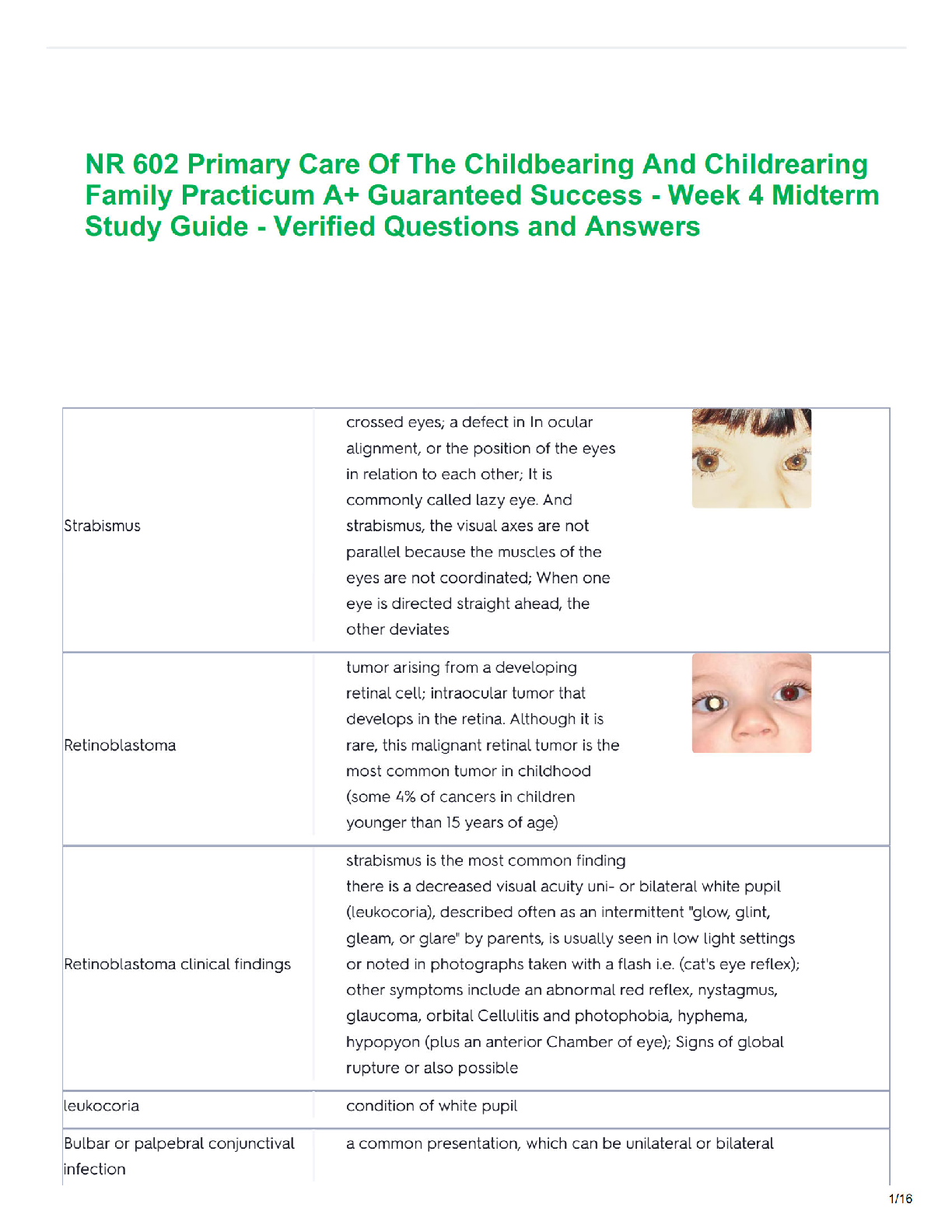


.png)





.png)

