Pharmacology Reasoning
Bradycardia
Suggested Answer Guidelines
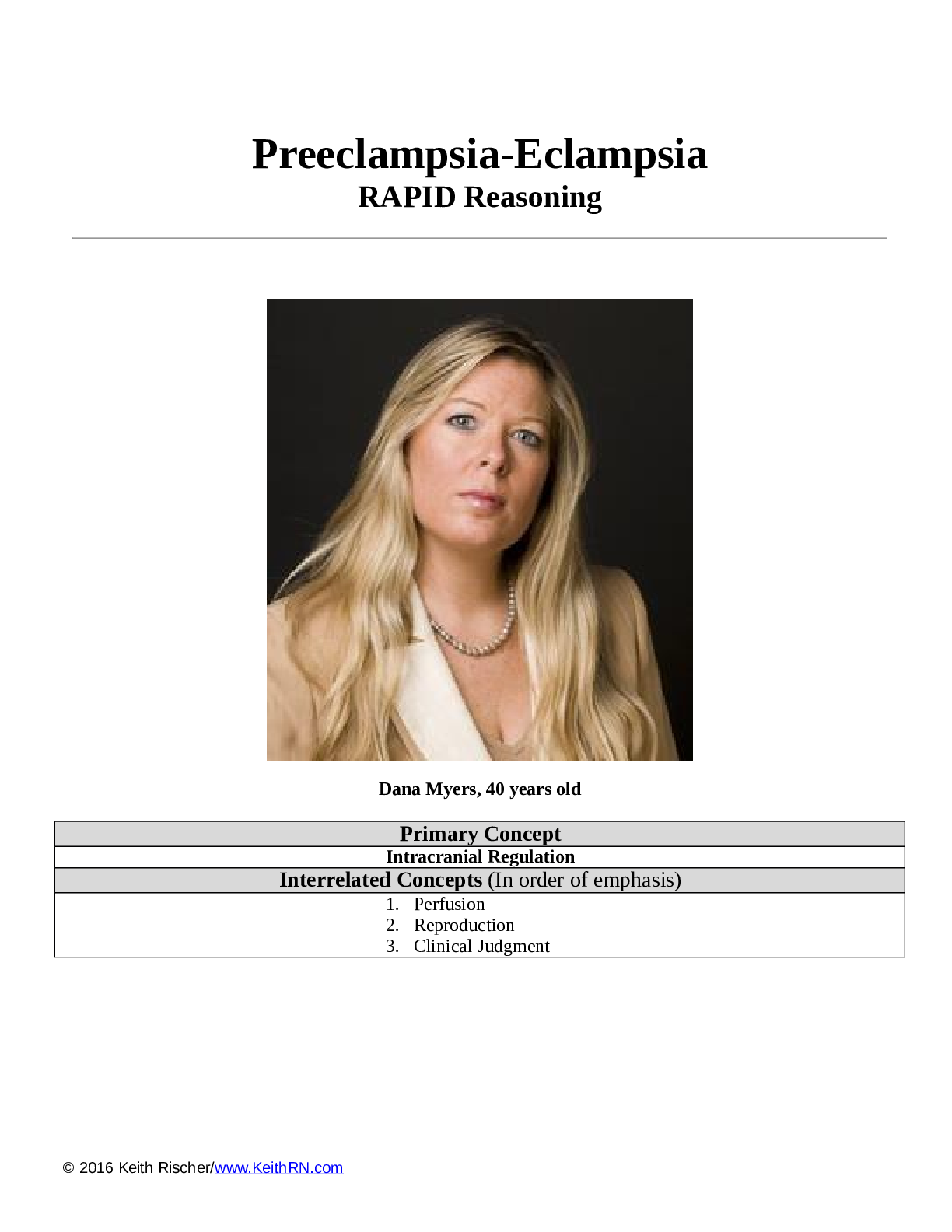
Marilyn Fitch, 78 years old
Medication Categories: Concepts/Content:
Antidysrhythmics
ACE Inhibitors
Beta Blockers
Statins
Oral Anticoagulants
Diur
...
Pharmacology Reasoning
Bradycardia
Suggested Answer Guidelines
Marilyn Fitch, 78 years old
Medication Categories: Concepts/Content:
Antidysrhythmics
ACE Inhibitors
Beta Blockers
Statins
Oral Anticoagulants
Diuretics
Electrolytes
Assessment
Drug-drug interactions
Evaluation of desired outcomes
Monitoring for adverse effects
Emergency treatment of dysrhythmias
Client education
Psychosocial support
NCLEX Client Need Categories Percentage of Items from Each
Category/Subcategory
Covered in
Case Study
Safe and Effective Care Environment
Management of Care 17-23% X
Safety and Infection Control 9-15% X
Health Promotion and Maintenance 6-12% X
Psychosocial Integrity 6-12% X
Physiological Integrity
Basic Care and Comfort 6-12%
Pharmacological and Parenteral Therapies 12-18% X
Reduction of Risk Potential 9-15% X
Physiological Adaptation 11-17% X
© 2020 KeithRN LLC. All rights reserved. No part of this case study may be reproduced, stored in retrieval system or transmitted in any
form or by any means, electronic, mechanical, photocopying, recording or otherwise, without the prior written permission of KeithRN
I. Initial Presentation:
Marilyn Fitch is a 78-year-old Caucasian woman with a history of hypercholesteremia, hypertension, and heart
failure and has NKDA. She was brought in by her daughter after Marilyn complained of feeling dizzy several
times this morning and then almost passed out at home. Marilyn has a six-month history of paroxysmal atrial
fibrillation. Her heart rate has been regular and she has had no episodic dizziness since she had a synchronized
cardioversion one week prior to this visit. Her initial VS in triage were: T: 98.9 F/37.2 C (oral) P: 52 R: 16 BP:
94/52 and O2 sat: 98% room air.
Personal/Social History:
Marilyn is a widow and lives alone in her own home. She denies smoking and admits to drinking one glass of
wine with her dinner.
1. What data from the histories are RELEVANT and must be NOTICED as clinically significant by
the nurse?(NCSBN: Step 1 Recognize cues/NCLEX: Reduction of Risk Potential)
RELEVANT Data from Present Problem: Clinical Significance:
Hx of hypercholesteremia, hypertension, and
heart failure
Felt dizzy several times this am
6 mo Hx of intermittent A-Fib.
Had sync. Cardioversion 1 wk ago, heartbeat
regular and no dizziness since until today.
Pulse: 52 BP 94/52
Pt already has pre- existing conditions that can implicate heart
complications. Would support showing an intermittent A-Fib.
Pt is elderly and having dizziness, can be a fall risk and may need
help with setting up home for safety measures if this is continuous.
Will need to keep eye on this as it seems to be continuing even after
treatment for this.
Seemed to work short term, but a-fib seems to be appearing again
so we may need a longer-term treatment/ and /or a better treatment
plan for care.
Pulse and BP are sig. low but pt is also on ace inhibitor and beta
blocker. Need to keep watch on these values.
RELEVANT Data from Social History: Clinical Significance:
Lives alone as a widow
Drinks wine with dinner.
Safety concern with her continually getting dizzy spells and
possible fall risks. Would want to evaluate home for safety
precautions and adjustments for falls.
May want to see if doctor asks to limit the alcohol as pt is already
dizzy and a fall concern. Maybe only drink one glass when
someone is over for dinner. Family or friends. In case she becomes
dizzy afterwards.
2. What is the RELATIONSHIP of the past medical history and current medications? Why is your patient
receiving these medications? (Which medication treats which condition? Draw lines to connect)
Medical History (PMH): Home Medications:
As the nurse responsible for this patient, you promptly review the medical
history and current home medications in the medical record:
Hypercholesteremia
Hypertension
Heart failure
Atrial fibrillation
Apixaban 2.5 mg po bid
Captopril 100 mg po BID daily
Amiodarone 100 mg po bid
Hydrochlorothiazide 50 mg po daily
Atorvastatin 10 mg po daily
Carvedilol 6.25 mg po bid
Applying your knowledge of pharmacology, to provide safe
patient care, answer the following essential information:
3. List each home medication from the scenario and answer the following:
(NCLEX Pharmacologic and Parenteral Therapies)
Home
Medication:
Pharm.
Class:
Indication(s): Mechanism of Action
In OWN WORDS:
Body
System
Impacted
Common
Side Effects: (1-
3)
Nursing
Assessments:
Apixaban
2.5 mg po
bid
anticoagulants Thromboembolis
m/ preventative
for stroke
Blocks an enzyme that cl
[Show More]




.png)