polarity. gizmos graded A.
Document Content and Description Below
Vocabulary: dipole, dipole-dipole force, dipole-induced dipole force, electronegativity,
intermolecular force, ionic bond, London dispersion force, molecule, nonpolar, nonpolar covalent
bond, partial charges, polar, po
...
[Show More]
Last updated: 3 years ago
Preview 1 out of 7 pages
Instant download

Buy this Document to get the Full Access Instantly
Provided by Students Who Aced it
We Verify Document Content to Gurantee Accuracy
Reviews( 0 )
Document information
Connected school, study & course
About the document
Uploaded On
Dec 28, 2021
Number of pages
7
Written in
All

Additional information
This document has been written for:
Uploaded
Dec 28, 2021
Downloads
0
Views
61
Topic Tags
Related Subjects & Courses
Explore similar study resources and related concepts.
Recommended For You
Get more on GIZMOS »
$7
7 Pages
Solubility and Temperature Gizmo Questions and 100% correct an...

$25
550 Pages
Achieve for Interactive General Chemistry, 1e by Macmillan Lea...

$19
63 Pages
Solution Manual for Elementary Principles of Chemical Processe...

$16
1287 Pages
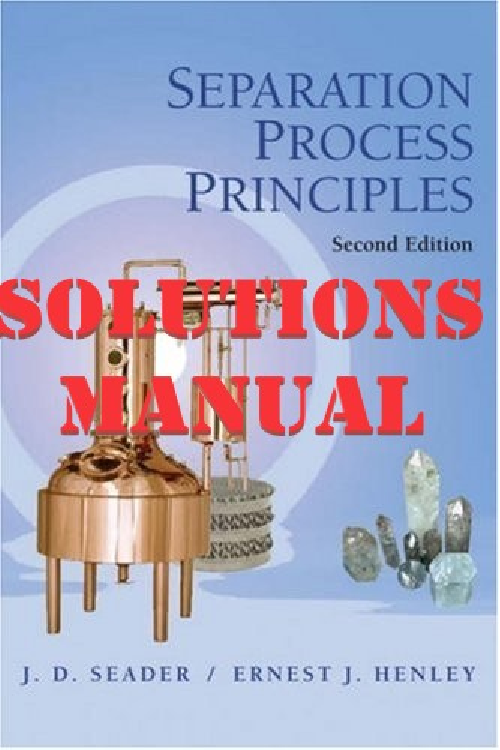
Separation process principles 2nd edition By J. D. Seader, Ern...

$18
973 Pages
Introduction to Chemistry 5th Edition By Richard Bauer, James...




$5
8 Pages
Gizmos Student Exploration: Evolution: Natural and Artificial...

$6
5 Pages