NUTRITION (C787) STUDY GUIDE
Document Content and Description Below
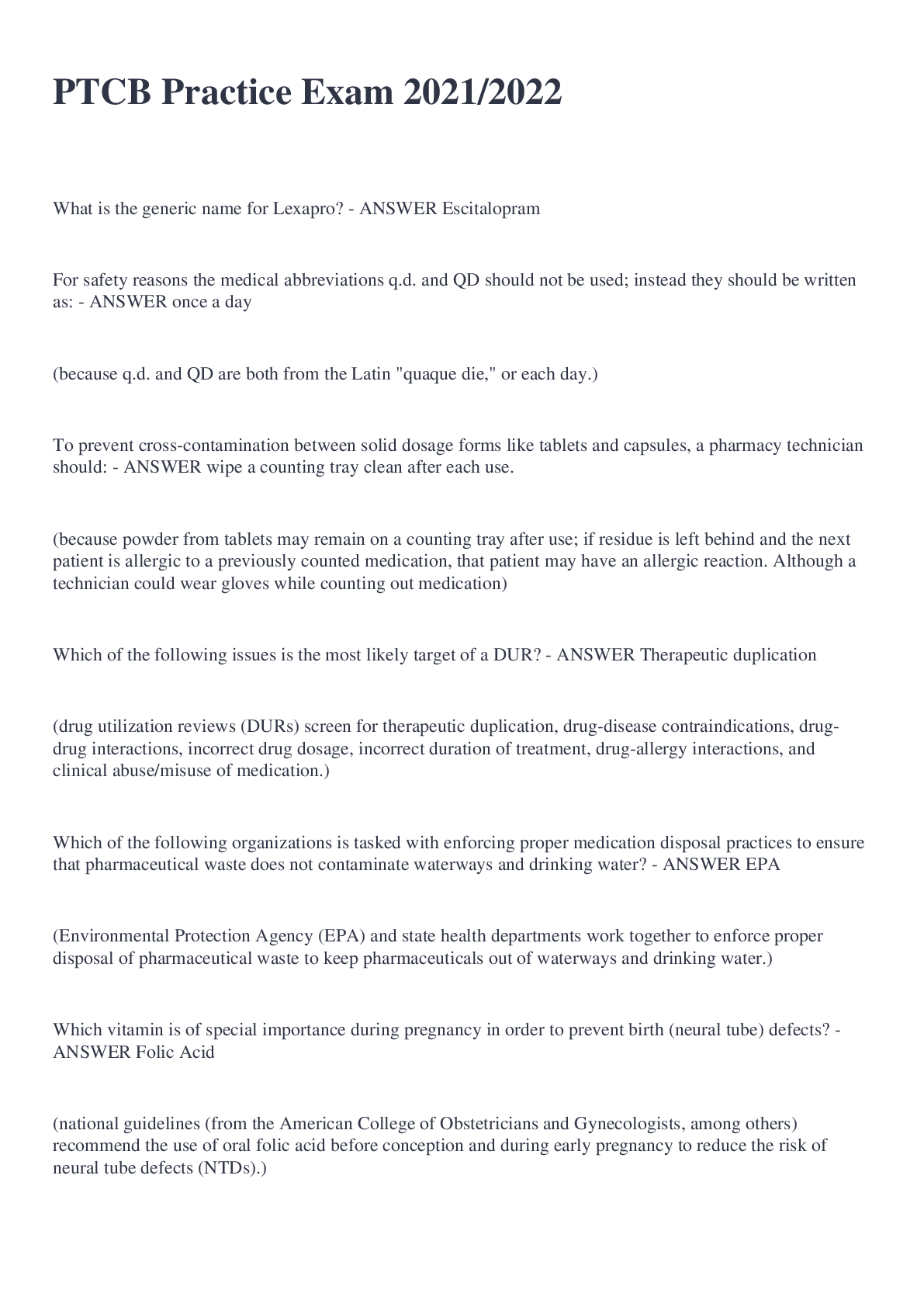
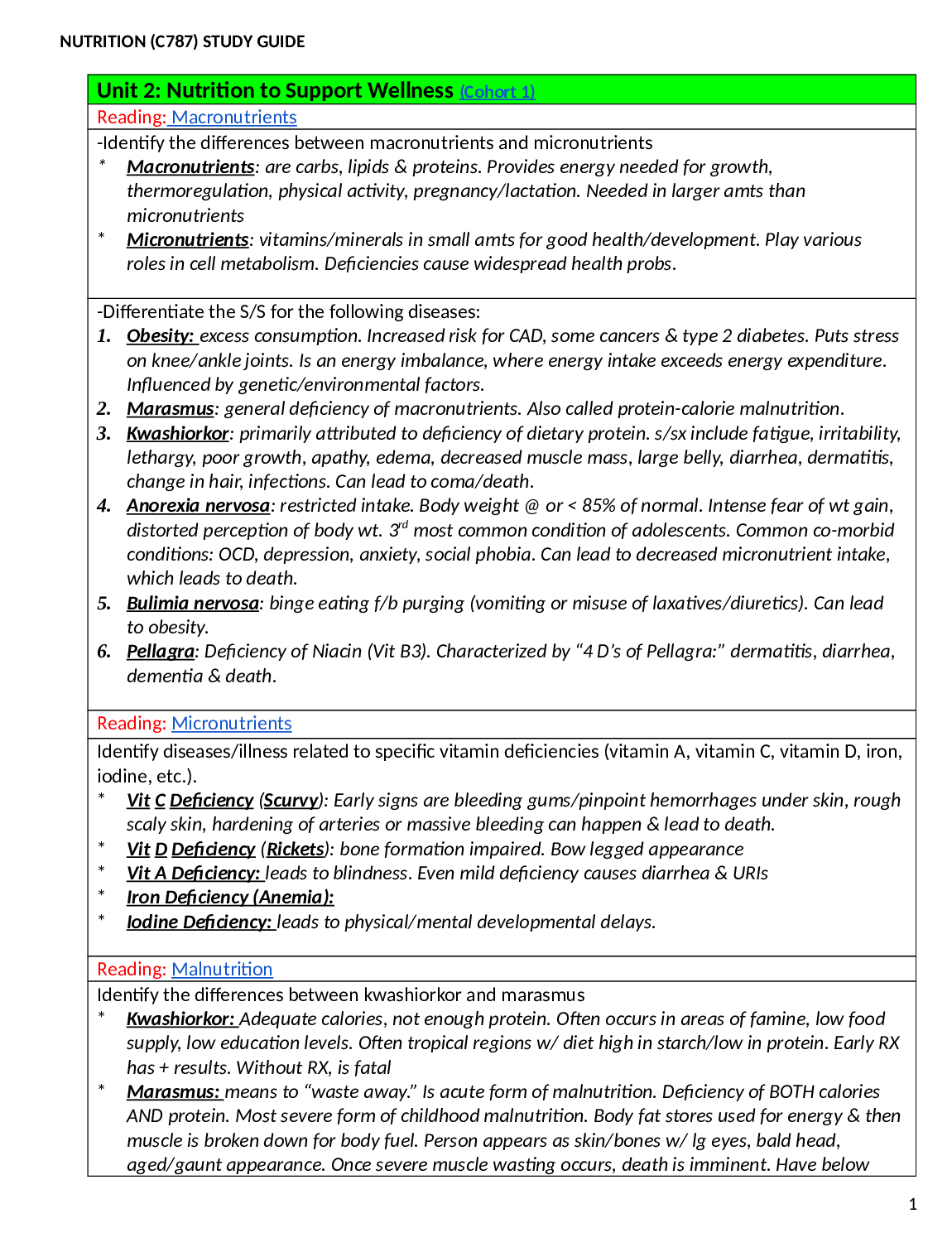
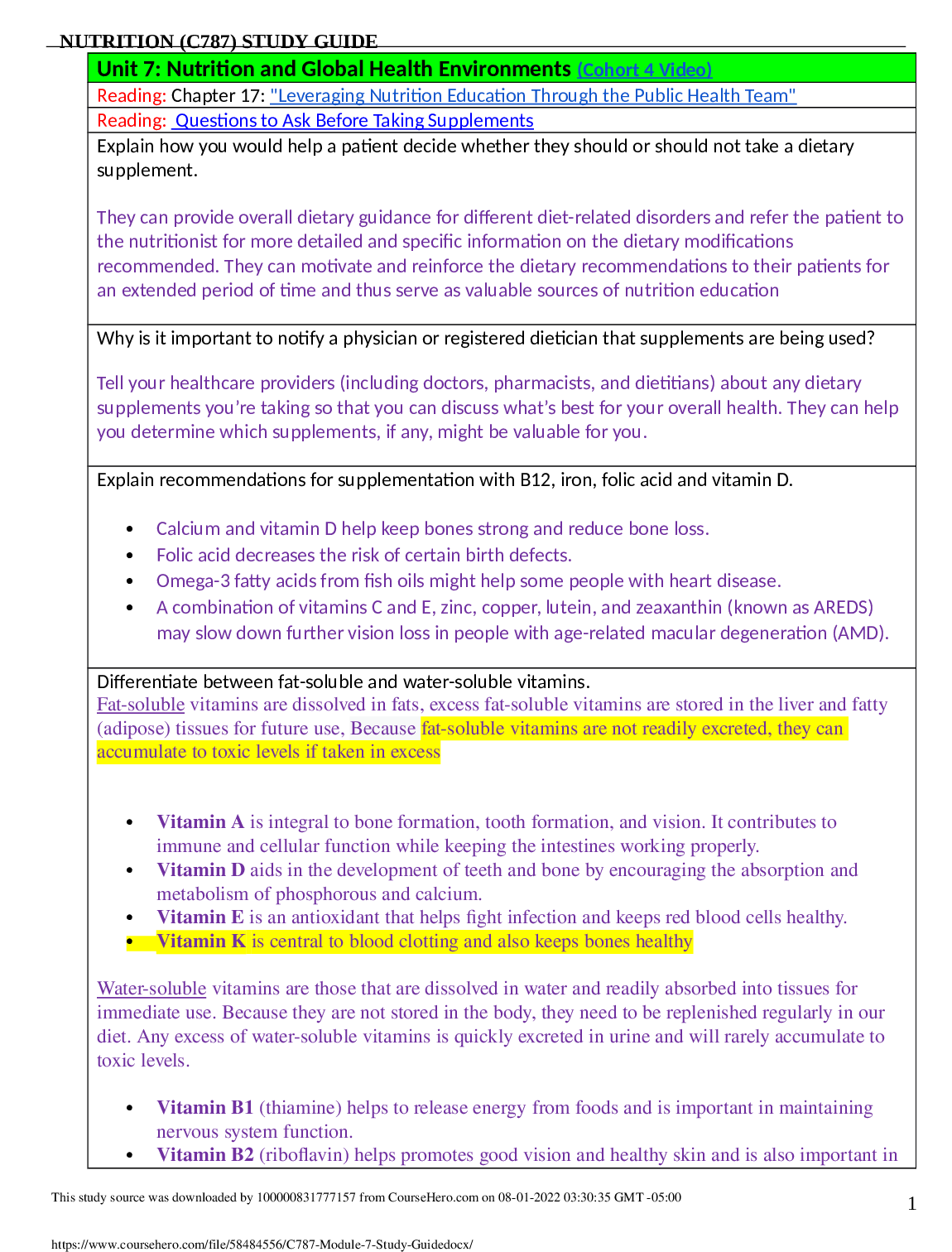
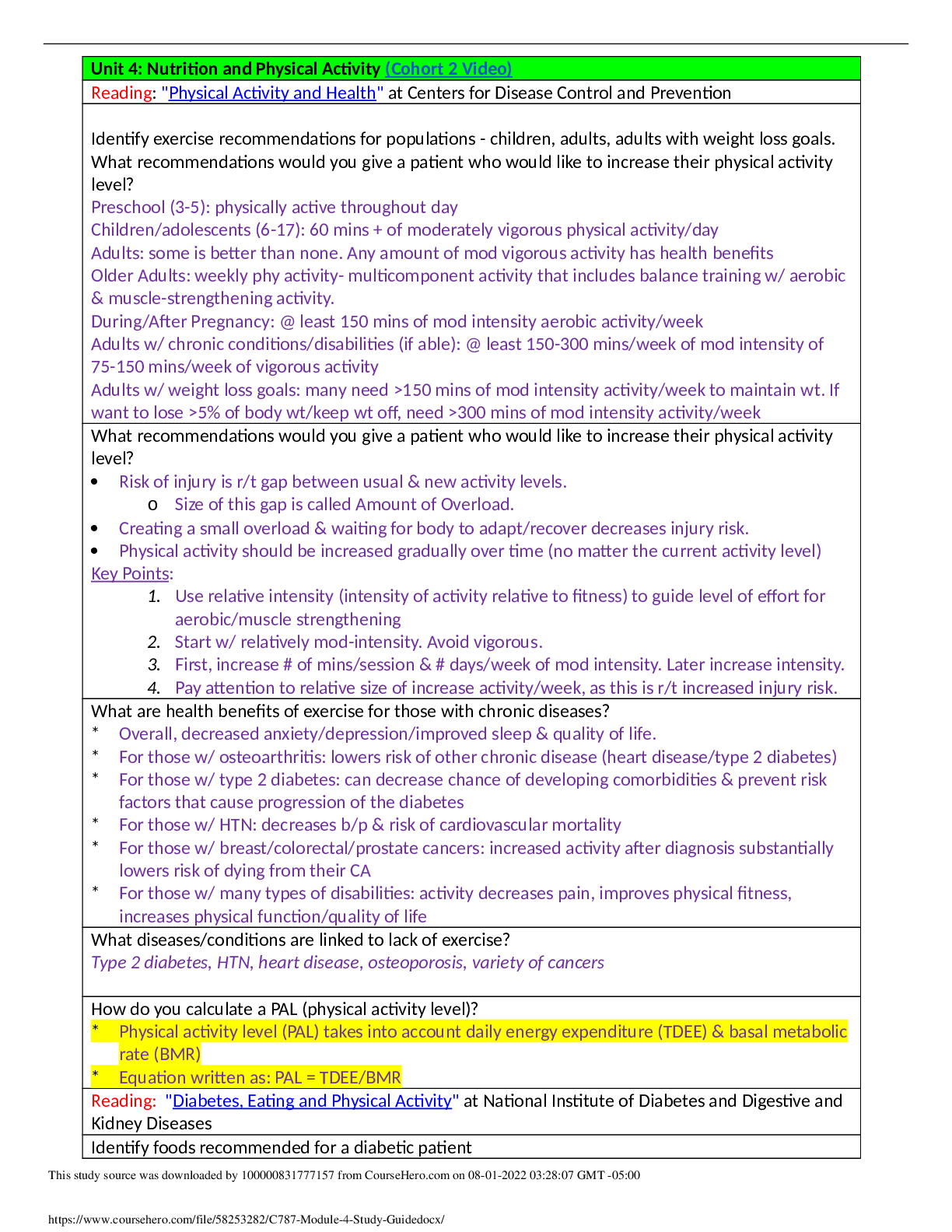
What do the acronyms DRI, UL, EAR, RDA signify? Describe how these numbers are developed and how they are used to guide nutritional recommendations for people and populations. * DRI: Dietary Reference Intakes. Replaced R
...
[Show More]
Last updated: 3 years ago
Preview 1 out of 45 pages
Instant download
Buy this Document to get the Full Access Instantly
Provided by Students Who Aced it
We Verify Document Content to Gurantee Accuracy
Reviews( 0 )
Document information
Connected school, study & course
About the document
Uploaded On
Jan 10, 2022
Number of pages
45
Written in
All

Additional information
This document has been written for:
Uploaded
Jan 10, 2022
Downloads
0
Views
316
Topic Tags
Related Subjects & Courses
Explore similar study resources and related concepts.
Recommended For You
Get more on EXAM »
$12
21 Pages
NUTRITION C787 - Study Guide: Health and Nutrition Units 2 and...

$12.5
15 Pages
C787 Cohort questions and Answers Plus Side notes Health and W...
$11
46 Pages
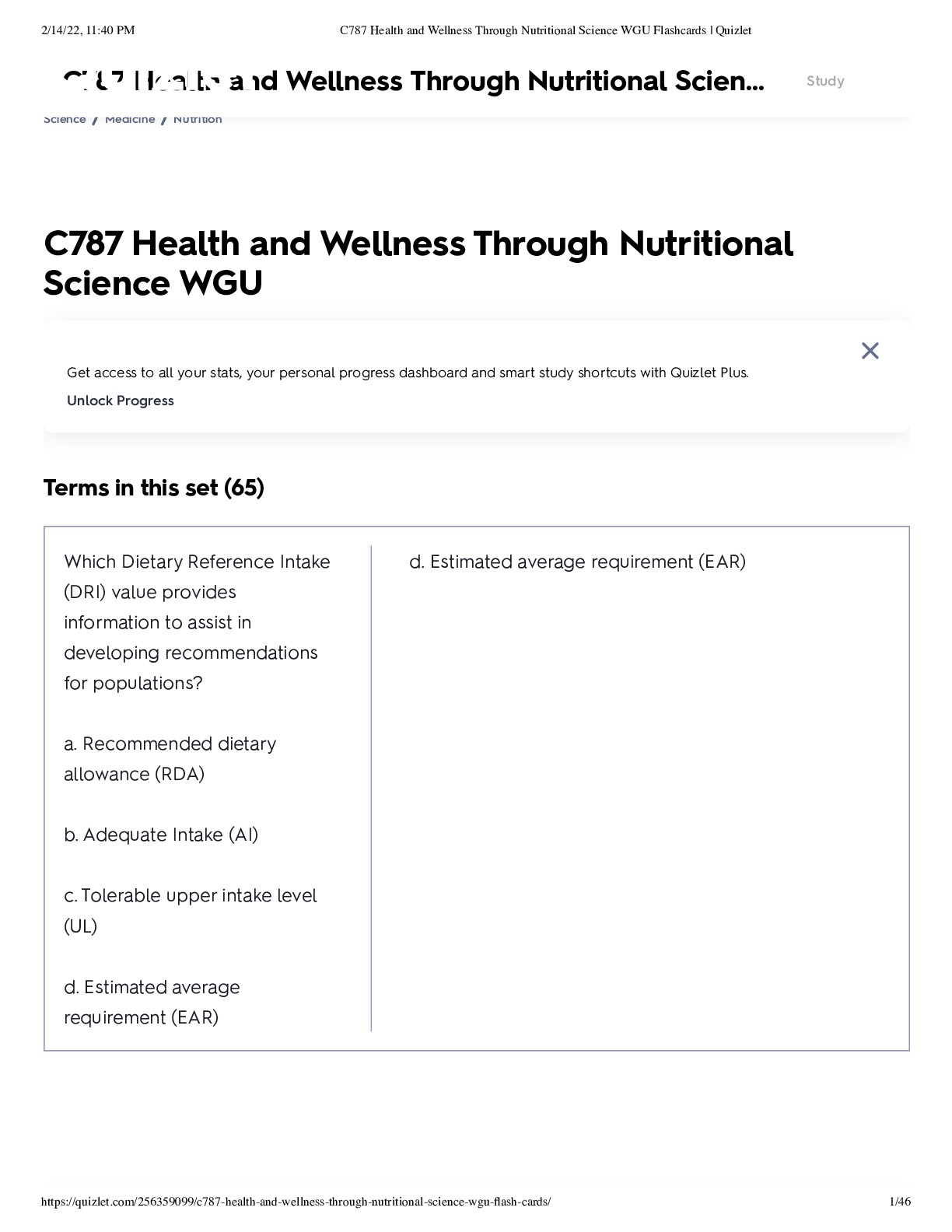
C787 Health and Wellness Through Nutritional Science WGU Flash...




$10
23 Pages
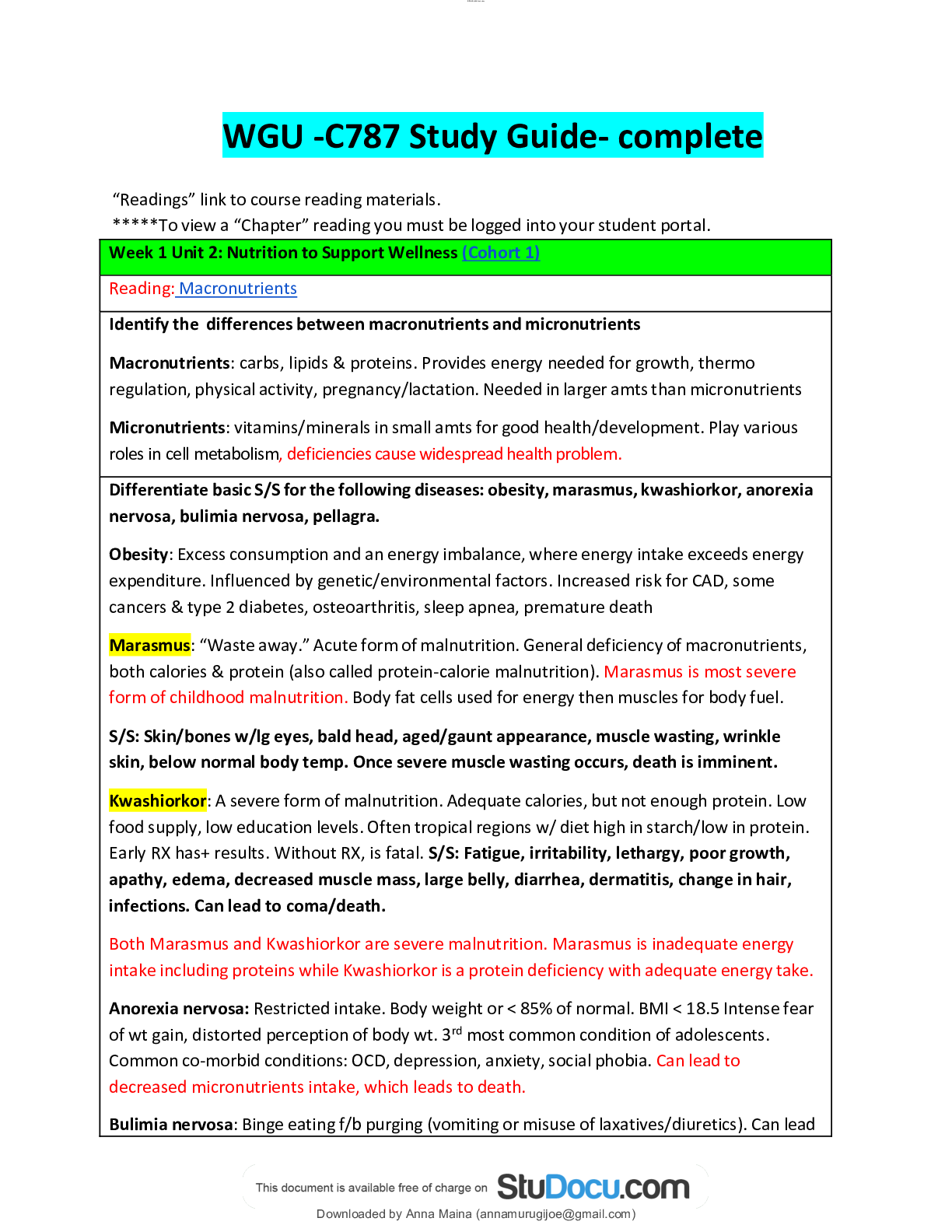
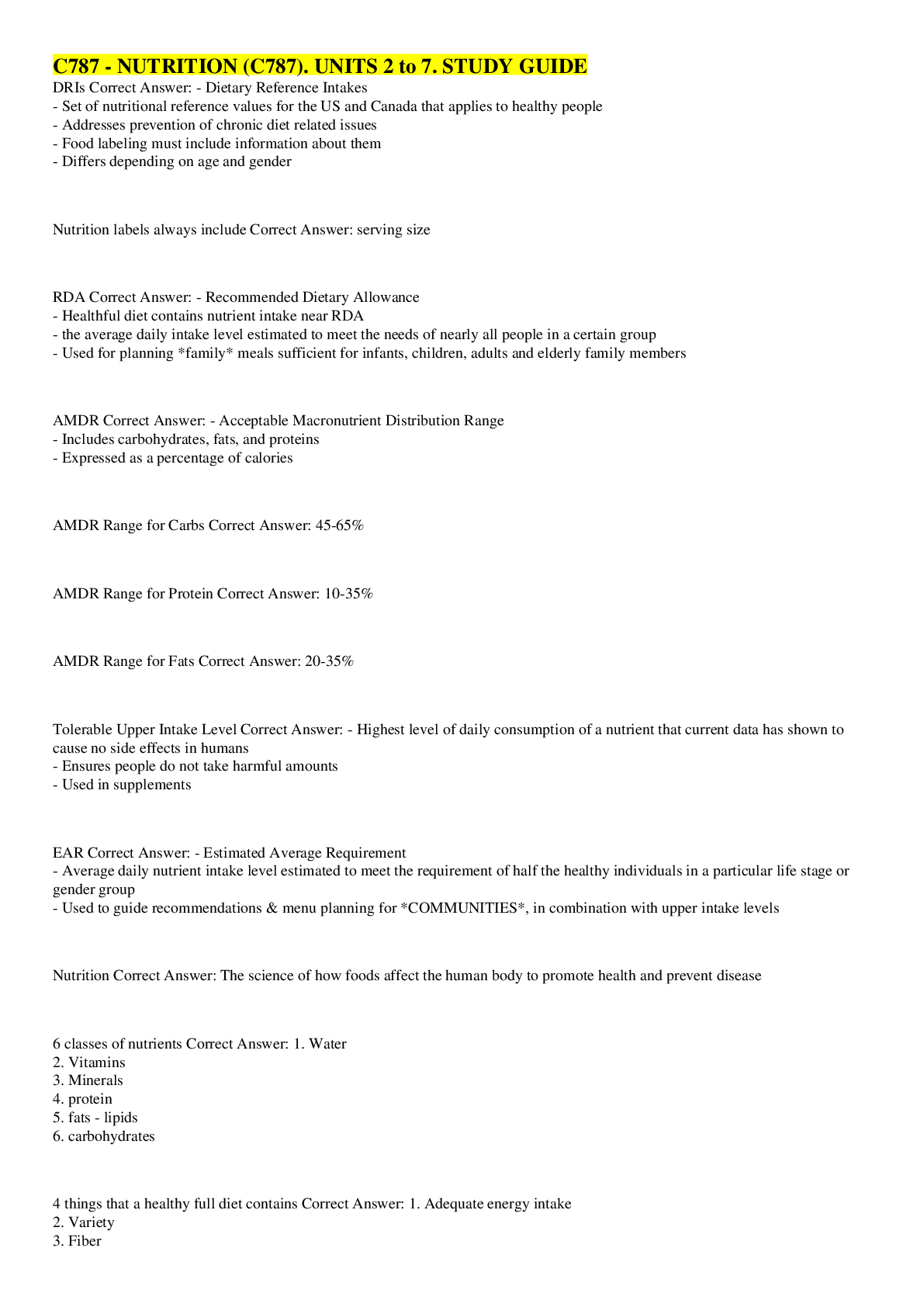
WGU C787 Nutrition Review Questions and Answers plus well summ...

$10
18 Pages
WGU c787 Nutrition cohort review questions and answers latest...

$6.5
9 Pages
C787 Nutrition WGU Practice 2022 questions and answers (100% v...
$11
29 Pages
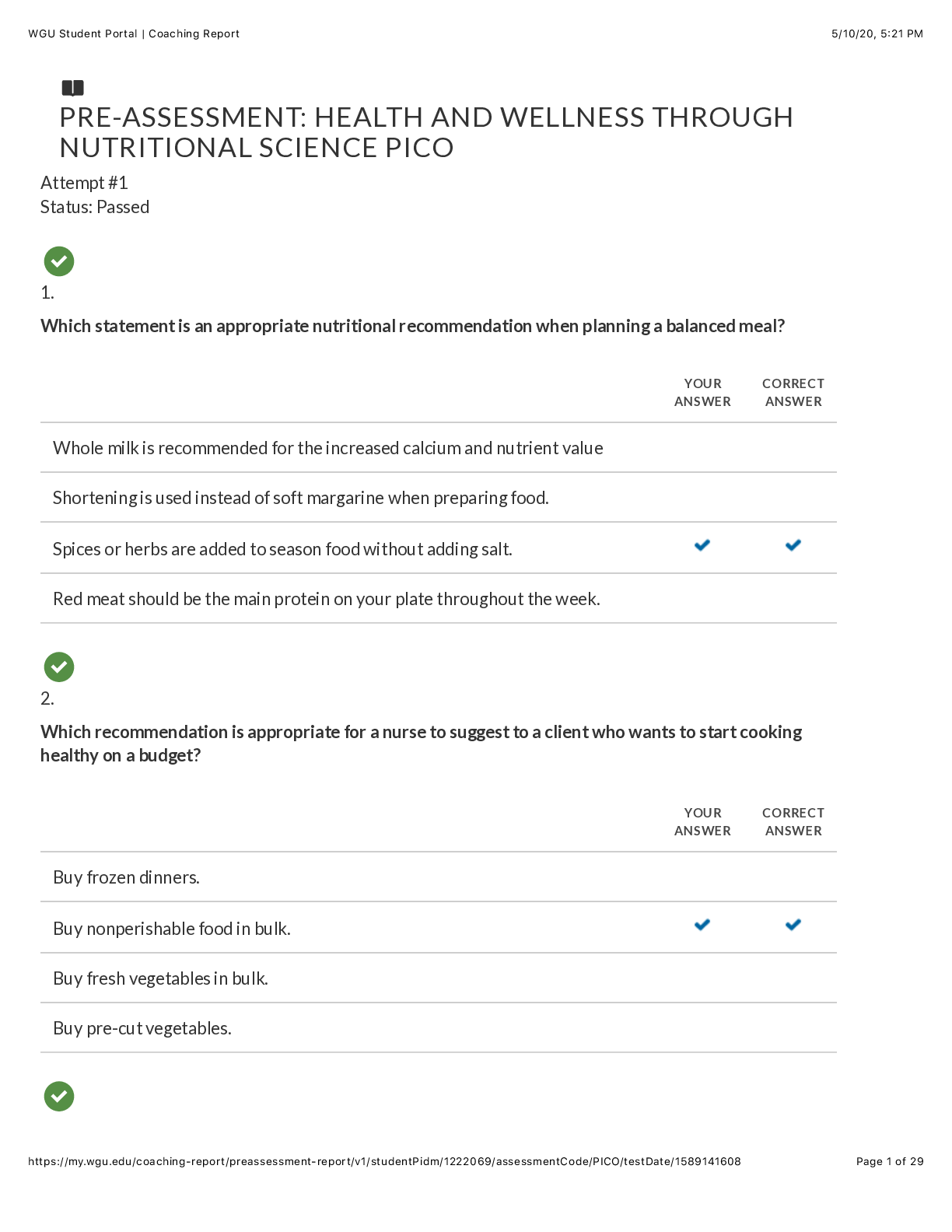
C787 Health and Wellness through Nutritional Science Test WGU...

More related documents below