Philosophy > EXAM > West Georgia Technical College - PHILOSOPHY 201 QUIZ 8 > PHIL 201 - New Study Help. (All)
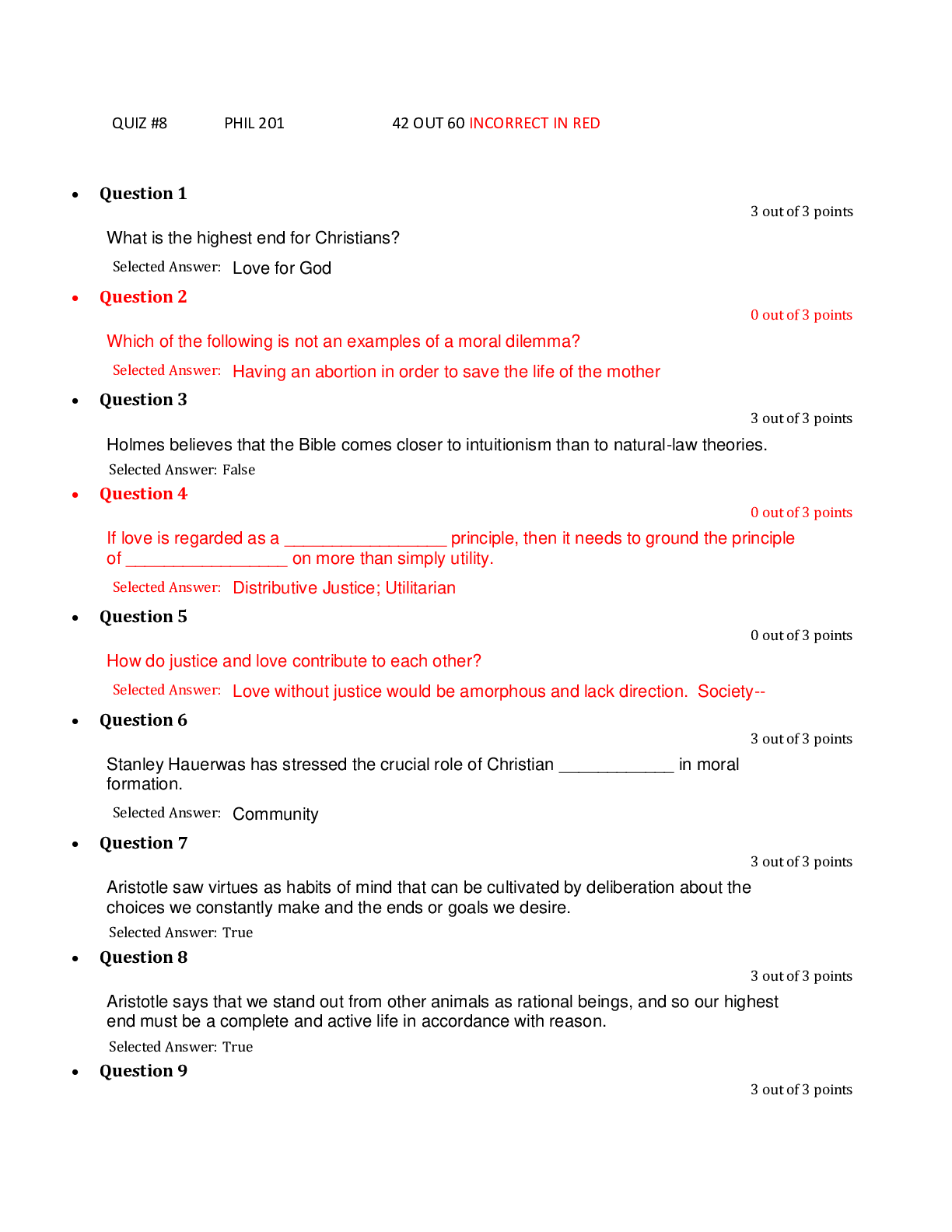
West Georgia Technical College - PHILOSOPHY 201 QUIZ 8 > PHIL 201 - New Study Help.
Document Content and Description Below
Last updated: 6 months ago
Preview 1 out of 3 pages
Instant download
Buy this Document to get the Full Access Instantly
Provided by Students Who Aced it
We Verify Document Content to Gurantee Accuracy
Reviews( 0 )
Document information
Connected school, study & course
About the document
Uploaded On
Nov 16, 2019
Number of pages
3
Written in
All

Additional information
This document has been written for:
Uploaded
Nov 16, 2019
Downloads
0
Views
183
Topic Tags
Related Subjects & Courses
Explore similar study resources and related concepts.
Recommended For You
Get more on EXAM »
QUIZ 4 PHIL 201: West Georgia Technical College - PHILOSOPHY 2...

West Georgia Technical College - PHILOSOPHY 201 > Quiz #5 -PHI...

West Georgia Technical College - PHILOSOPHY 201 : PHIL 201 Qui...
State University Of West Georgia > PHILOSOPHY 201 : PHIL 201...

MILESTONE-.PHIL 201-Introduction to Political Philosophy -Libe...
 answers.png)
Phil 201 Terms week 3 new test solution 2021 Liberty universit...

Liberty University > philosophy 201 > PHIL 201: COMPLETE ARGUM...
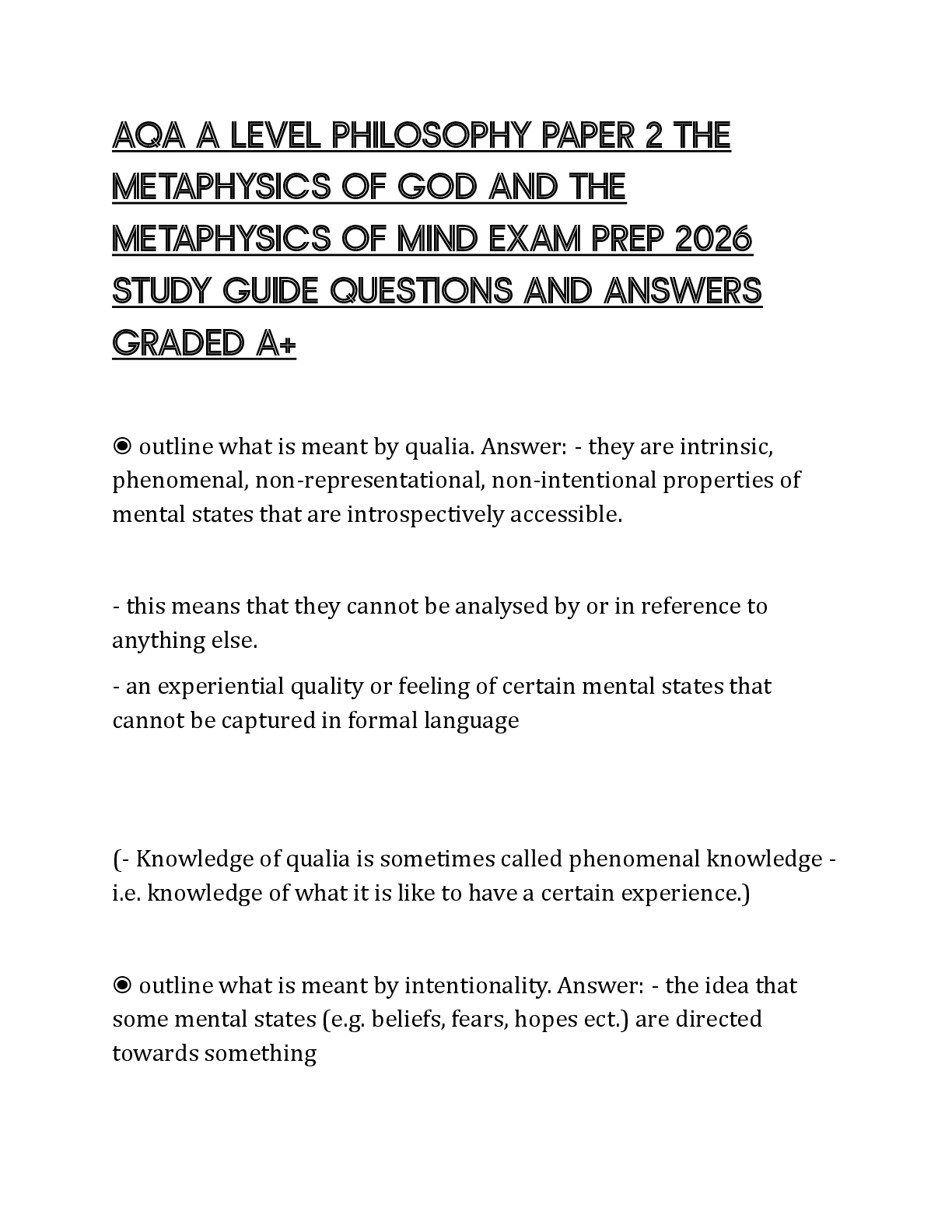
AQA A LEVEL PHILOSOPHY PAPER 2 THE METAPHYSICS OF GOD AND THE...
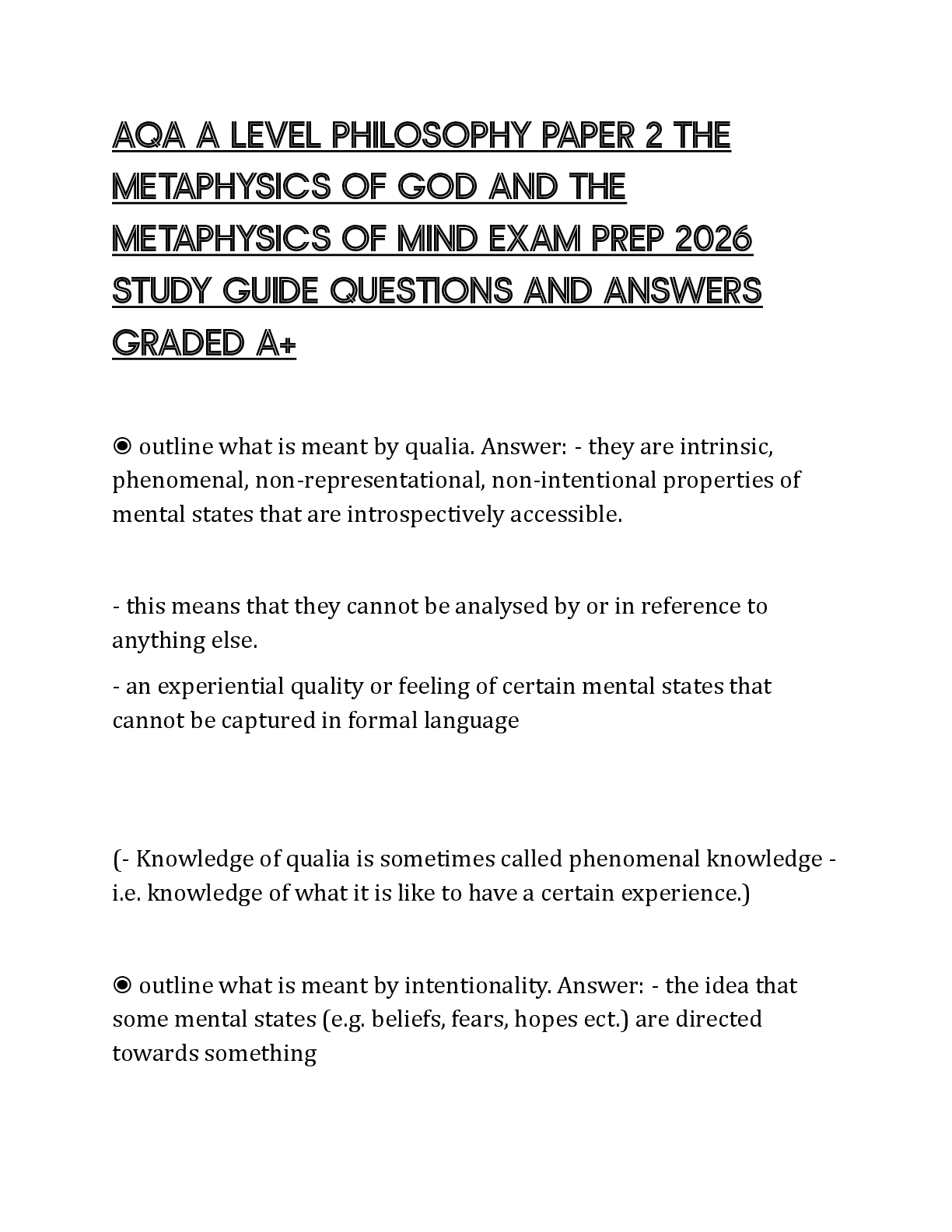
AQA A LEVEL PHILOSOPHY PAPER 2 THE METAPHYSICS OF GOD AND THE...


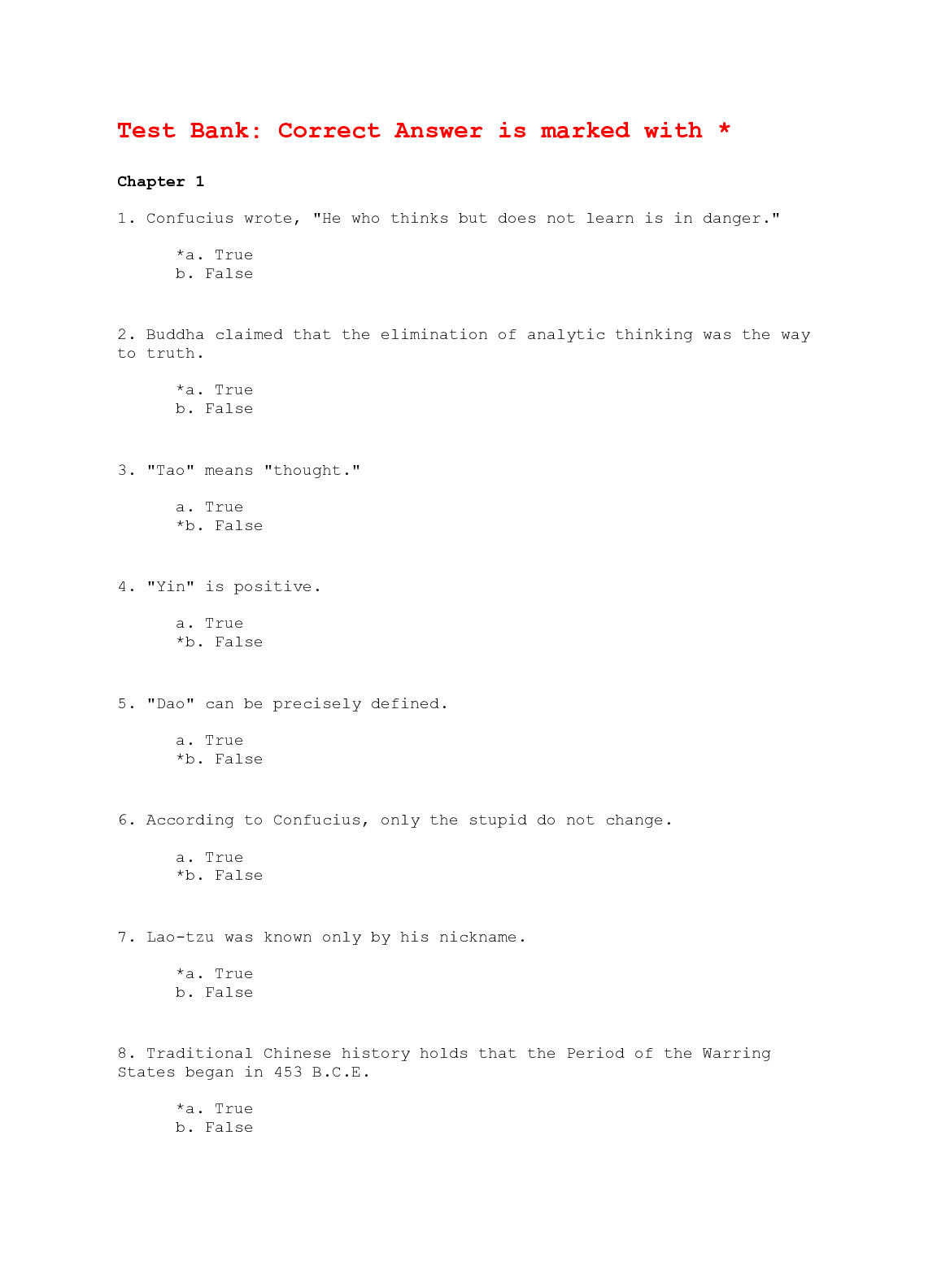
Test Bank for Archetypes of Wisdom An Introduction to Philosop...
Exploring Philosophy An Introductory Anthology 7th Edition By...
eBook The Right Thing to Do Readings in Moral Philosophy 8th E...