ATI MED SURG PROCTORED EXAM FALL 2022-STUDY GUIDE
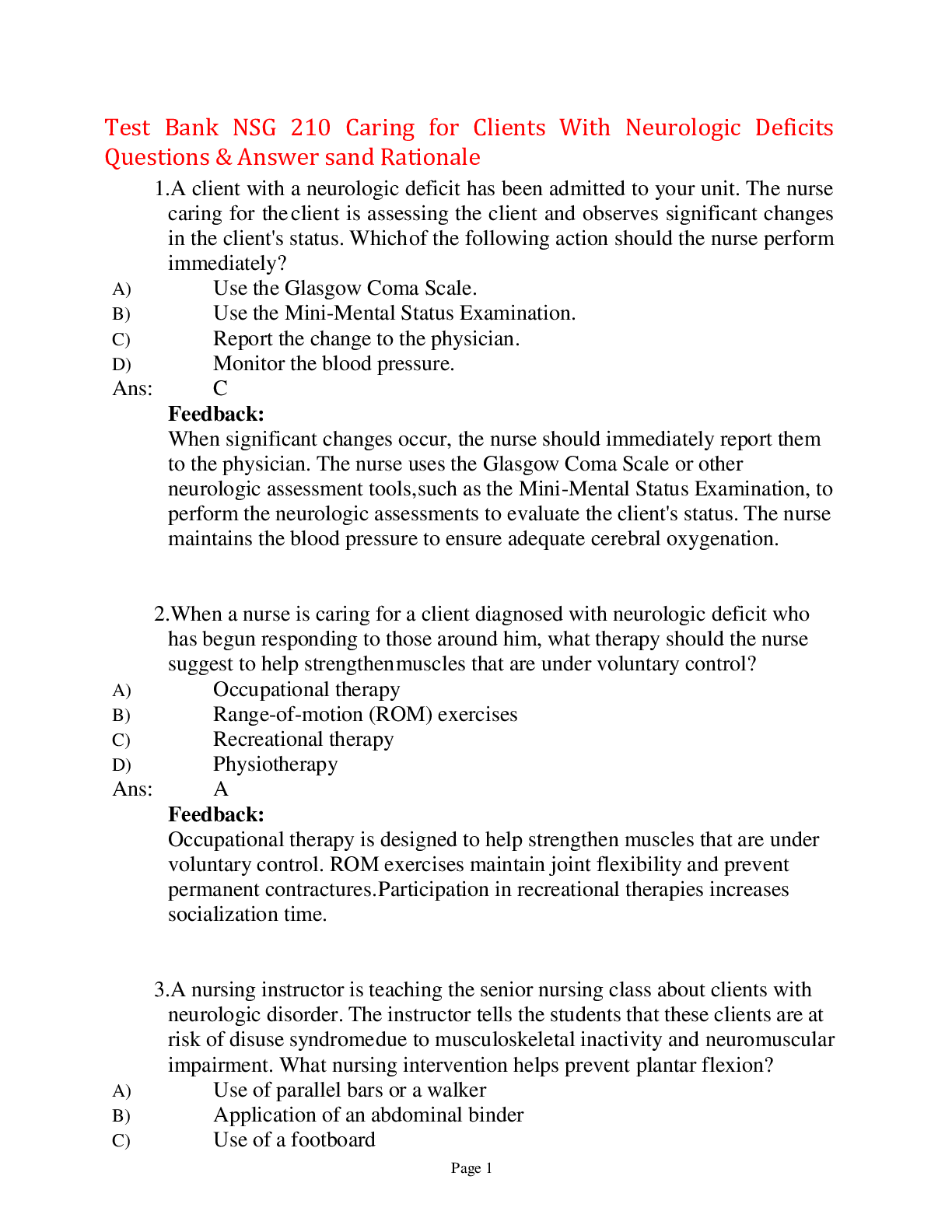
1.A client with a neurologic deficit has been admitted to your unit. The nurse caring for the client is assessing the client and observes significant changes in the cl
...
ATI MED SURG PROCTORED EXAM FALL 2022-STUDY GUIDE
1.A client with a neurologic deficit has been admitted to your unit. The nurse caring for the client is assessing the client and observes significant changes in the client's status. Which of the following action should the nurse perform immediately?
A)Use the Glasgow Coma Scale.
B)Use the Mini-Mental Status Examination.
C)Report the change to the physician.
D)Monitor the blood pressure.
Ans: C
Feedback:
When significant changes occur, the nurse should immediately report them to the physician. The nurse uses the Glasgow Coma Scale or other neurologic assessment tools, such as the Mini-Mental Status Examination, to perform the neurologic assessments to evaluate the client's status. The nurse maintains the blood pressure to ensure adequate cerebral oxygenation.
2.When a nurse is caring for a client diagnosed with neurologic deficit who has begun responding to those around him, what therapy should the nurse suggest to help strengthen muscles that are under voluntary control?
A)Occupational therapy
B)Range-of-motion (ROM) exercises
C)Recreational therapy
D)Physiotherapy
Ans: A
Feedback:
Occupational therapy is designed to help strengthen muscles that are under voluntary control. ROM exercises maintain joint flexibility and prevent permanent contractures. Participation in recreational therapies increases socialization time.
3.A nursing instructor is teaching the senior nursing class about clients with neurologic disorder. The instructor tells the students that these clients are at risk of disuse syndrome due to musculoskeletal inactivity and neuromuscular impairment. What nursing intervention helps prevent plantar flexion?
A)Use of parallel bars or a walker
B)Application of an abdominal binder
C)Use of a footboard
D)Use of a flotation mattress
Ans: C
Feedback:
A footboard positions the foot and ankle in such a way as to prevent plantar flexion. Parallel bars help the client with impaired mobility to support body weight and move forward before ambulating independently. An abdominal binder prevents dizziness and faintness. A flotation mattress helps relieve pressure when the client is lying down and sitting.
[Show More]