Final Exam Study Guide
Elimination: Ch 49, 50, 53
- BPH
o Definition – enlargement of prostate gland because of overgrowth of cells. This
creates pressure on the neck of bladder
o Symptoms – difficulty urinating, vo
...
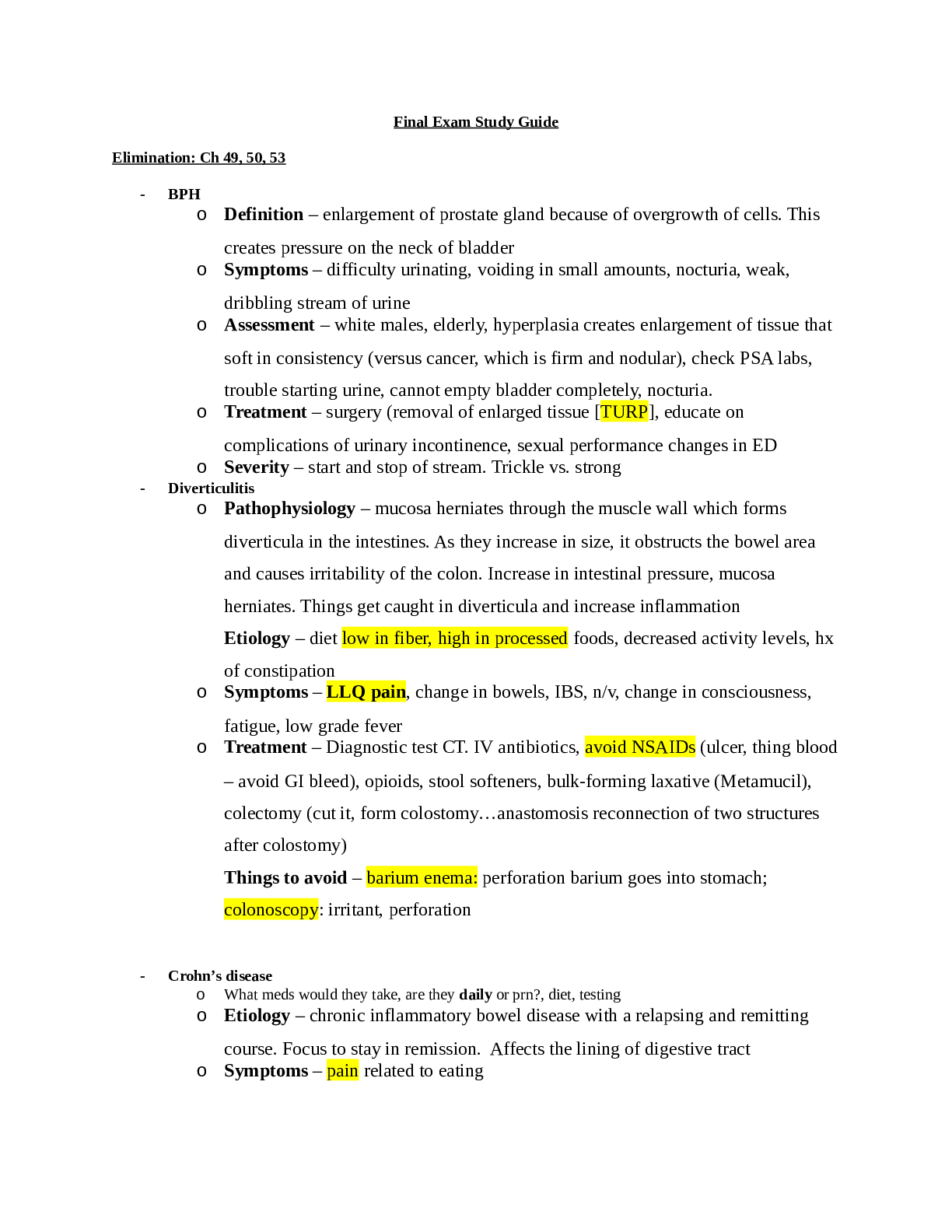
Final Exam Study Guide
Elimination: Ch 49, 50, 53
- BPH
o Definition – enlargement of prostate gland because of overgrowth of cells. This
creates pressure on the neck of bladder
o Symptoms – difficulty urinating, voiding in small amounts, nocturia, weak,
dribbling stream of urine
o Assessment – white males, elderly, hyperplasia creates enlargement of tissue that
soft in consistency (versus cancer, which is firm and nodular), check PSA labs,
trouble starting urine, cannot empty bladder completely, nocturia.
o Treatment – surgery (removal of enlarged tissue [TURP], educate on
complications of urinary incontinence, sexual performance changes in ED
o Severity – start and stop of stream. Trickle vs. strong
- Diverticulitis
o Pathophysiology – mucosa herniates through the muscle wall which forms
diverticula in the intestines. As they increase in size, it obstructs the bowel area
and causes irritability of the colon. Increase in intestinal pressure, mucosa
herniates. Things get caught in diverticula and increase inflammation
Etiology – diet low in fiber, high in processed foods, decreased activity levels, hx
of constipation
o Symptoms – LLQ pain, change in bowels, IBS, n/v, change in consciousness,
fatigue, low grade fever
o Treatment – Diagnostic test CT. IV antibiotics, avoid NSAIDs (ulcer, thing blood
– avoid GI bleed), opioids, stool softeners, bulk-forming laxative (Metamucil),
colectomy (cut it, form colostomy…anastomosis reconnection of two structures
after colostomy)
Things to avoid – barium enema: perforation barium goes into stomach;
colonoscopy: irritant, perforation
- Crohn’s disease
o What meds would they take, are they daily or prn?, diet, testing
o Etiology – chronic inflammatory bowel disease with a relapsing and remitting
course. Focus to stay in remission. Affects the lining of digestive tract
o Symptoms – pain related to eating
o Assessment – abdominal pain, eating can increase pain, weight loss, malnutrition,
diarrhea, weakness
o Testing – rule out other possible diagnosis. There is no one test for Crohn’s.
Blood tests for anemia, infection, fecal blood test. Colonoscopy, sigmoidoscopy,
CT, MRI
o Treatment – surgical resections. Treat abdominal pain. Stay in remission. Know
triggers. Doctor may recommend a diet of low-fiber to reduce intestinal blockage
(Mayo Clinic)
o Medications – Anti-inflammatory drugs. Axulfidine, Asacol. Corticosteroids –
prednisone, Entocort. Immune system suppressors – Methotrexate. Antibiotics –
Flagyl, Cipro. Anti-diarrheals – Metamucil, Imodium. Acetaminophen. Fe
supplements. Vitamin B12. Calcium and Vitamin D. (Mayo Clinic)
o
- Ulcerative Colitis
o Etiology – inflammatory bowel disorder that affects mucosa and submucosa of
colon and rectum (bloody stool). There is no cure. Focus of care is supportive
o Symptoms – bloody diarrhea, LLQ pain, weight loss, anemia, fatigue, weakness,
tachycardia, hypotension
o Complications – colostomy for life
Toxic Megacolon: total dilation of the colon, only treatment is to remove the
colon
Colon Perforation: perforation occurs if colon dilation isn’t removed: perforates
into belly
o Treatment – colon surgery, colostomy for life. May use Asacol may be used to
help decrease inflammation in the colon.
- Medications:
o Cardura (doxazosin) – Antihypertensive, BPH. Relaxes blood vessels. Relaxes prostate and
opening of the bladder. Increase the flow of urine
o Senna – Laxative. Stimulant used for constipation.
o Docusate (Colace) – Laxative. Stool softener. Doesn’t make you go; just makes you go softer
o Metamucil – Laxative. Used for constipation.
o Diuretics – Antihypertensive. Relaxes blood vessels. Thiazide diuretics (hydrochlorothiazide),
Loop diuretics (forsemide, Lasix), K-sparing (spironolactone, Aldactone). Caution orthostatic
hypo. Fall risk. Electrolyte levels. Monitor weight change.
o Asacol (Mesalamine) – NSAID, May treat colitis, Crohn’s disease, Ulcerative colitis. Helps
reduce inflammation in the colon.
Fluid Electrolyte, Acid/Base, Communication: Ch 12, 13
- Elderly
[Show More]