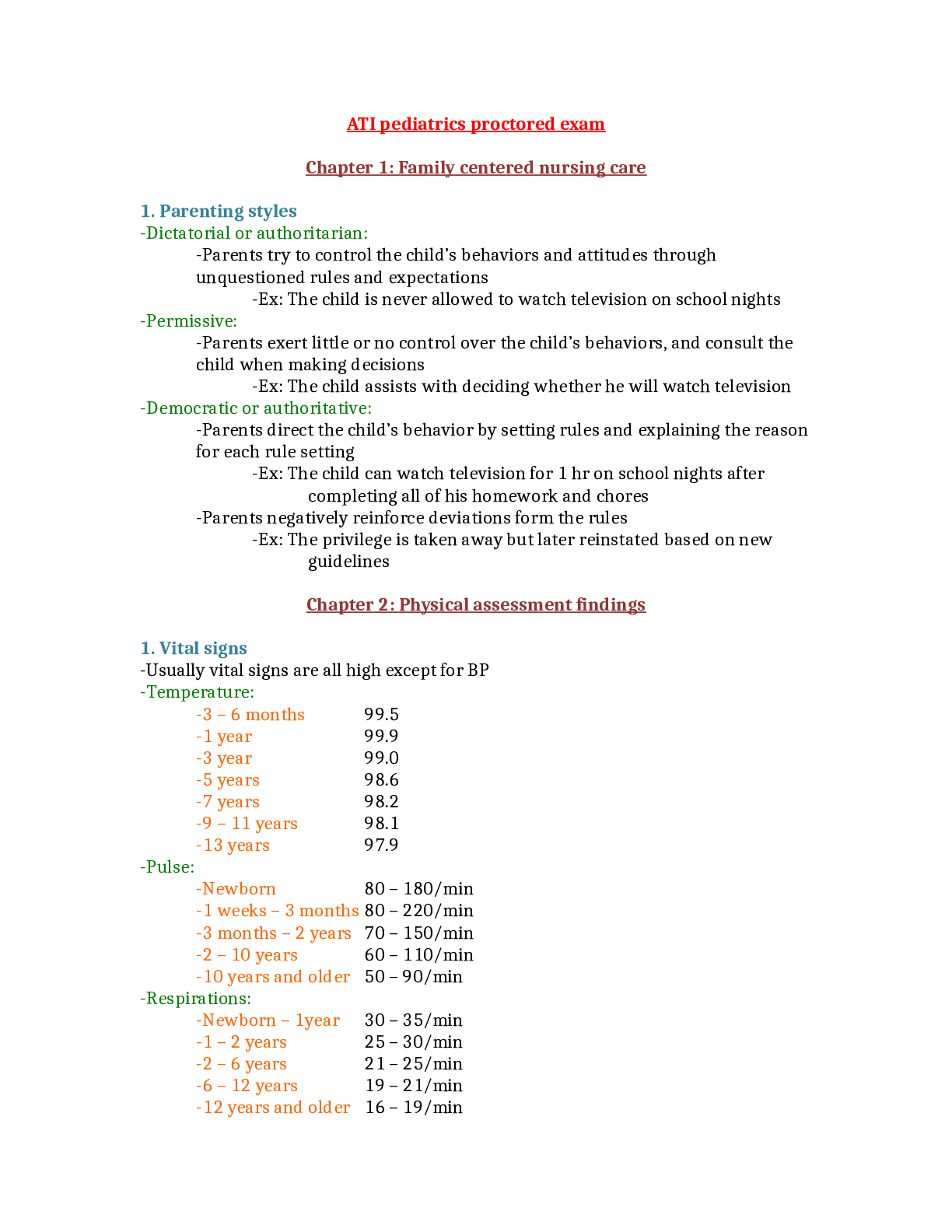
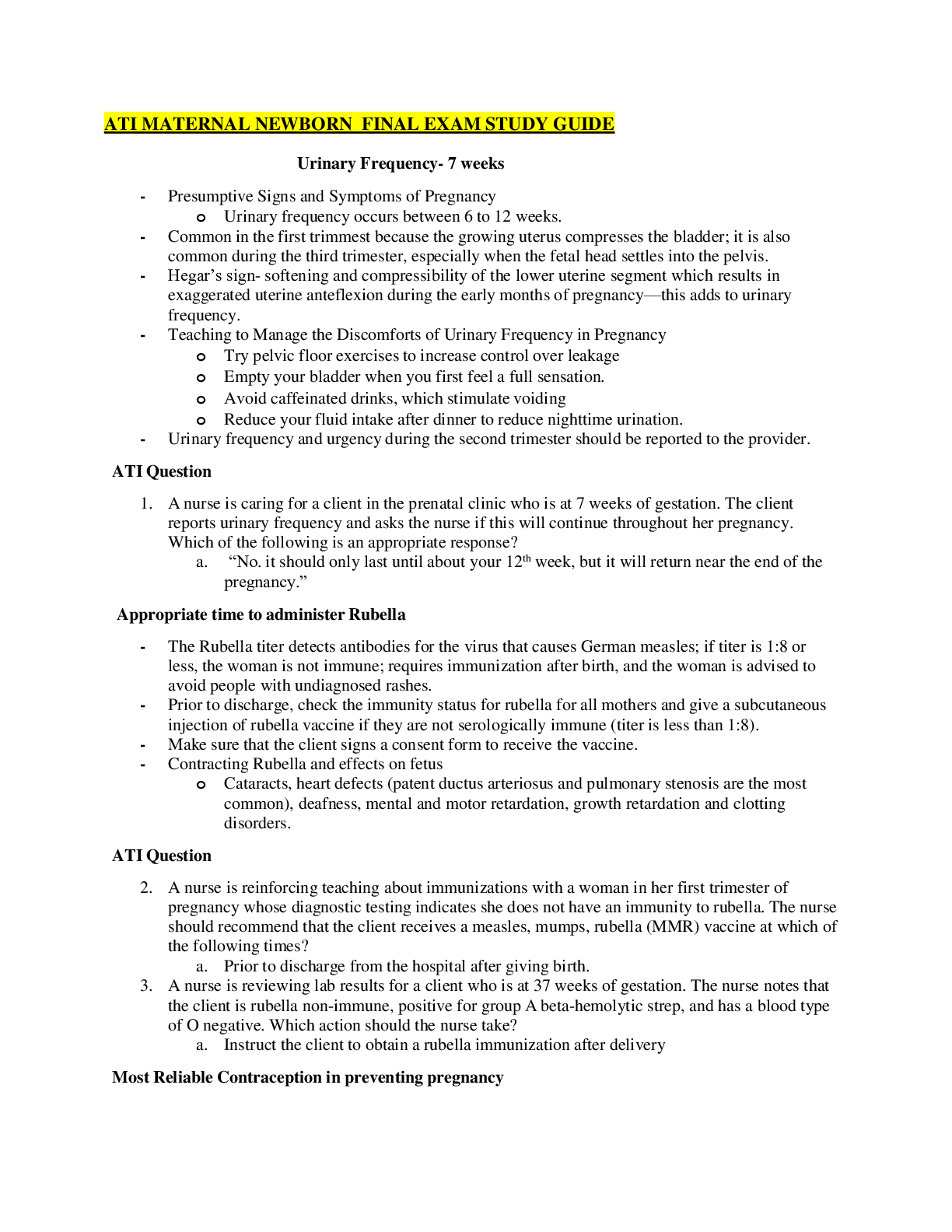
ATI MATERNAL NEWBORN FINAL EXAM STUDY GUIDE
Urinary Frequency- 7 weeks
-Presumptive Signs and Symptoms of Pregnancy
oUrinary frequency occurs between 6 to 12 weeks.
-Common in the first trimmest because the growing
...
ATI MATERNAL NEWBORN FINAL EXAM STUDY GUIDE
Urinary Frequency- 7 weeks
-Presumptive Signs and Symptoms of Pregnancy
oUrinary frequency occurs between 6 to 12 weeks.
-Common in the first trimmest because the growing uterus compresses the bladder; it is also common during the third trimester, especially when the fetal head settles into the pelvis.
-Hegar’s sign- softening and compressibility of the lower uterine segment which results in exaggerated uterine anteflexion during the early months of pregnancy—this adds to urinary frequency.
-Teaching to Manage the Discomforts of Urinary Frequency in Pregnancy
oTry pelvic floor exercises to increase control over leakage
oEmpty your bladder when you first feel a full sensation.
oAvoid caffeinated drinks, which stimulate voiding
oReduce your fluid intake after dinner to reduce nighttime urination.
-Urinary frequency and urgency during the second trimester should be reported to the provider.
ATI Question
1.A nurse is caring for a client in the prenatal clinic who is at 7 weeks of gestation. The client reports urinary frequency and asks the nurse if this will continue throughout her pregnancy. Which of the following is an appropriate response?
a. “No. it should only last until about your 12th week, but it will return near the end of the pregnancy.”
Appropriate time to administer Rubella
-The Rubella titer detects antibodies for the virus that causes German measles; if titer is 1:8 or less, the woman is not immune; requires immunization after birth, and the woman is advised to avoid people with undiagnosed rashes.
-Prior to discharge, check the immunity status for rubella for all mothers and give a subcutaneous injection of rubella vaccine if they are not serologically immune (titer is less than 1:8).
-Make sure that the client signs a consent form to receive the vaccine.
-Contracting Rubella and effects on fetus
oCataracts, heart defects (patent ductus arteriosus and pulmonary stenosis are the most common), deafness, mental and motor retardation, growth retardation and clotting disorders.
ATI Question
2.A nurse is reinforcing teaching about immunizations with a woman in her first trimester of pregnancy whose diagnostic testing indicates she does not have an immunity to rubella. The nurse should recommend that the client receives a measles, mumps, rubella (MMR) vaccine at which of the following times?
a.Prior to discharge from the hospital after giving birth.
3.A nurse is reviewing lab results for a client who is at 37 weeks of gestation. The nurse notes that the client is rubella non-immune, positive for group A beta-hemolytic strep, and has a blood type of O negative. Which action should the nurse take?
a.Instruct the client to obtain a rubella immunization after delivery
[Show More]










.png)
.png)


.png)
.png)