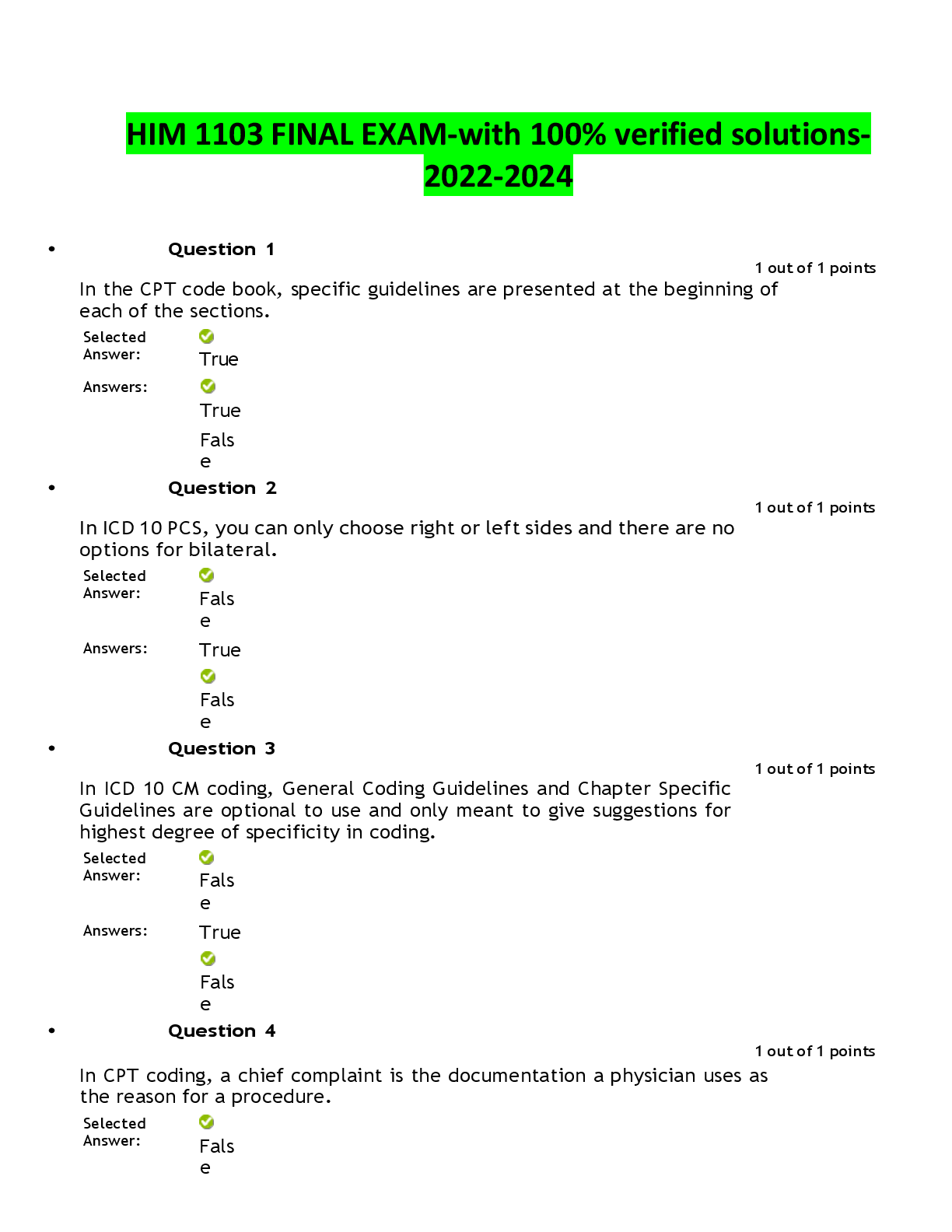
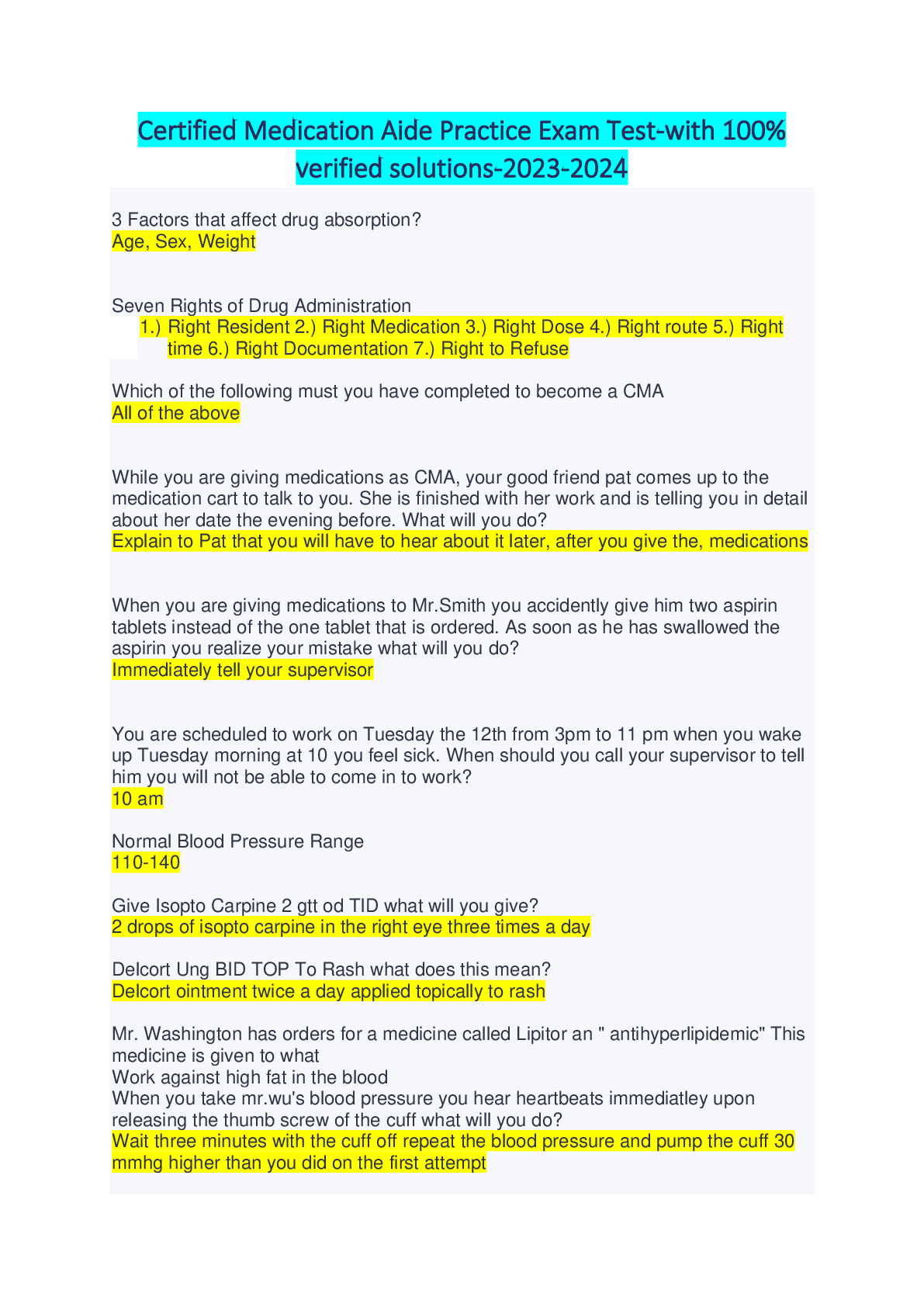
NSG6101-QUANTitative Sampling & Data Collection
Document Content and Description Below
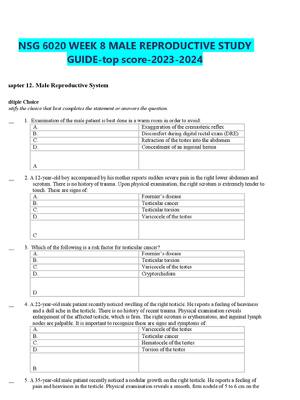
1. Sampling may be defined as which of the following?
A) Selection of an accessible population for a study
B) Selection of a subset of a population to represent the entire population
C) Assignment of study participant
...
[Show More]
Last updated: 3 years ago
Preview 1 out of 9 pages
Instant download

Buy this Document to get the Full Access Instantly
Provided by Students Who Aced it
We Verify Document Content to Gurantee Accuracy
Reviews( 0 )
Document information
Connected school, study & course
About the document
Uploaded On
Mar 25, 2022
Number of pages
9
Written in
All

Additional information
This document has been written for:
Uploaded
Mar 25, 2022
Downloads
0
Views
76
Topic Tags
Recommended For You
Get more on EXAM »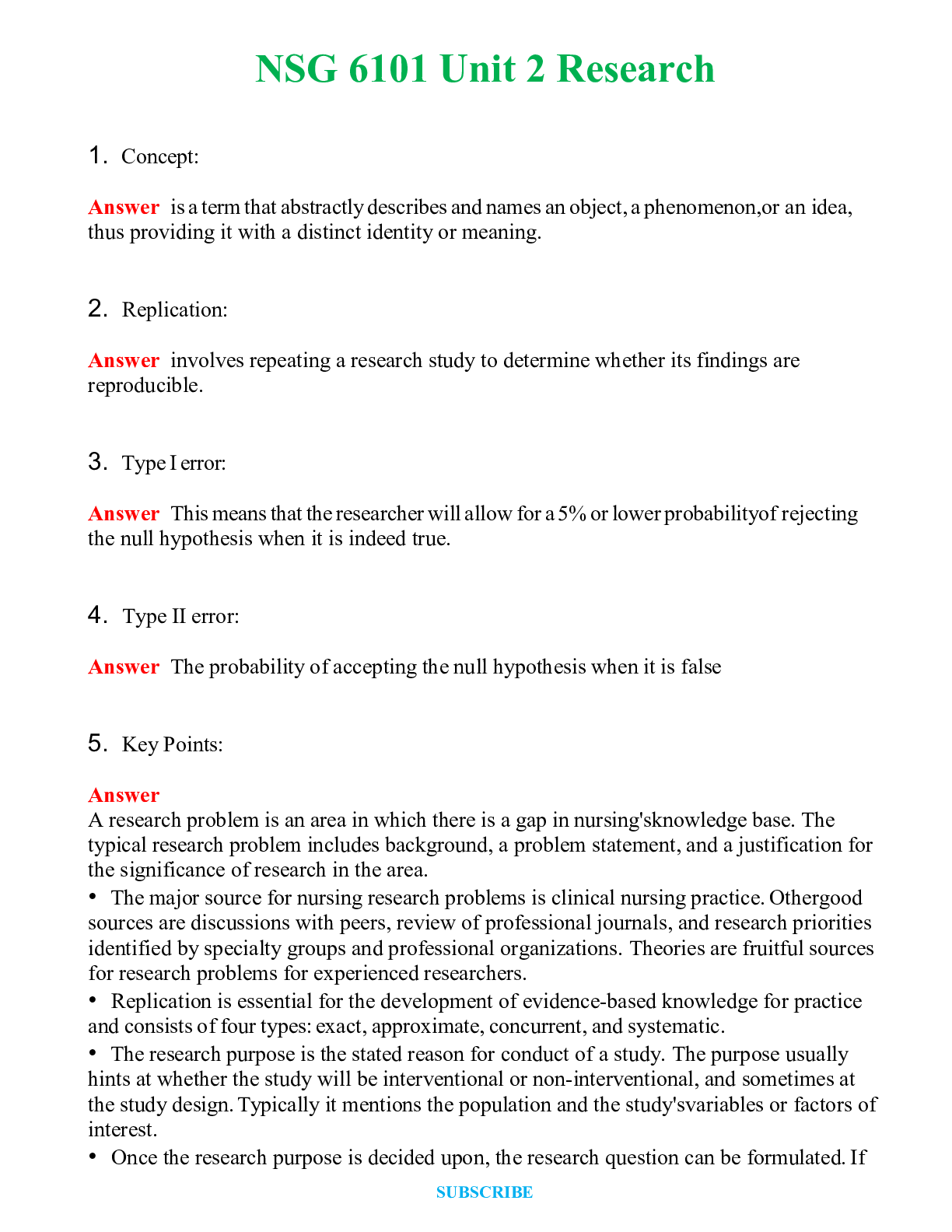
$9.5
26 Pages
NSG 6101 Unit 2 Research Questions and Verified Answers

$4
2 Pages
NSG6101 Week 8 Knowledge Check > South University, Savannah, L...

$16
11 Pages
SOUTH UNIV NSG 6101 AANP Questions and Answers,100% CORRECT

$9.5
3 Pages
NSG 6101 Week 7 Knowledge Check Array - South University

$7.5
4 Pages
NSG 6101 Week 6 Knowledge Check with All Correct Answers


$12
3 Pages
NSG6101 WEEK 7 QUIZ (KNOWLEDGE CHECK QUIZ) (LATEST): SOUTH UNI...
$12
2 Pages
NSG6101 WEEK 10 QUIZ (KNOWLEDGE CHECK QUIZ) (LATEST): SOUTH UN...

$12
2 Pages
NSG6101 WEEK 9 QUIZ (KNOWLEDGE CHECK QUIZ) (LATEST): SOUTH UNI...
.png)
$7
4 Pages
Prevention, Decreasing, and Elimination of Bloodstream Infecti...

$22.5
307 Pages
TEST BANK for Davis Advantage for Psychiatric Mental Health Nu...
More related documents below