NR503 FINAL EXAM STUDY GUIDE
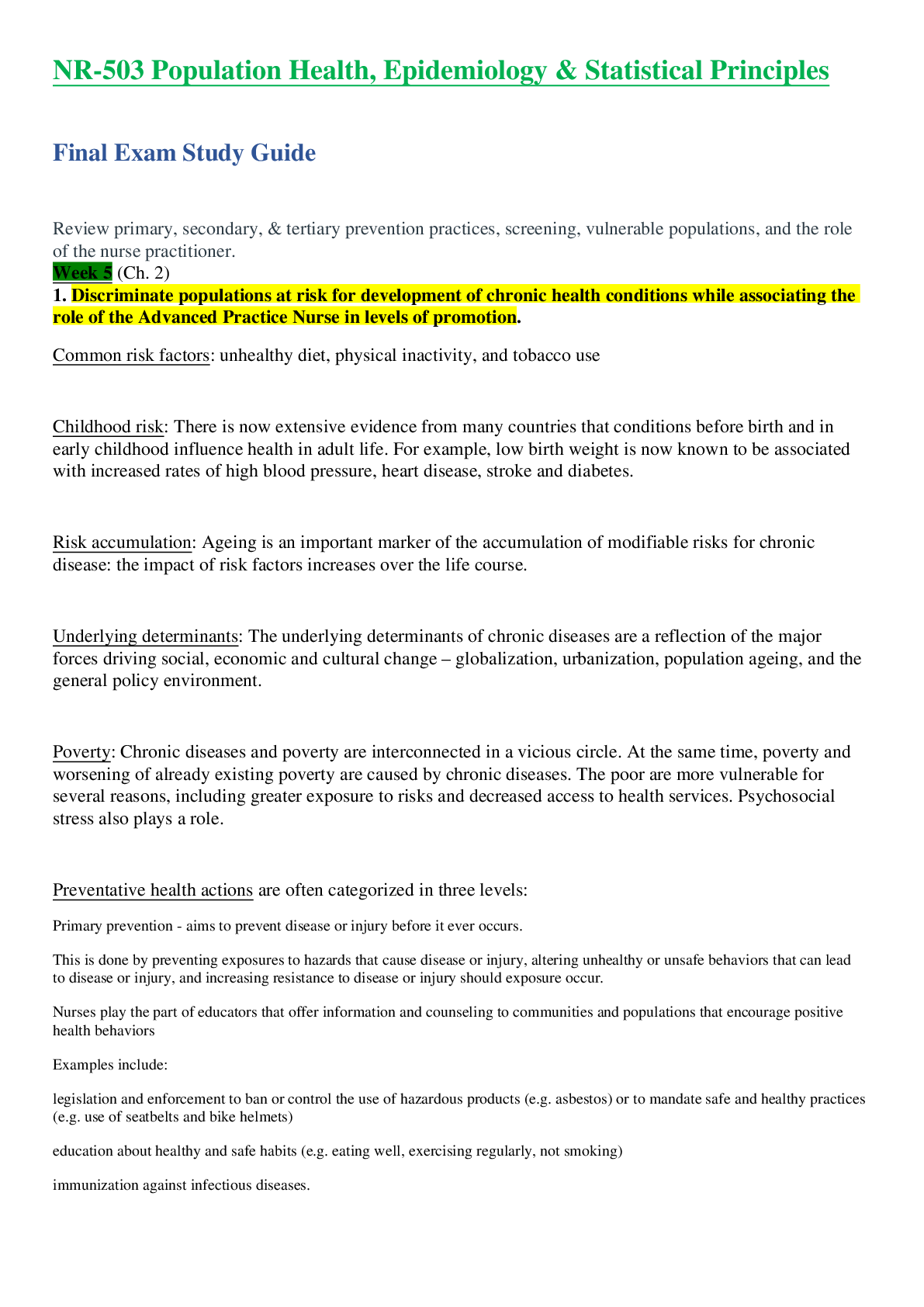
Review primary, secondary, & tertiary prevention practices, screening, vulnerable populations, and the role of the nurse practitioner.
Week 5 (Ch. 2)
1. Discriminate populations at risk fo
...
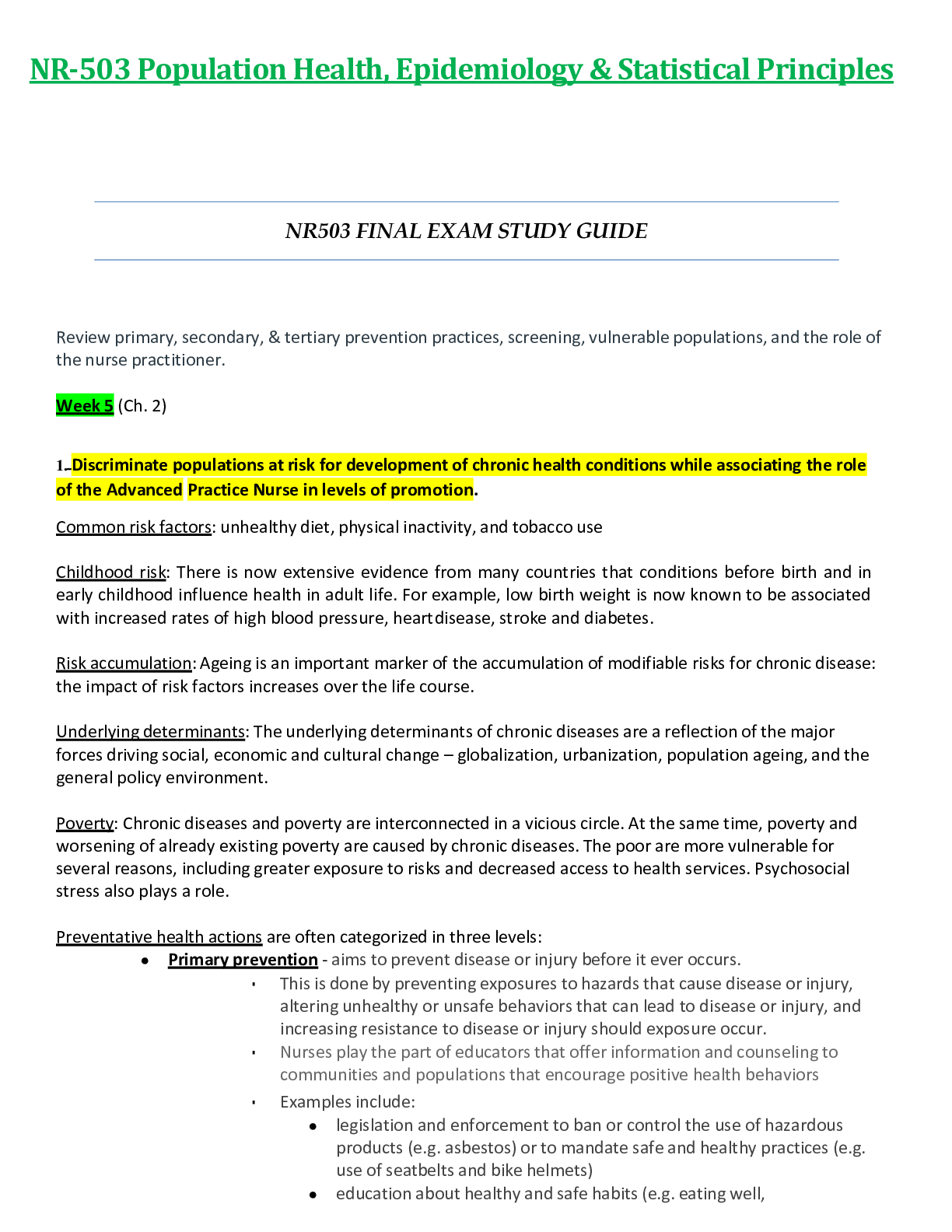
NR503 FINAL EXAM STUDY GUIDE
Review primary, secondary, & tertiary prevention practices, screening, vulnerable populations, and the role of the nurse practitioner.
Week 5 (Ch. 2)
1. Discriminate populations at risk for development of chronic health conditions while associating the role of the Advanced
Practice Nurse in levels of promotion.
Common risk factors: unhealthy diet, physical inactivity, and tobacco use
Childhood risk: There is now extensive evidence from many countries that conditions before birth and in early childhood influence
health in adult life. For example, low birth weight is now known to be associated with increased rates of high blood pressure, heart
disease, stroke and diabetes.
Risk accumulation: Ageing is an important marker of the accumulation of modifiable risks for chronic disease: the impact of risk
factors increases over the life course.
Underlying determinants: The underlying determinants of chronic diseases are a reflection of the major forces driving social,
economic and cultural change – globalization, urbanization, population ageing, and the general policy environment.
Poverty: Chronic diseases and poverty are interconnected in a vicious circle. At the same time, poverty and worsening of already
existing poverty are caused by chronic diseases. The poor are more vulnerable for several reasons, including greater exposure to risks
and decreased access to health services. Psychosocial stress also plays a role.
Preventative health actions are often categorized in three levels:
Primary prevention - aims to prevent disease or injury before it ever occurs.
This is done by preventing exposures to hazards that cause disease or injury, altering unhealthy or
unsafe behaviors that can lead to disease or injury, and increasing resistance to disease or injury
should exposure occur.
Nurses play the part of educators that offer information and counseling to communities and
populations that encourage positive health behaviors
Examples include:
legislation and enforcement to ban or control the use of hazardous products (e.g.
asbestos) or to mandate safe and healthy practices (e.g. use of seatbelts and bike helmets)
education about healthy and safe habits (e.g. eating well, exercising regularly, not
smoking)
immunization against infectious diseases.
Secondary prevention - aims to reduce the impact of a disease or injury that has already occurred
This is done by detecting and treating disease or injury as soon as possible to halt or slow its
progress, encouraging personal strategies to prevent reinjury or recurrence, and implementing
programs to return people to their original health and function to prevent long-term problems.
Nurses work with these patients to reduce and manage controllable risks, modifying the
individuals’ lifestyle choices and using early detection methods to catch diseases in their
beginning stages when treatment may be more effective.
Examples include:
regular exams and screening tests to detect disease in its earliest stages (e.g.
mammograms to detect breast cancer)
daily, low-dose aspirins and/or diet and exercise programs to prevent further heart attacks
or strokes
suitably modified work so injured or ill workers can return safely to their jobs.
Tertiary prevention - aims to soften the impact of an ongoing illness or injury that has lasting effects
This is done by helping people manage long-term, often-complex health problems and injuries
(e.g. chronic diseases, permanent impairments) in order to improve as much as possible their
ability to function, their quality of life and their life expectancy.
Nurses are tasked with helping individuals execute a care plan and make any additional behavior
modifications necessary to improve conditions
Examples include:
cardiac or stroke rehabilitation programs, chronic disease management programs (e.g. for
diabetes, arthritis, depression, etc.)
support groups that allow members to share strategies for living well
vocational rehabilitation programs to retrain workers for new jobs when they have
recovered as much as possible.
[Show More]






.png)





.png)


