NSG 6005: Advanced Pharmacology Week 1 Quiz 2021/2022-Nurse practitioner prescriptive authority is regulated by - the state board of nursing for each state 2. The benefits to the patient of having an Advanced Practice Re
...
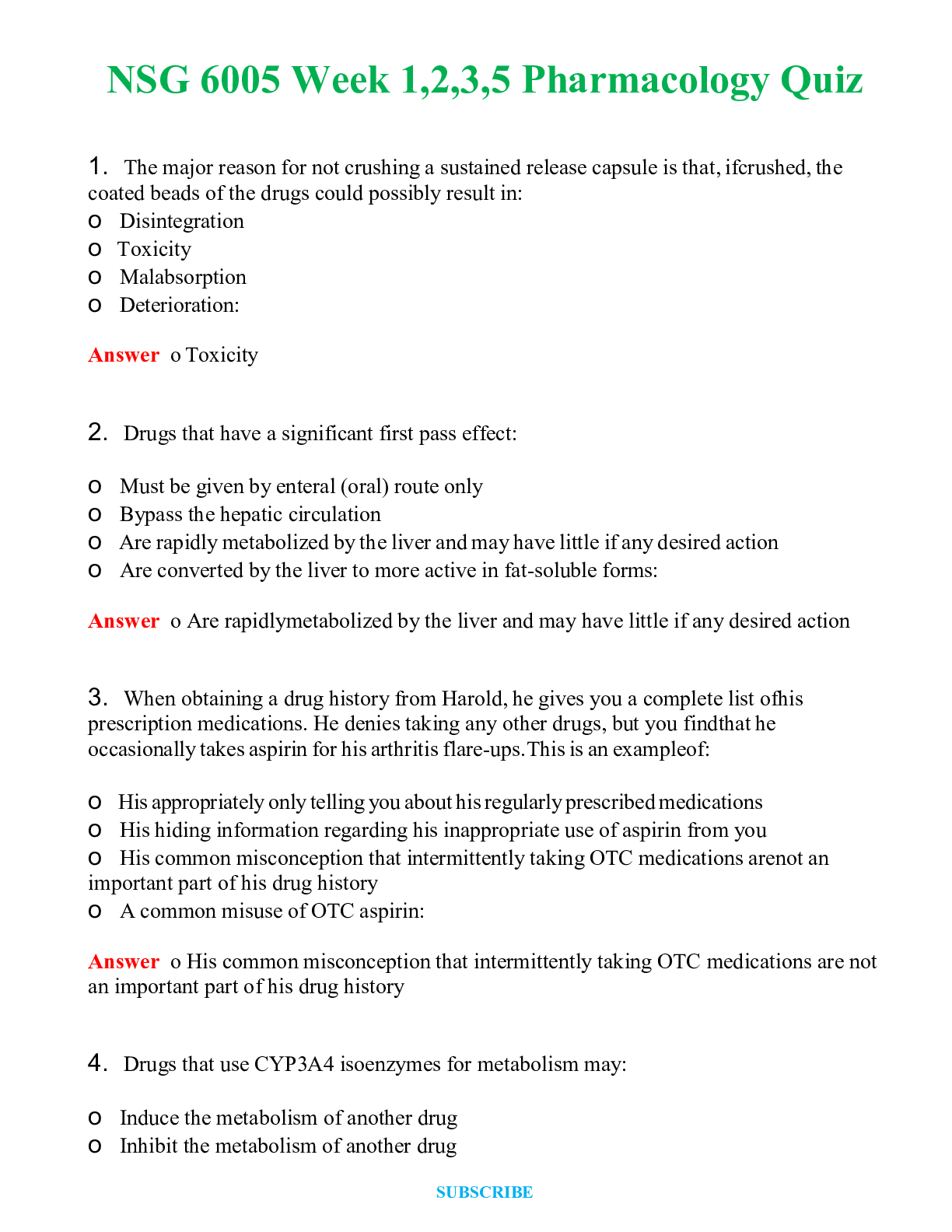
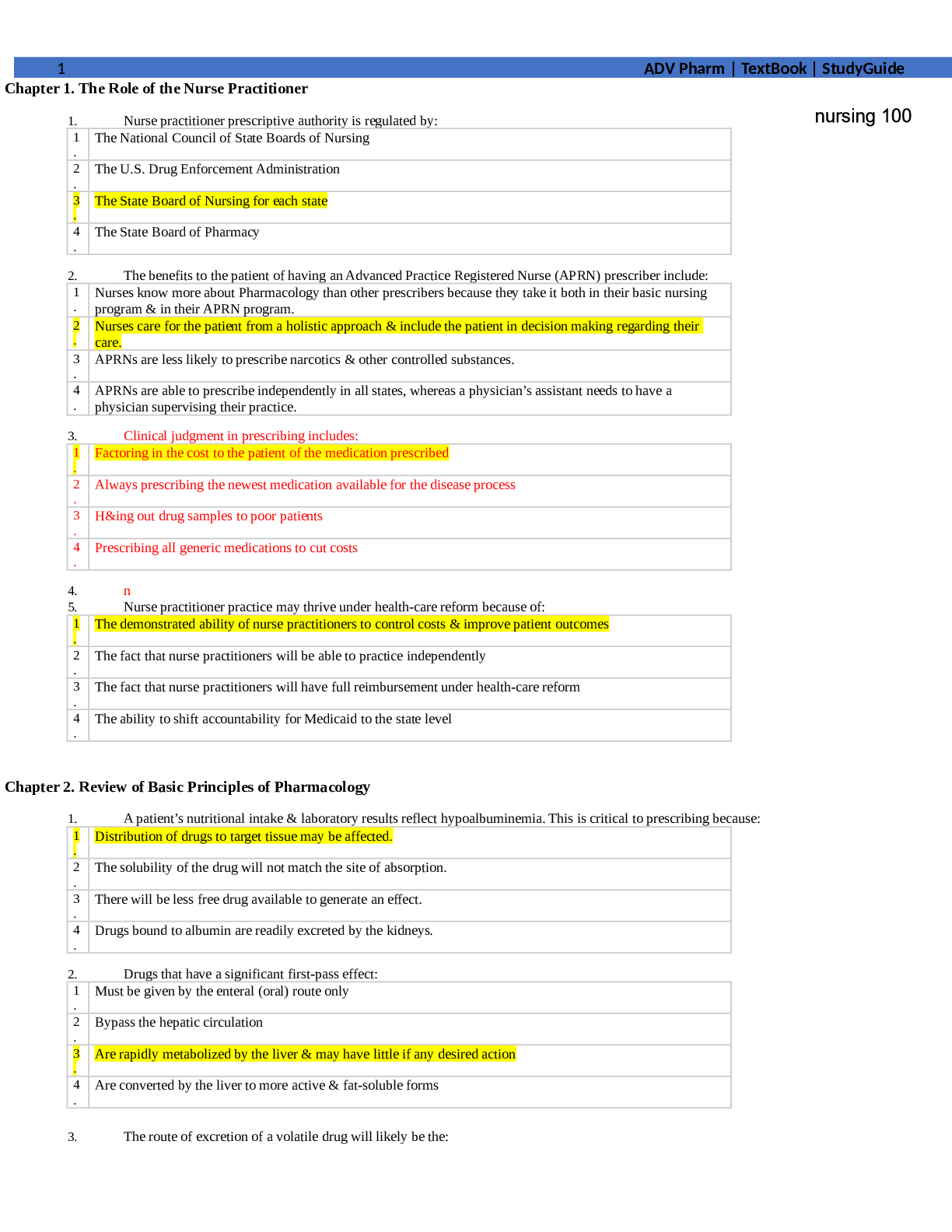
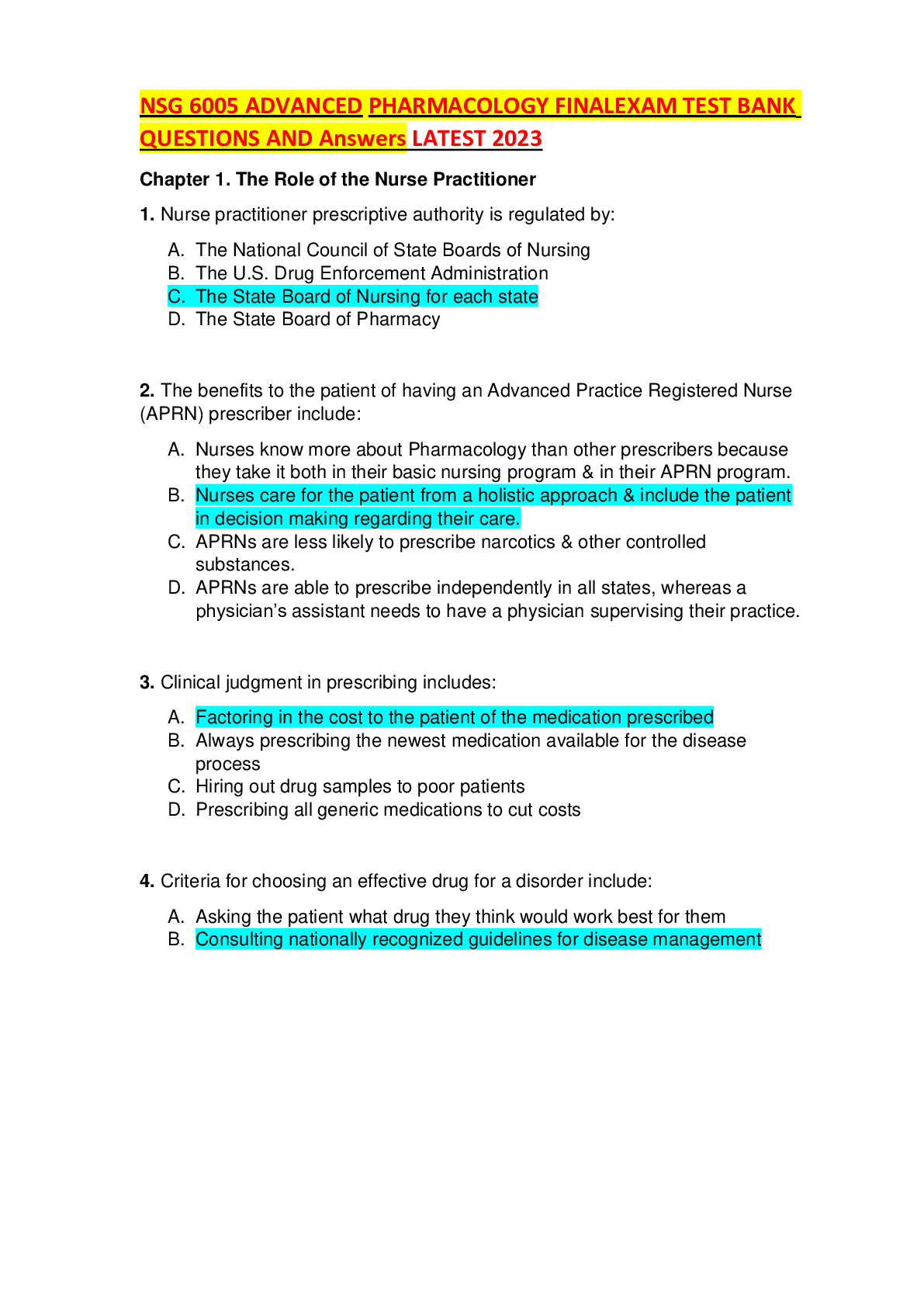
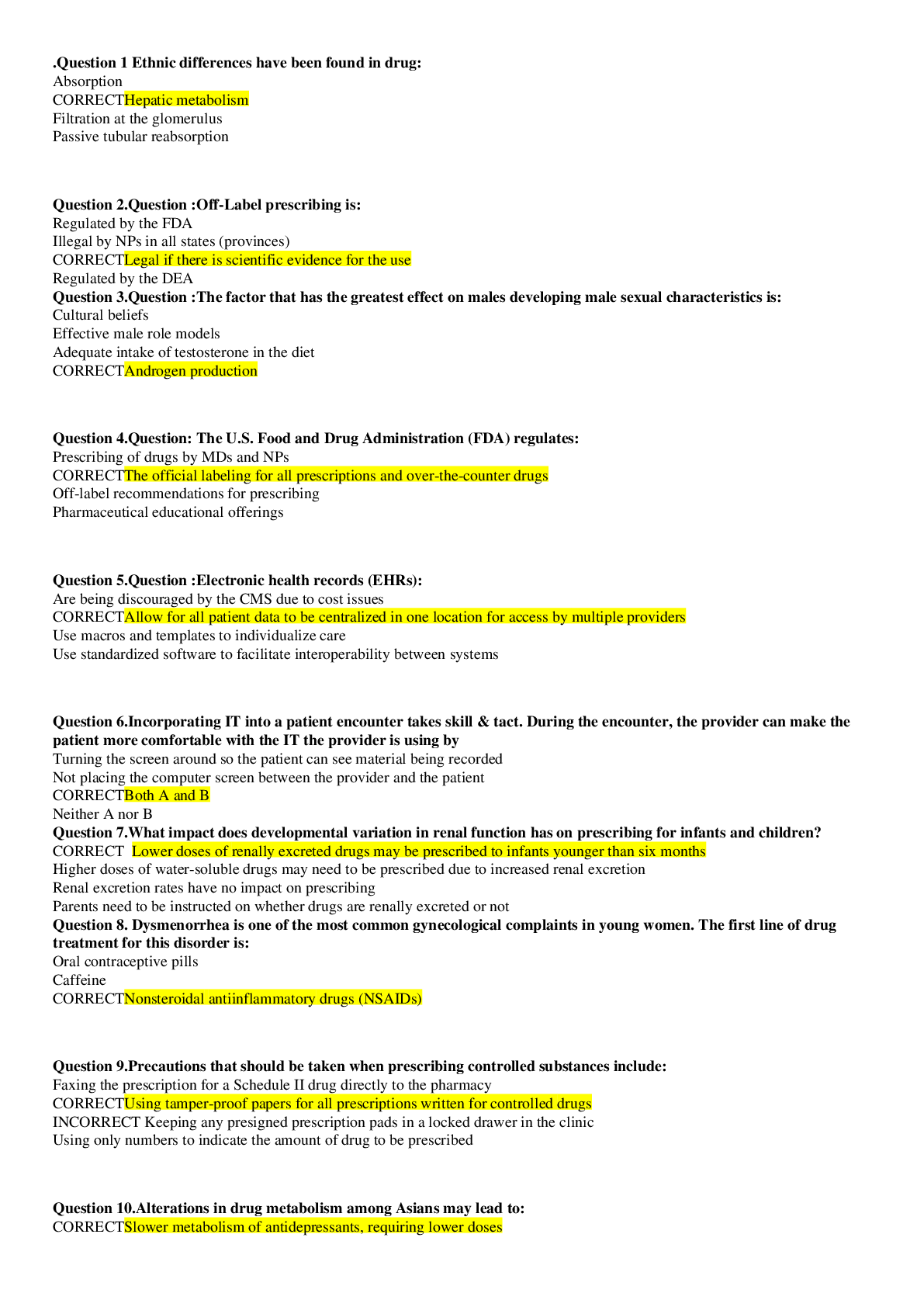
NSG 6005: Advanced Pharmacology Week 1 Quiz 2021/2022-Nurse practitioner prescriptive authority is regulated by - the state board of nursing for each state 2. The benefits to the patient of having an Advanced Practice Registered Nurse (APRN) prescriber include - nurses care for the patient from a holistic approach and include the patient in decision making regarding their care 3. Clinical Judgement in prescribing includes - factoring in the cost to the patient of the medication 4. Criteria for choosing an effective drug for a disorder include - consulting nationally recognized guidelines for disease management 5. Nurse practitioner practice may thrive under health-care reform because of - 6. A comprehensive assessment for a patient should be holistic when trying to determine competence in drug administration. Which of the following factors would the NP omit from this type of assessment? - 7. Elena Vasquez's primary language is Spanish, and she speaks very limited English. Which technique would be appropriate to use in teaching her about a new drug you have just prescribed? - 8. Rod, age 68, has hearing difficulty. Which of the following would NOT be helpful in assuring that he understands teaching about his drug? - 9. Which of the following factors may adversely affect a patient's adherence to a therapeutic drug regimen? - 10. The health-care delivery system itself can create barriers to adherence to a treatment regimen. Which of the following system variables creates such a barrier? - 11. Ralph's blood pressure remains elevated despite increased doses of his drug. The NP is concerned that he might not be adhering to his treatment regimen. Which of the following events would suggest that he might not be adherent? - 12. Nonadherence is especially common in drugs that treat asymptomatic conditions, such as hypertension. One way to reduce the likelihood of nonadherence to these drugs is to prescribe a drug that - 13. Factors in chronic conditions that contribute to nonadherence include - 14. While patient education about their drugs is important, information alone does not necessarily lead to adherence to a drug regimen. Patients report greater adherence when - 15. Patients with psychiatric illnesses have adherence rates to their drug regimen between 35% and 60%. To improve adherence in this population, prescribe drugs - 16. Many disorders require multiple drugs to treat them. The more complex the drug regimen, the less likely the patient will adhere to it. Which of the following interventions will NOT improve adherence? - 17. Pharmacologic interventions are costly. Patients for whom the cost/benefit variable is especially important include - 18. Providers have a responsibility for determining the best plan of care, but patients also have responsibilities. Patients the provider can be assured will carry through on these responsibilities include those who - 19. Monitoring adherence can take several forms, including - 20. Factors that explain and predict medication adherence include - 21. Cultural factors that must be taken into account when prescribing include(s) - 22. Ethnic differences have been found in drug - 23. The National Standards of Culturally and Linguistically Appropriate Services are required to be implemented in all - 24. According to the National Standards of Culturally and Linguistically Appropriate Services, an interpreter for health care - 25. According to the U.S. Office of Minority Health, poor health outcomes among African Americans are attributed to - 26. The racial difference in drug pharmacokinetics seen in American Indian or Alaskan Natives are - 27. Pharmacokinetics among Asians are universal to all the Asian ethnic groups - 28. Alterations in drug metabolism among Asians may lead to - 29. Asians from Eastern Asia are known to be fast acetylators. Fast acetylators - 30. Hispanic native healers (curanderas) - 31. Pharmacoeconomics is - 32. The direct costs of drug therapy include - 33. Indirect costs associated with drug therapy include - 34. The intangible costs of drug therapy include - 35. When a pharmacoeconomic analysis looks at two or more treatment alternatives that are considered equal in efficacy and compares the costs of each it is referred to as - 36. Cost-effectiveness analysis compares two or more treatments or programs that are - 37. When the costs of a specific treatment or intervention are calculated and then compared with the dollar value of the benefit received it is referred to as - 38. Mary has a two-tiered prescription benefit plan, which means - 39. Prescribing less-expensive generic drugs or drugs off the $4 retail pharmacy lists
[Show More]