NURSING NSG 6005 Week Pharm Knowledge Check
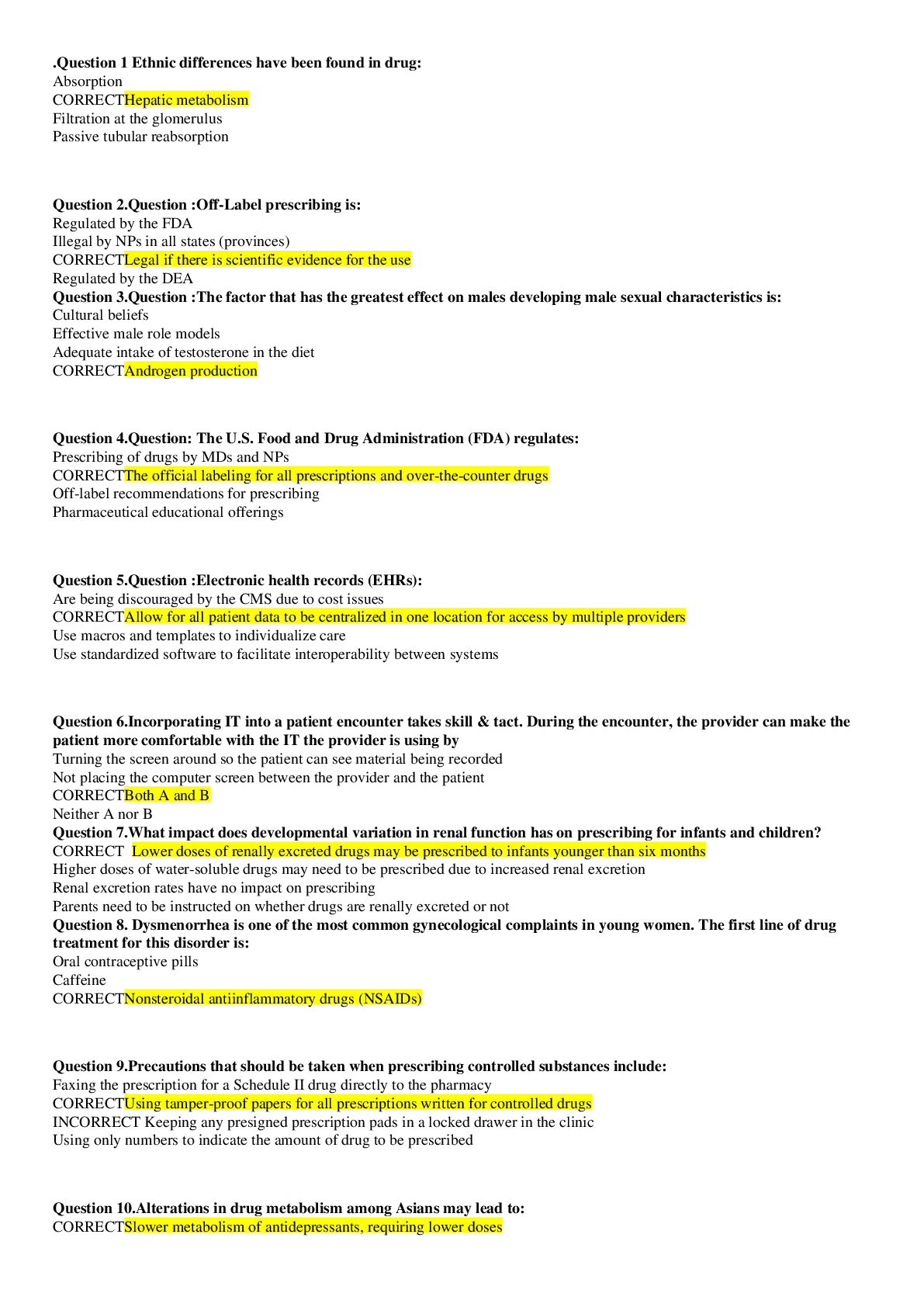
.Question 1 Ethnic differences have been found in drug:
Absorption
CORRECT
...
NURSING NSG 6005 Week Pharm Knowledge Check
.Question 1 Ethnic differences have been found in drug:
Absorption
CORRECT Hepatic metabolism
Filtration at the glomerulus
Passive tubular reabsorption
Question 2. Question : Off-Label prescribing is:
Regulated by the FDA
Illegal by NPs in all states (provinces)
CORRECT Legal if there is scientific evidence for the use
Regulated by the DEA
Question 3. Question : The factor that has the greatest effect on males developing male sexual characteristics is:
Cultural beliefs
Effective male role models
Adequate intake of testosterone in the diet
CORRECT Androgen production
Question 4. Question: The U.S. Food and Drug Administration (FDA) regulates:
Prescribing of drugs by MDs and NPs
CORRECT The official labeling for all prescriptions and over-the-counter drugs
Off-label recommendations for prescribing
Pharmaceutical educational offerings
Question 5. Question : Electronic health records (EHRs):
Are being discouraged by the CMS due to cost issues
CORRECT Allow for all patient data to be centralized in one location for access by multiple providers
Use macros and templates to individualize care
Use standardized software to facilitate interoperability between systems
Question 6. Incorporating IT into a patient encounter takes skill & tact. During the encounter, the provider can make the patient more comfortable with the IT the provider is using by
Turning the screen around so the patient can see material being recorded
Not placing the computer screen between the provider and the patient
CORRECT Both A and B
Neither A nor B
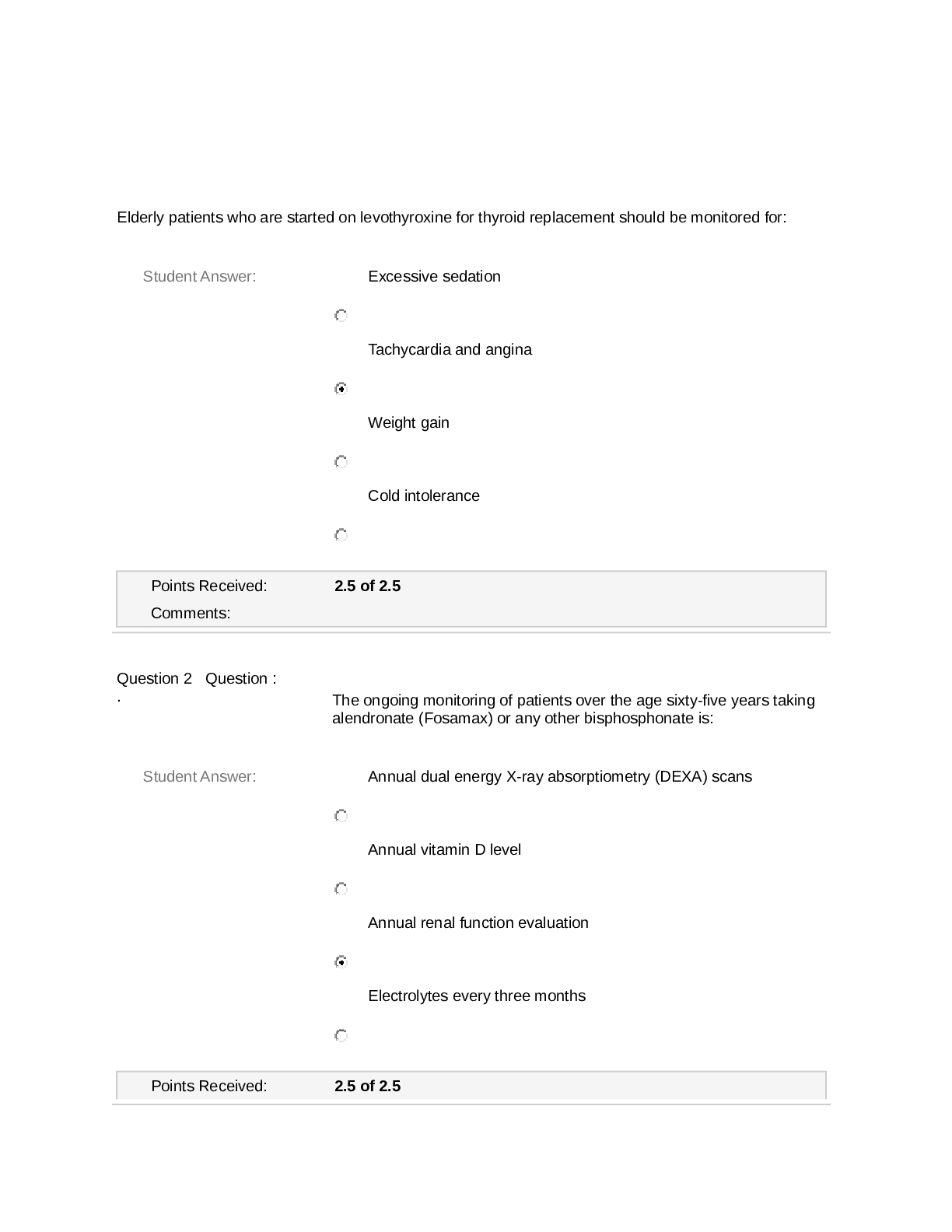
Question 7. What impact does developmental variation in renal function has on prescribing for infants and children?
CORRECT Lower doses of renally excreted drugs may be prescribed to infants younger than six months
Higher doses of water-soluble drugs may need to be prescribed due to increased renal excretion
Renal excretion rates have no impact on prescribing
Parents need to be instructed on whether drugs are renally excreted or not
Question 8. Dysmenorrhea is one of the most common gynecological complaints in young women. The first line of drug treatment for this disorder is:
Oral contraceptive pills
Caffeine
CORRECT Nonsteroidal antiinflammatory drugs (NSAIDs)
Question 9. Precautions that should be taken when prescribing controlled substances include:
Faxing the prescription for a Schedule II drug directly to the pharmacy
CORRECT Using tamper-proof papers for all prescriptions written for controlled drugs
INCORRECT Keeping any presigned prescription pads in a locked drawer in the clinic
Using only numbers to indicate the amount of drug to be prescribed
Question 10. Alterations in drug metabolism among Asians may lead to:
CORRECT Slower metabolism of antidepressants, requiring lower doses
Faster metabolism of neuroleptics, requiring higher doses
Altered metabolism of omeprazole, requiring higher doses
Slower metabolism of alcohol, requiring higher doses
Week One Quiz Study Guide
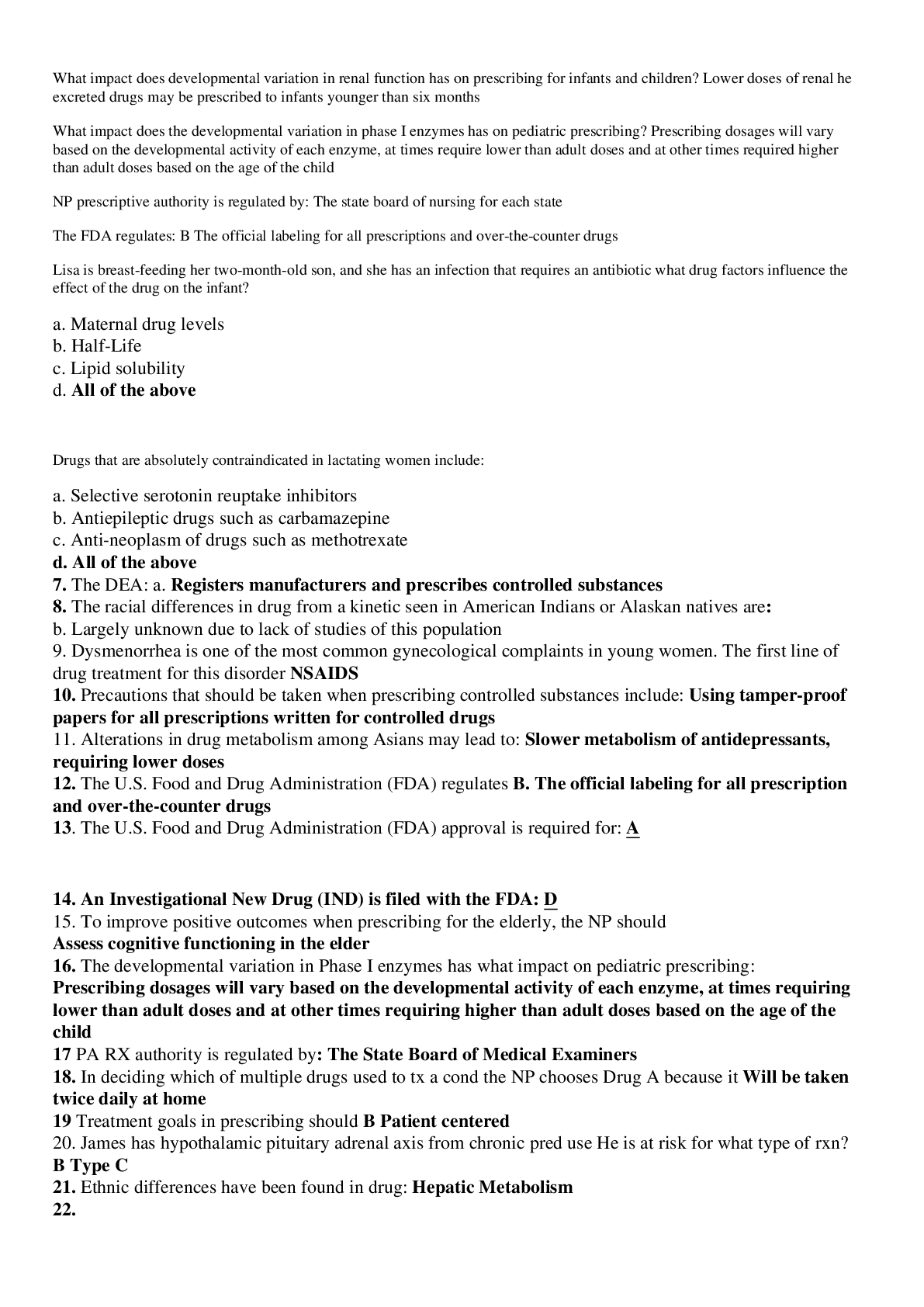
Who regulates the Nurse Practitioner’s (NP) prescriptive authority?
What are the roles of the U.S. Food & Drug Administration (FDA) & U.S. Drug Enforcement Administration (DEA)?
Address the issues of off-label prescribing.
Describe the DEA’s drug “Schedule” designations.
Precautions re: prescribing controlled substances & behaviors of addiction.
Ethnic/cultural & gender considerations in drug absorption, distribution, metabolism & excretion.
Describe the role of electronic health records & technology in the NP practice.
Treatments for dysmenorrhea.
Physiology of the male puberty process.
Indications of testosterone therapy.
The pediatric developmental variations & aging variation that needs to be considered in prescribing meds.
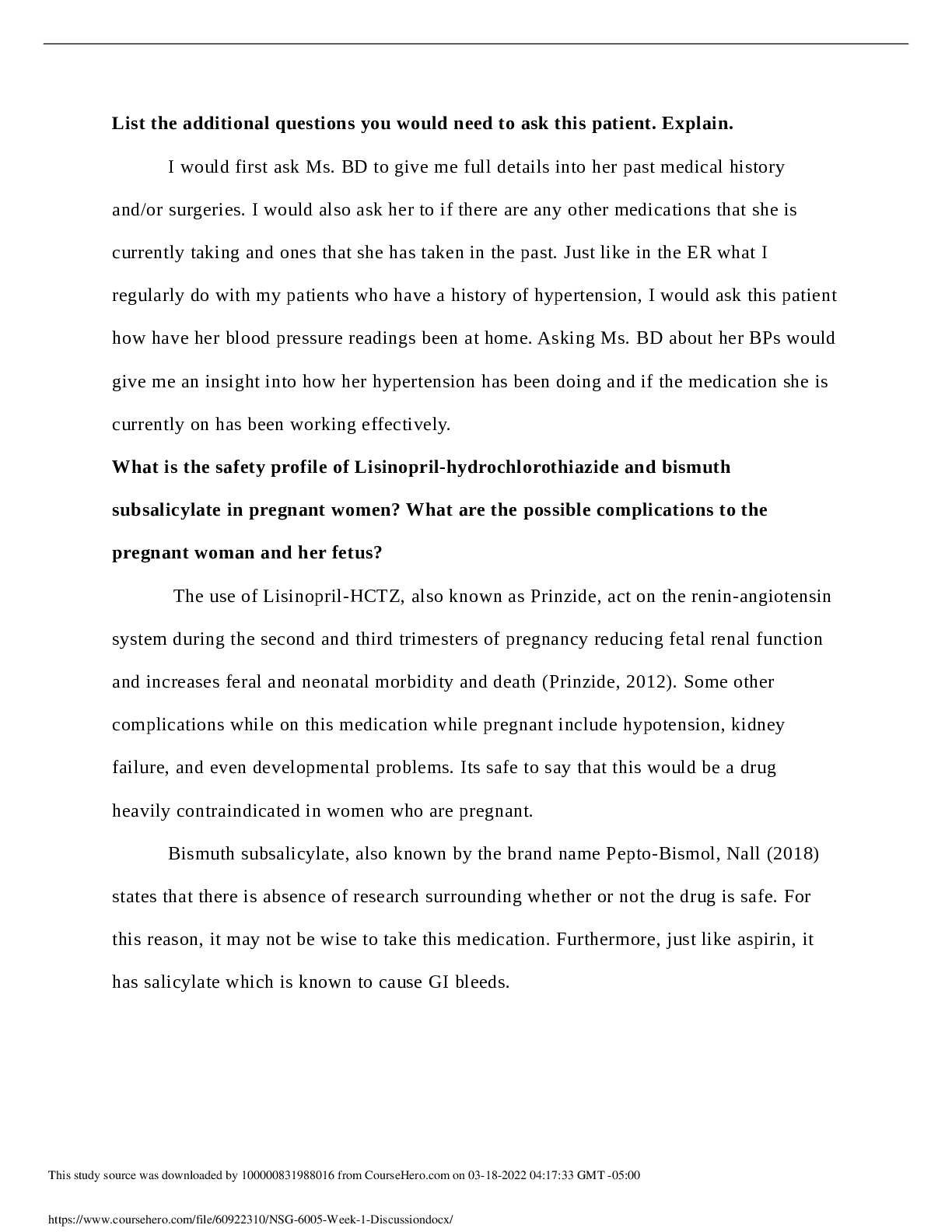
Meds contraindicated in pregnancy & lactation.
[Show More]